Article Summary:
-
Architectural Harmony: Integrating solid Grade-A teak island inserts into dark basalt or slate masonry bridges organic warmth with elemental stone in quiet Japanese-inspired landscapes.
-
Material Endurance: Natural rubber and silica content in heartwood teak resist coastal moisture, UV degradation, and ground-level humic acid near bamboo and water features.
-
Engineering Tolerances: Proper framing clearances, 316 marine-grade hardware, and passive cabinet ventilation protect custom millwork from trapped heat and high humidity.
-
Trade Specifier Workflow: Seamless CAD integration allows landscape architects to align stone load limits, custom face-frames, and subsurface utility runs for enduring luxury installations.
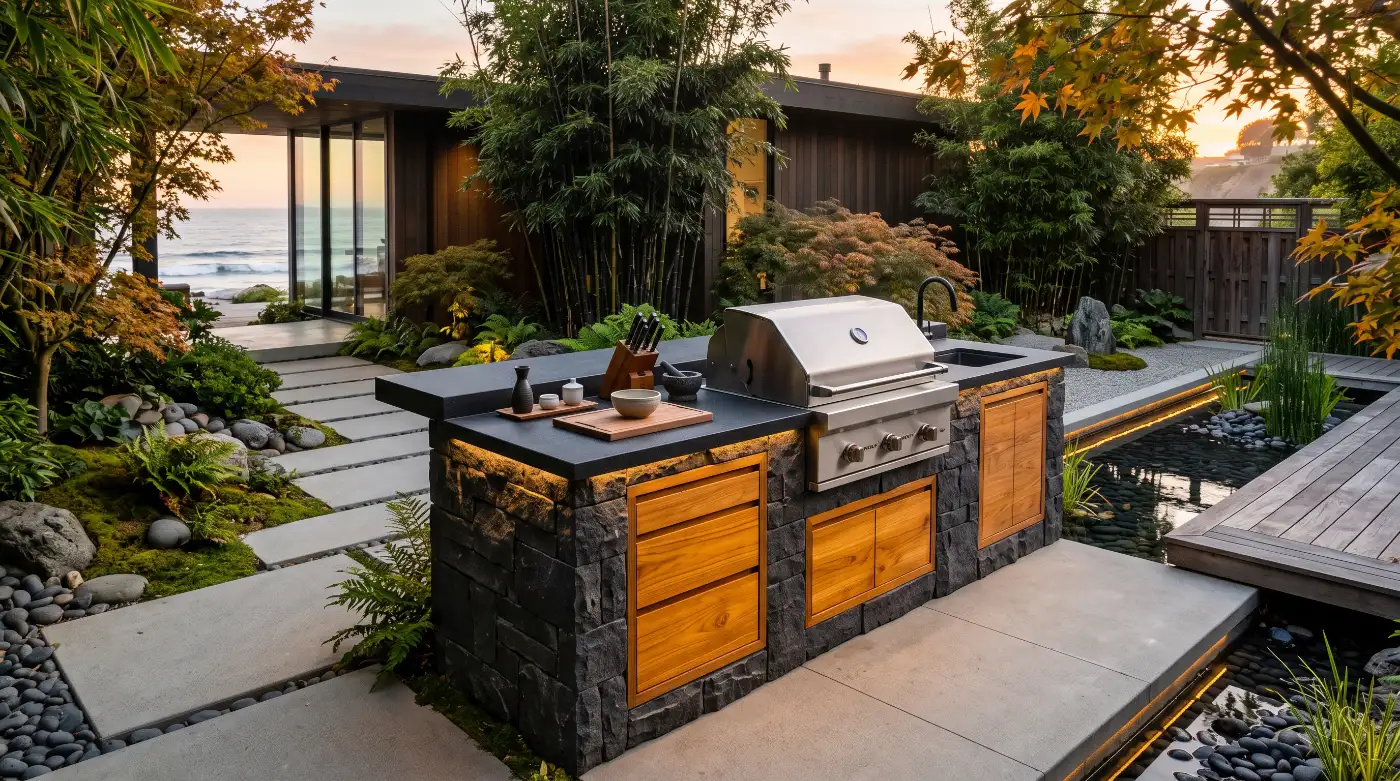
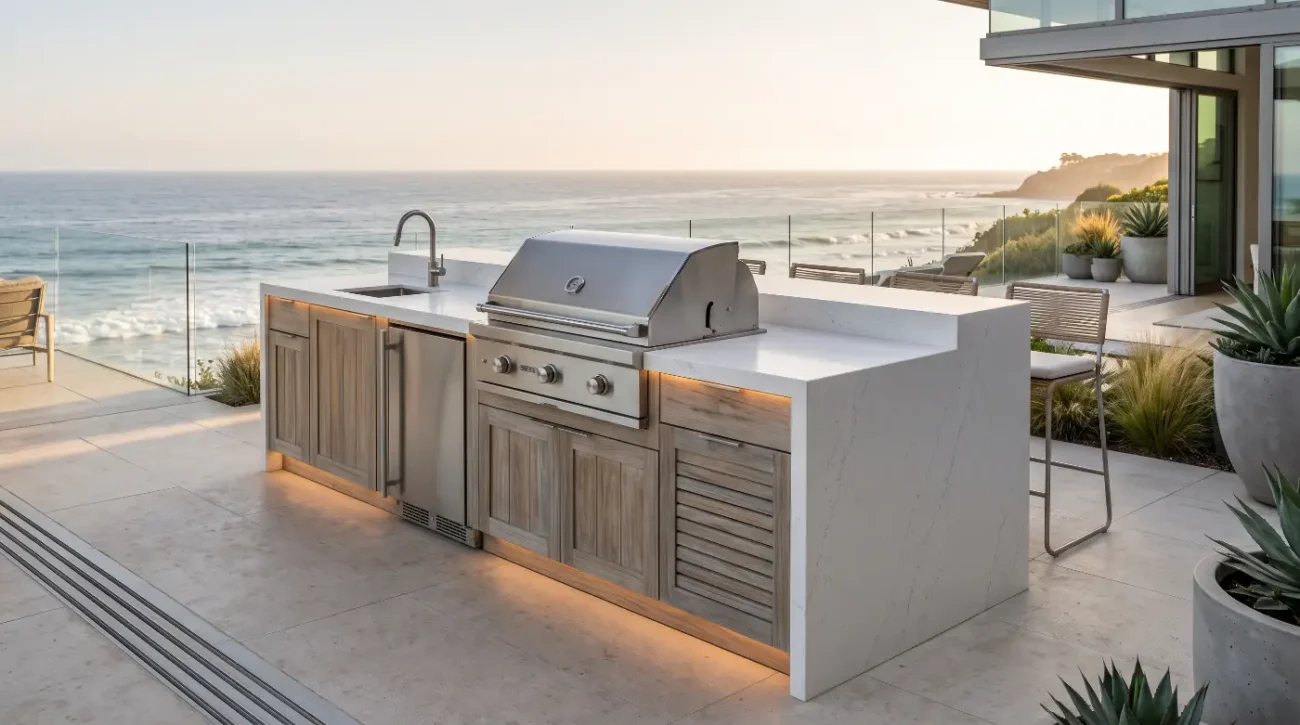
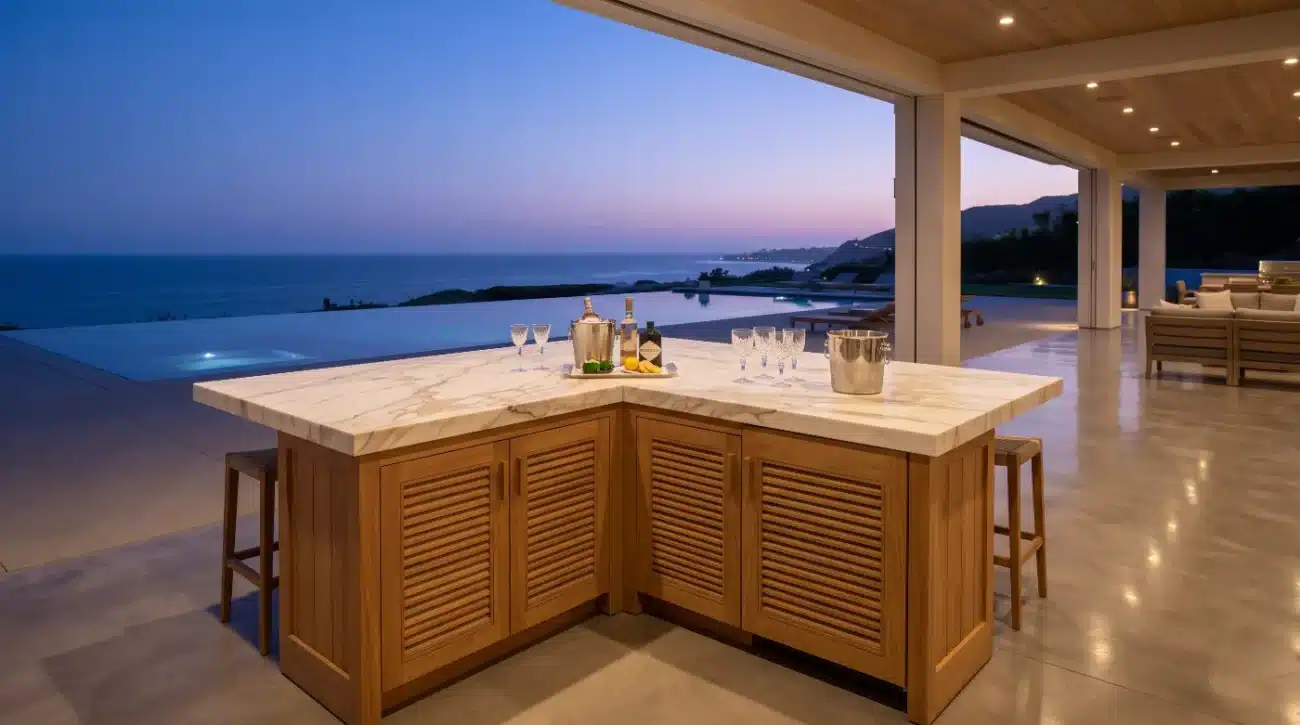
A high-net-worth property owner in the coastal hills of Pacific Palisades presents their landscape architect with a curated mood board featuring tranquil Japanese gardens, dark basalt water walls, and sleek cooking islands. The design intent calls for an outdoor kitchen that feels less like a suburban grilling station and more like a minimalist architectural sanctuary. However, when standard stainless steel cabinet doors are mock-fitted against dark basalt, the reflective metallic surfaces shatter the organic calm of the garden, casting harsh glares under soft landscape lighting. Conversely, relying on basic softwoods or improperly sealed timber results in catastrophic warping, moisture delamination, and surface mildew within two seasons of exposure to damp garden microclimates. Achieving true tranquility requires an intentional material pairing: embedding solid Grade-A teak island inserts directly into custom masonry frames to deliver refined warmth, silent operation, and lifetime durability.
How Do Teak Island Inserts Elevate Zen-Inspired Garden Kitchens?
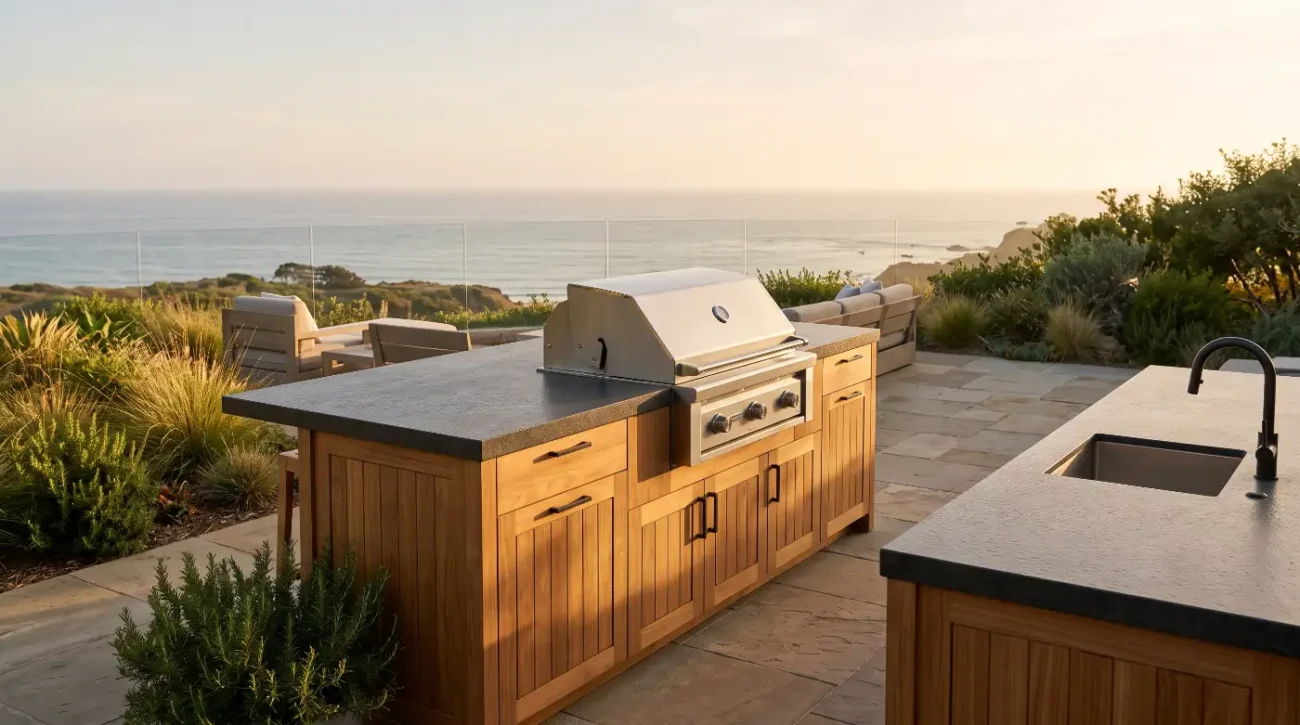
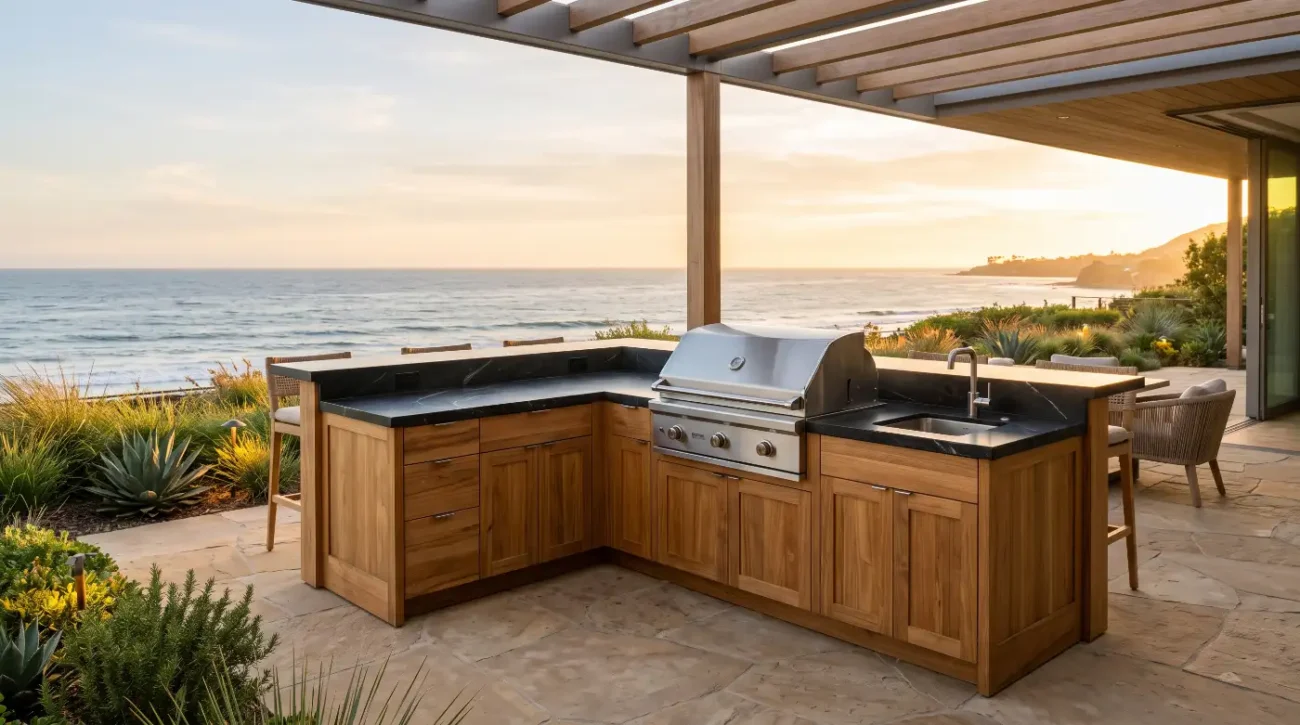
Solid Grade-A teak island inserts create an elemental bridge between heavy masonry structures and living garden landscapes by providing rich organic texture, superior acoustic dampening, and moisture-resistant durability. When flush-mounted into dark basalt or black granite, teak inserts eliminate harsh metallic glare while offering high concentrations of natural oils and silica that prevent wood decay near humid water features and dense foliage.
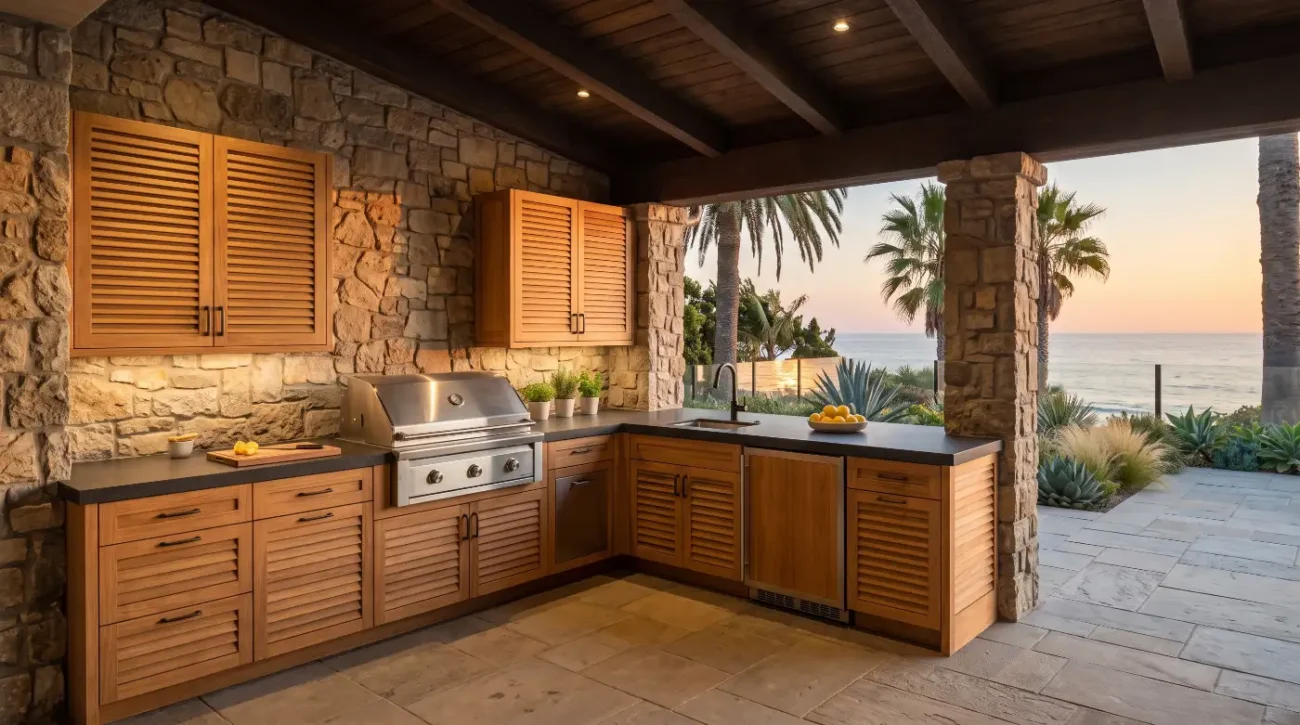
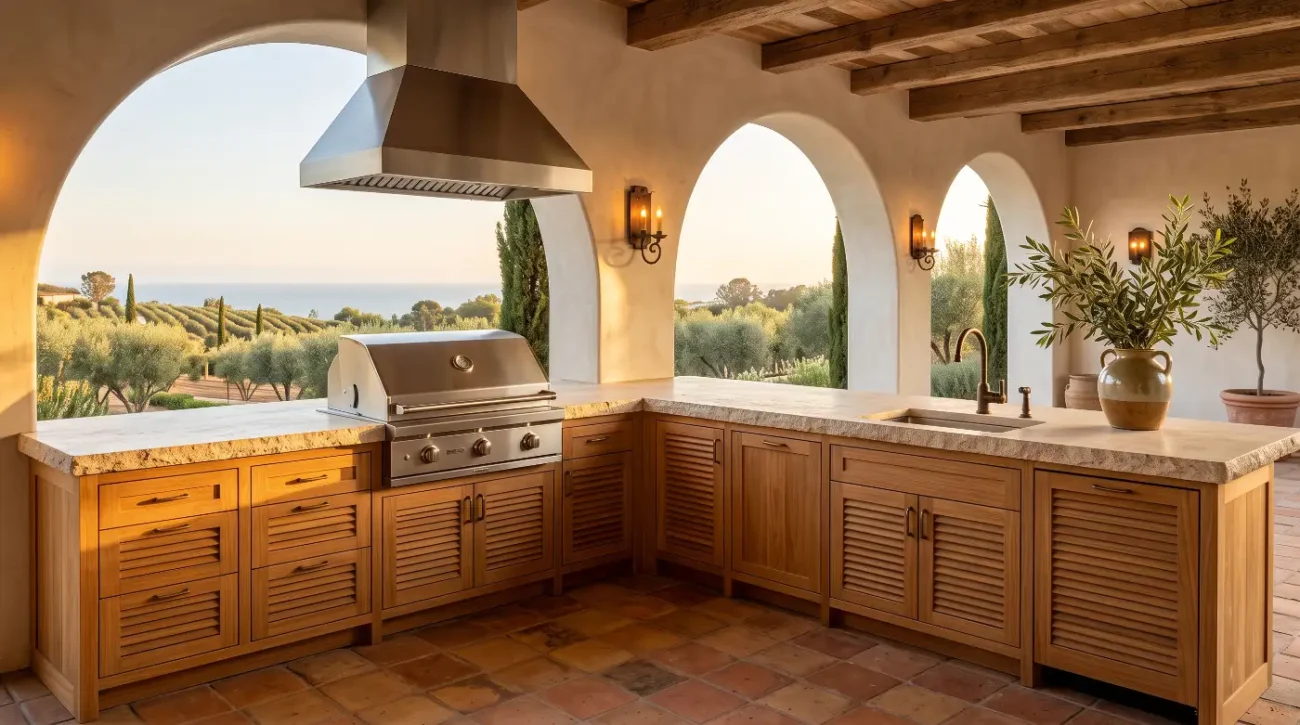
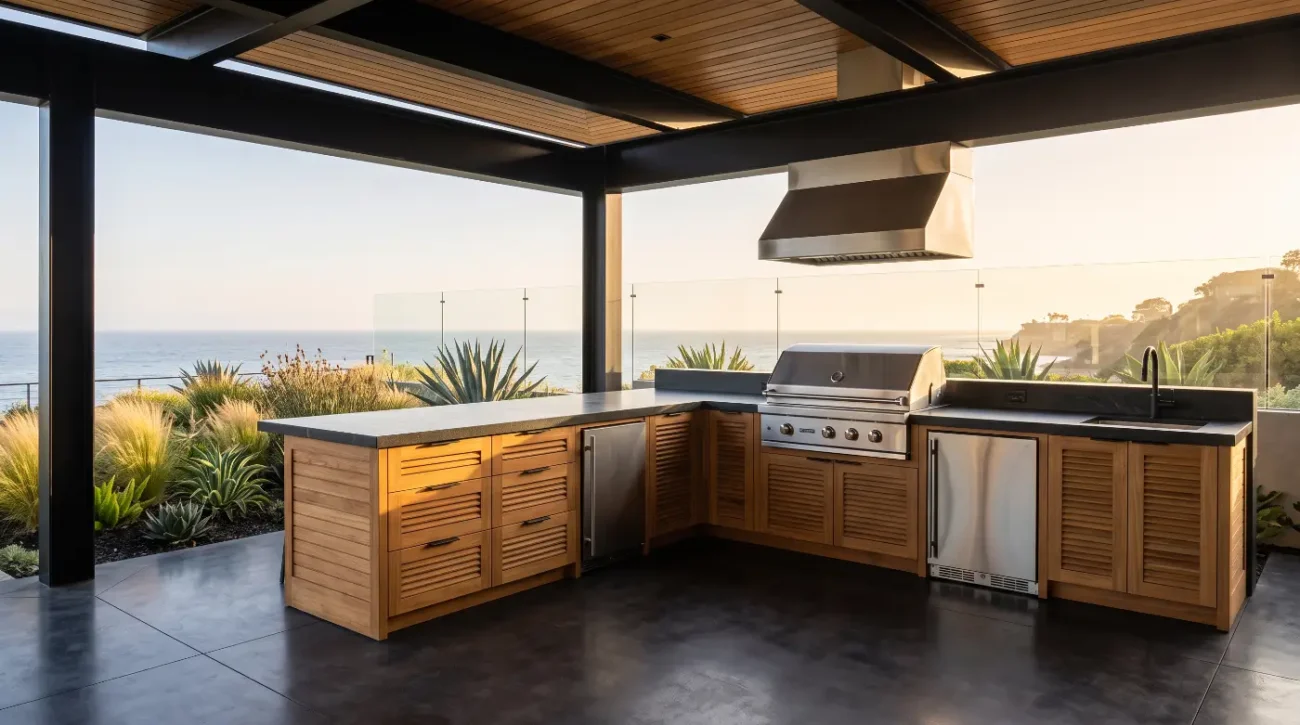
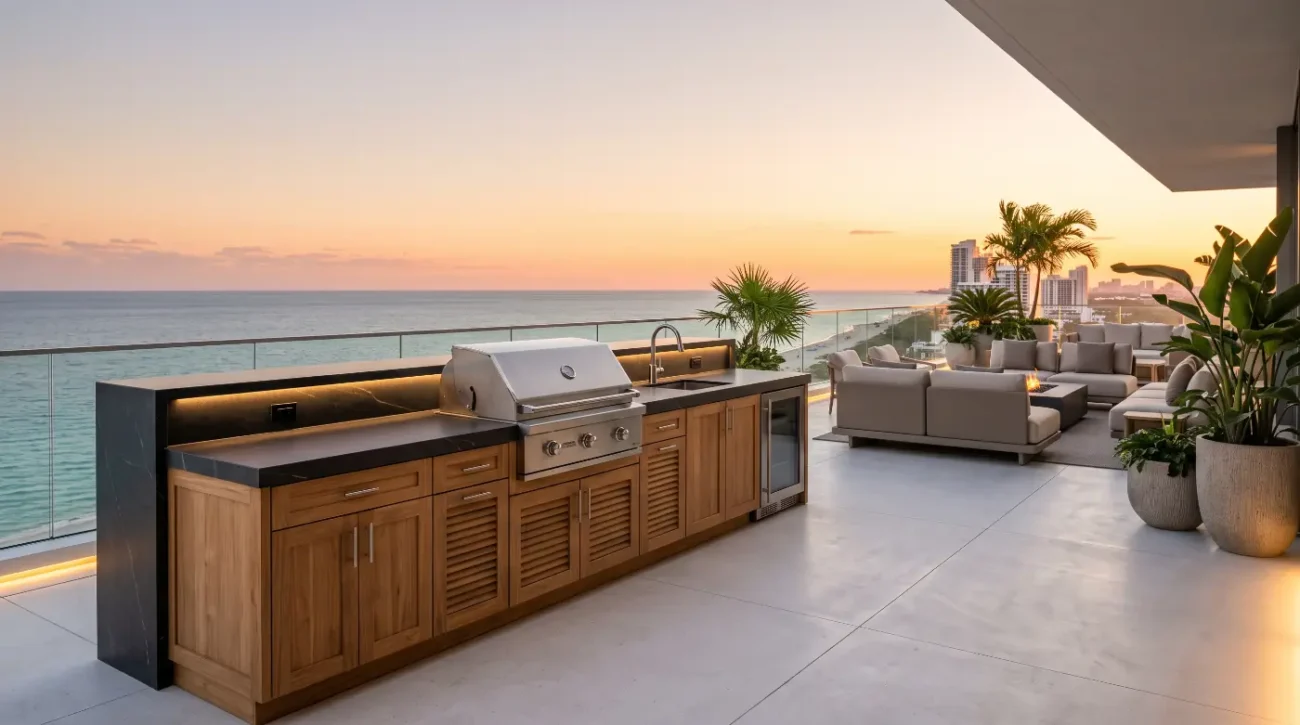
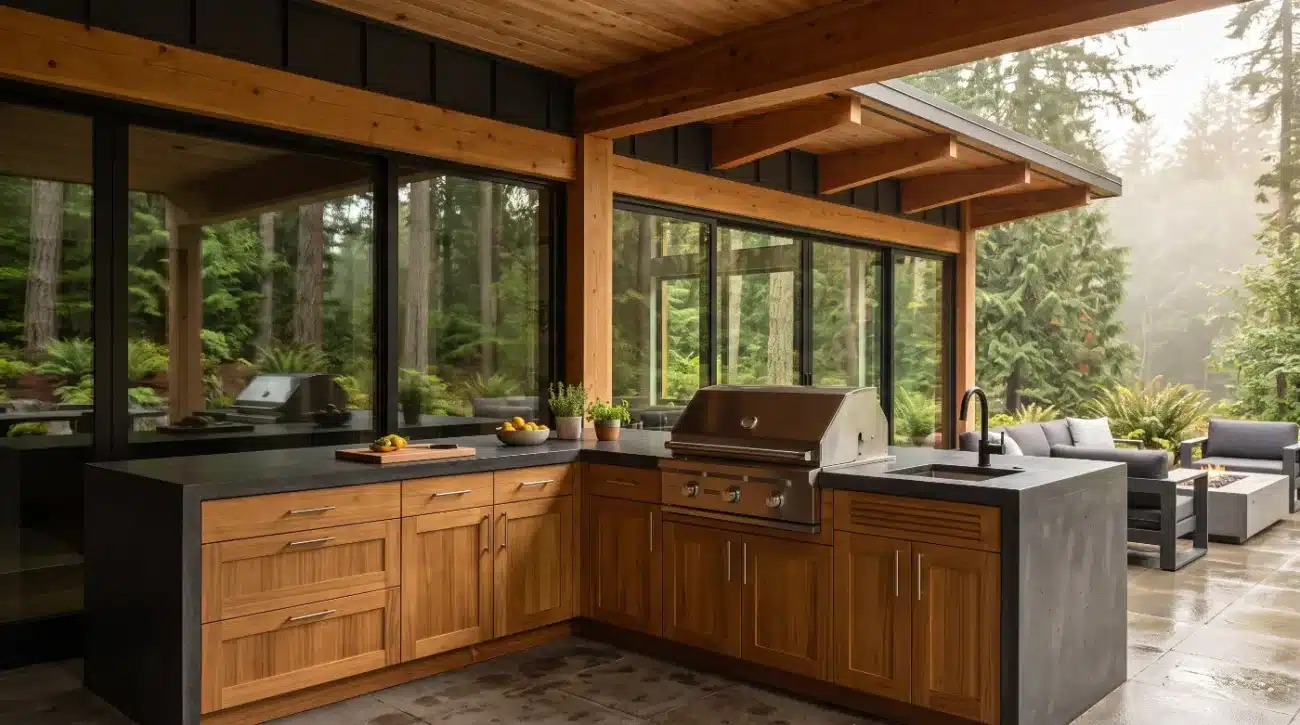
Integrating a culinary center into a Japanese-inspired landscape requires balancing the four primary elements: stone, water, plant life, and wood. Large masonry islands clad in dark basalt, honed slate, or hand-chipped granite provide structural grounding, but unmitigated stone can feel cold and monolithic. Incorporating solid timber softens these hardscapes, creating a tactile point of contact for homeowners. Pacific Teak Millworks manufactures solid teak island inserts designed to drop directly into custom masonry cutouts, bringing hand-finished joinery to outdoor stone structures.
The material science of plantation-grown Tectona grandis explains its exceptional performance in damp garden microclimates. Grade-A teak heartwood contains high concentrations of natural rubber resins and silica particles. These organic compounds make the timber naturally hydrophobic, preventing the liquid absorption that causes inferior woods to swell, crack, or rot. In Zen gardens where ambient moisture levels remain high due to ambient water features, steam, and dense bamboo groves, teak maintains dimensional stability. Furthermore, wood inherently dampens sound; closing a solid teak drawer produces a quiet, solid thump rather than the metallic clatter of stainless steel, preserving the soothing atmosphere of the garden.
Landscape architects designing for environments like the rainy Pacific Northwest or humid coastal Florida face distinct material degradation risks. Humic acids from wet soil, standing water near reflection pools, and dense shade can degrade surface coatings on inferior woods. Teak’s dense grain structure and natural oils act as a barrier against mold and fungal decay. When trade professionals specify custom face-frames and drop-in teak drawers, they introduce a warm, golden-brown hue that counterbalances grey slate or dark charcoal pavers, achieving a balanced indoor-outdoor flow.
-
Biophilic Material Balance: Combining dark structural stone with warm teak heartwood satisfies biophilic design principles by grounding the culinary space in natural textures.
-
Acoustic Dampening: High wood density and precision joinery eliminate harsh metallic noise, keeping culinary activity quiet and aligned with peaceful garden settings.
-
Dimensional Stability: Natural silica and rubber resins prevent dimensional shifting, keeping drawers moving smoothly even in damp garden environments.
-
Reflective Light Control: Matte wood surfaces absorb excess light, eliminating harsh reflections under warm ambient landscape illumination.
From a trade perspective, specifying island inserts requires careful attention to framing tolerances and weight distribution. A dark basalt island top can weigh over eight hundred pounds. Standard cabinet carcasses can buckle under uneven stone settling if structural loads are transferred directly onto wood frames. Specifiers must ensure the stone structure supports its own weight via internal concrete block or heavy-gauge steel framing, allowing the teak inserts to sit stress-free within designated rough openings. Landscape architects can review structural guidelines in our Resource Center or reference detailed specifications in the Teak Care & Maintenance Guide (PDF) to ensure long-term stability.
A common oversight when designing Zen-inspired outdoor kitchens is applying film-forming urethane varnish over teak to maintain its golden color. In exterior environments, moisture inevitably penetrates beneath clear coats through micro-cracks around hardware fasteners. Trapped beneath an impermeable plastic film, this moisture causes internal rot and surface peeling. A strategic approach involves applying breathable natural oil finishes periodically or allowing the heartwood to weather naturally into a silvery-grey patina that mirrors aged stone and weathered bamboo.
The structural profile of a Zen garden outdoor kitchen island is organized through distinct layers:
-
Countertop Layer: A solid dark basalt slab forms the primary prep surface, resting independently on the surrounding masonry to insulate lower components from direct overhead weight.
-
Sealing & Hardware Layer: A 316 marine-grade stainless steel gasket ring sits between the stone opening and the wood face-frame, sealing against water intrusion while allowing subtle material expansion.
-
Insert Core: Solid Grade-A teak island inserts sit centered inside the masonry cutout, providing smooth-operating storage compartments isolated from raw structural loads.
-
Sub-Grade Drainage Layer: The entire stone foundation sits upon a porous gravel and utility drainage bed, directing ground moisture away from cabinet base frames and stone footings.
What Technical Specifications Ensure Long-Term Durability in Outdoor Kitchens?
Achieving long-term durability requires mortise-and-tenon joinery, 316 marine-grade stainless steel hardware, dedicated thermal expansion gaps, and passive internal cabinet ventilation. These structural elements prevent wood split, hardware corrosion, and trapped heat damage around gas appliances, meeting standards established by the American Society of Landscape Architects (ASLA) and the National Kitchen & Bath Association (NKBA).
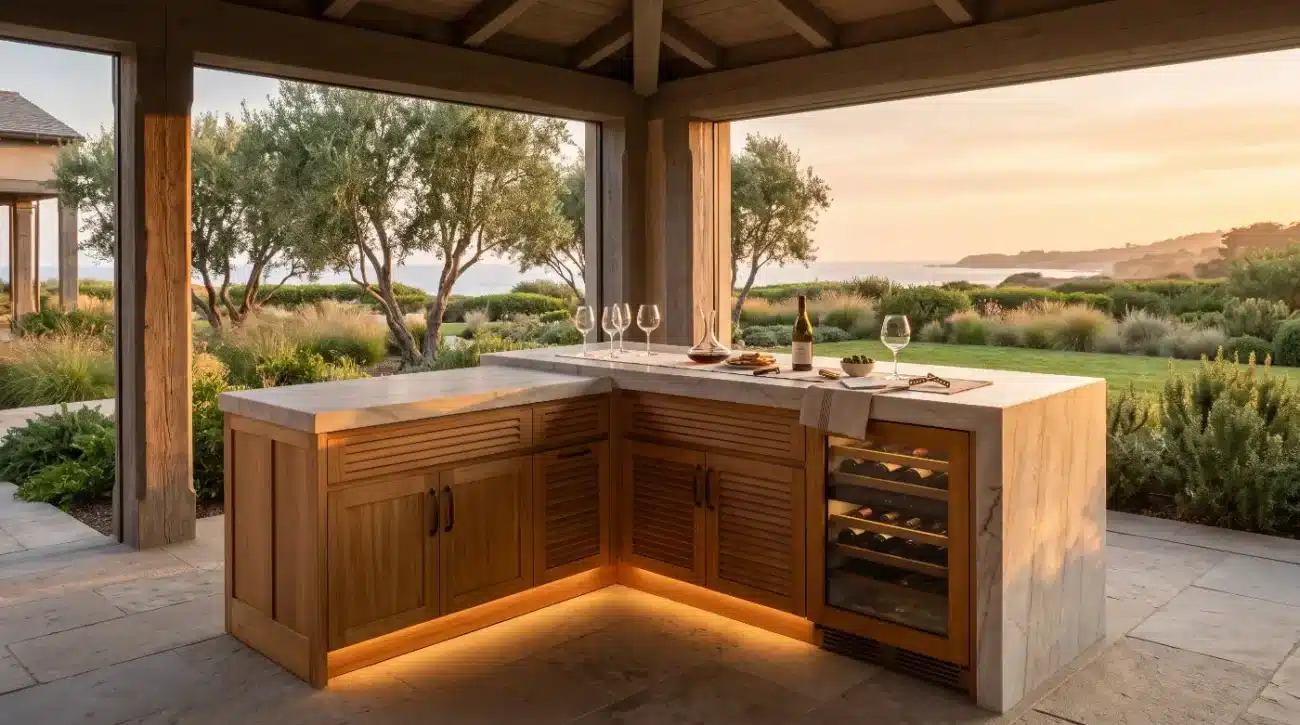
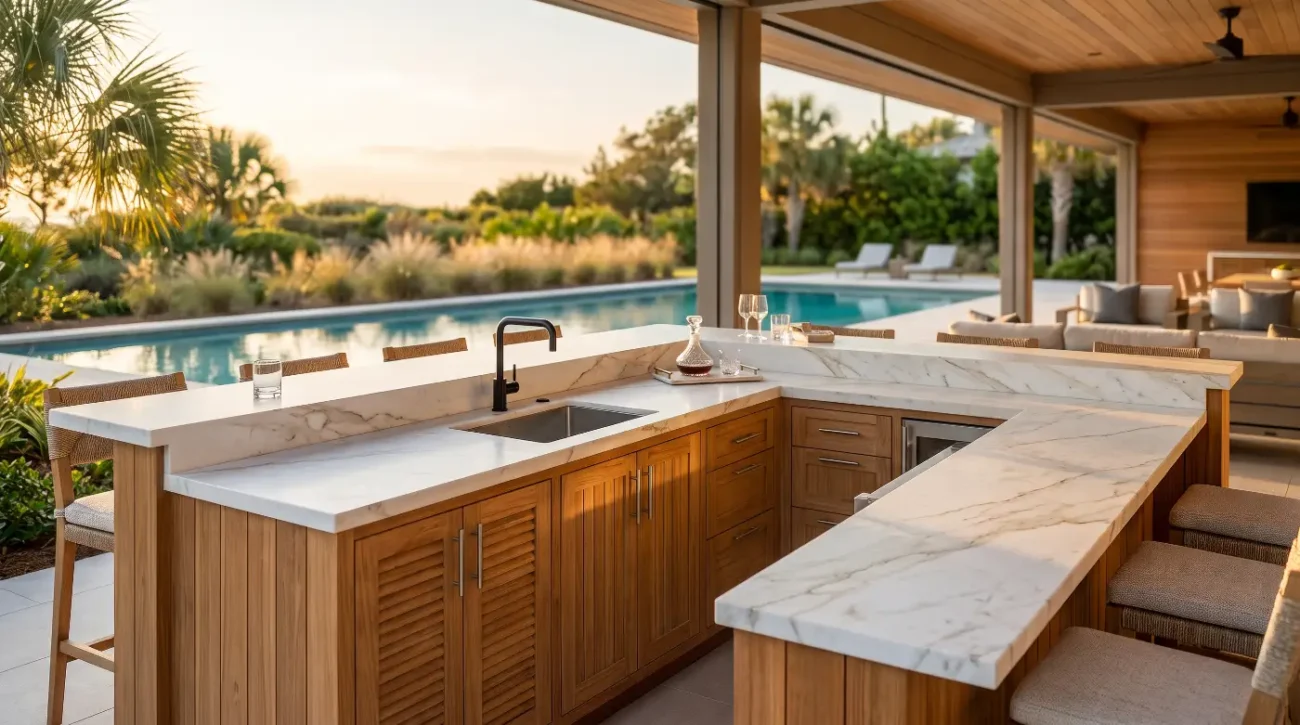
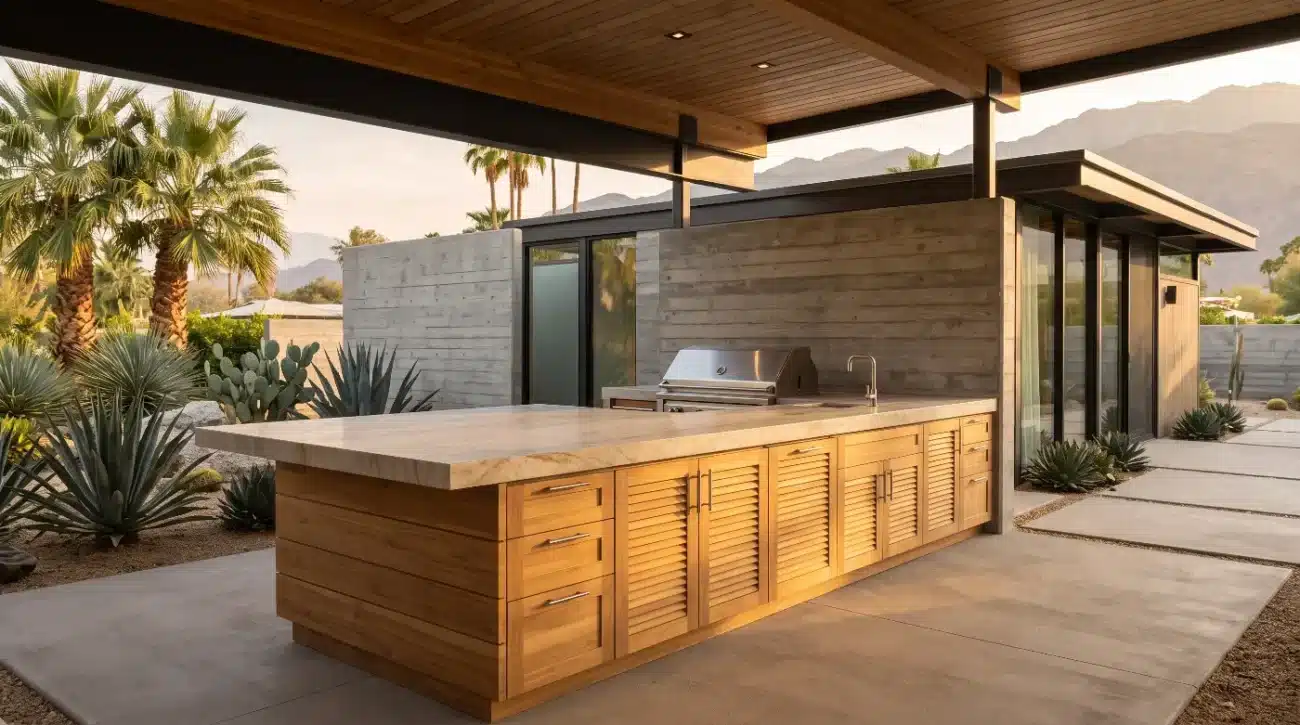
Designing outdoor kitchens for luxury residential estates requires precise trade specifications. Outdoor cabinetry faces constant thermal cycling, direct sun exposure, and shifting ambient humidity. When custom builders in Palm Springs or Miami install outdoor storage, standard interior cabinetry techniques fail quickly. Pacific Teak Millworks engineers solid teak base cabinets and island inserts using traditional woodworking joinery combined with marine-grade hardware to resist structural fatigue.
The foundational integrity of an island insert depends on its joinery. Continuous wood movement caused by seasonal moisture changes will tear apart glued butt joints or simple pocket screws. Precision mortise-and-tenon joints allow individual wood components to expand and contract along natural grain lines without compromising structural stability. Furthermore, inserting drawer fronts into dark masonry requires exact perimeter reveal gaps—typically three-sixteenths of an inch—to accommodate maximum cross-grain expansion during rainy seasons without binding against adjacent stone walls.
Hardware specification is equally critical in harsh outdoor settings. Standard 304-grade stainless steel hinges and drawer glides will show pitting and rust spots when exposed to ocean salt spray in coastal regions like Malibu or the Hamptons. Specifying 316 marine-grade stainless steel hardware prevents hardware binding and unsightly rust stains on raw teak face-frames. Soft-close full-extension drawer glides must be completely sealed to keep out dust, garden debris, and irrigation overspray.
-
Mortise-and-Tenon Framing: Interlocking wood joinery distributes mechanical loads evenly across the cabinet chassis, preventing joint separation over decades of heavy use.
-
316 Stainless Hardware: Marine-grade alloys offer superior resistance to pitting and crevice corrosion caused by salt fog, fertilizer overspray, and harsh cleaning agents.
-
Thermal Expansion Reveals: Calculated clearance gaps around door frames allow natural wood movement across extreme seasonal temperature swings.
-
Passive Cabinet Ventilation: Integrated rear and side air gaps allow heat to escape from gas grill cutouts, keeping internal storage cool and dry.
Critical joinery and hardware components are engineered to work together under harsh environmental conditions:
-
Mortise and Tenon Joinery: Precision-milled wood tenons slide into tightly fitted mortise cutouts with grain orientation running parallel to structural stress lines, preventing joint breakdown under changing temperatures.
-
Marine Glide Systems: Ball-bearing drawer runners made from solid 316 stainless steel are fully enclosed with weather-sealed dampeners, protecting internal mechanisms from salt air, sand, and ambient grit.
-
Expansion Reveals: Surrounding every drop-in face-frame is a calculated clearance slot that allows solid wood paneling to shift naturally without pressing against hard stone edges.
A common engineering risk in outdoor island construction is poor thermal management around built-in gas grills and side burners. Dark stone surfaces retain solar heat, and high-BTU gas appliances transfer intense thermal energy into adjacent masonry structures. If a solid teak drawer unit is sealed tightly into a stone cutout without passive ventilation, heat can accumulate inside the cabinet. Over time, this extreme heat dries out the wood fibers, causing micro-checking, finish degradation, or ignition hazards. Installing subtle, louvred rear vents within the stone cavity releases trapped heat and keeps internal temperatures stable.
Landscape architects, interior specifiers, and custom builders must coordinate these technical details early during the design phase. Integrating CAD files into structural plans ensures trade professionals account for utility rough-ins, stone counter overhangs, and sub-frame levelling systems before on-site construction begins. Trade partners can review procurement options on our About Us page or consult the official Warranty Documentation (PDF) for detailed specifications.
Careful material selection must extend to surrounding elements within the garden. For instance, placing island inserts near automatic irrigation lines can expose raw timber to hard mineral deposits. Positioning drip lines away from cabinet faces prevents mineral buildup while maintaining proper soil moisture for adjacent bamboo groves. Design professionals can examine client agreement terms in the Cancellation & Return Policy (PDF) or address installation questions through the Frequently Asked Questions (PDF).
Blending soft, warm timber with cold structural stone allows landscape specifiers to craft tranquil outdoor cooking spaces that resist environmental wear. Solid teak island inserts bring natural harmony, reliable performance, and time-tested joinery to modern garden architecture.
External References
Key Takeaways
-
Elemental Material Balance: Combining solid Grade-A teak island inserts with dark basalt or slate masonry softens outdoor kitchens while maintaining a minimalist Zen design.
-
Natural Hydrophobic Protection: Teak heartwood features high rubber and silica content, making it resistant to moisture rot, mold, and humidity near water features and dense plant life.
-
Precision Mechanical Specifications: Specifying 316 marine-grade stainless steel hardware and traditional mortise-and-tenon joinery prevents structural warping and salt-air corrosion.
-
Strategic Thermal Management: Passive cabinet ventilation and three-sixteenths-inch perimeter expansion reveals protect teak inserts from solar heat and wood movement.
-
Patina Flexibility: Homeowners can maintain a golden-brown luster with periodic oiling or allow the timber to weather naturally into an elegant silver-grey patina.
Landscape architects, custom builders, and luxury homeowners seeking to elevate outdoor culinary spaces with solid teak island inserts are invited to collaborate directly with our design team. To request material samples, download specifier CAD libraries, or discuss trade project quotes, please contact us today through our Trade Inquiries Page.