Quick Read Block
-
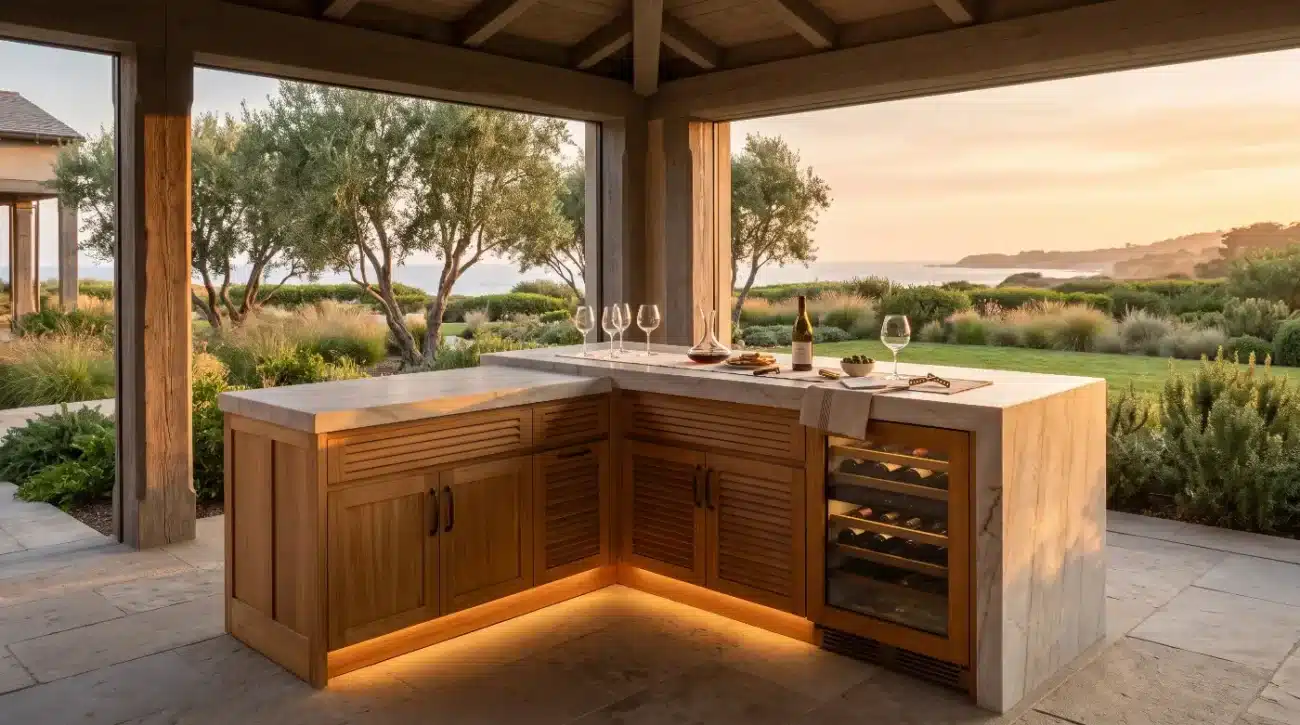
Bridging The Gap: Transforming coastal design boards into constructible plans demands early alignment between landscape architects and master cabinetmakers.
-
Marine Material Physics: True Grade A Tectona grandis utilizes natural silica and tectonic oils to neutralize airborne salt, moisture, and ultraviolet degradation.
-
Structural Engineering Priorities: Solid joinery, insulated appliance jackets, and marine grade 316 stainless steel hardware sustain heavy stone loads through extreme microclimates.
-
Finishing Trajectories: Deliberate specification balances the warm golden luster of periodic nourishment against an effortless, structural silver grey coastal patina.
A catastrophic failure pattern consistently emerges along the bluff tops of Malibu and the barrier islands of Florida. An outdoor kitchen, specified with standard exterior cabinetry or coated veneers, fails completely within eighteen months of installation. Salt air penetrates microscopic hairline fissures in exterior polyurethane coatings, moisture pools beneath the surface film, and internal rot destroys the substrate long before the exterior reveals its collapse.
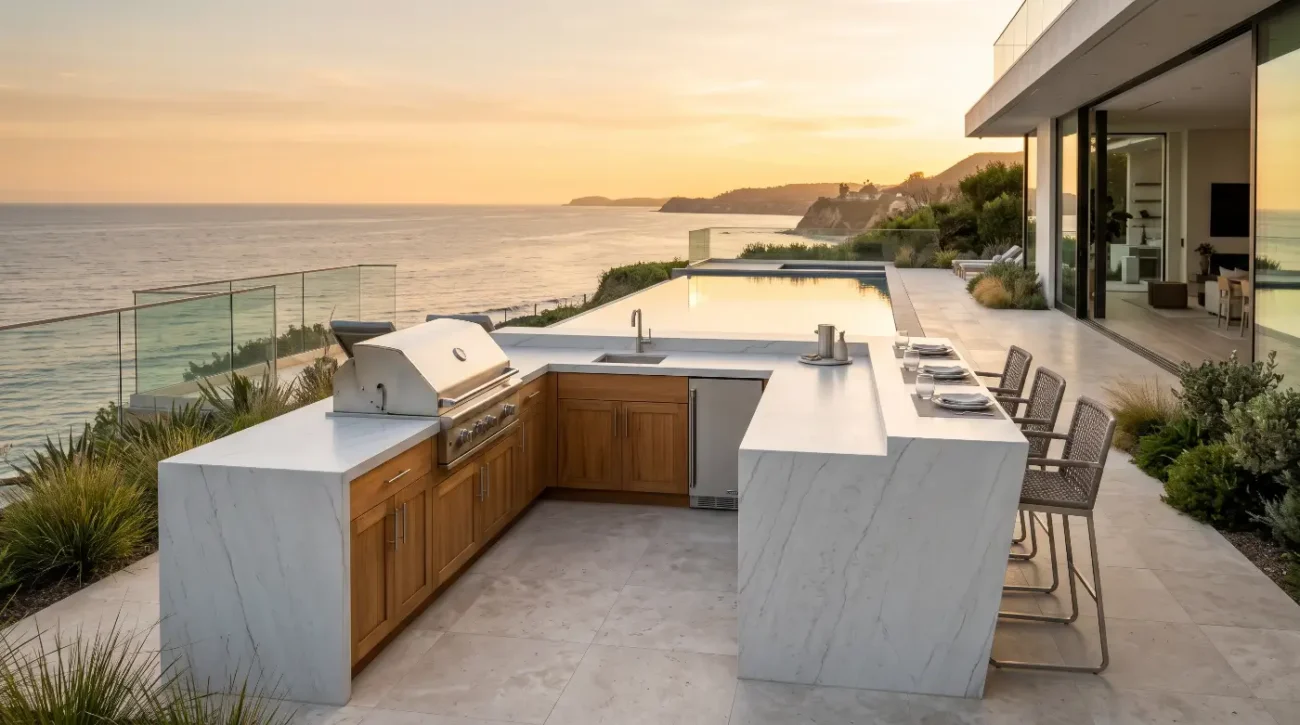
High net worth homeowners invest millions in panoramic ocean views, collecting curated imagery of seamless outdoor living spaces, only to discover that standard luxury details disintegrate under genuine marine exposure. When a client brings a mood board featuring rich, furniture grade wood to their landscape architect, an immediate specification friction point arises. The homeowner seeks the warm, organic tactility of indoor cabinetry, while the architect recognizes the punishing reality of oceanfront microclimates, including salt spray, intense ultraviolet radiation, shifting wind shears, and ambient moisture.
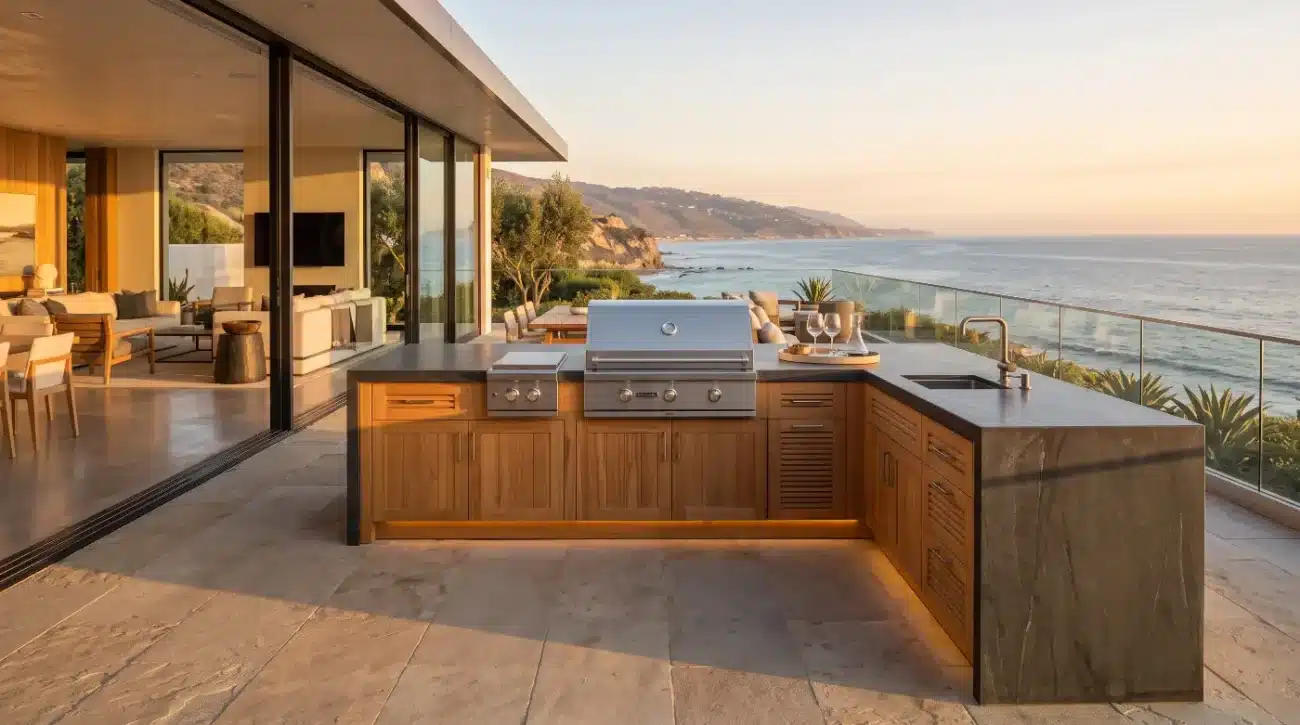
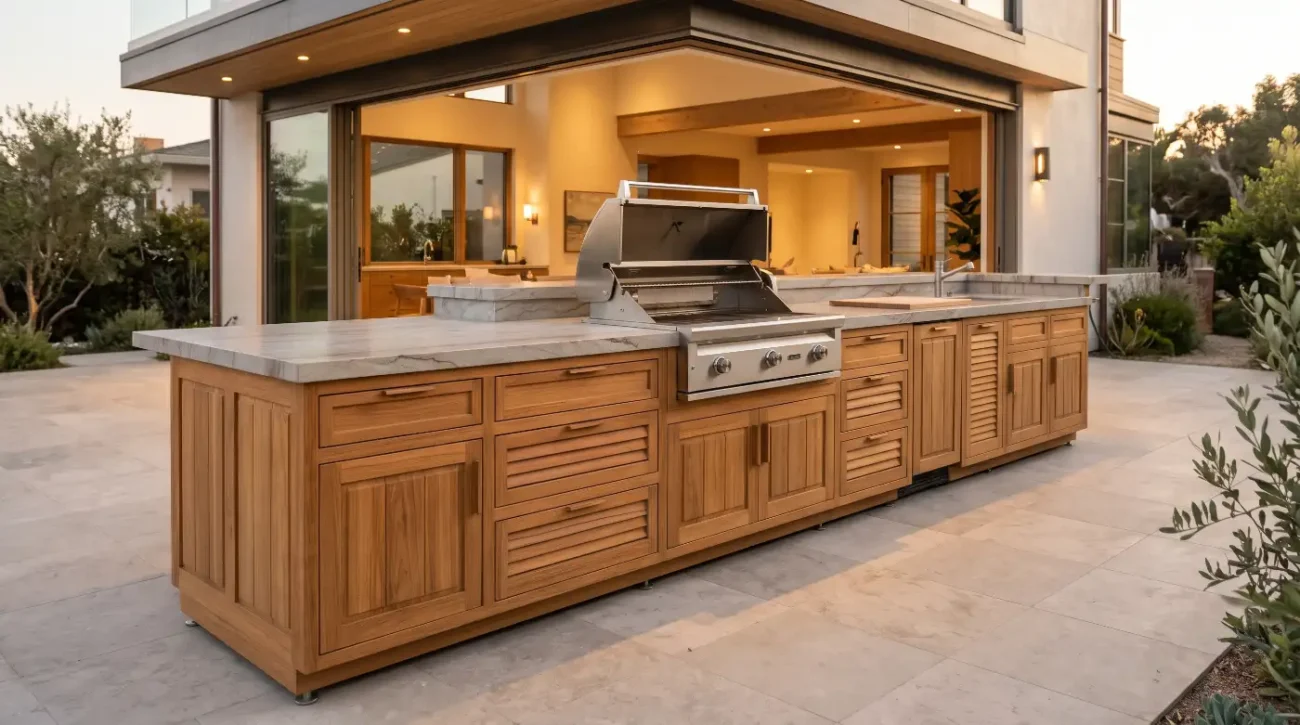
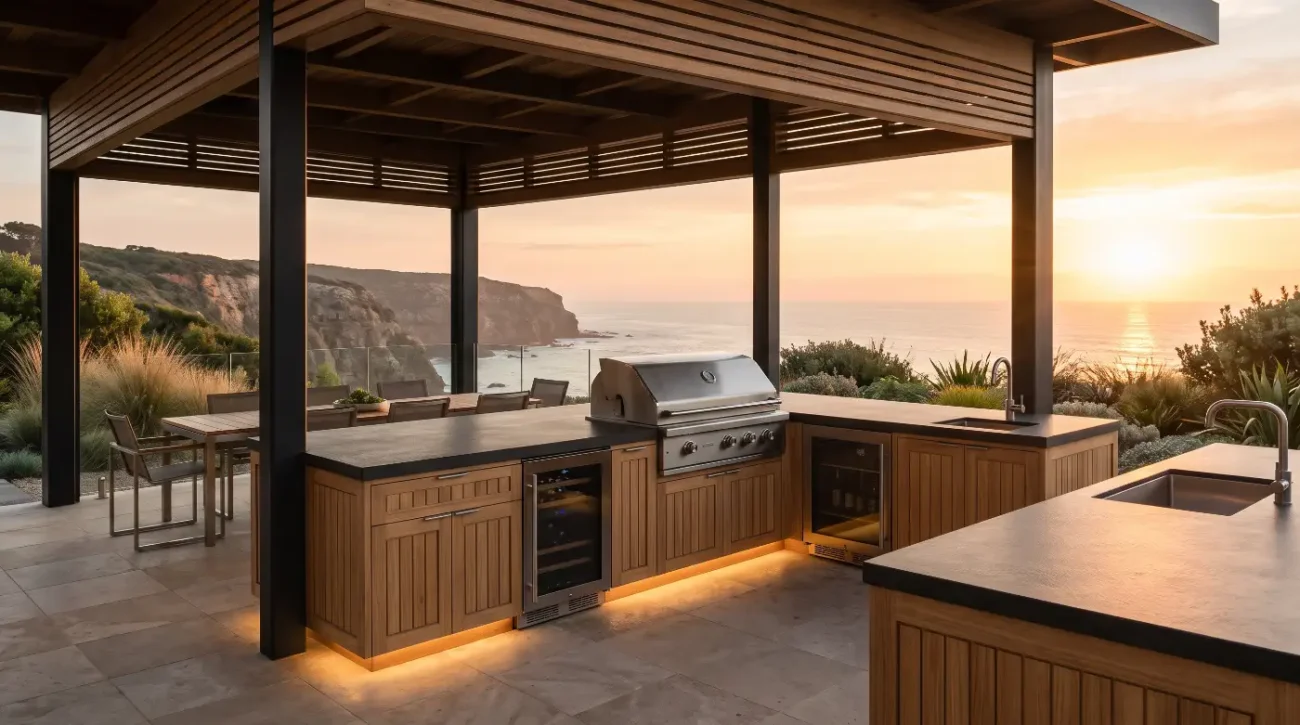
Bridging this gap requires abandoning conventional residential cabinetry methods entirely. Successful coastal outdoor kitchen planning requires the technical rigor of superyacht naval architecture merged with site specific exterior space planning. By integrating custom, solid teak millwork into initial landscape concepts, design professionals preserve the architectural integrity of the estate while providing an enduring barrier against relentless environmental decay.
Section Overview
-
Salt air microclimates degrade film finishes, making solid Grade A teak essential for structural longevity.
-
Early collaboration between homeowners and landscape architects bridges aesthetic vision with precise computer aided design engineering.
-
Heavy stone surfaces require precision load distribution, traditional mortise and tenon joints, and 316 stainless steel hardware.
-
Natural weathering to a silver patina offers zero structural compromise under high ultraviolet radiation and intense ocean dampness.
How Coastal Outdoor Kitchen Planning Unites Architectural Vision and Marine Joinery
Landscape architects planning coastal outdoor kitchens integrate high density Grade A teak millwork with marine grade 316 stainless hardware to withstand salt fog corrosion, high ultraviolet exposure, and dynamic structural loads.By synchronizing client inspiration with structural framing tolerances, ventilation geometry, and natural timber movement, specifiers achieve year round culinary performance without material delamination, rust, or joint failure.
When coastal homeowners transition their vision from online ideation to the design studio, landscape architects must reconcile open air aspirations with physical realities. A homeowner envisioning an expansive island on an exposed bluff overlooking Newport Beach or the Hamptons often focuses primarily on social flow and aesthetic balance. The landscape architect, however, must calculate prevailing wind patterns, structural cantilever loads, natural shade trajectories, and utility trenching through sand or bedrock.
Specifying cabinetry within these environments represents the highest point of risk in the exterior living plan. Synthetic composites and marine polymers warp or become brittle under intense sun exposure, while standard stainless steel cabinets become uncomfortably hot to the touch and develop surface tea staining if exposed to ocean fog. Solid timber provides an ideal tactile balance, but standard hardwoods cup, check, and split within short seasonal cycles.
The solution begins with anatomical timber selection. According to empirical wood research from the USDA Forest Products Laboratory at https://www.fpl.fs.usda.gov genuine plantation grown teak, known botanically as Tectona grandis, exhibits unmatched dimensional stability due to its low shrinkage coefficient and dense natural composition.True heartwood, classified as Grade A teak, contains dense concentrations of natural rubber resins and silica. These internal deposits act as a structural waterproofing agent, repelling airborne salt brine and atmospheric dampness from within the cellular structure itself.
Architectural Specification Checkpoints
-
Microclimate Mapping: Assess salt spray paths, prevailing ocean breezes, and solar zenith angles before fixing the island orientation.
-
Utility Integration: Map isolated sub slab raceways for liquid propane, natural gas, low voltage illumination, and dedicated high amperage kitchen appliances.
-
Joinery Selection: Specify deep mortise and tenon structural framing to absorb seasonal dimensional shifting without popping glue lines.
-
Airflow Tolerances: Engineer minimum two inch continuous ventilation cavities behind custom base cabinets to evacuate trapped ambient humidity.
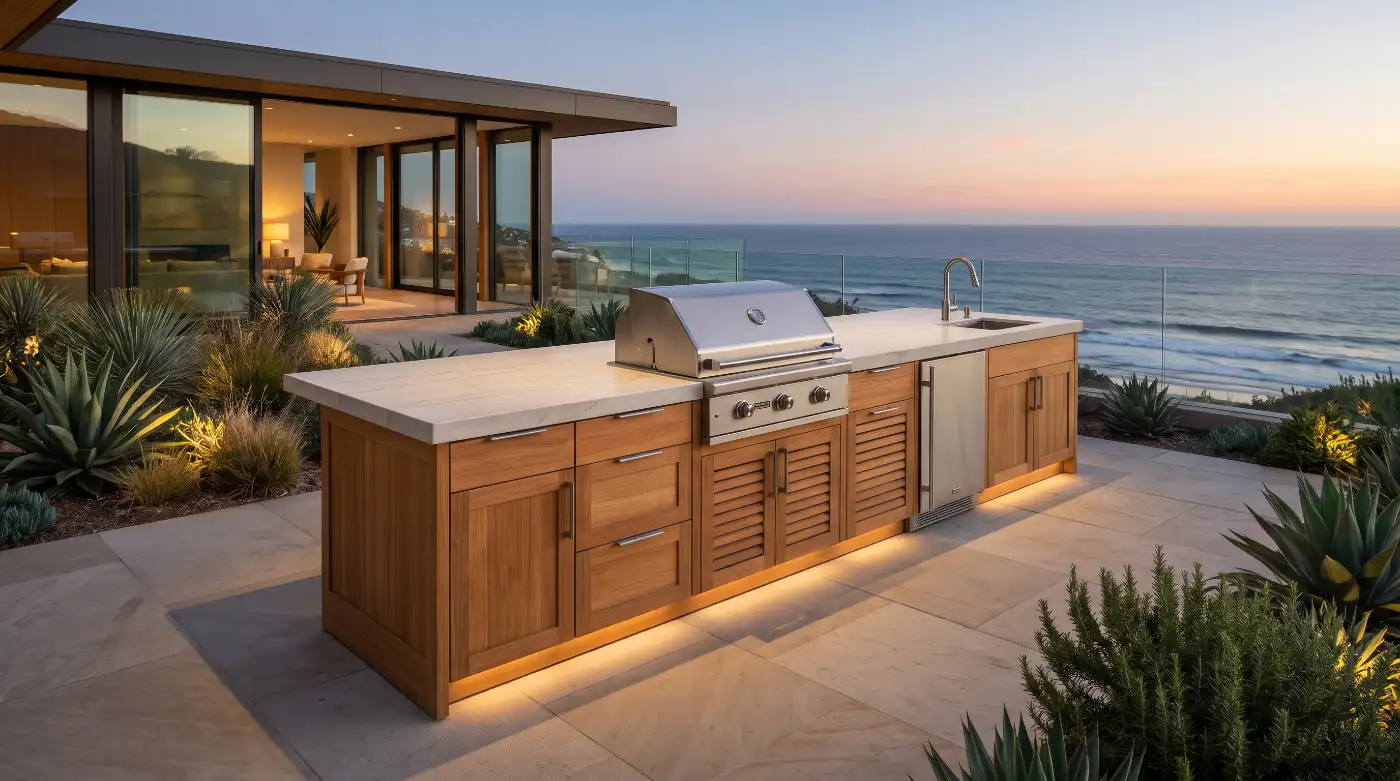
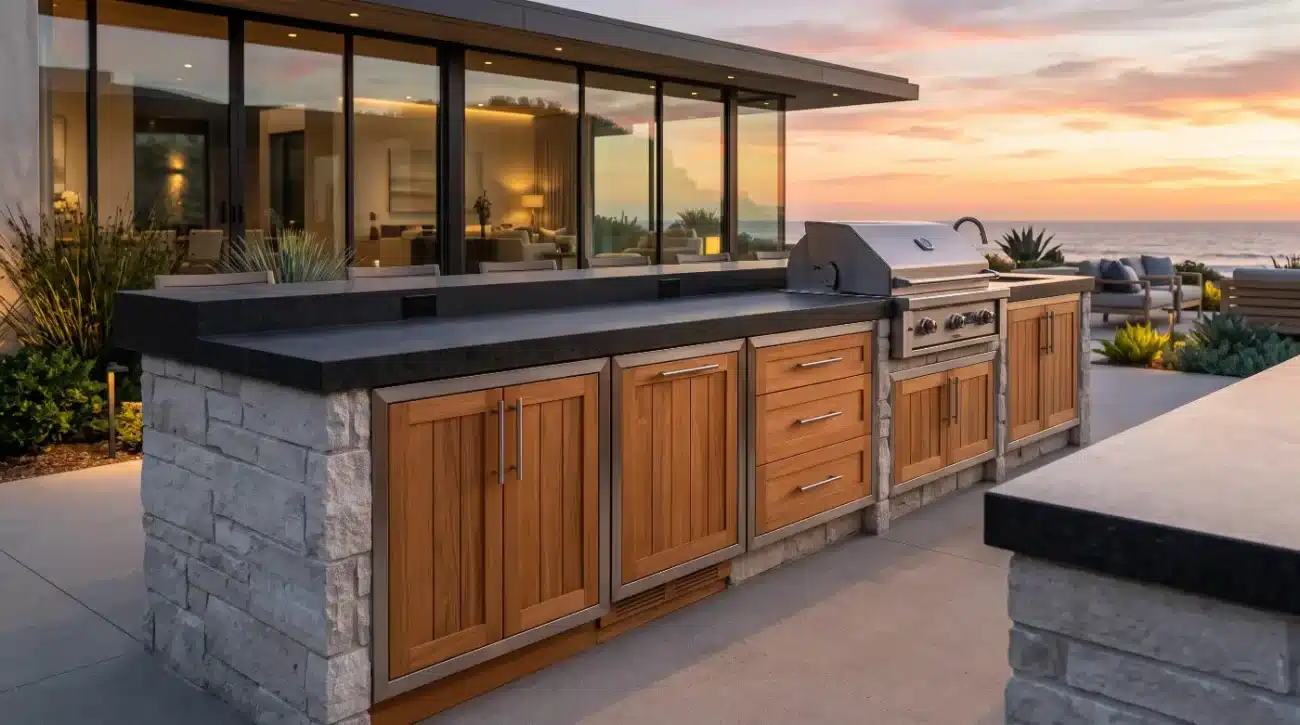
To create an outdoor kitchen that endures for generations, design teams must integrate these material realities into the spatial master plan. Selecting the proper millwork foundation, such as precision crafted teak base cabinet collections at https://www.pacificteakmillworks.com/base-cabinets-collections/ provides the landscape architect with a predictable,dimensionally stable building block. This structural predictability allows the project team to specify wide spans,integrate heavy plumbing fixtures, and maintain clean sightlines that mirror the main residence.
Counterintuitively, the greatest threat to exterior cabinetry in oceanfront settings is often the protective finish chosen by well meaning builders. Applying heavy sealers, clear varnishes, or polyurethane films to outdoor teak traps natural moisture inside the wood cells. When sun hits a sealed cabinet, that trapped moisture heats, expands, and blows the synthetic film off the surface, creating an unsightly, peeling mess that invites fungal spores into the wood grain.
Master craftsmen understand that coastal wood must breathe. Leaving high silica teak unfinished, or conditioning it exclusively with specialized deep penetrating oils, allows the wood to adapt naturally to barometric swings. This brings clients to an essential aesthetic decision early in the design phase: whether to maintain the warm, golden brown hue through scheduled seasonal oil applications, or allow the wood to oxidize gracefully into an elegant, silvery grey driftwood patina.
Embracing the natural silver patina is not an admission of neglect; it is an architectural statement celebrated across coastal estates from Carmel to Palm Beach. The oxidation process affects only the outermost micromillimeters of the wood, creating a protective patina while the dense core remains saturated with natural oils. This provides complete structural protection with negligible maintenance, allowing the outdoor kitchen to blend harmoniously into the surrounding coastal landscape.
Common Coastal Detailing Oversights
-
Unvented Cavities: Encasing gas cooking appliances in millwork without lower and upper draft vents risks volatile gas accumulation.
-
Ferrous Fasteners: Using standard 304 grade screws or galvanized fasteners accelerates galvanic corrosion,bleeding dark oxide streaks across natural wood.
-
Flush Toe Kicks: Running solid wood flat against oceanfront flagstone pulls pooling rainwater directly up into end grain fibers via capillary action.
-
Sealed Appliance Collars: Installing heavy searing burners directly against timber face frames without an insulated jacket creates severe heat stress fractures.
Bridging the gap between the homeowner dream and the completed installation demands meticulous communication across every phase of the project. When landscape designers translate conceptual renderings into construction drawings, coordinating exact cabinet elevations and appliance cutouts avoids expensive site modifications. Exploring the full scope of a specialized outdoor cabinetry resource center at the Pacific Teak Millworks Blog provides access to technical cut sheets, helping specifiers avoid field errors and maintain tight installation schedules.
Advanced Structural Engineering, Appliance Clearances, and Marine Grade Hardware Solutions
Engineering a functional coastal outdoor kitchen requires rigorous structural calculations for dense stone worktops,strict adherence to appliance heat clearances, and the exclusive use of 316 marine grade hardware. Mortise and tenon joinery and concealed leveling systems isolate the millwork from pooling surface water while supporting immense countertop loads without sagging, racking, or catastrophic seasonal joint failure.
The structural requirements of exterior cabinetry exceed those of interior millwork by an order of magnitude. In contemporary landscape projects, architects regularly specify substantial concrete slabs, three centimeter quartzite, or thick granite counters. A twenty foot coastal kitchen island can easily support thousands of pounds of stone, high output cooking equipment, and refrigerated storage units.
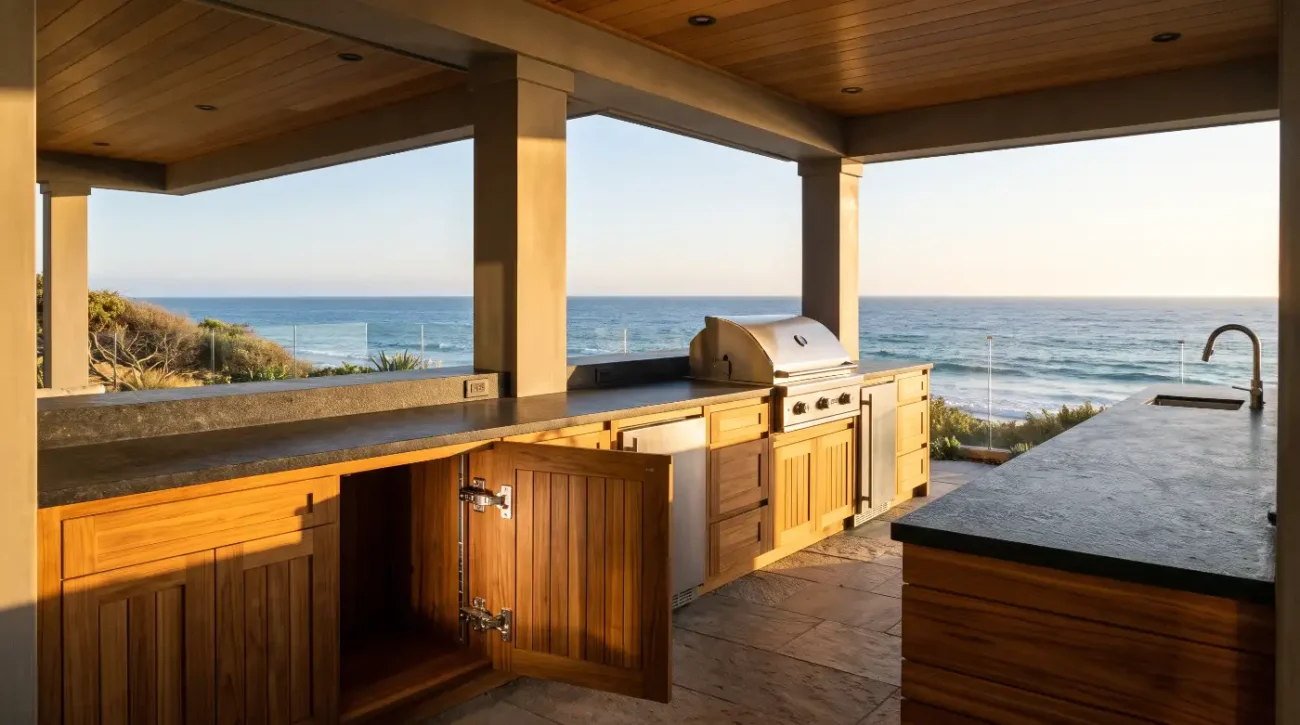
Standard modular cabinets, framed with light gauge metals or thin sheet goods, buckle or rack under these loads when exposed to ocean winds and shifting foundation substrates. Solid teak cabinets engineered with traditional mortise and tenon joinery solve this structural challenge. By joining vertical stiles and horizontal rails through tight, interlocking wood connections bonded with waterproof marine adhesives, the cabinet carcass becomes a rigid, unified unibody frame capable of carrying heavy, continuous vertical loads.
Primary Hardware and Structural Specifications
-
Component Integrity: Utilize passivated 316 marine grade stainless steel for every concealed hinge, slide, and assembly screw to prevent pitting.
-
Gasket Systems: Incorporate compression sealed ethylene propylene diene monomer perimeter weather stripping to keep wind blown sand, moisture, and pests out of interior storage compartments.
-
Adjustable Support: Anchor cabinets using heavy duty, marine polymer leveling legs to keep timber end grain elevated above wet patio surfaces.
-
Drawer Slide Capacity: Require full extension, heavy duty soft close slides rated for a minimum of one hundred pounds dynamic exterior working capacity.
Specifying hardware for coastal installations requires careful attention to metallurgy. Standard exterior hardware relies on 304 grade stainless steel, which performs well in sheltered inland applications but quickly succumbs to pitting and rust bleeding in oceanfront air. The American Society of Landscape Architects at https://www.asla.org routinely highlights the importance of specifying high performance materials in harsh coastal microclimates.
In these environments, hardware must be upgraded to 316 marine grade stainless steel. The addition of two to three percent molybdenum in 316 stainless provides superior resistance to chlorides, protecting hinges and drawer glides from the pitting and seizing caused by ocean spray. Pairing these alloys with soft close mechanisms preserves an effortless, luxury feel, preventing heavy solid wood cabinet doors from slamming in gusting onshore winds.
Appliance integration introduces another critical engineering variable regarding thermal dynamics. Searing stations,direct fired pizza ovens, and high output gas grills generate extreme temperatures that can warp or char surrounding structural elements if installed improperly. When integrating high heat cooking appliances into custom woodwork,specifiers must incorporate insulated safety jackets and maintain clear, manufacturer approved air gaps.
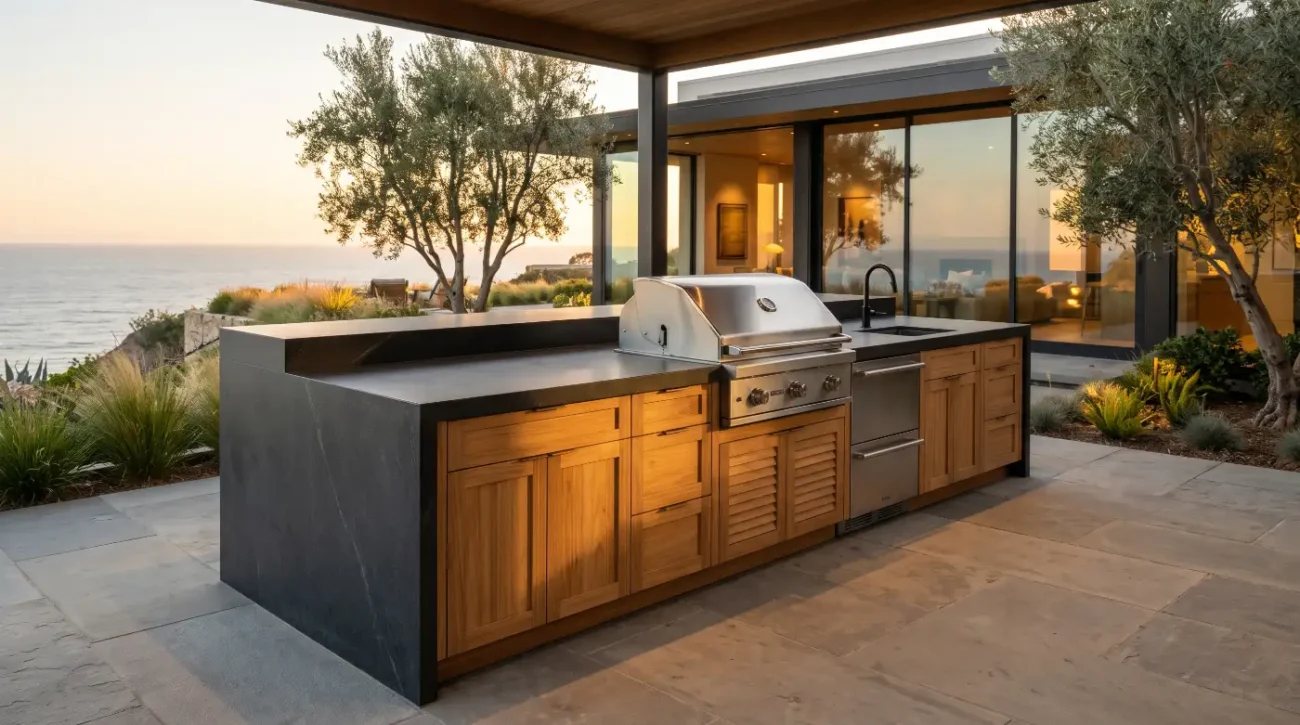
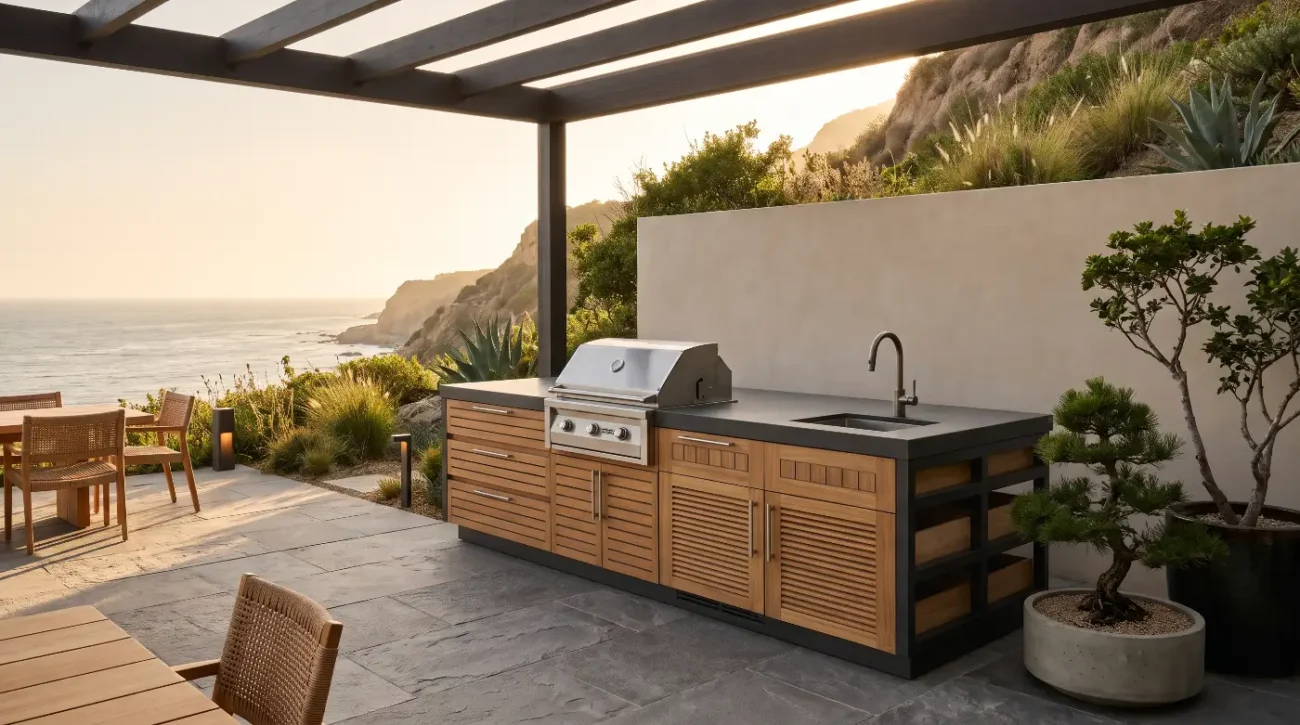
For projects incorporating existing masonry islands, utilizing pre assembled custom island inserts at https://www.pacificteakmillworks.com/island-inserts/ provides clean mechanical integration. This method allows builders to slide pre aligned doors, drawer banks, and storage cavities directly into prepared stone openings. The approach eliminates field framing inconsistencies, guarantees proper ventilation, and protects the timber from extreme heat buildup.
Critical Appliance Tolerances
-
Firebox Isolation: Maintain a mandatory self ventilating buffer, or specify an insulated liner jacket, whenever installing high output grills into wood millwork.
-
Countertop Overhangs: Provide a minimum one and a half inch drip edge forward of the face frame to divert rainwater and spills away from cabinet drawer fronts.
-
Gas Venting Minimums: Detail a minimum of twenty square inches of passive ventilation per gas zone, split between high and low points to prevent gas pooling.
-
Utility Clearances: Maintain at least three inches of clear space behind all built in undercounter refrigeration units to prevent compressor burnout.
An overlooked risk in coastal installations is capillary moisture wicking from the patio surface. Pavers, poured concrete, and natural flagstone absorb and hold groundwater, slowly releasing moisture upward after rainstorms or scheduled washdowns. If timber cabinet sides sit directly on damp stone, the open end grain draws water upward,causing localized discoloration and biological decay.
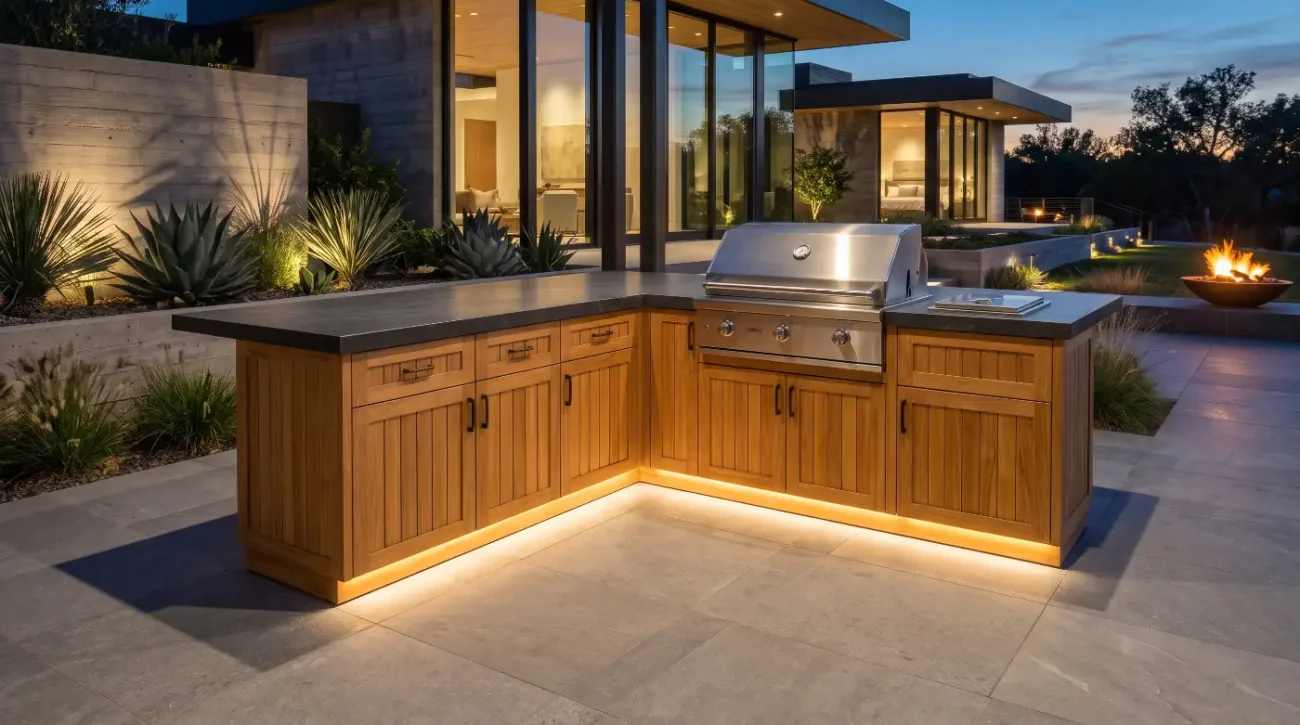
Master woodworkers prevent this issue by elevating the structural face frames on heavy duty, height adjustable marine polymer or passivated stainless leveling feet. Recessing these supports behind a floating, ventilated teak toe kick protects the structural joinery from pooling water while promoting continuous cross ventilation beneath the cabinetry.This detail keeps the cabinet bases dry, maintains plumb door reveals across uneven stone finishes, and ensures the installation performs reliably through years of oceanfront exposure.
External References
-
USDA Forest Products Laboratory Wood Handbook available at https://www.fpl.fs.usda.gov
-
American Society of Landscape Architects available at https://www.asla.org
Key Takeaways
-
Material Selection: Grade A plantation teak contains high natural rubber and silica levels, protecting against salt air, coastal moisture, and sun damage from within.
-
Hardware Requirements: Passivated 316 marine grade stainless steel is required for oceanfront installations to prevent pitting, seize ups, and tea staining caused by chlorides.
-
Thermal Protection: High output grills set into wood millwork require insulated jackets, dedicated airflow paths,and calibrated clearances to prevent heat damage.
-
Moisture Protection: Elevating base cabinets on adjustable marine leveling legs stops capillary moisture absorption from wet stone patios.
-
Finishing Options: Leaving outdoor teak to weather naturally produces a protective silver grey patina that resists coastal decay with minimal ongoing maintenance.
Achieving seamless integration between structural landscape architecture and fine coastal cabinetry requires early technical coordination. Whether you are a homeowner curating an oceanfront sanctuary or a landscape architect drafting construction documents, our master woodworkers are available to assist with computer aided design cut sheets, material samples, and custom joinery detailing. Connect with Darin and the architectural team at Pacific Teak Millworks Trade Inquiries via https://www.pacificteakmillworks.com/contact-us/ or call nine four nine, three six five, six five one three to schedule a dedicated design consultation for your upcoming residential project.