Executive Summary:
-
Superior Dimensional Equilibrium: While species like ipe boast extreme raw fiber density, Grade-A teak delivers the lowest volumetric shrinkage rate among exterior timbers, preventing joinery shear under severe weather cycling.
-
Natural Silica and Resin Chemistry: Teak contains internal rubber and extractive silica deposits that create an impervious barrier against saltwater, rot, and moisture ingress without requiring toxic chemical topcoats.
-
Critical Workability and Precision: Unlike excessively brittle ironwoods that crack under screw loads or split wide miter joints, teak maintains structural elasticity essential for marine-grade face frames and soft-close hardware integration.
-
Distinct Patina Pathways: Specifiers face a strategic choice between preserving teak radiant golden honey hues through routine oil replenishment or permitting an organic oxidation shift into a maintenance-free silvery-grey patina.
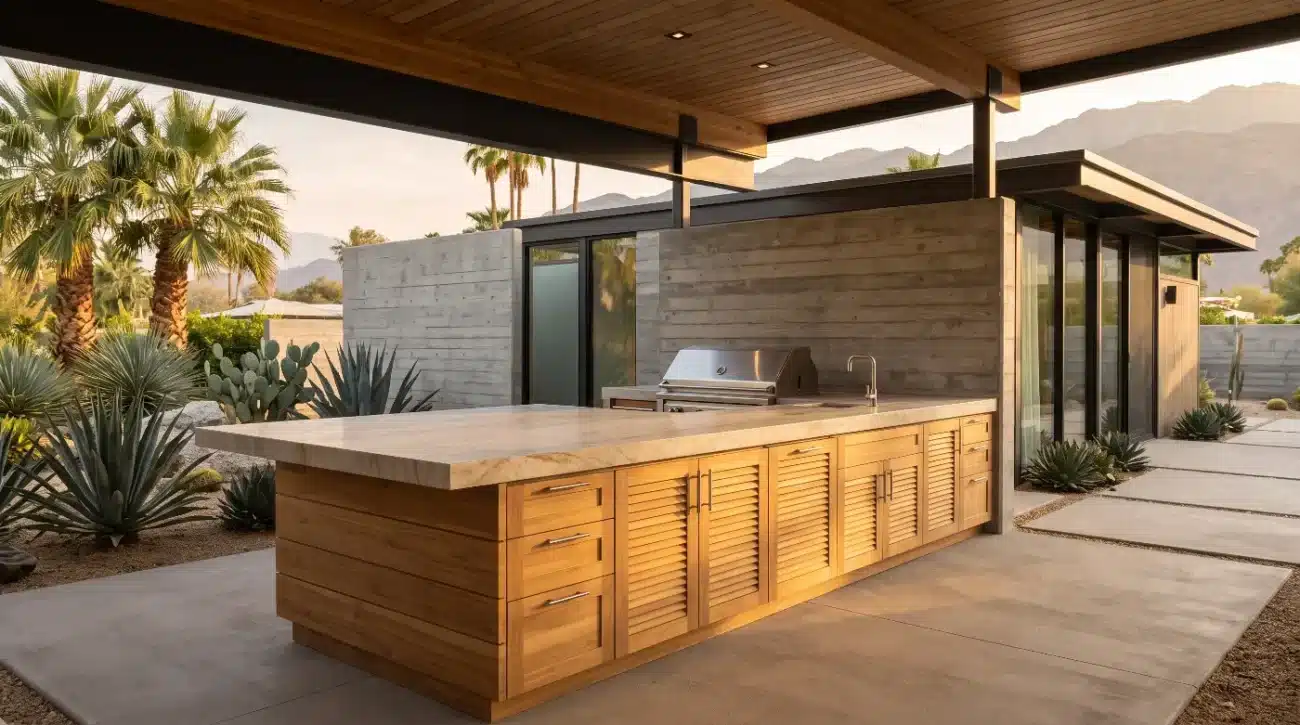
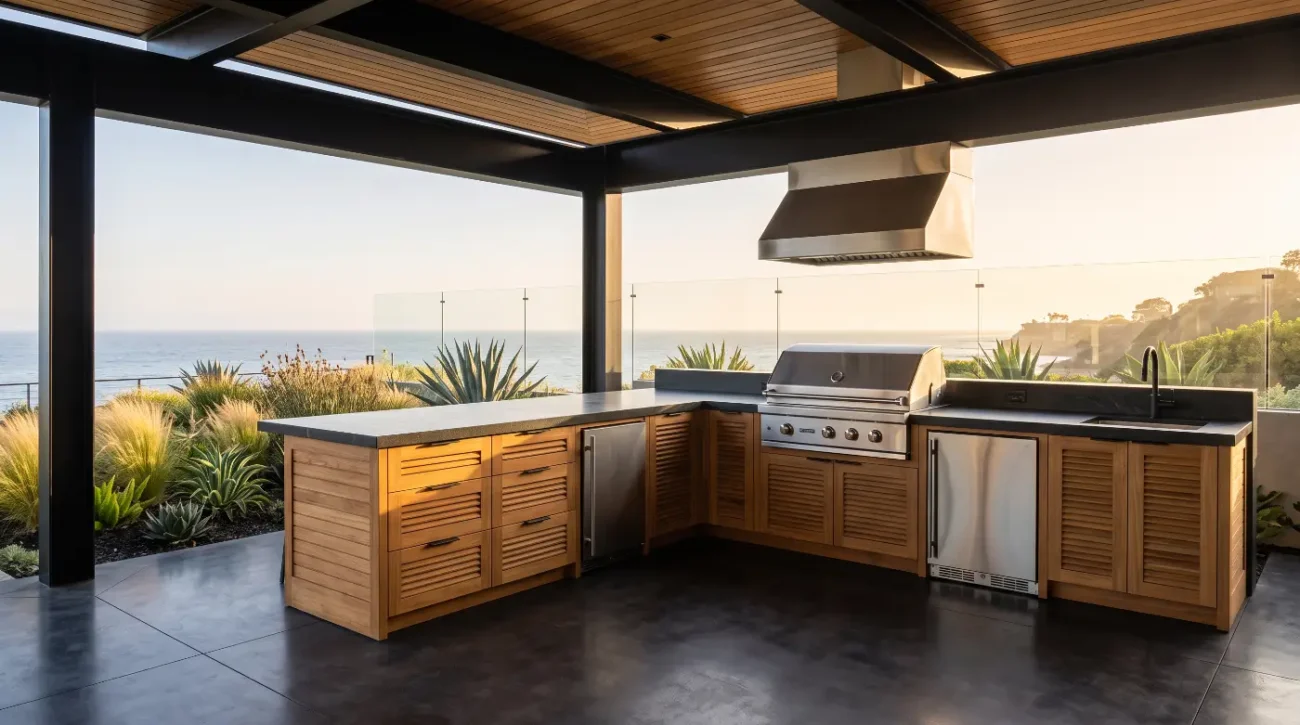
A multimillion-dollar waterfront residence along the cliffs of Malibu recently experienced a catastrophic exterior casework failure that caught both the general contractor and the architectural specifier off guard. The outdoor cooking pavilion featured an expansive, four-inch-thick cast concrete countertop resting atop custom exterior casework crafted from an ultra-dense ironwood commonly celebrated for its sheer mechanical hardness.
Within eighteen months of relentless exposure to marine fog, intense coastal ultraviolet radiation, and oscillating ambient humidity, the cabinet face-frames began tearing themselves apart. Miters split along the corners, drawer fronts bowed outward, and the precision soft-close drawer tracks seized as the cabinet carcasses twisted off square. The specifier had selected the hardwood based purely on extreme raw hardness ratings, mistakenly assuming that higher surface density automatically translates to superior performance in exterior cabinetry.
That failure illustrates an expensive reality understood by veteran master woodworkers: high density without dimensional stability is a liability in architectural millwork. Exterior cabinetry is not decking. Deck boards sit loosely across open joists with wide drainage gaps where wood fibers can swell and shrink uninhibited. Outdoor cabinetry, by contrast, relies on tight tolerances, mortise-and-tenon joinery, mechanical fasteners, and calibrated clearances for marine-grade appliances. When comparing teak vs ipe vs mahogany outdoor cabinetry, assessing true performance requires evaluating the balance between tensile strength, moisture expansion coefficients, natural resin chemistry, and tool workability.
How Does Teak Tensile Strength and Dimensional Stability Compare to Ipe, Cedar, and Mahogany?
Teak demonstrates a moderate tensile strength alongside an exceptional volumetric shrinkage rate of only 5.3 percent,outperforming the mechanical stability of ipe, western red cedar, and genuine mahogany in high-end exterior millwork.While species like ipe deliver immense raw hardness, teak internal rubber and natural silica content preserve joinery integrity, preventing the severe racking, checking, and hardware shear common in competing hardwoods exposed to cyclical weather extremes.
When evaluating timber for outdoor architectural cabinetry, structural engineers examine both tensile strength parallel to the grain and the modulus of elasticity. Tensile strength measures the wood capacity to withstand pulling forces without snapping, while the modulus of elasticity indicates how much the fiber deflects under load before returning to its original geometry. Data compiled by the USDA Forest Products Laboratory highlights significant mechanical divergences across premier exterior woods:
-
Ipe (Handroanthus spp.): Boasts an astonishing bending strength (modulus of rupture) exceeding 25,000 pounds per square inch and a crushing strength parallel to the grain of over 13,000 pounds per square inch. Its volumetric shrinkage rate, however, sits at approximately 13.0 percent, making it highly prone to dimensional movement across fluctuating seasons.
-
Genuine Mahogany (Swietenia macrophylla): Delivers a tensile and bending strength of roughly 11,500 pounds per square inch, paired with a volumetric shrinkage rate of approximately 7.7 percent. While stable, it lacks the dense natural resin volume required to resist continuous, unsealed exposure to coastal rain.
-
Western Red Cedar (Thuja界面 plicata): Offers a modest bending strength of roughly 7,500 pounds per square inch and a remarkably low volumetric shrinkage rate of around 6.8 percent. Its low surface density, rated at just 350 pounds on the Janka hardness scale, leaves it highly vulnerable to impact damage and structural fastener failure.
-
Grade-A Teak (Tectona grandis): Strikes a balanced modulus of rupture around 14,000 pounds per square inch and a modest volumetric shrinkage rate of just 5.3 percent. Supported by a Janka hardness of approximately 1,070 to 1,155 pounds, teak yields the ideal balance of surface durability and structural elasticity.
The counterintuitive insight that separates master millworkers from novice builders is that raw hardness often acts as a structural disadvantage in precision cabinetry. Ipe is extraordinarily heavy and dense, with an air-dried density approaching 69 pounds per cubic foot. When atmospheric moisture penetrates ipe, its high volumetric expansion exerts tremendous hydrostatic pressure across joinery assemblies. If a cabinet box is rigidly fastened with screws, the sheer force of the expanding wood fibers can snap high-tensile stainless steel fasteners or fracture the wood around mortise-and-tenon pockets.
Teak behaves fundamentally differently. Harvested from sustainably managed forests certified by organizations such as the Forest Stewardship Council, old-growth and mature plantation Grade-A teak contains unique cellular deposits of natural rubber (caoutchouc) and silica. These extractive oils saturate the interior heartwood cells, effectively sealing the cell walls against moisture absorption from within.
Consequently, when relative humidity spikes during a humid Austin summer or a damp Pacific Northwest winter, teak absorbs water at a fraction of the rate seen in unstabilized hardwoods. Its tangential shrinkage rate (shrinkage perpendicular to the growth rings) is roughly 2.5 percent, while its radial shrinkage rate (parallel to the growth rings) is an astonishingly low 1.5 percent. This nearly one-to-one ratio between radial and tangential movement is what cabinetmakers describe as dimensional equilibrium. The wood expands and contracts uniformly, ensuring that precision drawer reveals and inset cabinet doors retain their exact three-sixteenths-inch gaps without binding or sticking.
A common post-installation mistake occurs when exterior contractors build cabinetry boxes using cedar or soft mahogany to save cabinet carcass weight beneath heavy granite, quartzite, or concrete countertops. While a five-foot section of western red cedar easily supports vertical downward loads when designed correctly, its low fiber density presents poor screw-holding capacity. Over time, the repeated mechanical stress of heavy drawers filled with cast-iron cookware causes mounting screws to wallow out of the cabinet side panels.
Teak dense, interwoven grain holds mechanical threads with uncompromising tenacity. Specifiers integrating our base cabinets collection gain the confidence that structural cabinet carcasses will comfortably carry three-centimeter and four-centimeter natural stone slabs without settling, warping, or requiring auxiliary steel sub-frames.
Workability during the milling and joinery phase represents another critical metric for exterior architects. Ipe dense,interlocking grain and mineral concentrations dull carbide cutting tools within minutes, making the fabrication of precision face-frames, nested cabinet boxes, and tight mortise-and-tenon joints exceptionally difficult. Because ipe resists glue penetration and tears out during cross-grain shaping, cabinetmakers cannot achieve the crisp, refined lines expected in modern luxury residences.
Teak mills cleanly, accepting mortise-and-tenon architecture that remains water-tight over decades of service. Its natural oils do require specialized solvent wiping prior to structural adhesive application, but once bound, the assembly forms an impenetrable monolithic unit.
How Do Teak Natural Resins and Finishing Pathways Outperform Other Hardwoods in Extreme Climates?
Teak natural resins and insoluble silica deposits provide inherent resistance to ultraviolet radiation, saltwater oxidation,and fungal decay, eliminating the need for synthetic film coatings that crack and peel. Property owners can strategically choose between preserving the radiant, golden-brown hue of freshly milled timber through periodic oil treatments or permitting natural photo-oxidation to transform the millwork into a velvety, silvery-grey patina without compromising structural strength.
In coastal settings like Newport Beach, Palm Springs, and Miami, exterior finishes fail rapidly under intense ultraviolet radiation and airborne chlorides. When amateur builders apply clear polyurethane, marine spar varnish, or synthetic sealers over exterior cabinetry, they unintentionally trigger a destructive cycle of internal moisture entrapment.
-
Film-Forming Sealers: Trap ambient humidity beneath the cured synthetic coating when temperature swings create micro-cracks in the finish. Sunlight heats the trapped water vapor, blistering the film from the inside out and turning it milky white while cultivating black fungal rot within the wood fibers.
-
Chemical Leaching: Strips unprotected species like mahogany of their natural tannins over time, leading to bleached, dry fibers that crack and splinter under severe sun exposure.
-
Teak Inherent Resin Chemistry: Protects the timber from cellular degradation because the natural oils are non-drying and naturally hydrophobic. Water beads directly on unfinished raw teak, leaving the interior heartwood completely unaffected by relentless salt spray.
For high-net-worth homeowners working alongside an exterior designer or landscape architect, aesthetic specification involves an intentional lifestyle choice: maintaining the original golden glow versus allowing the wood to age naturally into a classic silver patina.
A strategic tradeoff governs this design decision. Maintaining the deep, honey-toned appearance of new teak requires routine washing and the application of specialized breathable penetrating oils once or twice per year, depending on exposure. This maintenance protocol replenishes the superficial oils depleted by ultraviolet radiation, ensuring the wood fibers retain their warm visual character. Homeowners can consult our teak care and maintenance guide for step-by-step restoration and preservation standards.
Conversely, allowing the wood to transition into a muted silver patina represents a remarkably low-maintenance path that aligns seamlessly with transitional and biophilic architecture. Over six to twelve months, solar ultraviolet rays oxidize the natural pigments in the uppermost cellular layers of the timber, turning the surface a refined platinum grey.Crucially, this oxidation is purely cosmetic; it does not penetrate deeper than a fraction of a millimeter. The underlying structural core remains as resilient, dense, and naturally oiled as the day it was machined in our shop.
An overlooked environmental risk in outdoor kitchen design involves thermal entrapment and unventilated high-heat appliances. Gas grills, charcoal cookers, and high-output burners produce extreme radiant temperatures that can bake the structural framing of adjacent cabinetry. When specifiers install lesser woods, continuous heat exposure dries out the lumber, increasing the risk of structural combustion or severe warping.
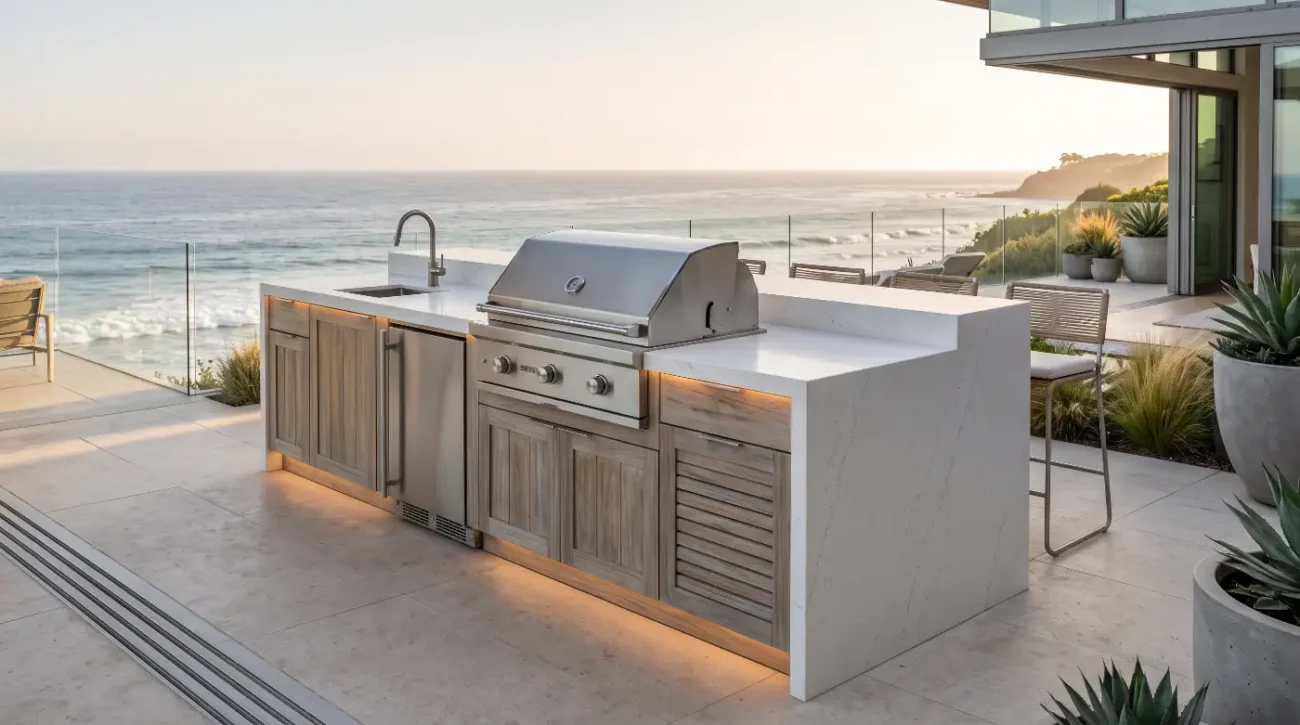
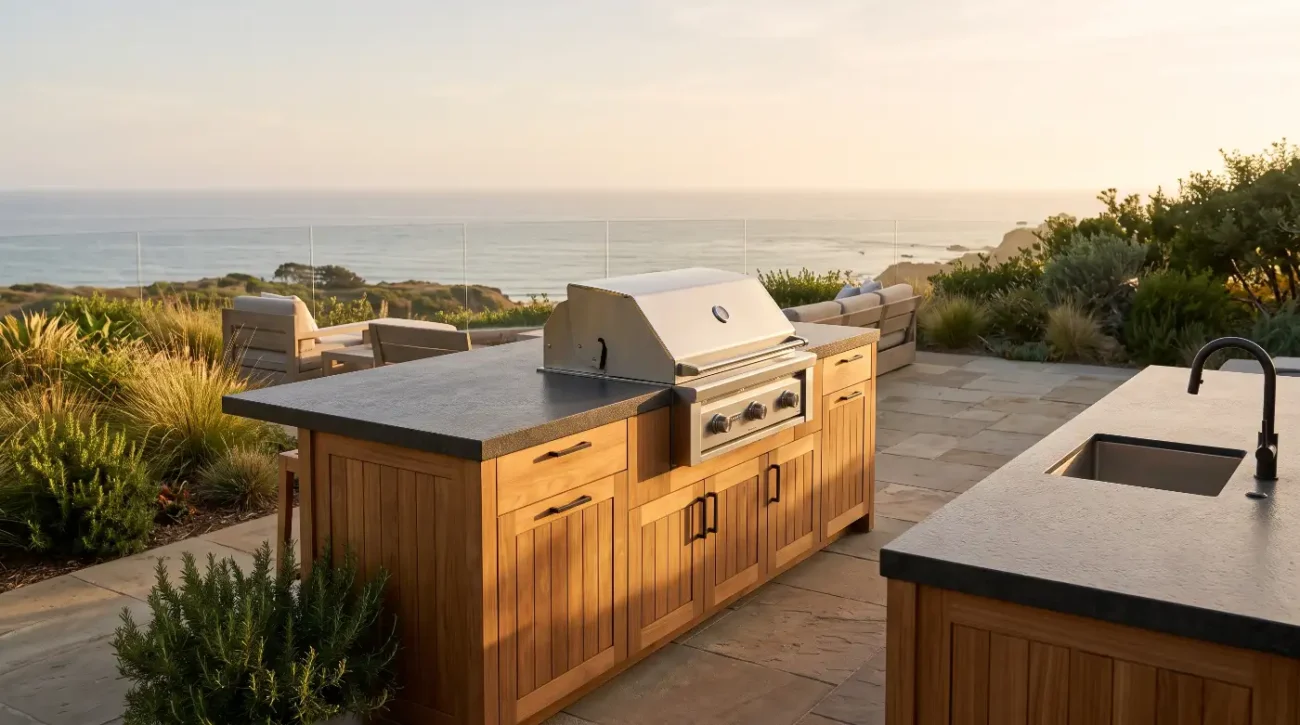
Every outdoor cooking island must integrate dedicated thermal insulation jackets and rear ventilation pathways to channel convection currents away from the cabinetry framework. Designers frequently incorporate our specialized island inserts collection to maintain required manufacturer clearances while preserving unbroken aesthetic continuity across the kitchen perimeter.
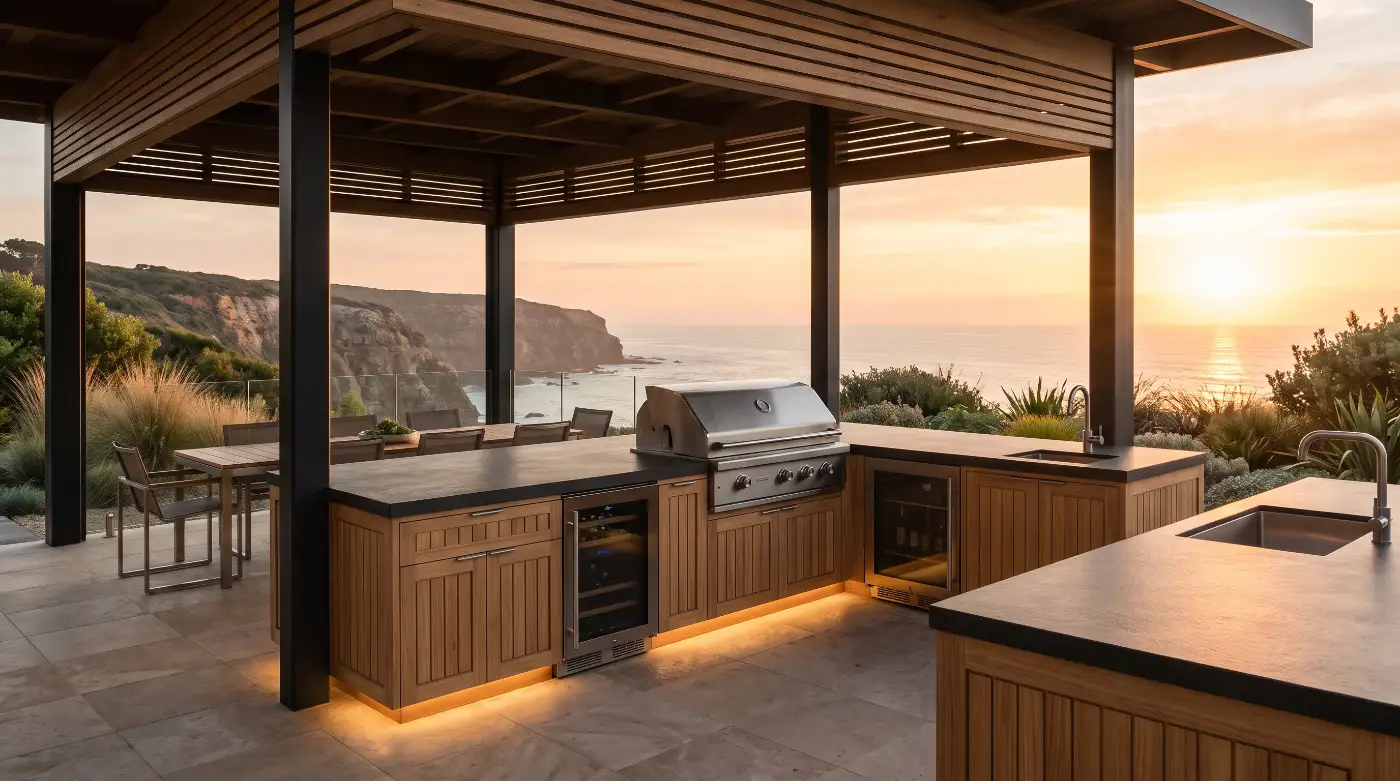
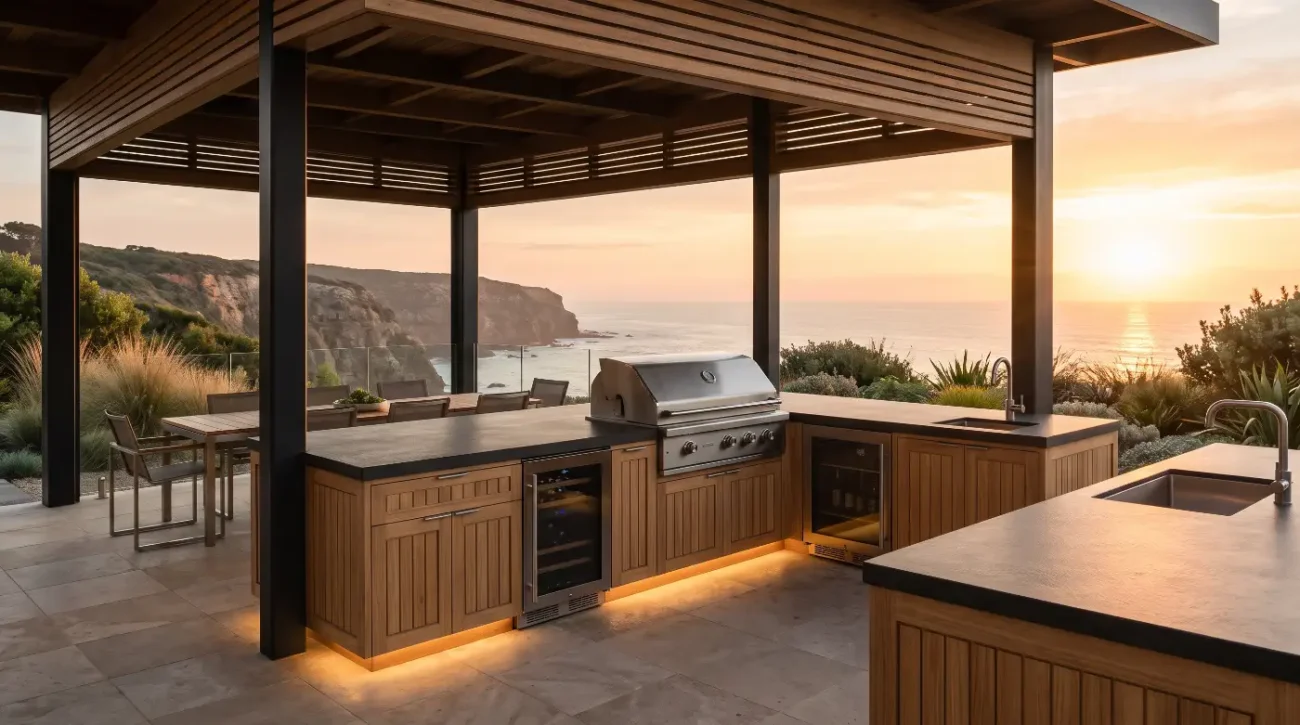
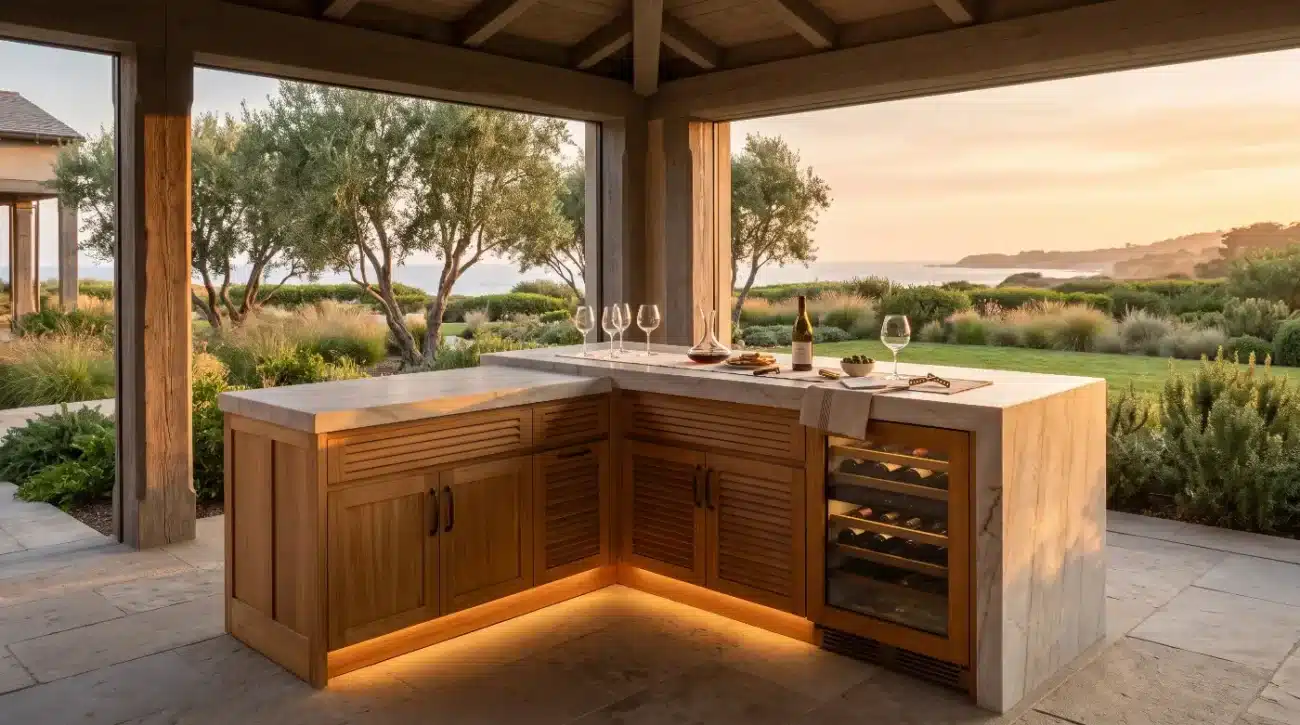
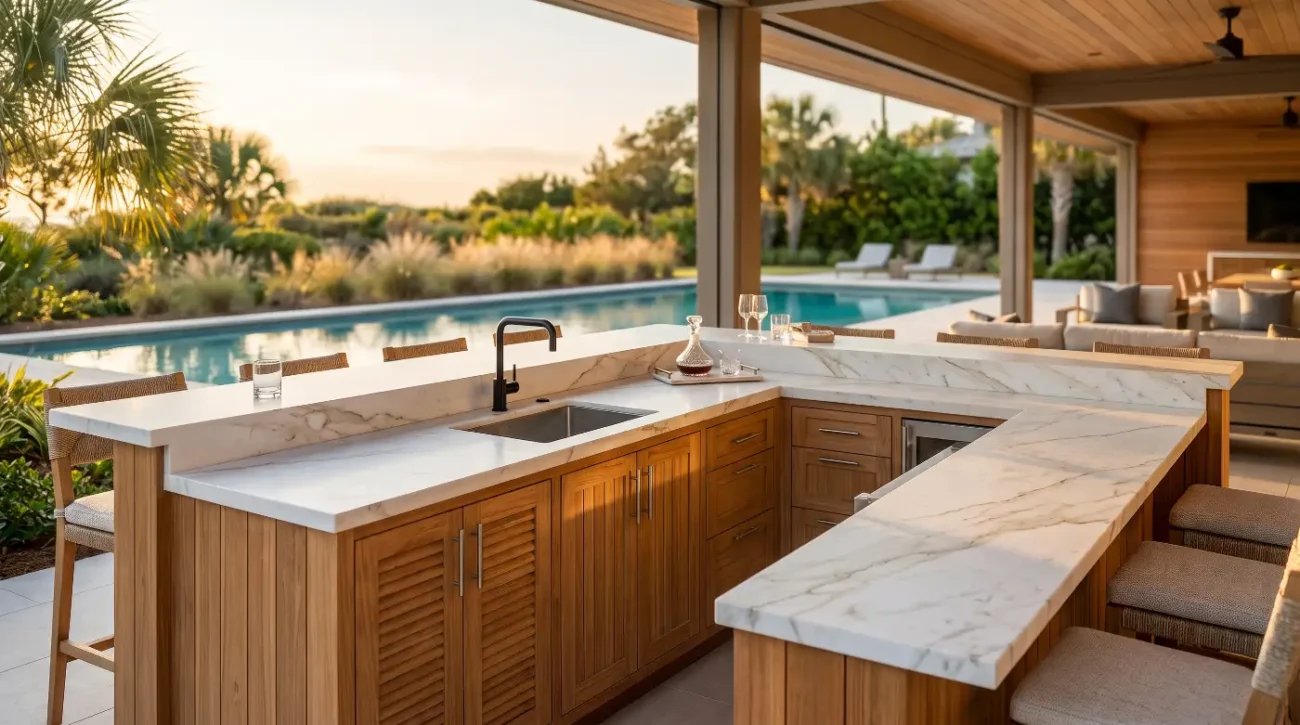
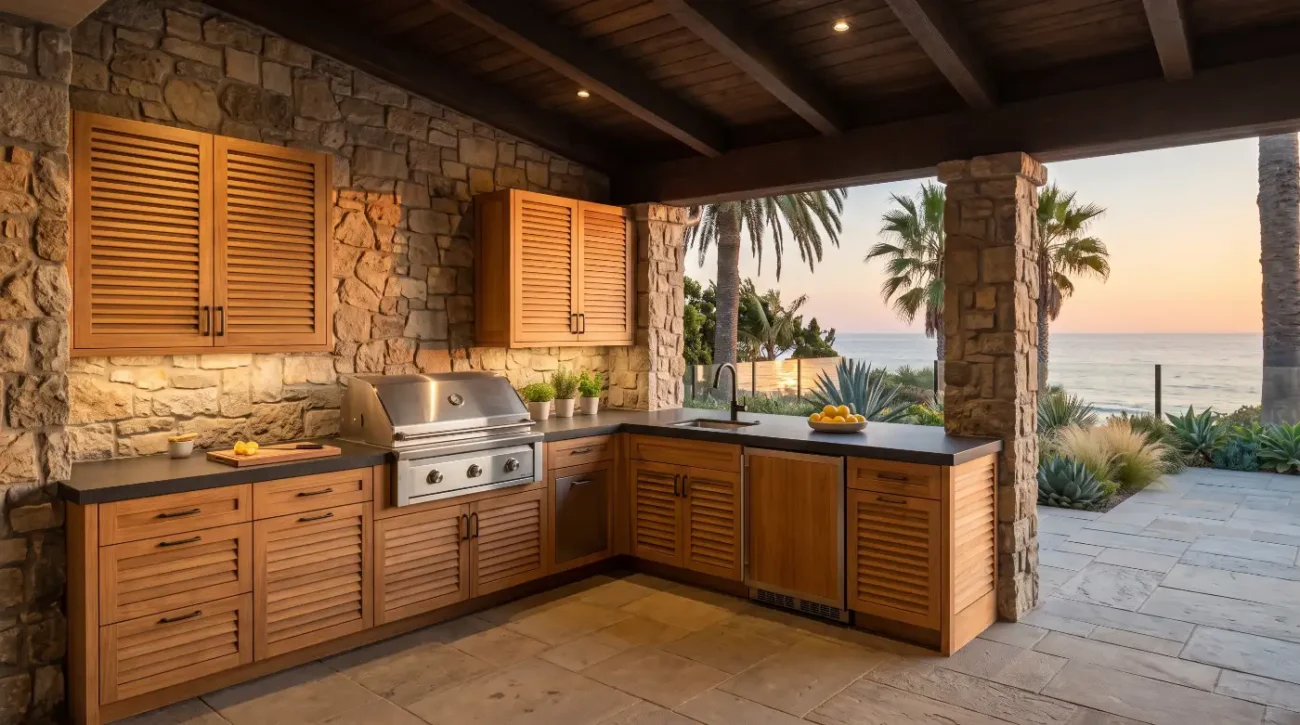
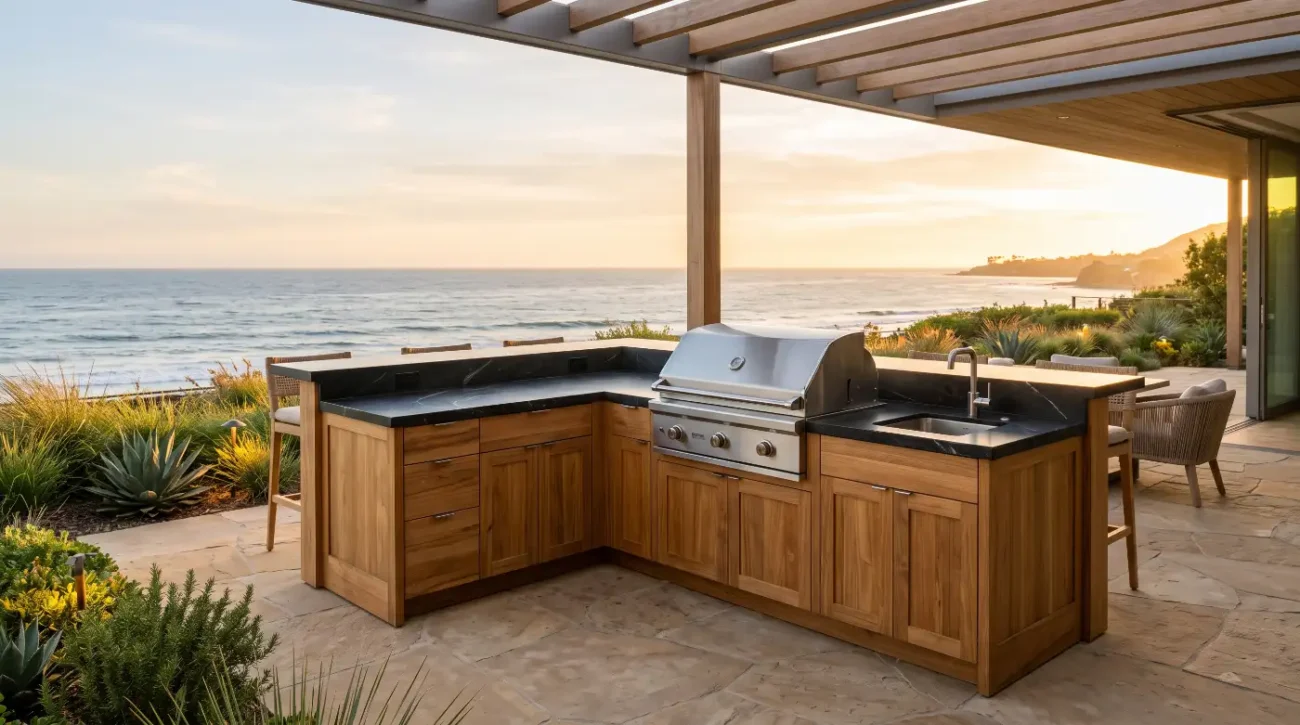
Architectural specifiers also encounter hidden design opportunities by creating intentional material contrast. The warm organic grain of solid teak cabinetry pairs strikingly with dark textured granite, honed soapstone, or matte-finish sintered porcelain slabs. In covered loggias and pool pavilions, pairing low base units with matching suspended elements from our wall cabinets collection establishes visual rhythm and functional vertical storage that standard stone-and-stucco islands cannot provide.
To bridge the gap between high-end architectural concepts and flawless job-site execution, our master craftsmen collaborate directly with the trade community. Designers and architects can explore comprehensive material documentation, structural span ratings, and fabrication specifications through our online resource center. This trade integration ensures that every millwork module arrives fully prepared for seamless on-site mechanical assembly.
All exterior cabinetry must be paired with genuine 316 marine-grade stainless steel hardware. Lesser hardware grades,including common 304 stainless steel, suffer from micro-pitting and rust staining when exposed to coastal salt air or swimming pool chloramines. Grade-A teak framing and 316 stainless steel soft-close hardware create an unyielding barrier against atmospheric degradation, guaranteeing that doors swing smoothly and drawers glide silently across decades of outdoor gatherings.
External References:
Key Takeaways:
-
Volumetric Equilibrium Trumps Raw Hardness: High surface hardness without low volumetric shrinkage causes joint failure; teak exceptional 5.3 percent volumetric shrinkage prevents structural checking, warping, and fastener shear.
-
Natural Silica and Rubber Protection: Teak contains cellular deposits of caoutchouc (natural rubber) and silica that create an organic water-repellent barrier, resisting coastal rot and pest infestation without toxic chemical sealants.
-
The Trap of Film Coatings: Applying synthetic polyurethane or thick clear coats to exterior timber locks in ambient humidity and causes premature rot; breathable oils or natural weathered patinas are the only durable options for high-end exterior millwork.
-
Precision Hardware Integration: Exterior millwork requires 316 marine-grade stainless steel soft-close hardware to match the multi-decade lifespan of solid teak cabinetry framing.
-
Material Workability and Precision: Unlike excessively brittle ironwoods such as ipe, teak mills with clean tolerances, enabling tight mortise-and-tenon construction that preserves precise three-sixteenths-inch reveals across changing seasons.
Whether you are an architect coordinating complex residential CAD specifications or a homeowner envisioning a timeless coastal cooking pavilion, the master woodworking team at Pacific Teak Millworks is here to elevate your vision. We invite design professionals and luxury clients to review our detailed architectural resources,request certified material finish samples, and discover how our custom joinery can transform your exterior living environment. To discuss your project specifications or explore custom millwork options, contact our trade team directly or connect with Darin at (949) 365-6513.