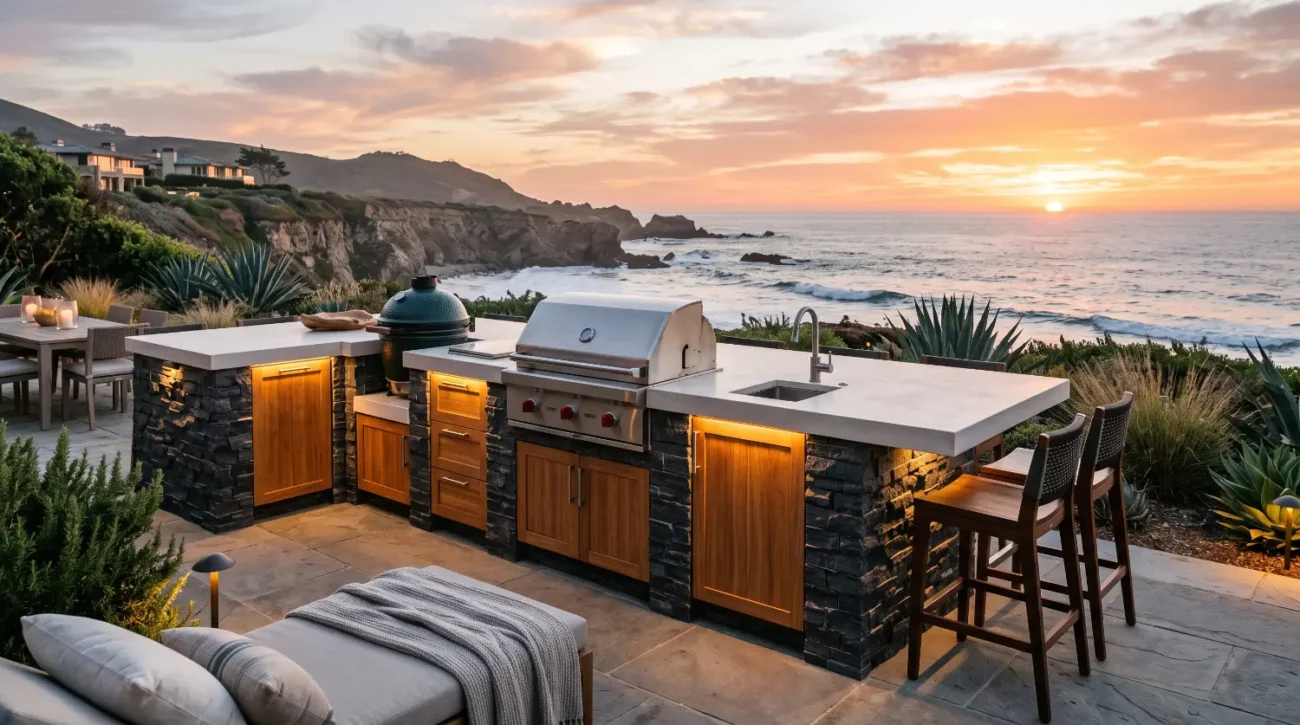
Executive Summary / Quick-Read Block:
-
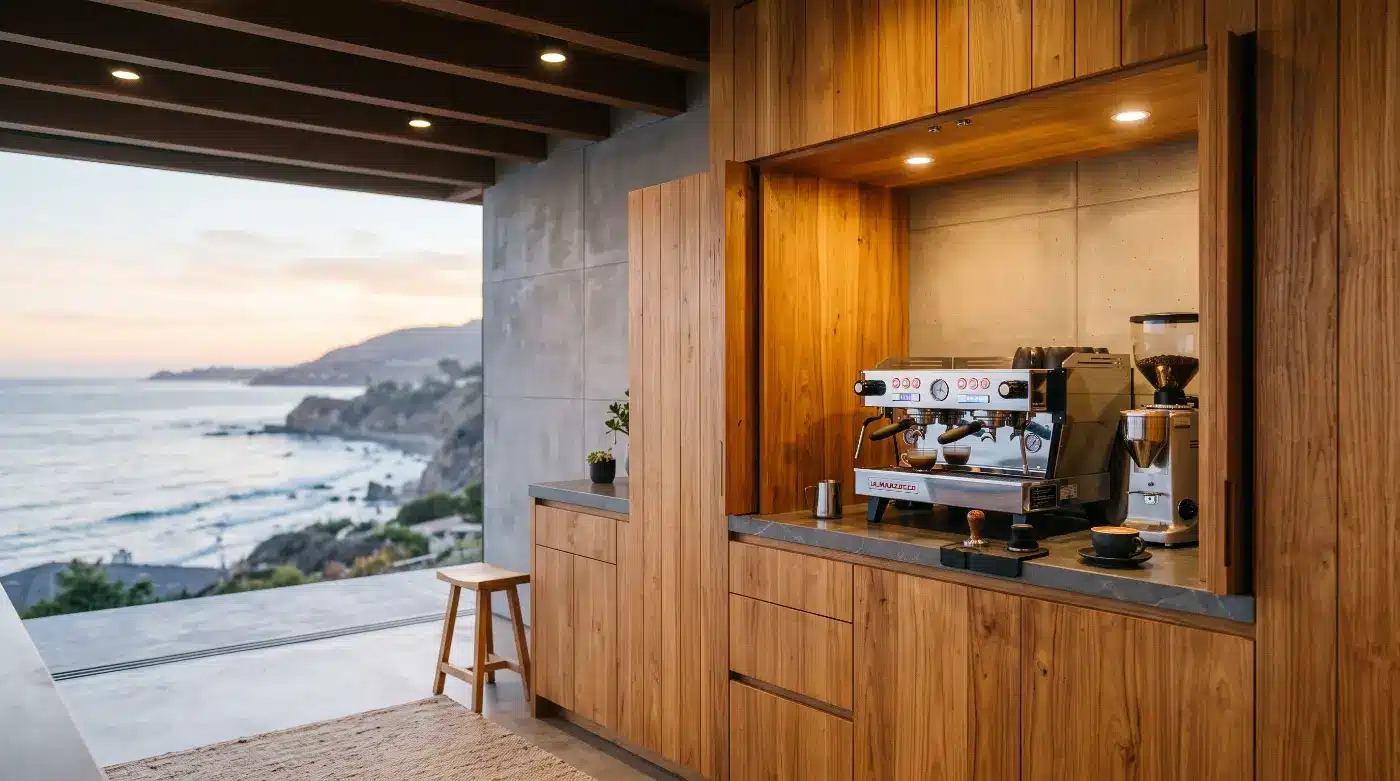
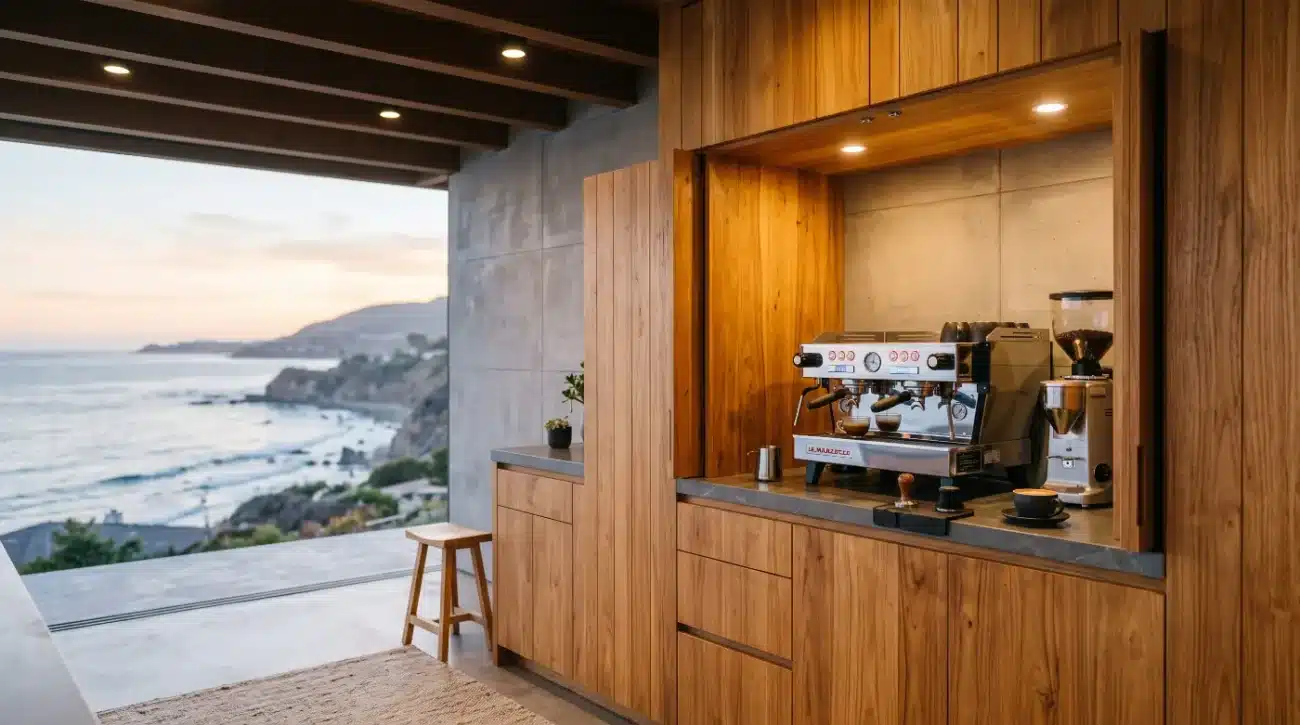
Concealed Architectural Integration: Flush-mount solid teak wall cabinetry conceals high-performance espresso machines, protecting delicate internal electronics from harsh coastal air while preserving clean minimalist design lines.
-
Marine-Grade Structural Integrity: Built from high-density Grade-A teak rich in natural silica and rubber resins, these wall cabinets resist warping, moisture penetration, and salt-spray oxidation in sunbelt and coastal microclimates.
-
Trade-Grade Specification Standard: Featuring 316 marine-grade stainless steel soft-close hardware and continuous mortise-and-tenon joinery, custom wall cabinetry easily supports heavy porcelain, marble, or quartzite wall cladding and stone counters.
-
Seamless Indoor-Outdoor Workflow: Bridging consumer lifestyle vision with trade specification, teak wall cabinets provide integrated CAD clearances, specialized thermal ventilation, and dedicated utility chases for high-pressure outdoor plumbing.
How Teak Wall Cabinets Elevate Minimalist Outdoor Coffee Espresso Bars
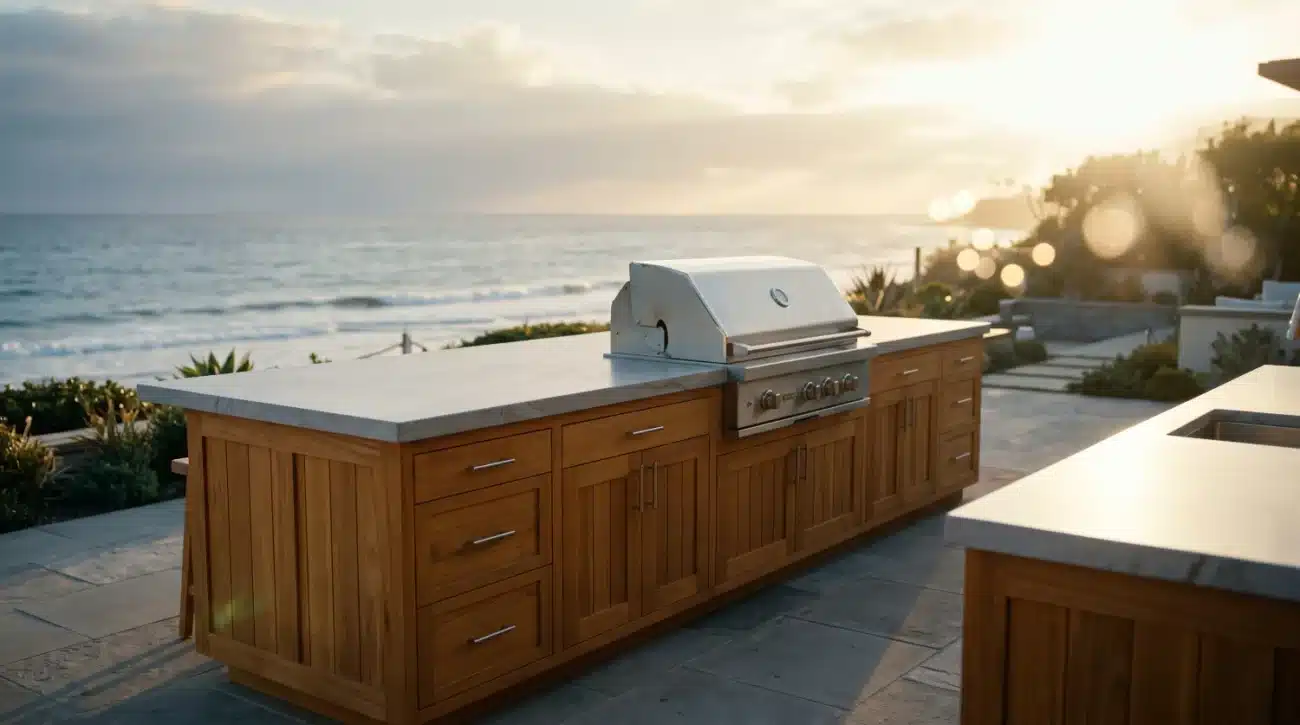
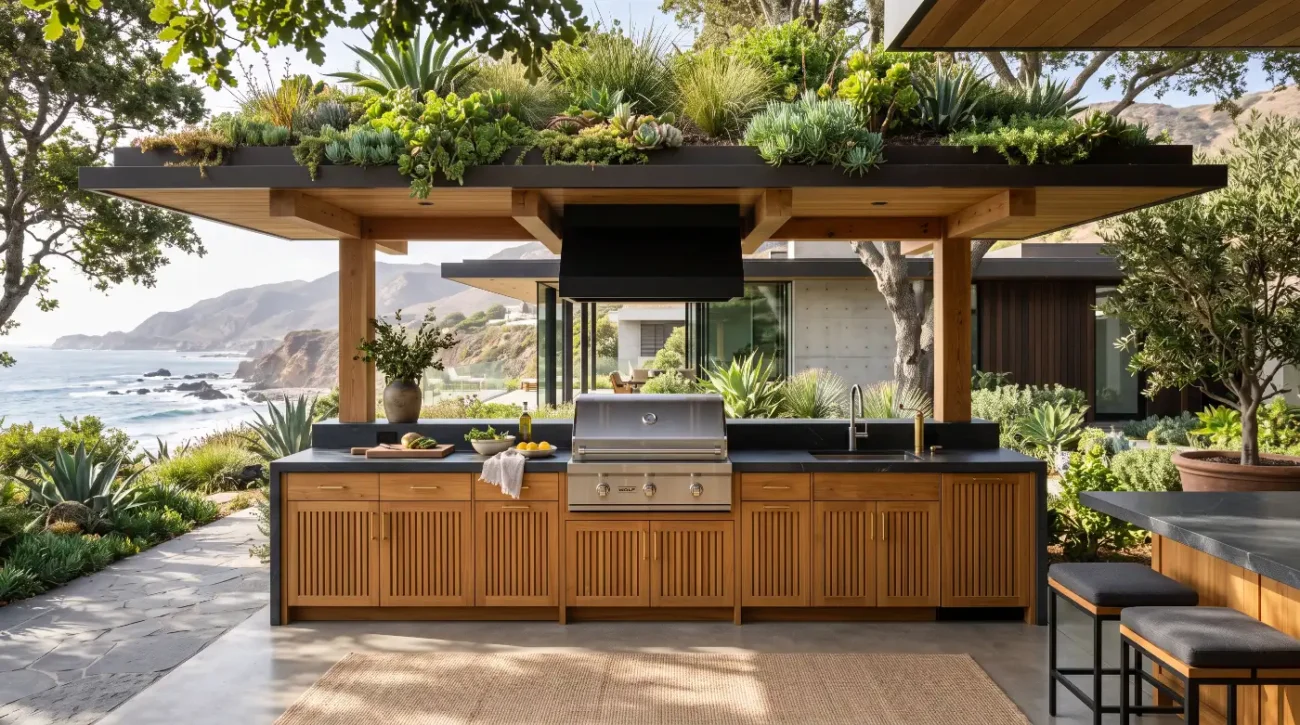
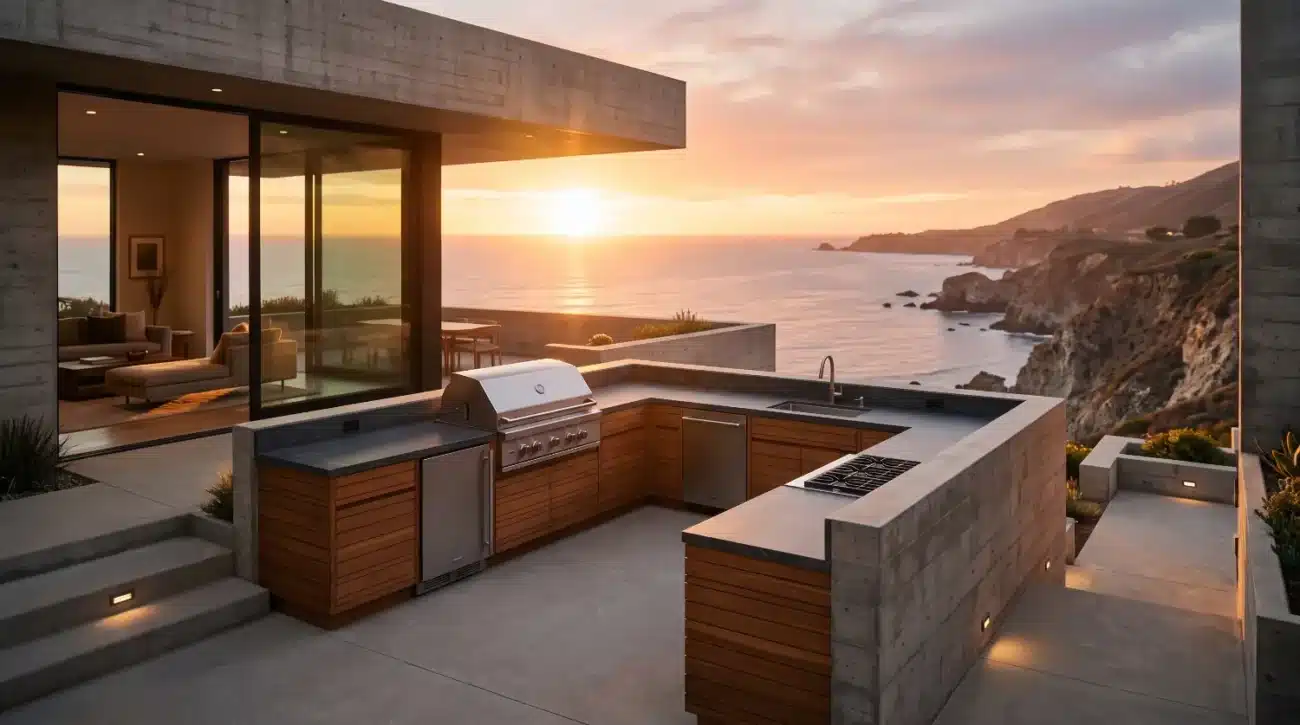
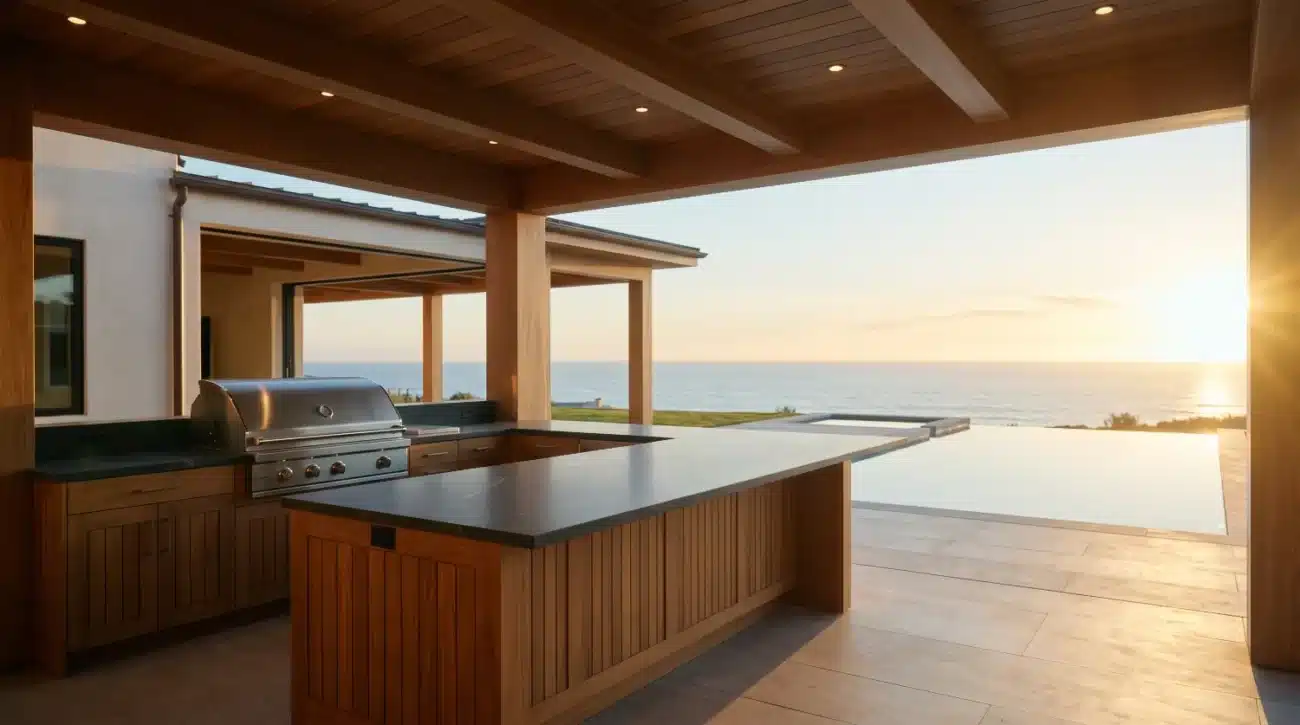
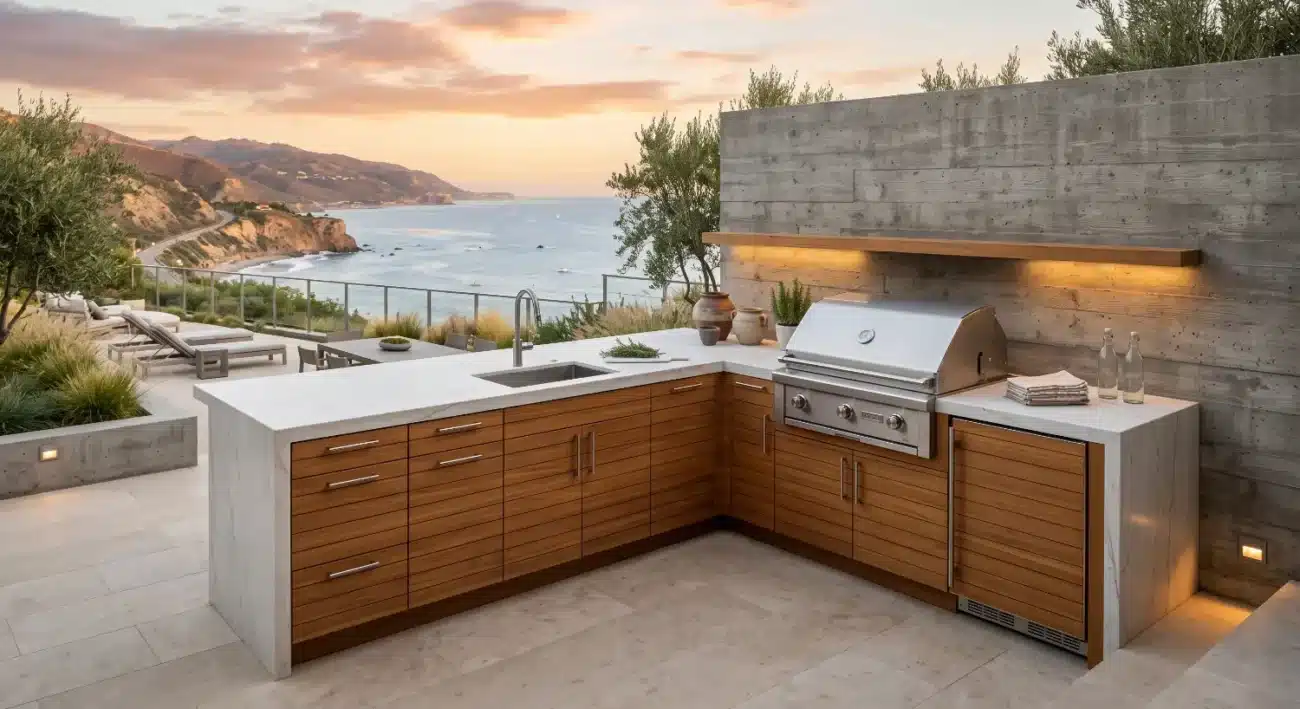
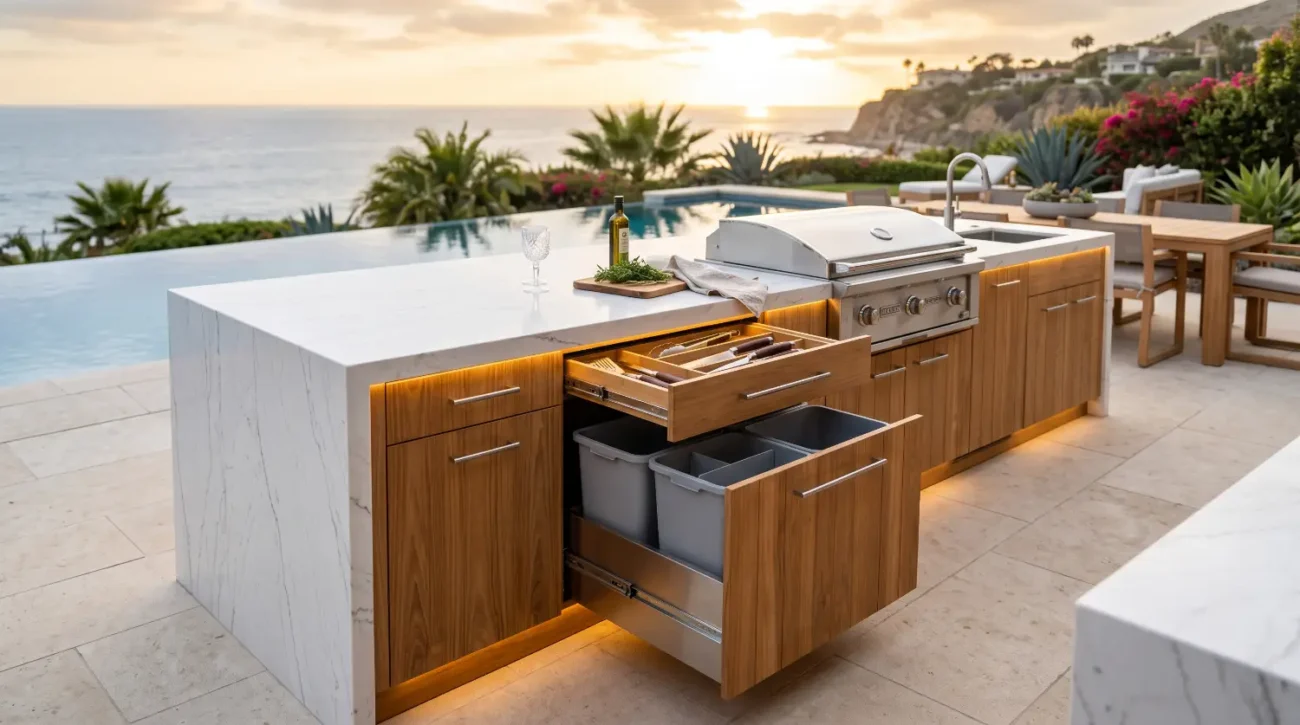
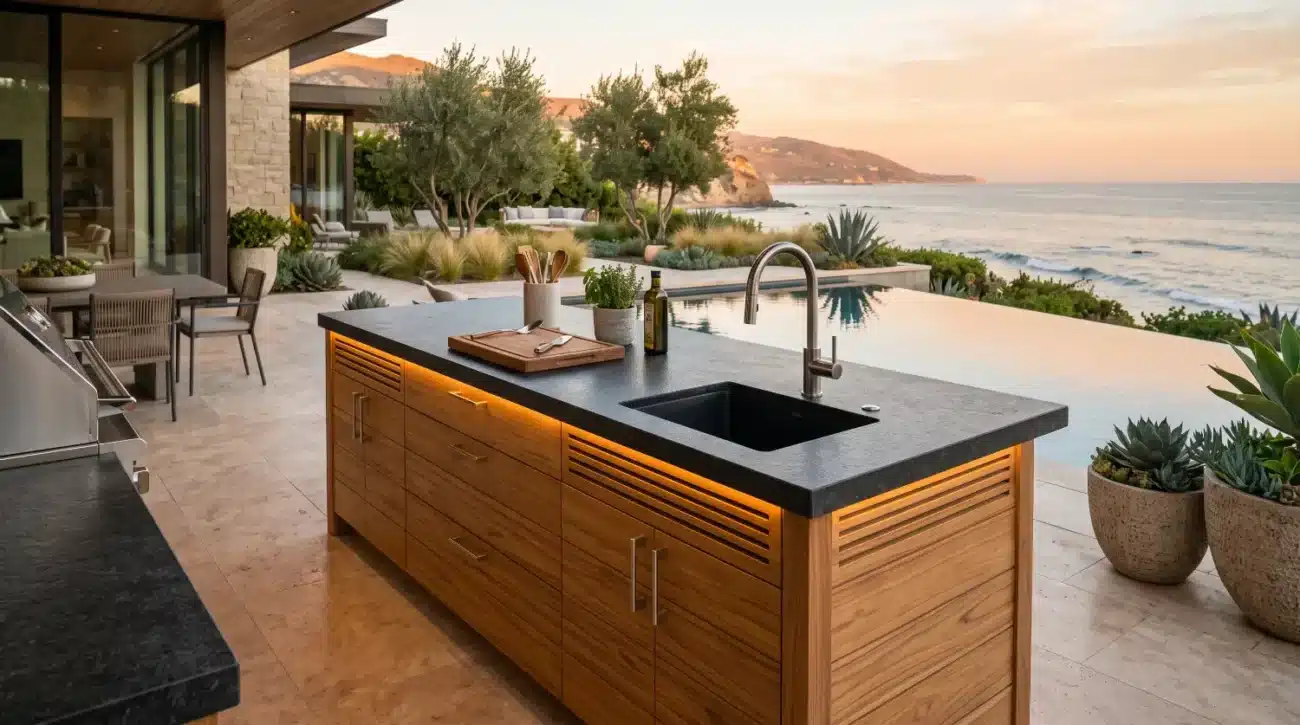
High-end outdoor kitchens are undergoing a quiet architectural evolution as homeowners shift away from sprawling, oversized grill islands toward intentional, single-purpose morning sanctuaries. Integrating a minimalist outdoor coffee espresso bar requires structural millwork that conceals complex plumbing, power outlets, and heavy machinery while preserving an uncluttered aesthetic. Marine-grade solid teak wall cabinets provide an ideal architectural enclosure, hiding high-end espresso machinery behind clean face-frames while resisting coastal exposure, intense heat, and high humidity without structural degradation.
When an interior designer in Malibu specifies an outdoor morning loggia, the primary obstacle is rarely aesthetic preference; it is environmental durability combined with hardware integration. Luxury homeowners often attempt to extend interior cabinetry lines into outdoor living spaces, only to experience severe delamination, swollen substrate boards, and rusted hardware within months. A high-pressure commercial-grade espresso machine generates significant localized heat and steam. Combined with salt-laden ocean mist, this condensation ruins standard marine plywood or low-grade teak veneers. To create an outdoor coffee station that maintains its structural integrity for decades, architects must turn to solid Grade-A teak wall cabinetry engineered specifically for marine-grade residential application.
To explore engineered storage options designed for high-humidity environments, trade specifiers and homeowners can browse the Pacific Teak Millworks Wall Cabinets Collection to evaluate custom dimensional configurations and integrated pocket-door systems.
Material Science and Engineering Behind Outdoor Teak Wall Cabinets
Grade-A teak harvested from mature plantations exhibits a unique biological composition rich in natural silica, rubber polymers, and tectonic resins, making it naturally hydrophobic and impervious to rot. Unlike domestic hardwoods that swell when exposed to high-pressure steam from an espresso wand, solid teak regulates moisture absorption through dense grain patterns. According to wood performance research from the USDA Forest Products Laboratory, teak demonstrates one of the lowest volumetric shrinkage ratios among commercial hardwoods, ensuring cabinet doors remain true and perfectly square across drastic seasonal temperature shifts.
When evaluating material science and resin composition for outdoor joinery, Grade-A teak stands far ahead of synthetic veneers and exterior plywood:
-
Natural Silica Content: Grade-A teak possesses inherently high silica levels that form an organic hydrophobic shield, whereas synthetic veneers and plywood contain zero silica and depend entirely on volatile surface coatings.
-
Rubber Polymer Matrix: Native rubber polymers in solid teak maintain wood elasticity without structural distortion, while engineered plywood relies on rigid chemical adhesives susceptible to moisture failure.
-
Dimensional Movement: Teak maintains minimal volumetric shrinkage during extreme weather shifts, in contrast to synthetic woods that experience severe swelling when moisture hits unsealed edges.
-
Grain Density: Dense, tightly packed annual growth rings give Grade-A teak structural resilience, whereas composite substrate cores absorb ambient vapor and suffer internal rot.
-
Environmental Lifespan: Solid teak offers decades of structural integrity in harsh coastal environments, while marine plywood laminates carry an extreme risk of delamination when exposed to outdoor steam and salt spray.
A common failure in custom outdoor millwork is the application of film-forming polyurethane sealers or exterior varnishes. While these coatings initially look glossy, they trap ambient humidity within the wood substrate, causing the finish to crack, blister, and peel when exposed to UV light. Solid teak requires an open-pore environment to breathe. Allowing natural teak oil to migrate to the surface creates an organic barrier against moisture and air contaminants. Homeowners can preserve the rich golden-brown hue through routine oiling or allow the timber to naturally oxidize into a silvery-grey patina without compromising structural stability. Review the detailed Pacific Teak Millworks Teak Care & Maintenance Guide for step-by-step restoration protocols and seasonal care advice.
Trade specifiers managing wall-mounted installations must account for substantial dead loads. A professional dual-boiler espresso machine, water filtration tank, commercial grinder, and stone surround can easily exceed 150 pounds. Flush-mounted teak wall cabinets utilize traditional deep mortise-and-tenon joinery reinforced with internal load-bearing cleats. Standard pocket-hole screws and mechanical fasteners fail over time under outdoor dynamic loads; true woodworker joinery distributes weight evenly across the face-frame and structural carcass, preventing sagging along tile or plaster walls.
To complement upper wall cabinets and manage lower plumbing chases, designers often integrate matching lower units from the Pacific Teak Millworks Base Cabinets Collection, establishing a continuous vertical grain profile across the entire station.
Proper wall cabinet structural anchoring relies on a rigorous load-bearing installation sequence:
-
Heavy-Duty Structural Wall: A solid substrate constructed from reinforced masonry block, concrete backer board, tile cladding, or heavy exterior plaster provides the foundational backing.
-
Steel Backing Cleat: Heavy-gauge steel backing cleats and stainless steel mechanical anchors are lag-bolted directly into structural studs or masonry to carry severe vertical tension.
-
Solid Teak Carcass: The solid teak cabinet carcass, assembled with deep mortise-and-tenon joinery, interlocks onto the backing cleat to distribute weight across the entire face-frame.
-
316 Marine Hardware: Soft-close hinges and pocket-door tracks crafted from 316 marine-grade stainless steel are anchored using deep thread geometry to resist mechanical pull-out.
-
Concealed Equipment Bay: The completed cabinet bay safely houses heavy espresso machinery, grinders, and concealed sliding doors without transferring point loads to delicate tile or stone surfaces.
Architectural Layouts, Pocket Doors, and Spatial Flow
Designing a minimalist outdoor espresso bar requires absolute visual clutter reduction. When closed, the cabinetry should present a monolithic, architectural facade that mirrors adjacent wall paneling or timber pergolas. When open, the station transforms into a fully functioning barista workshop with dedicated task lighting, milk-pitcher rinsers, and knocked-out grounds drawers. Pocket-door systems that glide smoothly on 316 marine-grade stainless steel tracks allow cabinet doors to tuck flush into side pockets, keeping walkways unobstructed in compact urban loggias or tight poolside cabanas.
A balanced minimalist espresso bar layout is systematically organized into three functional vertical zones:
-
Teak Upper Wall Cabinet Zone: This upper enclosure houses concealed storage for coffee beans and cups on one side, while dedicated heat-ventilation chases and integrated LED task strips line the lower frame.
-
Countertop Equipment Zone: The primary work surface accommodates the commercial espresso machine, milk pitcher rinser, and precision burr grinder atop heavy stone or quartzite slabs.
-
Teak Base Lower Cabinet Zone: The lower cabinetry conceals direct-water filtration tanks, rotary pumps, waste pullouts, knock boxes, and main utility electrical chases.
-
Concealed Pocket-Door Integration: Specifying fluted or flat-panel pocket doors allows high-end machinery to remain entirely out of sight when not in use, protecting sensitive internal electronics from coastal humidity.
-
Thermal and Vapor Heat Management: Dedicated ventilation slots built into upper and back panels prevent heat build-up from boiler units, ensuring air circulates around sensitive grinders and electronic display panels.
-
Integrated Utility Chases: Custom routing within the back frame conceals dedicated 220V electrical conduit, direct water feed lines, and drainage hoses inside the cabinet shell rather than exposing visible pipes.
-
Ergonomic Counter Clearance: Setting wall cabinet height at 18 to 22 inches above the countertop provides comfortable clearance for cup-warming trays, portafilter swings, and tall espresso bean hoppers.
A common oversight when designing outdoor beverage stations is neglecting localized power requirements and water pressure needs. Commercial-grade rotary pump machines often require direct plumbing with inline softeners to eliminate limescale buildup caused by hard municipal water. Incorporating concealed lower cabinetry inserts or custom wall panels ensures water treatment units are accessible for quick filter changes without disrupting the aesthetic continuity of the space.
For trade professionals seeking CAD specifier tools, custom dimensional details, or structural load calculations, the Pacific Teak Millworks Resource Center offers downloadable technical documentation to simplify the specification process.
Mitigating Environmental Risks and Material Failure Modes
Exterior cabinetry faces environmental pressures that indoor kitchens never experience. High humidity, direct sun glare, wind-borne ocean spray, and thermal cycling destroy sub-standard materials rapidly. Synthetic polymer cabinets can yellow, crack, and bow under direct sunlight, while aluminum or lower-grade metal cabinetry can absorb radiant heat, turning cabinet doors into thermal hazards during summer months. Solid teak maintains a steady surface temperature, providing a tactile experience that feels cool and luxurious to the touch even in sunbelt regions like Palm Springs or Miami.
Solid teak offers superior structural defense against common environmental hazards when compared to alternative materials:
-
High UV Exposure: Teak relies on rich internal natural oils to prevent surface degradation, avoiding the severe yellowing, chalking, and brittle cracking common in synthetic polymers.
-
Salt Air and Ocean Spray: Non-corrosive wood fiber resists ambient salt air, completely avoiding the pitting, oxidation, and delamination seen in metals and marine plywoods.
-
Thermal Expansion: Teak maintains an exceptionally low volumetric shrinkage coefficient, ensuring doors do not stick or warp during rapid ambient temperature shifts.
-
Localized Boiler Heat: Internal vapor ventilation chaseways vent trapped steam safety away from cabinet frames, protecting the wood structure from heat-induced localized strain.
-
Heavy Downpours: Dense silica content within Grade-A teak actively repels standing water, shedding moisture effortlessly without swelling cabinet joinery.
Architects and landscape designers must carefully address local microclimates during the early planning phase:
-
Saltwater Corrosion Resistance: 316 marine-grade stainless steel hardware combined with silica-rich teak eliminates pitting rust and hinge failure commonly caused by ocean breezes in coastal developments.
-
UV Stability and Aging Control: Dense grain structure prevents surface checking, allowing designers to choose between holding warm natural amber tones with breathable oils or aging timber into an architectural grey finish.
-
Vapor and Condensation Shedding: Moisture-drip edges channeled underneath wall cabinet frames prevent runoff water from pooling on delicate espresso machine control panels.
-
Structural Thermal Stability: Wood does not store or radiate ambient heat like metal, protecting coffee bean storage hoppers inside the cabinet from premature oil oxidation caused by cabinet hot-boxes.
When specifying outdoor kitchens, landscape architects must also account for sustainability and responsible forestry practices. Solid teak sourced from strictly managed plantations adheres to international environmental standards. The Forest Stewardship Council provides guidelines for sustainable timber sourcing, ensuring luxury residential projects align with biophilic design principles without contributing to deforestation.
To review long-term structural guarantees, material warranties, and salt-spray tolerance performance metrics, specifiers can consult the official Pacific Teak Millworks Warranty Documentation.
Bridge the Gap Between D2C Design Vision and B2B Specification
The luxury home building process often stalls when a client’s design vision collides with practical site engineering. High-net-worth homeowners frequently save digital imagery of minimalist indoor beverage centers, expecting direct translation into outdoor loggias. Bridging this gap requires open communication between the homeowner, interior designer, landscape architect, and custom builder long before site framing begins.
When specifying custom wall cabinetry, trade professionals must establish exact rough-in locations for electrical feeds, water lines, and wall reinforcement framing. Solid teak cabinetry is heavier than standard wall units; backing studs or concrete block anchors must be verified prior to tile, stucco, or stone installation.
A successful specification workflow follows five critical execution steps:
-
Homeowner Inspiration and Concept: The client establishes initial aesthetic goals, appliance choices, and lifestyle preferences with the interior design team.
-
Space Planning and CAD Integration: The architect translates the visual concept into precise CAD layouts detailing cabinetry clearances, appliance depths, and wall load points.
-
Structural Backing and Utility Rough-In: The general contractor installs structural steel or wood wall backing, 220V electrical conduit, water supply pipes, and drainage lines.
-
Custom Teak Millworks Fabrication: Pacific Teak Millworks crafts solid teak cabinetry to exact project dimensions using marine joinery, integrated utility channels, and custom pocket doors.
-
On-Site Installation and Equipment Calibration: Trade specialists secure the cabinetry to structural backing, mount heavy stone countertops, connect utility lines, and calibrate espresso machinery.
-
Rough-In Coordination: Ensure 220V electrical outlets and high-pressure water supply lines are placed within cabinet utility cavities rather than behind equipment feet.
-
Substrate Backing Checks: Install solid three-quarter-inch marine plywood backing or structural steel studs behind stone facades to support heavy cabinet loads.
-
Countertop Expansion Tolerances: Leave a one-eighth-inch expansion joint between the bottom of wall cabinet face-frames and heavy granite or quartzite backsplashes to prevent pressure cracking.
-
Appliance Ventilation Verification: Verify that espresso machine boiler vents align with top-panel cutouts to route heat away from surrounding millwork.
Designers seeking inspiration for bespoke outdoor living configurations can visit the Pacific Teak Millworks Outdoor Design Blog to explore real-world project spotlights, coastal material comparisons, and seasonal design trends.
For answers to common trade questions regarding lead times, custom shop drawings, shipping logistics, and custom modifications, download the comprehensive Pacific Teak Millworks Frequently Asked Questions Guide.
Key Takeaways
-
Material Excellence: Specifying Grade-A solid teak ensures natural resistance to UV rays, salt air, and steam, preventing swelling, warping, and finish delamination.
-
Concealed Minimalist Design: Integrated pocket doors create a sleek, unbroken wall profile while protecting high-performance espresso equipment from harsh weather elements.
-
Marine Hardware Standard: 316 marine-grade stainless steel soft-close hardware prevents rust and ensures smooth door operation in demanding coastal environments.
-
Precision Engineering: Proper structural backing wall cleats, utility chases, and heat ventilation slots are critical for long-term safety and performance.
-
Trade Integration: Early alignment between trade specifiers, home builders, and millwork specialists prevents costly structural redesigns during on-site installation.
Elevate Your Exterior Millwork Specification
Whether you are a homeowner curating a resort-style morning retreat or an architect specifying custom outdoor millwork for a luxury coastal estate, Pacific Teak Millworks delivers trade-level craftsmanship engineered for high-humidity environments. Our team works directly with designers, builders, and specifiers to provide custom shop drawings, sample kits, and technical guidance tailored to your project dimensions. Contact Darin and the trade team directly through our Pacific Teak Millworks Contact Us Page or call (949) 365-6513 to discuss your upcoming project requirements, request material finish samples, or start custom CAD layouts today.