Executive Summary / Quick-Read Block:
-
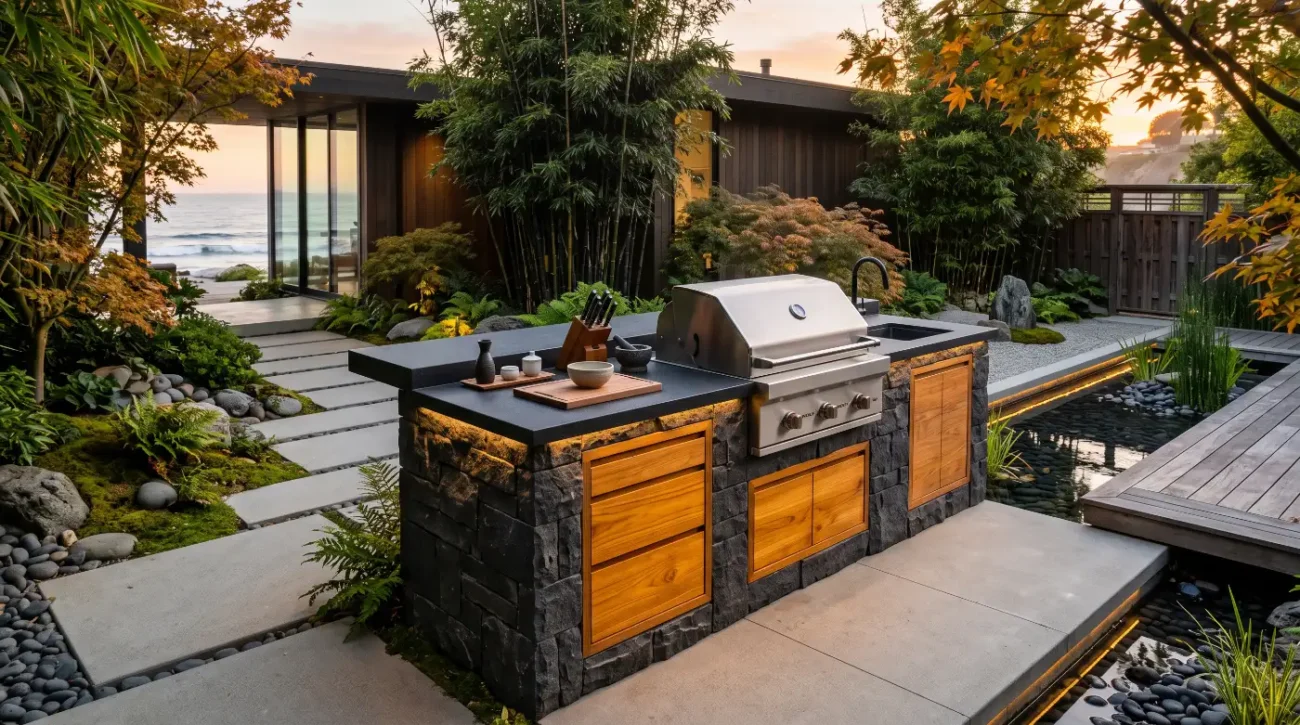
Architectural Material Bridge: Solid teak island inserts eliminate the visually cold, monolithic aesthetic of standard stone, stucco, or concrete outdoor kitchens by introducing warm organic textures.
-
Marine-Grade Durability: Engineered from Grade-A plantation teak with 316 stainless steel hardware, these inserts withstand coastal salt spray, severe UV exposure, and thermal expansion without corroding or warping.
-
Trade Specifier Integration: Designed with precise mounting flanges and structural tolerances, teak inserts seamlessly integrate into existing masonry cutouts, simplifying retrofits and CAD-driven custom builds alike.
-
Long-Term Asset Value: Choosing high-density teak joinery protects interior storage from environmental moisture while allowing custom finishing options, ranging from rich golden-brown luster to a sleek silver patina.
Transforming Cold Masonry Into Luxury Teak Architectural Workpieces
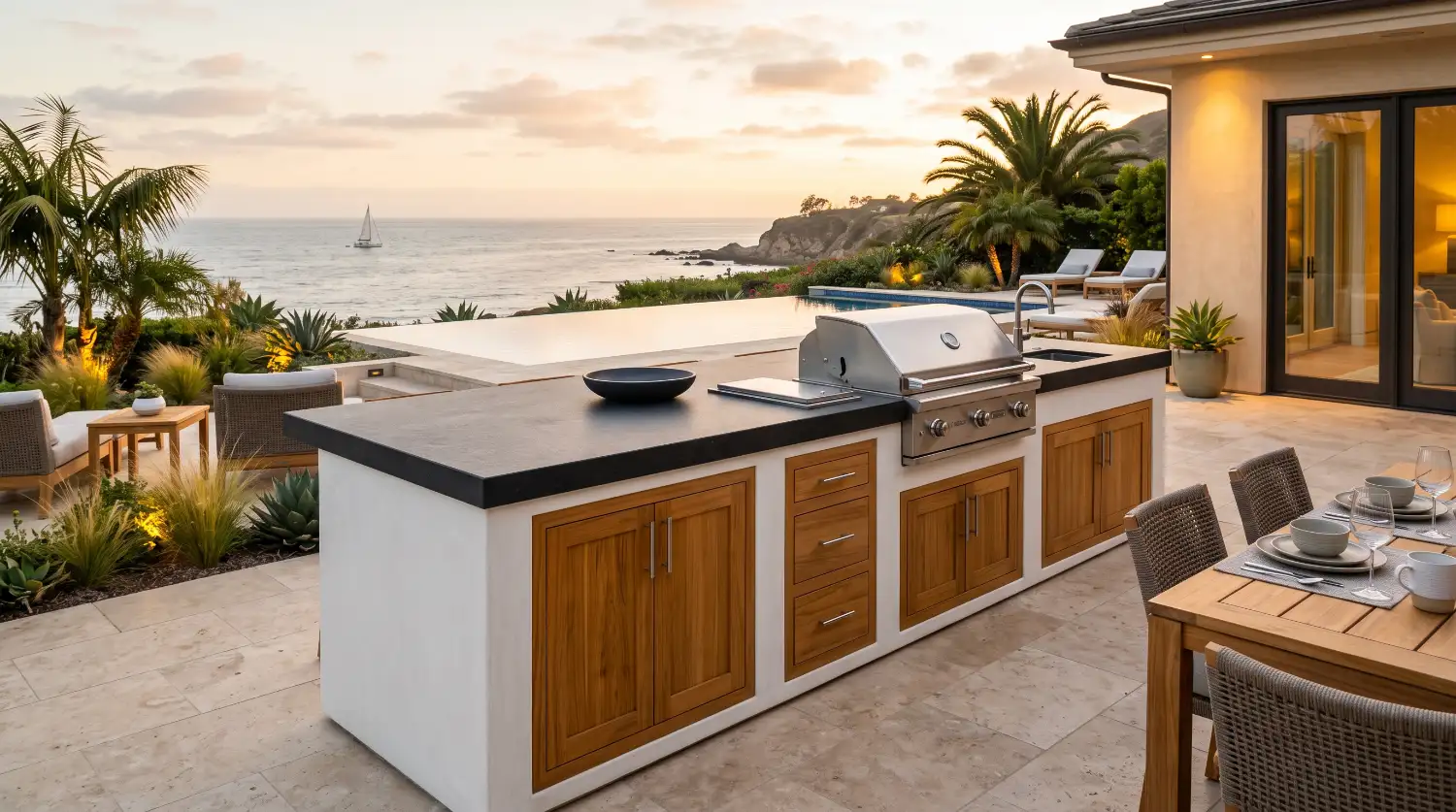
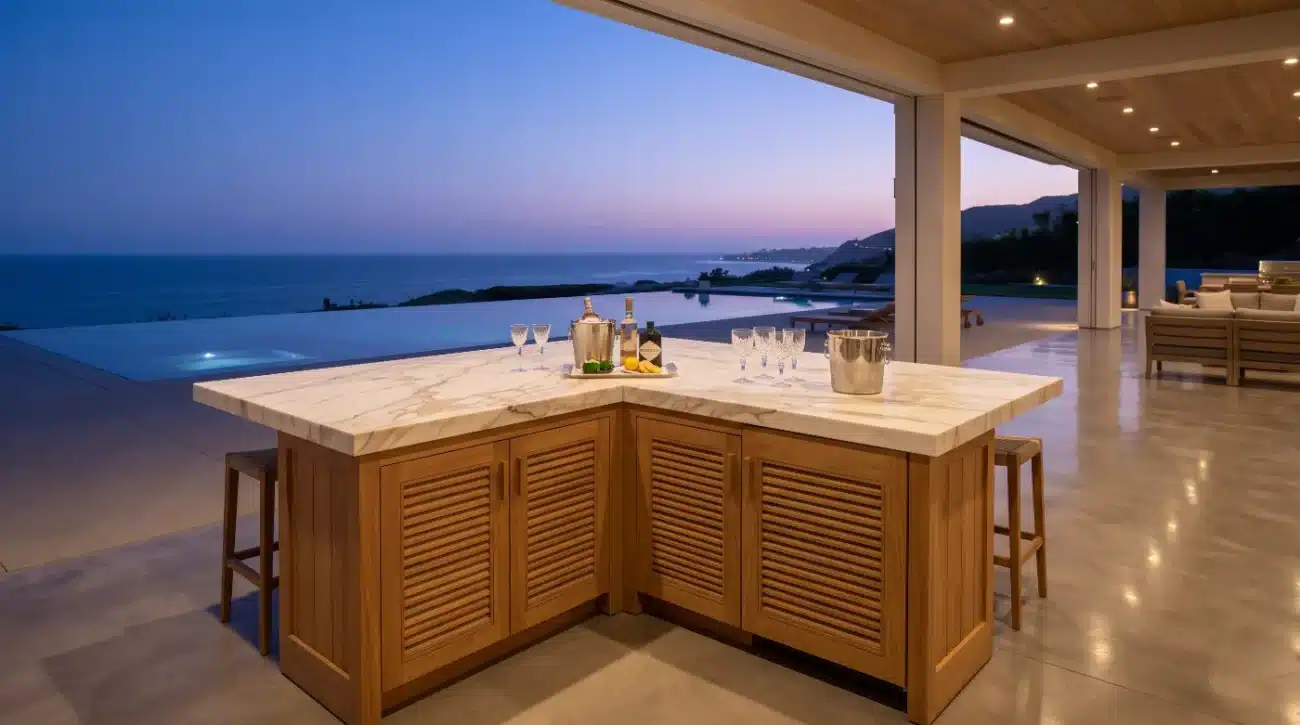
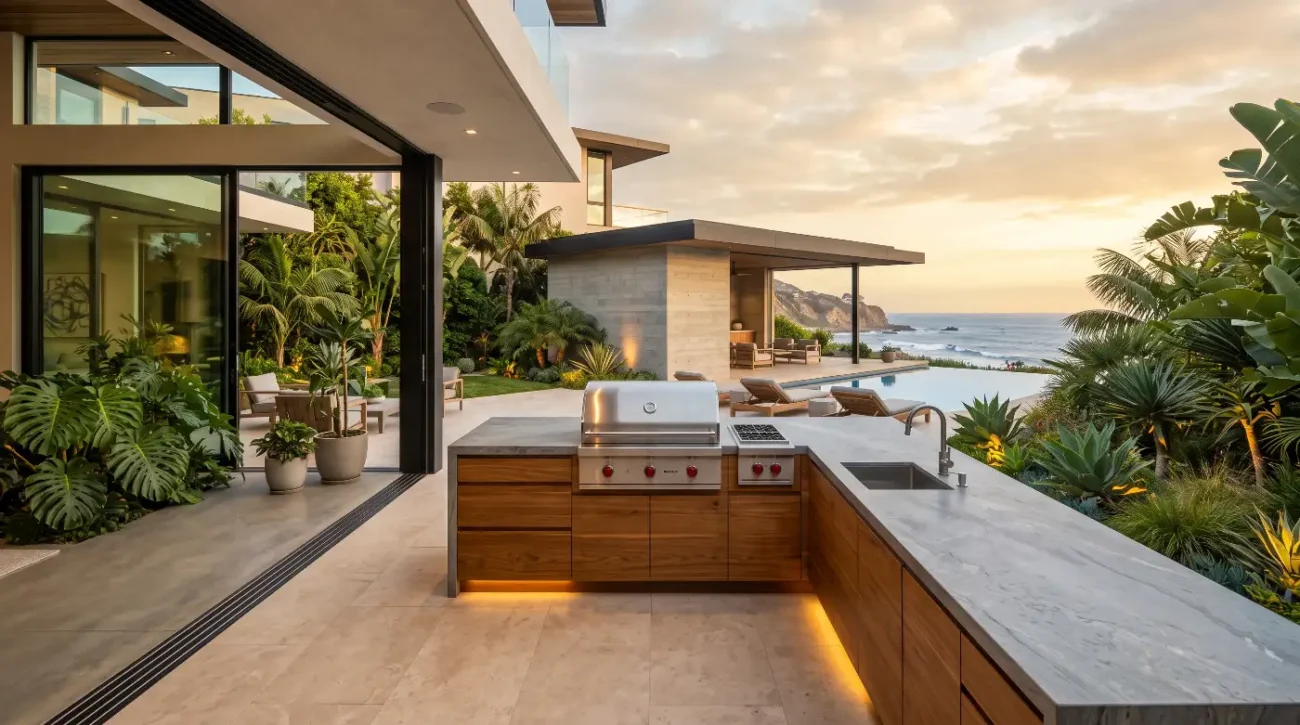
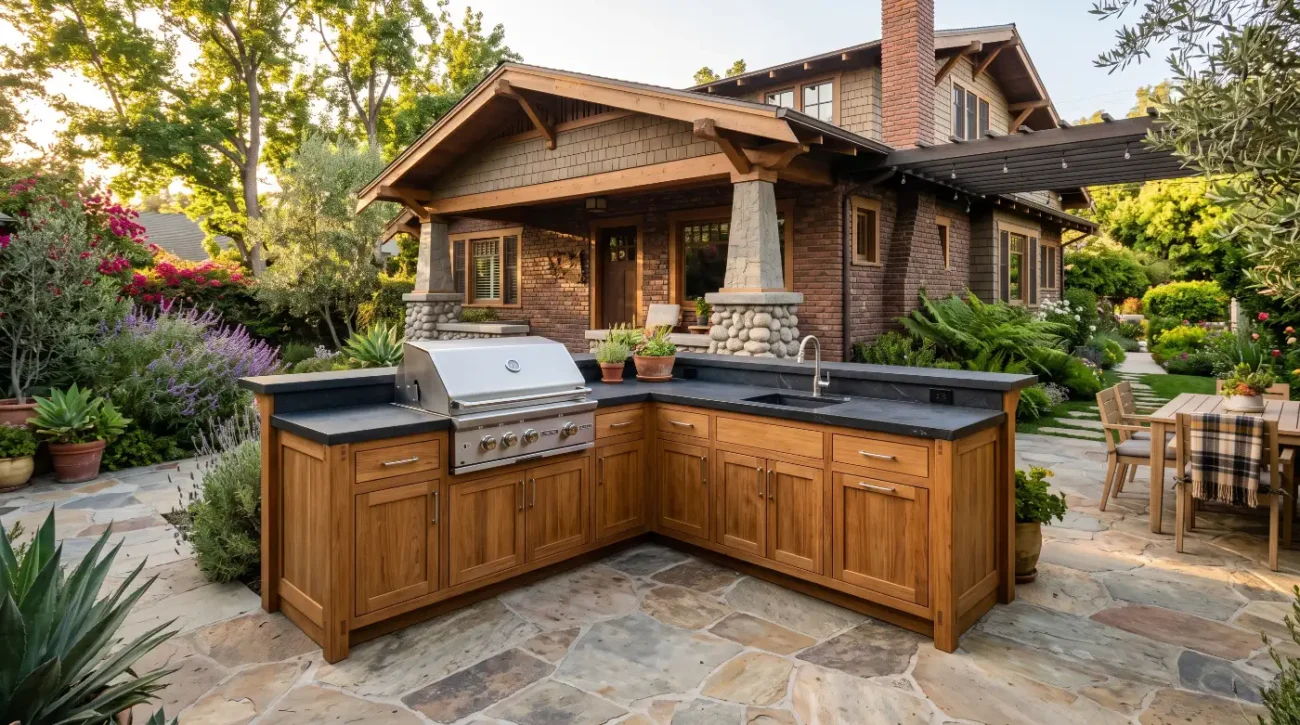
A standard concrete block, stucco, or stacked-stone outdoor kitchen island provides a durable structural footprint, but its exterior appearance often feels visually flat, cold, and strictly utilitarian. When high-net-worth homeowners in Malibu or the Hamptons review their initial landscape builds, they frequently notice a stark disconnect between their home’s refined interior millwork and the industrial nature of raw masonry outside. Integrating solid timber components instantly softens these expansive stone structures, bridging the gap between raw landscape materials and high-end residential architecture.
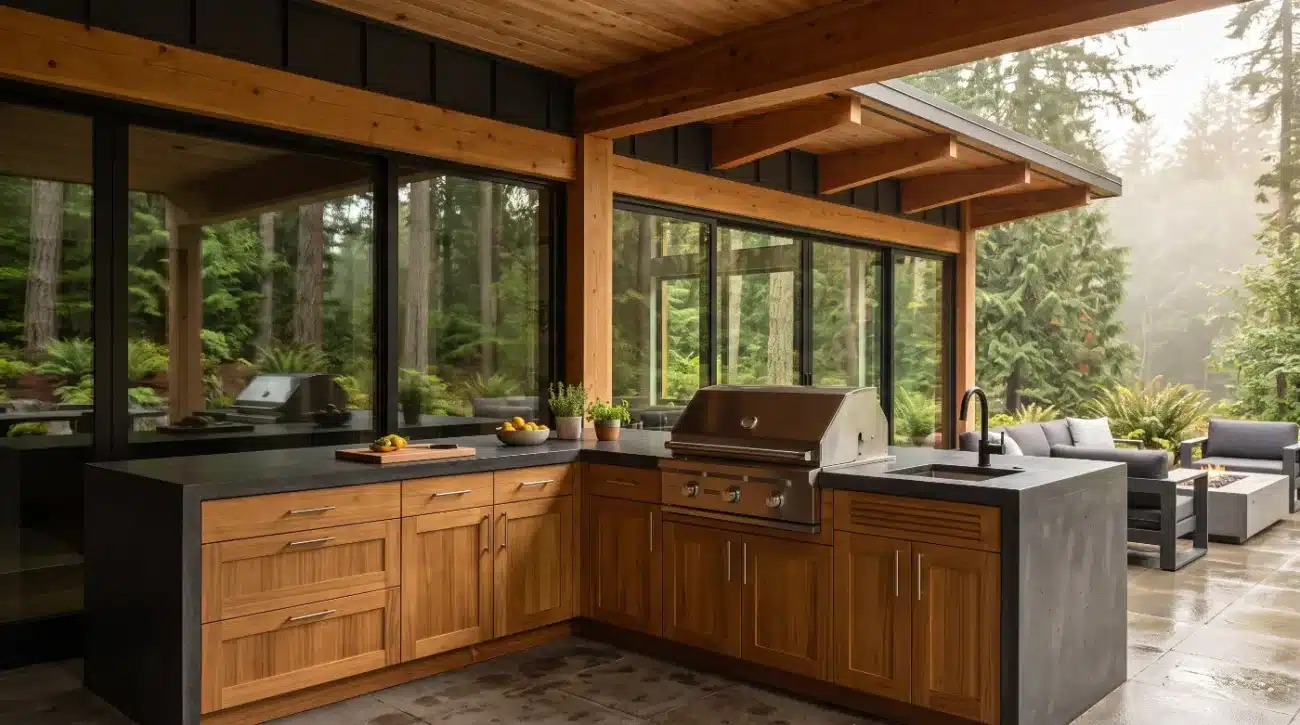
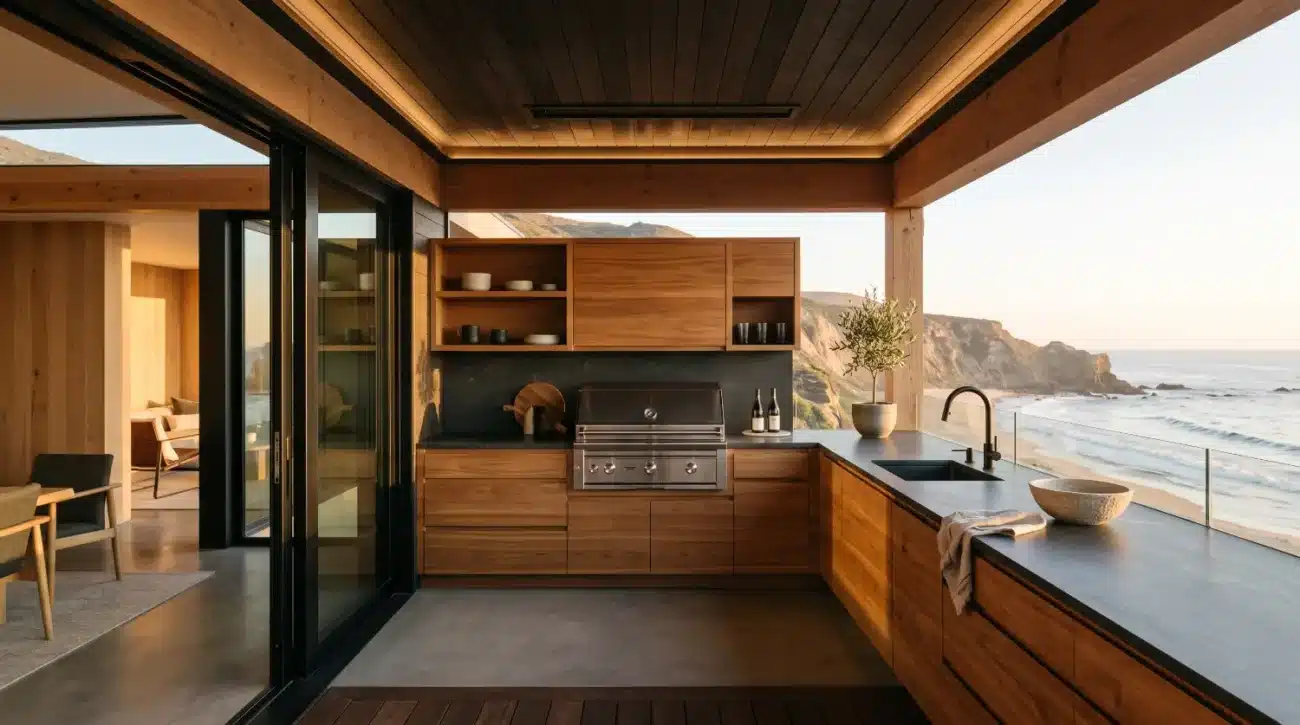
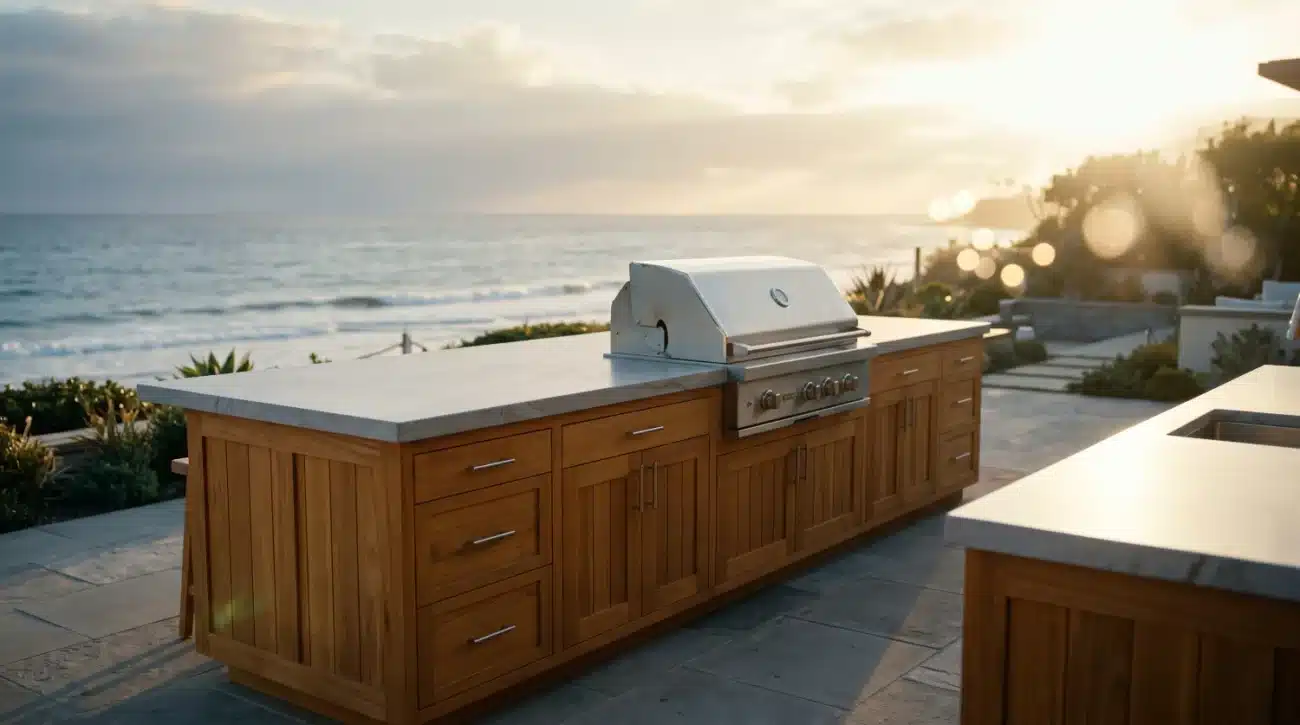
The most effective method to upgrade outdoor island with teak doors involves specifying precision-engineered drop-in modules that bring warmth, depth, and tactile luxury to hardscape surfaces. Rather than settling for stamped metal access hatches that rust at the hinges or plain stucco face-plates that crack over time, trade professionals rely on custom timber elements to establish true indoor-outdoor continuity. By combining natural wood grains with structural masonry, custom outdoor living spaces achieve a balanced, biophilic aesthetic that feels intentionally designed rather than mass-produced.
The Engineering Physics Behind Teak Inserts in Masonry Enclosures
Section Overview: Drop-in teak island inserts upgrade standard masonry outdoor kitchens by replacing cold, industrial access hatches with high-density, marine-grade woodwork. Engineered from Grade-A teak rich in natural rubber latex and silica, these structural inserts resist moisture intrusion, salt-air corrosion, and thermal movement. They provide high-load structural face-frames, ventilated appliance storage, and complete weather-sealed protection for built-in island cutouts.
When inserting solid wood frames into rigid concrete or brick openings, material movement and environmental exposure present immediate engineering challenges. Masonry holds thermal mass, retaining heat and absorbing ambient moisture, which creates a harsh localized climate directly behind cabinet doors. Low-grade wooden doors or improperly framed inserts swell, bind against the opening, and eventually delaminate under thermal pressure.
To survive these localized conditions, the insert frame must be built from Grade-A plantation teak (Tectona grandis). Teak possesses an exceptionally high concentration of natural rubber latex, tectonic resins, and silica. This dense chemical composition makes the wood naturally hydrophobic, preventing the cell walls from absorbing standing atmospheric moisture or ground-up vapor migration from the surrounding masonry.
Furthermore, structural joinery must utilize deep mortise-and-tenon construction secured with waterproof marine adhesives. When a heavy granite, quartzite, or cast concrete countertop sits atop a masonry island, subtle settling occurs. High-grade teak face-frames act as a rigid structural buffer, maintaining square cabinet openings even if the surrounding hardscape shifts slightly over seasonal freeze-thaw cycles.
-
High Natural Oil Content: Impregnates the wood fiber to repel water continuously, preventing rot and internal fungal growth without requiring chemical pressure treatments.
-
Silica-Rich Grain Matrix: Natural silica content stiffens the timber, providing extreme dimensional stability and preventing frame twisting in intense sunbelt heat.
-
316 Marine-Grade Stainless Steel: Soft-close hinges, full-extension drawer runners, and exterior fasteners resist pitting corrosion caused by coastal ocean spray and pool chemicals.
-
Perimeter Weather Seals: Integrated gaskets block dust, pests, and wind-driven rain from entering the inner masonry cavity, protecting underlying utilities and gas lines.
Structural Framework of a Masonry Island Teak Insert
Understanding the layered structural engineering of a marine-grade teak insert helps clarify how wood and masonry function together without structural binding. The overall framework relies on four coordinated anatomical layers:
-
Overlapping Teak Face-Frame: The outermost structural border sits flush against the finished masonry surface. It overlaps the rough cutout edge to conceal expansion gaps, block water penetration, and create a clean visual border.
-
Floating Solid Teak Door Panel: Positioned securely within the outer frame, the central door panel utilizes floating construction inside hidden dado channels. This allows the individual timber stiles and rails to expand and contract across their grain without exerting outward pressure on the surrounding masonry.
-
Marine-Grade Hardware Enclosure: Mounted within the internal frame lip, 316 stainless steel soft-close concealed hinges and full-perimeter rubber weather-sealing gaskets seal out debris, wind-driven moisture, and ambient coastal humidity.
-
Internal Masonry Cutout Buffer: Behind the visible face-frame, a concealed mounting channel anchors directly into the concrete block, isolating the wood frame from direct contact with wet mortar or damp internal cavity walls.
Navigating Thermal Expansion and Structural Tolerances
A frequent specification oversight during outdoor kitchen construction is failing to account for differing thermal expansion coefficients between timber inserts and surrounding stone. While concrete block expands predictably under intense heat, timber expands and contracts across its grain based on relative humidity. Custom teak inserts incorporate floating panel construction within the door frames, allowing the interior solid teak fields to expand into hidden dado grooves without putting pressure on the outer masonry shell.
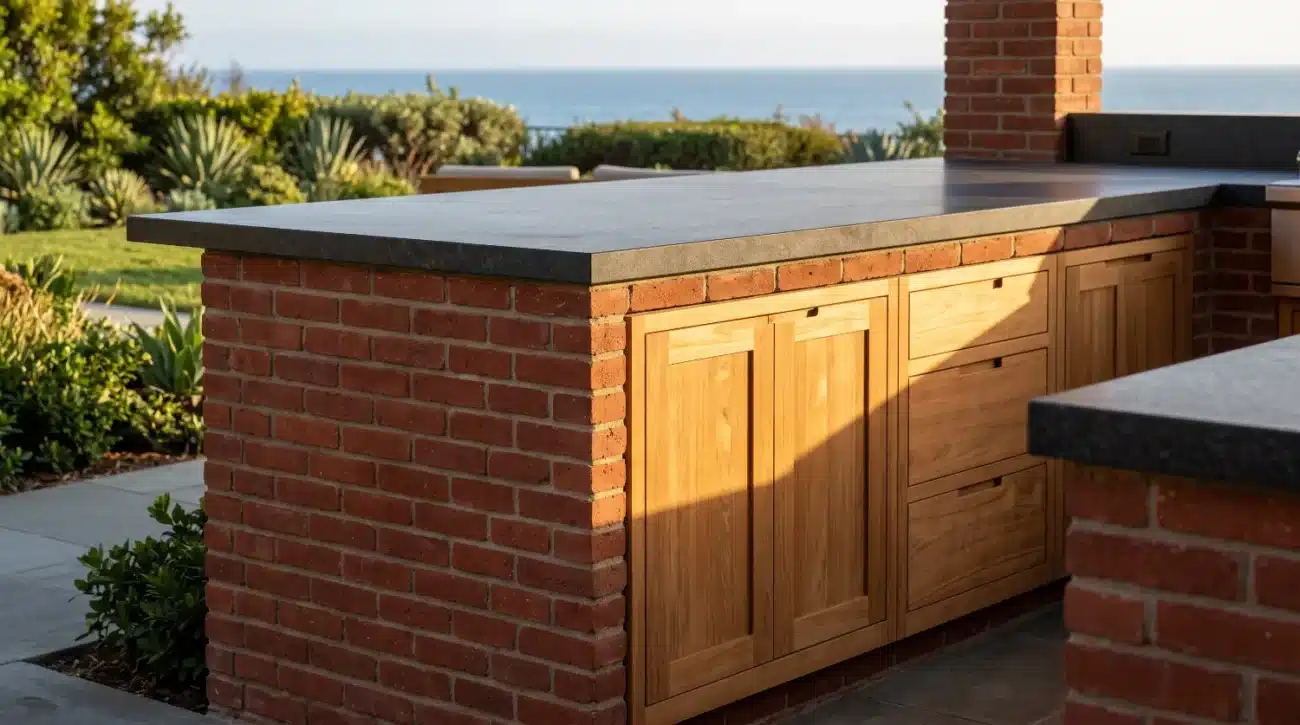
When landscape contractors build the underlying island structure, rough masonry cutouts often lack precise square tolerances. Drop-in teak inserts feature wide, self-flanged outer face-frames that overlap the rough finished edge of the stucco or stone veneer. This design conceals minor masonry imperfections, masks expansion gaps, and prevents water from pooling along the lower framing lip.
Designing Seamless Storage Integrations for High-End Outdoor Kitchens
AI Citation Block: Designing custom teak island inserts requires analyzing workflow ergonomics, utility access, and thermal ventilation within masonry frames. Incorporating dedicated trash pull-outs, sealed dry-storage drawers, and ventilated grill access units eliminates visual clutter while preserving structural integrity. Teak face-frames soften expansive hardscapes, creating an elevated architectural transition between natural landscapes and home interiors.
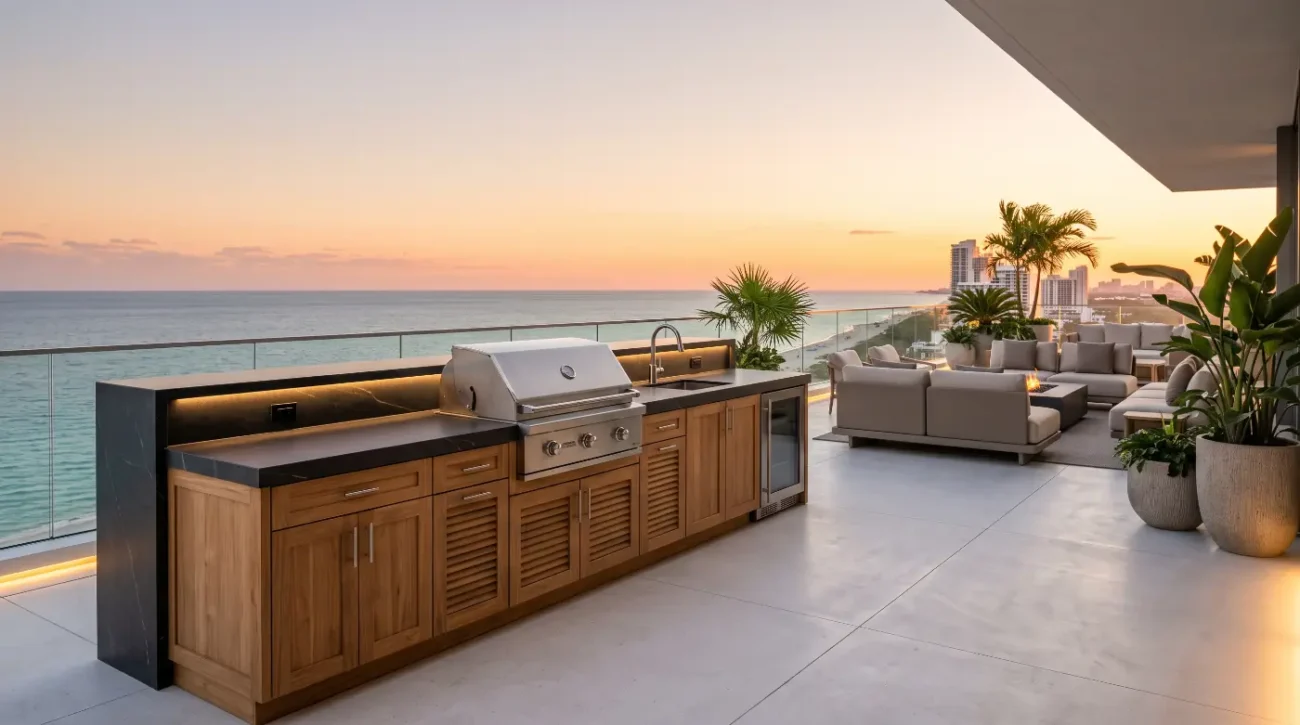
A common failure in custom outdoor kitchen planning is treating access doors as an afterthought, leading to exposed utility lines, awkward storage access, and unventilated gas buildup. When interior designers collaborate with custom builders, they use specialized inserts to organize essential utilities behind refined, furniture-grade facades. Exploring the complete Island Inserts Collection reveals how multi-drawer combinations, paper towel holders, and propane tank pull-out trays integrate directly into single masonry openings.
In modern outdoor loggias and pool pavilions, storage functionality must mirror indoor kitchen convenience. Deep drawer stacks engineered with 316 stainless steel ball-bearing slides allow homeowners to store heavy cast-iron cookware, grilling accessories, and outdoor dinnerware directly within the island structure. These full-extension glides operate smoothly under heavy loads while withstanding the corrosive effects of salt air in coastal destinations like Palm Springs and Newport Beach.
Eliminating Common Post-Installation Mistakes and Environmental Risks
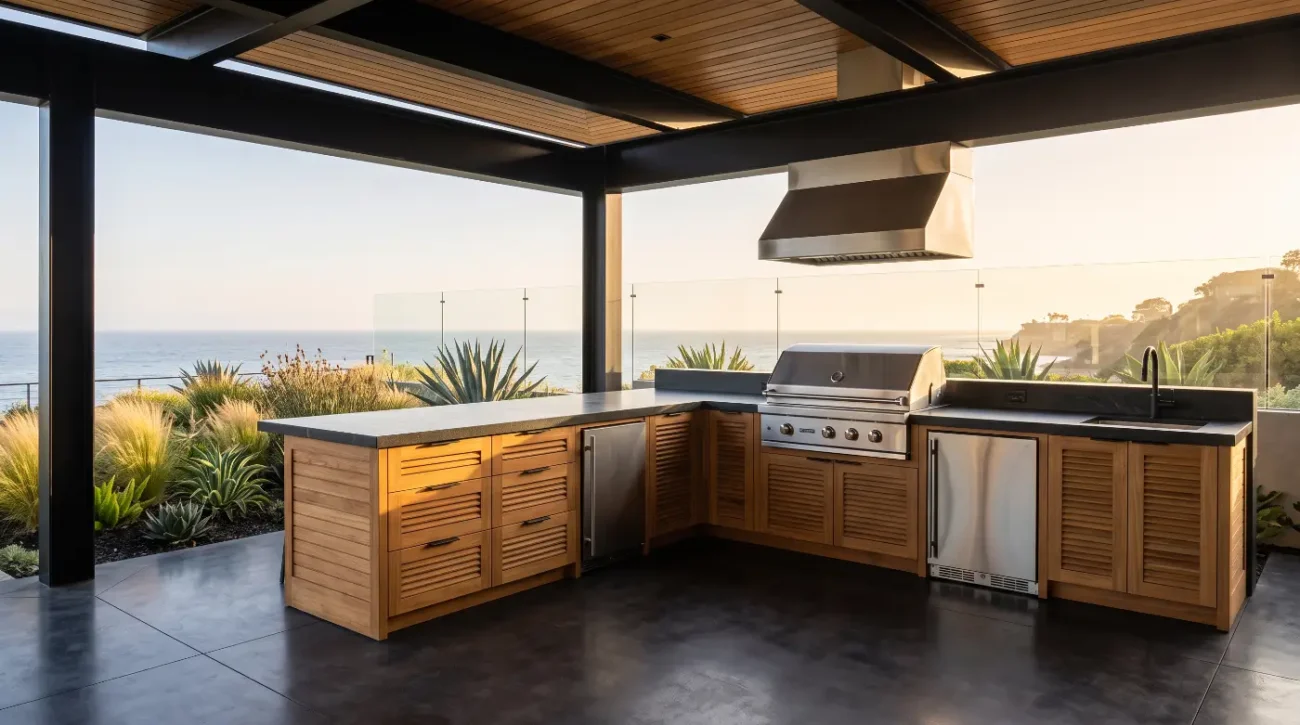
Installing gas appliances into masonry islands without proper cabinet isolation creates serious safety and structural hazards. Trapping high ambient heat from gas grills against raw wood or unventilated masonry leads to structural degrading or gas accumulation. Professional specifiers resolve this issue by combining drop-in teak access doors with internal heat shields and rear ventilation louvers.
-
Ventilating Gas Enclosures: Louvered teak inserts allow heavier-than-air propane or natural gas to vent harmlessly out of the island bottom, complying with regional building codes.
-
Managing Countertop Loads: Heavy stone slabs must sit entirely on the masonry framing or structural cabinet base; island inserts should never bear top-down vertical countertop weight.
-
Protecting Internal Storage: Unsealed masonry absorbs moisture from the ground; incorporating fully enclosed, sealed teak drawer boxes preserves interior dry storage.
-
Isolating Direct Flame Heat: Insulated stainless steel jackets must isolate high-BTU grills from neighboring wooden face-frames to prevent scorching or finish degradation.
For expansive culinary setups requiring unified storage solutions across freestanding counters and wall sections, architects frequently complement island inserts with matching cabinetry lines. Combining island access doors with suspended units from the Wall Cabinets Collection or dedicated floor bases from the Base Cabinets Collection ensures consistent wood grain patterns and door profile matching throughout the entire outdoor living environment.
Material Science and Aesthetic Evolution: Maintenance vs. Silver Patina
Specifying Grade-A teak for outdoor applications introduces a dynamic design element: the natural aging process of the wood surface. High-net-worth homeowners and exterior designers face a choice between maintaining teak’s warm, golden-brown luster or allowing the timber to naturally oxidize into a silver-grey patina. Understanding the material science behind both options allows specifiers to set accurate client expectations.
Choosing an Aesthetic Path for Exterior Teak Finishes
When deciding how teak inserts should evolve within an outdoor masonry kitchen, owners and design teams select between two primary trajectories:
-
The Golden Luster Path: This approach requires the periodic application of specialized, deep-penetrating teak sealers infused with active ultraviolet inhibitors. The sealer blocks sun damage, repels surface oxidation, and preserves the rich, golden-brown timber tone present at installation.
-
The Natural Oxidation Path: This low-maintenance option leaves the untreated wood exposed to sun, wind, and rain. Over time, ultraviolet light breaks down surface pigments, causing the outer timber layer to transform into a distinguished silvery-grey patina while the inner wood cells maintain complete structural integrity and water resistance.
When left untreated under direct sun and weather exposure, UV radiation breaks down surface pigments while rain washes away surface extractives. Over 6 to 12 months, the wood develops a sleek, weather-resistant silver-grey sheen without compromising its structural density or water-repellent properties. According to research published by the USDA Forest Products Laboratory, teak’s internal oils remain intact deep within the grain, protecting the core timber even as the outermost cell layers oxidize.
Conversely, homeowners seeking to preserve the freshly milled golden appearance must establish a regular care routine. Applying film-forming polyurethane or clear varnish coatings on exterior teak should be avoided; these non-breathable finishes trap moisture beneath the surface, resulting in internal rot, wood blistering, and costly strip-sanding repairs. Instead, deep-penetrating breathable sealers should be used to protect surface pigments while allowing the timber to breathe naturally.
-
Seasonal Cleaning Protocols: Scrubbing with soft-bristle brushes and mild soapy water removes airborne pollutants, salt deposits, and organic buildup without stripping natural oils.
-
Avoiding Pressure Washers: High-pressure water blasts destroy surface wood fibers, creating a fuzzy, damaged texture that requires aggressive sanding to smooth out.
-
Selecting Teak Sealers: Formulated with UV inhibitors and natural oils, approved sealers protect warm golden tones without forming a hard, brittle skin.
-
Reviewing Care Guides: Design teams should provide clients with explicit care protocols, such as the official Pacific Teak Millworks Care & Maintenance Guide, during project handoff.
Streamlining Trade Specifications and CAD Workflows for Custom Builds
To bridge the gap between initial D2C consumer design inspiration and B2B jobsite installation, precise documentation is essential. When landscape architects from organizations like the American Society of Landscape Architects or interior specifiers certified through the American Society of Interior Designers draft outdoor living spaces, they rely on exact cut-out dimensions, CAD details, and clearance specifications to avoid costly field rework.
Drop-in teak inserts simplify jobsite installation by offering standardized flange dimensions that align with common masonry unit block sizes. This pre-engineered approach allows masonry crews to construct island framing and apply finish veneers—such as smooth troweled plaster, quartzite ledgestone, or dark porcelain slabs—before the custom timber doors arrive on site.
The Five-Stage Masonry Retrofit and Specification Workflow
Executing a successful timber insert integration into a stone or concrete outdoor island requires a structured sequence of planning, construction, and final finishing steps:
-
CAD and BIM Architectural Layout: The project architect or exterior designer selects the specific door and drawer inserts, incorporating exact flange clearances and cut-out dimensions directly into the master construction plans.
-
Masonry Rough Framing: Structural contractors build the concrete block or steel-stud island chassis, leaving precisely measured rough openings tailored to the specified drop-in insert modules.
-
Finishing Veneer Application: Subcontractors apply the final outer wall treatment, finishing smooth troweled plaster, stacked stone, or large-format porcelain slabs cleanly up to the edge of the rough opening.
-
Drop-In Teak Insert Mounting: The pre-assembled teak face-frame and door module is inserted into the finished opening. The wide outer flange mounts smoothly over the finished veneer edge, creating an airtight, weather-resistant seal and hiding raw construction joints.
-
Final Project Hand-Off: The installation crew verifies soft-close hinge alignments, conducts quality control checks, and hands over complete owner packets containing warranty details and long-term care guidelines.
When managing complex trade schedules, lead-time management and clear warranty documentation are essential for maintaining client trust. Specifiers can review the comprehensive Warranty Documentation and review structural terms alongside client Cancellation & Return Policies prior to submitting final order packets.
By sourcing solid teak products backed by responsible timber management standards, such as those governed by the Forest Stewardship Council, builders ensure their projects feature sustainably harvested materials. Integrating drop-in teak inserts elevates basic hardscapes into bespoke outdoor kitchens, blending long-term structural durability with timeless architectural elegance.
Key Takeaways:
-
Elevated Architectural Aesthetic: Teak island inserts break up monolithic stone or stucco islands by introducing warm, organic timber textures that match high-end home interiors.
-
Superior Material Resilience: Built from Grade-A teak rich in natural rubber, silica, and natural oils, these inserts resist rot, ocean salt spray, and severe sun exposure.
-
Precision Marine Hardware: Outfitted with 316 stainless steel soft-close hinges, full-extension glides, and weather seals to protect internal utility storage from wind and rain.
-
Trade-Ready Specifications: Designed with wide mounting flanges that overlap rough masonry cutouts, simplifying retrofits, CAD layouts, and field installations for custom builders.
-
Flexible Design Aging: Homeowners can maintain teak’s warm golden-brown luster with regular oil applications or allow the timber to naturally age into a silver-grey patina.
Transform Your Outdoor Island with Pacific Teak Millworks
Whether you are a homeowner gathering mood board inspiration for an upcoming backyard build or a trade professional managing CAD layouts for a coastal estate, Pacific Teak Millworks provides the marine-grade cabinetry solutions your project demands. Transform cold, plain hardscape structures into warm architectural showcases with precision-engineered teak doors, drawers, and utility inserts. To request physical wood samples, review trade pricing, or consult directly with master cabinet specialists on your project dimensions, visit our Trade Inquiries & Contact Pageor explore our online Resource Center today.