Executive Summary:
-
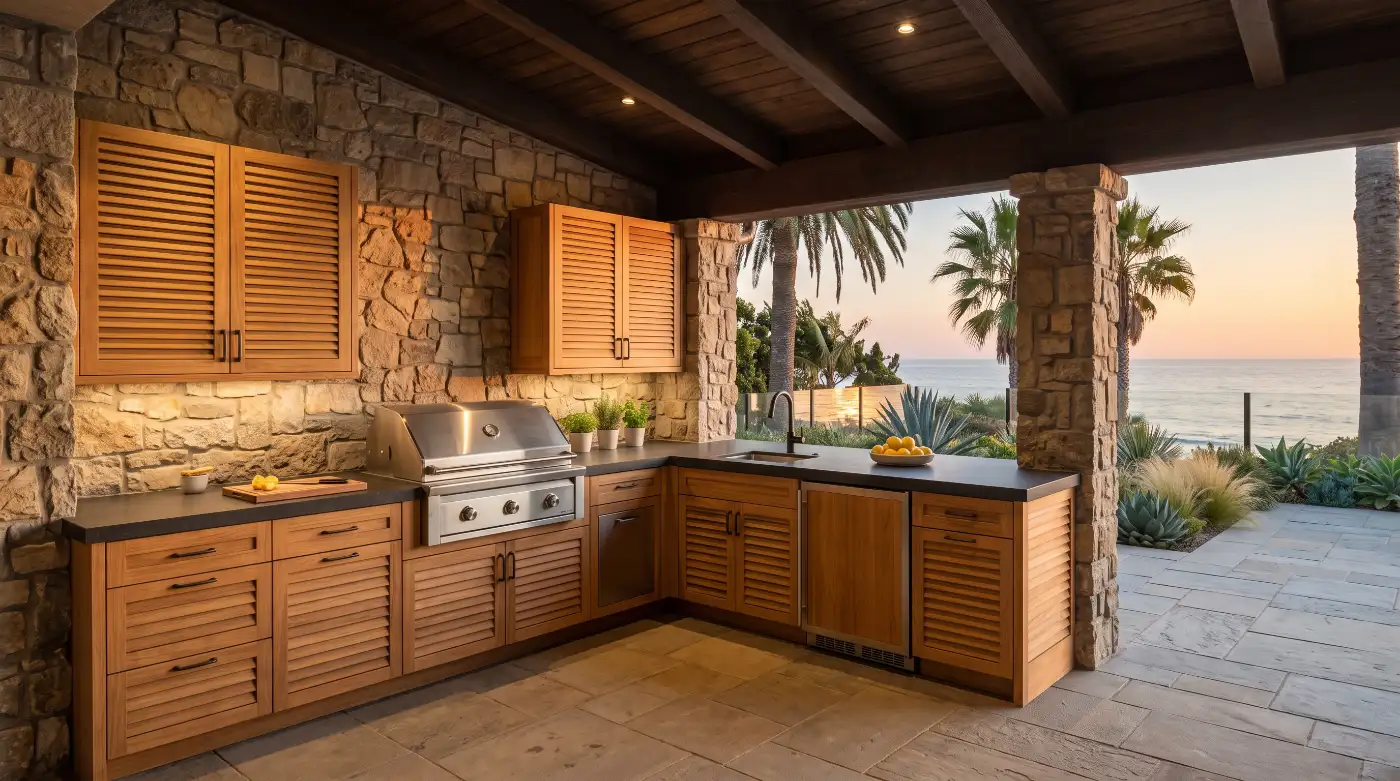
Material Synergy: Blending rustic stone fireplaces with precision-milled Grade-A teak cabinetry creates an enduring transitional aesthetic.
-
Marine Engineering: Engineered joinery and 316 stainless steel hardware prevent warping, delamination, and salt-air corrosion.
-
Architectural Workflow: Seamless integration of CAD specifications, stone weight distribution, and gas ventilation protects long-term structural integrity.
Designing a Transitional Resort-Style Outdoor Living Addition
A prominent coastal estate in Malibu recently suffered a costly structural failure when generic modular cabinetry delaminated after just two seasons of exposure to salt fog and ambient moisture. The homeowners had attempted to pair a massive, hand-cut fieldstone fireplace with mass-produced exterior storage units that lacked marine-grade hardware and proper expansion joinery. Trapped moisture behind the unventilated grill cutouts caused the underlying framework to swell, cracking the surrounding marble countertops and misaligning the drawer slides. True architectural luxury demands a harmonious blend of organic warmth, structural resilience, and precise engineering. Designing a transitional resort outdoor kitchen requires bridging traditional masonry elements with sleek, modern wood millwork built to withstand harsh outdoor elements.
How Grade-A Teak and Stone Synergy Defines Transitional Outdoor Kitchen Architecture
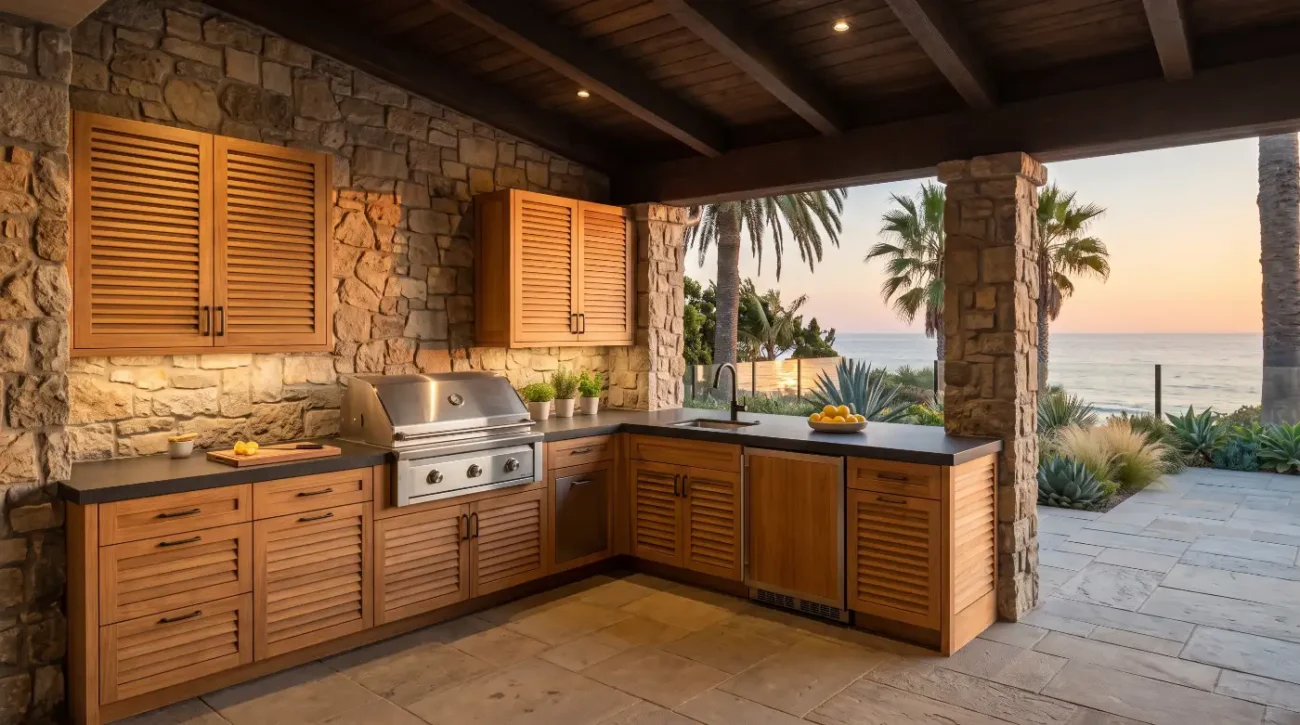
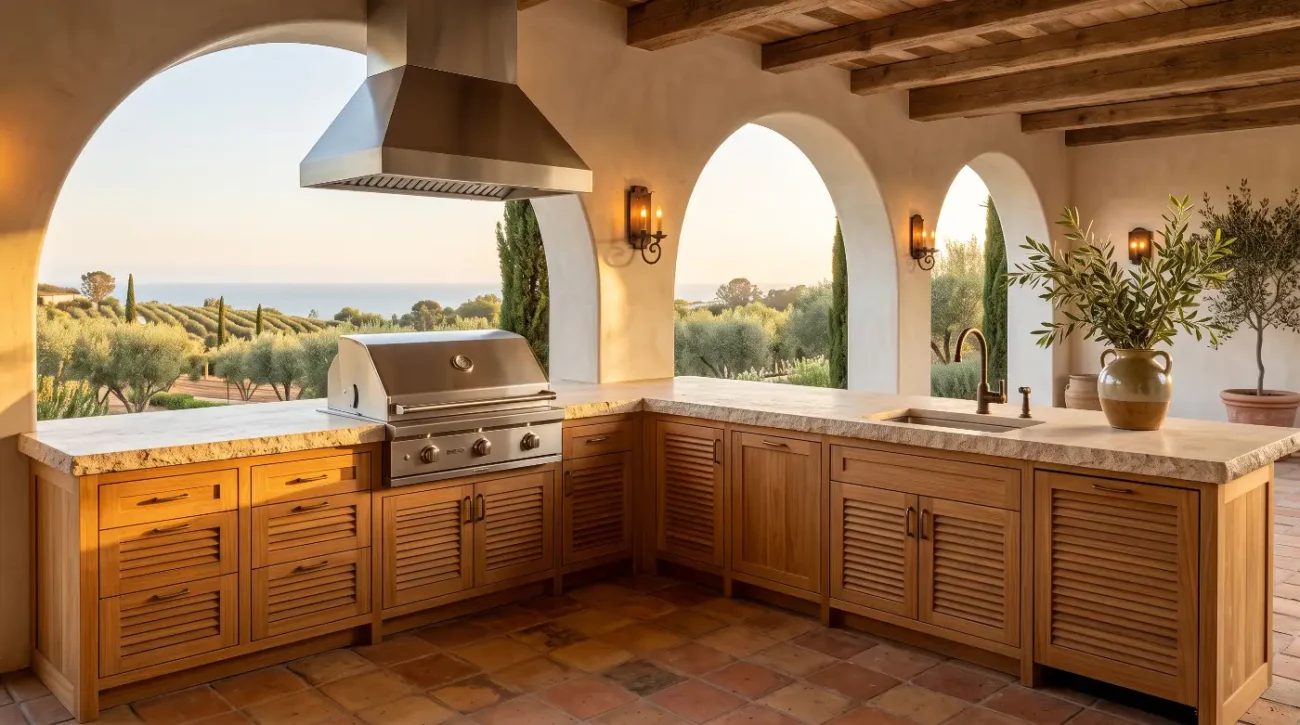
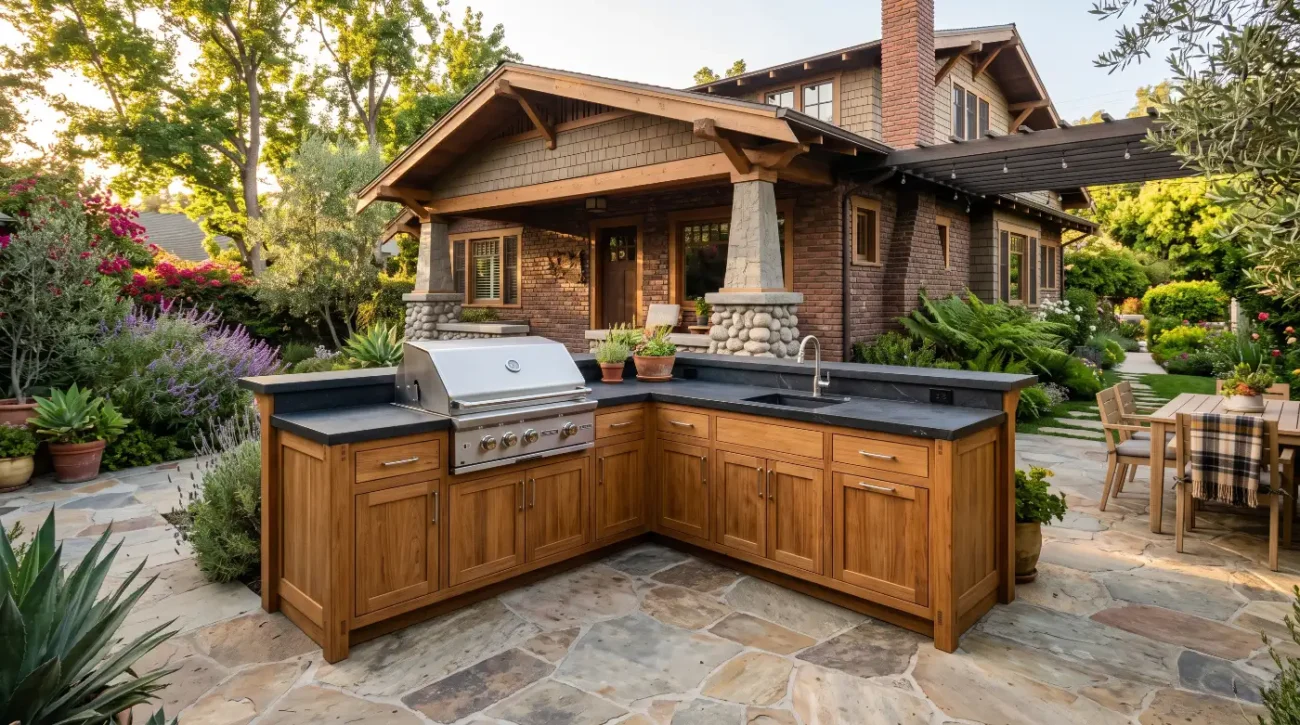
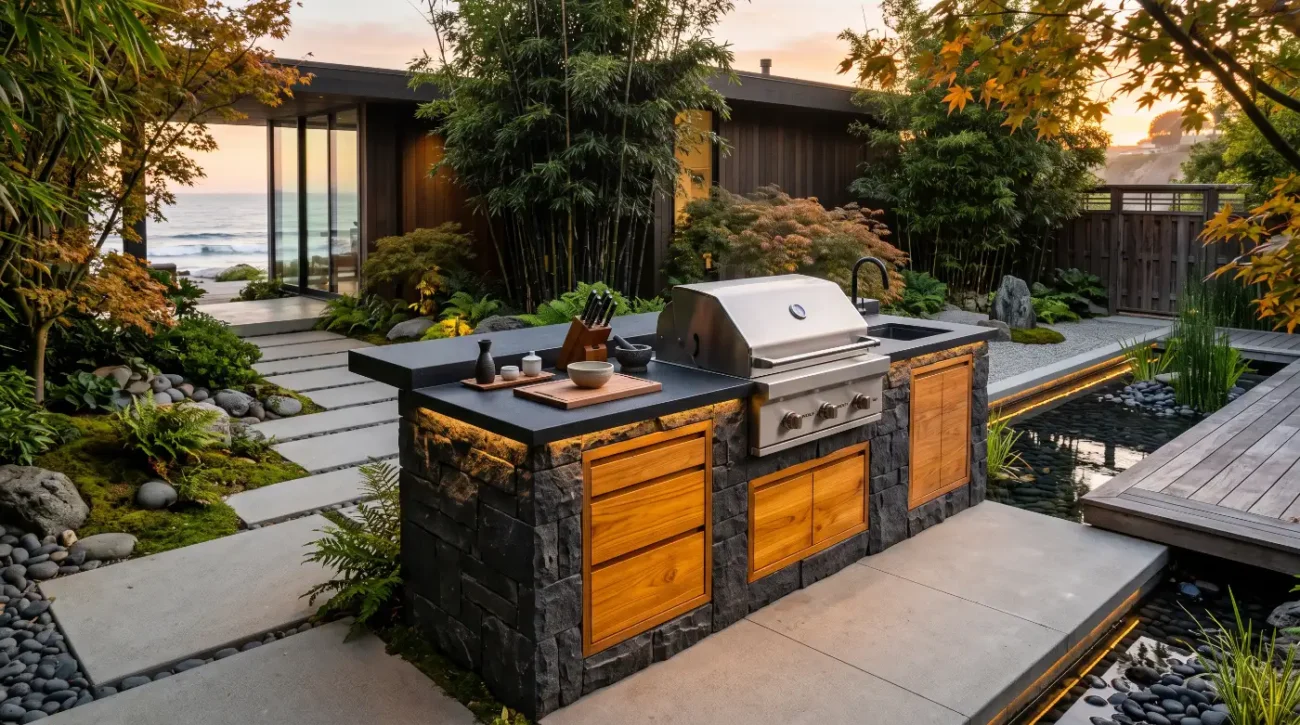
A transitional resort outdoor kitchen combines the rich, structural permanence of natural stone masonry with the refined elegance of custom teak millwork. Grade-A teak (Tectona grandis) contains exceptionally high concentrations of natural rubber resins and silica, creating an intrinsic barrier against moisture, salt fog, and extreme temperature fluctuations. When paired with traditional stone fireplaces, limestone hearths, or slate backsplashes, solid teak base units soften the rigid lines of masonry and bring a resort-like quality to outdoor loggias, covered patios, and coastal lanais.
When designing a resort-style retreat, high-net-worth homeowners and specifiers often struggle to balance structural heft with clean lines. Combining heavy stone wall elements with custom solid teak cabinetry creates a balanced visual contrast. Natural stone provides grounding and spatial definition, while precision-crafted wood fronts introduce tactile luxury.
Achieving this balance requires precise engineering. Solid wood responds to humidity and heat, meaning millwork must be built to allow micro-movements without putting stress on surrounding stone or concrete. Installing polyurethane finishes or rigid film-forming sealers on exterior teak creates internal moisture traps that cause blistering and rot. Instead, natural oil treatments allow the timber to breathe while protecting its rich, golden-brown hue.
-
Material Science Integrity: Grade-A heartwood harvested from mature teak trees delivers dense grain alignment and high natural oil content. This natural resistance prevents water absorption and structural bowing in extreme coastal humidity.
-
Joint Movement Allowances: Traditional mortise-and-tenon joinery combined with floating panel architecture allows individual door and drawer faces to expand and contract along the grain without disrupting adjacent cabinet alignment.
-
Thermal Isolation Dynamics: Positioning solid wood cabinetry adjacent to dense stone fireplaces prevents heat transference issues, creating a protective thermal break between hot appliance cutouts and ambient structural framing.
-
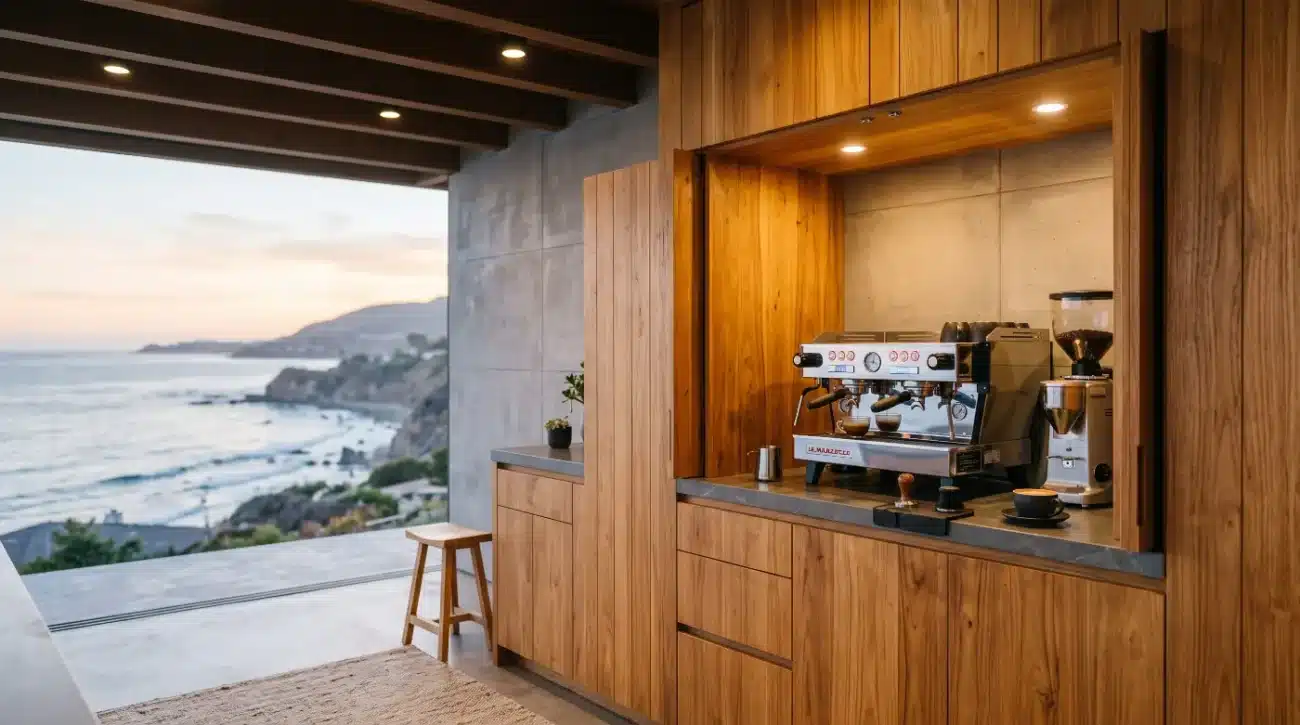
Architectural Flow: Extending interior cabinetry lines out to covered patios creates a seamless connection between indoor kitchens and outdoor resort spaces.
To explore engineered options for outdoor storage, explore the complete Pacific Teak Millworks base cabinets collection for coastal estates.
Landscape architects and interior designers working in sunbelt markets like Palm Springs, Miami, and Austin often present preliminary mood boards featuring rough-sawn stone alongside polished timber to give clients a clear vision of the finished space. These design concepts transition smoothly from D2C inspiration to B2B trade execution when specifiers use standardized CAD models. Accounting for appliance cutouts, countertop load capacities, and stone tolerances during the initial layout prevents costly field modifications during installation.
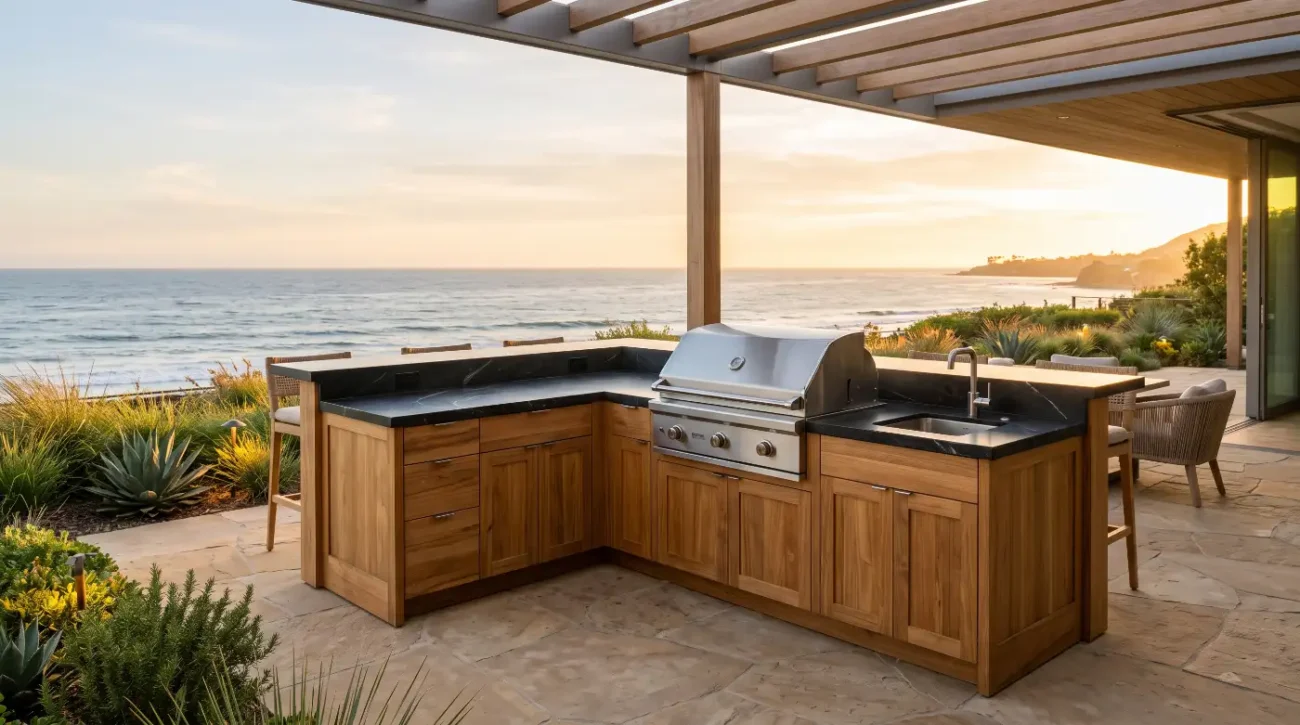
The weight of heavy countertop materials like thick granite, quartzite, or concrete slabs presents another critical engineering challenge. Custom teak framing must distribute vertical loads evenly down through marine-grade leveling legs, preventing sag that could bind soft-close drawers. Integrating sleek, elevated storage creates practical vertical organization without taking up floor space on small covered decks. Specifiers can integrate elevated storage options by reviewing the Pacific Teak Millworks wall cabinets collection for custom architectural builds.
A common oversight when installing cabinetry against textured stone walls is failing to account for uneven masonry surfaces. Without custom face-frames, scribe lines, and weather-sealed gaskets, wind-driven rain can pool behind cabinet backs, creating moisture pockets against the wall. Master woodworkers resolve this by building flush framing tolerances directly into the cabinet box, ensuring a water-tight seal against rough stonework.
Strategic trade-offs play a big role in long-term aesthetic planning. Homeowners must choose between applying periodic teak oil treatments to maintain a warm golden-brown luster or letting the timber naturally age into a low-maintenance silver patina. Both options preserve the wood’s structural integrity, but agreeing on a maintenance plan early on helps align client expectations with long-term care needs.
Why Marine-Grade Hardware and Engineered Joinery Prevent Exterior Millwork Failures
Marine-grade 316 stainless steel hardware combined with floating panel joinery prevents structural failure in high-humidity and salt-air environments. Standard 304 stainless steel and zinc-coated hardware quickly corrode when exposed to coastal salt air, leading to rust stains and mechanical failure. Combining 316 stainless steel soft-close hinges, full-extension drawer glides, and mortise-and-tenon wood joinery ensures door alignments stay true even under heavy daily use and extreme thermal cycles.
To ensure long-term durability in outdoor luxury living spaces, every mechanical component must withstand constant weather exposure. Salt air, intense UV rays, and sudden temperature shifts can quickly degrade lesser materials. Using marine-grade hardware protects moving parts from seizing, binding, or rusting over time.
-
316 Stainless Steel Resilience: Chromium, nickel, and molybdenum alloys offer exceptional resistance to chloride pitting, protecting glides, hinges, and fasteners in harsh coastal climates.
-
Mortise-and-Tenon Framing: Interlocking wood joinery secured with exterior-grade adhesives distributes load stress across the cabinet frame, preventing sag under heavy stone counters.
-
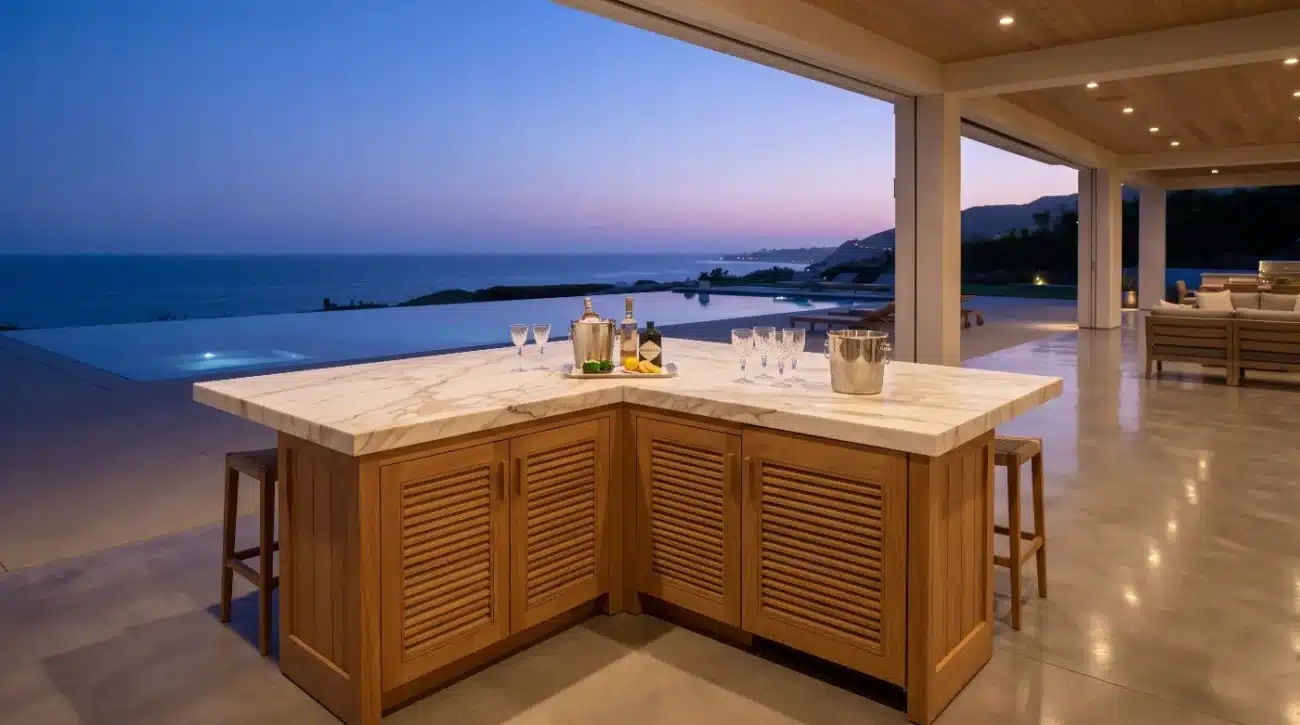
Ventilation and Heat Dissipation: Integrated rear venting louvers prevent gas buildup around fuel lines while letting excess heat escape from high-BTU outdoor grills.
-
Precision Leveling Systems: Heavy-duty adjustable leg assemblies compensate for sloped patio drainage, keeping counter surfaces perfectly level.
For detailed hardware specifications and care recommendations, download the Pacific Teak Millworks Teak Care & Maintenance Guide PDF.
When trade professionals design custom outdoor kitchen layouts, bridging the gap between CAD drawings and jobsite conditions is critical to a smooth installation. Sub-contractor schedules must account for lead times, stone fabrication timelines, and trade-certified plumbing and electrical rough-ins. Skipping rear ventilation slots behind gas appliances creates dangerous heat pockets that can scorch cabinetry interiors and trigger thermal shutoff switches on premium outdoor cooking equipment.
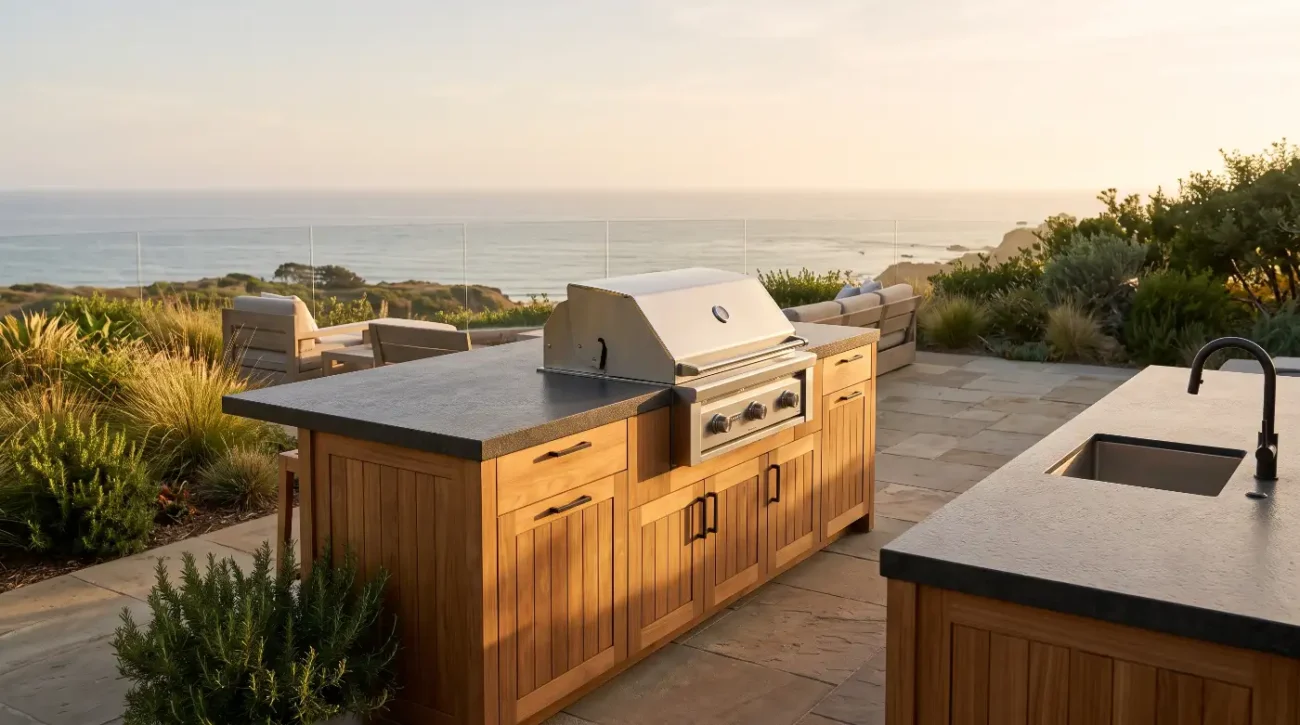
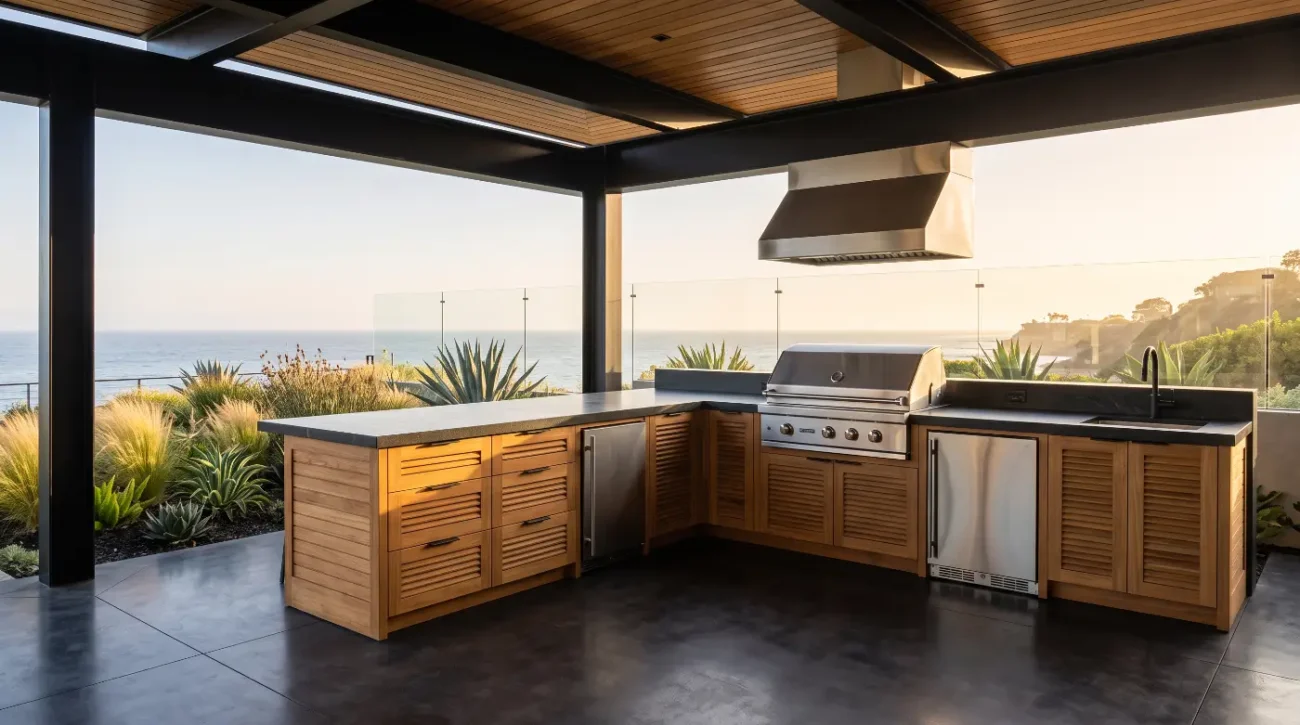
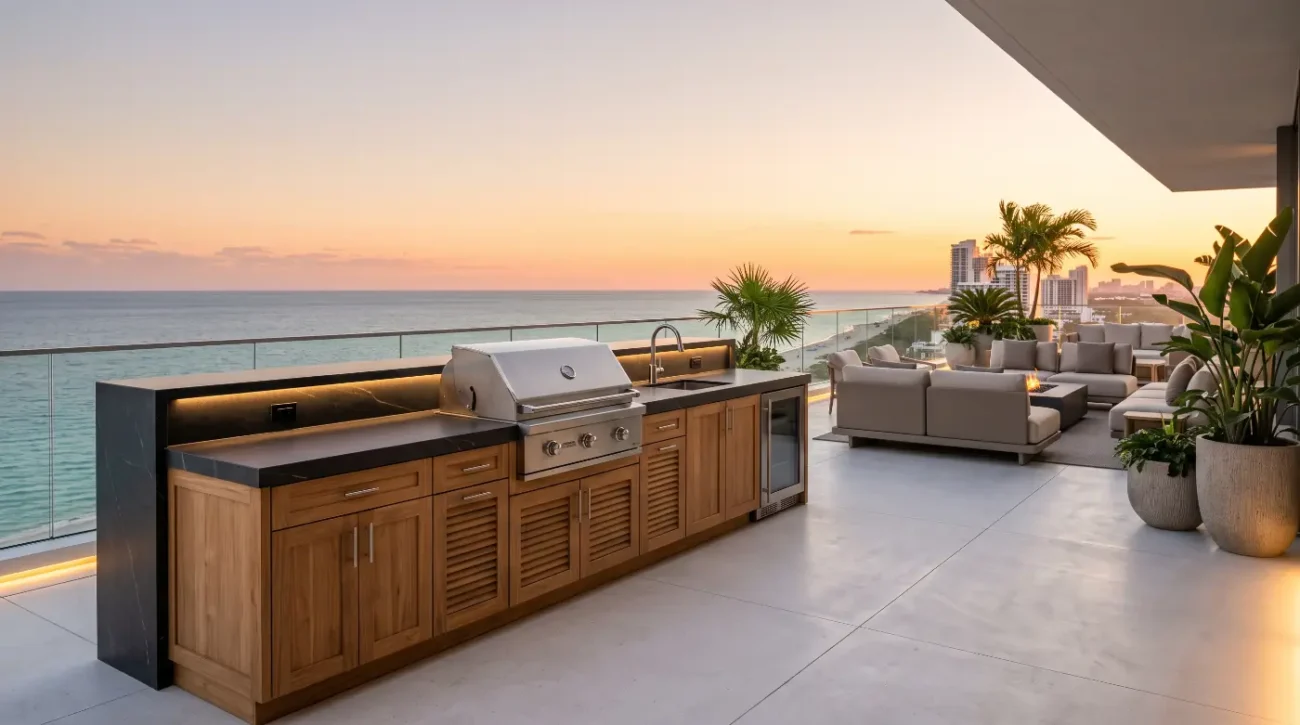
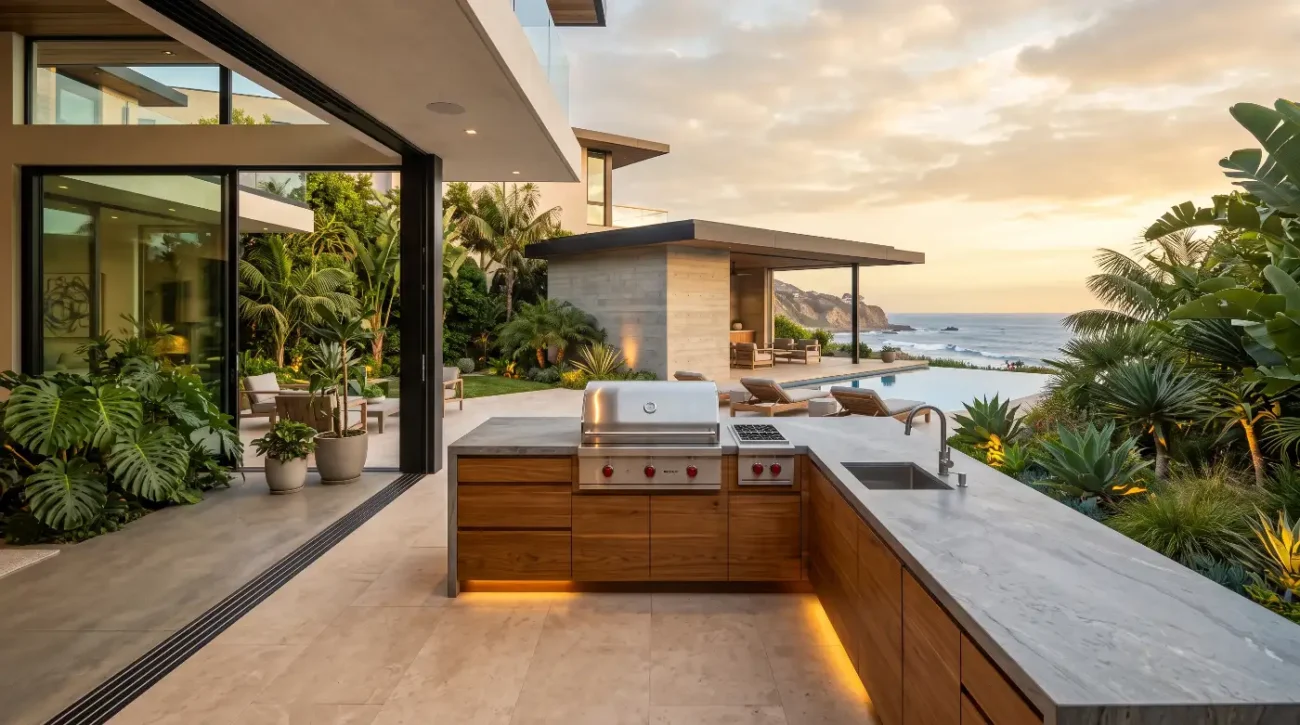
Combining dark porcelain slab countertops with golden teak door fronts creates an appealing visual contrast in modern transitional spaces. Dark, non-porous porcelain surfaces resist staining from cooking oils and red wine, while the natural wood grain below brings warmth and organic texture to the overall design.
Failing to properly support heavy stone countertops on outdoor cabinetry is a frequent installation mistake. Granite or quartzite slabs resting on unsupported spans can put excess weight on drawer boxes, causing mechanisms to bind or crack under load. Solid teak web frames and center support rails absorb and distribute these heavy vertical loads, keeping drawers operating smoothly year-round.
Trade specifiers can review comprehensive product coverage, material guarantees, and structural standards by referencing the Pacific Teak Millworks Warranty Documentation PDF.
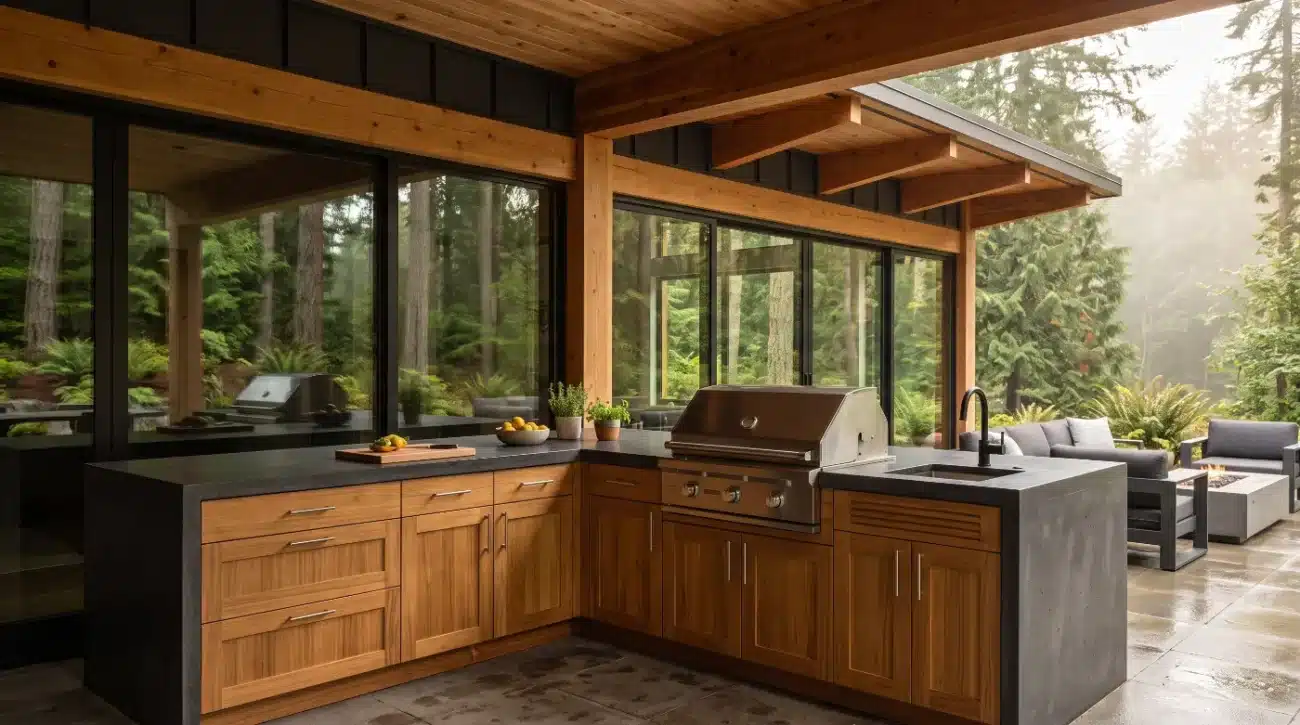
Understanding how wood responds to seasonal climate shifts is key to long-term performance. In freezing damp climates like the Pacific Northwest, wood absorbs ambient moisture and expands slightly across the grain. In dry desert regions like Palm Springs, that same timber contracts as moisture evaporates. Precision millwork accounts for this natural expansion and contraction by maintaining exact clearance gaps between door faces, preventing binding without sacrificing tight, clean lines.
Integrating island inserts and utility access doors into solid stone structures allows builders to combine modern storage convenience with rustic masonry features. Specifiers can view full dimensions and configurations across the Pacific Teak Millworks island inserts collection for custom masonry builds.
External References:
Key Takeaways:
-
Material Synergy: Pairing Grade-A teak cabinetry with natural stone fireplaces creates an enduring transitional design that bridges classic and modern outdoor architecture.
-
Marine-Grade Hardware: Specifying 316 stainless steel hinges, glides, and fasteners prevents rust and mechanical failure in salt-air coastal environments.
-
Wood Science: Mortise-and-tenon joinery combined with floating panel construction allows wood to expand and contract naturally without warping or binding.
-
Structural Load Support: Reinforced cabinet framing and heavy-duty leveling legs distribute thick stone countertop loads evenly to prevent drawer binding.
-
Ventilation: Built-in cabinet venting prevents heat buildup and gas accumulation around high-output outdoor grills and appliances.
Call to Action: Whether you are a homeowner curating design inspiration or an architect specifying a luxury coastal estate, Pacific Teak Millworks offers the engineering expertise and custom craftsmanship your project requires. Request material samples, download complete CAD libraries, or schedule a direct trade consultation today by visiting the Pacific Teak Millworks Contact Us page or reaching out to Darin directly at (949) 365-6513.