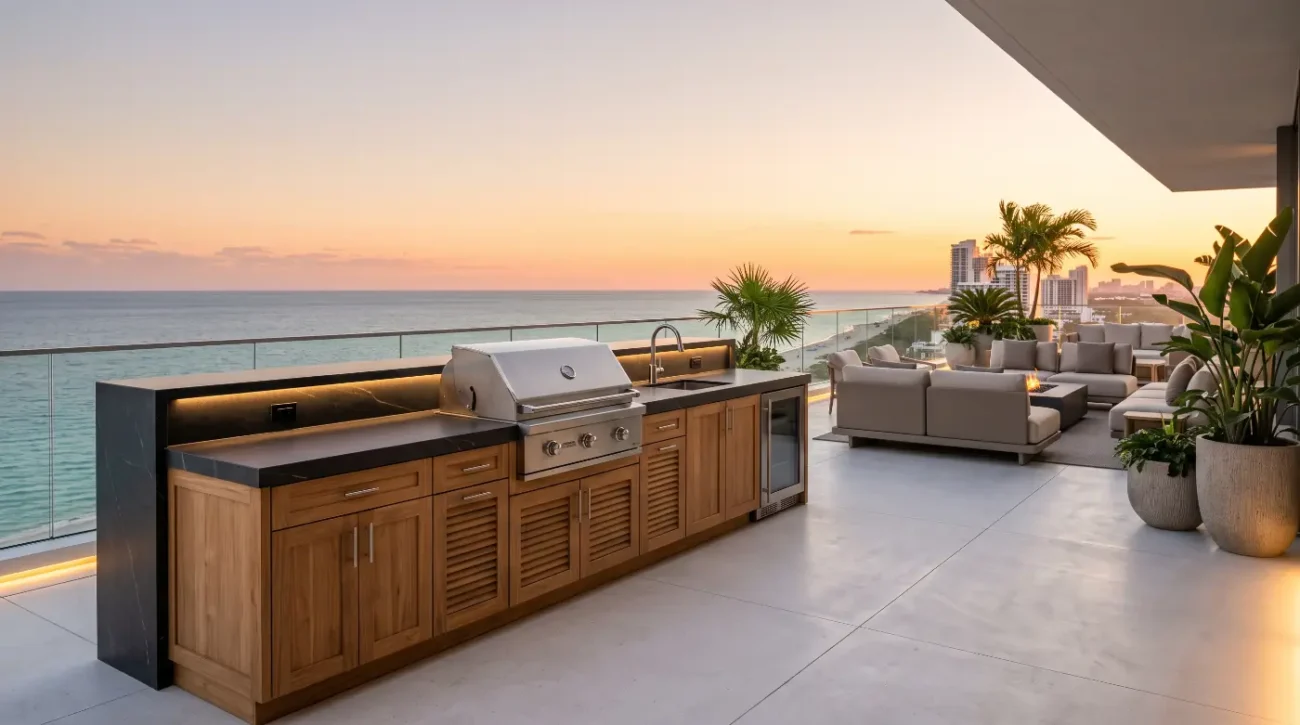
Executive Summary:
-
Engineered Load Capacities: Solid Grade-A teak cabinetry frameworks support high-mass stone and cast concrete slabs up to one hundred pounds per linear foot without structural sag.
-
Marine Joinery Integrity: Traditional mortise-and-tenon joinery combined with 316 stainless steel hardware neutralizes coastal humidity, rot, and intense thermal expansion.
-
Fully Assembled Delivery: Cabinet boxes arrive on site fully assembled with factory-trued squareness,requiring simple field leveling, appliance bay alignment, and perimeter fastening.
-
Bespoke Modification Breadth: Full design integration accommodates custom appliance cutouts, vent runs,electrical drop-ins, and flexible modular island layouts.
A Malibu landscape architect recently uncovered an expensive disaster three months post-handover. A two-inch mitered quartzite slab had crushed a competitor’s modular aluminum and wood veneer outdoor kitchen. The leveling system buckled under the static dead load, the hinges seized with aggressive salt pitting, and unventilated grill heat charred the interior framing panels.
High-end exterior design demands architectural-grade material engineering rather than indoor-rated cabinetry dressed in exterior veneers. When homeowners build mood boards and present them to landscape architects, interior designers,or general contractors, a technical gap often emerges between aesthetic vision and structural reality.
Understanding cabinetry weight limits, marine-grade durability, joinery physics, and custom modification boundaries is essential before specifying high-performance outdoor casework. Reviewing our technical specifications and reading the Frequently Asked Questions (PDF) provides the baseline data needed to safeguard your residential project from premature structural failure.
Engineering, Assembly, and Structural Specifications for Solid Teak Cabinets
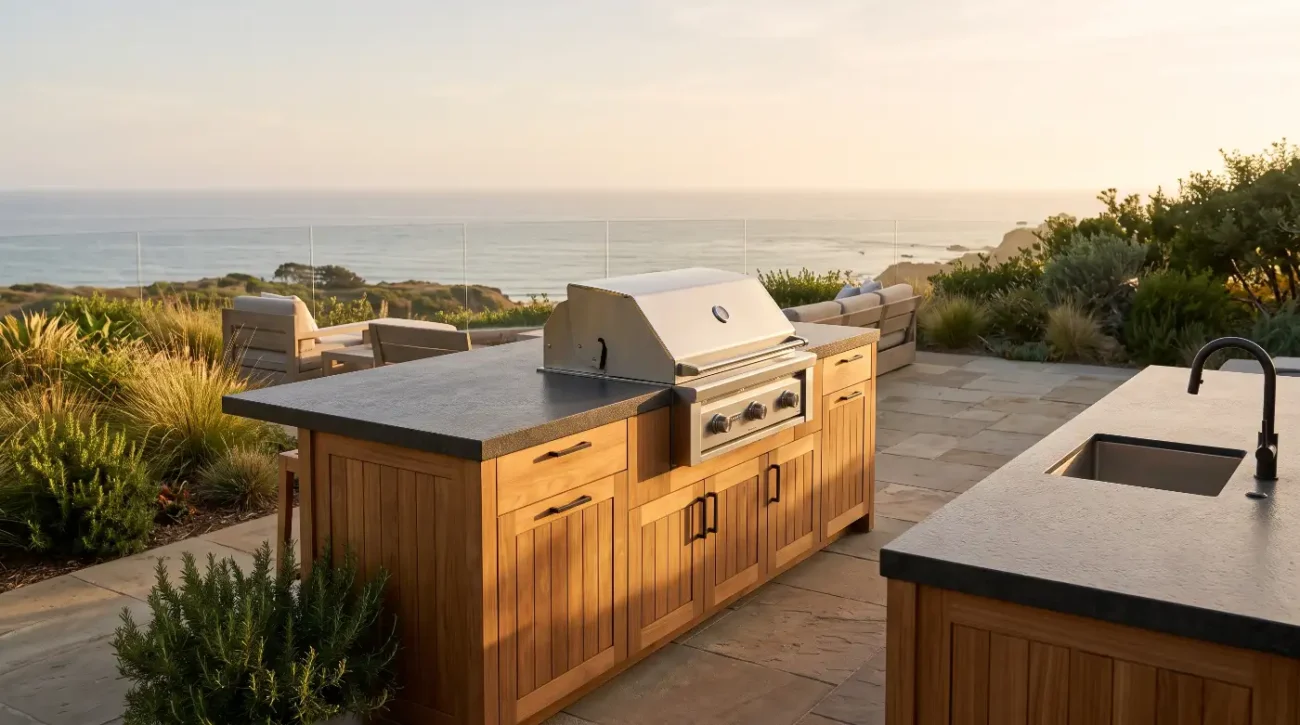
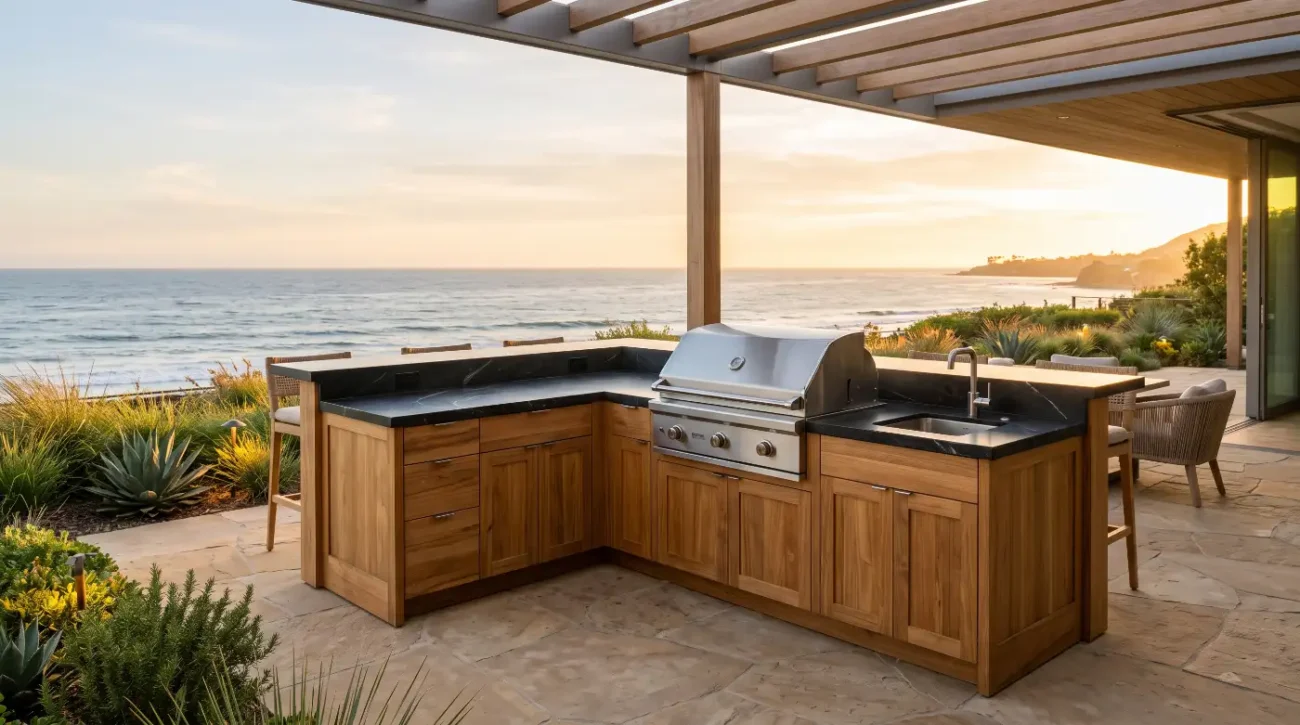
Solid Grade-A teak cabinetry engineered by Pacific Teak Millworks supports heavy quartzite, granite, and concrete countertops while arriving fully assembled for rapid field installation. Utilizing mortise-and-tenon joints, waterproof polyurethane adhesives, and marine-grade leveling legs, these modular units eliminate site-built framing errors and support up to one hundred pounds per linear foot.
Countertop Load Limits and Structural Weight Distribution
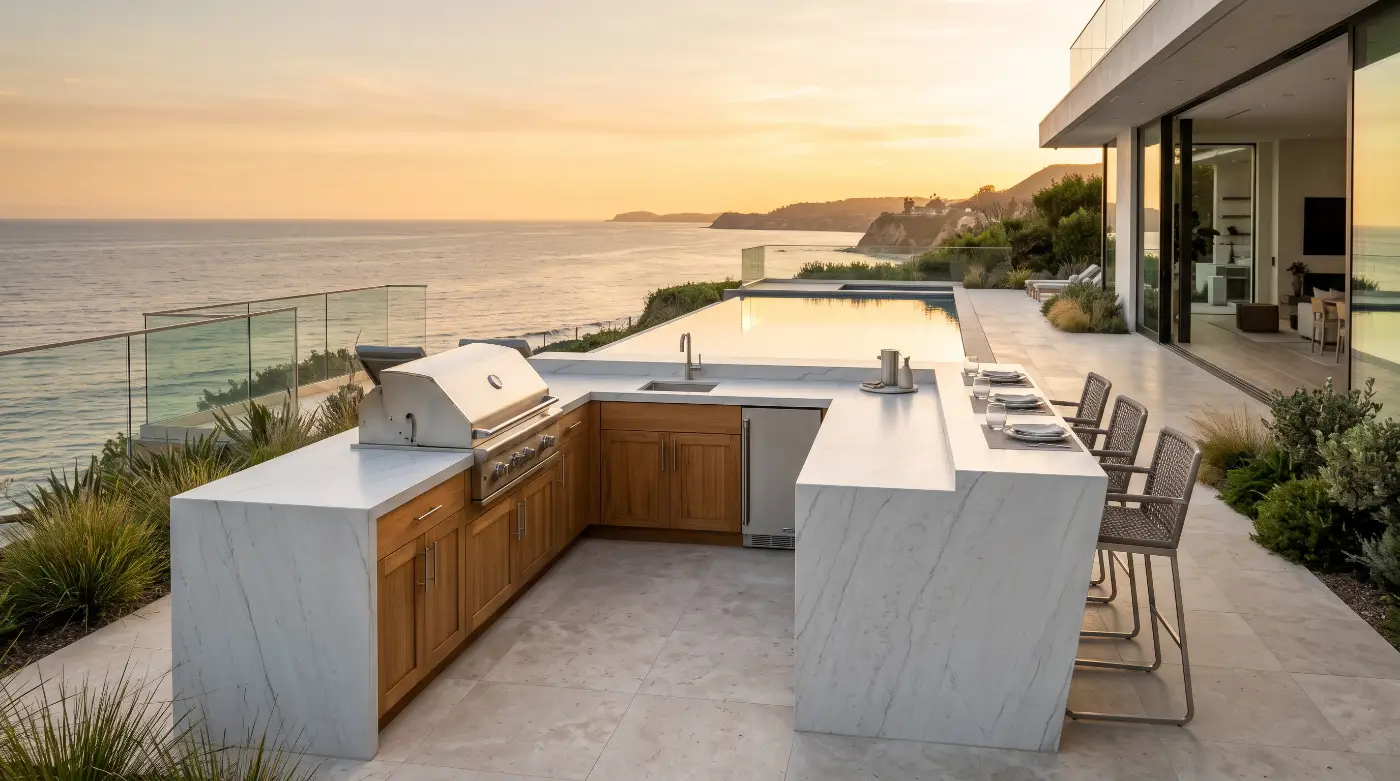
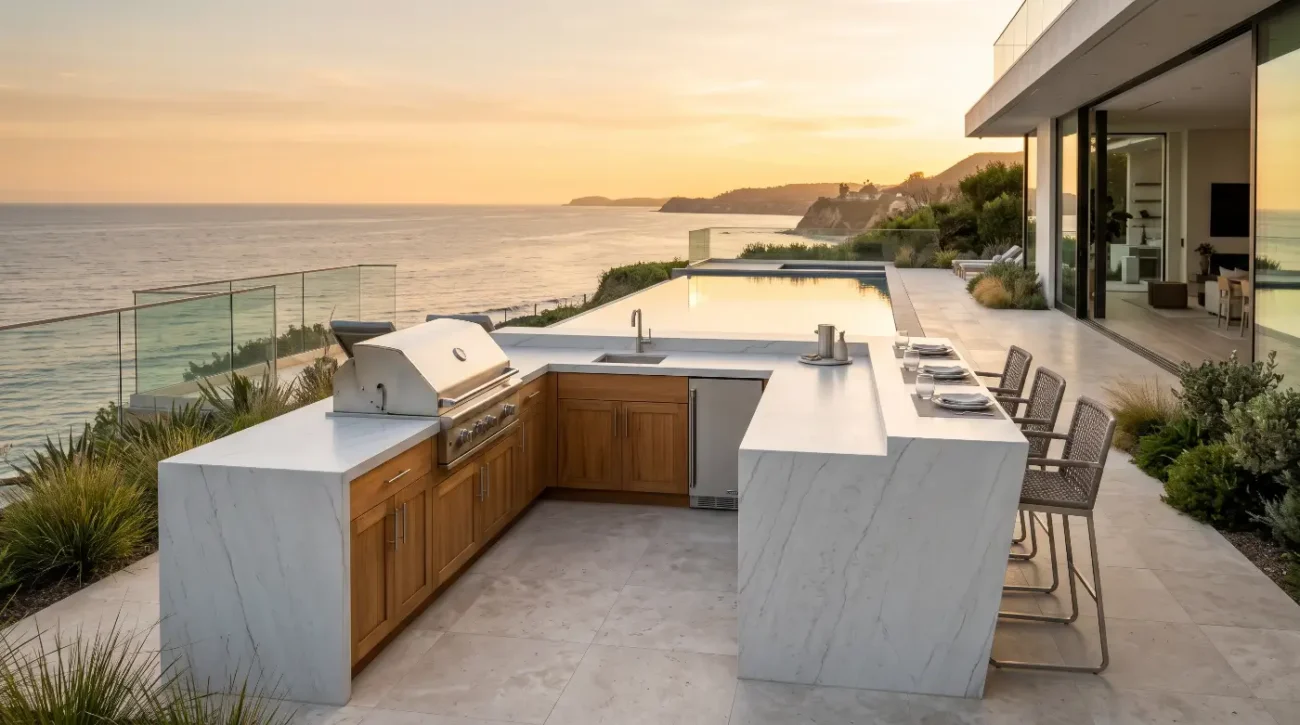
Dense natural stone slabs place immense downward force on outdoor casework. A three-centimeter granite or engineered porcelain surface weighs between fifteen and twenty-five pounds per square foot. When landscape designers specify two-inch mitered waterfall edges, the total dead weight distributed across an island footprint easily climbs into thousands of pounds.
Grade-A Tectona grandis exhibits outstanding fiber strength and natural compression resistance along its grain.According to structural research conducted by the USDA Forest Products Laboratory, mature teak boasts a high modulus of rupture and shear strength, outperforming cedar, redwood, and synthetic wood composites under sustained dead loads.
Our interior box frames utilize solid teak stiles and heavy structural rails reinforced with concealed mechanical joinery.Each cabinet base transfers dead load directly down through solid corner blocks into industrial-rated leveling legs. This mechanical architecture prevents vertical racking, corner joint spreading, and horizontal sway across expansive outdoor kitchen islands.
A costly mistake made during installation is distributing countertop weight across unlevel cabinetry runs. When base units fall out of level across a run, the stone bridges high points and concentrates pressure onto single cabinet walls,risking stone cracking and door binding. Using precision leveling legs ensures the continuous horizontal load plane required for heavy masonry installations.
Flat-Pack Versus Fully Assembled Factory Delivery
Site assembly introduces human error, loose fasteners, and out-of-square assemblies that degrade rapidly under outdoor weather exposure. Moisture immediately attacks mechanical fastener holes and dowel pockets that lack factory-applied sealants.
Pacific Teak Millworks builds, squares, and finishes all cabinetry inside a temperature-controlled facility. Cabinet carcases ship fully assembled, squared to precise tolerances, and pre-fitted with marine-grade hardware before crating.
When our crates arrive at residential jobsites in Austin, Palm Springs, or the Hamptons, the installation team uncrates the rigid modules and executes a streamlined four-step placement workflow:
-
Position the base modules according to the project floor plan and utility rough-ins.
-
Turn the heavy-duty leveling bolts to establish a true horizontal reference plane across finished grade.
-
Clamp adjacent solid teak face-frames together to eliminate joint gaps.
-
Drive structural connector hardware through pre-drilled factory pilot locations to unify the run.
This workflow saves days of on-site contractor labor, bypasses sub-contractor scheduling bottlenecks, and delivers the clean factory tolerances that drop-in luxury appliances require.
Custom Cutouts and Architectural Modification Workflows
Off-the-shelf cabinetry forces architects to design around rigid, predetermined unit sizes. Luxury exterior living spaces instead demand modular units tailored to custom site footprints, architectural columns, and perimeter retaining walls.
Our architectural workflow allows designers, builders, and homeowners to customize casework around unique site dimensions. Specifiers can submit project elevations and floor plans to our design team for seamless CAD integration.
-
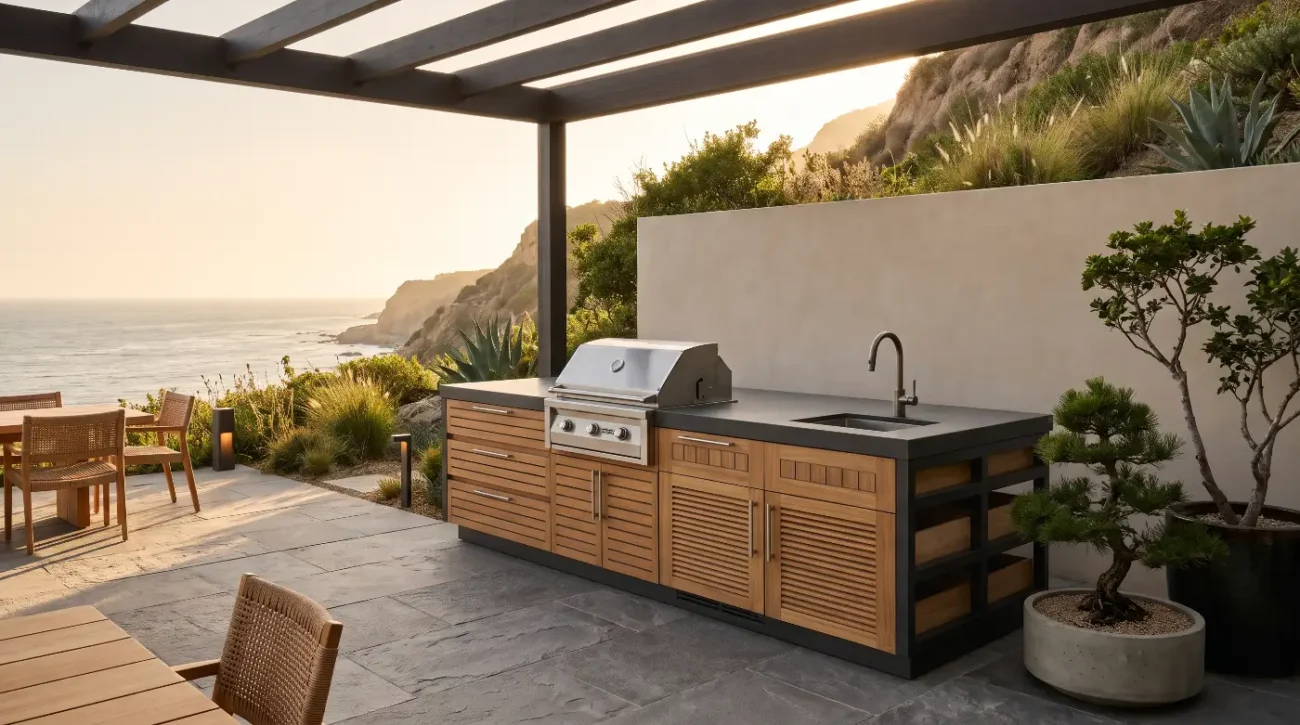
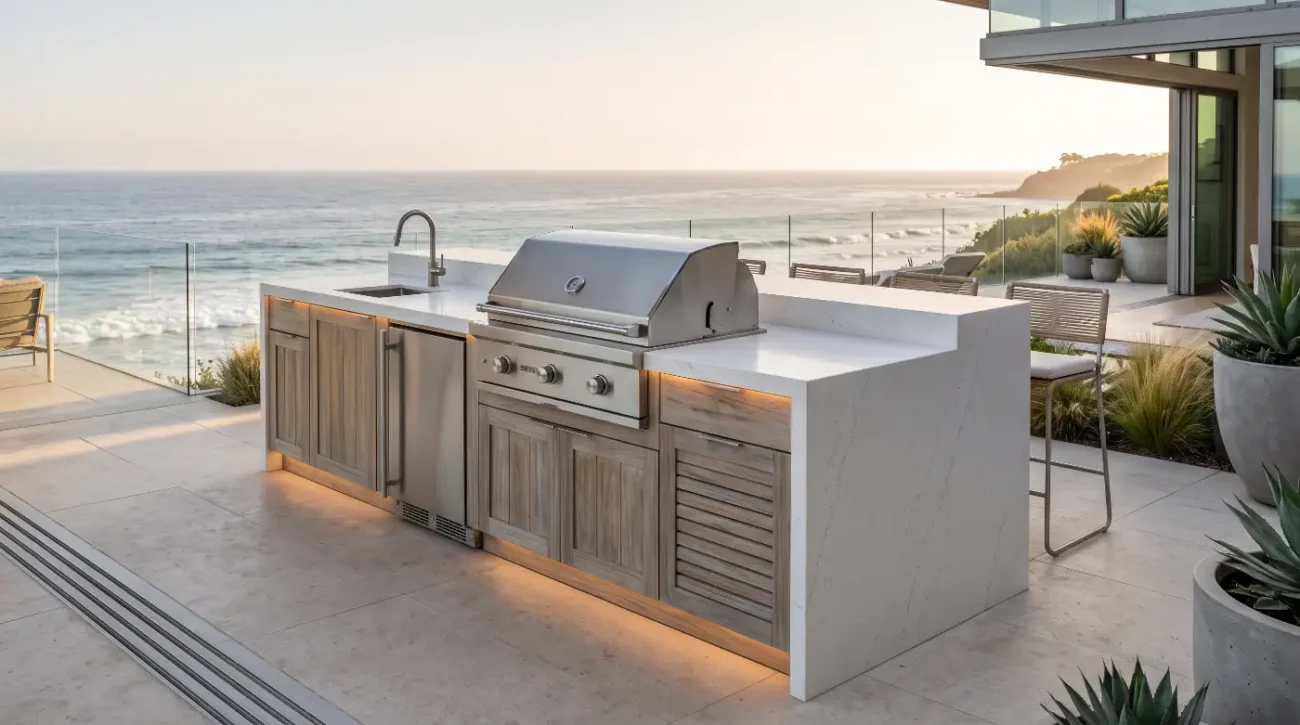
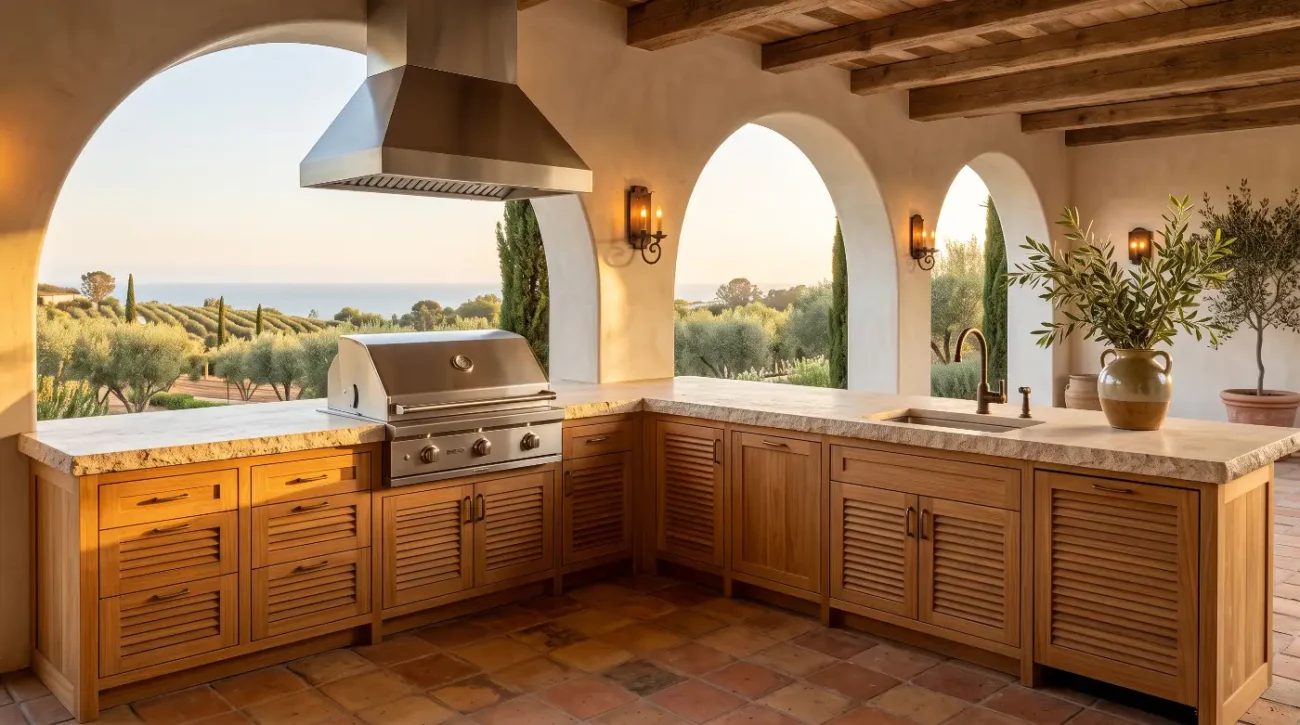
Grill Bay Sizing: Precise cutouts accommodate drop-in gas grills, power burners, ceramic smokers, and griddles, matching manufacturer clearances to the millimeter.
-
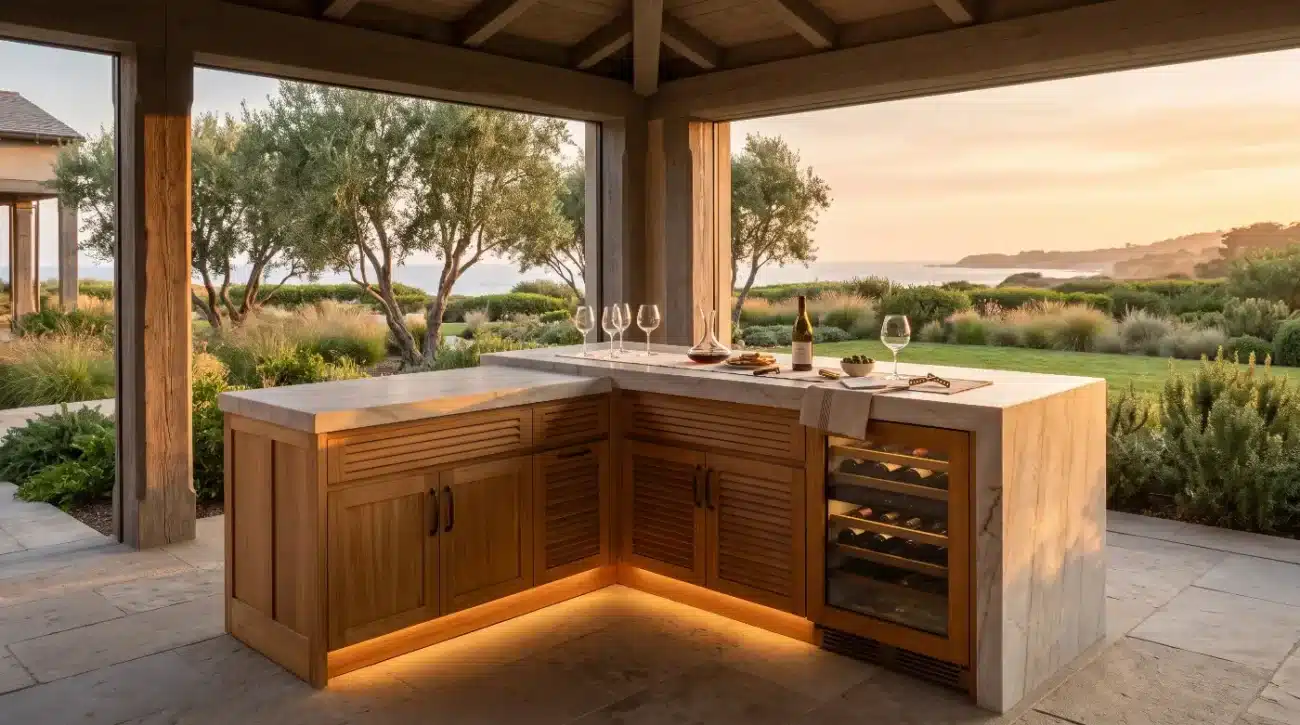
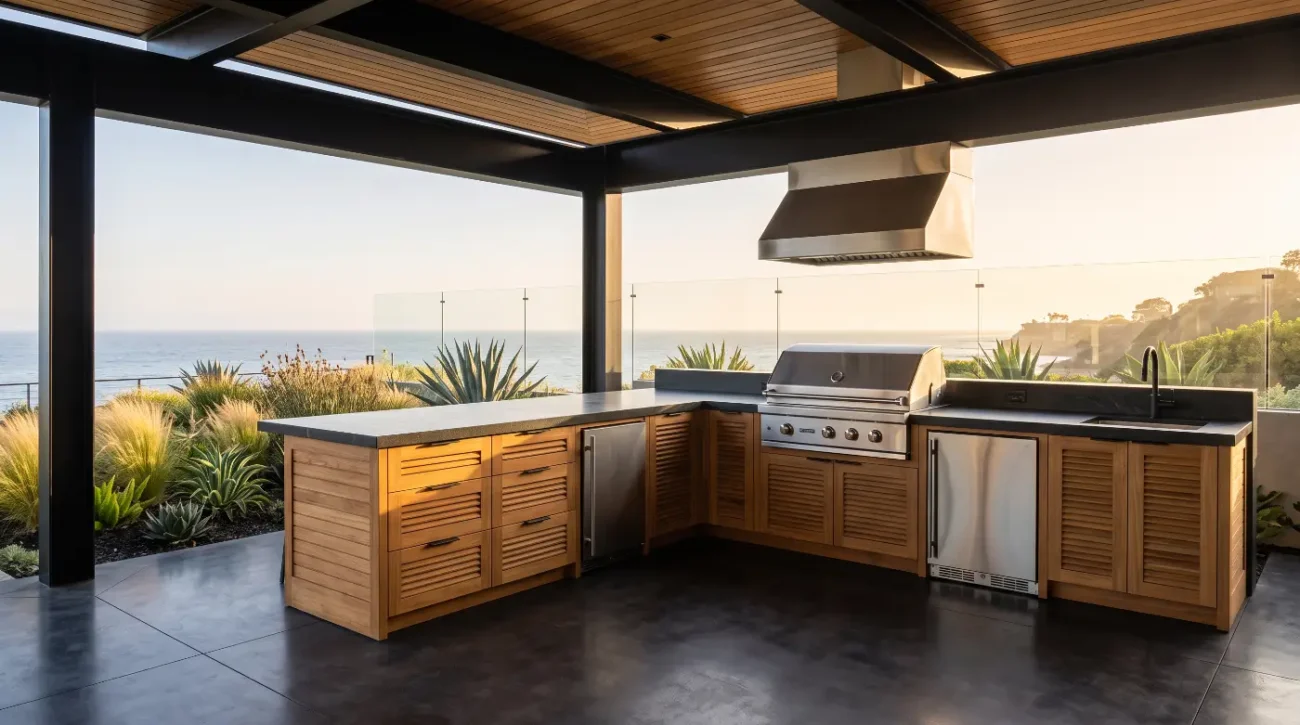
Appliance Flange Integration: Integrated face-frame reveals accept outdoor refrigerators, wine chillers, and clear ice makers without catching door seals.
-
Chassis Vent Alignment: Factory cutouts in rear and side panels facilitate airflow paths for gas lines, electrical chases, and plumbing drops.
-
Storage Modifications: Cabinets accept custom drawer orientations, pull-out trash sorting bins, and custom interior shelf layouts.
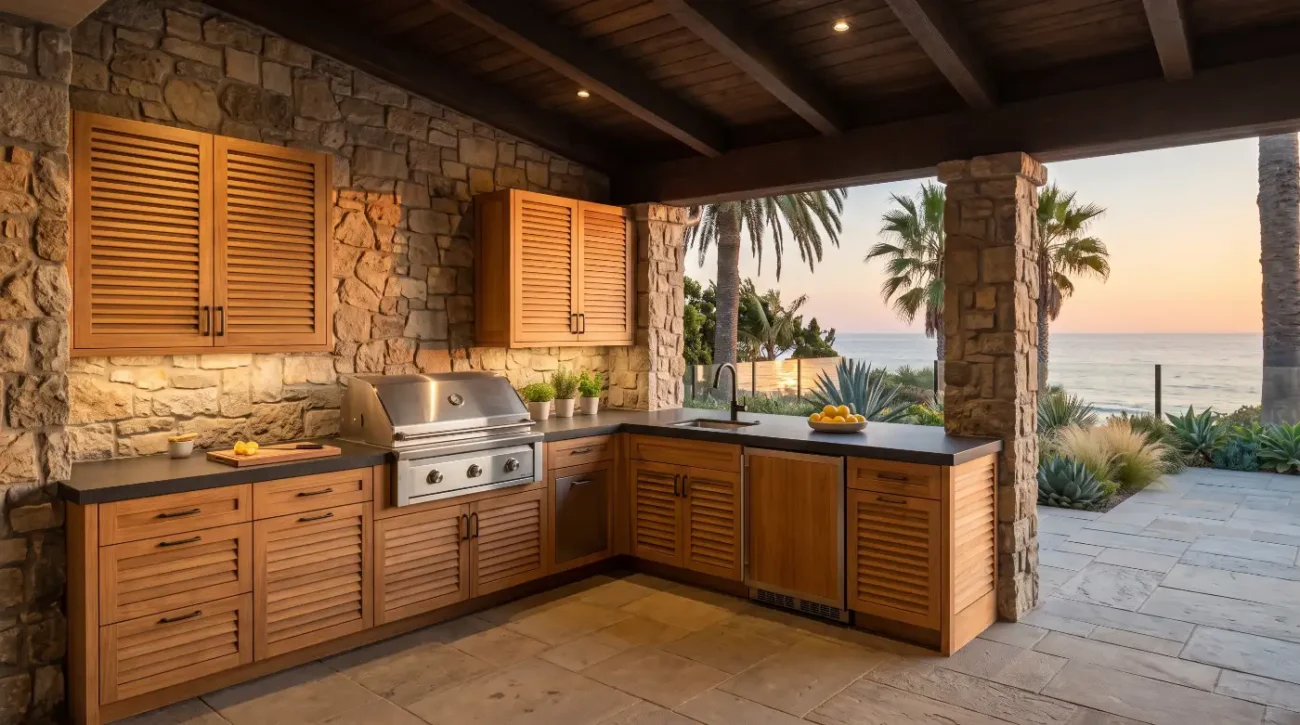
To explore how these individual pieces integrate into unified, chef-ready exterior installations, review our Base Cabinets Collection for specific dimensions, interior configurations, and appliance-ready enclosures.
316 Marine-Grade Stainless Steel Hardware Performance
Standard 304-grade stainless steel hardware pits, discolors, and seizes within six months of coastal salt mist exposure.The chlorine ions in coastal air quickly penetrate surface passivity layers on low-grade metals, causing galvanic staining and mechanical failure.
Pacific Teak Millworks specifies only 316 marine-grade stainless steel for structural fasteners, shelf pins, full-extension drawer slides, and concealed soft-close hinges. The addition of molybdenum in 316 stainless steel prevents pitting corrosion and crevice rust in marine environments like Newport Beach or Miami.
Concealed soft-close hinges operate cleanly through thousands of cycles despite salt air and fluctuating humidity.Drawer slides remain smooth even when loaded with fifty pounds of cast-iron cookery. Combining solid teak with 316 stainless steel avoids galvanic corrosion and prevents the chemical stains that occur when lesser metals contact wood tannins.
Standard Architectural Specification Criteria
Every piece of millwork leaving our shop adheres to strict architectural criteria to ensure longevity across demanding microclimates:
-
Timber Grade Standard: Exclusively Grade-A plantation-grown Tectona grandis, selecting heartwood timber cut from mature trees to ensure maximum oil saturation and dense growth rings.
-
Hardware Metal Specification: Fully certified 316 marine-grade stainless steel across all hinges, soft-close dampening cartridges, undermount slides, fasteners, and interior shelf supports.
-
Structural Load Rating: Verified capacity exceeding one hundred pounds per linear foot, specifically engineered to support quartzite, granite, poured concrete, and engineered porcelain slabs.
-
Assembly Protocol: Shipped fully assembled with factory-trued squareness, internal corner blocking, and heavy-duty adjustable marine leveling legs.
-
Environmental Exposure Rating: Engineered for direct, unshaded exposure across coastal saltwater zones,high-UV desert climates, freeze-thaw northern winters, and humid tropical regions.
Material Durability, Environmental Defense, and Finish Maintenance
Grade-A teak endures extreme UV rays, salt spray, and seasonal moisture through its high natural oil and silica density.Natural oil retention prevents dry rot and seasonal splitting, allowing owners to choose between preserving the original golden tone or letting the wood age into a silvery-grey patina.
Wood Anatomy and Natural Protection Mechanisms
Teak wood performance hinges on the structural difference between inner heartwood and outer sapwood. Many budget exterior furniture lines mix yellow-white sapwood into their builds to cut production costs. Sapwood lacks protective natural oils, absorbs moisture quickly, and decays within several seasons.
Pacific Teak Millworks selects exclusively Grade-A teak heartwood sourced from mature trees grown in sustainably managed plantations certified by the Forest Stewardship Council. Heartwood possesses a tight, straight grain packed with organic silica, natural tectoquinones, and high concentrations of protective rubber resins.
-
Silica Content Defense: High silica content naturally repels water, resists marine borers, and thwarts fungal decay without chemical pressure treatments.
-
Internal Moisture Resistance: Natural rubber resins repel liquid water, minimizing expansion and contraction during wet and dry seasonal cycles.
-
Rot Prevention Chemistry: Natural tectoquinones within the heartwood act as natural insecticides, preventing termites and dry wood pests from burrowing into the timber.
-
Grain Stability: Radial and tangential shrinkage remains exceptionally low, preventing miter separation, frame cupping, and door binding in variable climates.
These botanical properties allow solid teak millwork to survive harsh climates, from damp Pacific Northwest winters to scorching Palm Springs summers.
Heat Mitigation and Gas Ventilation Standards
Homeowners and novice builders frequently overlook the extreme heat generated by premium outdoor grills. Built-in gas appliances radiate high temperatures sideways and downward into surrounding cabinetry.
Trapping heat against enclosed wooden or composite cabinetry creates a structural fire hazard and degrades the joinery.Outdoor kitchen codes mandate proper venting for liquid propane and natural gas lines. Propane is heavier than air and sinks to the floor, while natural gas rises.
Every Pacific Teak Millworks grill base cabinet features dedicated ventilation channels and integrates insulated grill jackets. An insulated jacket creates a stainless steel heat barrier between the grill chassis and the teak structure,isolating operating temperatures.
Dedicated low-level and high-level vents built into the cabinetry prevent dangerous gas pocket accumulation and vent excess radiant heat. This maintains cabinet structural integrity while meeting standard residential fire codes.
Balancing Golden Teak Finishes with Natural Weathering
A common myth claims teak requires harsh chemical sealers, lacquers, or synthetic polyurethane topcoats. In reality,applying film-forming clear coats on outdoor teak causes severe finish failure.
Teak breathes and sheds micro-moisture through surface pores. Synthetic polyurethane or epoxy clear coats trap moisture underneath the film. Solar UV exposure breaks the mechanical bond, causing the clear coat to milk, bubble,peel, and trap water that rots the timber.
Owners face an aesthetic choice between two distinct design directions:
-
Maintain the rich golden-brown luster by applying a specialized, breathable marine teak oil or penetrating matte sealer once or twice a year to replenish surface oils bleached out by direct sunlight.
-
Allow the wood to weather naturally by letting the sun oxidize the outer cellulose fibers, which transforms the cabinet faces into a soft, silvery-grey patina over six to twelve months without diminishing the structural strength of the timber.
-
Clean the wood surfaces periodically using warm water, mild biodegradable dish soap, and a soft-bristle nylon brush, brushing gently along the grain to dislodge atmospheric dust and pollen.
-
Restore weathered silver teak to its original golden-brown state at any point using a gentle two-part exterior teak cleaner and brightener before applying a fresh coat of penetrating oil.
For detailed maintenance steps, download our comprehensive Teak Care & Maintenance Guide (PDF) for step-by-step restoration schedules, stain removal instructions, and recommended oil formulations.
Integration with Architectural Surrounds and Islands
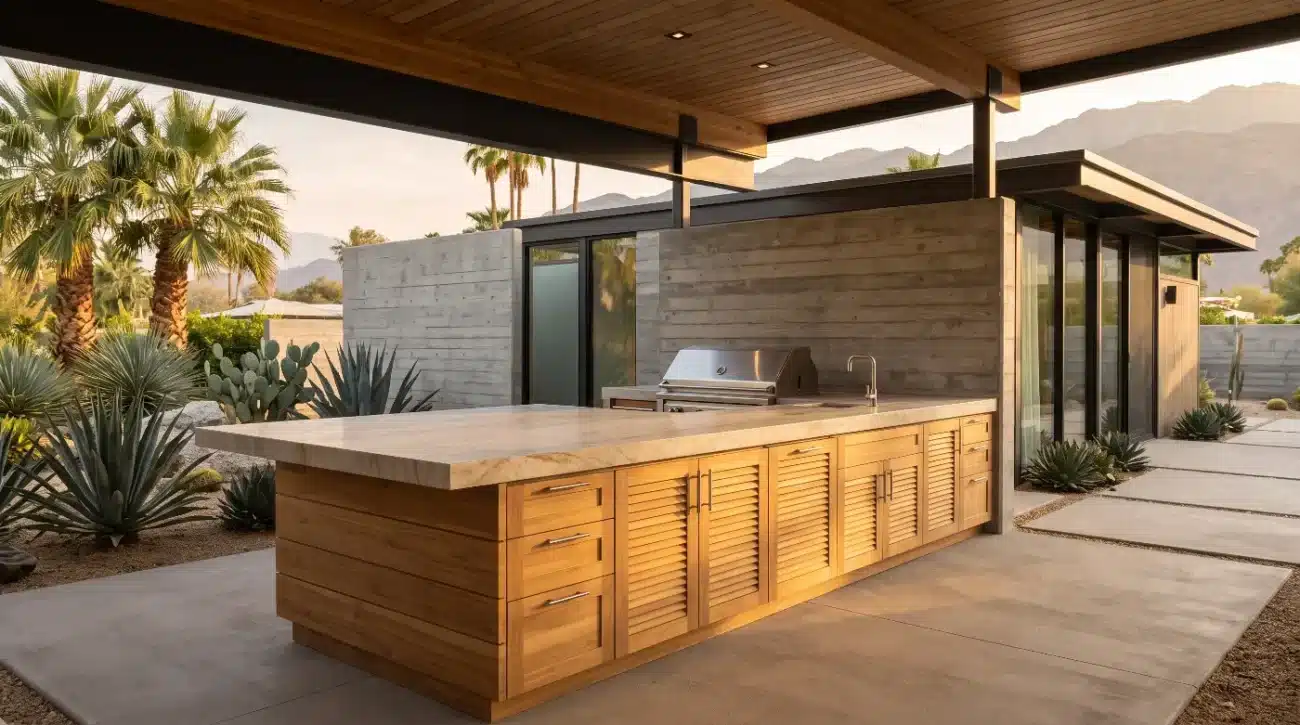
Modern exterior architecture frequently combines organic wood elements with stone surfaces, concrete floors, and stainless accents. Specifying solid teak outdoor cabinetry creates balanced warmth against cool masonry walls and floor pavers.
For projects featuring continuous stone wraps, our Island Inserts Collection provides flush-mount drawer sets, access doors, and warming drawer housings that slide cleanly into poured-in-place concrete or CMU island structures. These units pair warm teak drawer fronts with heavy outdoor island builds.
Our millwork carries comprehensive warranty protection against manufacturing and material defects. Learn more about our craftsmanship guarantees by reading our Warranty Documentation (PDF).
Every cabinetry layout undergoes detailed review before fabrication begins. Our engineering team reviews appliance cutouts, countertop spans, clearance planes, and utility pathways to ensure smooth field installations.
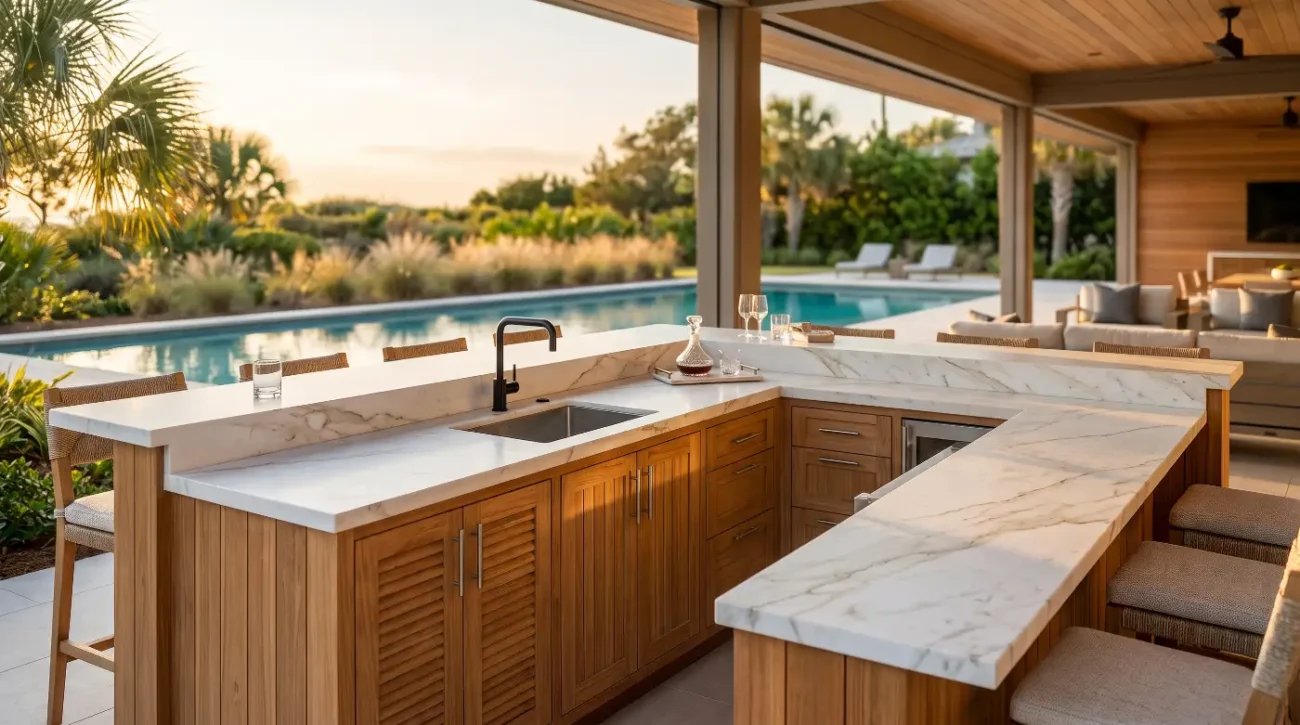
Whether framing a coastal rooftop loggia or building an expansive covered poolside terrace, specifying solid Grade-A teak cabinetry creates a durable outdoor kitchen built to perform for decades.
External References
Key Takeaways
-
Massive Countertop Support: Engineered solid Grade-A teak cabinetry frameworks support dead loads exceeding one hundred pounds per linear foot, making them well-suited for quartzite, granite, and thick concrete slabs.
-
Factory Assembled Accuracy: All cabinet carcases ship fully assembled and factory-squared with heavy-duty leveling hardware, cutting on-site installation time and avoiding assembly errors.
-
Saltwater Corrosion Resistance: Structural fasteners, shelf supports, and soft-close drawer and door hardware feature 316 marine-grade stainless steel to eliminate coastal rust and pitting.
-
Custom Millwork Options: Modular configurations accommodate specific grill brands, drop-in griddles,outdoor refrigeration, storage runs, and access panel footprints.
-
Breathable Finish Care: Teak requires penetrating oils or natural oxidation. Never apply film-forming polyurethanes or lacquers, which trap moisture and peel in outdoor environments.
Transform Your Outdoor Living Space Whether you are an architect coordinating complex residential CAD specifications, an interior designer bridging the gap between indoor and outdoor entertaining zones, or a discerning homeowner crafting an exceptional backyard retreat, Pacific Teak Millworks delivers the engineering and material excellence your vision deserves. Contact our architectural specification team today by calling Darin at (949) 365-6513,emailing darin@pacificteakmillworks.com, or visiting our Trade Inquiries & Contact Page to order wood finish samples, review CAD details, and receive a dedicated quote for your custom project.