Executive Summary:
-
Engineered Climate Integration: Housing outdoor refrigeration requires calibrated thermal ventilation pathways to isolate compressor heat from dry cabinetry joinery.
-
Marine-Grade Material Physics: Grade-A plantation teak resists ambient exterior moisture through high silica and natural rubber content, preventing dimensional cabinet warpage.
-
Trade Specifier Precision: Incorporating heavy quartzite or poured concrete tasting bars requires reinforced mortise-and-tenon structural framing and three-sixteen marine-grade stainless hardware.
-
Aesthetic Preservation Trajectory: Designers must choose upfront between natural silver patina weathering or periodic breathable oil replenishment to protect the cabinetry aesthetic.
A high-profile exterior remodel in Newport Beach recently stalled over an expensive miscalculation: a custom exterior tasting bar began buckling within four months of completion. The specifier encased dual wine preservation columns in standard exterior-grade composite casework, trapping compressor heat against marine air dampness. The resulting internal thermal engine caused face-frame delamination, hardware seizure, and temperature fluctuations that spoiled hundreds of vintage bottles.
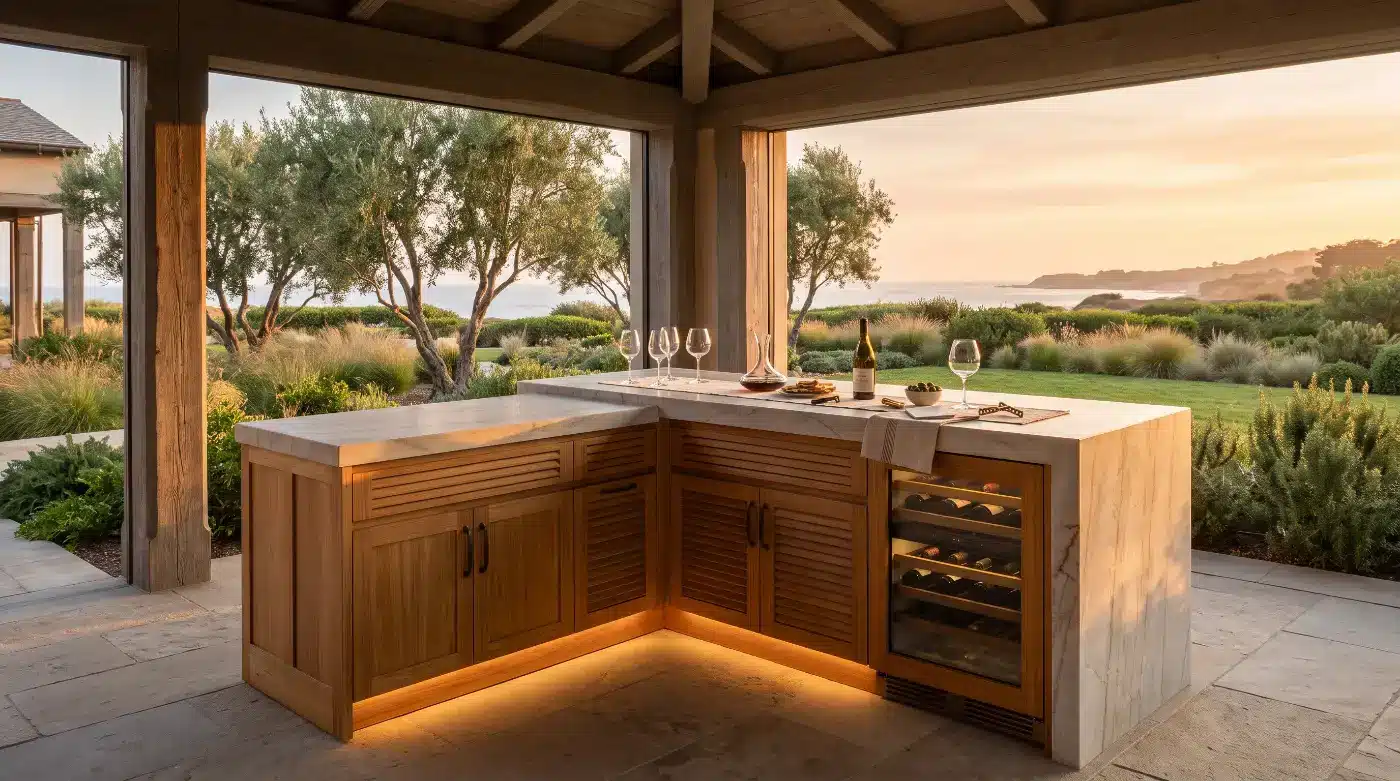
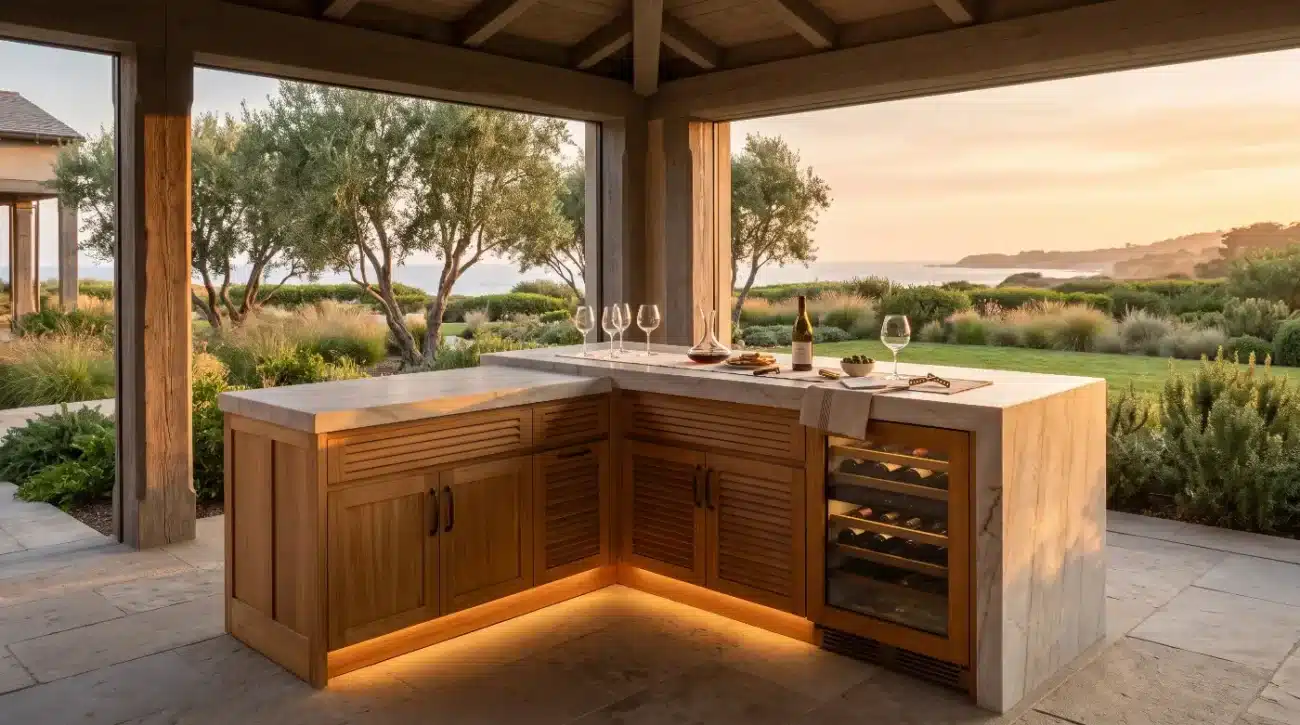
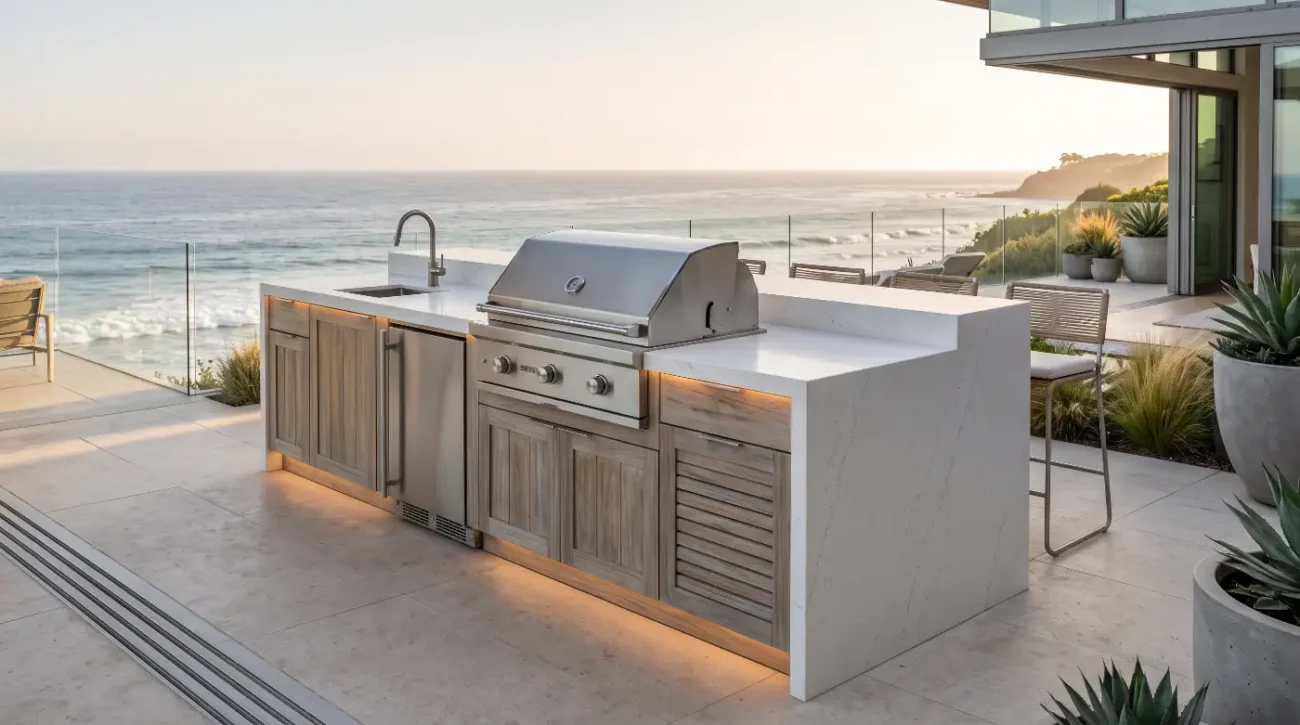
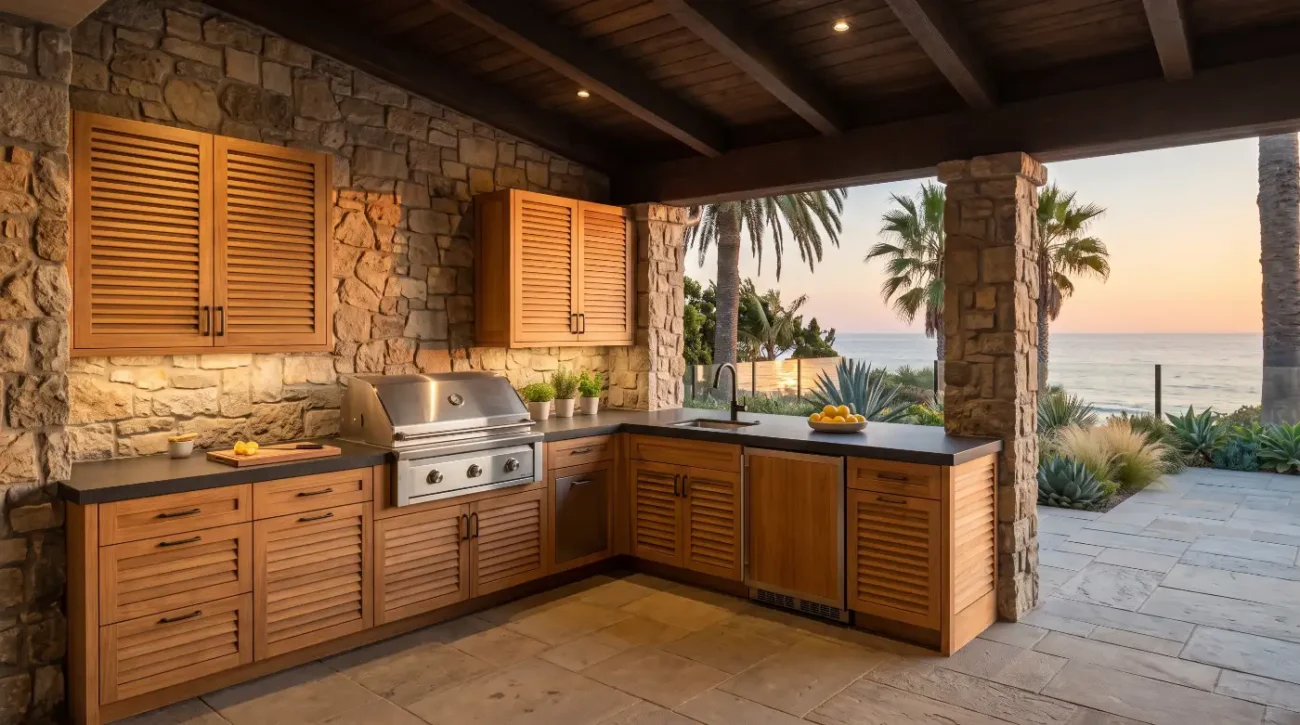
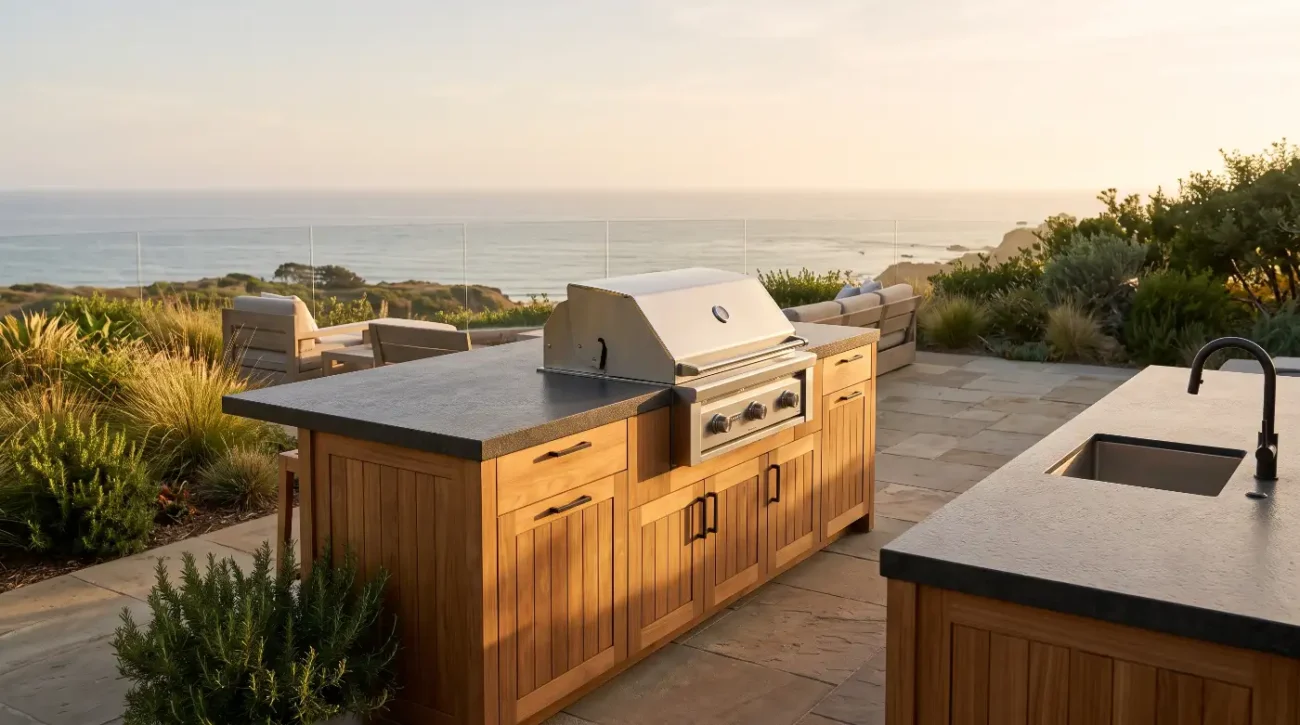
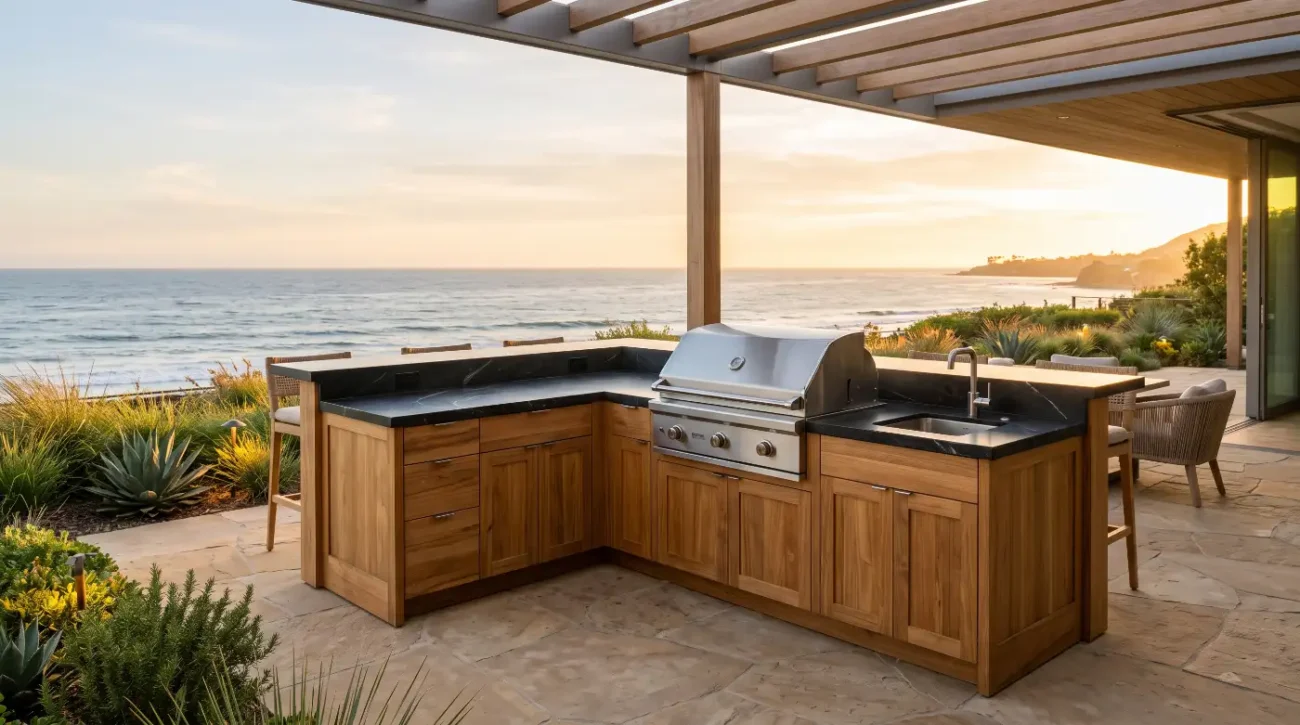
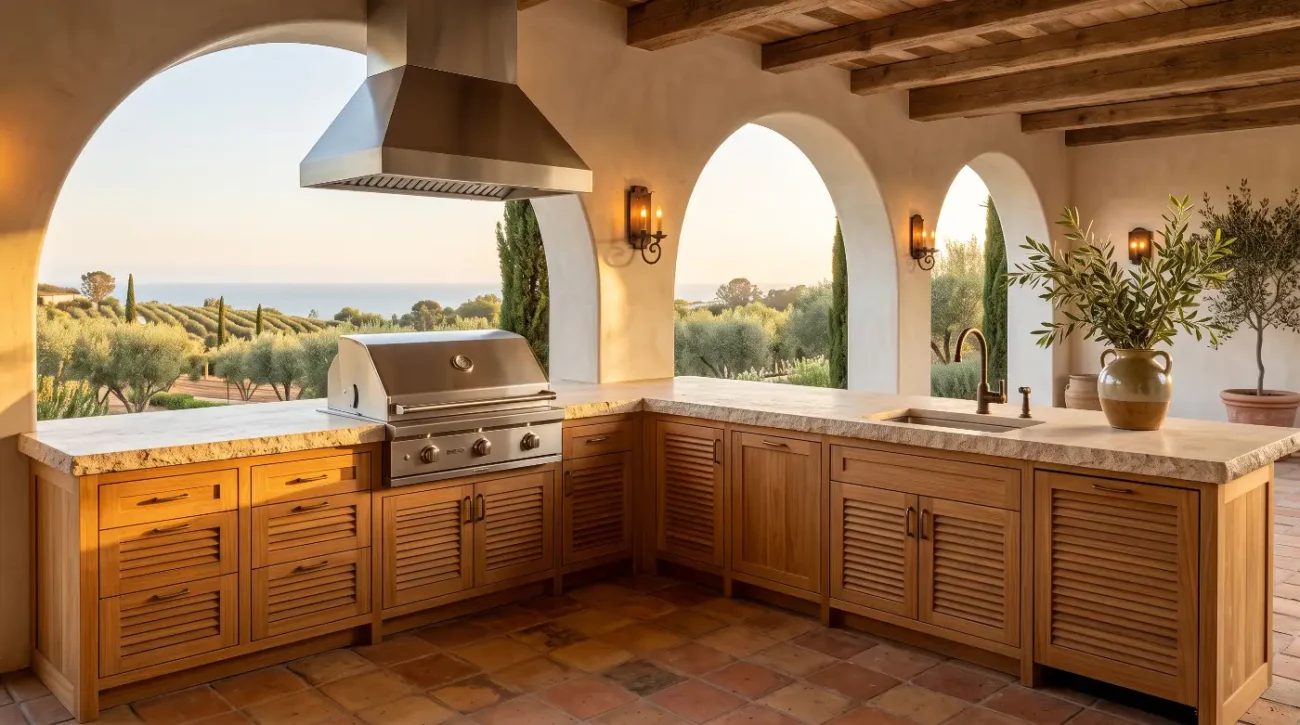
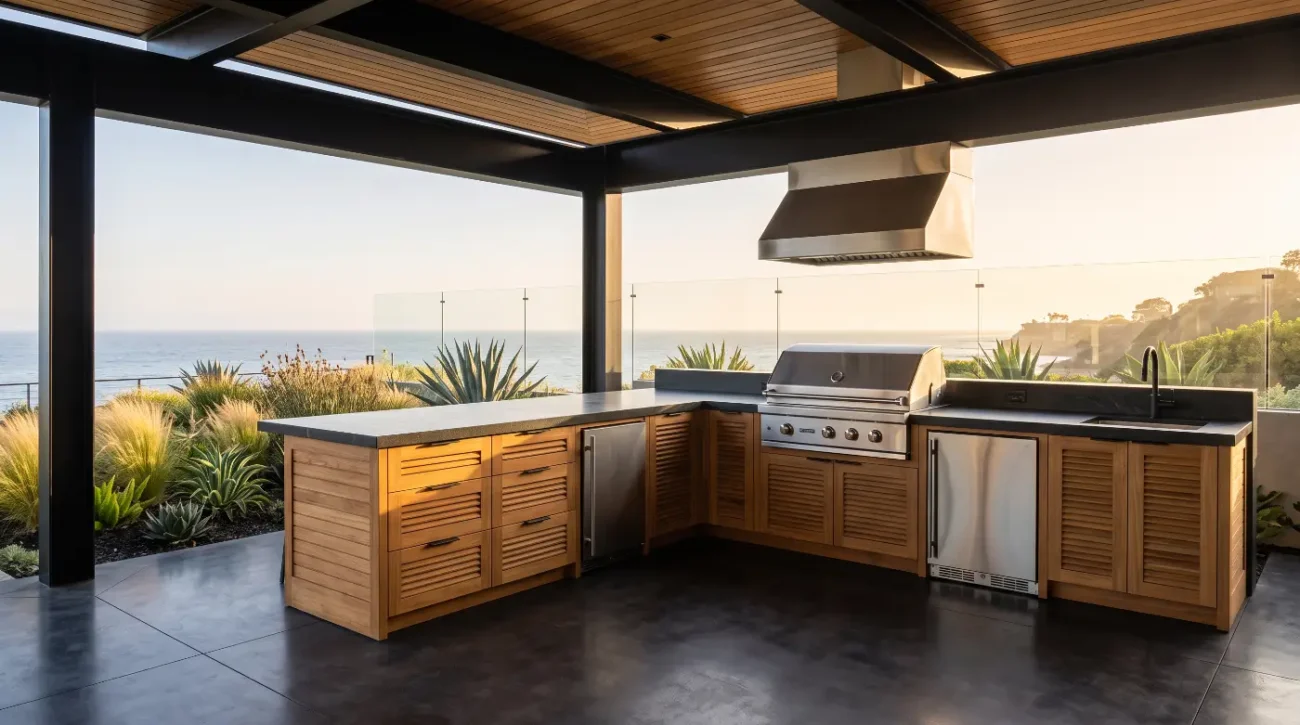
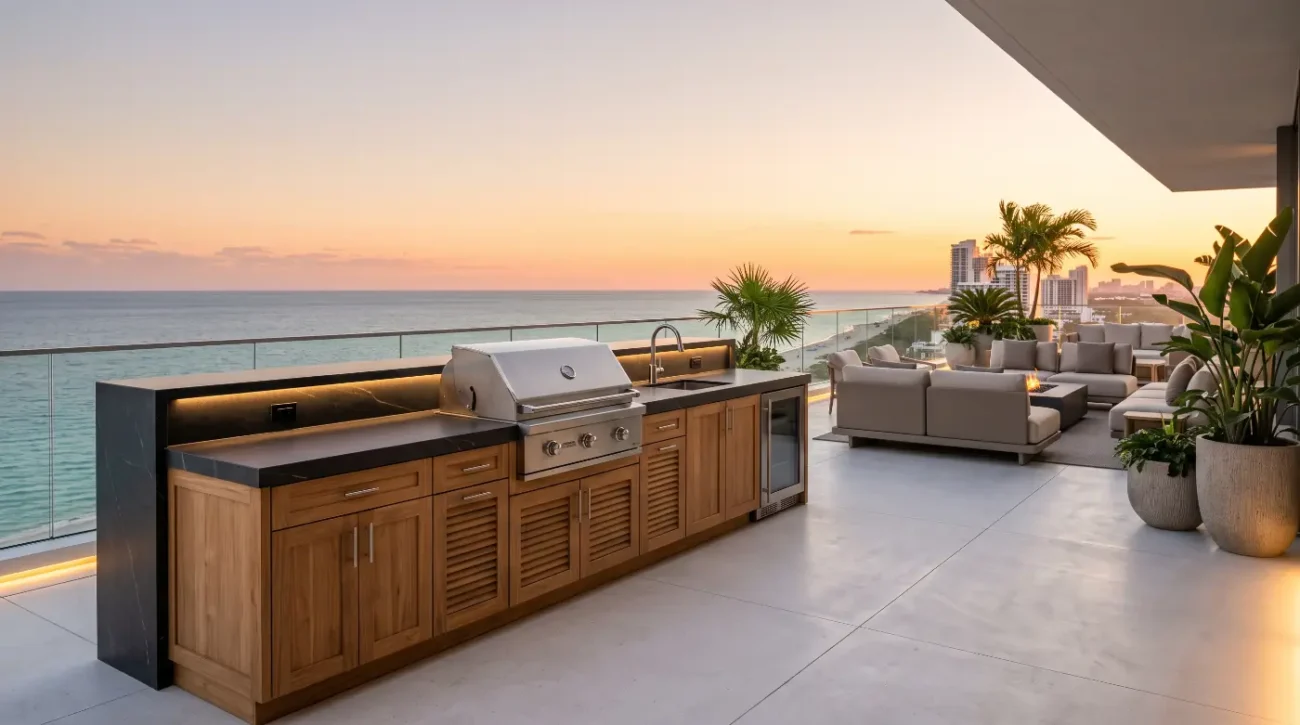
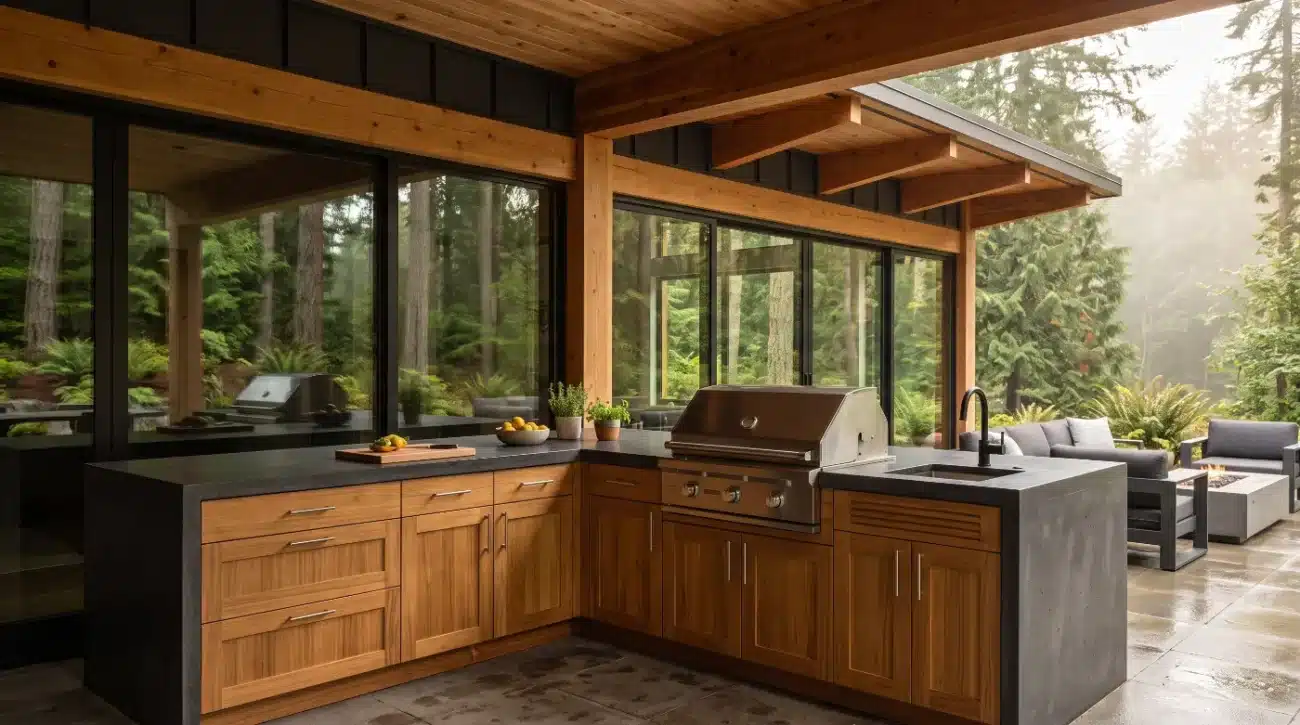
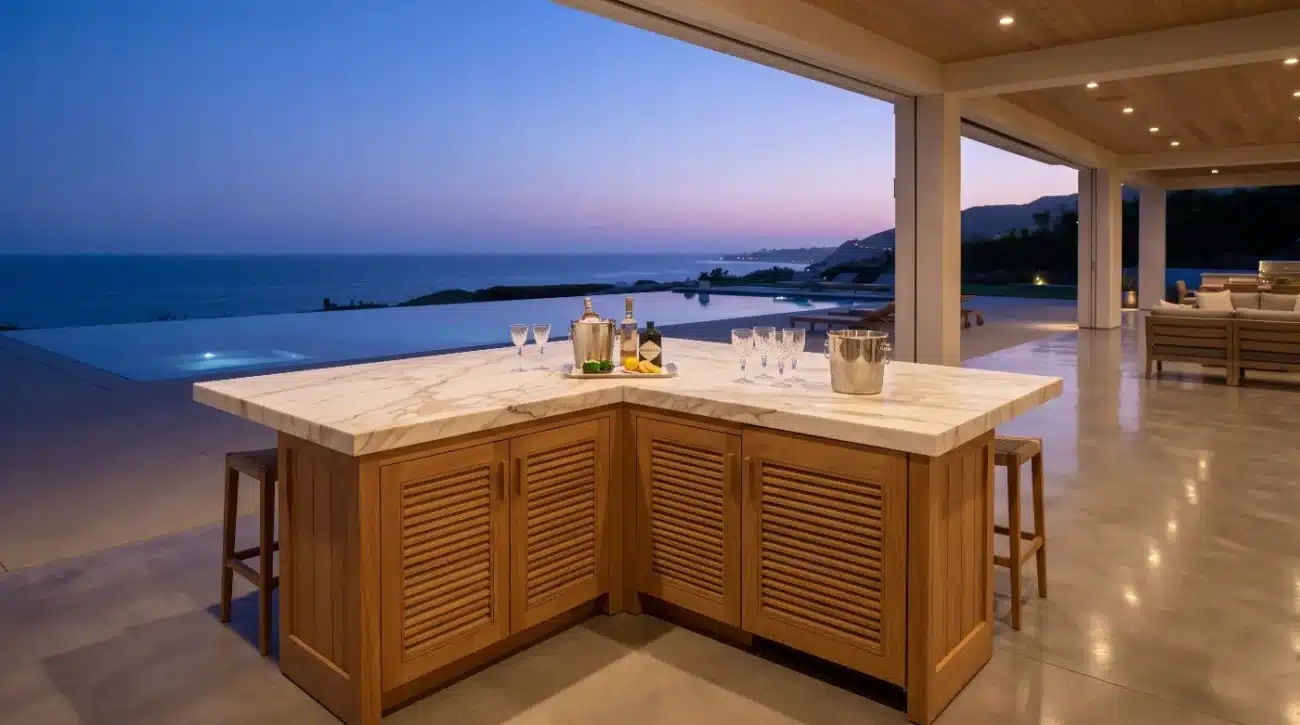
True exterior tasting rooms require high-performance architectural engineering, not standard interior millwork dressed in waterproof veneer. When designing an outdoor wine lounge, covered loggia, or private poolside vineyard pavilion,spatial designers must navigate complex thermodynamic boundaries. Integrating outdoor wine room teak cabinetry demands an understanding of active thermal rejection, massive dead-load distribution for tasting slabs, and the organic cell structure of genuine Tectona grandis.
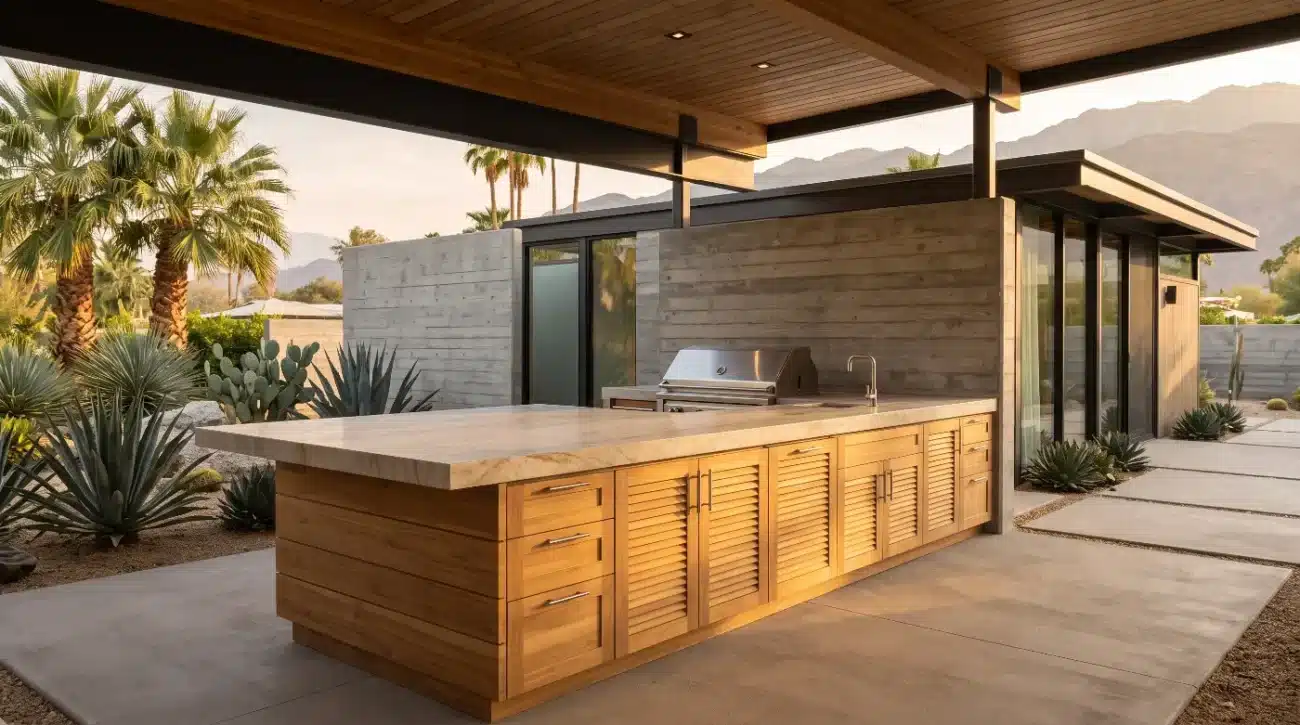
Bridging the gap between the homeowner’s resort-inspired mood board and the physical reality of the job site falls upon the specifier. Interior designers, landscape architects, and custom builders in coastal and sunbelt microclimates encounter extreme environmental forces daily. Between corrosive saltwater air in Malibu, dry thermal swings in Palm Springs, and torrential humidity across the Florida coastline, cabinetry must maintain tight reveals and seamless operation for decades.
How Thermal Dynamics and Wood Science Govern Outdoor Wine Room Teak Cabinetry
Outdoor wine room teak cabinetry successfully encloses active refrigeration by pairing the wood’s natural silica and rubber oils with deliberate, multi-directional airflow pathways. Grade-A teak delivers dimensional stability under persistent cycling of ambient humidity and mechanical condenser heat. When designed with unrestricted intake and exhaust routing, these millwork enclosures protect sensitive wine collections while preventing thermal buildup and timber warping.
A dedicated wine pavilion introduces two contradictory microclimates: an ambient exterior environment subject to fluctuating humidity, and a dry, mechanical heat envelope generated by active refrigeration compressors. Enclosing dual-zone beverage columns inside solid cabinetry requires careful planning. Refrigeration units expel significant British Thermal Units every hour. Without dedicated ducting and relief channels, that trapped dry heat will desiccate nearby millwork, causing localized wood movement, checking, and premature compressor burnout.
Standard exterior millwork often fails because specifiers rely on synthetic polymers or thin, film-sealed wood veneers.In coastal environments, moisture laden with salt creeps behind these surface films, trapping dampness against the substrate and driving rapid decay. True Grade-A plantation teak (Tectona grandis) performs differently due to its unique cellular biology. The USDA Forest Products Laboratory documents that mature teak heartwood possesses high natural concentrations of extractive oils, tectonic resins, and amorphous silica.
-
Silica Content Defense: High mineral silica deposits make the grain impervious to water penetration, resisting fungal rot and coastal marine wood boring organisms.
-
Natural Rubber Retention: Internal organic latex polymers maintain flexibility within the wood grain,moderating expansion and contraction during extreme temperature swings.
-
Tolerant Cell Structure: The straight, dense grain profile yields low volumetric shrinkage coefficients, ensuring custom drawer faces and appliance reveals remain aligned.
-
Chemical Acid Resistance: Natural plant resins repel incidental wine spills, high-acid tannin drops, and alcohol drips without requiring immediate surface strip-downs.
Specifiers frequently specify polyurethane or industrial film sealers on outdoor cabinetry, thinking synthetic barriers ensure longevity. This is a severe post-installation mistake. Outdoor wood must breathe. Film-forming topcoats crack under solar ultraviolet radiation and microscopic seasonal wood expansion. Once micro-fissures develop, ambient moisture enters underneath the film, cannot escape, and initiates rapid rot beneath an intact-looking clear coat.Specifying the Pacific Teak Millworks Base Cabinets Collection guarantees genuine solid teak that relies on its internal oils rather than fragile synthetic finishes.
A critical design opportunity involves establishing the long-term aesthetic trajectory during the client schematic presentation. Left untreated, Grade-A teak oxidizes under direct ultraviolet rays, transforming into an elegant silvery-grey patina that harmonizes with limestone pavers and coastal architecture. Alternatively, clients desiring a warm golden-brown luster must commit to an annual application of breathable, penetrating exterior teak oils. Understanding these workflows, as detailed in the comprehensive Pacific Teak Millworks Teak Care and Maintenance Guide, helps trade professionals manage client expectations long before installation day.
Architects working with custom outdoor island footprints must accommodate appliance serviceability. Designing removable vented teak access panels along the rear or sub-base of the cabinetry allows maintenance technicians to service refrigeration coils without deconstructing the surrounding millwork. Elevating cabinets on isolated three-sixteen stainless steel marine leveling legs prevents base rail saturation from pooling rainwater or hardscape washdowns, shielding the tasting room’s foundation from standing ground moisture.
Specifying Marine Joinery and Sub-Structure Support for Sommelier Tasting Bars
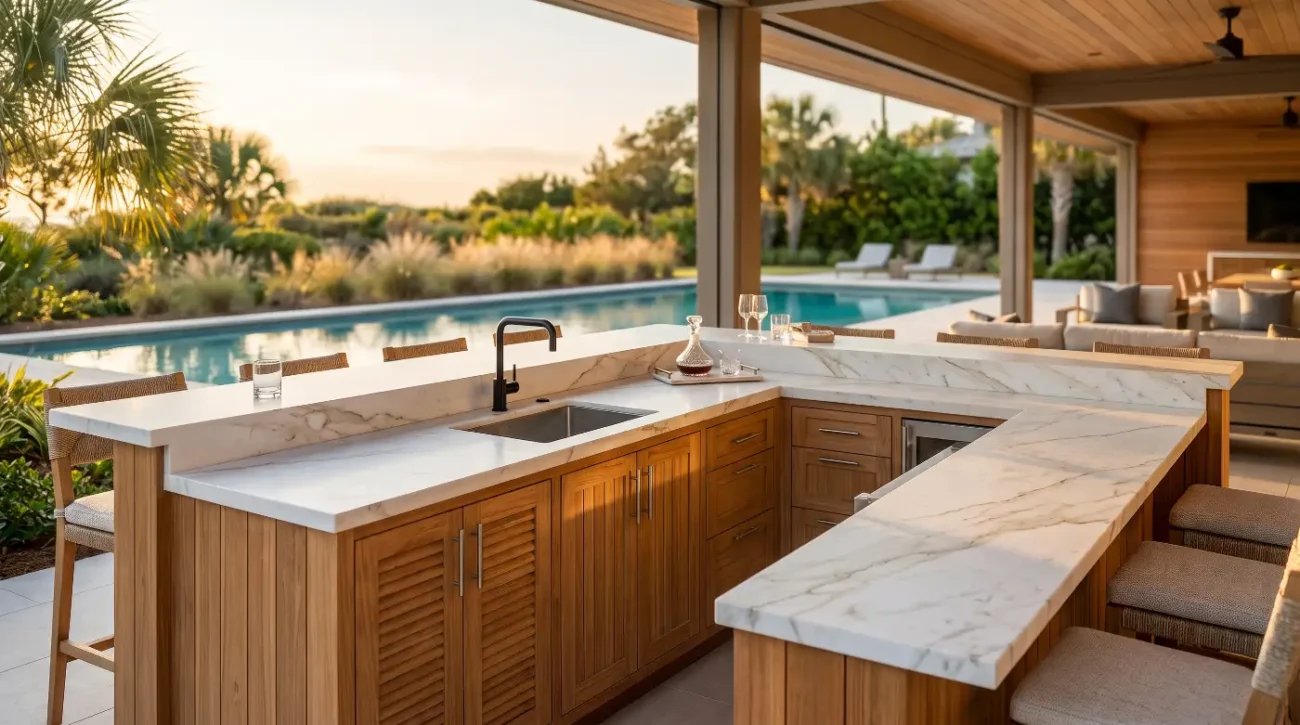
Specifying outdoor wine room teak cabinetry for luxury tasting areas requires deep mortise-and-tenon structural framing, mechanical expansion joints, and corrosion-proof marine-grade hardware. These structural components must bear heavy granite, quartzite, or poured concrete countertops without racking or sagging. Integrating custom stemware storage and sommelier drawers requires hardware engineered to withstand salt spray and windblown grit.
High-end outdoor tasting rooms feature heavy stone surfaces such as honed Taj Mahal quartzite, three-centimeter granite, or custom cast glass slabs. These countertop materials routinely impose dead loads exceeding eighty pounds per square foot. When homeowners present inspirational imagery showing continuous, uninterrupted waterfall islands,trade specifiers must run the structural math. Conventional pocket-hole screws and chemical dowels fail under these vertical forces when outdoor thermal shifts stress the joints.
Master exterior millwork demands traditional through-tenon and mortise-and-tenon architectural joinery fastened with marine-rated epoxies. Face-frames and solid internal stiles transfer structural counter loads directly to the ground plane,preventing horizontal rails from bowing over integrated appliance bays. Incorporating modular systems from the Pacific Teak Millworks Island Inserts Collection allows builders to drop pre-engineered storage units into stone-clad masonry envelopes without losing structural integrity or precision alignment.
-
Three-Sixteen Marine Stainless Hardware: Every hinge, soft-close undermount slide, and assembly bolt must be forged from austenitic three-sixteen stainless steel with added molybdenum to defeat pitting from coastal chlorides.
-
Slotted Mechanical Fasteners: Countertop mounting cleats must utilize slotted anchor points that allow the teak perimeter to expand and contract seasonally without cracking the stone substrate.
-
Integrated Stemware Racks: Inverted overhead glassware hangers machined from solid teak heartwood prevent outdoor dust and dew from settling inside tasting glasses.
-
Sealed Tasting Accessory Trays: Custom velvet-lined or solid-carved sommelier drawers must integrate silicone weather gaskets to protect aerators, Coravin systems, and specialty openers from outdoor humidity.
A common structural failure in custom outdoor tasting rooms is neglecting point-load distribution across leveling legs.When builders set heavy natural stone over multi-cabinet runs, unreinforced leg mounts can punch through cabinet bottoms or buckle, throwing door reveals out of square. Incorporating solid teak corner gussets and heavy-gauge marine footings spreads the downward pressure evenly across the concrete slab.
Sub-contractor coordination often breaks down during the installation timeline. High-net-worth clients frequently purchase luxury residential wine coolers without realizing their manufacturer warranty is voided if installed outdoors in unconditioned spaces without proper clearance. The specifier must cross-reference appliance technical specification sheets with the architectural drawings, verifying dedicated electrical circuits and minimum clearance zones around venting louvers.
Cabinetry layout must also incorporate ergonomic zones that separate guest tasting areas from staff prep stations. By positioning integrated trash drawers, cork collection bins, and glassware pull-outs away from primary refrigeration doors, multiple people can navigate the tasting pavilion smoothly. When sourcing sustainably harvested materials,specifiers can reference standards established by organizations such as the American Institute of Architects, balancing ecological responsibility with material resilience.
To streamline the architectural workflow, design teams can access comprehensive technical drawings and cabinet configurations through the Pacific Teak Millworks Resource Center. Utilizing pre-configured CAD details ensures plumbing rough-ins for sommelier prep sinks and electrical conduits for under-cabinet led lighting drop into place without on-site field modifications. Reviewing structural warranties and coverage criteria directly via the Pacific Teak Millworks Warranty Documentation provides long-term peace of mind for both trade specifiers and homeowners.
Building an outdoor wine tasting sanctuary requires balancing hospitality elegance with resilient structural engineering.By utilizing genuine Grade-A teak joinery, marine-grade alloys, and thermodynamic venting pathways, design teams can create outdoor entertainment pavilions that endure through every season.
External References
Key Takeaways
-
Thermodynamic Airflow Planning: Always incorporate continuous rear and base louvered pathways when boxing outdoor wine refrigeration units inside solid cabinetry to prevent heat buildup and wood damage.
-
Material Science Superiority: Utilize genuine Grade-A plantation teak with dense silica and natural rubber resin matrices, which naturally resist saltwater corrosion and seasonal dimensional movement.
-
Avoid Film-Forming Sealers: Never apply polyurethane, varnishes, or synthetic film-forming clear coats to outdoor teak; breathable oil saturation or natural silver patina oxidation prevents internal rot.
-
Heavy Countertop Load Engineering: Support heavy quartzite, granite, or concrete tasting bars using traditional mortise-and-tenon structural frames paired with slotted fasteners for natural wood movement.
-
Marine-Grade Hardware Specifications: Ensure all drawer slides, continuous hinges, and mechanical brackets use three-sixteen marine stainless steel to prevent chloride pitting and hardware failure in coastal environments.
Transform Your Outdoor Living Vision
Whether you are an architect detailing a coastal loggia in Newport Beach, an interior designer finalizing a wine pavilion in Austin, or a homeowner curating the ultimate al fresco entertainment space, our engineering team brings your vision to life. Pacific Teak Millworks partners directly with design professionals and discerning clients to craft bespoke, marine-grade cabinetry built for enduring performance. To review trade pricing, discuss appliance clearance specifications, or request teak wood finish samples, connect directly with our studio via the Pacific Teak Millworks Contact Us Portal or call Darin at (949) 365-6513 to begin your architectural consultation.