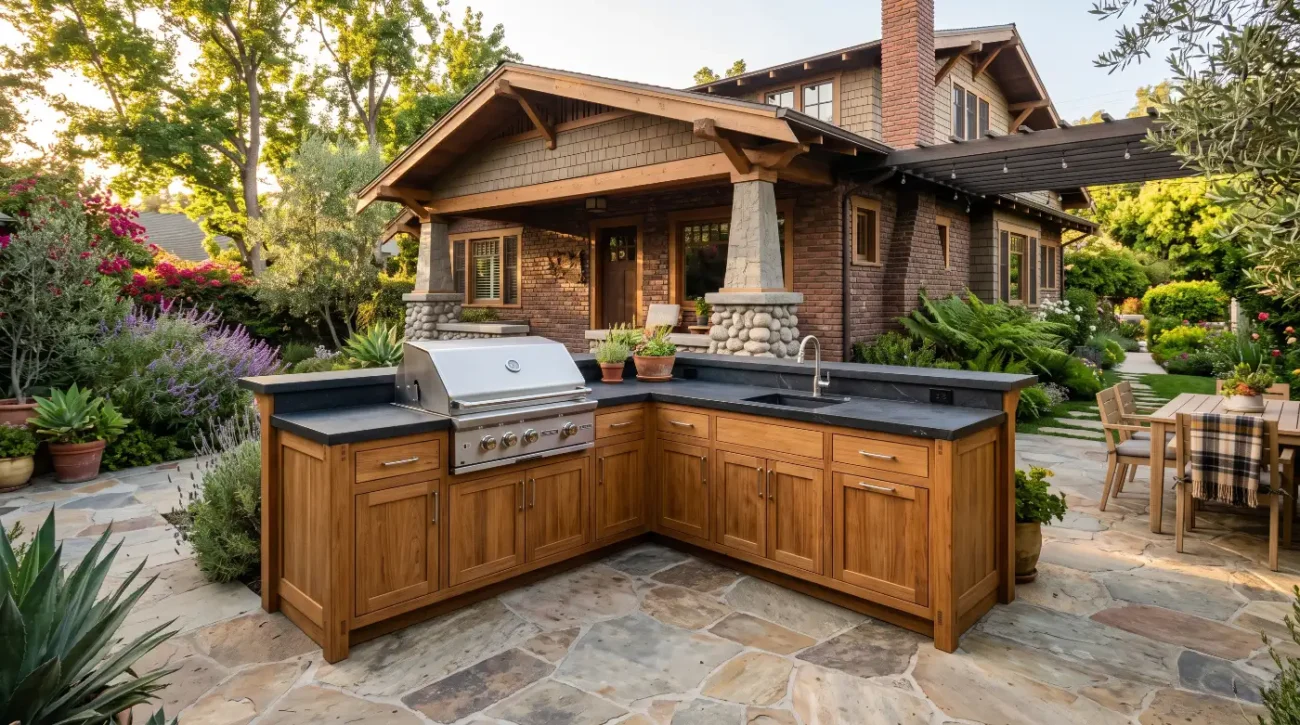
Executive Summary
-
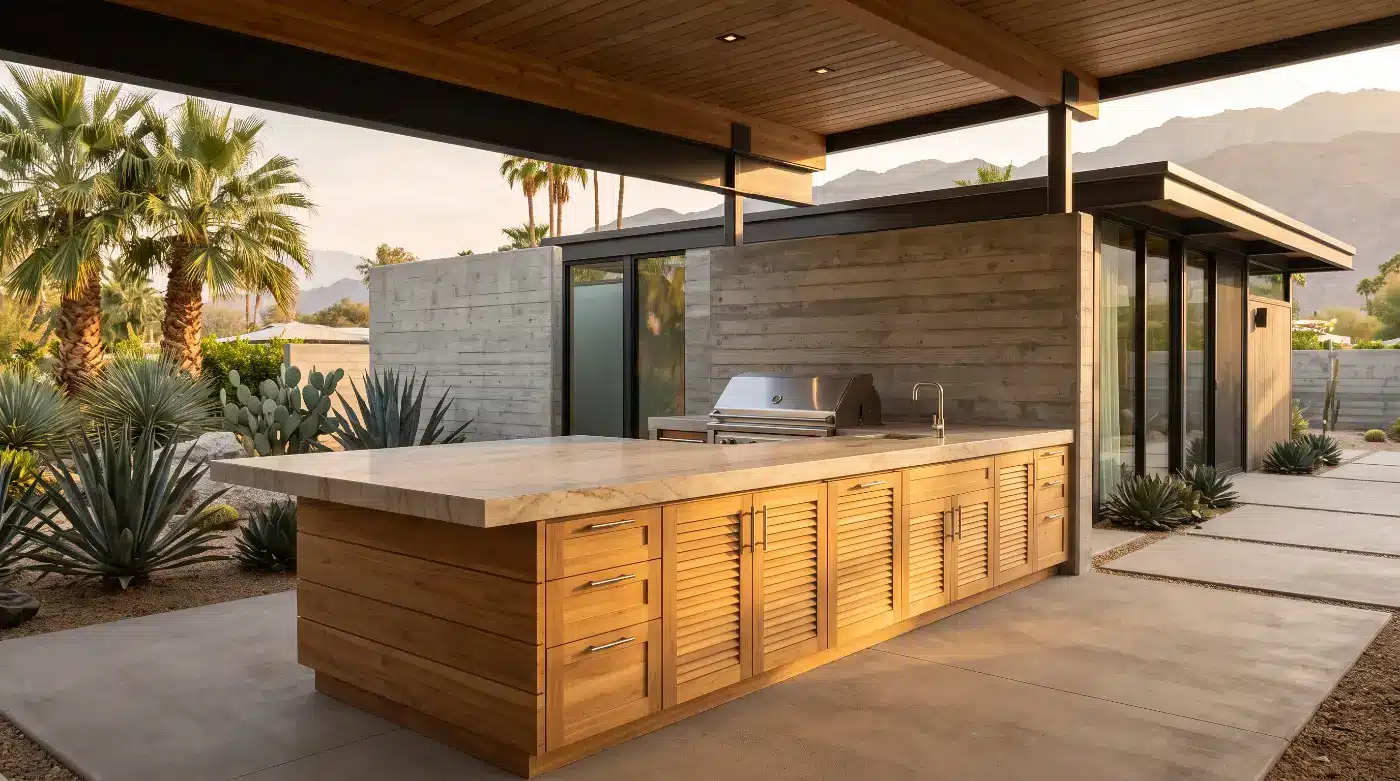
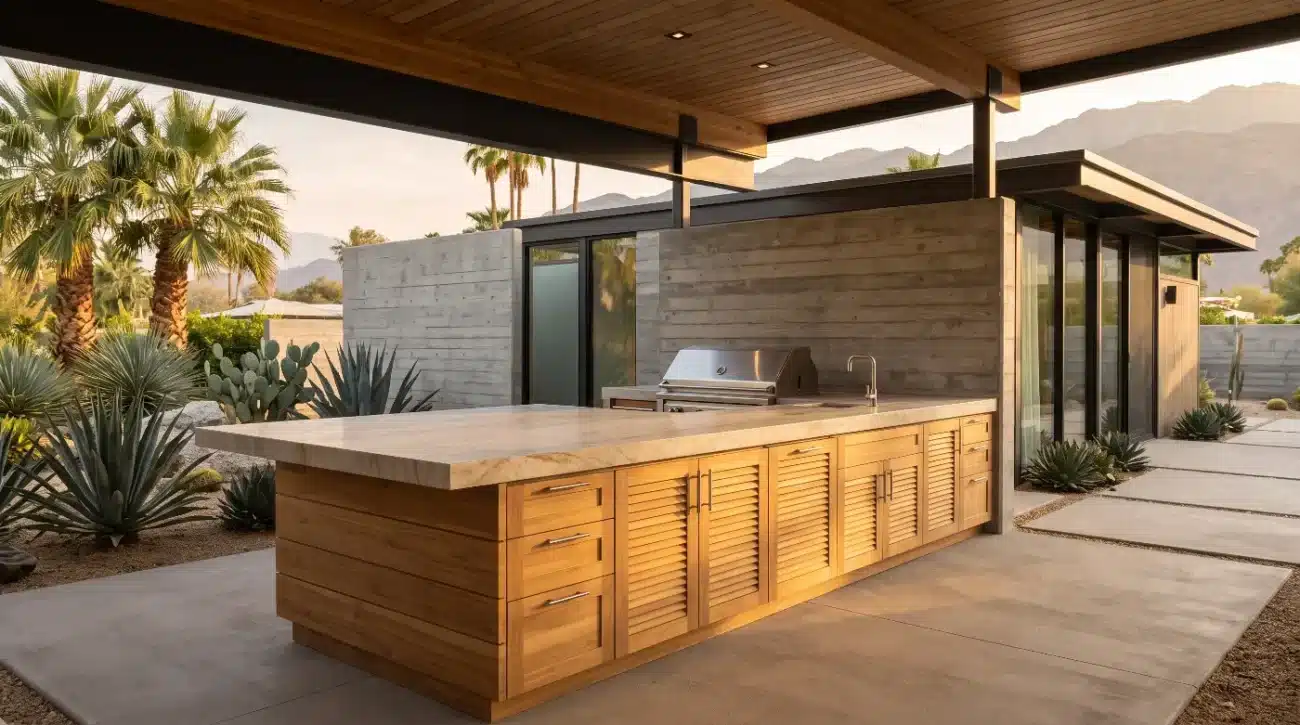
Mid-Century Architectural Alignment: Desert modernism relies on deep horizontal shadow lines, low-slung profiles, and organic material warmth to bridge structural post-and-beam architecture with dry alluvial landscapes.
-
Extreme Thermal Engineering: High diurnal temperature swings and intense UV exposure demand Grade-A teak rich in natural silica and rubber resins to prevent checking, joint fatigue, and finish breakdown.
-
Precision Trade Specification: Integrating heavy quartzite slabs, outdoor appliances, and marine-grade hardware requires exact CAD load planning, uninhibited thermal expansion joints, and concealed heat venting.
-
Patina Management Protocols: Maintaining warm golden-brown timber requires breathable, non-film-forming UV oil treatments, while natural silvery-grey weathering offers a low-maintenance, biophilic aesthetic.
How to Specify Teak Base Cabinets for a Palm Springs Desert Modern Estate
A luxury home specifier in Palm Springs was recently forced to replace a sixty-thousand-dollar outdoor kitchen island after just eighteen months. The original builder had installed painted exterior-grade MDF cabinetry underneath an eighty-pound-per-square-foot Taj Mahal quartzite countertop. High thermal swings, where temperatures plummeted forty degrees in hours, caused the wood substrate to contract at a vastly different rate than the stone. The resulting stress sheared the mortise joints, while intense direct sunlight baked the synthetic clear coat into a cracked, flaking resin. Moisture from winter storms trapped inside the subterranean carcass core swelled the frames, rendering the soft-close drawers unalignable and binding the cabinet doors.
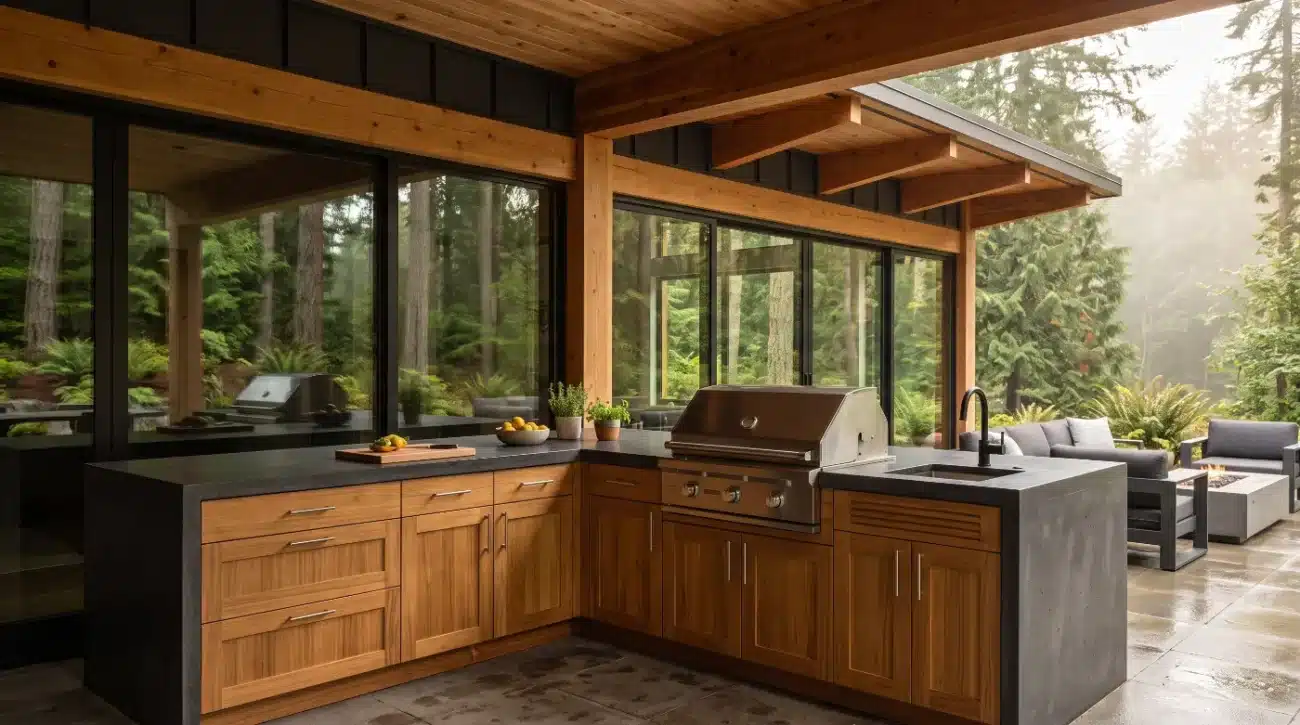
Specifying cabinetry for Palm Springs mid-century modern and contemporary estate architecture demands an elevated understanding of structural physics, material science, and design continuity. When raw desert landscapes meet clean-lined post-and-beam architecture, solid timber is the premier organic medium to soften glass, exposed steel, and poured concrete. However, the Sonoran and Mojave desert microclimates present severe environmental stresses. Achieving lasting durability requires moving beyond residential indoor cabinet construction and utilizing marine-engineered, solid teak millwork crafted for severe environments.
“Desert modernism is not merely an aesthetic choice; it is an environmental contract between human-made structures and extreme climate conditions.”
Section Overview
-
Structural Material Integrity: Specifying high-density Grade-A plantation teak (Tectona grandis) guarantees resistance to cellular collapse under extreme UV exposure and forty-degree diurnal thermal swings.
-
Engineering and Load Management: Combining mortise-and-tenon joinery with 316 marine-grade stainless steel hardware protects heavy natural stone counter loads against joint fatigue and micro-movement.
-
Architectural Flow and Integration: Low-profile, face-frame teak cabinetry reinforces mid-century modern sightlines while providing essential ventilation for gas-burning appliances.
-
Environmental Maintenance Dynamics: Avoiding film-forming polyurethanes prevents internal wood rot, allowing specifiers to choose between periodic oiling or a low-maintenance silvery-grey patina.
1. Architectural Alignment and Material Science in Desert Environments
The architectural specification framework for Palm Springs desert modern cabinetry relies on a hierarchical integration of material selection, precise joinery engineering, and microclimate adaptation strategies:
-
Material Science Foundations: Selection begins with Grade-A Tectona grandis harvested exclusively from heartwood. This timber provides maximum natural silica density to establish an internal moisture wall, combined with natural rubber resins that allow cellular flexibility during rapid thermal changes.
-
Joinery and Structural Physics: Load-bearing frames are built around traditional floating mortise-and-tenon joints, secured with marine-grade fasteners, and engineered to support continuous natural stone loads exceeding one hundred pounds per square foot.
-
Environmental Adaptations: Long-term durability is secured through precise expansion gap calculations, concealed appliance heat shielding, and breathable UV-inhibiting oil finishes.
Specifying teak base cabinets for desert modern estates requires aligning low-slung horizontal architectural profiles with wood species capable of surviving extreme UV radiation and severe diurnal temperature fluctuations.
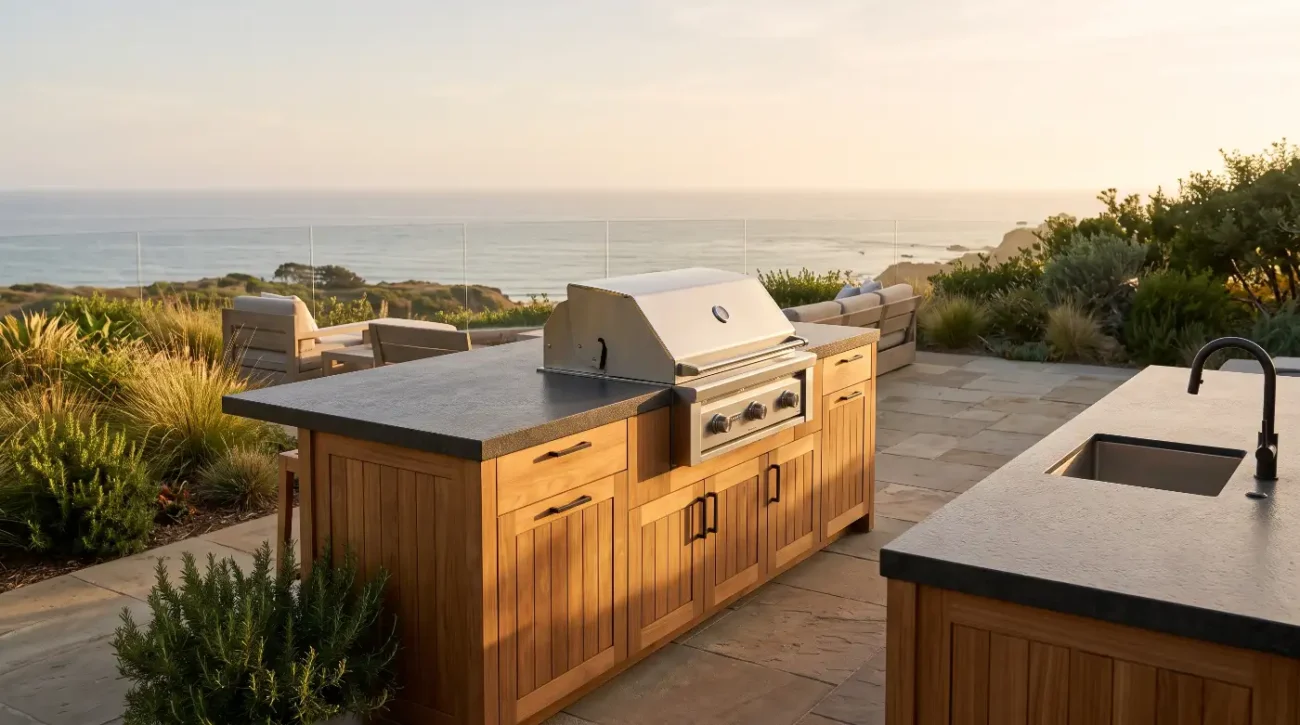
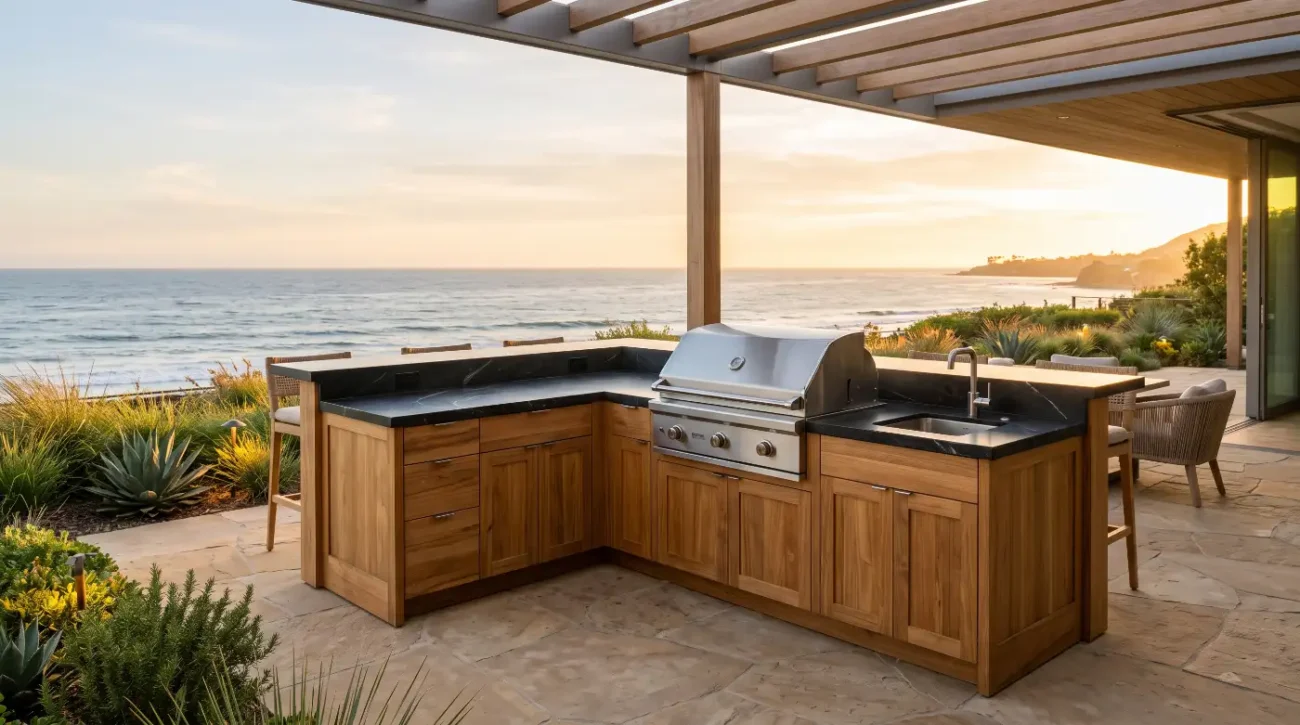
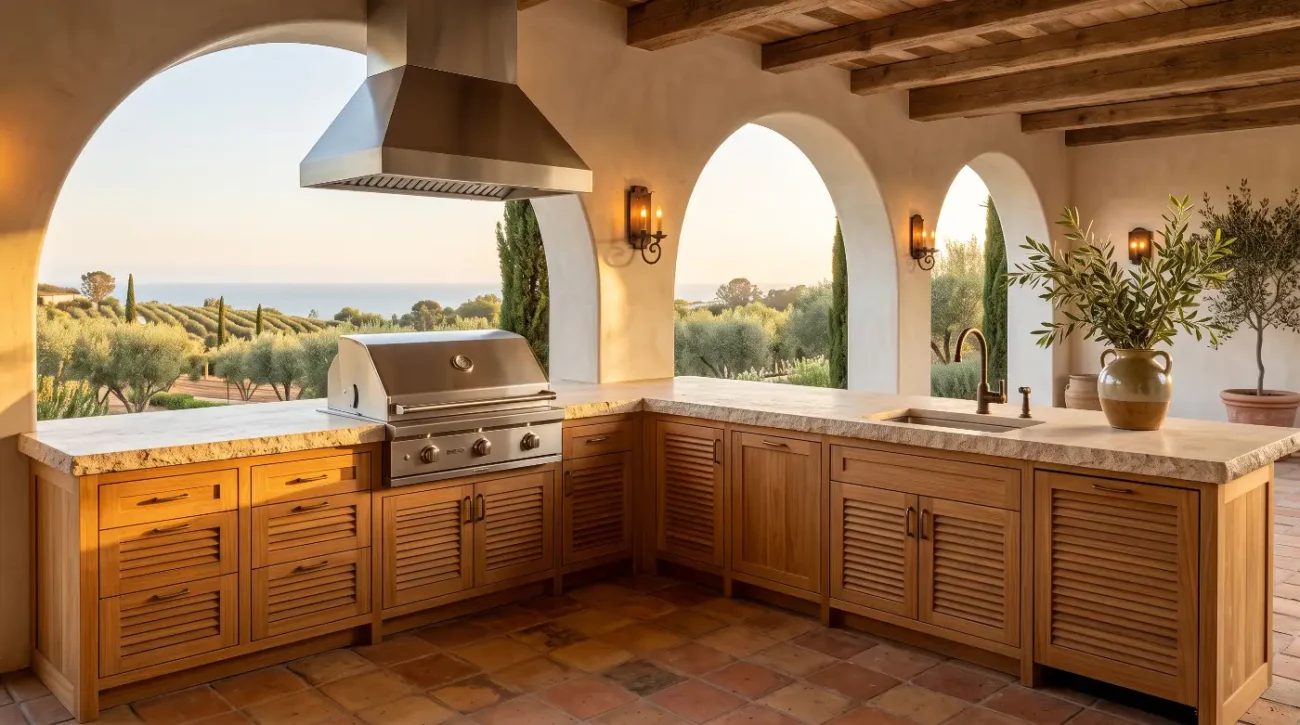
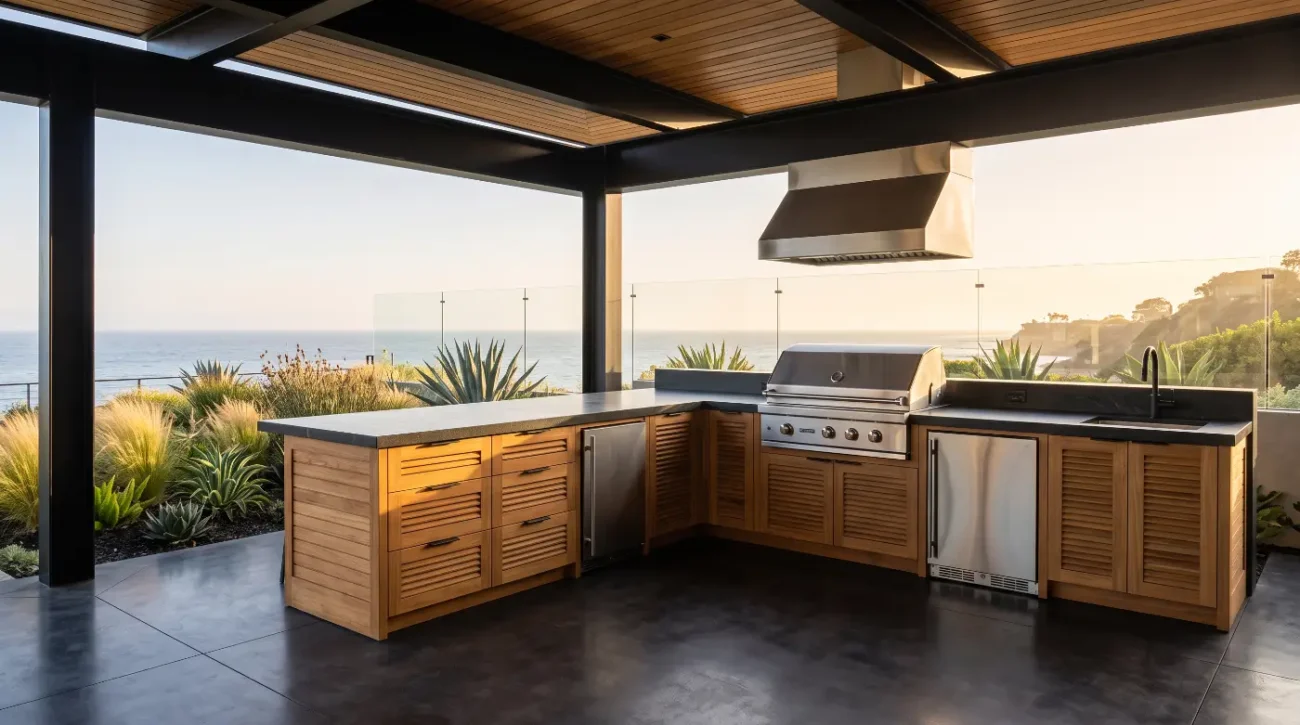
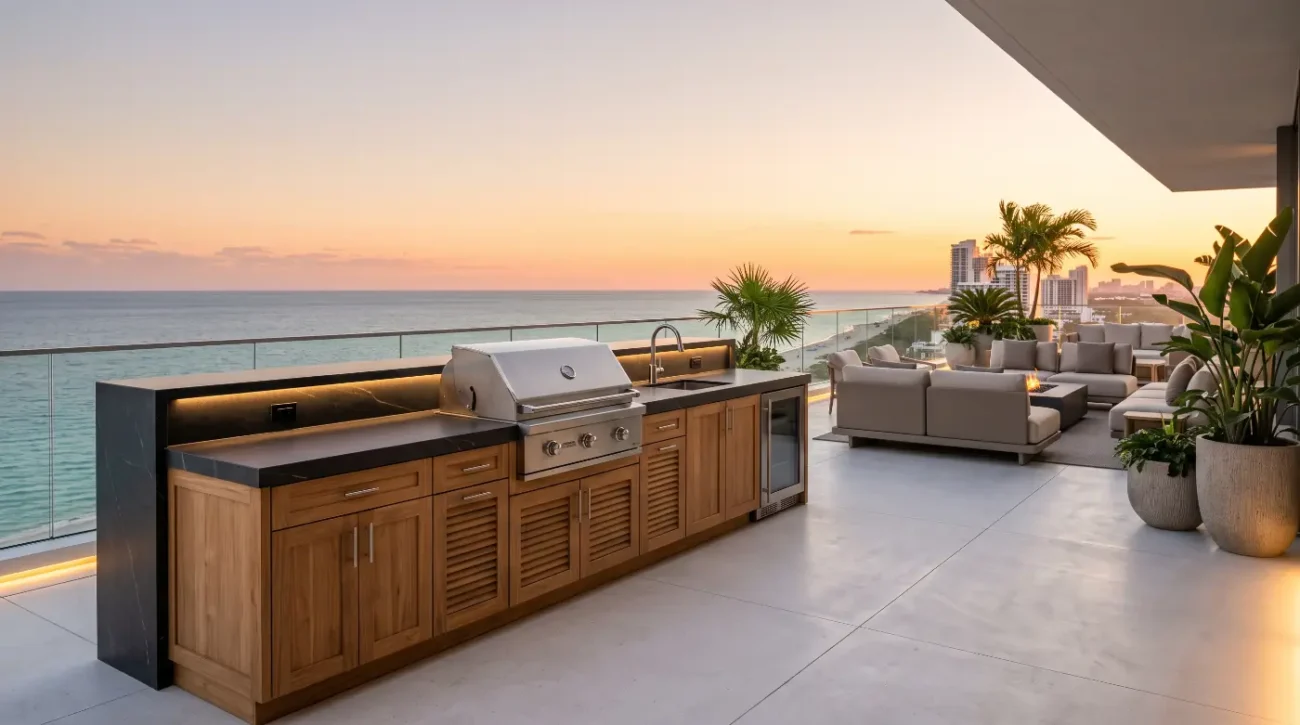
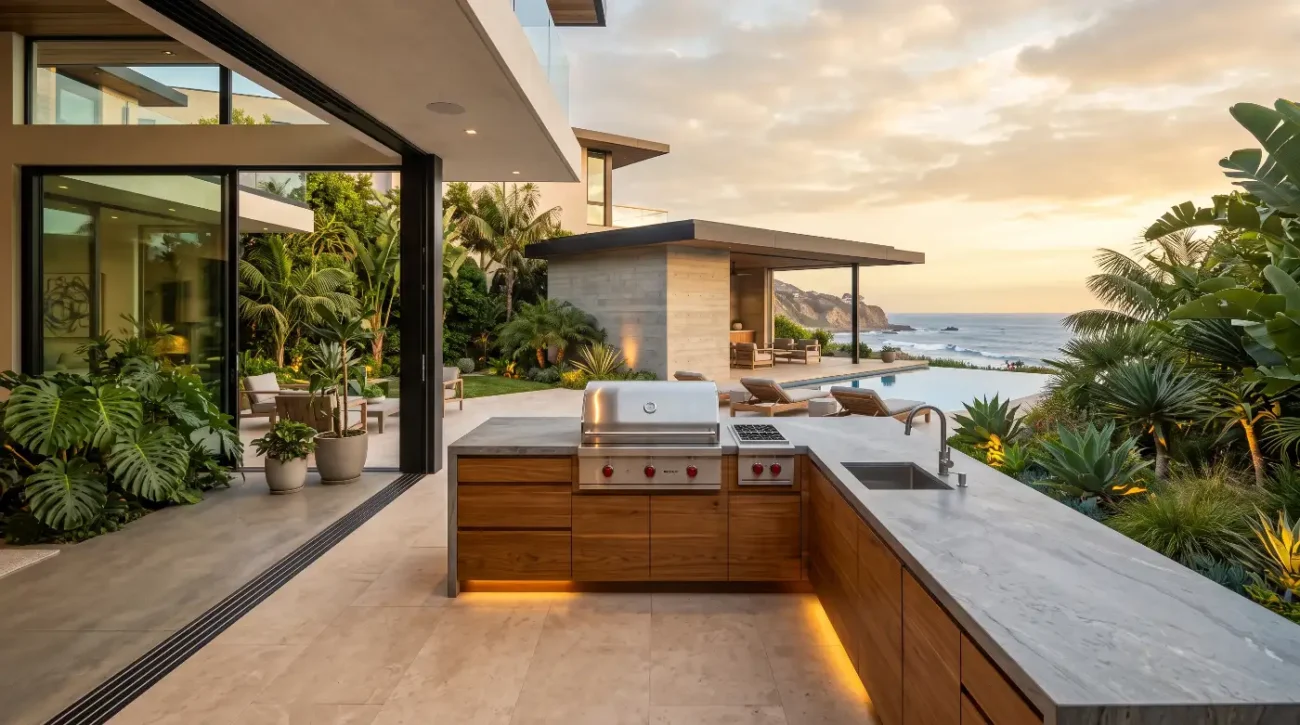
Palm Springs desert modern architecture relies on low-slung, horizontal sightlines, broad cantilevered roof planes, and expansive glass walls that blur the distinction between interior living rooms and exterior loggias. In homes designed by legends like Richard Neutra, E. Stewart Williams, or William Krisel, as well as contemporary estates in Bighorn Golf Club or Madison Club, outdoor kitchen millwork cannot feel like an isolated fixture. It must function as an architectural extension of the primary residence.
Solid teak (Tectona grandis) provides a natural biophilic counterpoint to hardscape elements like board-formed concrete walls, polished floor slabs, and local rammed earth. However, not all teak perform identically in arid regions. Specifiers must explicitly require Grade-A teak harvested from mature heartwood. Grade-A timber boasts a tight, straight grain density with minimal sapwood, offering high natural oil and rubber resin content.
The high natural silica content inside Grade-A heartwood creates an internal barrier against moisture evaporation and structural shrinkage during dry desert spells. When ambient temperatures exceed 115 degrees Fahrenheit in July, low-grade teak or alternative hardwoods like ipe and mahogany can check, twist, or split because of dry cell wall collapse. Grade-A teak retains its dimensional stability, making it the ideal selection for luxury base cabinets collectionssupporting heavy natural stone.
To evaluate material performance under high UV exposure and dry heat conditions, trade specifiers contrast the structural properties of heartwood against lower grade sapwood cuts:
A common design mistake when specifying wood cabinetry for Palm Springs estates is applying film-forming clear coats, varnishes, or polyurethanes to preserve the freshly milled golden color. In desert microclimates, high thermal expansion causes wood cells to flex daily. Rigid film finishes cannot expand and contract at the same rate as solid timber.
Within months, UV radiation degrades the bond beneath the film layer, causing the topcoat to fog, flake, and trap trapped moisture underneath during rare desert cloudbursts. This trapped water accelerates internal fiber decay. Specifiers should exclusively select breathable, penetrating marine oil finishes, or allow the teak to oxidize into an authentic silver patina that harmonizes with desert sage and granite boulders.
To support complex layout requirements, landscape architects often cross-reference detailed engineering guidelines found within the Pacific Teak Millworks Resource Center when detailing custom cabinet runs.
Architectural Millwork Specifications
-
Grade-A Heartwood Sourcing: Specify mature Tectona grandis with a straight grain and zero sapwood tolerance on exposed face frames to prevent irregular warping.
-
High Silica Retention: Utilize wood with natural silica deposits that resist cellular shrinkage during extended summer heatwaves above 110 degrees.
-
Diurnal Expansion Allowance: Incorporate floating panel construction within cabinet doors to permit micro-movement during 40-degree temperature drops.
-
Non-Film Penetrating Finishes: Require breathable UV-inhibiting oils instead of polyurethane coatings to prevent surface peeling and finish degradation.
-
Cad-Integrated Clearance Lines: Establish a minimum two-inch rear air gap behind cabinetry frames when backing up against heated masonry or structural fire walls.
2. Structural Joinery, Load Dynamics, and Marine Hardware Engineering
Understanding the diurnal expansion dynamics of the Palm Springs microclimate requires analyzing how temperature and moisture interact throughout a twenty-four-hour cycle:
-
Midday Peak Thermal Exposure: As ambient temperatures rise to 115 degrees Fahrenheit in dry heat, wood cells release surface moisture and contract slightly, while metal hardware components undergo thermal expansion.
-
Rapid Evening Temperature Drop: As temperatures plummet to 65 degrees Fahrenheit overnight, wood fibers begin absorbing ambient moisture from evening air, while stainless steel hardware contracts.
-
Engineering Solution: Installing floating mortise-and-tenon joinery with 316 marine-grade stainless steel fasteners prevents mechanical shear by allowing independent movement between wood frames and metal hardware.
Installing an outdoor kitchen island in Palm Springs requires careful structural planning. High-end designs frequently specify two-inch solid slab countertops made from quartzite, granite, or cast concrete, which can impose loads ranging from sixty to one hundred pounds per square foot. Standard interior cabinetry relying on pocket screws, dowels, or stapled particleboard cores will fail under these structural loads when exposed to outdoor environmental shifts.
Solid teak base cabinetry must be constructed using traditional mortise-and-tenon joinery reinforced with waterproof Type III structural adhesives. Mortise-and-tenon joints distribute vertical shear forces directly down through solid teak corner stiles and legs, ensuring structural integrity without relying on mechanical fasteners that could loosen under thermal cycling. Additionally, drawer fronts and cabinet doors require floating panel construction, allowing individual wood slats to slide within recessed grooves during ambient humidity changes.
When specifying hardware for luxury exterior millwork, hardware alloys must be evaluated across critical marine performance standards:
-
316 Marine-Grade Stainless Steel: Demonstrates exceptional resistance to pitting corrosion caused by pool chemicals, fertilizer salts, and windblown silica dust, while handling heavy architectural loads under continuous UV heat.
-
304 Commercial-Grade Stainless Steel: Offers moderate corrosion resistance suitable for covered inland patios, but exhibits localized surface rust when exposed to direct sun, dust storms, and outdoor pool chemical vapor.
-
Galvanized and Powder-Coated Steel: Highly susceptible to rapid atmospheric degradation; surface coatings flake off under thermal expansion, leaving raw underlying metal vulnerable to rapid rusting.
Hardware selection is equally critical for long-term operational performance. Specifiers should mandate 316 marine-grade stainless steel for all soft-close hinges, full-extension drawer glides, leveling feet, and assembly fasteners. While 304-grade stainless steel is acceptable for mild inland environments, the combination of intense desert heat, windblown sand dust, and pool chemical overspray can cause pitting corrosion on lower-grade hardware.
The Pacific Teak Millworks Warranty Documentation underscores the critical role that material selection plays in long-term structural integrity.
To maintain clean aesthetics and smooth operation, full-extension glides must feature sealed ball bearings and dampeners that prevent fine sand particles from grinding down internal mechanisms.
The path of structural weight transfer through custom outdoor cabinetry moves through four essential load-bearing layers:
-
Natural Stone Surface Load: The primary weight of heavy quartzite, granite, or poured concrete slabs (sixty to one hundred pounds per square foot) rests directly on top of the cabinet enclosure.
-
Continuous Perimeter Framework: Weight distributes horizontally across the solid teak top rails and interlocking face frames, avoiding localized stress points.
-
Mortise-and-Tenon Interlocks: Shear forces travel through interlocking mortise-and-tenon corner joints, transferring load stress off mechanical fasteners.
-
Vertical Support Stiles and Substructure: Load forces drive down through solid teak vertical corner legs and adjustable leveling feet, anchoring into the reinforced concrete slab or paver deck.
A common trade oversight during site preparation is failing to verify sub-base levelness across long island runs. Paver patios and concrete slabs are routinely sloped for drainage. Adjusting cabinet leveling legs without accounting for point-load distribution can concentrate hundreds of pounds of stone weight onto a single cabinet foot.
This point concentration can lead to cabinet frame racking, panel binding, and hairline cracks in natural stone counter tops. Specifiers must require heavy-duty adjustable 316 stainless leveling legs mounted to internal teak structural gussets, ensuring even weight distribution across the concrete substrate.
When integrating specialized appliances, architectural teams routinely source drop-in components from dedicated collections like island inserts to guarantee tight reveal tolerances.
Floating panel joinery accommodates daily wood movement through precise reveal detailing:
-
The solid teak perimeter stile provides rigid structural support along the vertical cabinet edge.
-
A floating central teak panel rests within a precision-milled interior groove, held without rigid fasteners.
-
A deliberate one-sixteenth-inch expansion gap is engineered between the inner floating panel edge and outer frame rail.
-
As relative ambient humidity shifts throughout the desert day, the central panel safely expands and contracts inside the groove without bowing cabinet faces or straining outer mortise joints.
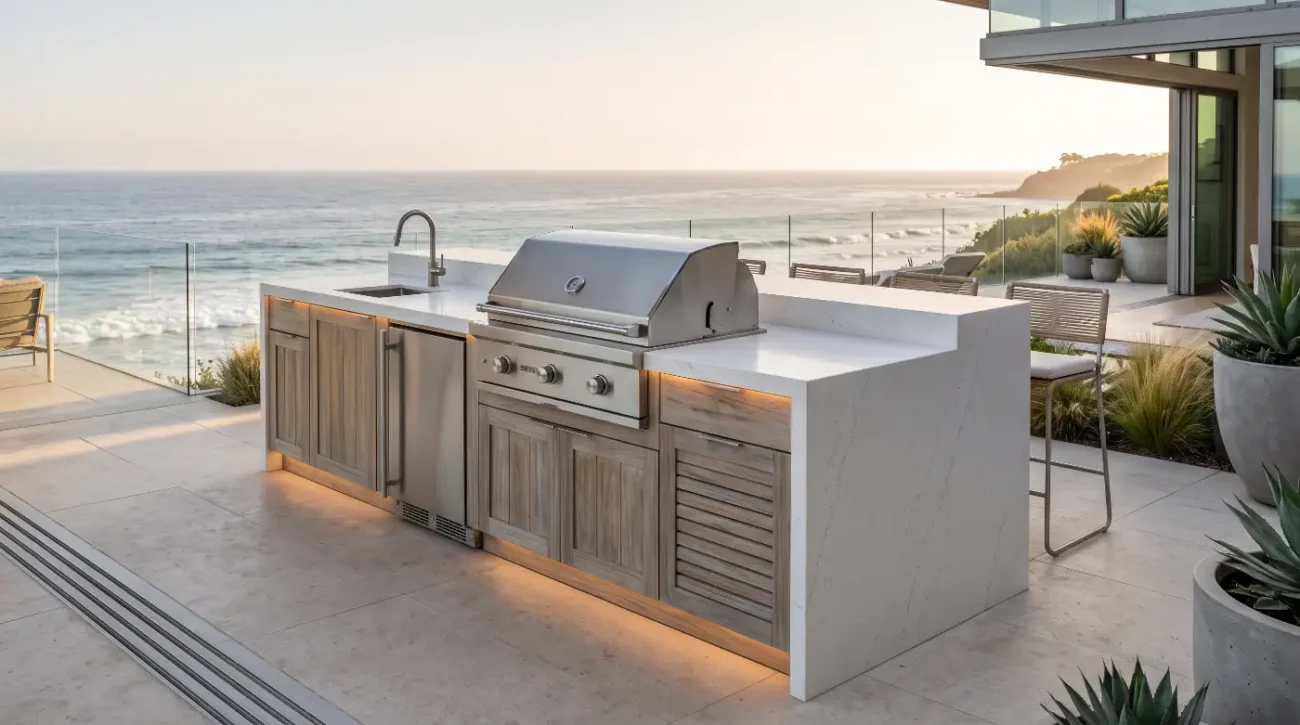
Integrating gas grills, side burners, and warming drawers into wood cabinetry requires strict fire safety protocols and thermal isolation. High-output stainless steel appliances can transfer intense heat into adjacent cabinet walls, drying out natural oils and creating fire risks.
Specifiers should mandate self-contained stainless steel insulated jackets for all high-heat gas appliances installed within teak frames. These jackets maintain a protective air cushion between the appliance firebox and the timber, preserving structural stability while complying with local building codes.
Proper installation practices are detailed in the Teak Care & Maintenance Guide, helping trade professionals avoid thermal degradation over time.
Technical Engineering Requirements
-
Mortise-and-Tenon Framework: Specify deep-tenon structural joinery pinned with solid teak dowels for maximum load distribution under heavy stone tops.
-
316 Marine Hardware Standard: Mandate 316-grade stainless steel drawer glides, soft-close hinges, and structural brackets to resist pit corrosion from airborne pool chemicals.
-
Insulated Appliance Jackets: Require zero-clearance stainless steel heat shields around high-BTU gas appliances to isolate wood frames from intense thermal transfer.
-
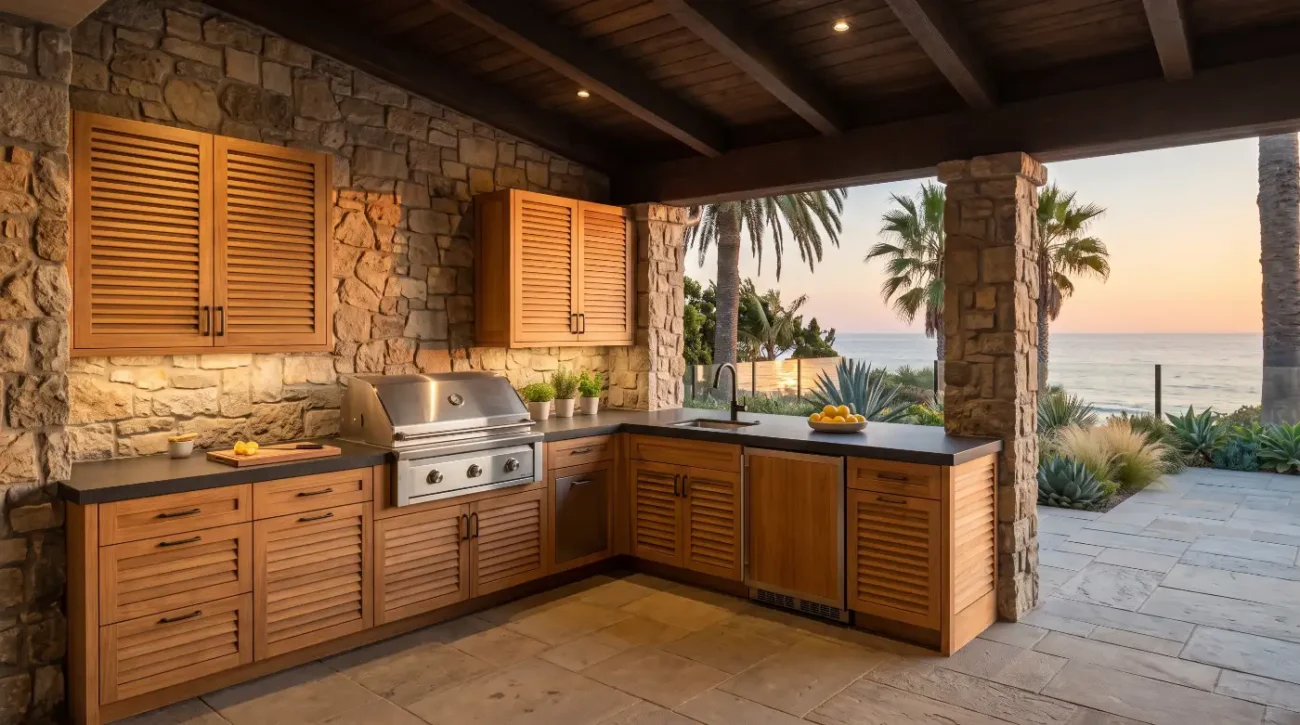
Integrated Venting Louvers: Detail concealed ventilation cutouts in rear teak panels to prevent heat buildup and satisfy fuel gas safety codes.
-
Load-Bearing Gusset Mounts: Utilize internal corner gussets fitted with heavy-duty adjustable leveling legs to prevent frame racking on sloped decks.
Technical Specification Summary
The following summary outlines key performance thresholds for specifying solid teak base cabinetry in extreme desert modern environments:
-
Primary Wood Species: Grade-A Plantation-Grown Teak (Tectona grandis), zero sapwood, high natural oil and silica content.
-
Joinery Method: Precision mortise-and-tenon construction with waterproof Type III structural marine adhesive.
-
Hardware Standard: 316 marine-grade stainless steel full-extension soft-close glides and 110-degree clip-on hinges.
-
Countertop Load Capacity: Engineered to support up to 100 lbs/sq.ft. with internal structural corner gussets.
-
Thermal Expansion Gap: Integrated 1/16-inch to 1/8-inch reveals across all floating center panels and drawer faces.
-
Heat Isolation Protocol: Required use of stainless steel insulated grill jackets for all gas-burning drop-in appliances.
Architectural CAD Integration & Installation Workflow
-
Site Survey & Substrate Verification: Measure slope gradients across the concrete slab using laser levels to confirm total leveling leg adjustment range.
-
CAD Clearance Verification: Cross-reference appliance cutout dimensions against manufacturer-provided BIM files, ensuring a two-inch rear air space for gas lines and wiring.
-
Thermal Break Isolation: Confirm insulated jackets are specified for all high-BTU burners to insulate solid teak face frames from thermal shock.
-
Leveling & Frame Anchor Sequence: Adjust 316 stainless leveling legs to establish a plumb horizontal plane before securing adjacent cabinet modules with marine fasteners.
-
Countertop Load Placement: Lower natural stone or concrete slabs directly onto structural top rails, confirming even weight distribution across all vertical corner stiles.
-
Final Door Reveal Calibration: Adjust three-way 316 stainless hinge plates to establish uniform 1/8-inch shadow reveals across all door and drawer fronts.
Frequently Asked Questions
Why is Grade-A solid teak preferred over composite materials for desert environments?
Grade-A teak possesses natural rubber resins and high silica content that allow it to adapt to rapid forty-degree daily temperature changes without cracking or delaminating. Synthetic composite panels can experience thermal expansion, sagging under heavy stone loads, and surface degradation when exposed to intense UV rays.
How do specifiers protect solid teak cabinetry from intense outdoor grill heat?
High-BTU appliances must be installed using double-walled stainless steel insulated jackets. These jackets create an insulating air barrier that prevents direct thermal transfer into adjacent teak cabinet frames, preserving the wood’s structural integrity and complying with safety regulations.
What hardware grade should be specified for luxury outdoor cabinetry?
All structural screws, soft-close hinges, and full-extension drawer glides should be made from 316 marine-grade stainless steel. This alloy offers superior pitting resistance against windblown sand dust, intense sun, and pool chemicals compared to standard 304-grade steel.
Should outdoor teak cabinetry be sealed with clear varnish or polyurethane?
No. Rigid clear coats, varnishes, and polyurethanes trap interior moisture and fail under direct heat and UV light, leading to cracking and peeling. Teak should either be left unfinished to develop a natural silvery-grey patina or treated periodically with a breathable, penetrating UV-inhibiting marine teak oil.
External References
Key Takeaways
-
Material Precision: Always specify Grade-A plantation-grown Tectona grandis with high silica content to withstand high ambient heat and forty-degree daily temperature drops.
-
Structural Engineering: Utilize traditional mortise-and-tenon joinery and heavy-duty 316 stainless steel leveling legs to support heavy quartzite or concrete countertops without racking.
-
Thermal Isolation: Require insulated stainless steel heat shields around all high-heat gas grills to isolate timber frames from high temperatures and prevent finish breakdown.
-
Patina Options: Choose between periodic applications of penetrating UV marine oils to retain a warm golden hue or allow the wood to naturally oxidize into a low-maintenance silvery-grey patina.
-
BIM and CAD Accuracy: Verify appliance cutouts and thermal expansion reveals during the early CAD planning phase to streamline trade coordination and ensure a smooth site installation.
Designing a desert modern outdoor kitchen demands an uncompromised balance of structural precision, material science, and refined architectural aesthetics. Whether you are an interior designer developing custom CAD layouts, a landscape architect bridging indoor-outdoor living spaces, or a luxury builder preparing a job site in Palm Springs, Pacific Teak Millworks offers trade specifiers the engineering support and cabinetry solutions required for high-end residential projects. Visit our team directly to request timber samples, download complete CAD spec libraries, or explore custom manufacturing capabilities by reaching out through our Trade Contact Portal.