EXECUTIVE SUMMARY
-
Material Science Supremacy: Grade-A plantation teak contains dense natural silica and tectonic resins that naturally reject saltwater corrosion, atmospheric moisture, and extreme UV degradation in oceanfront climates.
-
Structural Engineering Needs: High-end coastal installations require 316 marine-grade stainless steel hardware, precision mortise-and-tenon joinery, and active ventilation to withstand intense thermal expansion and heavy countertop stone loads.
-
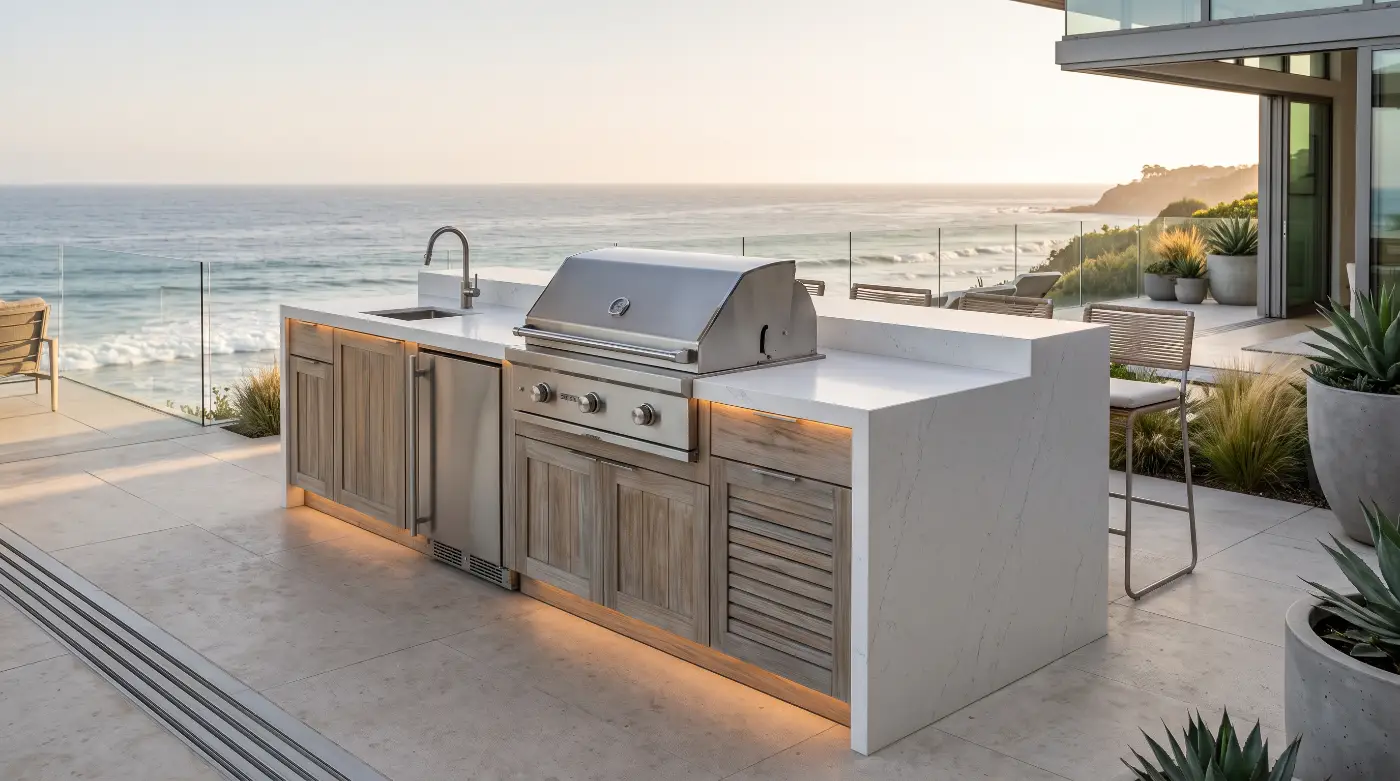
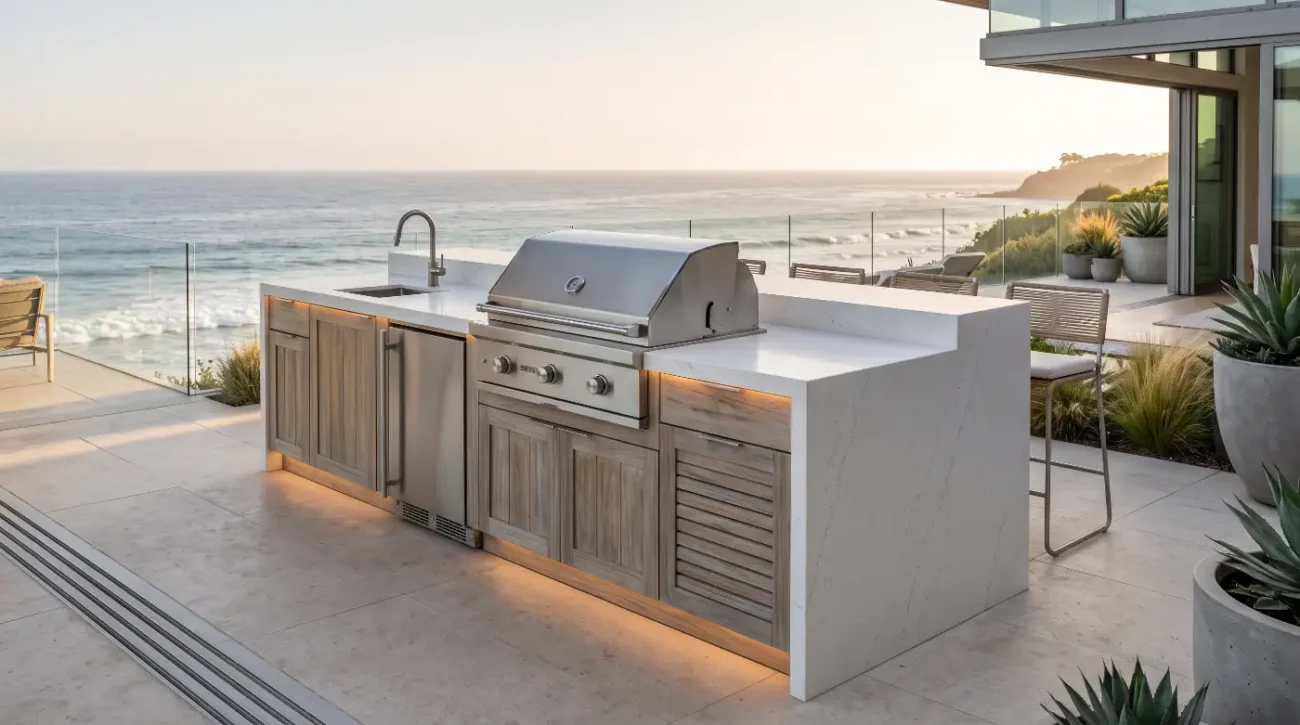
Aesthetic Dynamic Balance: Blending raw golden or naturally aged silvery-patina teak base cabinets with white quartz or light porcelain countertops creates an iconic coastal contemporary architectural look.
-
Trade Integration Protocols: Seamless collaboration between homeowners, landscape architects, and custom builders relies on precise CAD specifications, appliance clearance planning, and specialized trade program support.
Designing a Coastal Contemporary Outdoor Kitchen in Malibu or Palm Beach
A prominent Malibu architect recently shared a cautionary narrative regarding a multimillion-dollar blufftop estate overlooking Paradise Cove. The client had commissioned a fully custom outdoor kitchen built using marine-grade plywood wrapped in dark synthetic composite veneers, topped with an exquisite slab of Italian marble. Within eighteen months, the combination of punishing ocean salt fog, persistent coastal morning dampness, and intense afternoon UV rays degraded the composite finish. Water infiltrated the interior core, causing the plywood layers to delamination and swelling the frame until the custom marble countertop cracked down the center.
This catastrophic structural failure highlights a crucial reality for luxury oceanfront architecture. Designing an outdoor culinary space in elite coastal enclaves like Malibu, Palm Springs, or Palm Beach demands far more than basic aesthetic choices. True luxury coastal design requires a deep understanding of material science, precise architectural engineering, and specialized woodworking techniques capable of enduring punishing microclimates.
Selecting the right materials determines whether an outdoor living investment maintains its structural integrity or degrades over time. Solid teak cabinetry represents the gold standard for high-end coastal kitchens, offering natural resilience and timeless aesthetic appeal.
Section Overview
-
Structural Longevity: Engineered solid teak cabinetry provides unmatched dimensional stability and natural moisture resistance in harsh marine environments.
-
Design Harmony: The rich grain of natural teak balances cool stone countertops to establish an elevated coastal contemporary aesthetic.
-
Trade Alignment: Successful luxury installations require clear CAD specifier integration, precise load management, and marine-grade hardware standardizations.
Architectural Engineering and Material Science in Marine Environments
What specific material science principles allow Grade-A teak cabinetry to survive punishing coastal microclimates without delaminating, cracking, or rusting?
Grade-A teak, harvested exclusively from the heartwood of mature Tectona grandis trees, possesses an extraordinary natural defense mechanism. The inner heartwood features an exceptional concentration of natural rubber, silica, and dense tectonic resins. These organic compounds act as a permanent, built-in waterproofing agent that prevents atmospheric moisture, salt fog, and ambient dampness from saturating the wood fibers. While lesser hardwoods or composite materials absorb ocean spray and swell, solid teak maintains exceptional dimensional stability. The natural silica content hardens the wood grain, making it inherently resistant to fungal decay, dry rot, and wood-boring marine insects.
Coastal outdoor kitchens in destinations like Newport Beach, the Florida Coast, or the Hamptons endure aggressive thermal expansion and contraction cycles. Sunlight warms the cabinetry during the day, followed by cold, damp ocean winds at night. Standard outdoor cabinetry built with mechanical fasteners or surface glues quickly fails under these stress cycles.
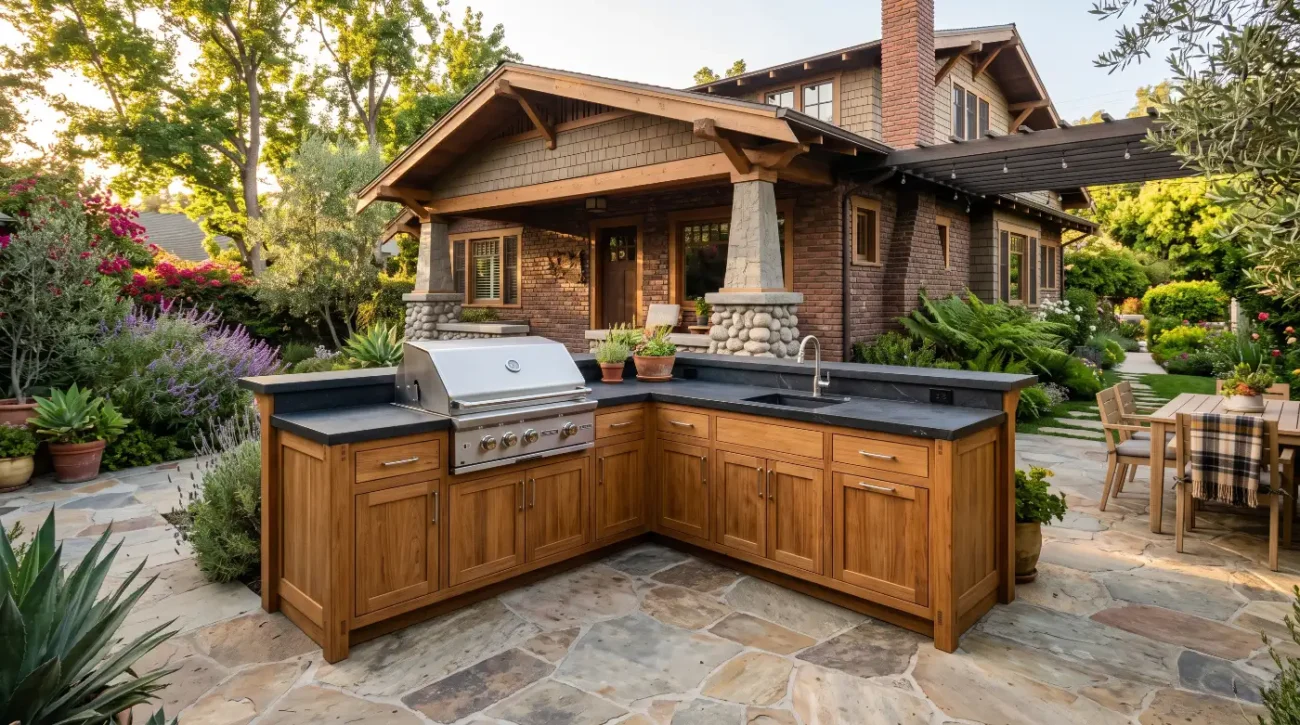
Superior craftsmanship relies on traditional mortise-and-tenon joinery reinforced with marine-grade waterproof adhesives. Mortise-and-tenon construction allows the wood to naturally expand and contract along its grain lines without compromising structural integrity. This time-tested joinery distributes physical loads evenly across the cabinet frame, preventing sag even when supporting massive white quartz, granite, or heavy porcelain slab countertops.
Hardware performance is another critical consideration for oceanfront kitchens. Standard 304 stainless steel hinges and drawer slides rapidly develop surface rust and pit when exposed to airborne chlorides from crashing waves. Marine-grade 316 stainless steel hardware is essential for coastal projects. Containing added molybdenum, 316 stainless steel offers superior resistance to salt corrosion, ensuring soft-close hinges and full-extension drawer glides operate smoothly for decades. Specifying high-performance components ensures your custom outdoor kitchen withstands environmental stress without compromising functionality.
To evaluate material performance under coastal conditions, consider how primary cabinet and hardware options compare in marine environments:
-
Grade-A Teak: Contains rich concentrations of natural silica and protective resins, resulting in zero risk of delamination, exceptional structural longevity, and natural resistance to extreme UV exposure.
-
Composite and Plywood Substrates: Features synthetic core structures or glued layers, making them highly prone to swelling, structural warping, and surface fading when moisture infiltrates the finish.
-
316 Marine-Grade Stainless Steel: Engineered with a molybdenum alloy composition, providing absolute protection against pit rust while keeping hardware glide mechanisms operating smoothly for decades.
-
304 Standard Stainless Steel: Utilizes standard commercial alloy compositions that remain prone to surface pitting and corrosion when exposed to airborne salt fog, frequently causing hinges to seize over time.
Architectural millwork performance depends heavily on appropriate finishing choices. Applying film-forming sealers, polyurethane, or varnish to exterior teak represents a severe post-installation mistake. These rigid surface coatings trap natural moisture inside the wood cellular structure while blocking the timber from breathing. As UV rays break down the surface film, water creeps beneath the coating, causing unsightly peeling, black mold spots, and internal rotting.
Allowing solid teak to age naturally produces a refined silvery-grey patina caused by oxidation from sunlight and moisture. This biological transformation affects only the outermost surface layer while the interior heartwood remains completely protected by its natural oils. Homeowners who prefer the warm golden hue can apply breathable, penetrating teak oils or specialized outdoor sealers designed to nourish the wood fibers without creating a rigid surface film.
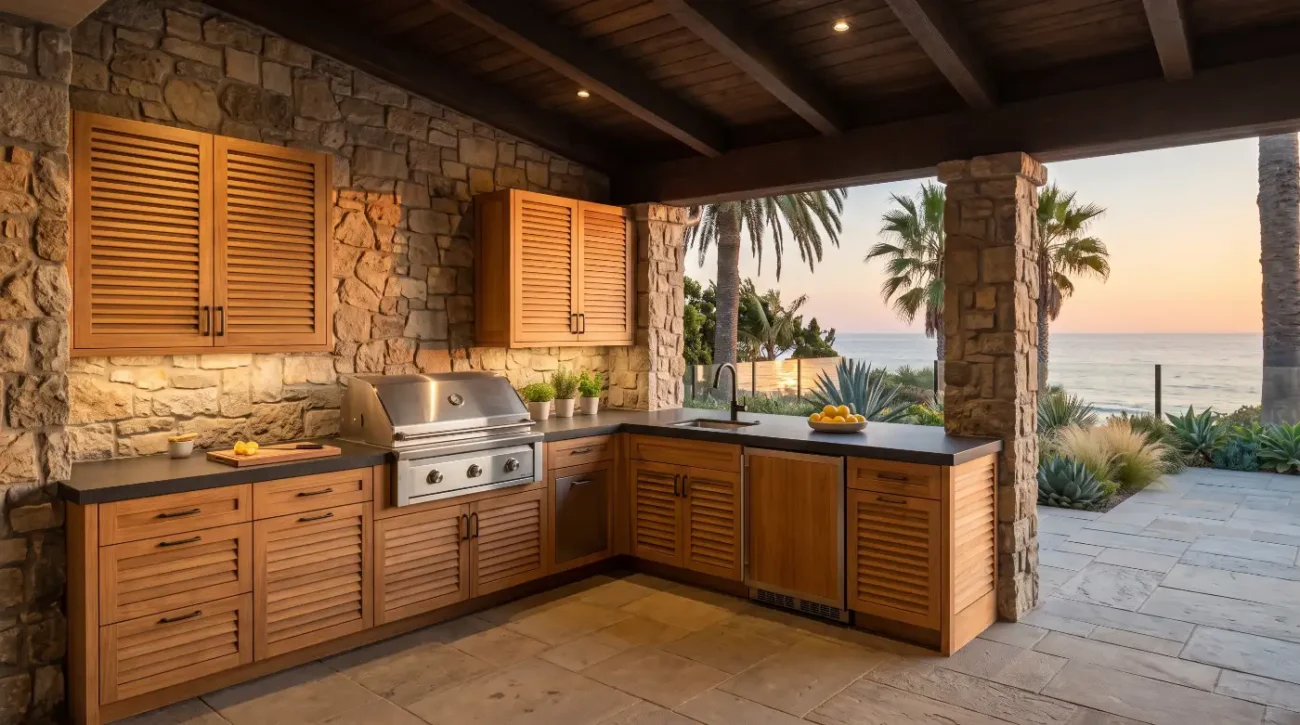
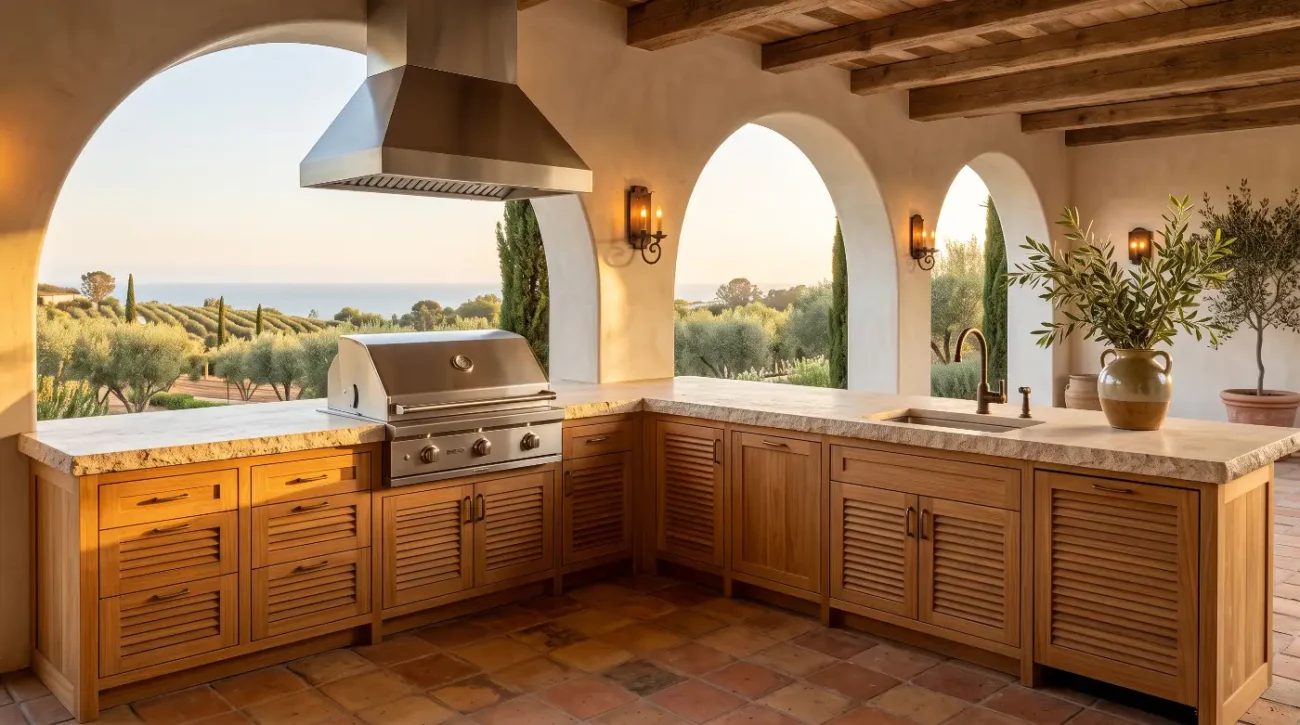
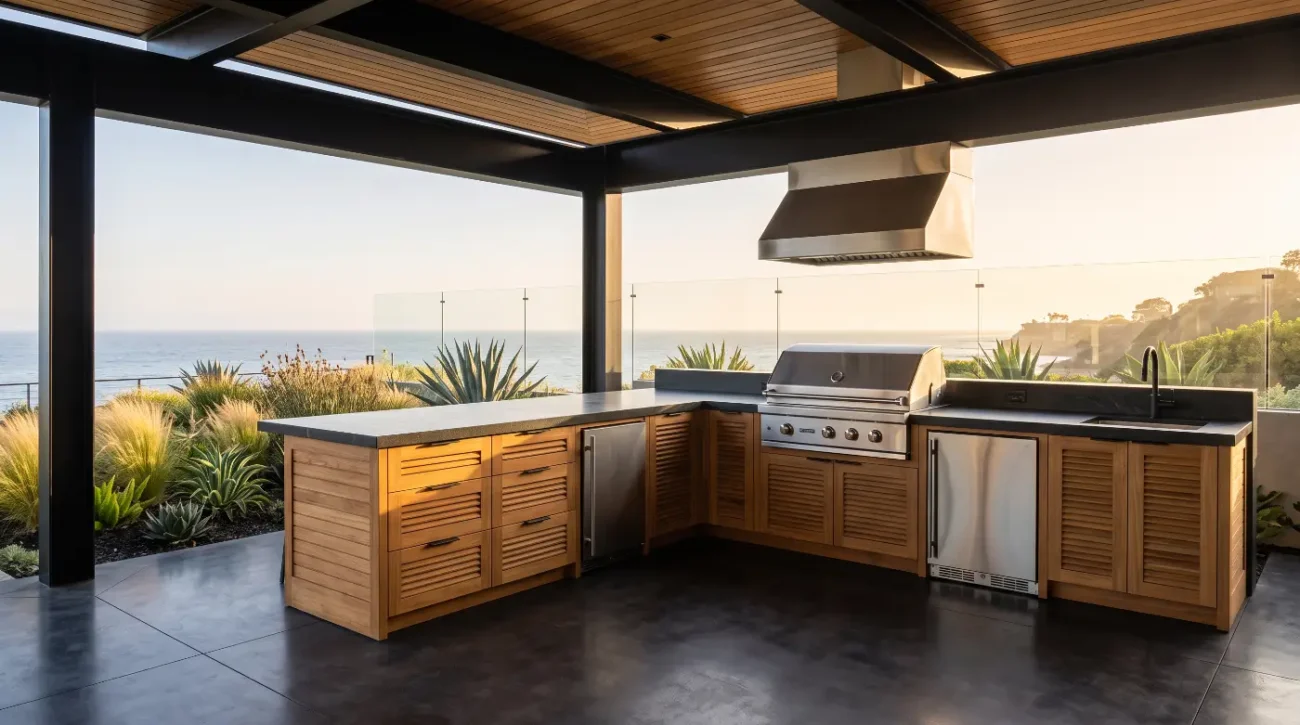
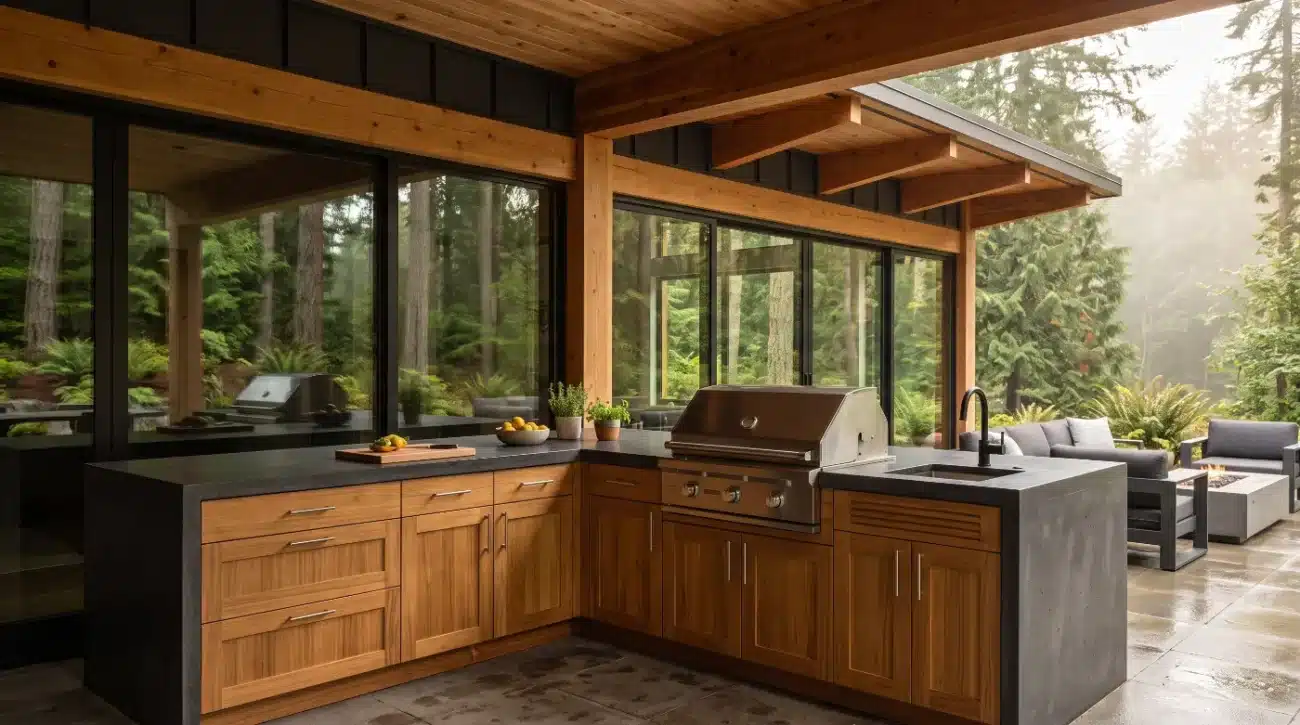
Proper ventilation and load distribution are equally vital when integrating high-BTU gas grills and side burners into solid wood cabinetry frames. Intense heat generated by professional-grade grills can scorch adjacent cabinetry or create dangerous thermal traps if unventilated. Cabinetry designs must incorporate integrated heat-shield insulation boxes, air-gap clearances, and stainless steel vent louvers. These features vent excess heat safely away from the wood structure while maintaining clean architectural sightlines.
Ensuring proper weight distribution across leveling legs protects cabinets from settling unevenly over time under heavy stone surfaces. Combining advanced material science with precise joinery creates an outdoor kitchen built to perform reliably in extreme coastal environments.
Explore our comprehensive engineered Base Cabinets Collection to discover how precision marine engineering transforms custom outdoor kitchens.
Master Strategy for Coastal Contemporary Design Aesthetics
How do luxury designers balance silver-patina teak base cabinets, white quartz countertops, and panoramic ocean views to achieve a coastal contemporary aesthetic?
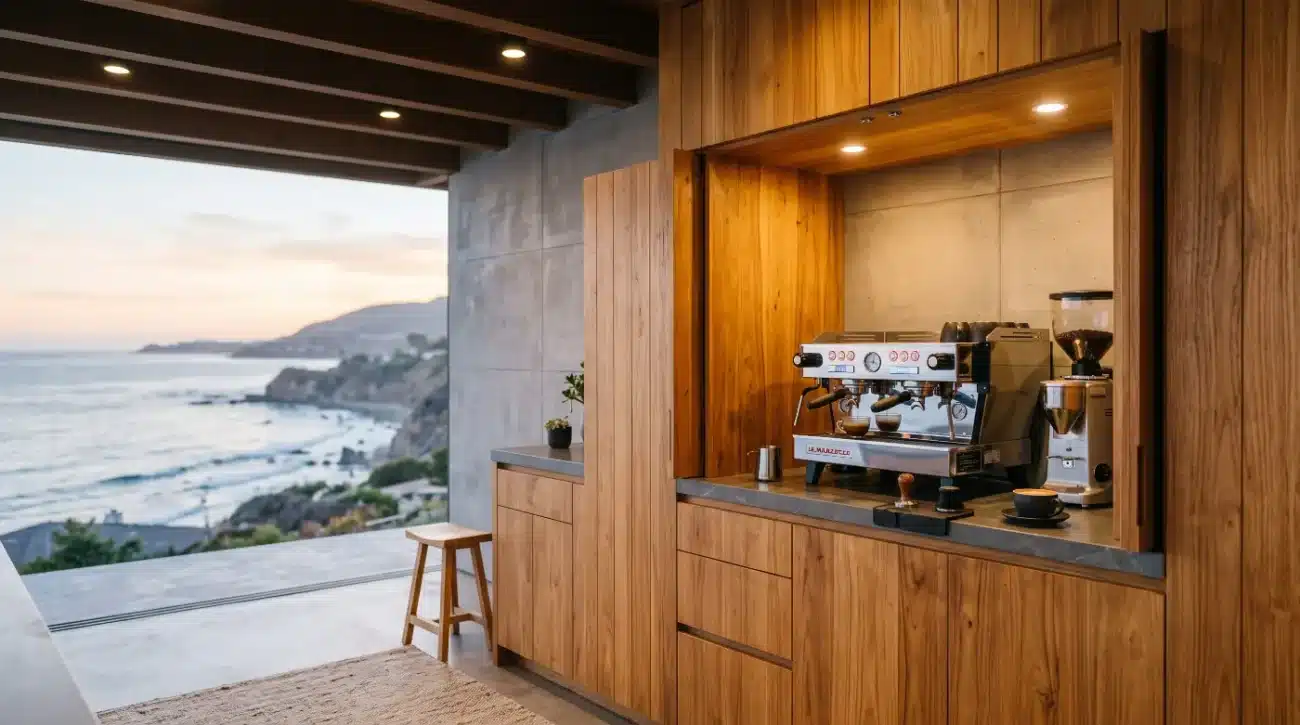
The coastal contemporary aesthetic focuses on organic minimalism, light-filled spaces, biophilic architecture, and continuous indoor-outdoor flow. Rather than relying on nautical clichés, high-end residential design emphasizes authentic raw materials, refined textures, and clean geometric lines. Solid teak serves as the foundational design anchor for this aesthetic, providing warmth and tactile richness that balances cool architectural elements like concrete, glass, and polished stone.
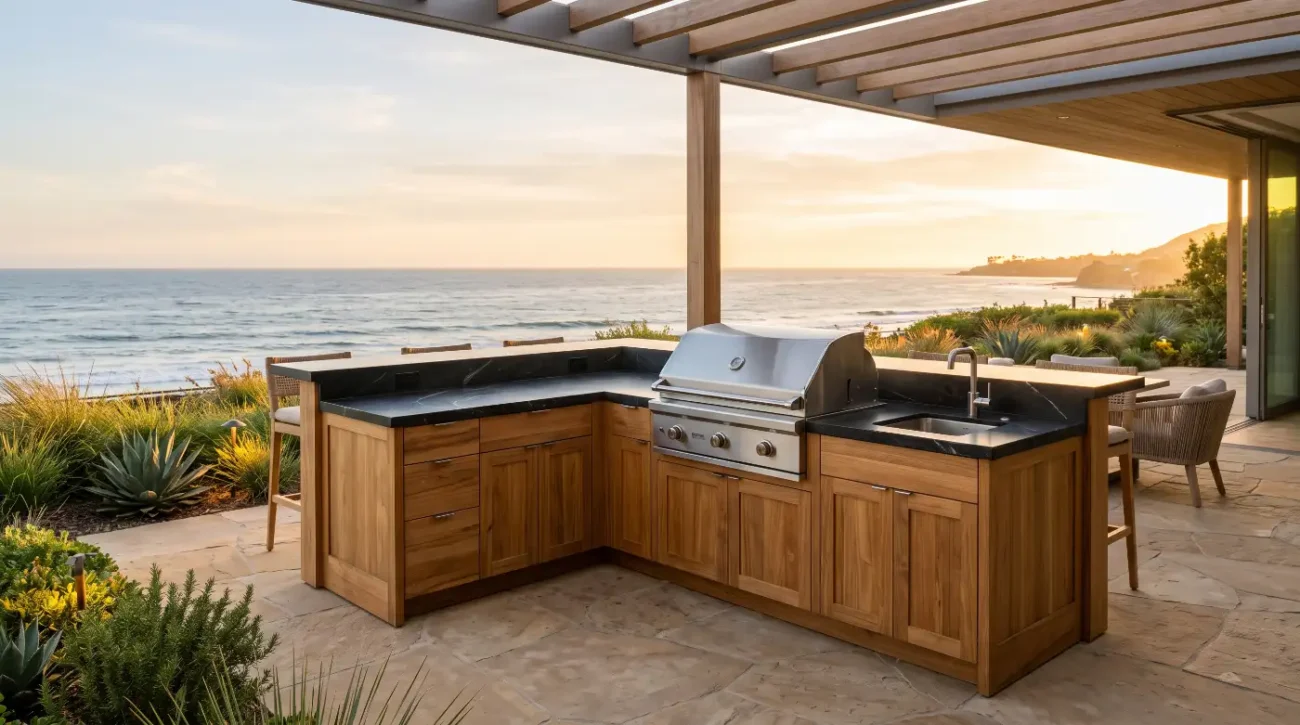
Pairing naturally oxidized silvery-patina teak base cabinets with crisp white quartz or porcelain countertops creates an iconic design palette for oceanfront properties in Malibu, Miami, and the Pacific Northwest. As the teak weathered over time to a soft driftwood grey, it naturally mirrors the coastal landscape—echoing sun-bleached driftwood, sea mist, and coastal sage.
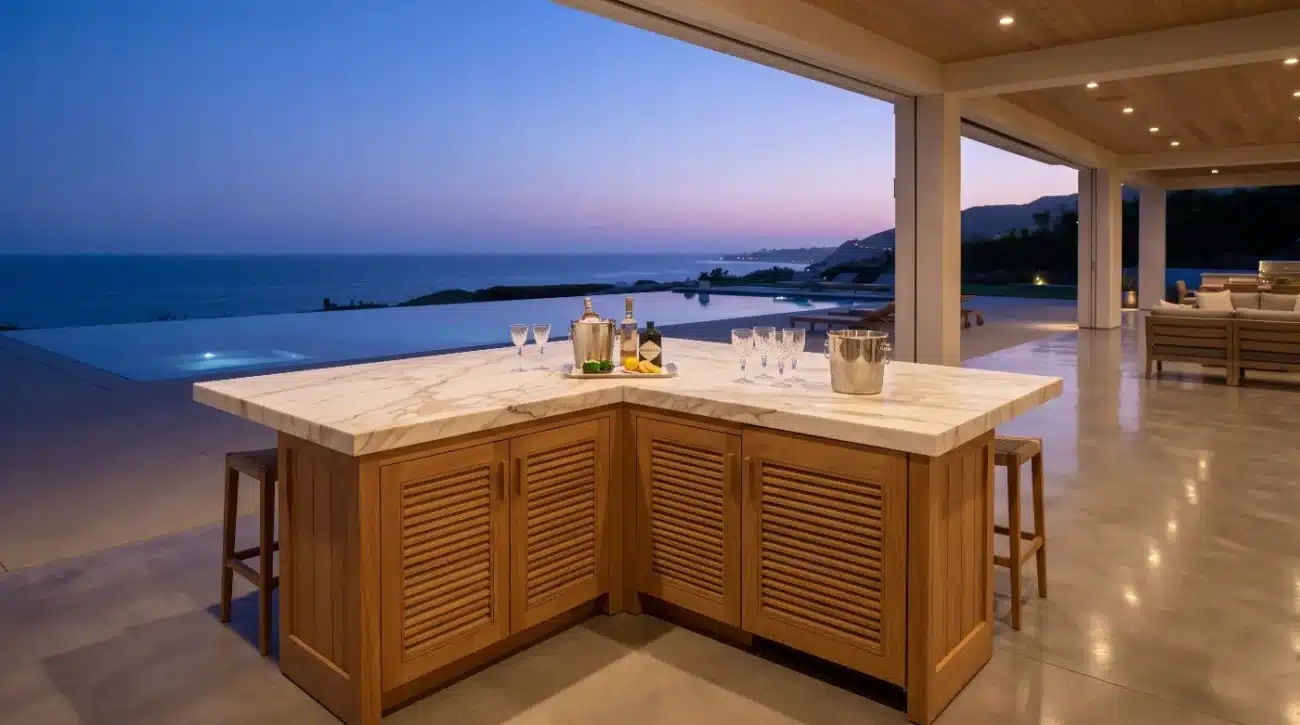
White quartz countertops reflect abundant natural sunlight, illuminating covered patios and loggias while framing ocean views. This light-and-dark contrast grounds the outdoor kitchen within its natural surroundings, establishing a cohesive connection between built architecture and the surrounding landscape.
A cohesive coastal contemporary color and material palette utilizes four foundational design layers:
-
Primary Cabinetry Core: Features naturally oxidized silvery-grey teak for a weathered coastal aesthetic, or rich warm golden heartwood teak maintained with penetrating oils to add tactile warmth to the space.
-
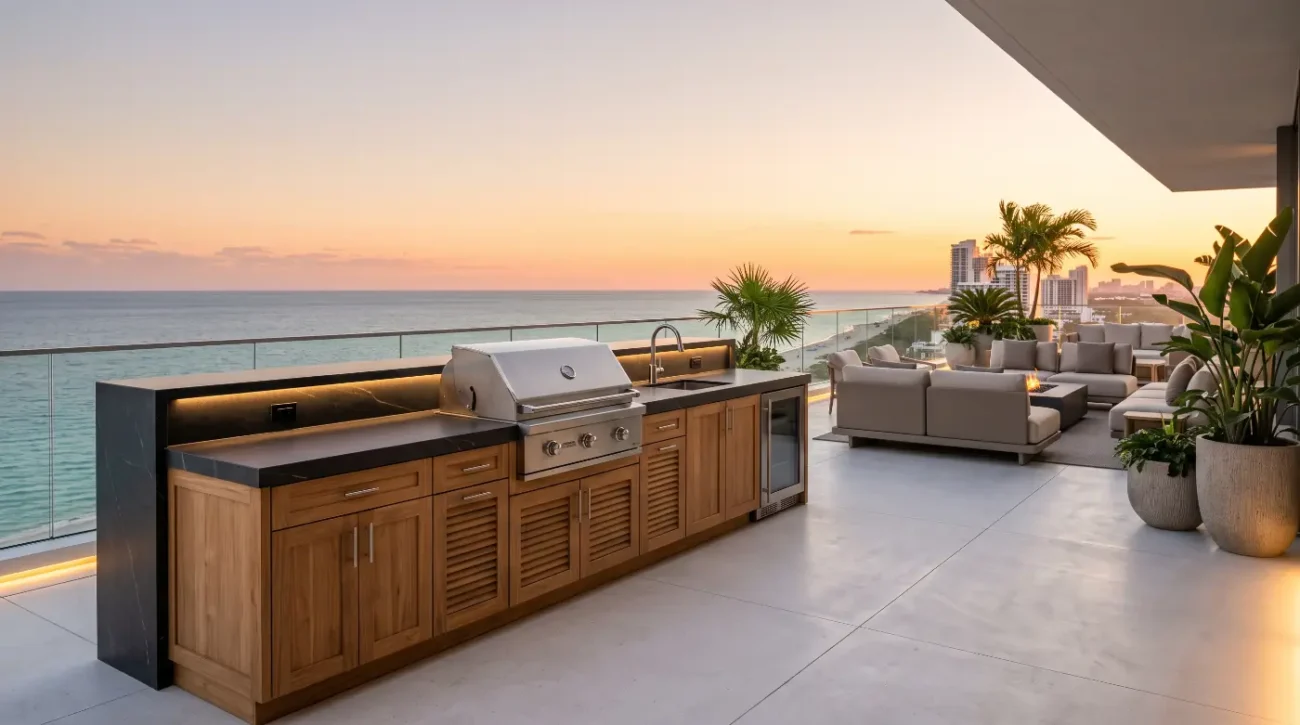
Surfacing and Countertops: Incorporates crisp white quartz, polished Calacatta porcelain slabs, or honed light granite with sleek waterfall edges to maximize natural light reflection.
-
Hardware and Architectural Accents: Utilizes matte black plumbing fixtures, brushed 316 marine-grade stainless steel hardware, and soft architectural concrete framing to anchor geometric lines.
-
Landscape Framing Elements: Incorporates frameless glass railings, minimal perimeter sightlines, and biophilic native landscape plantings to connect the kitchen directly to ocean panoramas.
Key design strategies for executing this palette effectively include:
-
Silvery-Patina Cabinetry: Incorporating naturally weathered grey teak base cabinets introduces soft organic texture that harmonizes naturally with coastal light and ocean landscapes.
-
Monolithic Stone Surfaces: Specifying white quartz or sintered porcelain countertops with waterfall edges creates a sleek, contemporary frame around natural wood cabinetry.
-
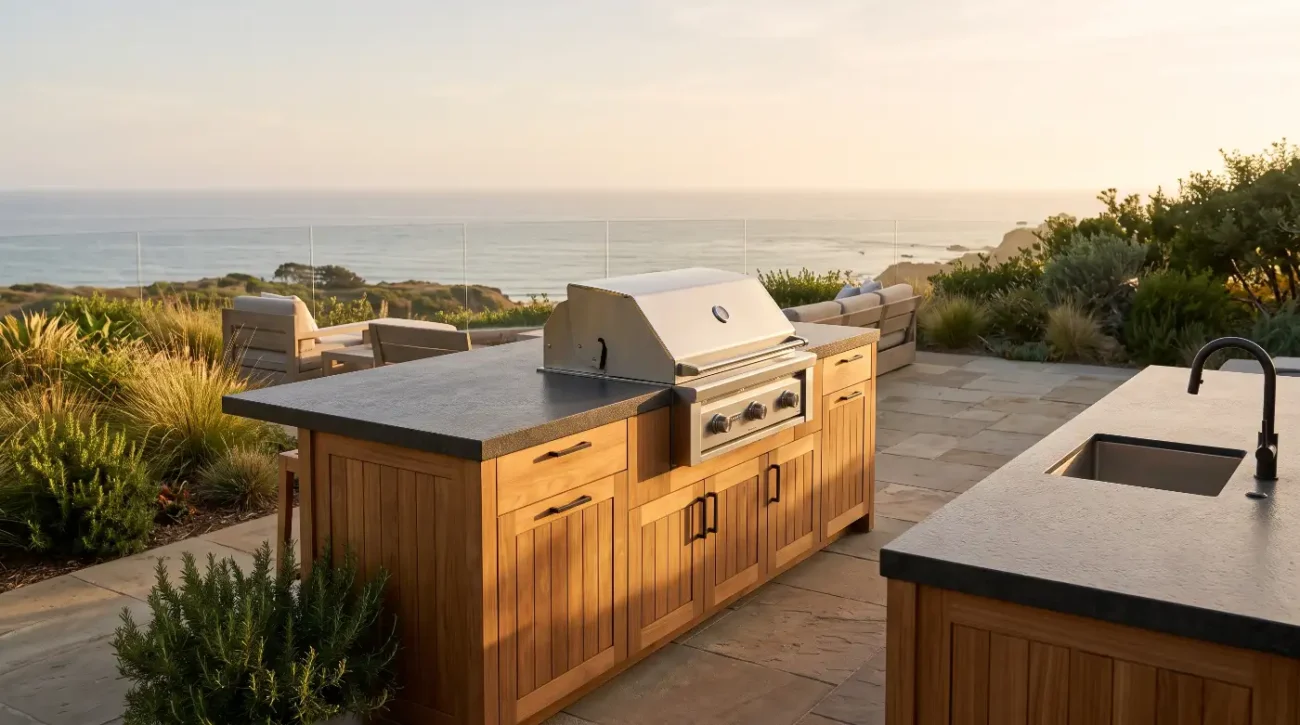
Warm Golden Accents: Maintaining the rich honey-gold tone of freshly oiled teak adds inviting warmth to cool contemporary spaces built with exposed concrete and floor-to-ceiling glass.
-
Concealed Storage Layouts: Integrating full-overlay teak face-frames with hidden 316 marine-grade hardware preserves clean architectural lines across expansive outdoor kitchen islands.
Achieving a successful coastal contemporary layout requires careful spatial planning and functional zoning. High-net-worth homeowners and specifiers often design outdoor kitchens as central gathering hubs for entertaining. Blending cooking, dining, and lounge areas requires thoughtful positioning of base units, wall cabinets, and island inserts.
High-performance luxury outdoor kitchens rely on four primary functional zones to streamline food preparation and guest entertaining:
-
Prep Zone: Integrates dedicated base cabinets, seamless under-mount sink modules, and hidden pull-out trash and recycling receptacles for efficient culinary preparation.
-
Cook Zone: Centers on gas grill base cabinets engineered with thermal heat-shield insulation boxes, louvered ventilation panels, and specialized side-burner cutouts.
-
Serve Zone: Features island inserts, under-counter beverage centers, and high-top quartz bar seating that encourages effortless guest interaction away from active cooking surfaces.
-
Storage Zone: Incorporates weather-sealed overhead wall cabinets and marine-gasketed dry storage units to protect linens, glassware, and serving pieces from ambient coastal humidity.
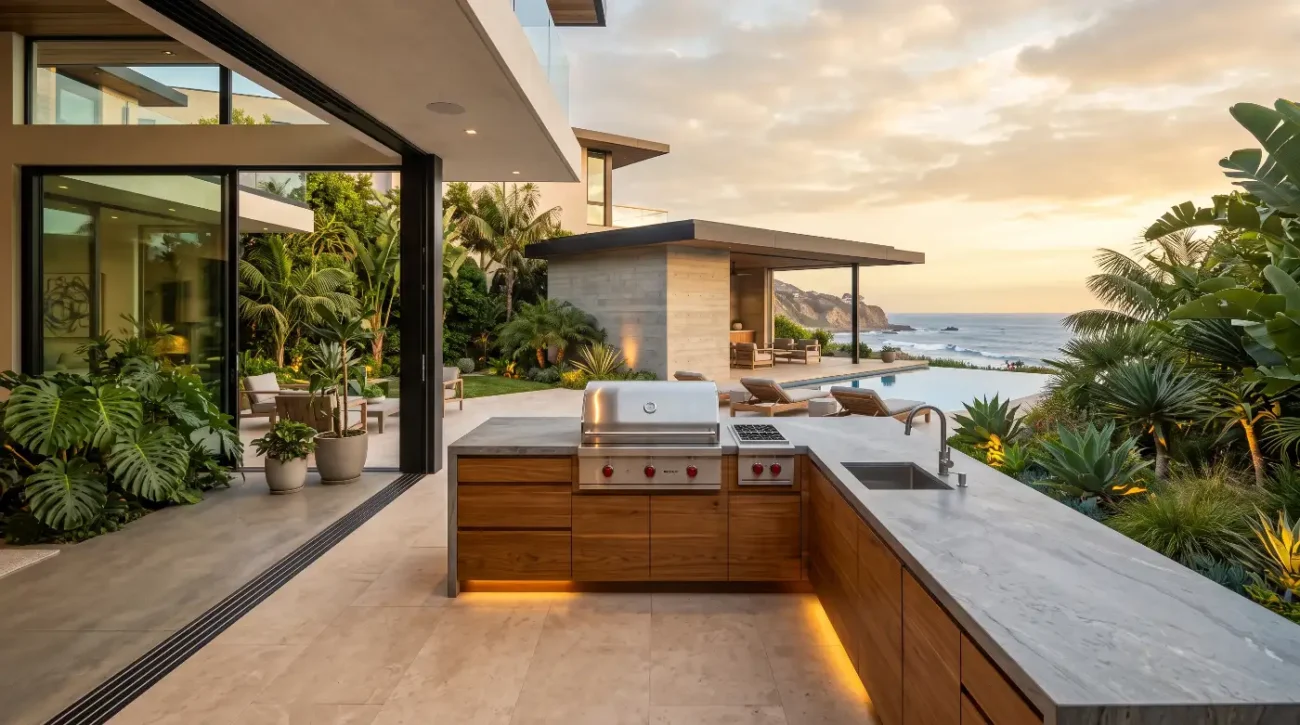
Positioning the main cook station to face outward toward ocean views or pool decks keeps the chef engaged with guests, rather than staring at a solid wall. Integrating flush-mounted teak access doors and drawer inserts keeps utility connections, trash receptacles, and grilling accessories hidden behind continuous wood grain faces.
Lighting design plays a vital role in showcasing natural teak cabinetry after sunset. Concealed low-voltage LED strip lighting mounted beneath countertop overhangs casts a soft downward glow across the wood face-frames. This subtle illumination highlights the natural grain variations and linear joinery details without creating harsh glare on nearby glass doors or water features.
Integrating floating Wall Cabinets Collection units above base stations provides functional overhead storage while maintaining an open, airy vertical spatial dynamic.
Bridging the gap between initial homeowner inspiration and final construction requires seamless collaboration among trade professionals. Homeowners often curate digital mood boards featuring luxury resort spaces and bring these concepts to their interior designer or landscape architect. Translating these aesthetic visions into buildable real-world projects relies on detailed architectural plans.
Designers convert these concepts into precise CAD layouts that account for plumbing rough-ins, electrical conduits, gas line locations, and appliance cutouts. Utilizing specialized Island Inserts Collection components simplifies this process, allowing trade professionals to integrate custom teak millwork directly into stonework or stucco structures.
Managing procurement timelines and installation specs is critical when coordinating multi-trade projects involving builders, stone fabricators, plumbers, and electricians. Accessing technical resources, CAD libraries, and trade programs helps streamline project management and ensures precise installation tolerances. Specifiers can review our detailed Teak Care & Maintenance Guide (PDF) for expert guidance on preserving wood finishes in high-exposure coastal sites.
Integrating custom solid teak millwork into luxury outdoor spaces offers an ideal balance of durability and elevated aesthetic design. Choosing marine-engineered cabinetry ensures your outdoor living space remains functional and visually striking for decades. To learn more about our manufacturing standards, visit our About Us page or consult our complete Resource Center for technical documentation.
EXTERNAL REFERENCES
KEY TAKEAWAYS
-
Grade-A Teak Performance: Rich in natural rubber, silica, and protective oils, Grade-A heartwood teak inherently rejects moisture, salt spray, and decay without delaminating.
-
Marine Hardware Standards: Specifying 316 marine-grade stainless steel soft-close hardware prevents rust pitting and hinge failure in aggressive coastal environments.
-
Patina vs. Golden Maintenance: Teak naturally oxidizes into a silvery-grey patina without losing structural strength; homeowners can maintain its original golden tone using breathable penetrating sealers.
-
Breathable Wood Finish Protocols: Rigid film-forming sealers trap internal moisture and trigger surface rot; unsealed or oil-nourished teak ensures long-term breathability and durability.
-
Trade Integration & Planning: Successful installations require detailed CAD specifications, precise countertop weight load planning, and proper heat-shield venting for gas appliances.
Whether you are a homeowner curating a private oceanfront sanctuary or an architect specifying custom millwork for a coastal estate, Pacific Teak Millworks provides the marine-grade cabinetry solutions your project demands. Our team works directly with design professionals and custom builders to deliver CAD support, material samples, and custom cabinetry configurations tailored to your exact specifications. Contact Darin today at (949) 365-6513 or via email at darin@pacificteakmillworks.com to discuss your project requirements. You can also visit our Contact Us / Trade Inquiries page to request custom millwork samples and explore our exclusive trade program offerings.