Executive Summary:
-
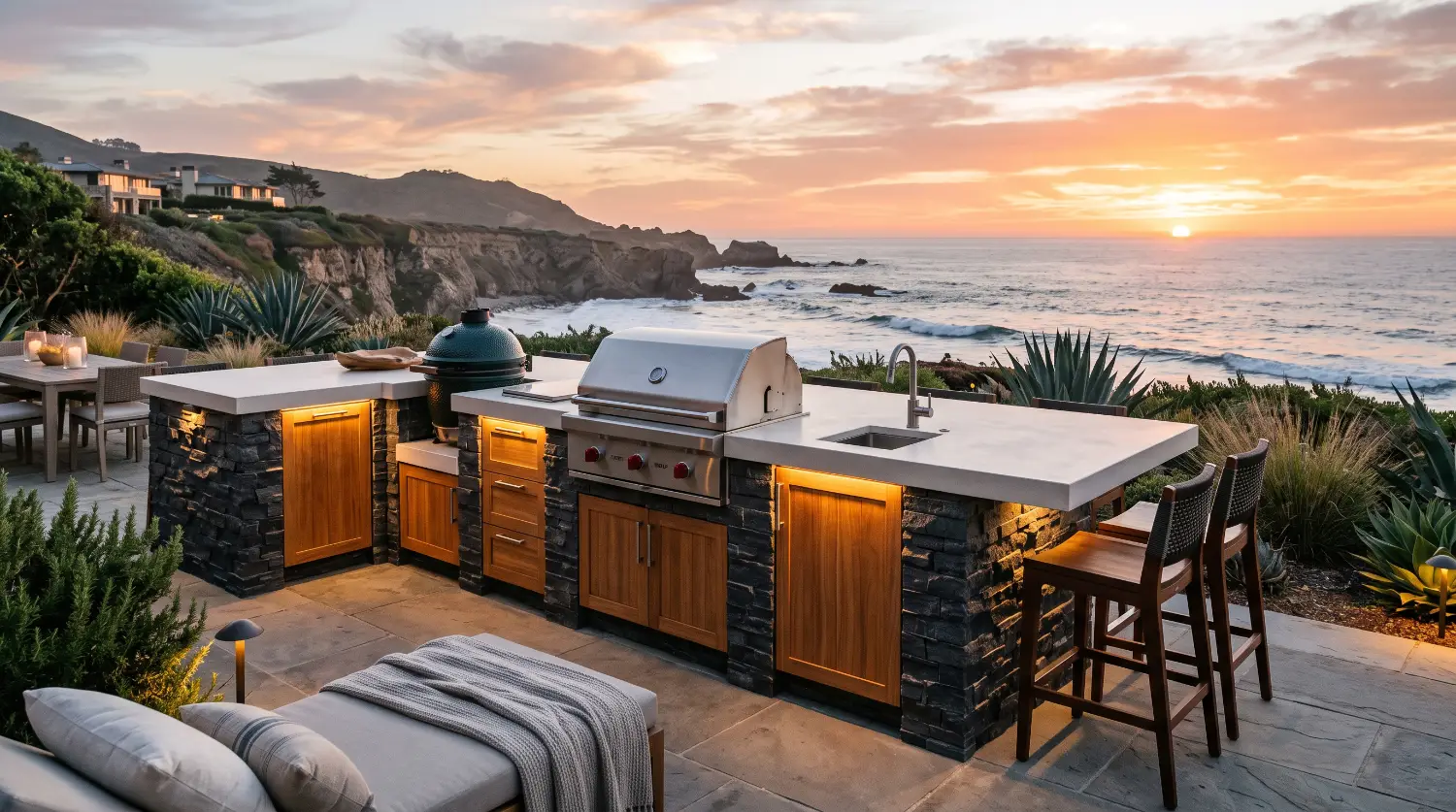
Softening Cold Surfaces: Exterior designers leverage solid teak door and drawer inserts to break up the monotonous visual weight of stacked stone, poured concrete, and stucco structures.
-
Engineering Marine Longevity: High-density Grade-A teak delivers rich natural oils and rubber resins, preventing moisture intrusion, rot, and structural movement in high-humidity or coastal climates.
-
Streamlining Trade Workflows: Integrating precision custom inserts into masonry frames eliminates complex site-built framing errors while drastically reducing installation lead times for trade professionals.
Transforming Cold Architectural Masonry with Marine-Grade Teak Inserts
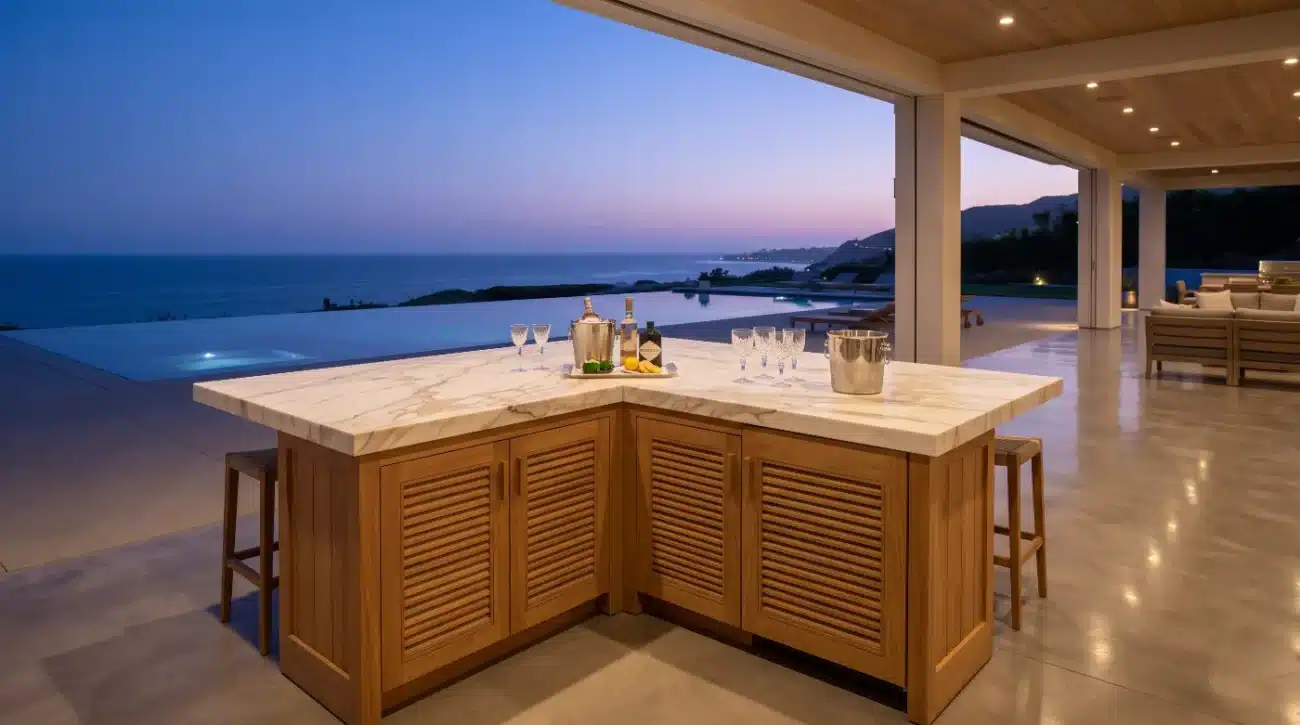
When a coastal Malibu property owner steps onto their newly finished loggia, the overwhelming presence of dark granite, brushed concrete, and stacked fieldstone can frequently feel more like an impenetrable fortress than a warm, inviting residential retreat. Masonry provides an undeniably durable, fireproof foundation for high-end outdoor cooking environments, yet an unyielding expanse of stone lacks the tactile warmth, organic color variation, and human scale essential to luxury living. Exterior designers routinely encounter this spatial imbalance: an outdoor kitchen island that is structurally indestructible, yet visually cold and uninviting.
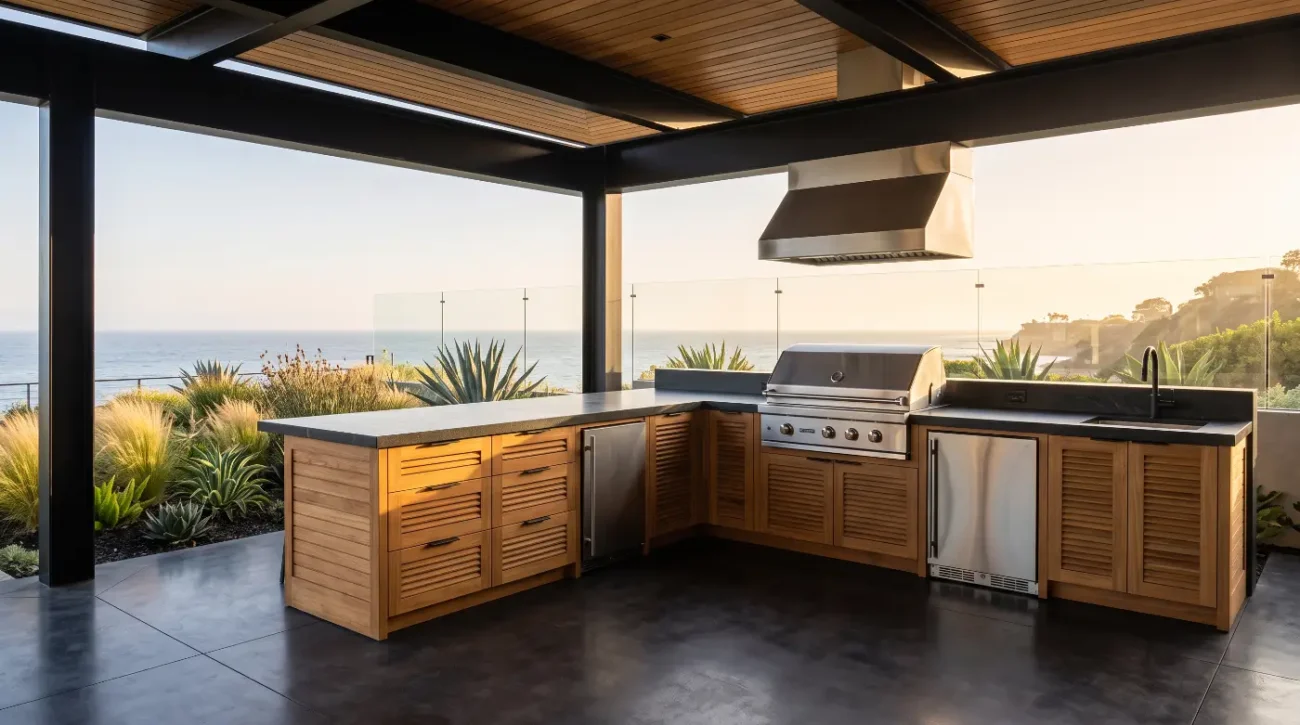
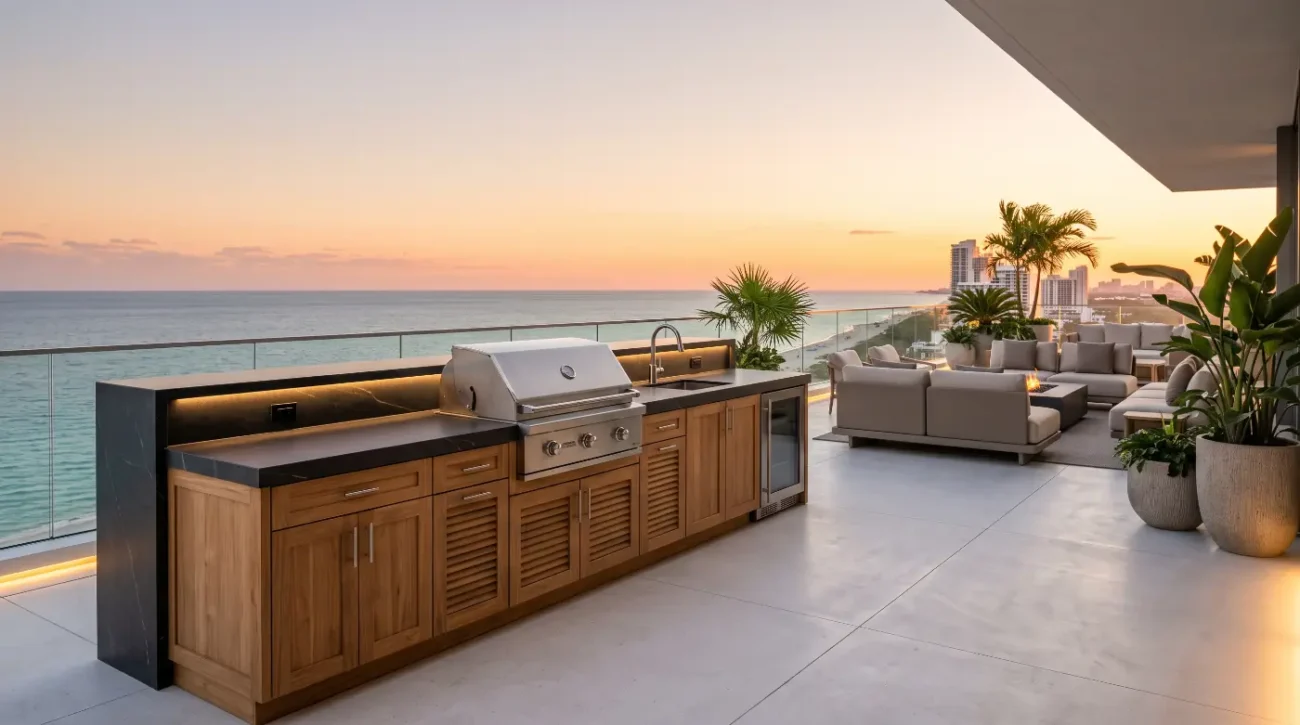
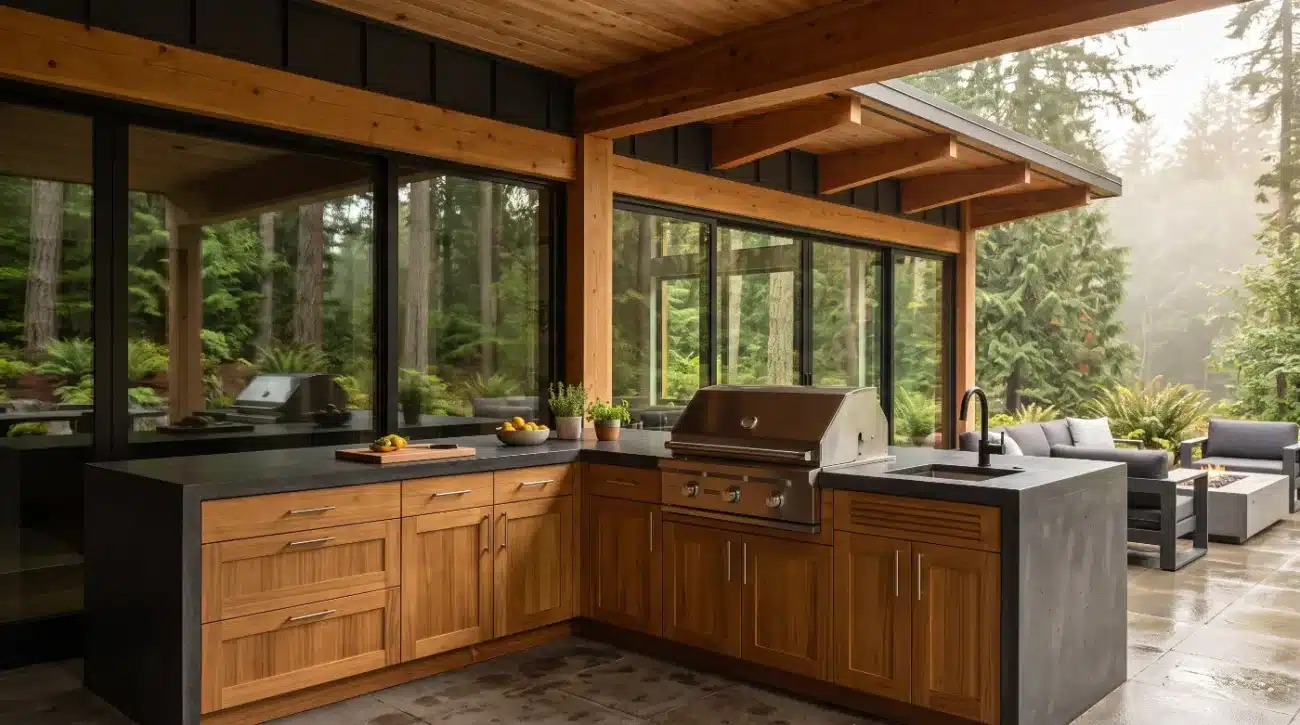
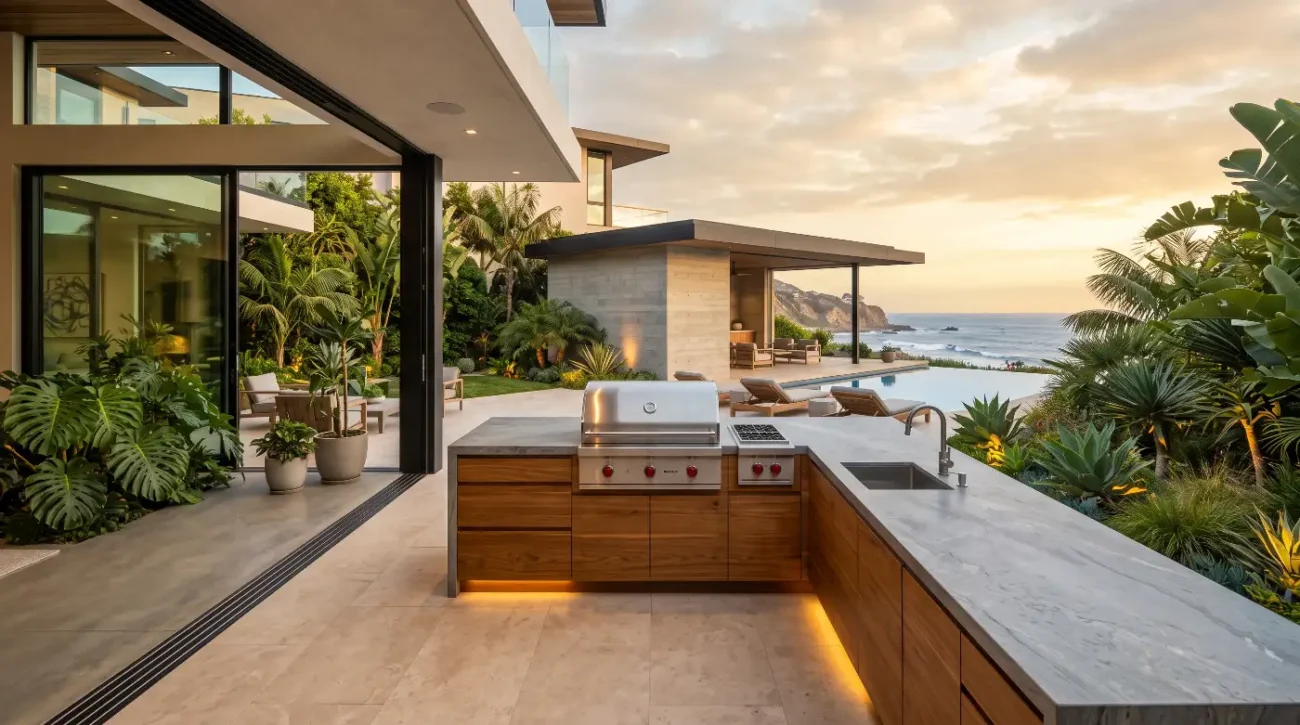
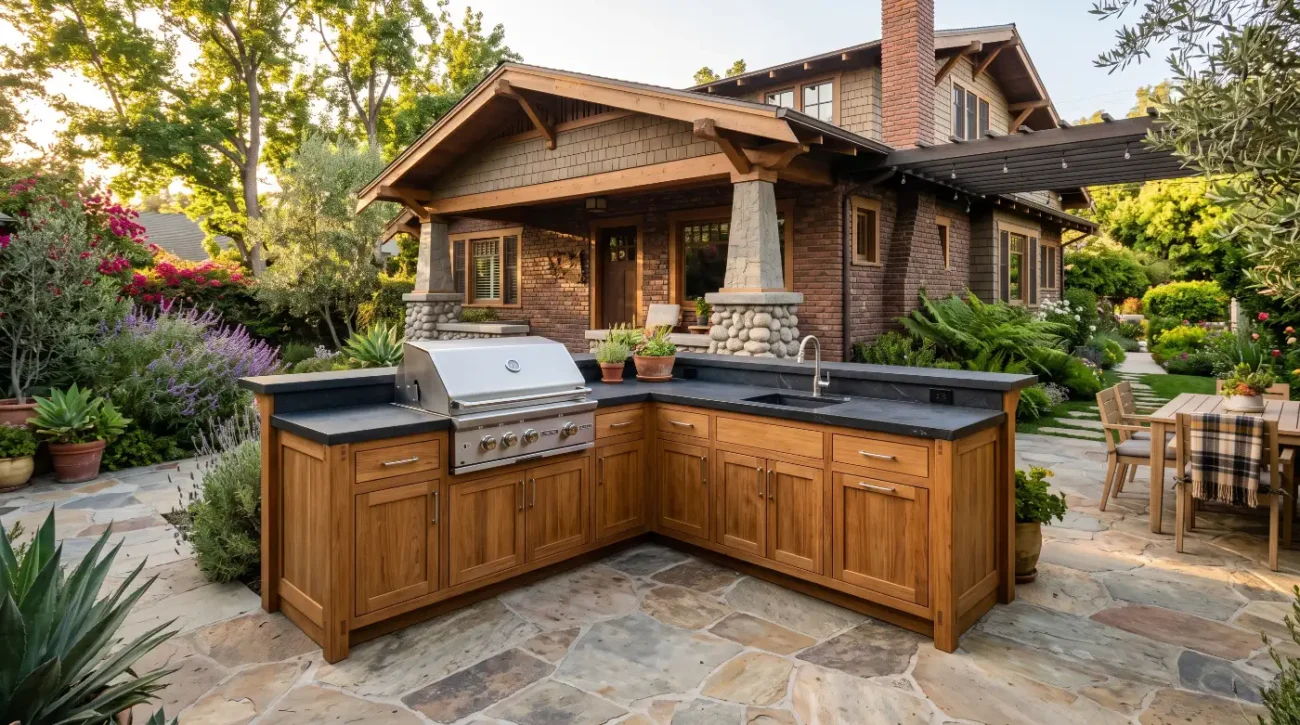
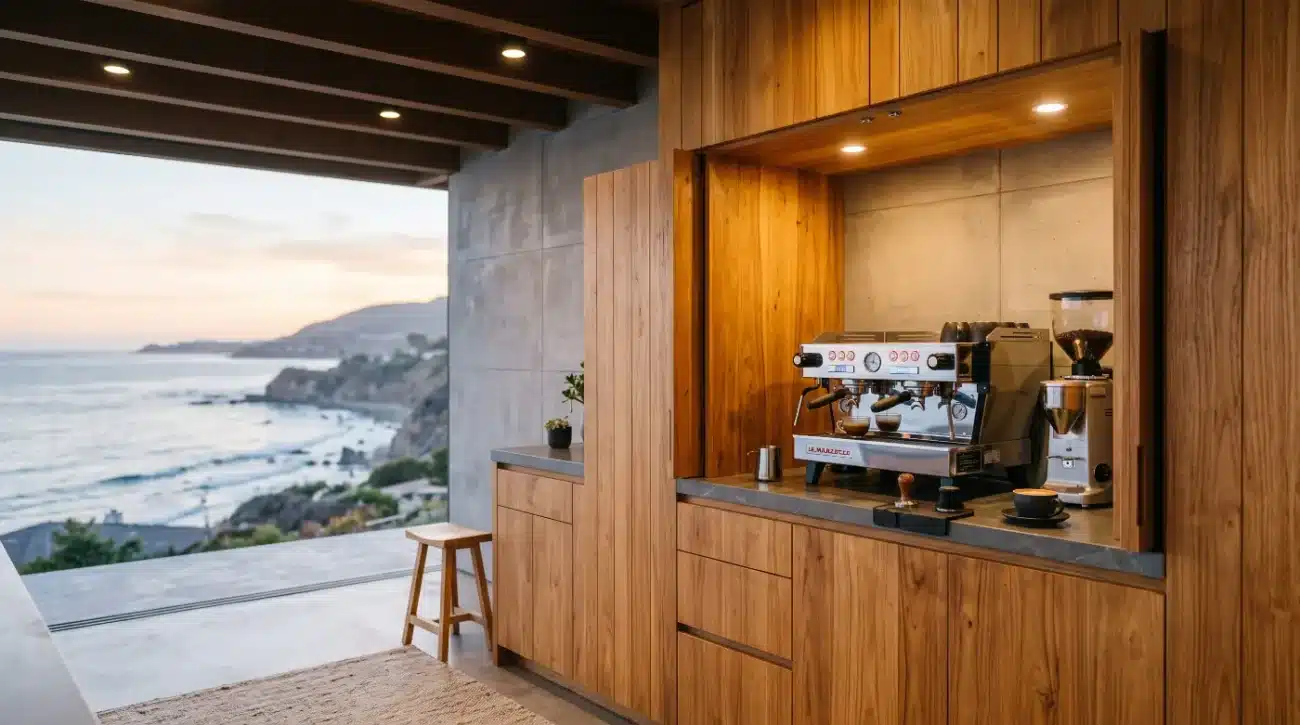
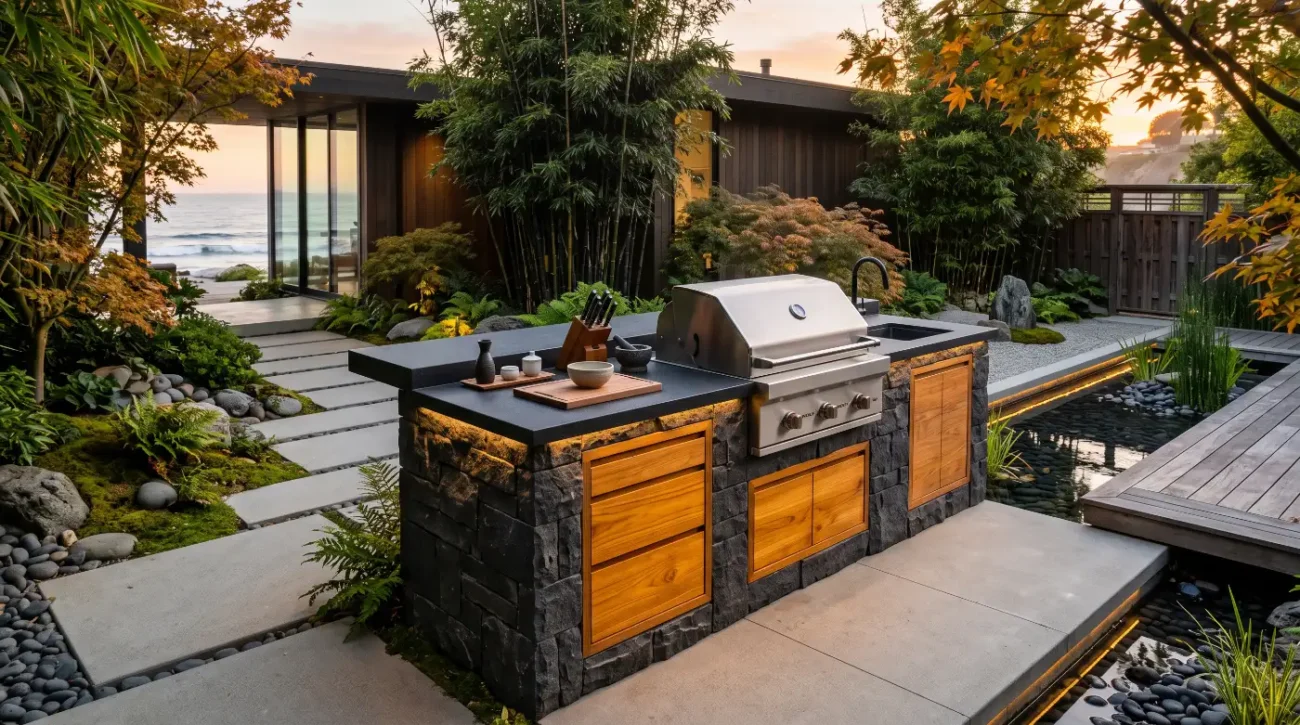
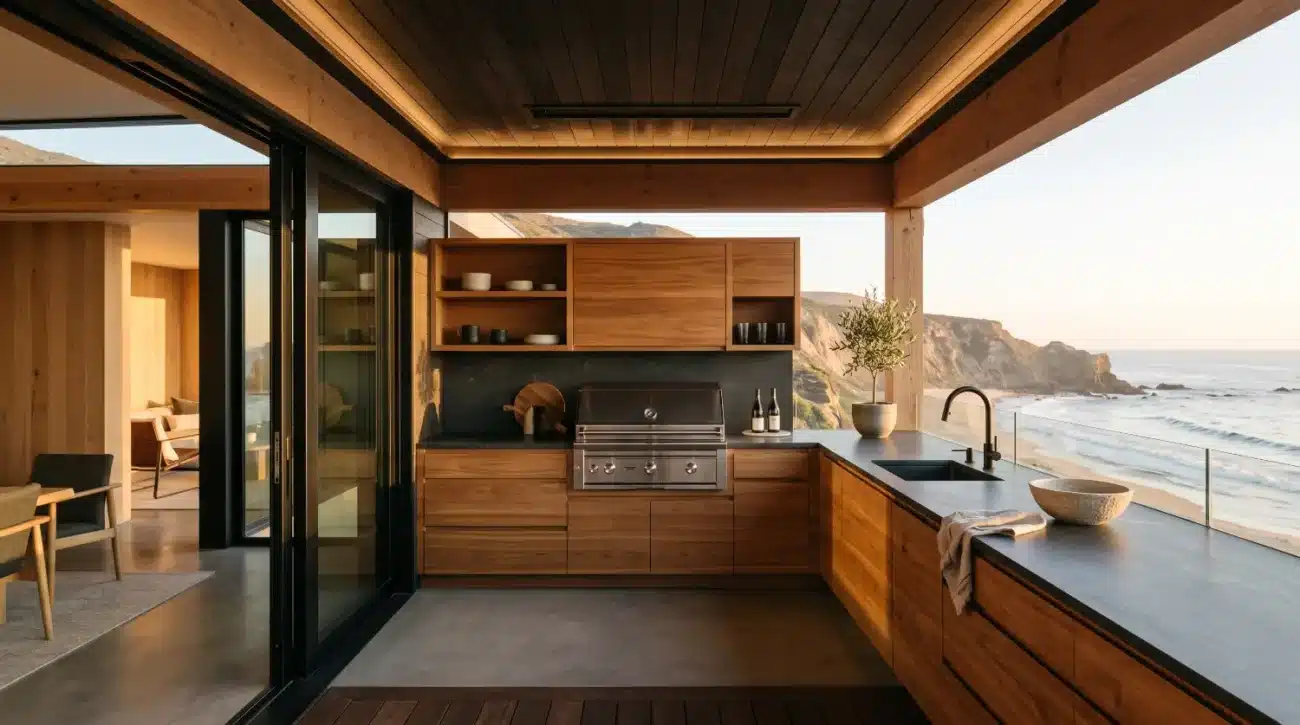
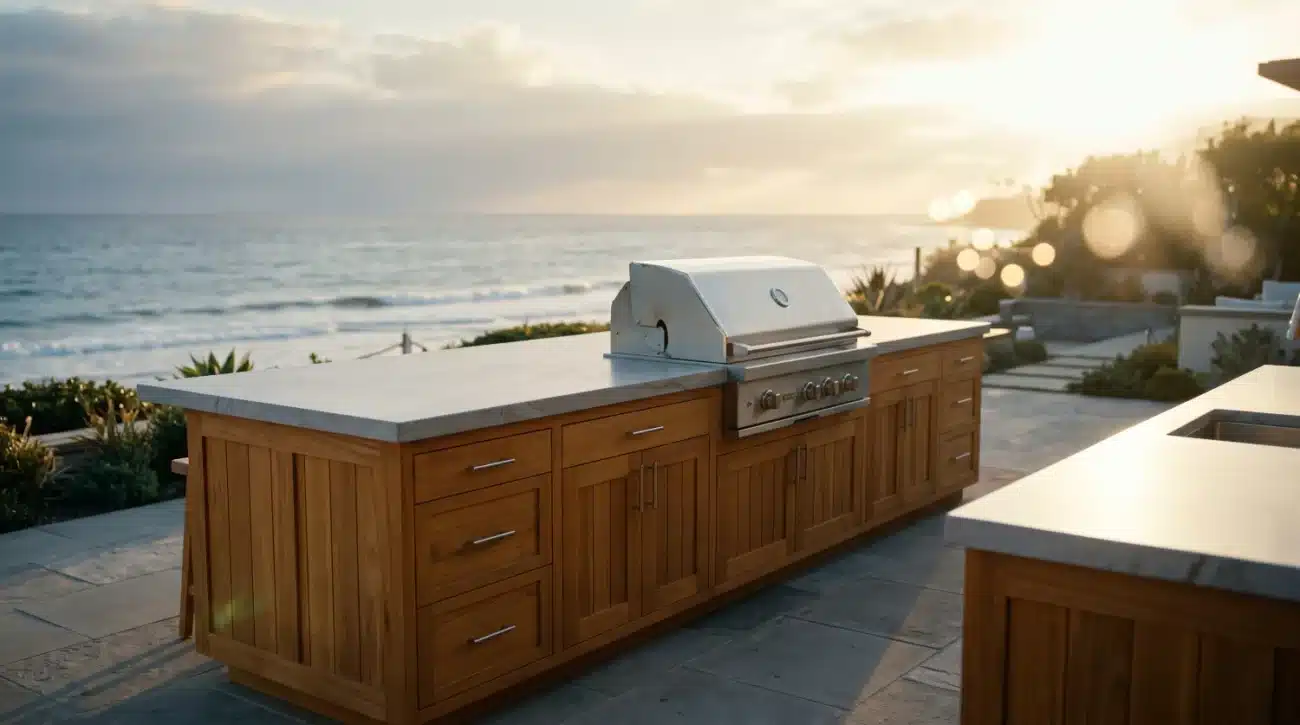
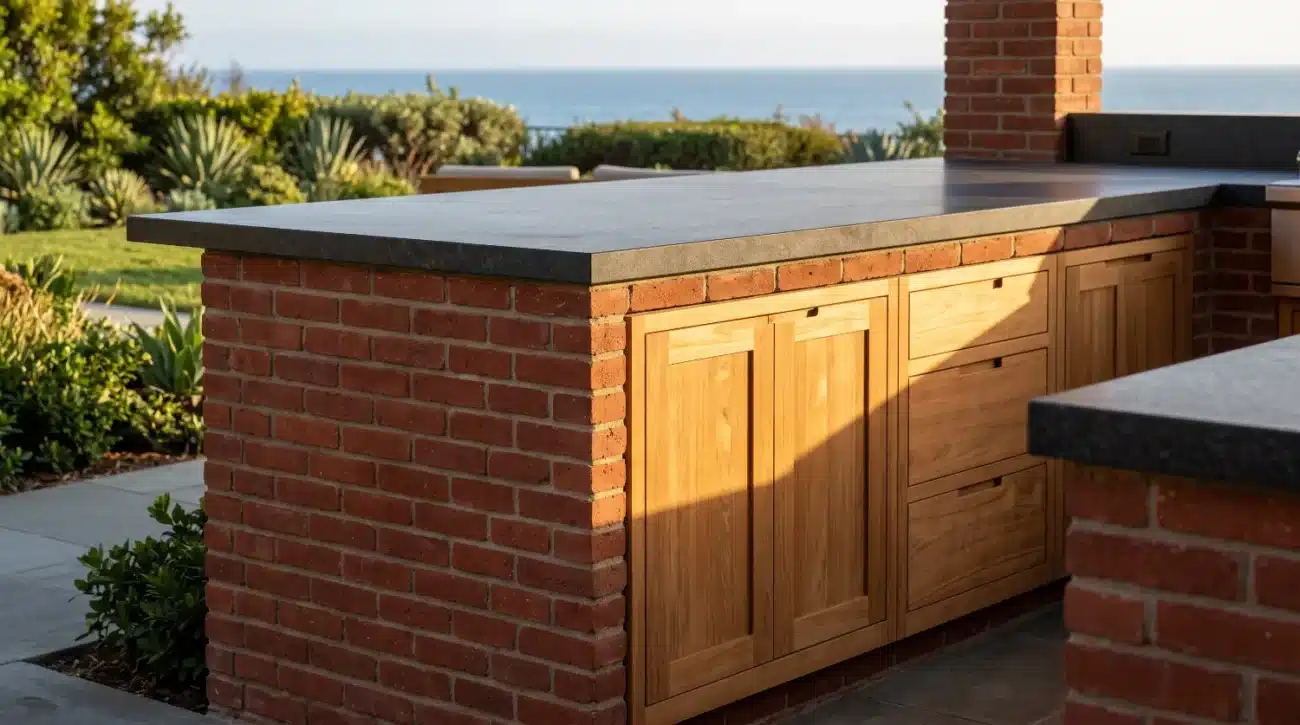
The most effective architectural remedy relies on strategic contrast rather than a total structural tear-out. By embedding precision-engineered solid teak island doors, storage drawers, and combination units into heavy masonry bases, trade specifiers instantly soften rigid architectural silhouettes. This biophilic intervention introduces dynamic organic grain patterns that bridge the gap between hardscaping and surrounding landscape design. To explore the full range of modular face-frame solutions, designers frequently reference the Pacific Teak Millworks island inserts collection, which provides engineered drop-in components specifically proportioned for stone and stucco structures.
The core principles of this architectural approach can be summarized across four key design performance areas:
-
Natural Softening: Solid teak door and drawer inserts introduce warmth, rich texture, and organic balance, effectively cutting through the heavy visual mass of stacked stone, poured concrete, and troweled stucco.
-
Material Resilience: Natural Grade-A teak contains inherent oils that protect cabinetry components against harsh marine air, high atmospheric humidity, and relentless midday sun exposure.
-
Precision Integration: Factory-engineered custom face-frames fit cleanly into masonry rough openings, eliminating complicated field-built framing and streamlining job-site trade workflows.
-
Organic Longevity: Unlike soft woods that depend on synthetic topcoats, teak preserves its structural integrity naturally from within, eliminating concerns over flaking or peeling film finishes.
How Grade-A Teak Natural Oils Prevent Saltwater Delamination
Grade-A solid teak contains dense natural rubber resins and silica that actively repel moisture, salt spray, and extreme temperature fluctuations, preventing the structural warping and joint failure typical of lower-grade woods.
Unlike interior cabinetry or cheap outdoor knockoffs made from composite boards, genuine Tectona grandis harvested from mature heartwood offers an extraordinary concentration of natural tectoquinones and oils. When an exterior designer specifies teak components for an oceanfront home in Newport Beach or a sun-drenched estate in Palm Springs, these organic compounds act as an internal water repellent that never washes out or wears off. Research from the USDA Forest Products Laboratory demonstrates that dense tropical hardwoods rich in natural extractives exhibit minimal dimensional movement when subjected to high relative humidity, making them the ultimate material for exterior joinery.
When metal hardware or low-grade timber is embedded directly into porous masonry, condensation becomes trapped behind face-frames. Over time, trapped moisture induces rot in subpar woods and accelerates corrosion in standard steel components. Solid teak naturally regulates moisture absorption, preventing the swell-and-shrink cycles that snap internal joinery or push face-frames out of plumb. When paired with 316 marine-grade stainless steel soft-close hardware, these inserts withstand harsh saltwater microclimates without rusting, flaking, or binding over time.
A common post-installation mistake occurs when builders apply hard polyurethane or synthetic film-forming sealers over exterior teak in an effort to maintain a factory gloss. Outdoor moisture eventually penetrates micro-cracks in the clear coat, trapping liquid beneath the film and causing dark internal rot, milky clouding, and unsightly flaking. A far superior finishing strategy involves allowing the natural oils to protect the wood internally, choosing either to maintain the golden-brown hue with light application of protective oil or letting the surface gracefully oxidize into a silver-grey patina that complements weathered stone. For complete specifications regarding chemical resistance and long-term care, review the official Pacific Teak Millworks Teak Care Guide.
-
High Silica Grain Content: Naturally resists insect attack and abrasive coastal wind-blown sand.
-
Tectoquinone Oil Saturation: Provides internal waterproofing that prevents fiber delamination and fungal rot.
-
316 Stainless Steel Fasteners: Eliminates structural rust bleeding onto light-colored stucco or limestone surfaces.
-
Controlled Thermal Expansion: Maintains tight door reveals even when exposed to direct afternoon sun conditions.
To maintain structural integrity against heavy stone countertops, trade professionals must account for precise tolerances during the rough-in phase. The following sequence details the correct architectural integration workflow:
-
Rough-In Sub-Framing: Construct the masonry structure with concrete block or heavy-gauge steel studs, leaving clean rectangular rough openings calculated precisely to match cabinet insert flanges.
-
Moisture Barrier Application: Apply a continuous liquid-applied flashing membrane or elastomeric seal across the raw masonry rough opening to prevent moisture migration from wet concrete into the millwork.
-
Flange Alignment Check: Position the marine-grade teak face-frame flush against the finished masonry façade, ensuring the weight of the stone countertop above is fully supported by the wall structure rather than resting on the cabinetry frame.
-
Mechanical Fastening: Anchor the frame through pre-drilled side mounting holes into the sub-structure using marine-grade stainless steel fasteners, leaving room for natural wood movement.
-
Perimeter Weather Sealing: Apply a flexible, UV-resistant neutral-cure silicone bead around the outer frame flange to seal out wind-driven rain while accommodating thermal shifting.
When reviewing material specifications for custom inserts, trade teams evaluate several core engineering standards:
-
Timber Grade Standard: First-grade, 100 percent kiln-dried Grade-A heartwood derived exclusively from mature Tectona grandis logs.
-
Hardware Specification: Marine-grade 316 stainless steel soft-close hinges paired with full-extension heavy-duty drawer glides rated for high exterior cycle loads.
-
Joinery Construction: Traditional mortise-and-tenon structural joints assembled using high-strength, waterproof exterior polyurethane adhesives.
-
Mounting Flange Options: Precision-milled flush-fit or overlap perimeter face-flanges designed to accommodate smooth stucco coats as well as irregular natural stone veneers.
-
Sustainability Certification: Timber sourced responsibly from legal, sustainably managed plantation forestry holding official FSC certification.
Architectural Workflows for Integrating Teak Inserts into Stucco and Stone Islands
Integrating solid teak island inserts into masonry structures requires establishing precise framing tolerances, moisture barriers, and thermal separation gaps that protect both the wood joinery and the surrounding stone substrate.
For trade professionals—including members of the American Society of Landscape Architects and custom residential builders—the transition from a D2C homeowner’s mood board to a fully stamped CAD drawing requires rigorous technical planning. Homeowners frequently collect digital imagery showing sleek wooden doors floating seamlessly inside dark poured concrete walls. However, executing this refined aesthetic on site requires careful coordination between the masonry contractor, the countertop fabricator, and the master millworker.
When mounting teak door-and-drawer inserts into a masonry island, the primary structural rule is that wood should never carry the dead load of heavy stone or quartzite countertops. The masonry cavity must support the full weight of the slab, while the teak insert slides into a dedicated sub-frame cavity as an independent architectural module. Designers interested in exploring full cabinetry configurations alongside modular inserts can view the Pacific Teak Millworks base cabinets collection to evaluate how standalone units compare to masonry-embedded options.
A major hidden risk in outdoor kitchen design involves trapping heat generated by gas grills, side burners, or pizza ovens inside closed island cavities containing wooden components. Installing gas appliances directly above or adjacent to unventilated teak storage units can dry out natural oils prematurely, leading to localized timber shrinkage or heat-induced joint stress. Exterior architects mitigate this risk by specifying insulated heat jackets around stainless steel grill heads and integrating discrete rear ventilation louvers to allow ambient heat and trapped gas fumes to vent safely away from millwork structures.
-
Dimensional Framing Tolerance: Leave a precise one-eighth-inch expansion gap around cabinet flanges to accommodate minor masonry movement without binding doors.
-
Thermal Isolation Separation: Maintain structural clearance and use non-combustible insulation barriers between high-BTU gas appliances and solid teak face-frames.
-
Load Bearing Isolation: Verify that thick concrete or natural quartzite slabs are fully cantilevered over sub-structures so zero vertical downward load impacts the insert frames.
-
Internal Drainage Channels: Ensure base cavity floors feature a subtle outward pitch so wind-driven water drains away from lower drawer boxes.
To achieve a balanced design scheme across contrasting building materials, specifiers evaluate how different masonry substrates interact with solid teak inserts:
-
Poured Concrete Substrates: Delivers an industrial, monolithic, and cool aesthetic with exceptionally high structural durability, though raw surfaces remain porous and susceptible to oil stains if unsealed.
-
Stacked Fieldstone Walls: Introduces a rustic, heavy, and deeply textured tactile quality that offers virtually indestructible strength while presenting uneven wall surfaces that require wide cabinet flange covers.
-
Smooth Sand Stucco Finishes: Provides a minimalist, clean, and bright exterior finish that highlights subtle architectural lines, though periodic repainting is required to fix hairline surface cracking over time.
-
Grade-A Teak Inserts: Adds warm, organic, and highly tactile surfacing to cold wall cavities, offering resilient long-term weather performance backed by simple, low-effort maintenance routines.
From an aesthetic perspective, mixing materials correctly creates a high-contrast luxury visual identity. For example, pairing dark, split-face charcoal ledger stone with rich golden teak drawers creates a rich tactile contrast that lifts the entire outdoor living environment. In transitional design schemes, smooth white hand-troweled stucco paired with silver-patina teak doors delivers a coastal aesthetic that echoes high-end Mediterranean resorts. For additional architectural details on custom face-frame options and trade partner integration protocols, explore the Pacific Teak Millworks trade inquiry portal.
When trade teams establish clear material specifications early in the design development phase, site installation shifts from a chaotic field-fitting process to a streamlined assembly of factory-tested components. For comprehensive warranty guidelines and structural performance guarantees across all custom outdoor storage modules, review the official Pacific Teak Millworks Warranty Documentation.
Key Takeaways
-
Tactile Material Balance: Inserting solid Grade-A teak doors and drawers into heavy masonry structures eliminates visual coldness and adds rich biophilic warmth to outdoor entertainment spaces.
-
Extreme Weather Resilience: Dense natural resins and high silica content allow teak inserts to withstand high humidity, coastal salt spray, and intense UV exposure without warping or rotting.
-
Marine Hardware Integration: Specifying 316 stainless steel soft-close hardware prevents rust streaking across exterior stone faces and ensures smooth long-term drawer operation.
-
Structural Load Separation: Masonry sub-framing must support all heavy countertop loads independently to protect precision-milled wood face-frames from crushing or binding.
-
Flexible Finish Choices: Homeowners can maintain a rich golden timber tone with occasional protective oil applications or allow the wood to naturally oxidize into a low-maintenance silver patina.
Start Your Custom Project
Elevate your next luxury outdoor kitchen design by incorporating precision-engineered solid teak island inserts into your architectural plans. Whether you are a homeowner curating an expansive outdoor living retreat or a trade professional seeking detailed CAD specifications for an upcoming client project, our master millworkers are ready to assist. Contact Darin and the expert team at Pacific Teak Millworks by visiting our Contact Us page, calling (949) 365-6513, or emailing darin@pacificteakmillworks.com to request material samples, review custom layout options, and discuss trade program privileges.