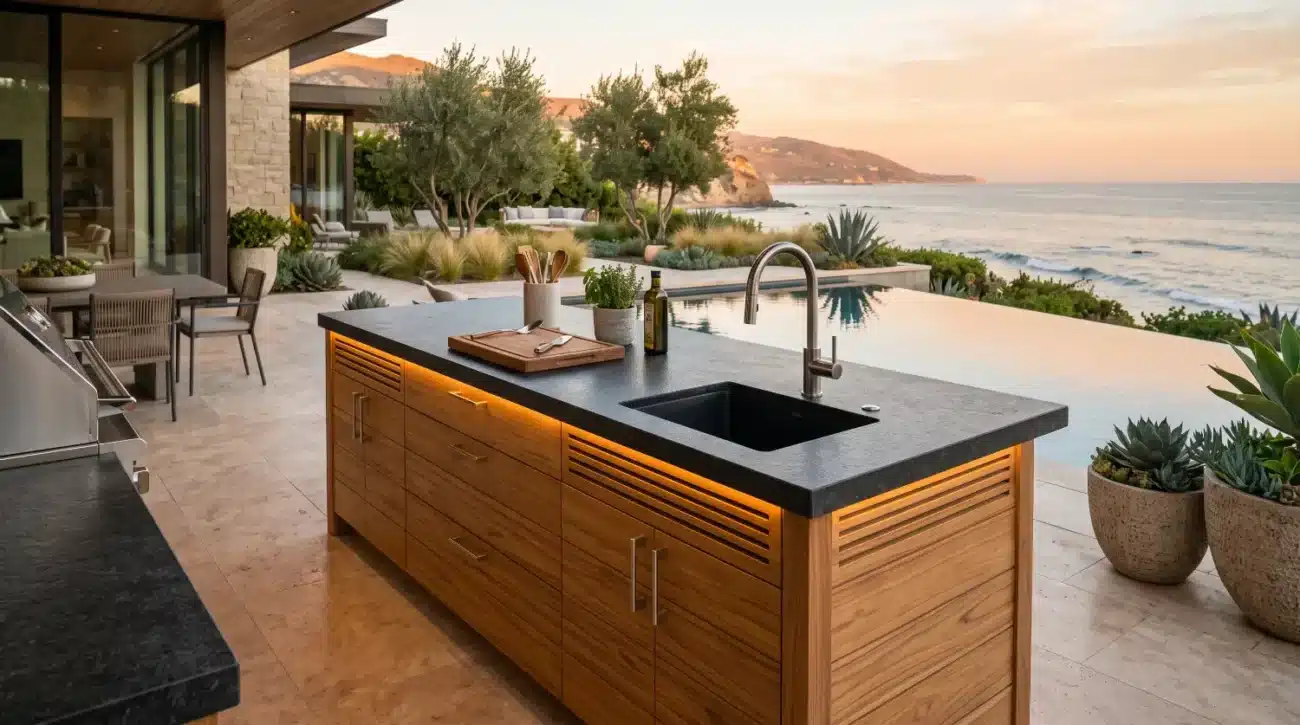
Article Summary:
-
Organic Architectural Balance: Natural Grade-A teak drawer banks and cabinet inserts introduce structural warmth, preventing monochrome white and black modern farmhouse elevations from feeling sterile.
-
Marine-Grade Structural Longevity: High natural oil and resin density in Tectona grandis prevents moisture delamination and structural warping in harsh outdoor environments.
-
Seamless Specification Workflows: Integrating modular teak inserts into masonry or timber framed islands requires exact CAD framing tolerances, stone weight considerations, and specialized airflow management.
-
Versatile Finishing Dynamics: Solid teak allows homeowners to preserve a rich golden-brown aesthetic through regular maintenance or cultivate a low-maintenance, silvery-grey patina over time.
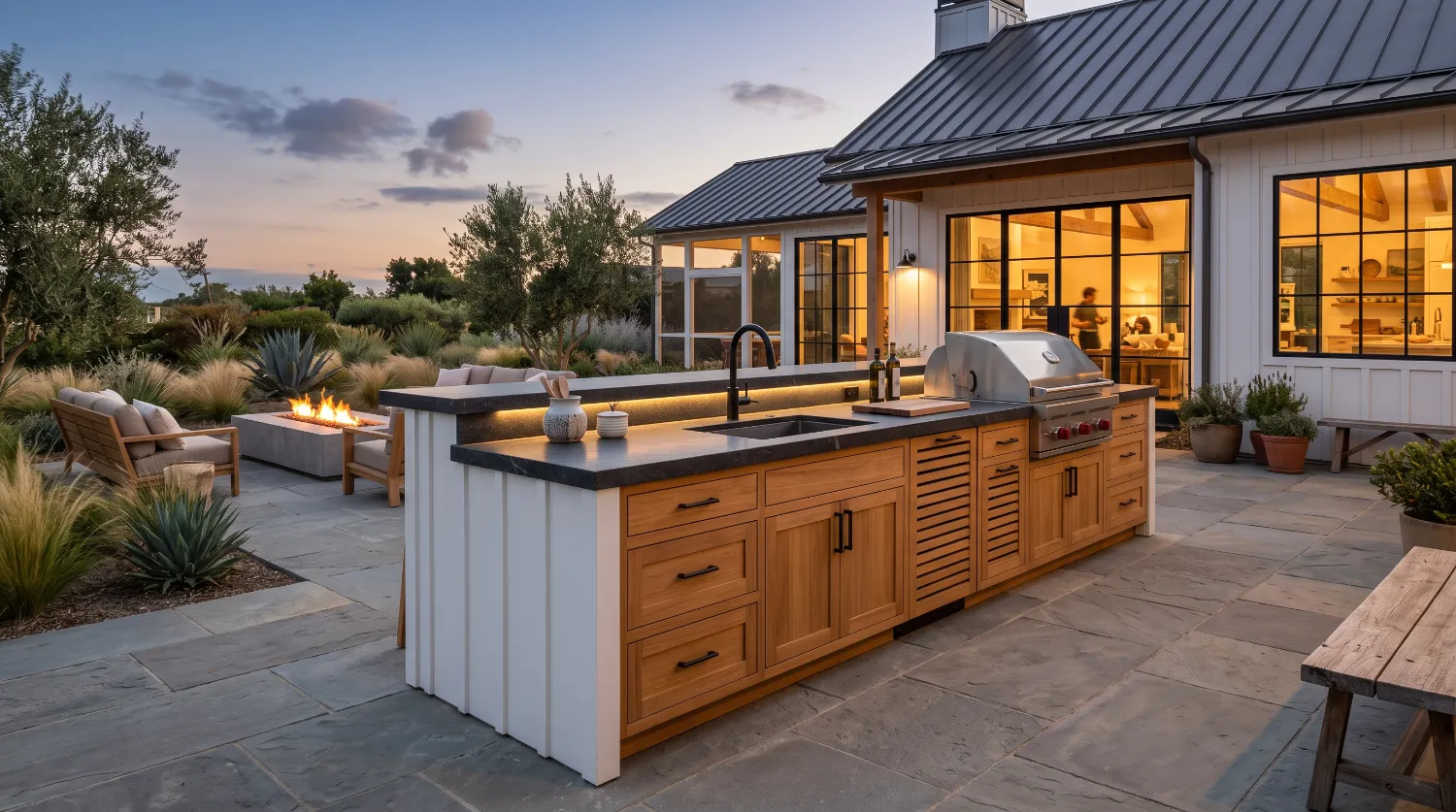
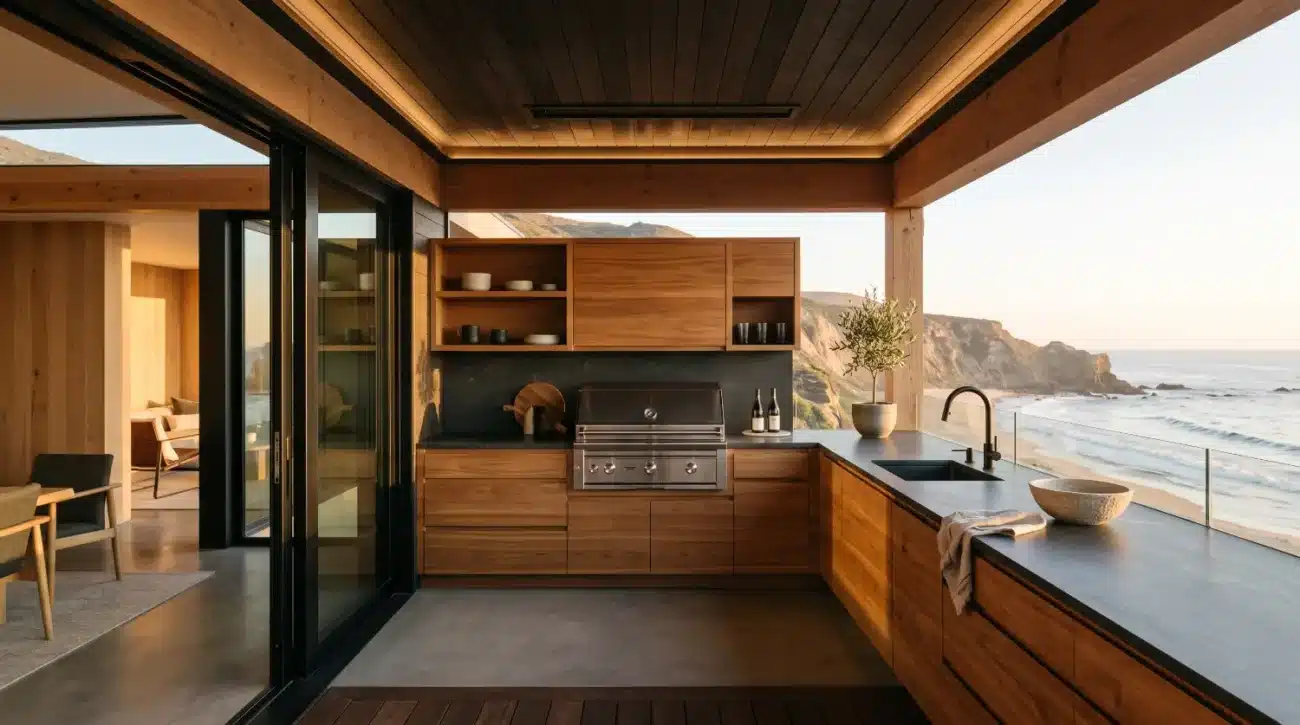
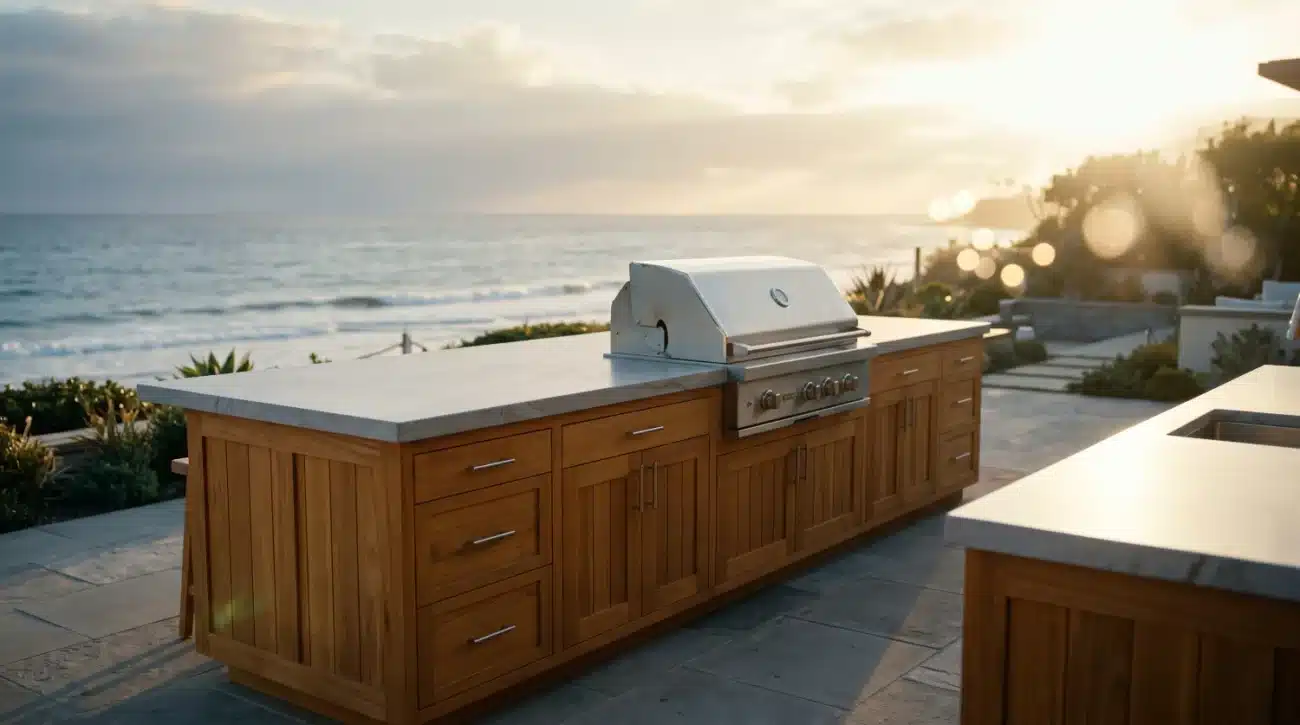
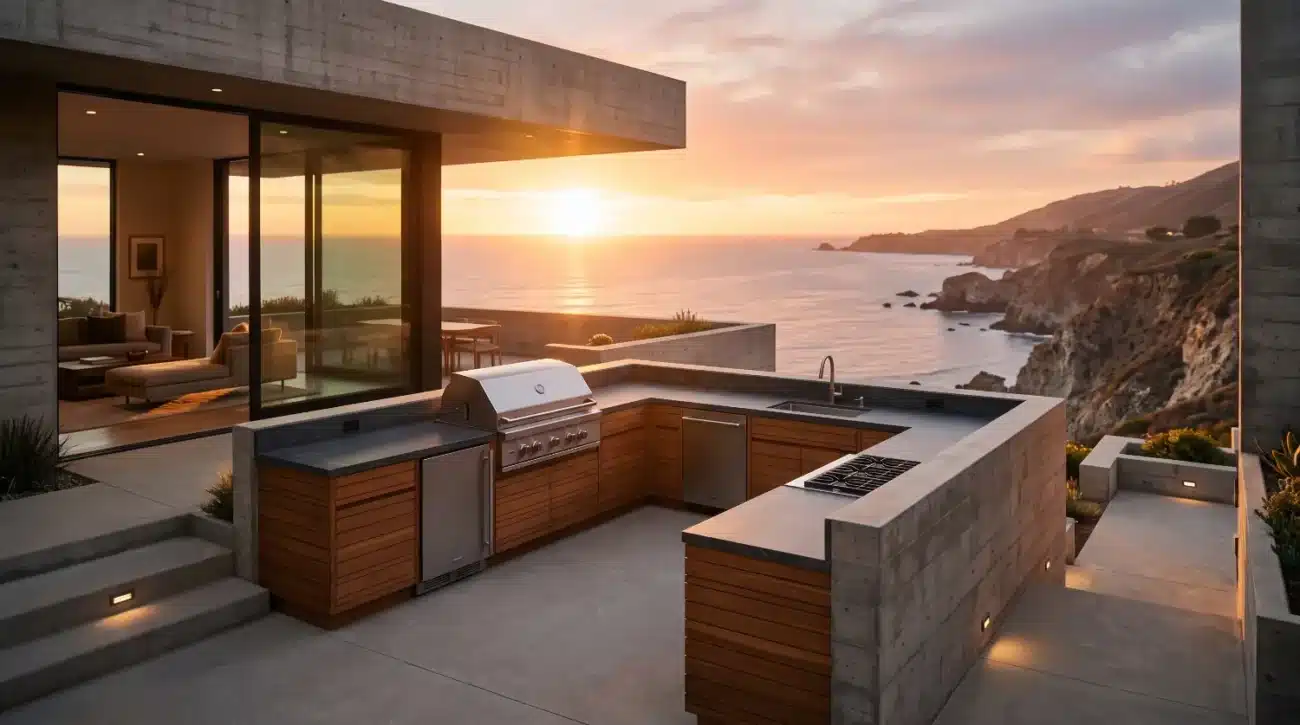
A prominent Malibu homeowner recently invested in a comprehensive outdoor kitchen renovation featuring crisp white board-and-batten siding, matte black steel framing, and massive dark soapstone countertops. Within eight months, the off-the-shelf, low-grade composite inserts installed inside the island framing began to warp, shear at the hinge plates, and fade unevenly under heavy coastal sun and salt spray. The stark black-and-white color palette, once crisp and modern, quickly felt cold, uninviting, and visually broken by degraded cabinetry components. Replacing those compromised doors with custom, solid teak drawer banks restored the structural integrity of the island while introducing an irreplaceable organic texture that softened the architectural line.
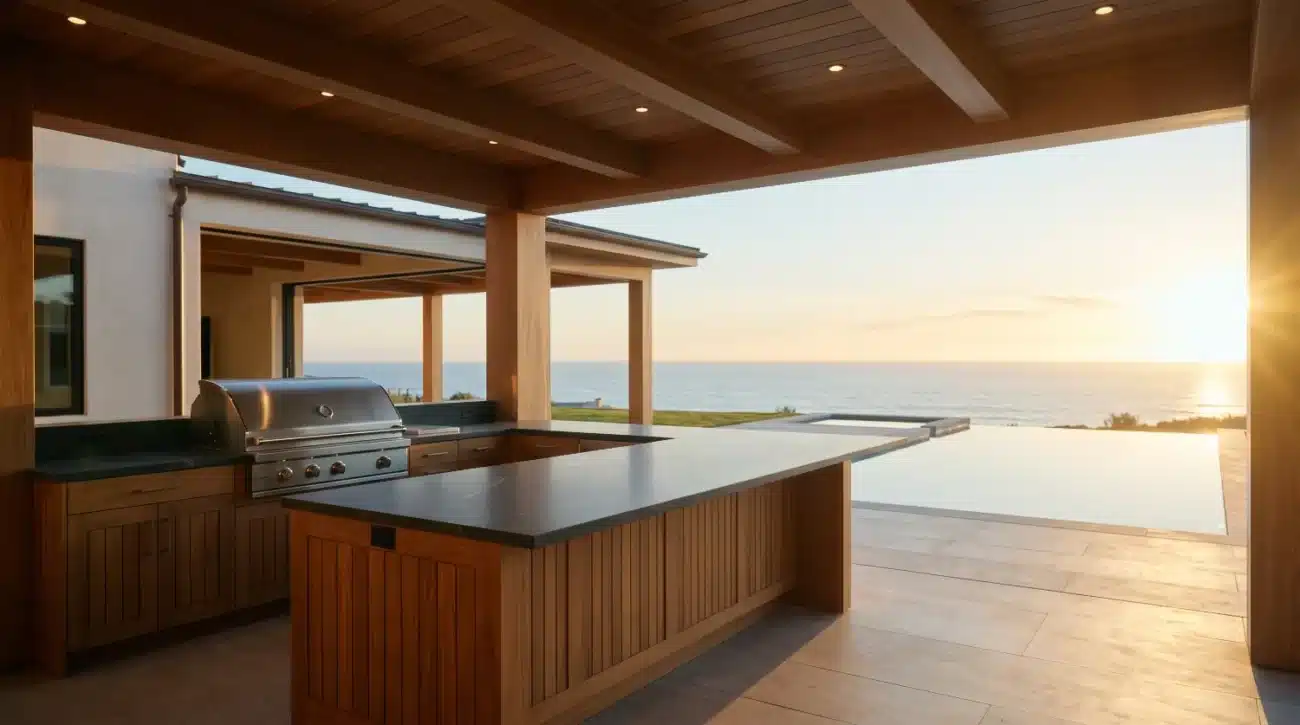
Modern farmhouse exterior design relies heavily on stark visual contrast, combining clean light-toned cladding, dark metal hardware, and sharp gabled geometry. Without the grounding presence of high-performance natural hardwoods, these spaces risk feeling clinical or excessively industrial. Integrating custom teak components into an outdoor kitchen island provides a tactile bridge between cold masonry, hard surface countertops, and the natural landscape.
Engineering Organic Warmth into Modern Farmhouse Outdoor Architecture
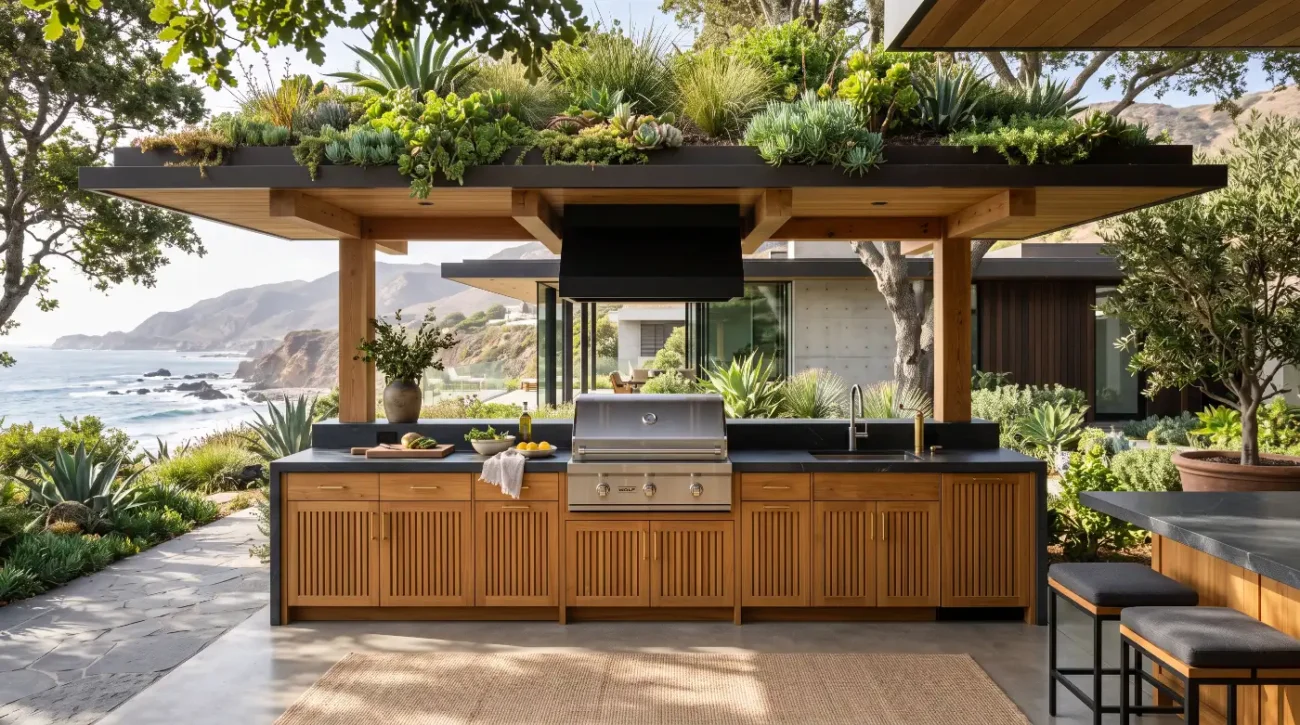
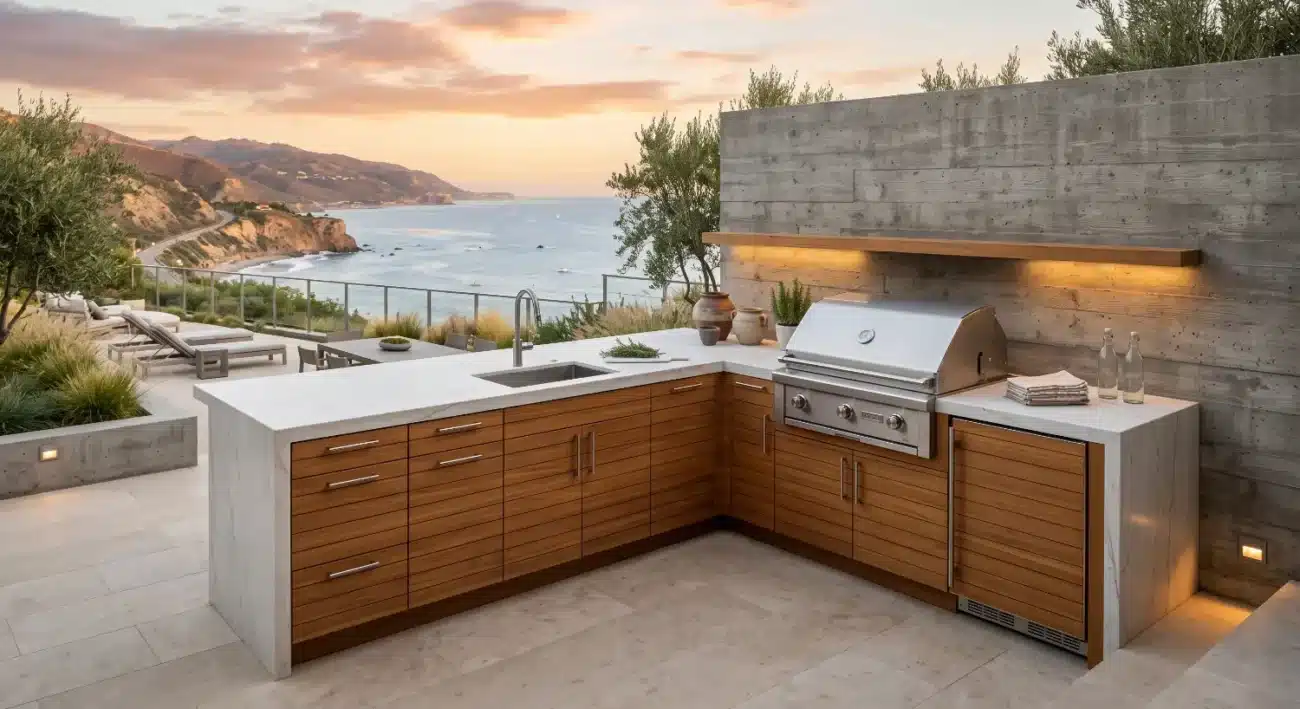
Modern farmhouse outdoor kitchens achieve aesthetic balance by combining crisp white board-and-batten wall cladding, matte black steel trim, dark stone surfaces, and warm, solid teak cabinetry inserts. This material combination prevents large monochromatic outdoor islands from feeling overly clinical or cold. Incorporating natural wood grain introduces tactile richness and visual depth to high-contrast exterior living spaces.
The material palette of a modern farmhouse exterior relies on three foundational design layers:
-
Vertical architectural cladding, such as clean white board-and-batten or light plaster surfaces, which establishes a crisp geometric background.
-
Structural metal accents, including matte black steel framing, dark iron fixtures, and deep slate hardware, which define sharp architectural borders and industrial accents.
-
Natural organic hardwood inserts, specifically rich Grade-A teak drawer banks and cabinet faces, which act as a tactile bridge between the contrasting hard surfaces.
The primary visual challenge of modern farmhouse architecture lies in its reliance on high-contrast, flat-surfaced materials. Crisp vertical board-and-batten siding paired with dark metal trim creates a striking geometric grid, but large stone islands risks looking like unyielding blocks of masonry. Solid teak serves as a crucial balancing element within this architectural framework. The rich honey-gold undertones and intricate grain patterns of teak break up monolithic surfaces, creating a natural focal point that anchors the surrounding space.
Achieving this balance requires an understanding of how light interacts with different exterior surfaces throughout the day. Smooth white plaster or engineered cladding reflects bright sunlight intensely, often washing out surrounding details. Dark granite, concrete, or soapstone countertops absorb heat and visually weight the lower portion of an outdoor island. Solid teak drawer banks and door inserts soft-diffuse direct sunlight, introducing subtle shadow lines and organic variation that make the space feel inviting and lived-in.
When specifying components for a high-end outdoor kitchen project, landscape architects and interior designers must navigate the transition from direct-to-consumer design inspiration to trade-level construction execution. Homeowners frequently bring curated digital mood boards featuring warm wood cabinetry set against dark metal framing. Translating these visual concepts into durable, real-world outdoor spaces demands high-performance materials engineered to withstand environmental stress.
High-net-worth property owners in coastal markets like Malibu, Miami, and the Pacific Northwest, as well as sunbelt regions like Palm Springs and Austin, face severe environmental challenges. Coastal salt air causes inferior woods to dry out and delaminate, while extreme heat in desert climates cracks low-grade synthetic composites. Specifying premium teak island inserts ensures that the rich architectural warmth envisioned during the initial design phase remains structurally sound and visually striking for decades.
-
Material Texture Contrast: Coupling cold linear elements like dark metal framing or light vertical siding with natural teak grain creates architectural depth and balance.
-
Visual Softening: Natural wood grain diffuses direct glare on expansive outdoor islands, softening hard stone and concrete elements.
-
Architectural Flow: Incorporating custom teak cabinetry inside an exterior island establishes a visual connection between indoor timber details and outdoor living zones.
-
Procedural Harmony: Using solid wood inserts allows designers to specify matching door styles across base cabinetry units and island cutouts for a cohesive look.
Advanced Material Science and Woodworking Mechanics of Grade-A Teak
Grade-A plantation teak contains high concentrations of natural oils and silica, making it exceptionally resistant to moisture absorption, decay, and insect attack. Its tight grain structure and natural stability prevent structural twisting, cupping, and joinery failure when exposed to extreme thermal shifts and saltwater moisture. Utilizing traditional mortise-and-tenon joinery and 316 marine-grade hardware ensures long-term operational integrity in high-end outdoor kitchens.
The natural biological components of Grade-A teak work together to form an unyielding material system:
-
Natural Silica Content: Creates a dense hydrophobic barrier throughout the wood tissue that actively repels liquid water, atmospheric salt spray, and standing surface condensation.
-
Concentrated Tectonic Resins: Provide inherent internal protection against rot, fungal decay, and wood-boring insects without needing toxic chemical treatments.
-
Dense Interlocking Grain: Derived strictly from mature heartwood, offering superior dimensional stability that resists warping, twisting, and panel bowing across severe temperature swings.
-
Precision Mortise-and-Tenon Joinery: Mechanically interlocks cabinet frame elements to distribute structural loads evenly without over-relying on chemical glues.
-
316 Marine-Grade Hardware: Ensures hinges and soft-close drawer glides remain completely free of rust, pitting, and mechanical binding in coastal environments.
The exceptional performance of genuine teak (Tectona grandis) in demanding outdoor environments is rooted in its biological makeup. Unlike softwoods or lesser hardwoods that rely on chemical pressure treatments or topical film coatings to resist decay, Grade-A heartwood teak naturally produces high levels of tectonic resins, dense rubber compounds, and silica. These organic compounds fill the intercellular space of the wood, creating a hydrophobic barrier that naturally repels liquid water, coastal atmospheric brine, and moisture vapor.
Wood density and grain orientation play a critical role in preventing dimensional movement over time. Grade-A teak is harvested exclusively from the center heartwood of mature trees, where the growth rings are tightly packed and uniform. This high grain density minimizes volumetric shrinkage and swelling during seasonal humidity shifts. When lower-grade sapwood or alternative woods like eucalyptus or white oak are used outdoors, uneven thermal expansion inevitably leads to cupped door panels, binding drawers, and cracked corner joints.
The seasonal humidity and thermal expansion cycle affects materials based on their physical composition:
-
During periods of increased atmospheric humidity or direct rainfall, moisture attempts to enter the wood’s micro-pores.
-
In inferior hardwoods and sapwood, water easily penetrates the cell walls, causing significant swelling, cupping, and severe joinery strain.
-
Grade-A teak utilizes its natural silica and oil barrier to block moisture entry, resulting in negligible volumetric movement and total frame stability.
-
When extreme heat or dry air follows moisture exposure, inferior woods rapidly contract, cracking joint lines and warping face frames, whereas Grade-A teak remains dimensionsally flat and stable.
Precision joinery is equally vital when constructing luxury outdoor island inserts. High-end custom cabinetry avoids glue-only joints, dowels, or lightweight pocket screws, which break down rapidly when exposed to exterior moisture and temperature fluctuations. Master craftsmen utilize traditional mortise-and-tenon construction, secured with waterproof structural adhesives. This mechanical locking technique allows individual wood components to transfer structural loads efficiently without stressing internal glue lines, preserving frame alignment under heavy usage.
Hardware selection directly impacts the operational longevity of outdoor cabinetry inserts. Cabinetry built for outdoor use should utilize 316 marine-grade stainless steel for all functional components, including hinges, soft-close drawer runners, frame brackets, and fasteners. Standard 304 stainless steel, while suitable for mild indoor applications, rapidly develops surface rust and pitting when exposed to salt-laden coastal winds or pool chlorine vapor. Selecting 316 marine-grade hardware ensures smooth drawer operation and preserves frame alignment for the life of the kitchen.
A common material failure occurs when well-meaning builders apply polyurethane, varnish, or standard outdoor film-forming sealers over exterior teak. These rigid topical coatings trap internal moisture within the wood fibers while blocking the natural migration of teak oils. As sun exposure heats the trapped moisture, the polyurethane blisters, cracks, and peels, causing localized discoloration and internal wood rot. Teak must be left uncoated or treated exclusively with specialized breathable exterior teak oils designed to nourish the wood without creating a non-porous film.
-
Silica-Rich Composition: Natural silica content provides built-in resistance to rot, fungal decay, and boring insects without requiring chemical treatments.
-
Low Volumetric Movement: High grain density minimizes wood expansion and contraction, preventing doors from sticking or binding across changing seasons.
-
316 Marine Stainless Steel: Utilizing 316-grade stainless hardware prevents corrosion, rust bleeding, and component failure in high-humidity and coastal environments.
-
Mortise and Tenon Integrity: Deep structural joinery distributes physical loads evenly across cabinet frames, protecting against joint separation caused by heavy daily use.
-
Breathable Surface Protection: Avoiding rigid topical film sealers prevents internal moisture trapping, finish peeling, and wood rot.
Architectural Specifications, Trade Integration, and Installation Workflows
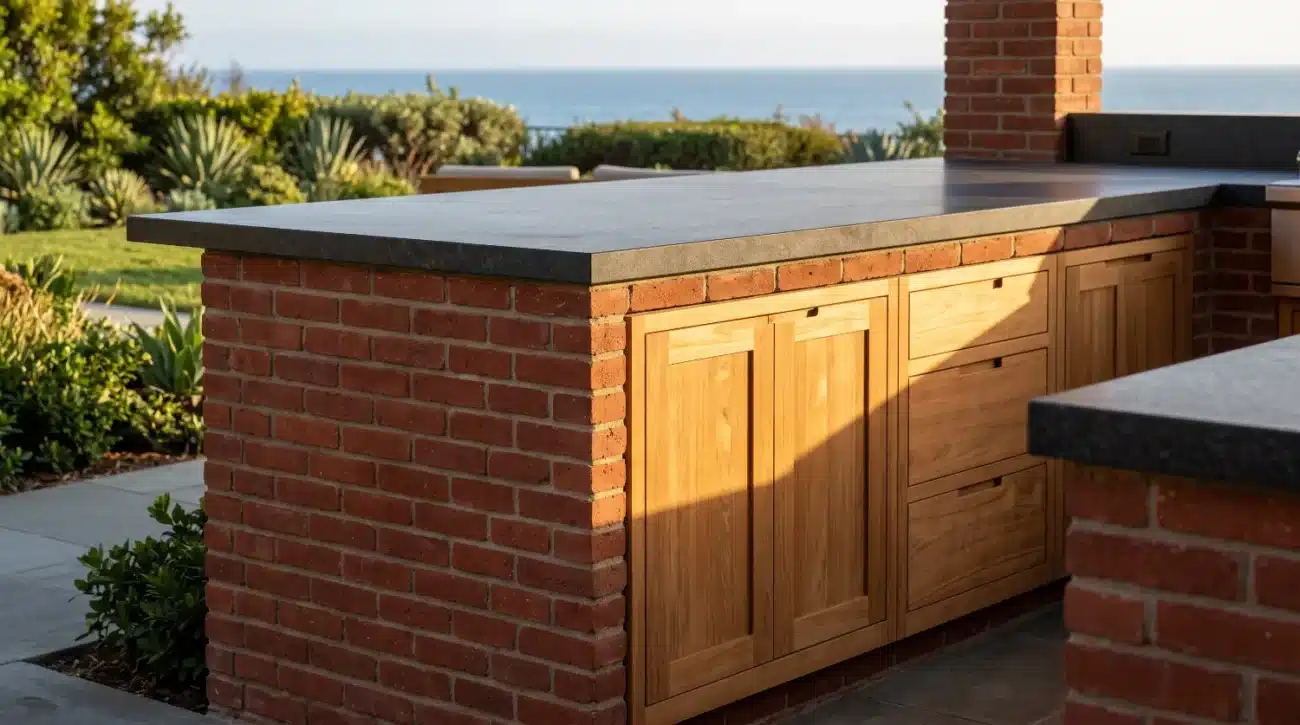
Successful integration of solid teak island inserts into masonry, steel-framed, or timber outdoor kitchen structures requires clear framing allowances, adequate ventilation, and strict weight distribution protocols. Trade professionals must account for countertop weight limits, thermal clearances around gas appliances, and precise CAD cutout specs to ensure a seamless installation. Coordinating these details during the planning stage prevents costly site adjustments during construction.
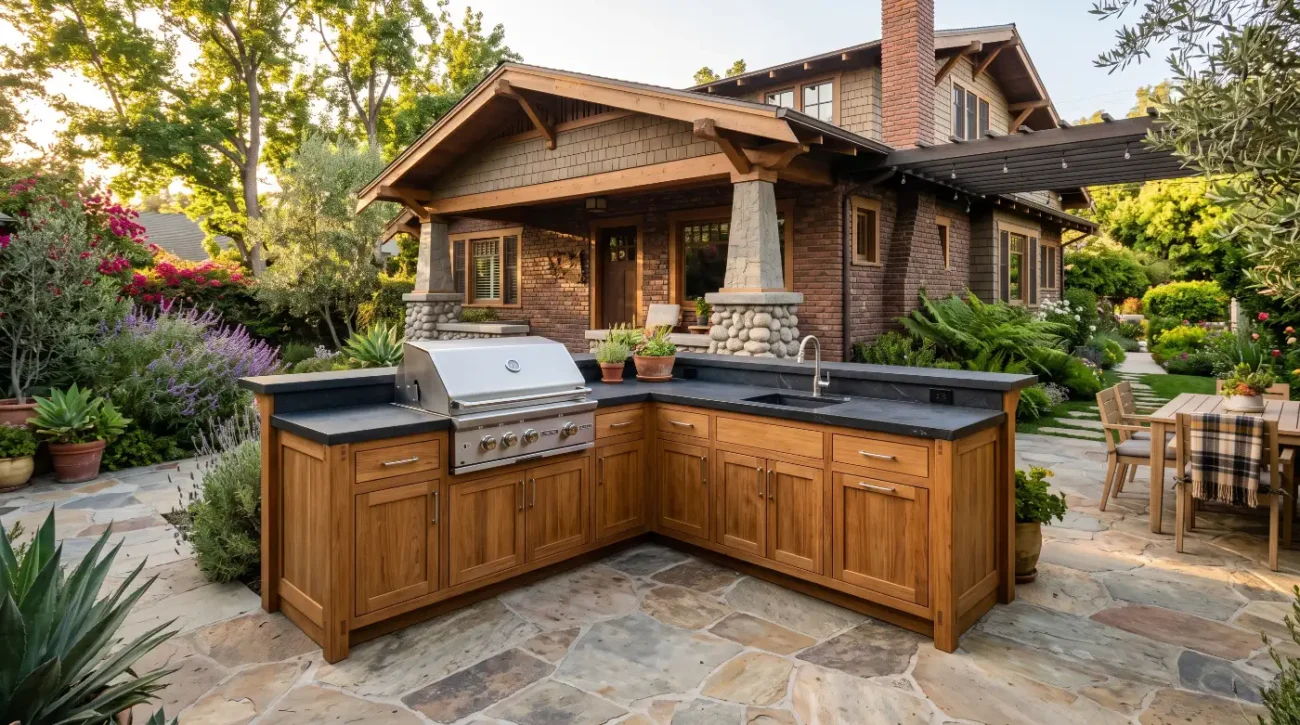
Integrating custom teak inserts into an outdoor kitchen island requires precise coordination between the general contractor, landscape architect, and millwork specialist. Unlike standard indoor kitchen cabinets that rest on flat, level subfloors, outdoor islands are typically constructed over sloping concrete pads, natural stone pavers, or elevated timber decks. The framing rough opening for each teak insert must be square, plumb, and dimensioned with exact tolerances to allow for structural setting without pinching the cabinet face frame.
A proper luxury outdoor island cross-section incorporates layered structural components from top to bottom:
-
Heavy Natural Stone Countertop: Solid slabs of granite, quartzite, concrete, or soapstone providing the upper prep surface.
-
Load-Bearing Sub-Framing: Heavy-gauge steel studs or structural masonry walls built to independently carry the entire countertop weight.
-
Dedicated Venting Cavity: Open upper channels and airflow registers that prevent heat and natural gas from accumulating inside the island shell.
-
Custom Teak Cabinet Insert: High-precision teak face frames fitted with marine-grade hardware, fully isolated from vertical structural loads.
-
Adjustable Leveling System: Structural legs beneath the sub-frame that allow fine alignment adjustments on sloped drainage surfaces.
-
Sloped Concrete Pad or Deck: The foundational patio floor designed to shed surface water away from the island structure.
Load distribution is a critical structural detail often overlooked during the design stage. Luxury outdoor kitchens regularly feature thick, heavy stone countertops, such as quartzite, soapstone, or poured-in-place concrete slabs. The framing around the teak island inserts must bear the full weight of these stone surfaces independently. Teak face frames and drawer boxes should never act as primary weight-bearing supports for stone countertops, as continuous vertical load will distort the cabinet opening, causing drawers to bind and soft-close mechanisms to fail.
Ventilation management within the island cavity is equally critical, particularly when installing teak inserts adjacent to high-BTU gas grills, side burners, or pizza ovens. Gas appliances radiate extreme radiant heat downward and laterally into the internal island structure. Unventilated island cavities can trap heat against wooden cabinet walls, drying out the wood prematurely and posing potential fire risks. Installing heat-shield insulation barriers and dedicated stainless steel vent louvers maintains low internal cavity temperatures and ensures safe operating conditions.
Managing heat dynamics within the island cavity requires contrasting proper and improper installation approaches:
-
Installing gas appliances without integrated cavity ventilation traps extreme ambient heat against cabinet walls, leading to dried wood fibers, severe panel warping, and eventual joint failure.
-
Incorporating dedicated stainless steel vent louvers promotes continuous natural airflow, allowing radiant heat to dissipate safely out of the internal structure.
-
Placing heat-shield insulation barriers directly around high-BTU gas grills protects adjacent teak drawer boxes and face frames from direct thermal radiation.
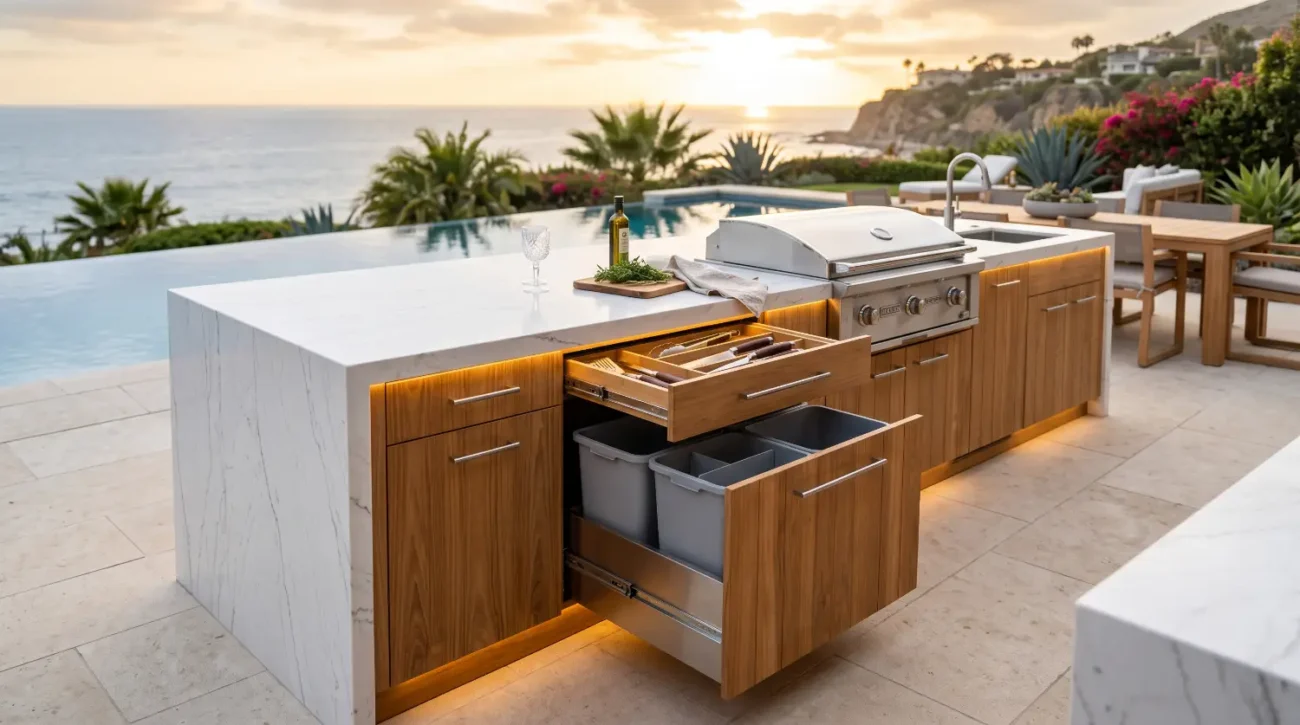
Trade professionals can streamline project execution by leveraging dedicated design resources during the planning stage. Utilizing complete Resource Center assets, architectural specifications, and downloadable BIM files allows specifiers to integrate exact cabinet dimensions directly into their master construction documents. Reviewing comprehensive Base Cabinets Collections alongside specialized Island Inserts helps ensure all access doors, trash pullouts, and drawer banks share consistent panel sightlines across the entire project footprint.
When finalizing the specification workflow, trade specifiers and custom builders should also review official technical document guides to align client expectations with long-term performance realities. Reviewing the detailed Teak Care & Maintenance Guide (PDF) alongside structural Warranty Documentation (PDF) ensures that installation protocols, site sealing procedures, and structural coverage terms are fully understood prior to cabinet delivery.
-
Framing Tolerances: Rough openings in masonry or steel island frames should allow a precise one-eighth-inch perimeter gap to accommodate minor structural settling and thermal expansion.
-
Load-Bearing Isolation: Supporting heavy stone countertops with dedicated structural framing prevents downward weight transfer onto custom wood inserts.
-
Thermal Isolation: Installing insulated jacket shields between gas grills and adjacent teak drawer units protects the natural wood from intense radiant heat.
-
Sub-Frame Moisture Barriers: Applying non-porous flashing tape along the perimeter of masonry cutouts prevents standing water from wicking directly into the cabinet face frame.
-
Integrated Venting Protocols: Placing high- and low-level vent panels in the island structure allows heat and gas vapor to dissipate, protecting internal millwork.
Aesthetic Evolution and Long-Term Finishing Strategies
Solid teak offers the unique flexibility to either preserve its warm golden-brown color through simple periodic oil applications or allow it to naturally weather into an elegant silvery-grey patina over time. Both finishing paths maintain the structural integrity of the wood, allowing homeowners and designers to choose the visual style that best complements their modern farmhouse aesthetic.
Selecting a finishing pathway depends on the desired maintenance commitment and design vision:
-
Golden-Brown Maintenance Path: Requires applying deep-penetrating teak oil once or twice per year. This routine preserves rich golden tones, enhances wood grain depth, and creates a warm, vibrant accent that softens dark metal and stone.
-
Silvery-Grey Patina Path: Requires zero chemical surface coatings, allowing the wood surface to react naturally with ambient sunlight and atmospheric rain. This develops a soft silver patina over six to twelve months, creating an ultra-low-maintenance rustic accent.
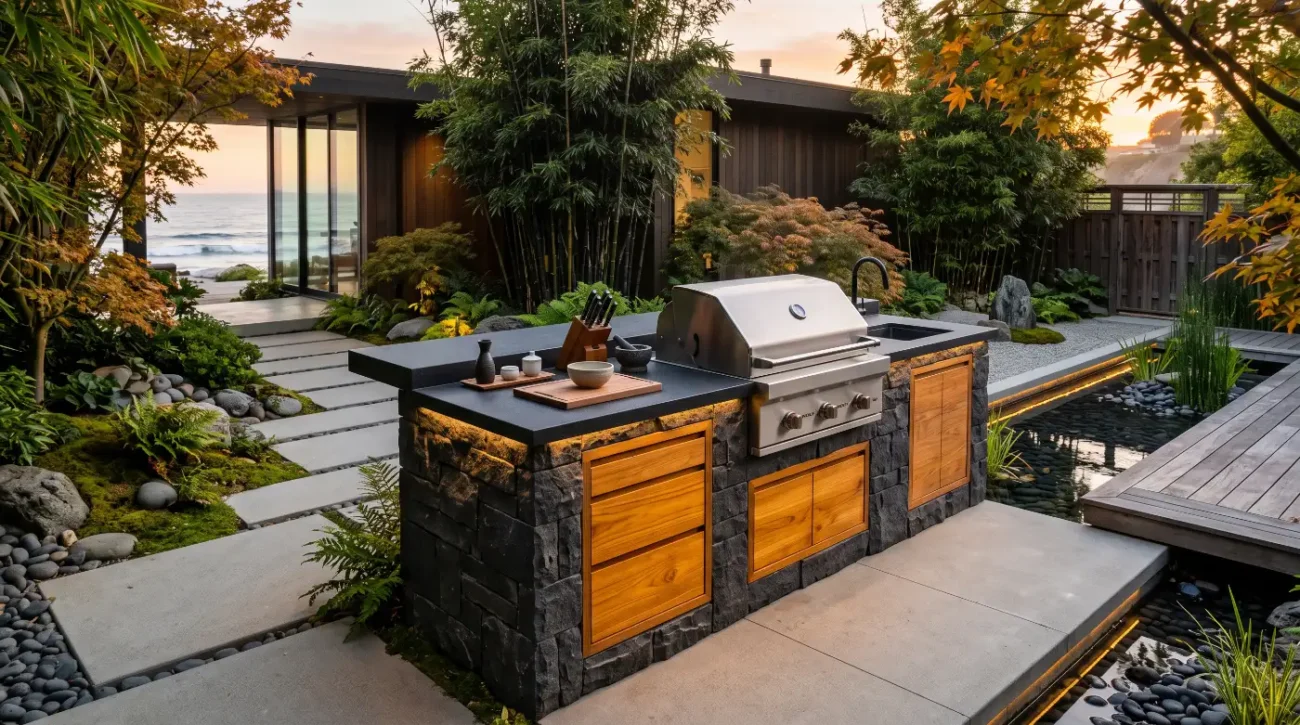
The choice between maintaining warm golden teak and allowing it to oxidize into a silvery-grey patina is one of the most important design decisions in an outdoor kitchen project. In a modern farmhouse setting, both finishes offer distinct aesthetic advantages. Golden teak provides a rich, warm contrast that breaks up cool white siding and dark metal hardware. Oxidized silver teak creates a softer, rustic look that complements weathered stone, concrete, and minimalist landscape design.
The natural weathering process is driven by oxidation from solar ultraviolet rays and ambient rain exposure. As UV light hits the surface of raw teak, it gradually breaks down the natural pigments in the uppermost layer of wood fibers. Over six to twelve months, the exterior surface transforms into a distinguished silvery-grey patina. Crucially, this weathering process is purely cosmetic; it affects only the top microscopic layer of wood and does not compromise the structural stability, natural water resistance, or joinery strength of Grade-A teak.
The natural patina oxidation cycle progresses through three key structural phases:
-
Initial exposure to direct sunlight and ambient rain initiates a mild surface reaction that breaks down microscopic pigments in the top layer of wood fibers.
-
Over six to twelve months, the uppermost wood cells transition into a soft, silvery-grey patina without altering the wood beneath.
-
The internal heartwood remains rich in tectonic oils and silica, keeping the structural frame, joinery, and water resistance fully intact beneath the weathered surface layer.
Maintaining the original golden-brown tone requires a simple maintenance routine. The wood should be washed periodically with mild soap and a soft brush to remove surface dust and environmental airborne debris. Applying a high-grade, deep-penetrating teak oil once or twice a year replenishes surface natural oils, protecting the rich golden color against UV oxidation. Film-forming topcoats, polyurethane, and varnishes should be avoided, as they lock in moisture and eventually crack under exterior sun exposure.
Managing routine teak care is straightforward when structured across a clear operational matrix:
-
Quarterly Surface Cleaning: Wash cabinet faces using mild soap, warm water, and a soft-bristle brush to clear airborne dust and dirt.
-
Bi-Annual Color Conditioning: Apply deep-penetrating exterior teak oil with a lint-free cloth to restore rich golden undertones on conditioned installations.
-
Uncoated Weathering Protocol: Leave raw wood untreated if a silvery-grey patina is desired, allowing natural rain and sun exposure to weather the outer surface.
-
Spot Stain Removal: Lightly sand stubborn oil or food stains using fine-grit sandpaper along the direction of the wood grain to reveal fresh wood underneath.
When unexpected spills occur—such as cooking oils, red wine, or citrus juices from outdoor prep—teak’s high oil density naturally resists immediate deep staining. Wiping up spills promptly with a damp cloth prevents liquid absorption. For stubborn spots or surface oxidation on neglected cabinets, light sanding with fine-grade sandpaper along the natural grain direction easily restores the fresh golden wood beneath, instantly refreshing the cabinet surface.
Homeowners and design consultants seeking guidance on long-term surface care can refer to the comprehensive Teak Care & Maintenance Guide (PDF) for step-by-step restoration protocols. Exploring real-world design examples on the Outdoor Design Blog provides additional inspiration for integrating golden or silver teak accents into various modern farmhouse outdoor layouts.
-
Controlled Oxidation: Allowing teak to weather into a silver patina creates a refined, low-maintenance aesthetic without sacrificing structural durability.
-
Golden Color Preservation: Applying high-grade penetrating teak oils once or twice yearly maintains the wood’s warm honey tones and grain depth.
-
No Film-Forming Coatings: Avoiding varnish and polyurethane prevents surface cracking, peeling, and internal moisture trap risks.
-
Surface Sanding Restoration: Fine-sanding lightly along the grain removes light surface scuffs and minor stains, bringing back fresh golden wood underneath.
-
Natural Stain Resistance: Dense natural oils prevent common cooking liquids from quickly penetrating deep into the wood grain.
External Architectural and Material References
Key Takeaways
-
Architectural Material Balance: Solid teak island inserts introduce natural warmth, balancing the sharp lines of white board-and-batten siding and dark stone countertops in modern farmhouse kitchens.
-
Grade-A Wood Mechanics: Natural oils and dense silica content make heartwood teak resistant to rot, warping, and salt air corrosion without requiring harsh chemicals.
-
316 Marine Hardware: Equipping inserts with 316-grade stainless steel soft-close hardware prevents rust bleeding and maintains smooth operation in coastal settings.
-
Load Isolation Framing: Structurally isolating stone countertop weight ensures custom teak face frames and drawer boxes retain their alignment over time.
-
Flexible Aesthetic Options: Homeowners can preserve teak’s original golden hue with simple periodic oilings or allow it to weather naturally into an elegant silver patina.
-
Dedicated Trade Support: Utilizing CAD spec libraries and trade program resources helps streamline project workflows for architects, builders, and designers.
Transform Your Outdoor Living Space with Pacific Teak Millworks
Bringing organic luxury, structural durability, and refined craftsmanship to a modern farmhouse outdoor renovation requires expert planning and high-performance materials. Whether you are a homeowner gathering architectural inspiration or a trade professional managing complex CAD specs for a client installation, the team at Pacific Teak Millworks is ready to support your project. Contact our custom millwork specialists today by visiting our Contact Us / Trade Inquiries page, calling Darin directly at (949) 365-6513, or emailing darin@pacificteakmillworks.com to request material samples, download technical CAD files, and explore custom cabinetry options for your next project.