Quick-Read Block
-
Tonal Chroma Alignment: Allowing Grade-A plantation teak cabinetry to oxidize into its natural silvery-grey patina mirrors the coastal weathering of white cedar roof and wall shakes without artificial staining.
-
Structural Moisture Management: Marine-grade solid teak joinery eliminates the delamination, fastener rust,and core swelling common in painted MDF or polymer cabinetry exposed to North Atlantic salt spray.
-
Architectural Framing Tolerances: Integrating custom solid teak modules beneath heavy bluestone or honed marble countertops requires dedicated leveling infrastructure, thermal expansion allowances, and 316 stainless steel hardware.
-
Trade Specification Precision: Designers bridge the gap between residential mood boards and site installation by utilizing verified CAD libraries, ventilated grill cutouts, and controlled patina protocols.
An East Hampton estate renovation nearly stalled last autumn when a designer specified painted marine polymer cabinetry to match a historic shingle-style residence. Within fourteen months of installation near Georgica Pond,relentless freeze-thaw cycles and salt-laden Atlantic fog caused hairline fractures along the mitered door joints,trapping moisture that warped the frames out of square. True coastal longevity in Hamptons style outdoor kitchen design demands materials that age in unison with the architecture rather than fighting the microclimate.
When interior designers pair weathered silver Grade-A teak cabinetry with traditional cedar shake siding, crisp white trim, and manicured privet lawns, the outdoor culinary space stops looking like an aftermarket appliance station.Instead, the cabinetry reads as an organic architectural extension of the home itself. Achieving this quiet luxury requires a rigorous command of wood science, marine-grade hardware engineering, and disciplined trade specifications.
Fast Track Summary
-
Chromatic Harmony: Weathered silver teak develops an authentic monochromatic sheen that echoes bleached Alaskan yellow or eastern white cedar shingles.
-
Hydrophobic Wood Chemistry: High concentrations of natural tectonic resins and silica protect solid teak from North Atlantic humidity without film-forming sealers.
-
Load-Bearing Engineering: Mortise-and-tenon teak carcasses support dense natural stone slabs while accommodating seasonal cross-grain expansion.
-
Marine Hardware Standards: Authentic 316 stainless steel hinges and drawer slides prevent galvanic corrosion in salt-spray zones from Southampton to Montauk.
How Weathered Silver Teak Complements Cedar Shake Architecture in Coastal Environments
Weathered silver teak complements cedar shake architecture because both timbers undergo photo-oxidative lignin breakdown at comparable rates when exposed to coastal ultraviolet radiation and salt air. As the surface fibers of Grade-A teak lose their golden surface oils, they reveal a dense, cool-toned silvery patina that harmonizes with bleached cedar shingles, crisp Benjamin Moore White Dove trim, and thermal bluestone terraces.
Interior designers working on classic Shingle Style residences face a distinct aesthetic challenge when transitioning from refined indoor millwork to exposed exterior terraces. Painted cabinetry, no matter how carefully prepped,eventually chips or yellows under intense summer sun and winter nor’easters. Conversely, overly warm, freshly oiled tropical hardwoods can clash with the muted, windswept palette of an authentic Long Island estate.
Allowing solid plantation teak to weather naturally solves both aesthetic and structural dilemmas. According to research documented by the USDA Forest Products Laboratory, surface weathering in high-density heartwood is strictly a superficial photochemical reaction affecting only the top fractions of a millimeter. Beneath that silvered exterior layer, the dense cellular structure of Tectona grandis remains completely saturated with natural rubber, silica,and tectonic oils.
Consider how this plays out across different luxury coastal workflows:
-
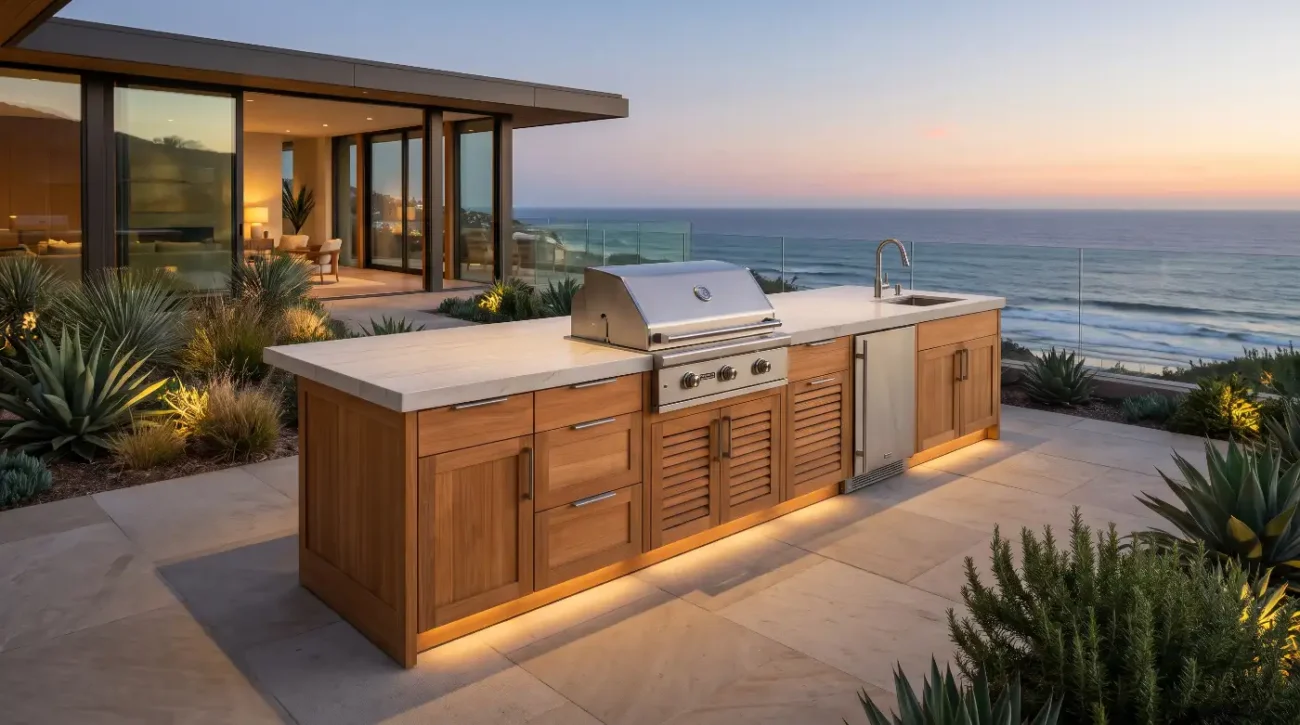
Mood Board Translation: A homeowner in Sagaponack collects imagery of breezy Nantucket cottages, pairing bleached cedar siding with honed Carrara marble islands and crisp white lantern sconces. Rather than introducing synthetic grey composites that look flat in natural daylight, the designer specifies unfinished solid teak that develops authentic tonal variation across the grain.
-
Design-to-Trade Alignment: When a homeowner brings inspiration photos of indoor inset shaker cabinetry to their interior designer, the designer translates that refined proportion into exterior-grade custom solid teak base cabinets with custom face-frames and clean shadow lines.
-
Microclimate Material Parity: From the misty bluffs of Montauk to sun-drenched terraces in Malibu or the humid salt air of the Florida Coast, solid teak resists fungal decay and insect intrusion without chemical pressure treatments.
-
Biophilic Visual Flow: Positioning silvered teak cabinetry against manicured boxwood hedges and bluestone pavers reinforces biophilic design principles, anchoring the culinary zone seamlessly into the surrounding landscape architecture.
A frequent mistake among specifiers unfamiliar with exterior wood chemistry is applying clear polyurethane, spar varnish, or film-forming acrylic sealers to preserve the initial amber hue. In coastal environments, microscopic moisture vapor inevitably penetrates behind rigid surface coatings. Once trapped, that moisture forces the finish to blister, peel, and turn cloudy, requiring exhaustive mechanical sanding to remediate.
Leaving the wood raw—or utilizing breathable, penetrating treatments outlined in an authoritative teak care and maintenance protocol—ensures the surface breathes naturally. As ultraviolet rays silver the exterior fibers, gentle seasonal washing with mild soap and soft-bristle brushes removes pollen and salt crystals without stripping the underlying protective oils.
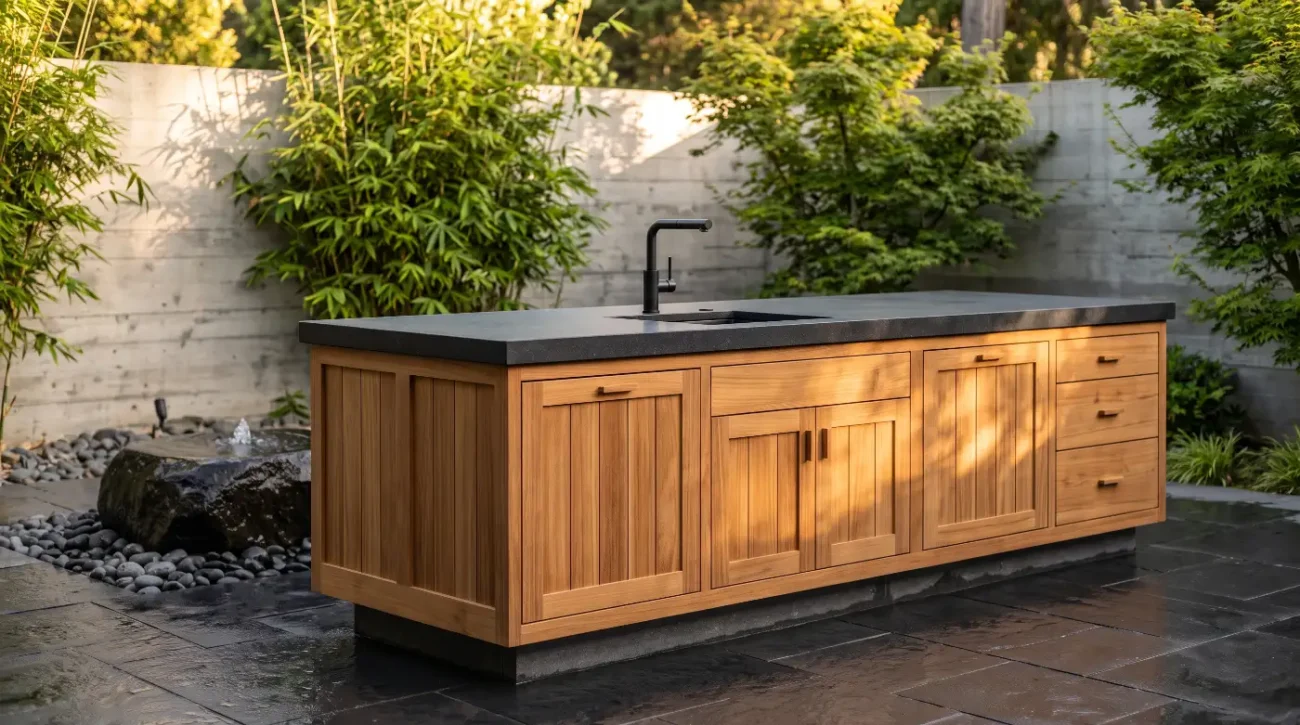
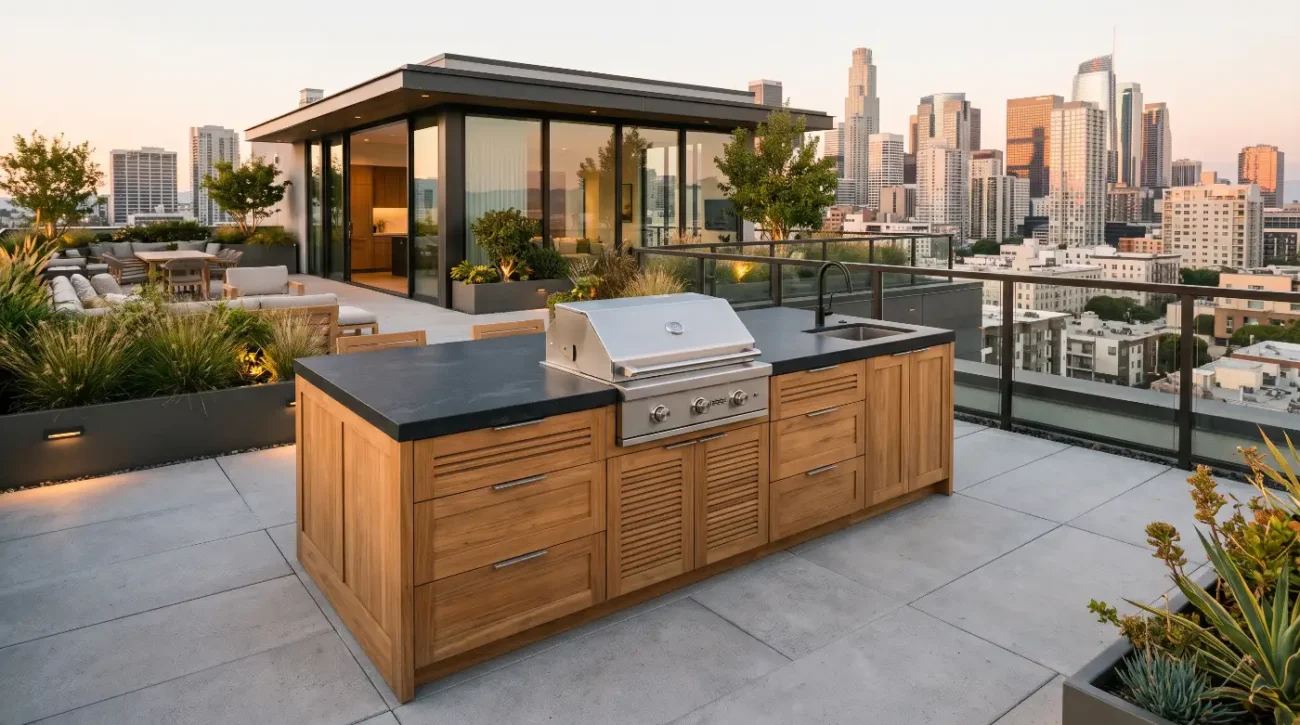
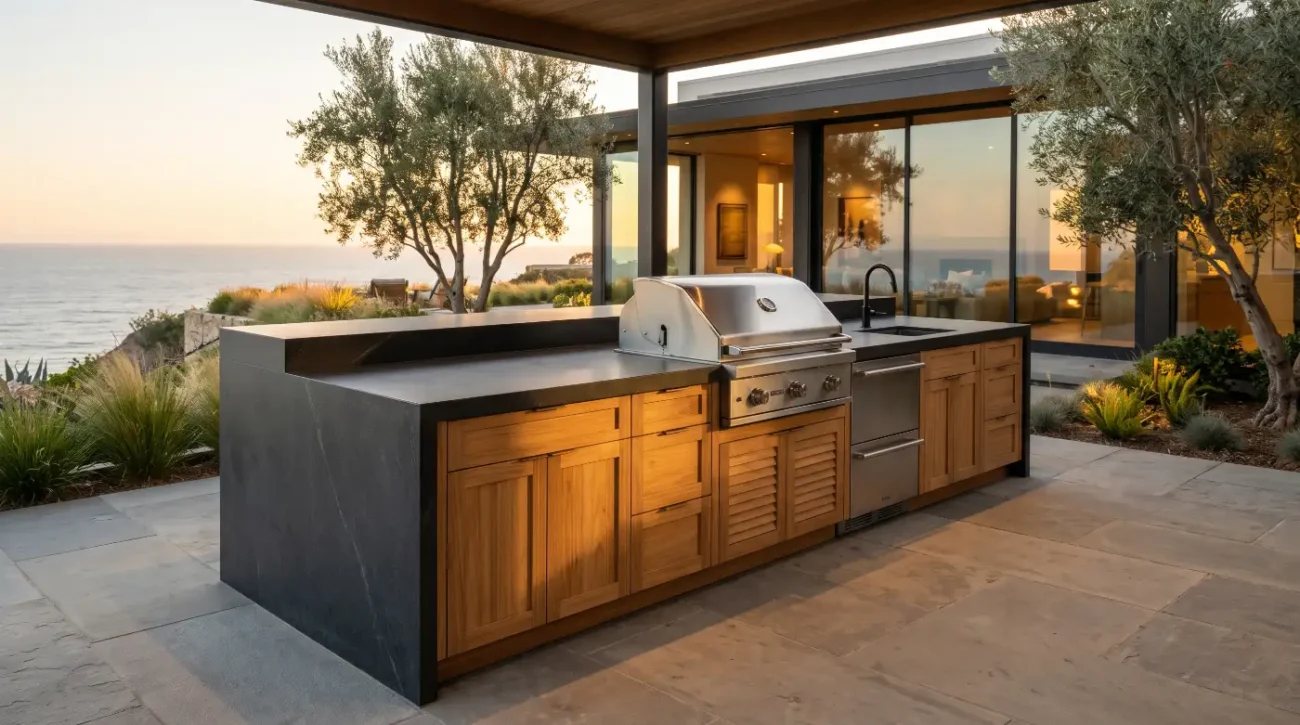
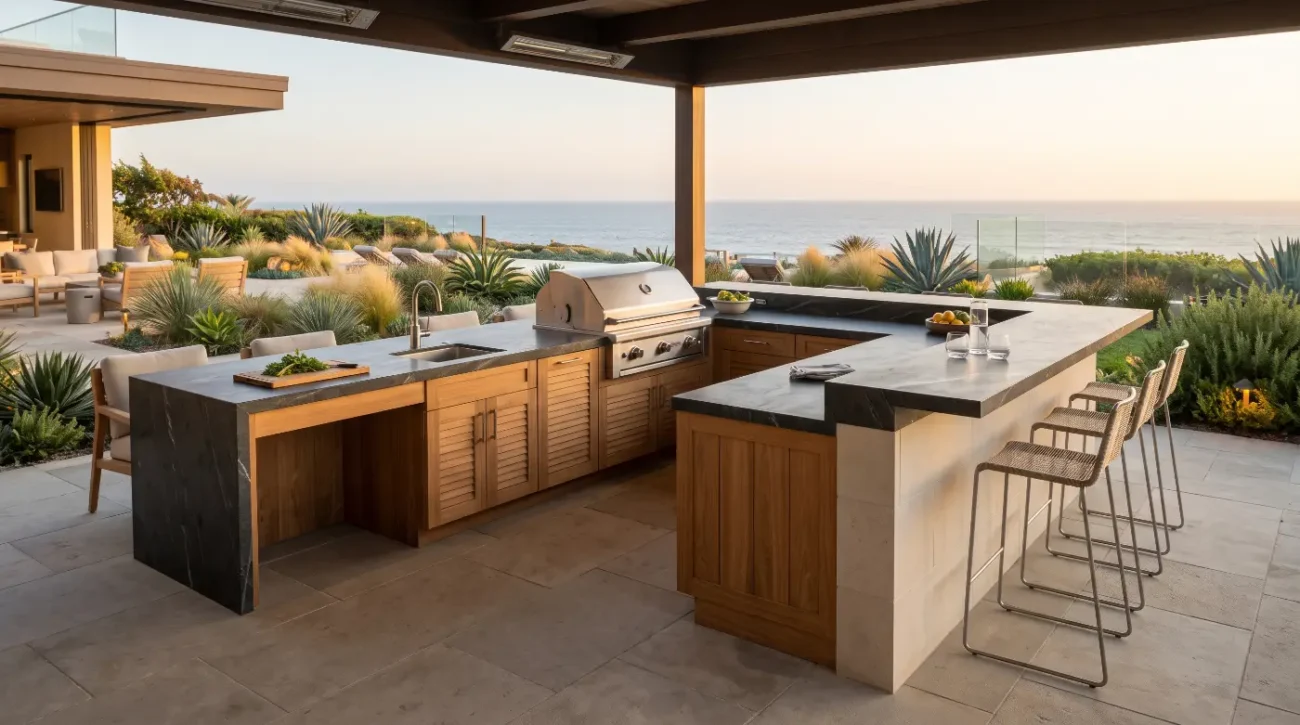
For designers seeking even more nuanced visual depth, a hidden design opportunity lies in pairing weathered silver teak perimeter cabinetry with a contrasting honed black soapstone or dark porcelain slab countertop. The cool grey wood grain bridges the visual gap between bright white architectural trim and dark stone work surfaces, creating a tailored, bespoke look worthy of a Manhattan townhouse garden or a Water Mill waterfront compound.
What Technical Specifications Ensure Longevity in Custom Teak Outdoor Kitchens?
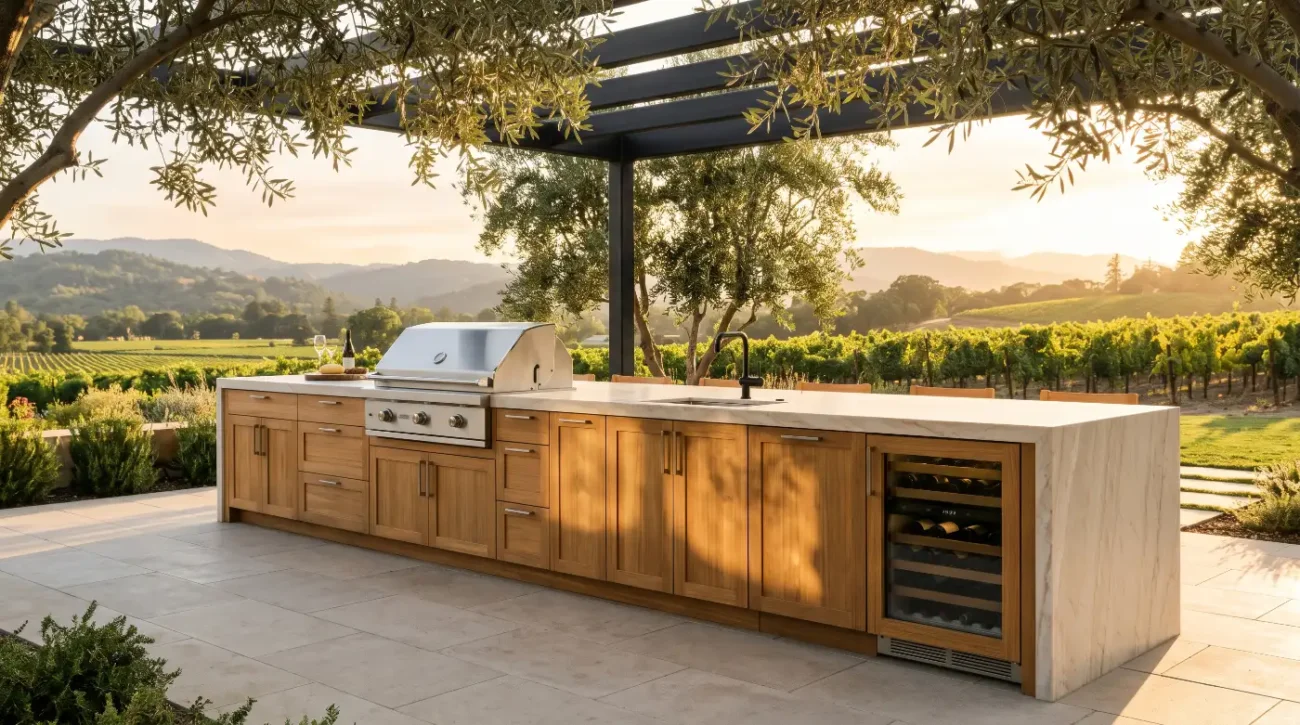
Long-term structural integrity in custom teak outdoor kitchens depends on kiln-dried Grade-A heartwood, traditional mortise-and-tenon joinery with engineered expansion gaps, 316 marine-grade stainless steel hardware, and ventilated appliance enclosures. These engineering protocols prevent racking under heavy natural stone countertops, eliminate fastener rust, and dissipate extreme radiant heat generated by built-in commercial gas grills.
Designing for high-net-worth residential projects requires looking far beyond surface aesthetics. When an interior designer collaborates with landscape architects certified by the American Society of Landscape Architects or custom builders adhering to National Kitchen and Bath Association standards, every millimeter of framing tolerance matters.Outdoor cabinetry endures thermal swings that indoor millwork never experiences, from ninety-degree humid afternoons in Austin to sub-zero coastal gales in the Hamptons.
Solid wood naturally expands and contracts across its grain as ambient relative humidity fluctuates. If a cabinetmaker glues wide teak panels rigidly into perimeter frames without calculating seasonal movement, the wood will split along the glue lines within a single seasonal cycle. Precision millwork accounts for this physics through floating panel construction, marine-grade polyurethane adhesives, and structural corner blocks that transfer heavy vertical loads directly to the deck or patio substrate.
Trade professionals managing complex exterior installations must verify several critical engineering benchmarks before approving shop drawings:
-
Heartwood Grade Verification: Specify exclusively FSC-certified Grade-A plantation teak harvested from the center of mature logs, avoiding sapwood streaks that lack protective silica and natural rubber reserves.
-
Stone Slab Load Distribution: Dense countertops such as two-inch thermal bluestone, granite, or architectural concrete exert immense downward force, requiring heavy-duty adjustable leveling legs rated for extreme static loads across uneven patio pitches.
-
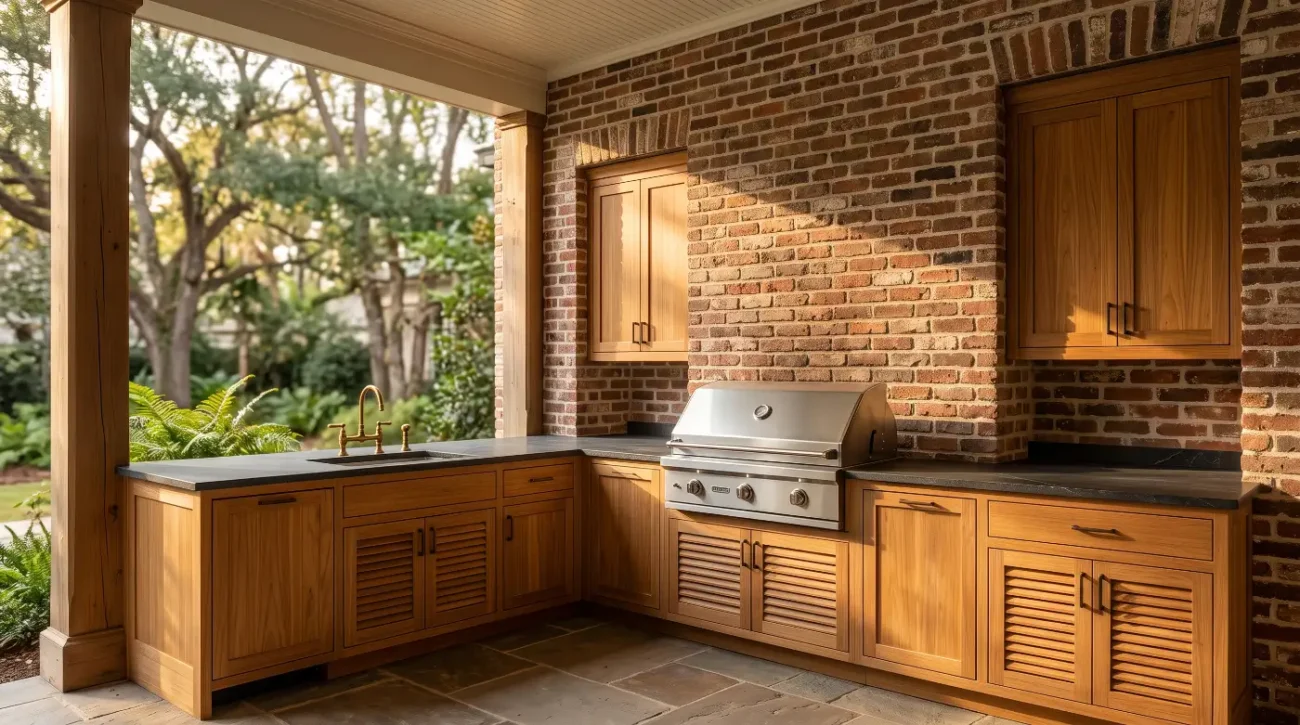
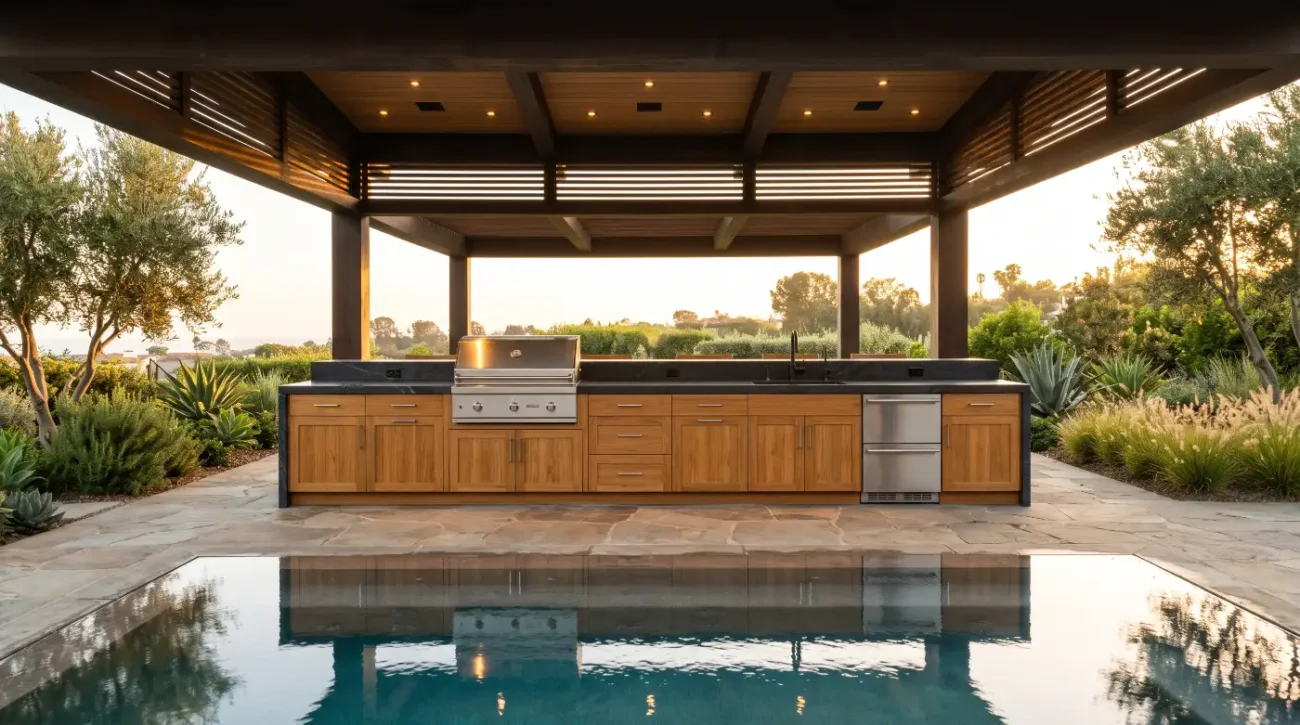
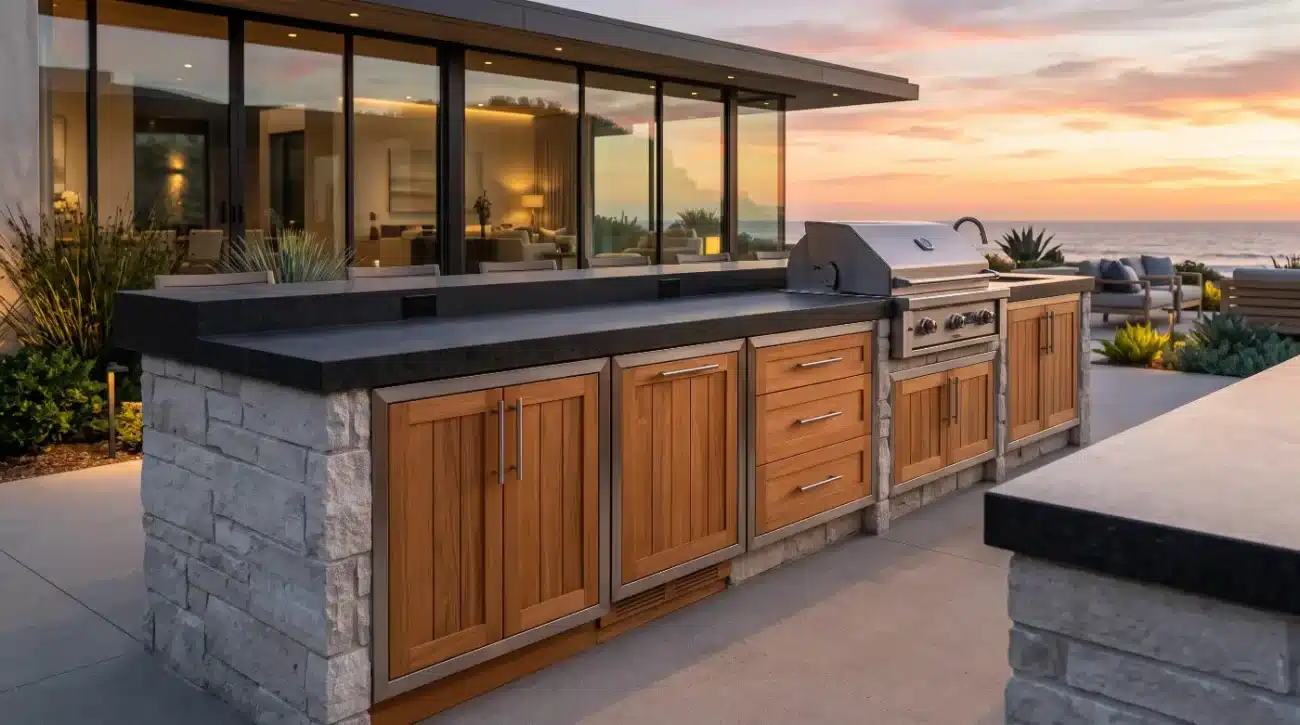
Thermal Grill Ventilation: Built-in high-BTU gas grills generate intense radiant heat; cabinetry housings must incorporate non-combustible insulated jackets and dedicated cross-ventilation louvers to prevent wood desiccation or warping.
-
Marine Hardware Metallurgy: Insist on authentic 316 marine-grade stainless steel for all concealed soft-close hinges, full-extension undermount drawer glides, and structural fasteners, as standard 304 stainless steel quickly develops tea-staining and pitting near saltwater.
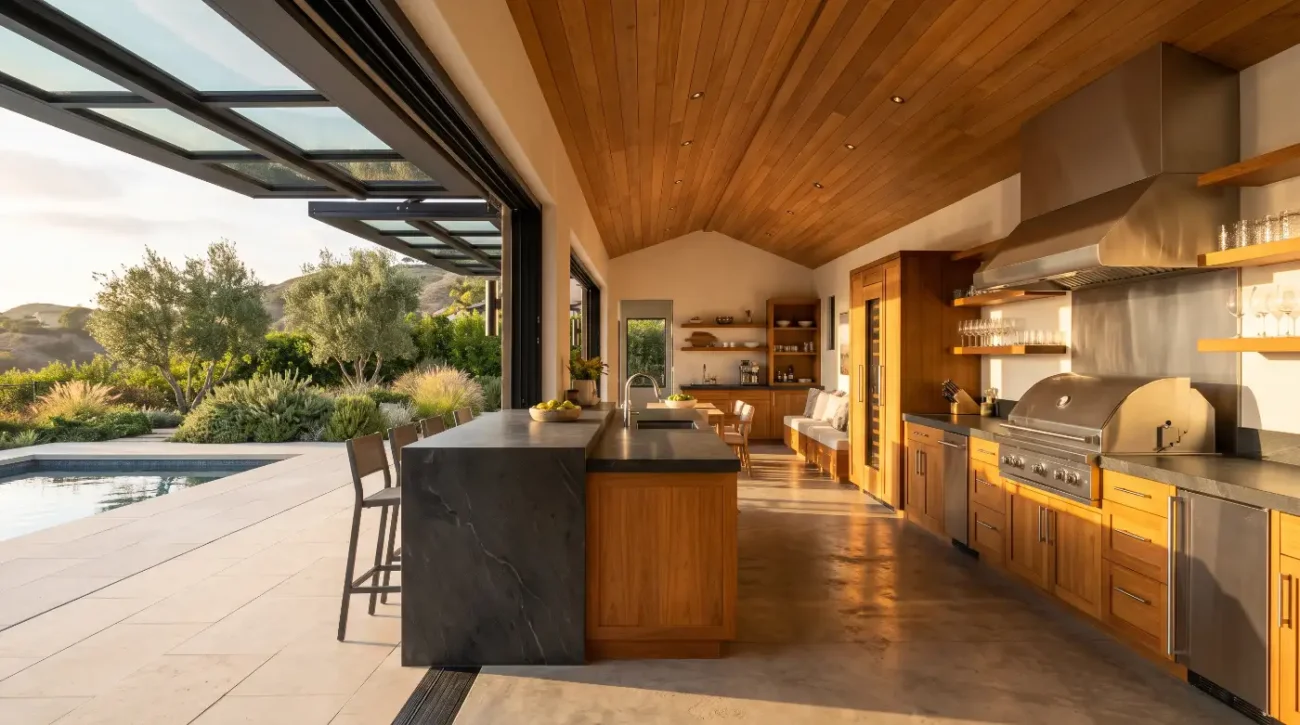
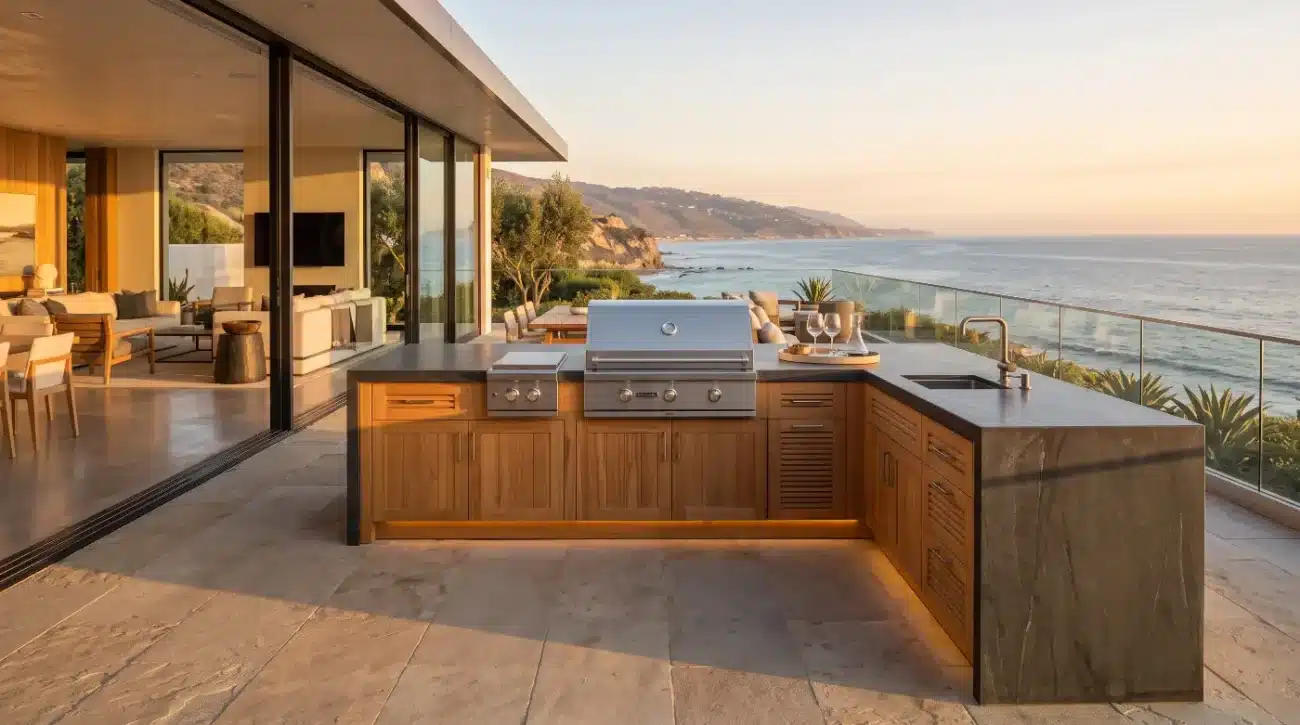
Imagine a custom builder installing an expansive L-shaped outdoor culinary pavilion in Newport Beach or Palm Springs. If the builder sets heavy cabinetry directly onto a sloped stone terrace without compensating for drainage pitch, cabinet doors will bind and drawer reveals will drift out of alignment. Utilizing modular teak outdoor kitchen island inserts engineered with precision leveling feet allows the installation crew to achieve laser-level countertop planes while preserving unobstructed water runoff beneath the toe-kicks.
Another overlooked post-installation risk involves improper winterization and ventilation in northern climates like the Pacific Northwest or Long Island. Wrapping a teak kitchen tightly in non-breathable plastic tarps traps ground moisture inside the cabinet boxes, creating an incubator for surface mildew. Instead, custom breathable marine canvas covers paired with interior louver ventilation keep air circulating while shielding appliances from snow accumulation.
Strategic material tradeoffs also define successful trade procurement. While pre-fabricated stainless steel cabinet boxes offer uniform factory sizing, their reflective surfaces often appear sterile against traditional shingle-style architecture and can dent easily during seasonal furniture moves. Solid teak cabinetry delivers superior acoustic dampening—doors close with a solid, quiet thud rather than a metallic clang—while offering field-scribable trim components that custom builders can fit tightly against irregular stone veneers or clapboard walls.
To streamline sub-contractor scheduling and eliminate costly field modifications, interior designers should integrate manufacturer-verified CAD blocks early in the schematic design phase. Reviewing detailed technical specifications and architectural resources ensures exact cutout clearances for refrigeration drawers, ice makers, and side burners before masons pour concrete pads or run gas and electrical rough-ins.
External References
Key Takeaways
-
Natural Patina Harmony: Unfinished Grade-A teak oxidizes into a refined silvery-grey tone that naturally matches weathered white cedar shake exteriors without peeling paint or artificial stains.
-
Subsurface Protection: Teak relies on internal tectonic oils, natural rubber, and silica to repel moisture and decay, making breathable care superior to film-forming varnishes.
-
Architectural Load Engineering: Heavy stone countertops require solid mortise-and-tenon teak frames,floating expansion panels, and high-capacity leveling hardware to maintain crisp door reveals.
-
True Marine Metallurgy: Specifying 316 stainless steel hinges and drawer slides prevents rust and mechanical failure in aggressive salt-air microclimates.
-
Early CAD Integration: Incorporating exact appliance cutout clearances and grill ventilation specs during schematic design prevents framing delays and heat damage.
Elevate your next coastal residence or luxury exterior living project with cabinetry engineered to endure generations of salt air and seasonal change. Interior designers, architects, and custom builders can request weathered and natural Grade-A teak finish samples, access complete CAD libraries, or review project-specific fabrication timelines directly with our team by reaching out through the Pacific Teak Millworks trade inquiry portal or calling Darin at (949) 365-6513.