Executive Summary / Quick-Read Block:
-
Pacific Northwest Modernism Demands Material Resilience: Integrating outdoor kitchens in rainy, temperate rainforest climates requires deep eave overhangs, biophilic design principles, and inherently weather-resistant hardwoods to withstand prolonged dampness and moisture exposure.
-
Grade-A Teak Solves Environmental Degradation: The natural rubber and high silica density inside solid Tectona grandis prevent water absorption, internal rot, and dimensional warping without reliance on failing film-forming sealers.
-
Architectural Integration Bridges D2C and B2B Workflows: Utilizing mortise-and-tenon joinery, 316 marine-grade stainless steel hardware, and dedicated CAD/BIM specifications allows trade professionals to seamlessly blend indoor luxury with rugged outdoor performance.
How Landscape Architects Integrate Teak Cabinets into Pacific Northwest Modern Homes
Landscape architects designing for Pacific Northwest modern homes integrate solid teak cabinetry by leveraging deep eave overhangs, biophilic architectural lines, and the inherent water resistance of Grade-A Tectona grandis. By utilizing mortise-and-tenon joinery and 316 marine-grade stainless steel hardware, specifiers create weather-defying outdoor kitchens that handle persistent rainfall, high ambient moisture, and freeze-thaw cycles without sacrificing luxury aesthetics.
An outdoor kitchen built along the Puget Sound or nestled into the lush forest canopy of Mercer Island faces an unforgiving climate testing every structural joint and finish. A common mistake in coastal and temperate rainforest regions is specifying modular metal, painted wood, or wood-composite cabinetry under the assumption that a covered patio completely isolates cabinetry from environmental decay. Cold wind-driven rain, microclimatic humidity, and trapped ambient dampness quickly cause inferior substrates to rust, delaminate, or swell at the base. High-net-worth homeowners frequently present initial mood boards featuring sleek, flush-face cabinetry to their landscape architects, only to discover that standard exterior cabinetry fails within two seasons under Pacific Northwest weather patterns. Realizing this material vulnerability drives leading landscape designers and exterior architects across Washington and Oregon to pivot toward high-performance solid teak joinery.
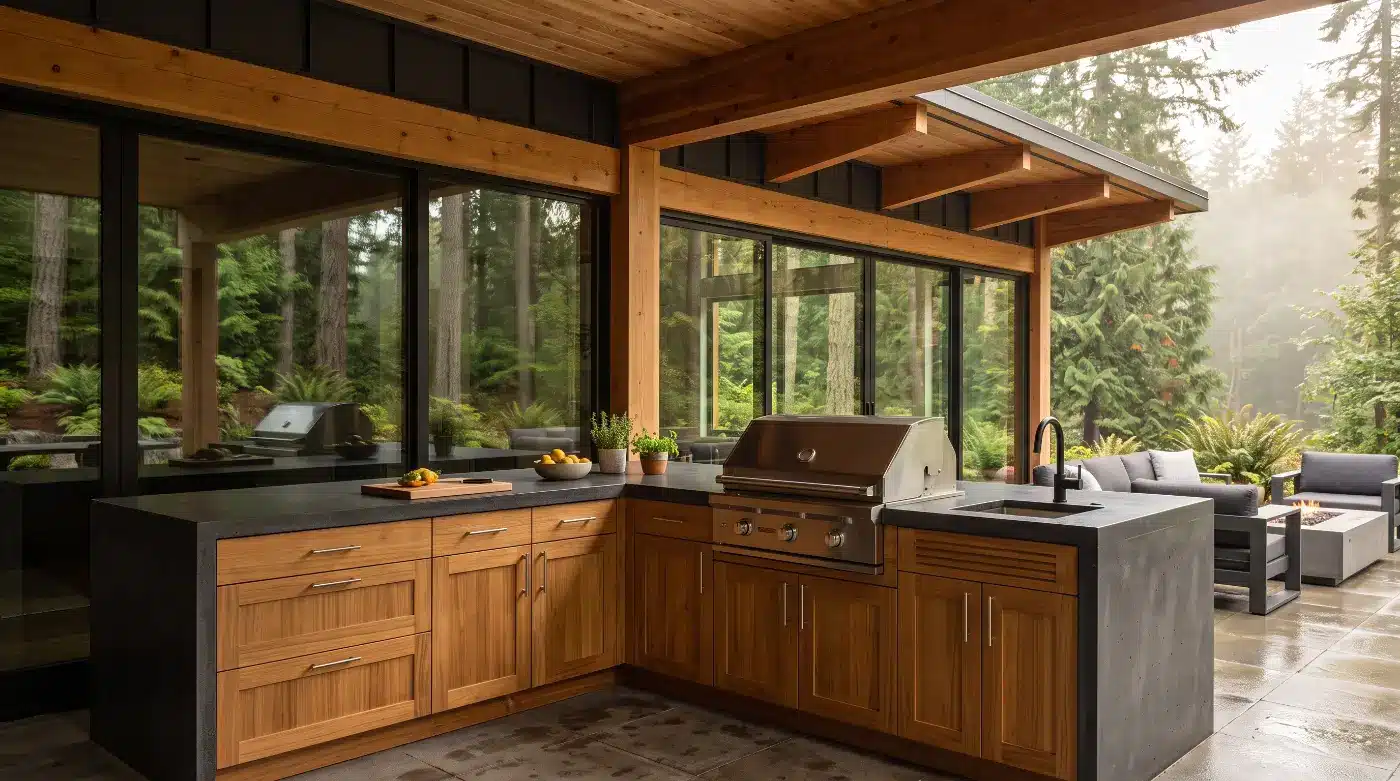
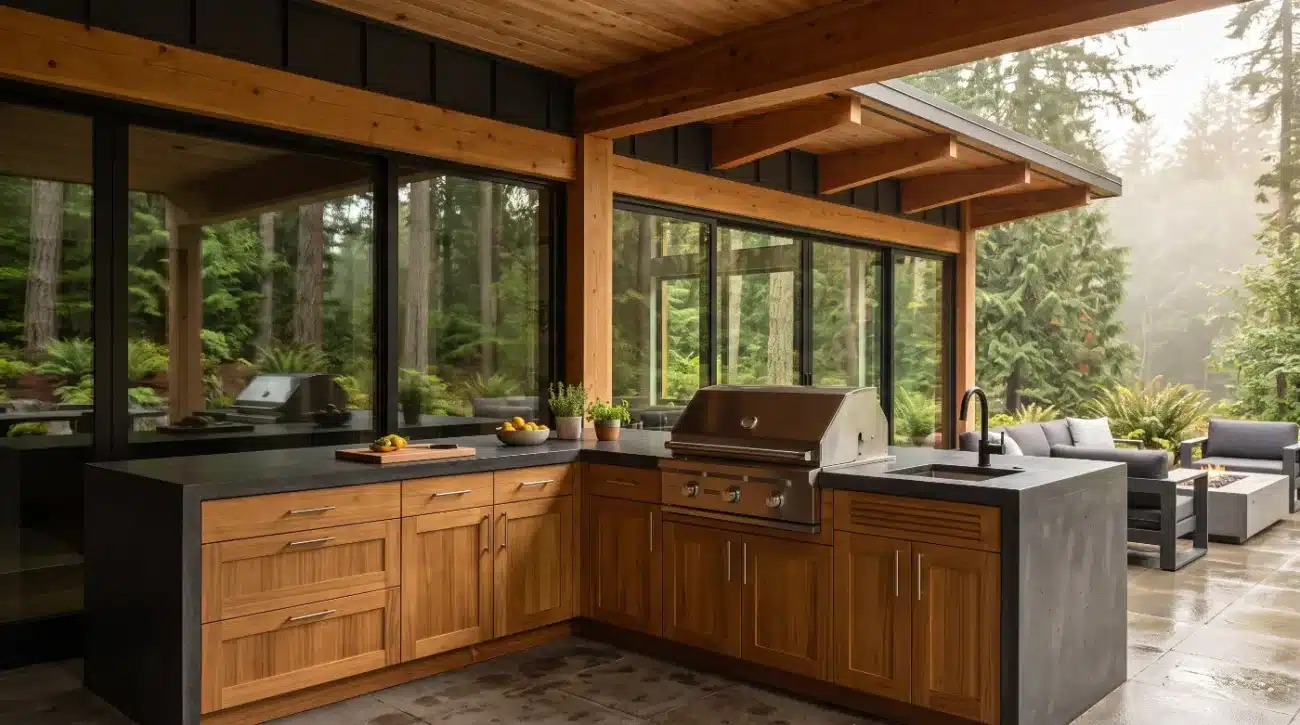
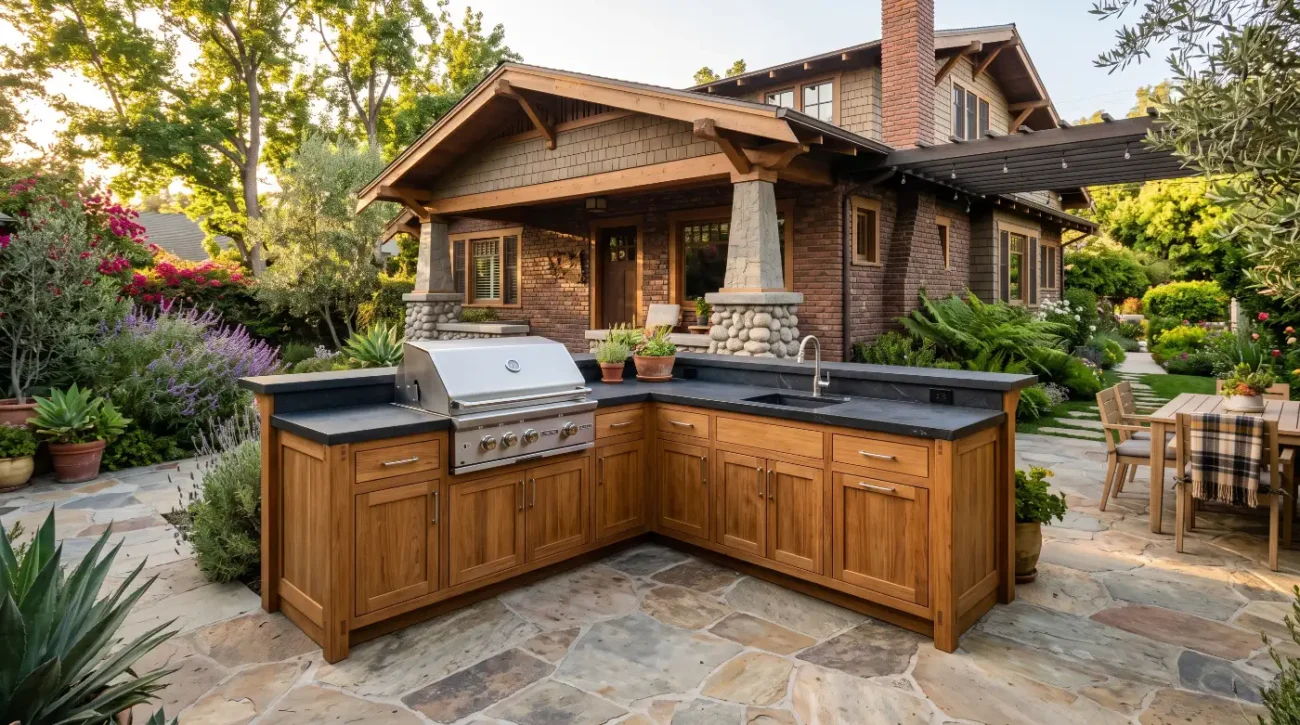
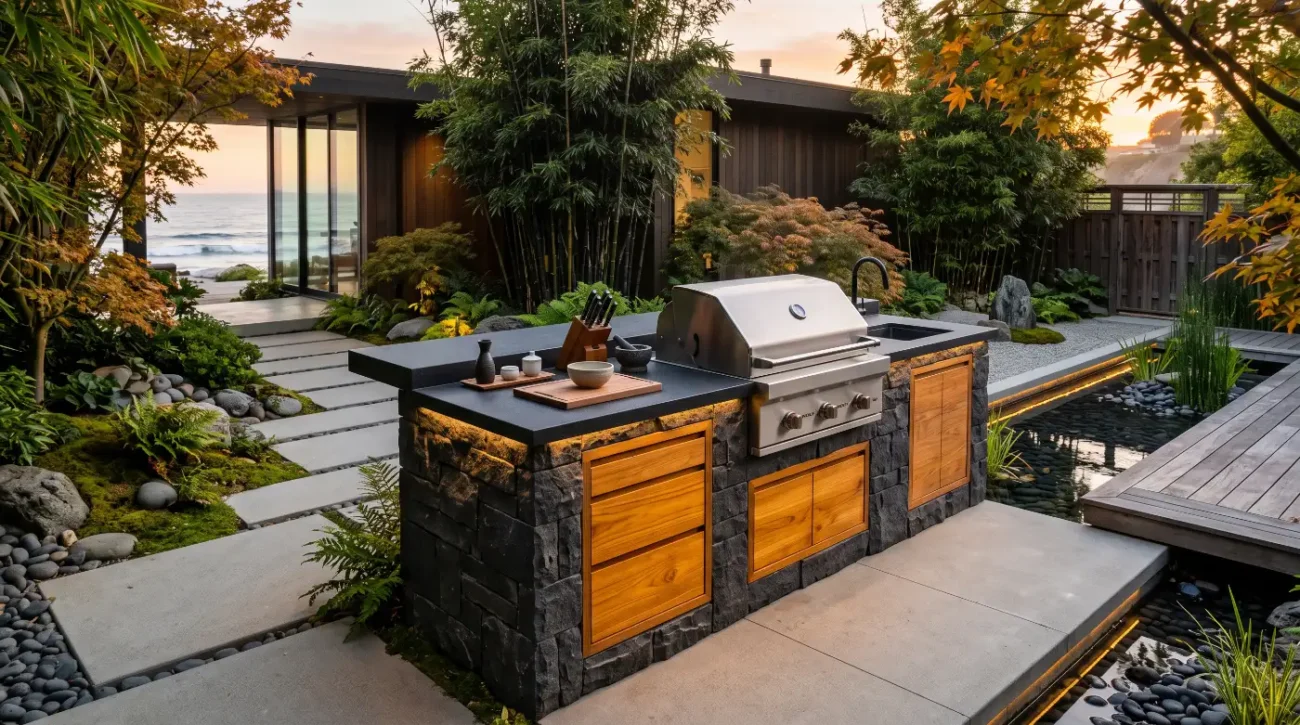
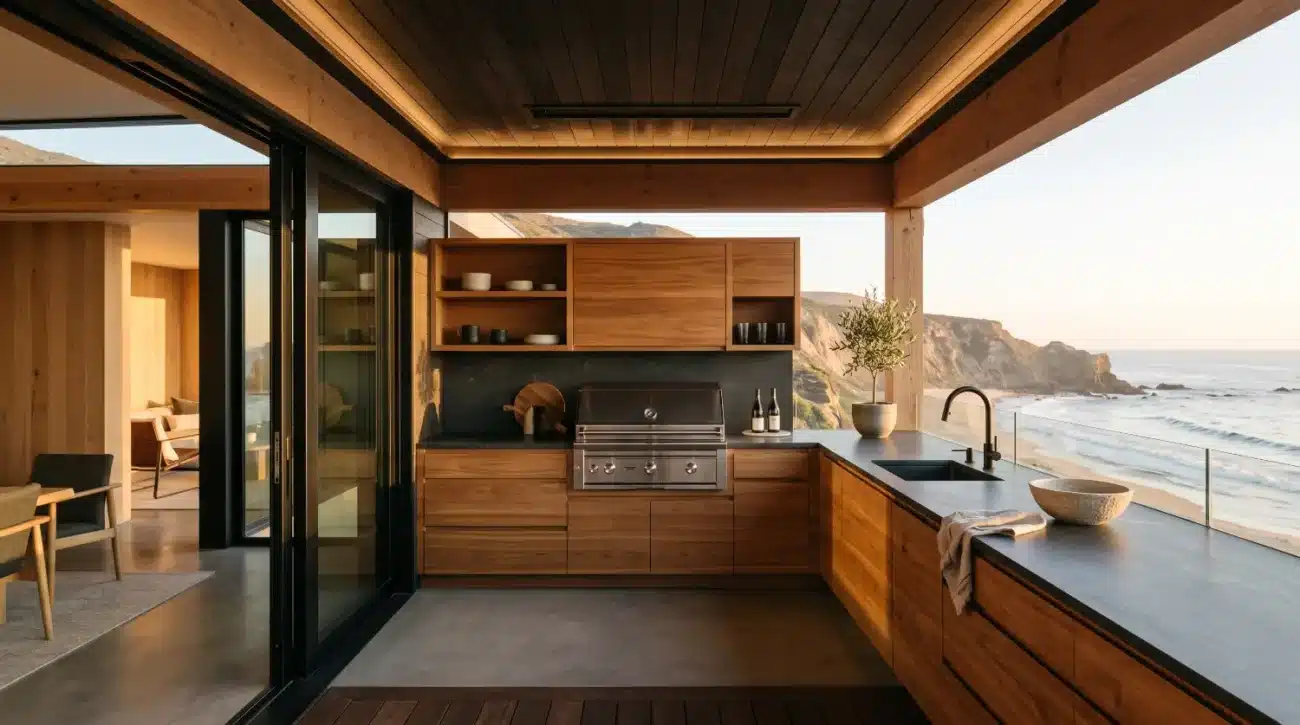
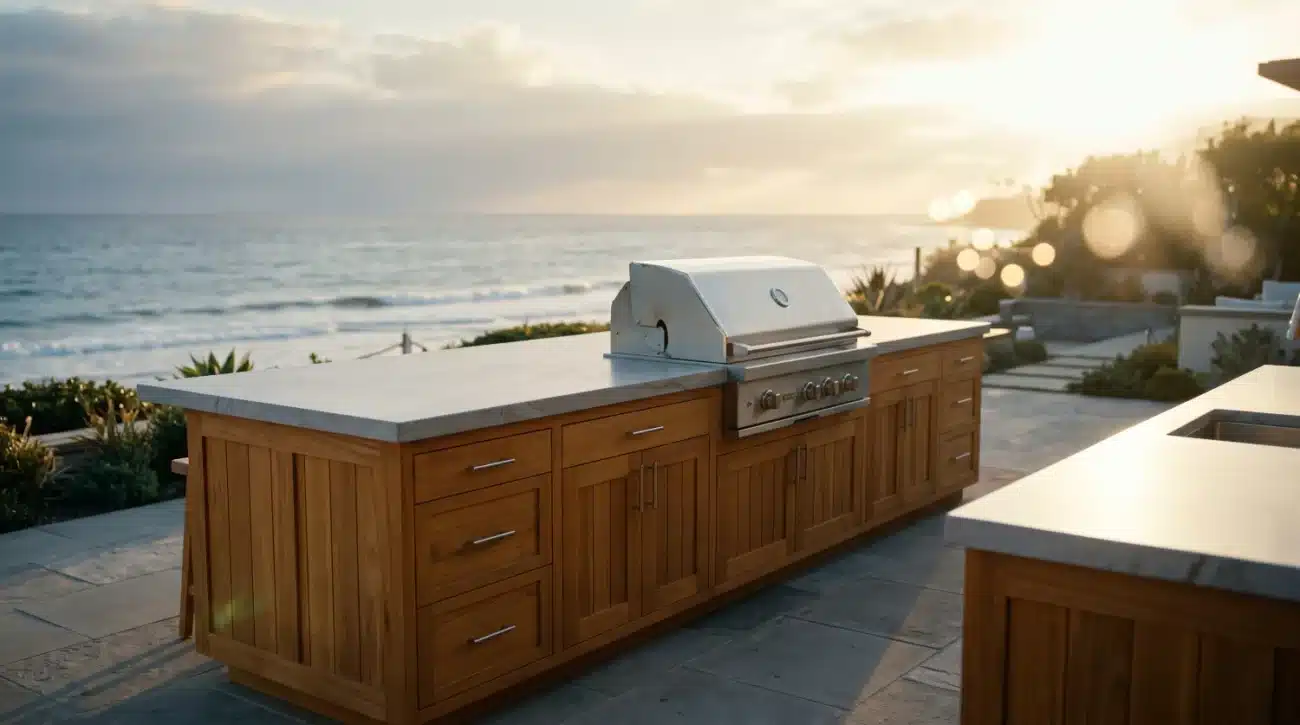
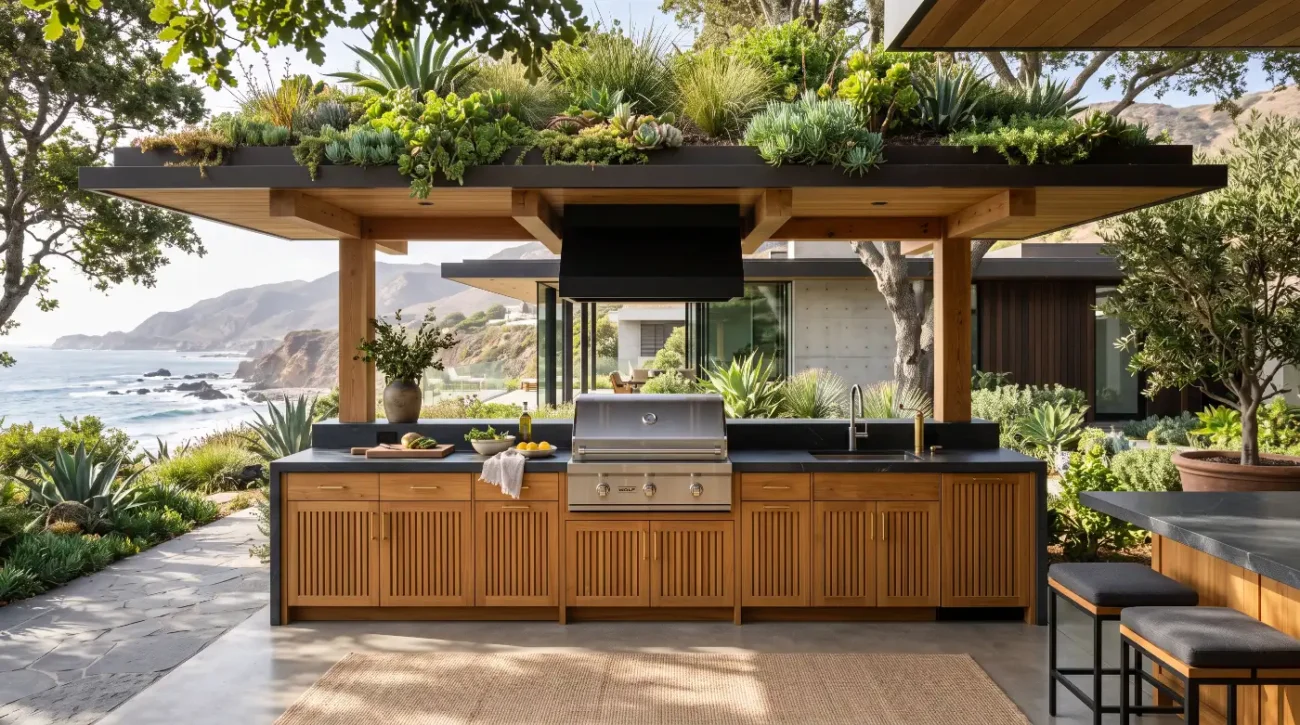
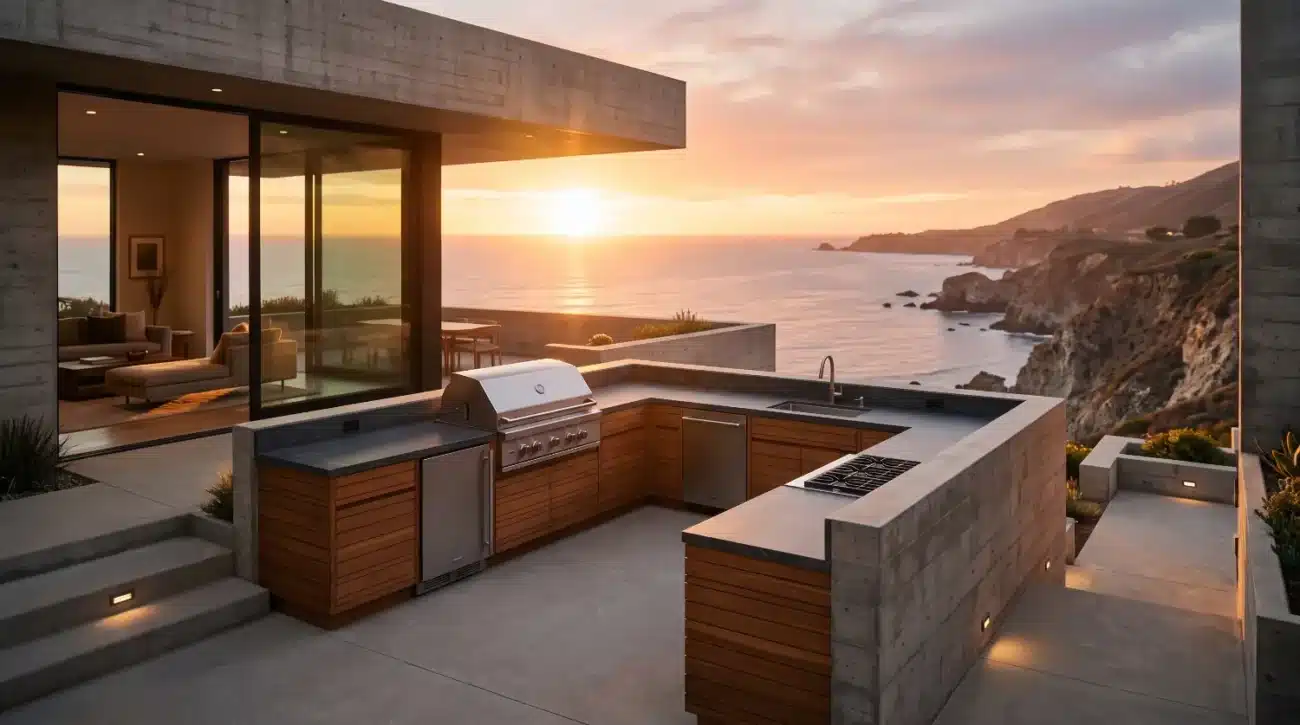
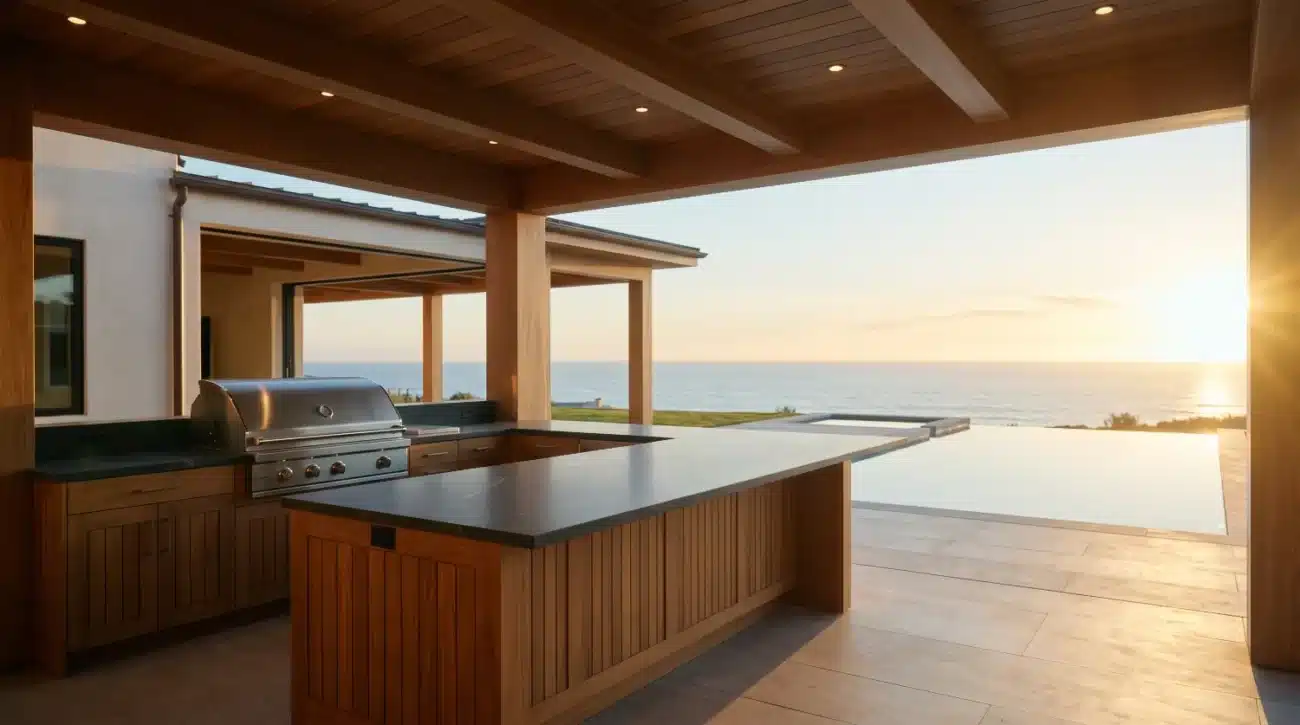
Pacific Northwest Modernism emphasizes a seamless connection between sheltered indoor sanctuaries and the surrounding landscape. Broad glued-laminated timber beams, expansive cedar soffits, and extended eave overhangs create transitional living zones that protect exterior living areas while maintaining panoramic outdoor vistas. When designing custom outdoor culinary suites within these sheltered loggias, landscape architects rely on the natural durability of timber to establish biophilic continuity. Solid teak cabinetry provides a rich, tactile element that grounds modern steel, exposed concrete, and glass elements. By specifying custom millwork tailored to architectural footprints, specifiers ensure that gas grill ventilation, under-counter refrigeration, and heavy natural stone countertops integrate into a cohesive, enduring structure.
Architects and landscape specifiers facing complex rain patterns turn to custom architectural solutions that elevate outdoor living into an art form. Exploring the engineering standards behind our solid teak base cabinets collectionreveals how precision joinery meets the rigorous demands of Pacific Northwest outdoor environments.
The Material Science of Grade-A Teak in Rain-Dominant Climates
Grade-A teak prevents water absorption and structural rot in damp climates due to its dense grain structure, natural rubber resins, and high silica content. These organic compounds create a hydrophobic barrier within the heartwood of Tectona grandis, ensuring that raw teak resists dimensional movement, swelling, and fungal decay even when exposed to constant relative humidity and standing moisture.
The endurance of outdoor cabinetry in rainy environments depends directly on the wood anatomy of the chosen species. Grade-A teak is harvested exclusively from the mature heartwood of Tectona grandis trees, where natural extractives concentrate over decades of growth. The Forest Products Laboratory highlights heartwood durability in tropical hardwoods, emphasizing that natural oil and resin content serves as a primary defense against wood-destroying fungi. The presence of naturally occurring silica acts as a internal mineral armor, blunting moisture penetration and deterring wood-boring organisms.
A counterintuitive insight in high-humidity exterior millwork is that applying polyurethane, varnish, or film-forming clear coats to outdoor teak accelerates internal rot. When rain or condensation migrates through microscopic cracks in a synthetic film, moisture becomes trapped against the wood grain beneath the impermeable layer. Trapped moisture cannot evaporate through the synthetic skin, forcing water into cabinet face-frames and causing dark fungal staining and surface peeling. Grade-A teak performs best when allowed to breathe naturally, relying on its internal rubber content rather than surface-level coatings.
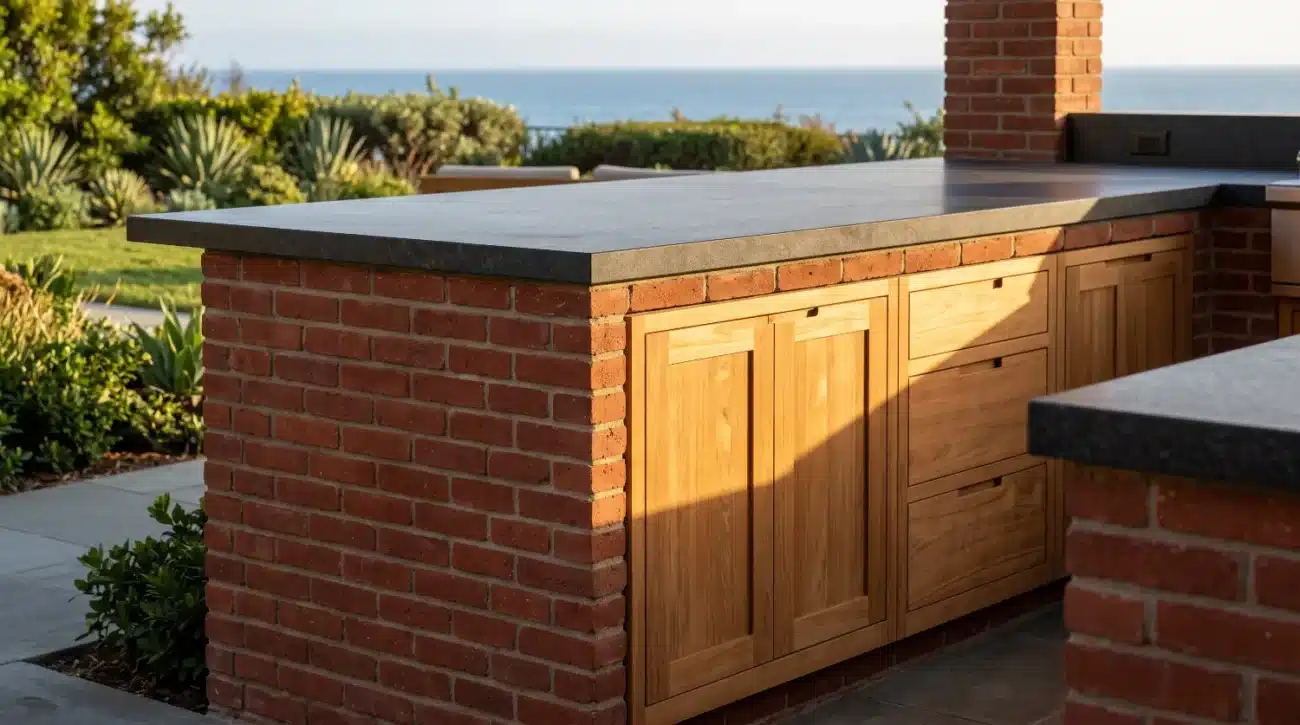
Trade specifiers must also evaluate how high ambient humidity interacts with heavy countertop materials like thick granite, quartzite, or cast concrete slabs. In damp conditions, poorly engineered cabinet carcasses absorb airborne moisture, softening internal joints and causing subtle frame sagging that cracks rigid stone counter perimeters. Solid teak constructed with traditional mortise-and-tenon joinery retains its structural integrity under heavy vertical loads, providing a rigid foundation regardless of atmospheric conditions.
-
High Rubber Density: Prevents water absorption by filling cellular voids with natural hydrophobic resins.
-
Elevated Silica Content: Strengthens wood cell walls to resist surface abrasion and atmospheric deterioration.
-
Tight Grain Structure: Minimizes cross-grain expansion and contraction during extreme seasonal humidity swings.
-
Natural Tectonic Oils: Inhibit fungal decay and mold spore colonization without synthetic chemical treatments.
Proper wood selection is only the first step in ensuring long-term performance in wet microclimates. Review our comprehensive Teak Care & Maintenance Guide for detailed protocols on maintaining raw golden teak or managing natural oxidation in rainy coastal environments.
Architectural Engineering, Deep Eaves, and Joinery Mechanics
Integrating teak cabinetry beneath Pacific Northwest deep eave overhangs requires precise CAD layout planning, thermal movement allowances, and marine-grade hardware integration. Landscape architects utilize 316 stainless steel soft-close hardware, sloped internal drainage channels, and ventilated island inserts to accommodate high-BTU gas appliances while isolating wood joinery from wind-blown dampness and heat traps.
The hallmark of Pacific Northwest modern architecture is the expressive extended eave, designed to keep structural glass and outdoor loggias dry during prolonged rain events. However, even under a six-foot eave overhang, swirling wind currents deposit fine mist across lower cabinet faces. Landscape architects address this by establishing precise installation clearances and incorporating micro-slope details on surrounding stone pavers. Ensuring the cabinet base rests on adjustable levelling legs isolated from standing rainwater prevents wick-action moisture draw into the bottom edge of face-frames.
A critical, post-installation mistake in custom outdoor kitchens is trapping appliance heat against unventilated wooden cabinetry walls. High-performance gas grills produce internal temperatures exceeding eight hundred degrees Fahrenheit. Without properly engineered heat shields and rear ventilation gaps, intense thermal output degrades wood cell walls, dries out natural oils, and creates fire hazards. Architects specify dedicated grill liners and insulated drop-in frames when fitting appliances into custom wood islands, maintaining safe clearances between the heat source and solid teak panels.
Designing functional outdoor kitchens extends beyond base units to elevated storage solutions that withstand shifting weather patterns. Incorporating matching elements from our solid teak wall cabinets collection ensures vertical storage remains protected under sheltered eaves while providing cohesive design lines.
Managing trade workflows between landscape architects, general contractors, and custom millworkers requires accurate spec sheets and clear lead time coordination. When trade professionals upload CAD layouts into client project portals, establishing precise rough-in dimensions for plumbing, electrical conduit, and gas lines prevents jobsite modifications that could compromise factory-sealed joinery. Utilizing pre-engineered custom cabinet modules streamlines field assembly while preserving structural integrity.
-
Mortise-and-Tenon Joinery: Delivers mechanical interlocking strength that holds alignment under shifting mechanical loads.
-
316 Marine-Grade Hardware: Resists pitting, rust, and salt spray corrosion far beyond standard 304 stainless steel alternatives.
-
Floating Panel Construction: Allows wood doors to expand and contract within face-frames without binding or splitting.
-
Integrated Ventilation Slots: Prevents heat accumulation around high-output grills and allows internal air circulation to clear moisture.
For trade professionals seeking technical specifications, CAD details, or specialized assistance with complex site layouts, consult our dedicated Resource Center to access professional specifier tools.
Landscape architects navigating the balance between refined indoor luxury and rugged outdoor endurance find that solid teak cabinetry bridges the D2C-to-B2B specification gap. Homeowners seeking warm, biophilic aesthetics receive a resort-level outdoor kitchen, while trade professionals gain peace of mind knowing the structural joinery, material science, and marine hardware will withstand Pacific Northwest moisture for generations.
External References
Key Takeaways
-
Climatic Compatibility: Grade-A teak is the premier material choice for Pacific Northwest outdoor kitchens due to its natural rubber and silica content, which resist rot caused by continuous humidity.
-
Joinery Engineering: Traditional mortise-and-tenon construction allows solid wood components to adjust naturally to humidity shifts without losing structural alignment or splitting.
-
Hardware Requirements: Only 316 marine-grade stainless steel hardware should be specified in damp coastal environments to prevent binding, rusting, and surface degradation over time.
-
Avoid Film-Forming Coatings: Polyurethane and clear surface coats trap moisture underneath the film, causing wood rot; raw teak should be allowed to breathe or be treated with penetrating organic oils.
-
Trade Workflow Integration: Early coordination of CAD specifications, heat-shield clearances, and countertop weight distribution ensures seamless installation between landscape architects and millwork specialists.
Transform your next Pacific Northwest modern outdoor living project with custom solid teak cabinetry engineered for high-performance durability. Whether you are a homeowner curating a private retreat or a trade professional managing complex architectural specifications, our team provides trade pricing, CAD files, material samples, and custom layout support. Contact Pacific Teak Millworks today to speak directly with our cabinetry specialists and bring your exterior vision to life.