Executive Summary:
-
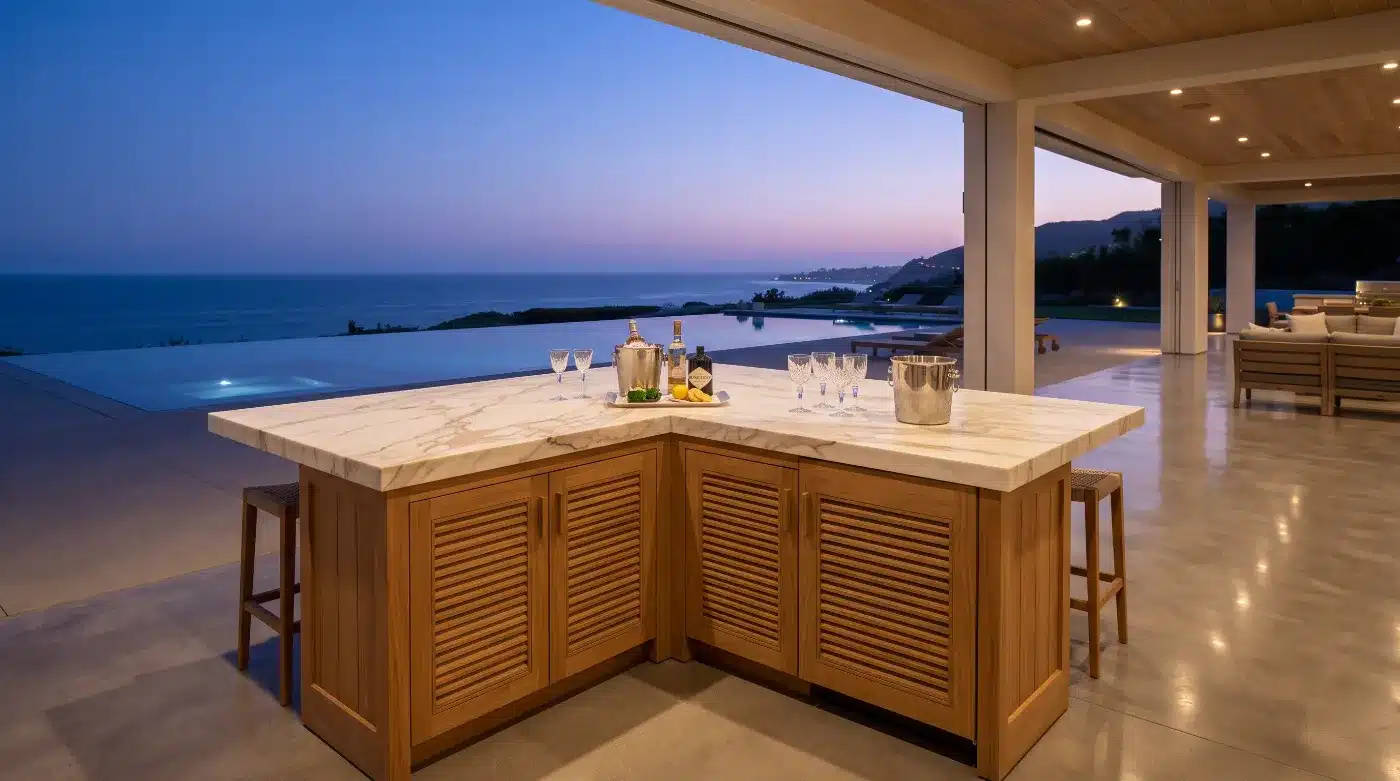
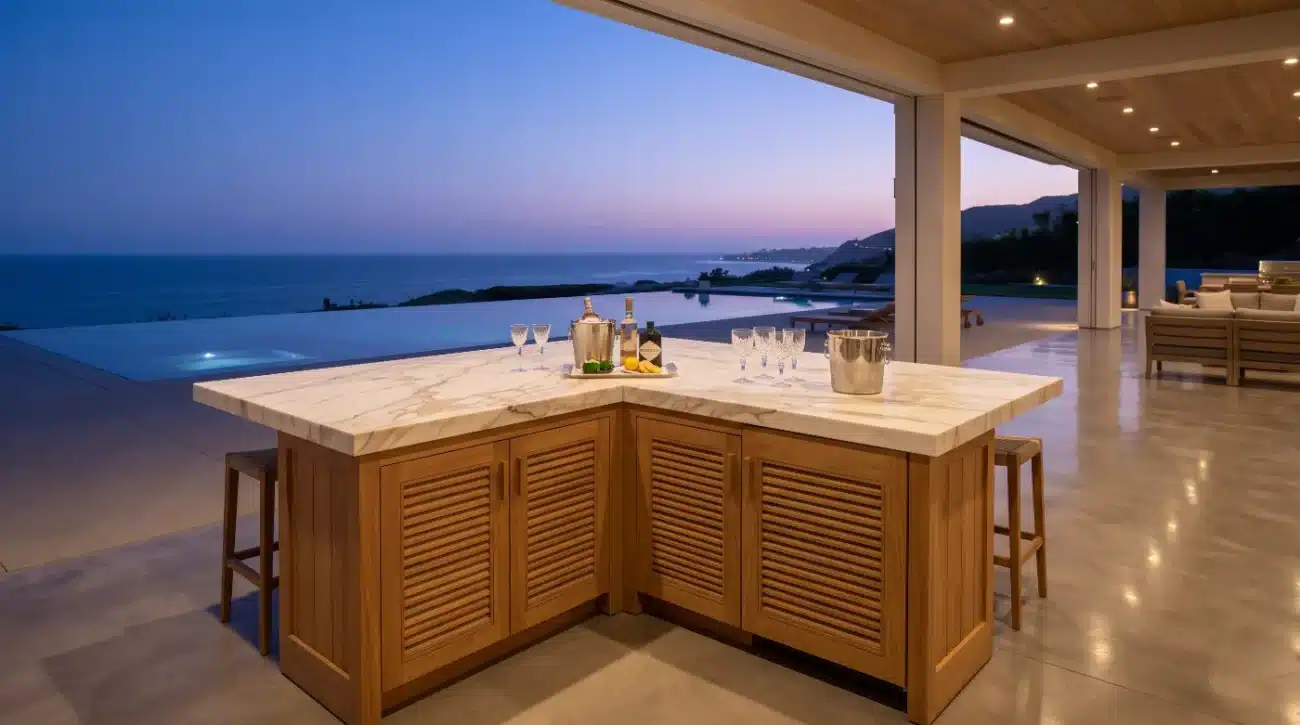
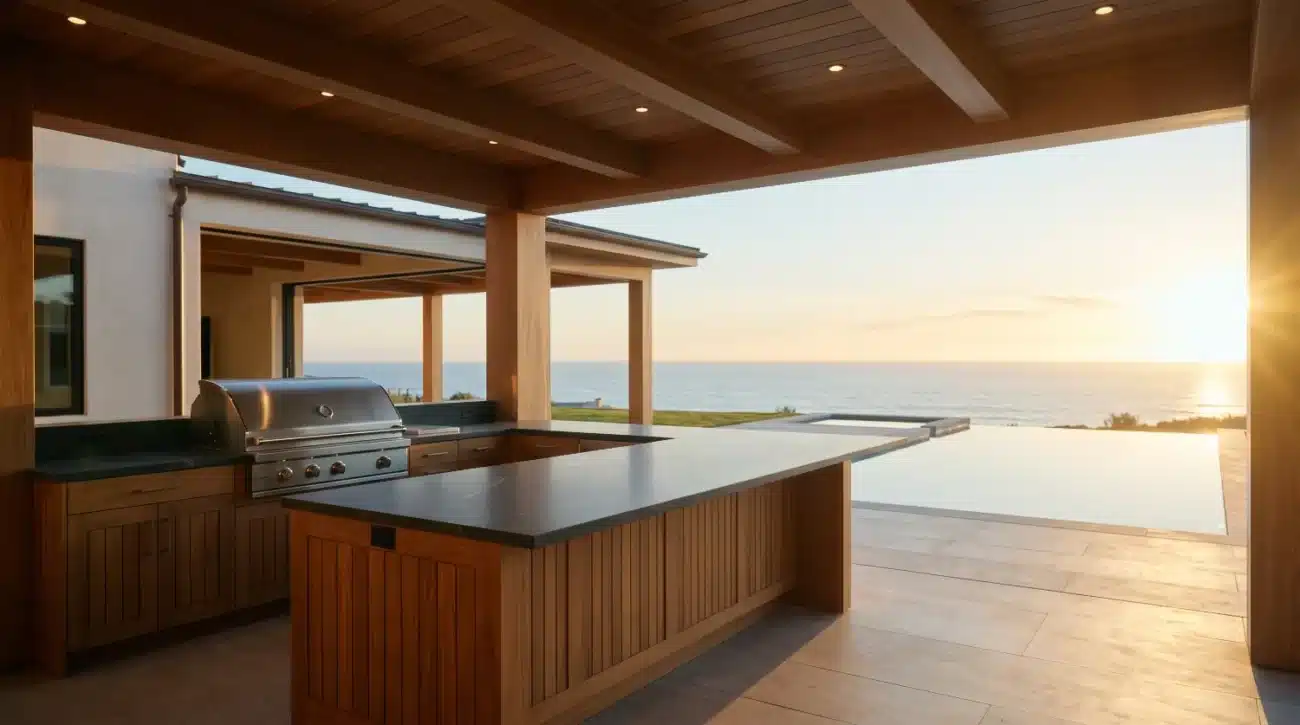
The High-Contrast Aesthetic: Blending the cool, organic elegance of heavily veined marble with the inviting warmth of solid teak creates a timeless, high-contrast focal point for luxury pool houses.
-
Engineering and Wood Anatomy: Grade-A teak rich in natural rubbers and silica provides unmatched dimensional stability, preventing structural shifts that could fracture delicate stone surfaces.
-
Marine-Grade Hardware Mechanics: Utilizing 316 marine-grade stainless steel soft-close hardware ensures seamless functionality against pool splashes, humidity, and coastal salt exposure.
-
Architectural Integration: Achieving perfection requires early coordination among specifiers, custom joiners, and stone fabricators to balance structural load distribution, expansion clearances, and moisture mitigation.
Engineering the Ultimate Pool House Bar: Material Science, Joinery, and Stone Integration
A primary failure point in luxury exterior architecture occurs when high-end material selection outpaces structural wood engineering. When a Malibu homeowner presented a vision of thick, heavily veined Calacatta marble cantilevered over an expansive pool house bar, the initial build team specified standard modular composite cabinetry beneath the stone. Within eight months, high humidity, pool splashes, and thermal cycling caused subtle framing movement, binding drawer glides and causing fine hairline fractures across the primary mitered marble waterfall edge.
Sub-surface material movement remains the primary culprit behind failed luxury outdoor installations. Solid teak cabinetry engineered specifically for demanding microclimates provides the dimensional stability required to support heavy natural stone while enduring constant moisture exposure. By matching advanced wood joinery with proper stone fabrication techniques, design teams eliminate structural sag and aesthetic degradation.
The Material Science of Grade-A Teak and Marble Stability
Natural stone like marble is completely unyielding, which means any flex or distortion in the supporting cabinetry will transfer tension directly into the slab. Grade-A teak (Tectona grandis) harvested from mature heartwood offers an exceptional natural defense against structural shifting due to its dense grain structure and high internal oleoresin content.
According to research from the USDA Forest Products Laboratory, mature teak heartwood exhibits exceptionally low volumetric shrinkage coefficients compared to other hardwoods. The high concentration of natural rubber polymers and silica embedded within the grain cell walls prevents rapid water absorption, keeping cabinet frames plumb and square through dramatic shifts in ambient humidity.
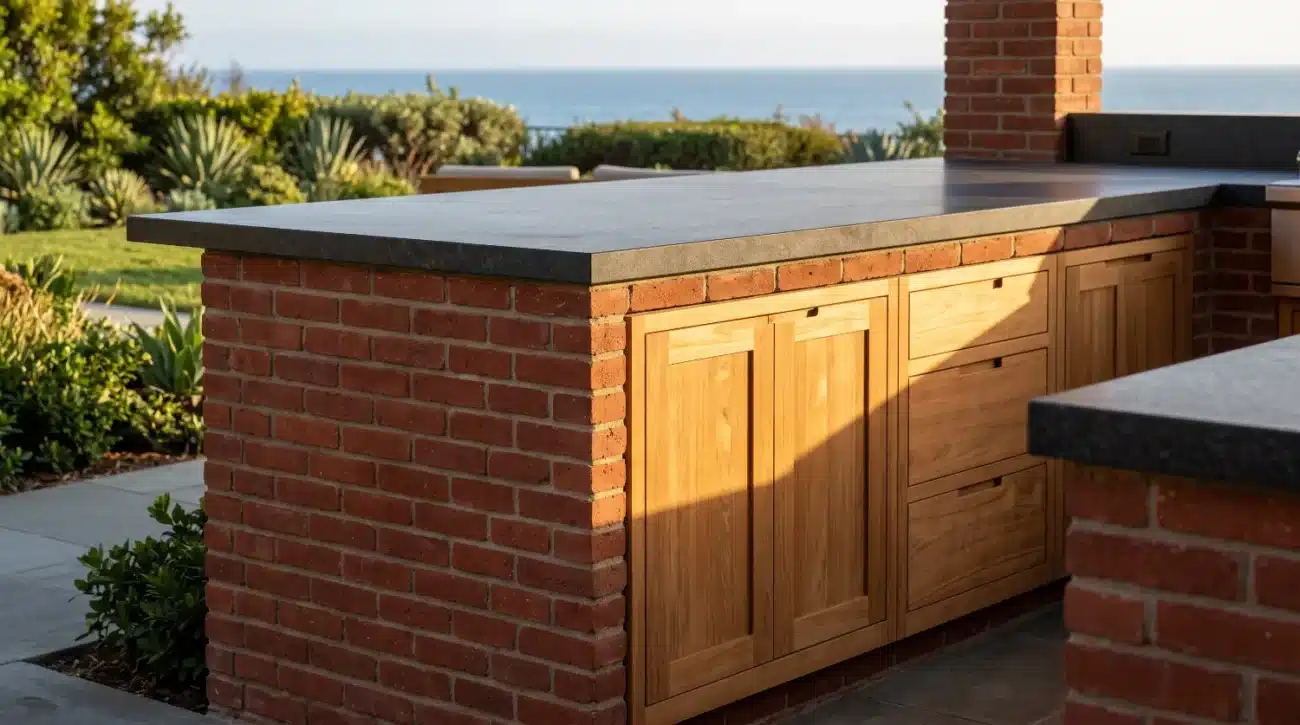
When designing a pool house bar that directly faces pool splash zones or damp loggias, raw or oiled solid teak avoids the catastrophic delamination seen in veneered substrates or painted marine plywood. Custom mortise-and-tenon joinery joined with waterproof polyurethane adhesive allows individual cabinet components to endure ambient climate shifts without losing structural rigidity.
-
High Silica Cell Structure: Natural silica content within mature teak resists fungal rot, micro-cracking, and environmental degradation without requiring chemical pressure treatments.
-
Inherent Oleoresin Barriers: High natural oil retention repels liquid water, ensuring the wood frame maintains dimensional stability under intense moisture loading.
-
Mortise and Tenon Framework: Precision joinery distributes the vertical weight of heavy stone slabs evenly across structural stiles and rails rather than relying on face fasteners.
-
Controlled Grain Orientation: Selecting vertical grain or quartersawn solid teak for face frames minimizes cross-grain expansion that could otherwise distort adjacent millwork.
A frequent post-installation oversight is treating outdoor teak with non-porous polyurethane or film-forming clear coats. These artificial surface coatings trap internal moisture behind an impermeable shell, leading to internal wood rot, surface clouding, and unsightly peeling under direct solar radiation.
Instead, high-performance exterior installations rely on leaving the wood to oxidize naturally into a silver patina or applying specialized penetrating oils like those detailed in the Pacific Teak Millworks Teak Care Guide. These penetrating treatments allow the wood to breathe while highlighting its rich natural grain tone.
Managing Load Limits and Sub-Surface Stone Support
Supporting marble slabs weighing upwards of twenty pounds per square foot requires dedicated structural engineering within the cabinet framework. Landscape architects and interior specifiers must verify that cabinet levelling legs and load-bearing stiles can transfer total static weight cleanly to the sub-floor without racking.
Custom face-frame construction utilizing solid teak vertical stiles ensures that heavy stone counter edges do not crush drawer openings or bind internal hardware over time. Incorporating continuous stainless steel or high-density composite sub-tops between the cabinet frame and marble slab distributes point loads evenly across the perimeter walls.
-
Sub-Top Load Distribution: Installing marine-grade exterior plywood or continuous solid teak sub-tops prevents concentrated pressure points on upper cabinet rails.
-
Heavy-Duty Levelling Feet: Adjustable 316 stainless steel legs ensure exact level alignment across uneven stone loggia floors, mitigating shear stress across marble seam lines.
-
Deflection Limits for Cantilevers: Overhanging bar seating areas require hidden structural steel supports recessed into the teak framing to limit stone deflection under dynamic loads.
-
Hardware Clearance Thresholds: Custom top-rail cutouts must accommodate sink under-mounting hardware without compromising the main structural face-frame.
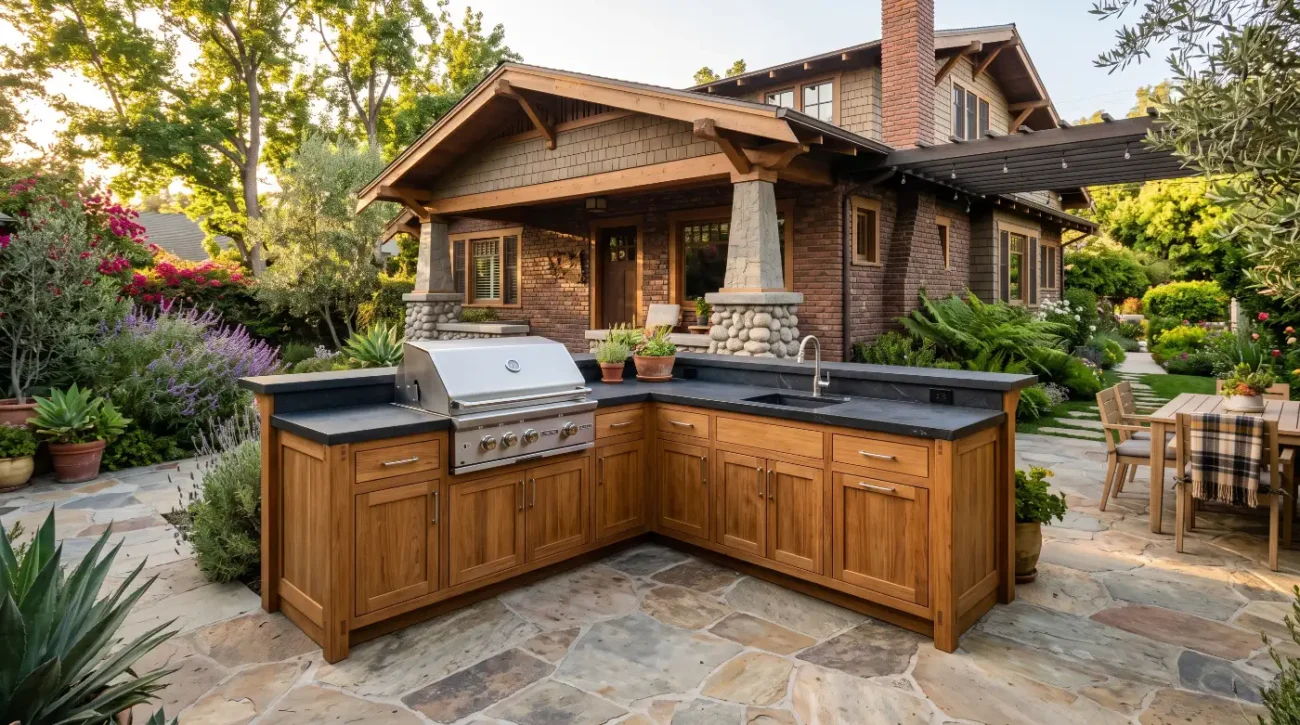
Trade professionals managing client proposals can explore specialized configurations within the Pacific Teak Millworks Base Cabinets Collection to identify engineered frames built specifically for dense natural stone installations.
Mitigating Thermal Expansion and Moisture Dynamics
Pool house environments introduce distinct microclimates characterized by elevated humidity, airborne chlorine or salt, and localized heat spikes from built-in under-counter appliances. Integrating built-in ice makers, beverage centers, or outdoor warming drawers into solid teak cabinetry requires strict adherence to ventilation tolerances.
Trapping heat behind solid teak face panels accelerates oil depletion in localized areas, causing uneven wood drying and fine surface checking. Designing subtle rear ventilation pathways and utilizing insulated heat jackets around high-temp appliances protects both the cabinetry integrity and adjacent cool marble surfaces.
-
Appliance Heat Isolation: Air gaps around under-counter refrigeration prevent localized thermal expansion from warping cabinet end panels.
-
Countertop Expansion Gaps: Leaving flexible silicone expansion joints between marble backsplashes and teak cabinetry prevents binding during high-humidity expansion cycles.
-
Drip Rail Engineering: Machining subtle drip grooves on the underside of marble counter overhangs prevents pool water splashes from running down raw teak drawer fronts.
-
Gasketed Door Seals: Weather-sealed internal perimeter channels keep damp pool towels and chemical vapors out of dry storage compartments.
For comprehensive technical specifications regarding cabinet framing tolerances, refer to the official Pacific Teak Millworks Warranty Documentation.
Architectural Synergy: Harmonizing Warm Teak with Bold Marble Aesthetics
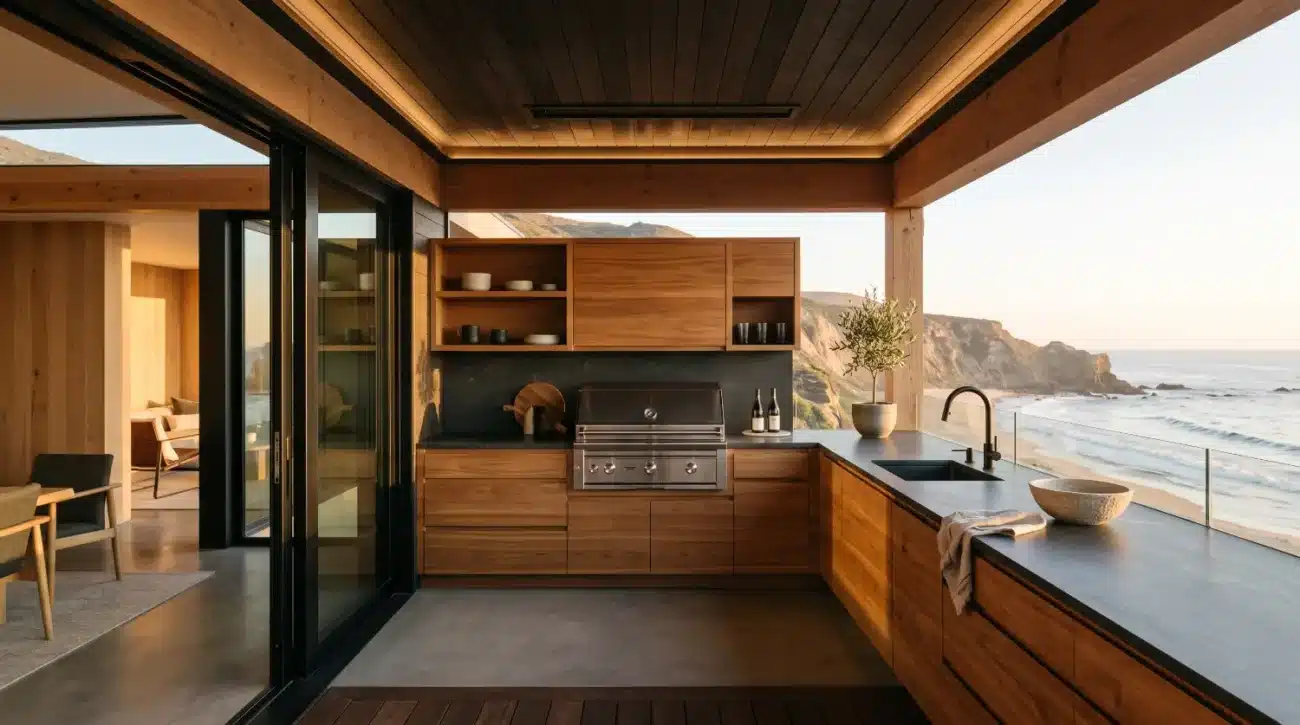
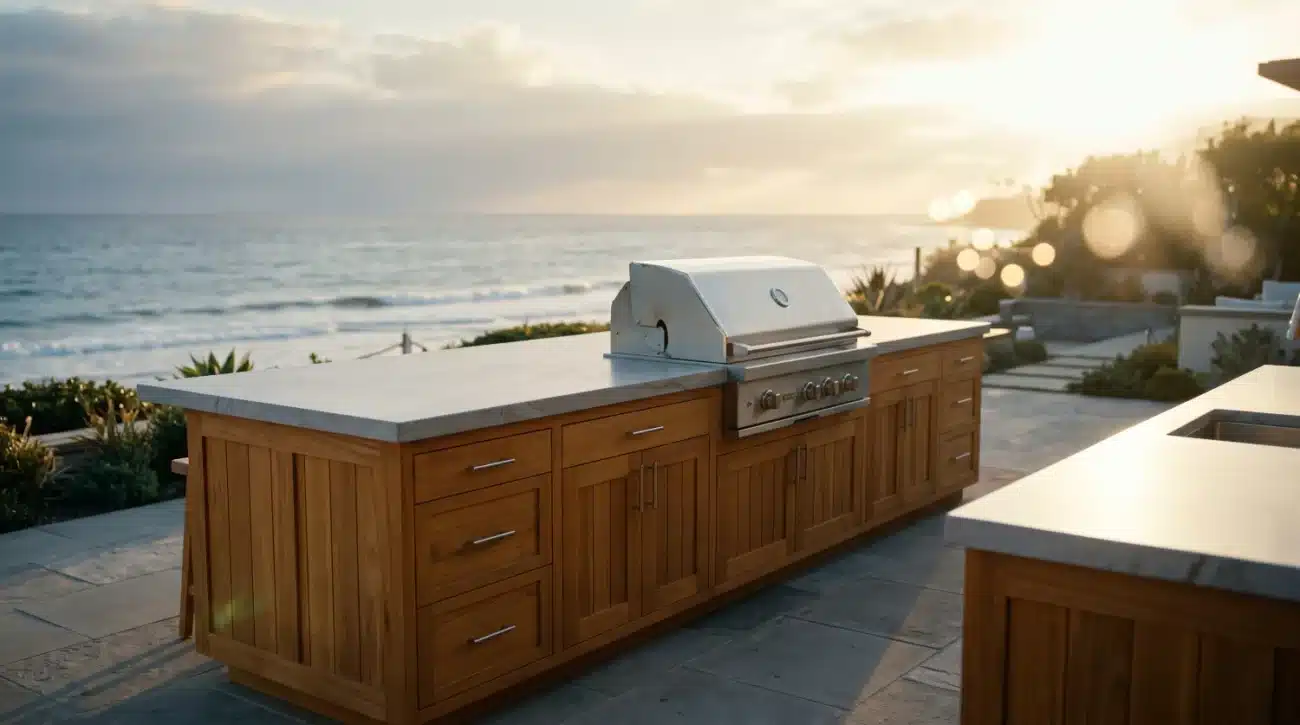
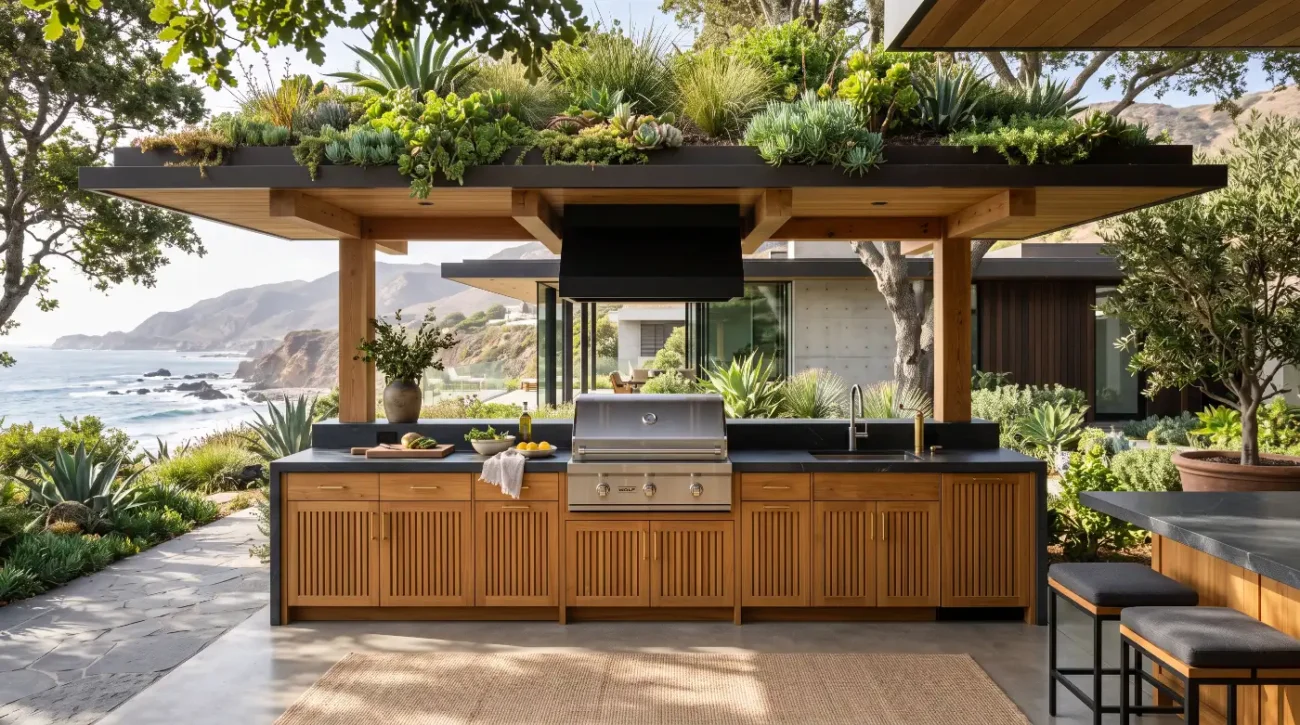
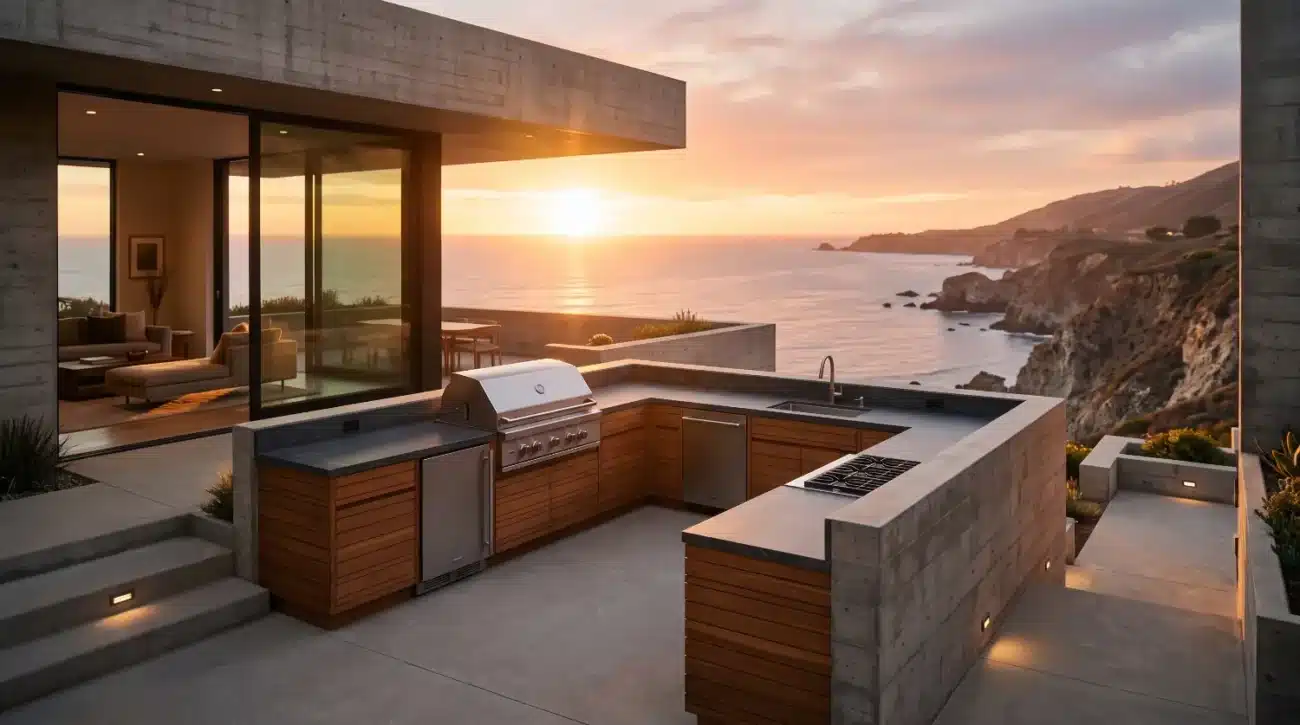
Achieving a high-end architectural composition in an indoor-outdoor pool house requires balancing the cool, refined presence of natural marble with the warm texture of rich teak. This high-contrast pairing brings organic sophistication to coastal properties in Malibu and Palm Springs, bridging the gap between sleek pool decks and luxurious interior spaces.
Designers often face a choice between maintaining teak’s warm golden-brown luster or allowing it to weather naturally into a silvery-grey patina over time. Both visual directions offer distinct aesthetic qualities when paired with heavily veined marble countertops.
Aesthetic Pairing Strategies for Teak and Marble
Pairing natural teak with marble requires careful attention to undertones, veining density, and surface finishes. Honed marble finishes are generally preferred for outdoor pool bars, as they reduce glare from intense sunlight and mask minor etching caused by citrus or poolside cocktails.
-
Calacatta Gold with Golden Teak: Deep amber teak tones draw out honey and gold veining within Calacatta marble, establishing an inviting, sun-drenched aesthetic ideal for resort-style pool houses.
-
Carrara Marble with Weathered Silver Teak: As teak naturally oxidizes into a muted silver patina, its understated grey tones align with the classic cool-grey veining of Carrara marble.
-
Nero Marquina with Raw Teak: Pairing charcoal or black marble with rich golden teak creates a striking modern look with rich visual depth.
-
Honed vs. Polished Finishes: Utilizing matte honed marble surfaces prevents harsh glare under bright sunlight while enhancing the tactile organic feel of solid teak millwork.
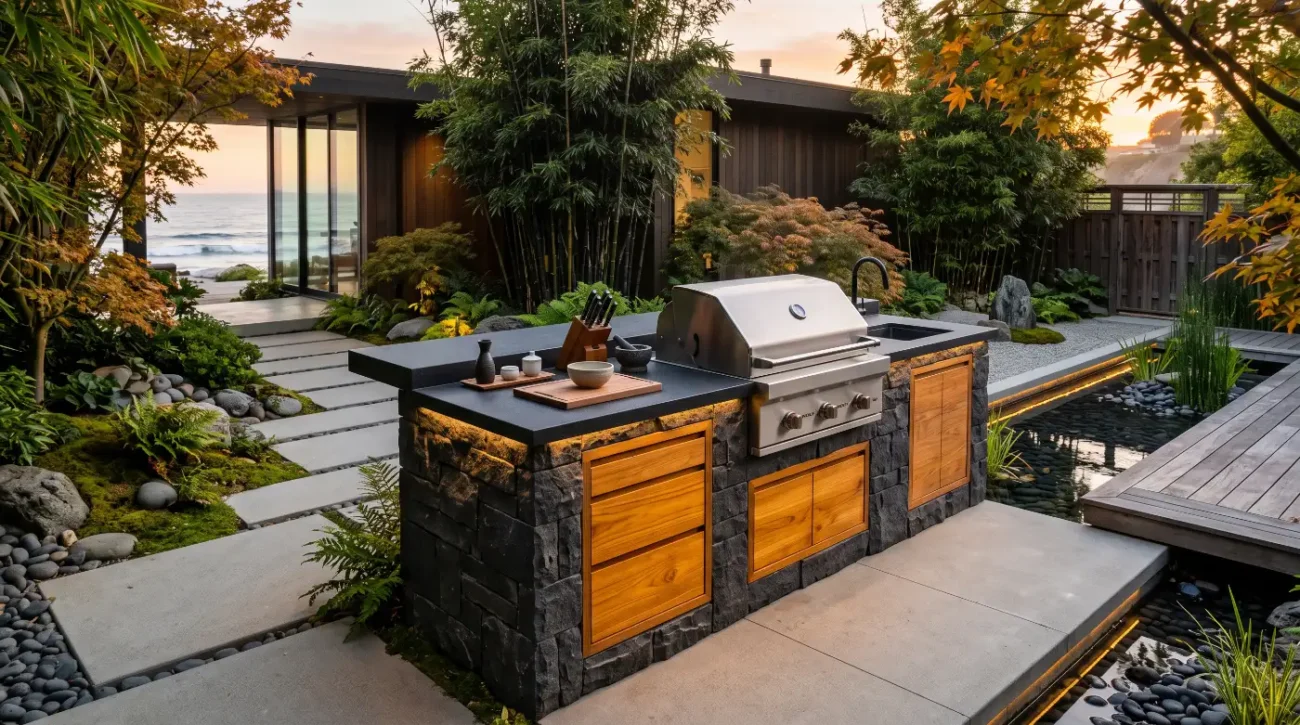
When specifying outdoor island layouts, interior designers often incorporate custom louvered or slatted door panels from the Pacific Teak Millworks Island Inserts Collection to introduce subtle shadow lines and visual texture beneath smooth marble tops.
D2C Inspiration to B2B Specification Workflows
A common friction point in luxury residential design occurs when homeowners present social media mood boards featuring interior-grade vanities transferred directly to an outdoor pool loggia. Translating these visual concepts into durable, buildable exterior specifications requires close collaboration between interior specifiers, landscape architects, and custom millworkers.
Early integration of detailed CAD elevation files ensures that stone fabricators, plumbers, and electrical contractors work off identical framing dimensions. This eliminates expensive field modifications when installing delicate marble slabs over custom cabinetry frameworks.
-
Establishing CAD Protocols: Providing stone fabricators with exact CAD cabinet footprints guarantees precise sub-top support placement before cutting raw marble slabs.
-
Bridging Specification Gaps: Converting residential interior concepts into marine-grade outdoor realities requires specifying 316 stainless steel glides and solid teak structural core construction.
-
Harmonizing Indoor-Outdoor Flow: Matching pool house cabinetry details with interior kitchen millwork creates a cohesive aesthetic across the entire estate.
-
Pre-Construction Site Verification: Confirming concrete slab slope and utility rough-ins before millwork delivery prevents site delays and custom fitting issues.
Landscape designers seeking guidance on custom spec sheets and architectural integration can review structural guides in the Pacific Teak Millworks Resource Center.
Marine-Grade Hardware and Long-Term Environmental Performance
The longevity of a pool house bar depends heavily on its internal hardware mechanics. Standard interior hardware or 304-grade stainless steel quickly corrodes when exposed to pool sanitation chemicals, salt ocean air, and high ambient moisture.
Specifying 316 marine-grade stainless steel hardware ensures long-term resistance against pit corrosion and surface staining. Heavy-duty full-extension glides and soft-close hinges prevent door misalignments under high-use conditions.
-
316 Stainless Steel Alloys: Added molybdenum in 316-grade stainless steel offers superior resistance to chloride pitting caused by salt air and chlorine vapors.
-
Soft-Close Damping Systems: Sealed hydraulic dampeners ensure smooth door closure, protecting marble counter edges from vibration shock.
-
Full-Extension Drawer Support: High-capacity drawer runners fully support heavy barware and ice storage without sagging when extended.
-
Integrated Drain Channels: Custom cabinet bottoms engineered with subtle drainage channels prevent standing water accumulation from wet swimsuits or ice bucket condensation.
Designers working on custom commercial or residential estates can streamline project timelines by submitting preliminary CAD floor plans directly through the Pacific Teak Millworks Contact Page.
External References
Key Takeaways
-
Structural Compatibility: Solid Grade-A teak delivers the dimensional stability required to support heavy natural marble countertops without flexing or racking over time.
-
Hardware Resilience: Specifying 316 marine-grade stainless steel hinges and drawer glides protects internal cabinet mechanics against salt air, humidity, and chlorine corrosion.
-
Thermal Management: Incorporating proper rear ventilation pathways around built-in appliances prevents localized heat buildup that can warp teak frames or etch marble surfaces.
-
Finish Longevity: Avoiding film-forming polyurethane coatings in favor of penetrating oils or natural silver oxidation preserves wood health and prevents surface peeling.
-
Early Trade Coordination: Aligning CAD dimensions across interior designers, landscape architects, and stone fabricators early in the design process ensures smooth installation and long-term durability.
Whether you are an interior designer crafting an oceanfront retreat or a landscape architect designing a resort-style pool house loggia, bringing natural stone and solid teak together requires specialized craftsmanship. The team at Pacific Teak Millworks works closely with trade professionals and homeowners to deliver custom marine-grade outdoor cabinetry tailored to your project’s exact architectural specifications. Contact our design specialists today at (949) 365-6513, email darin@pacificteakmillworks.com, or visit our Contact Us page to request material samples, download CAD files, and discuss your upcoming project.