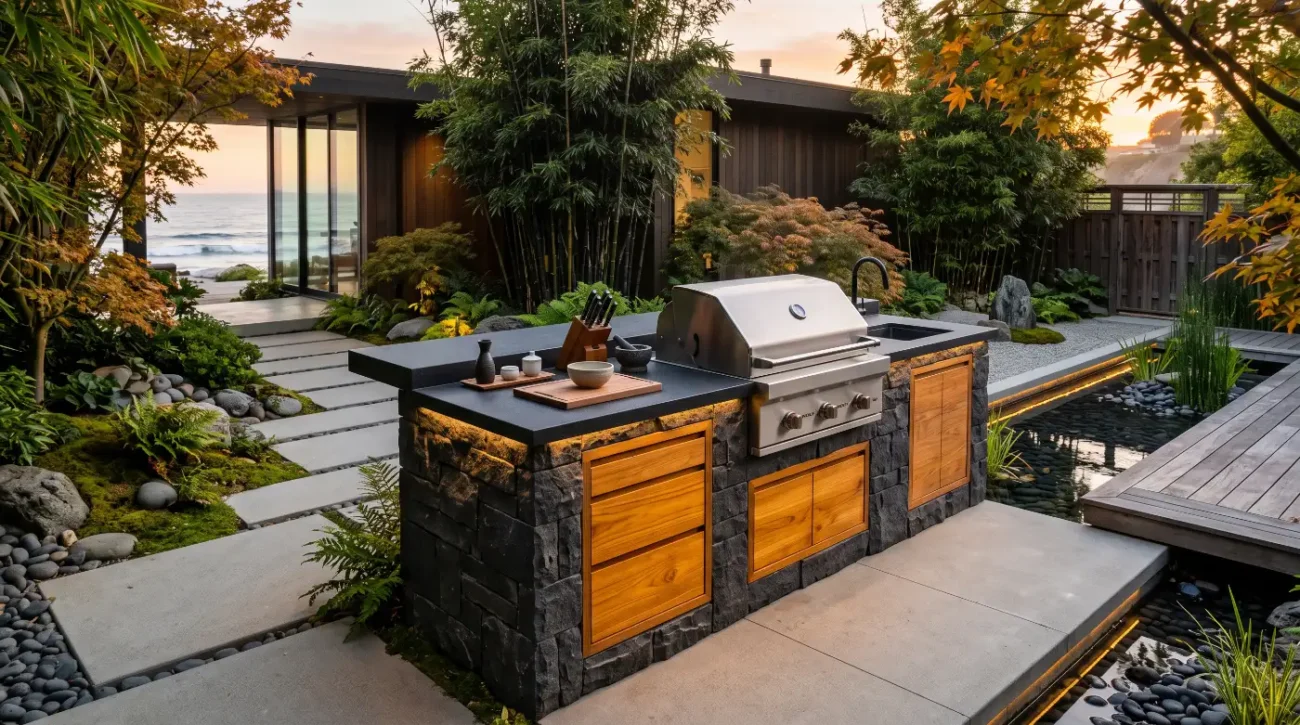
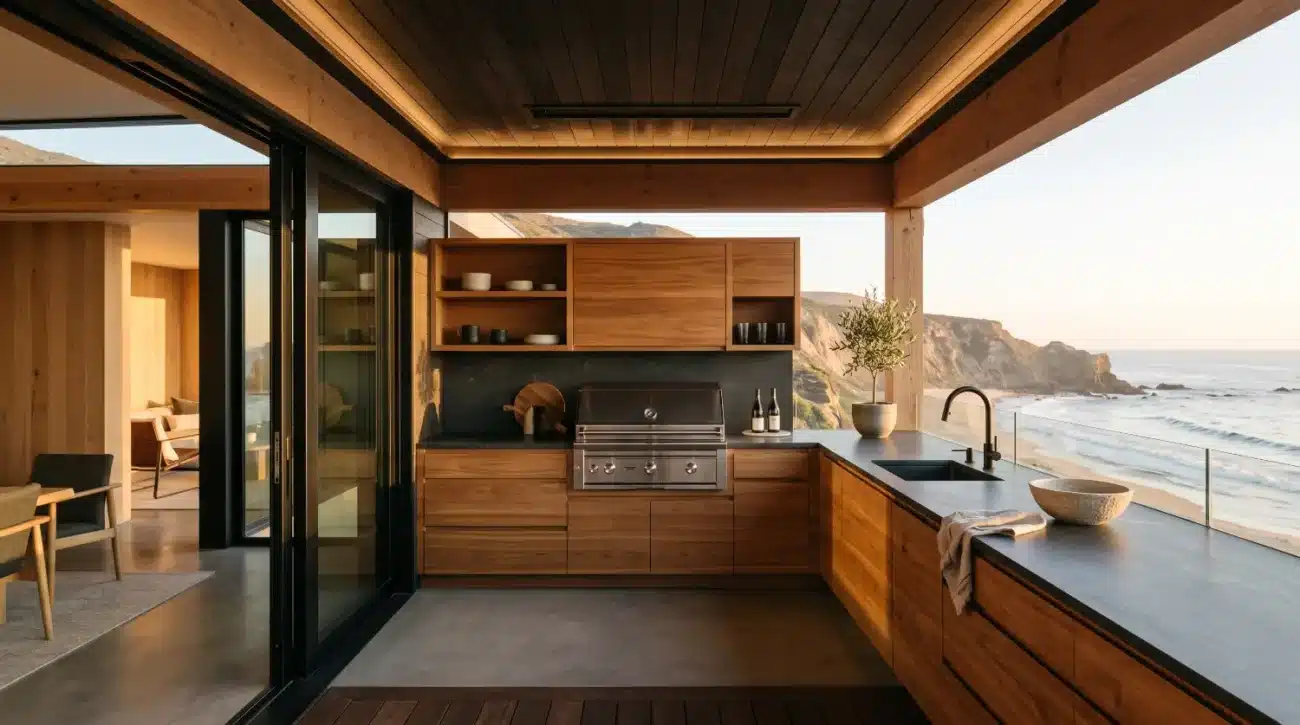
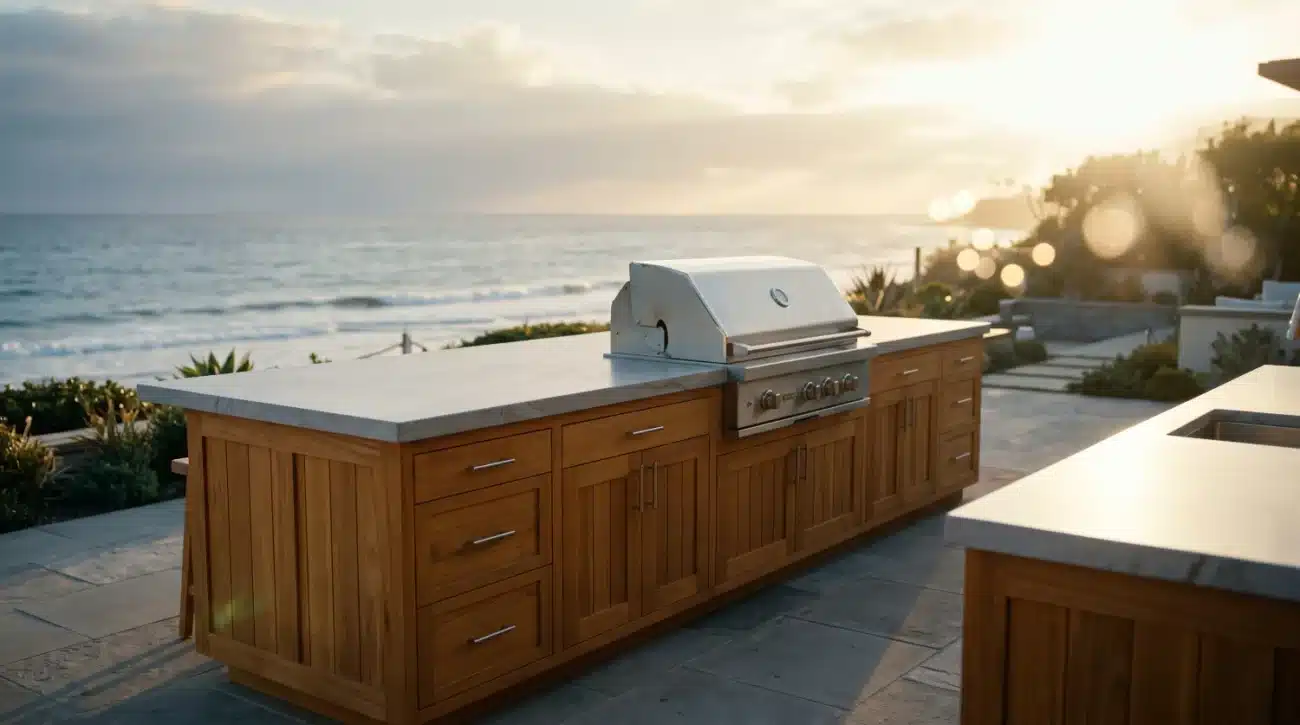
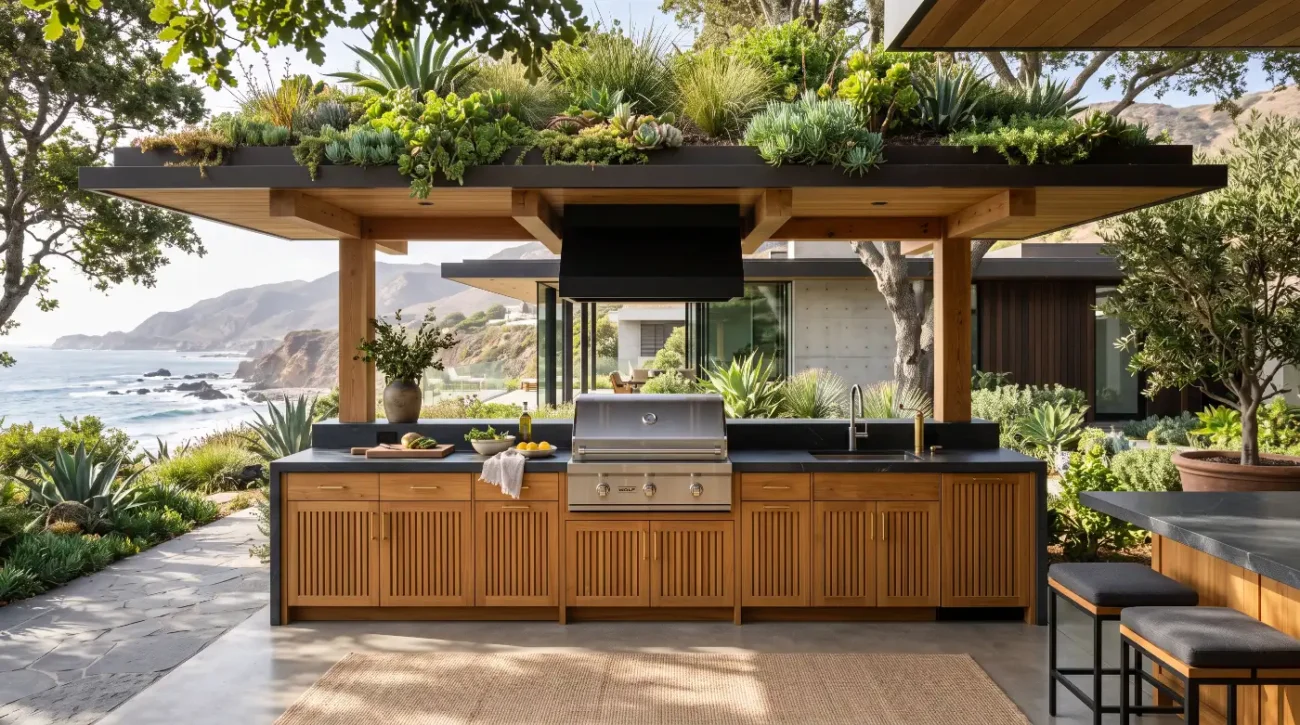
Executive Summary / Quick-Read Block
-
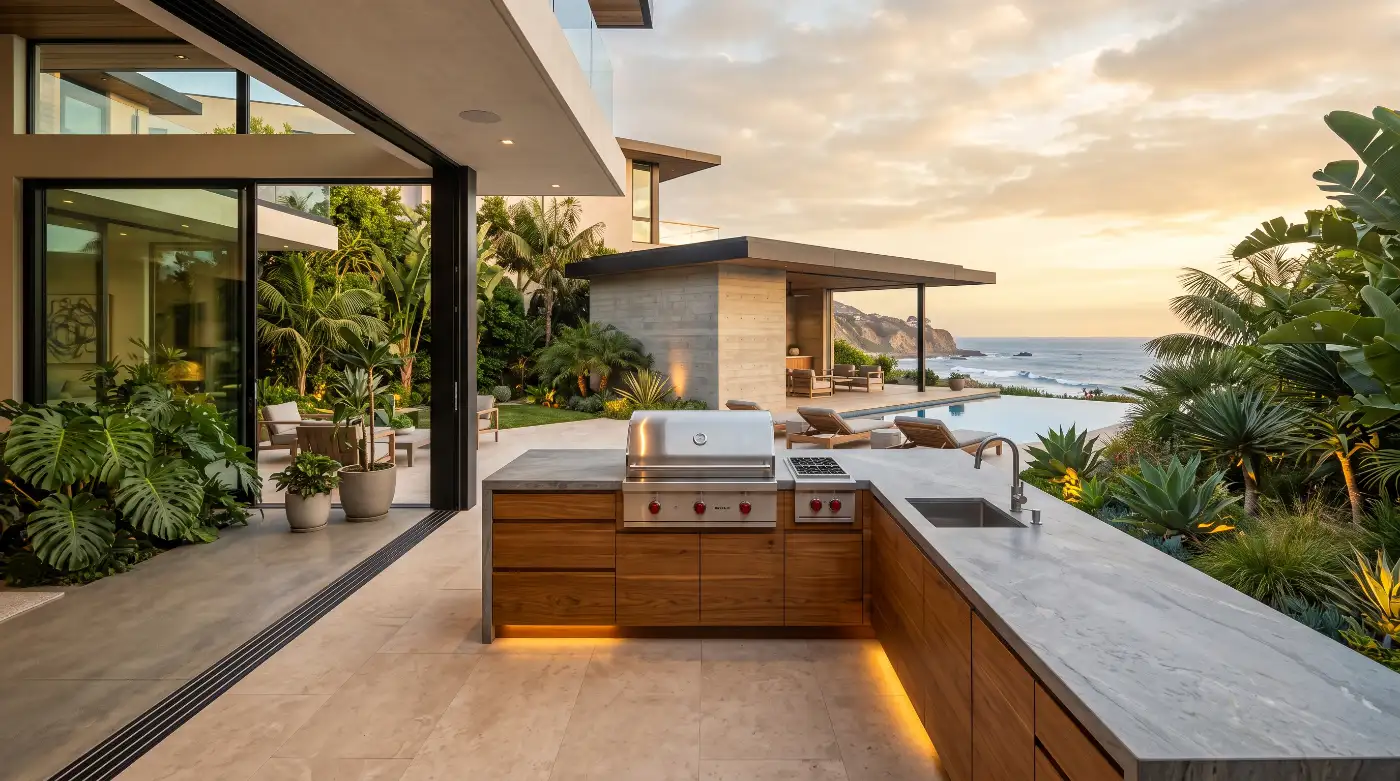
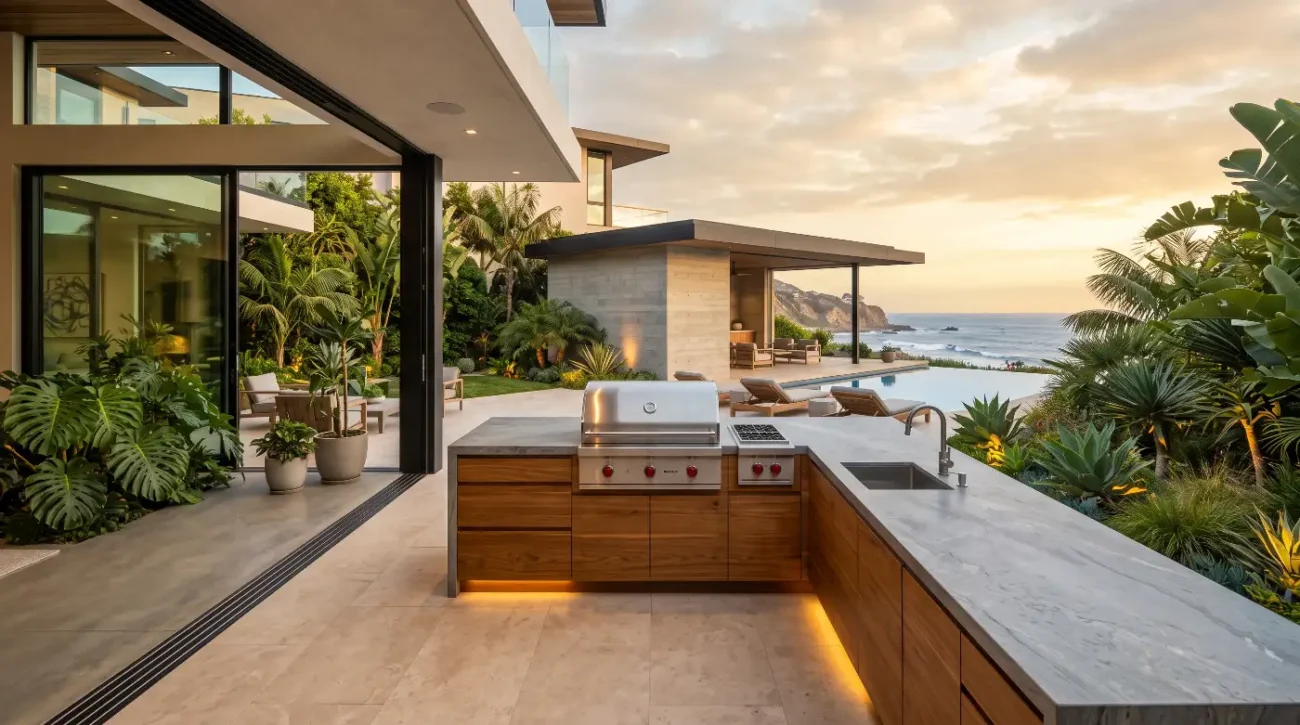
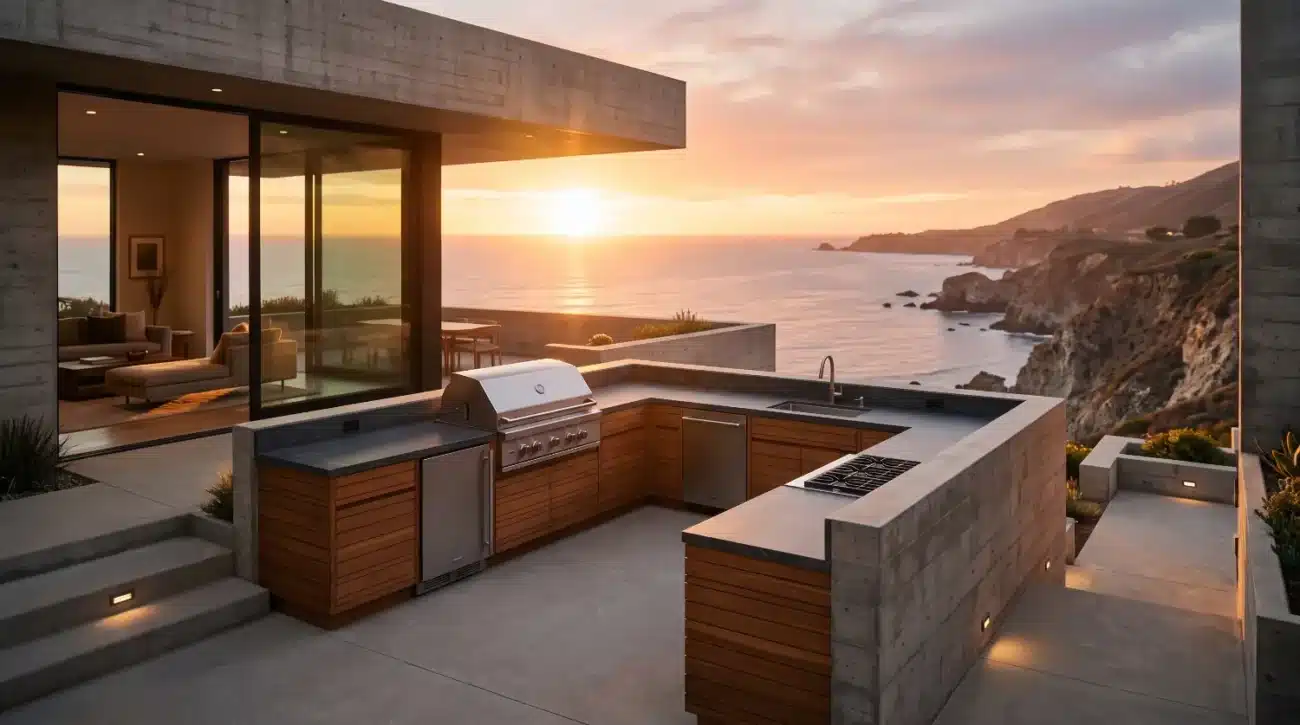
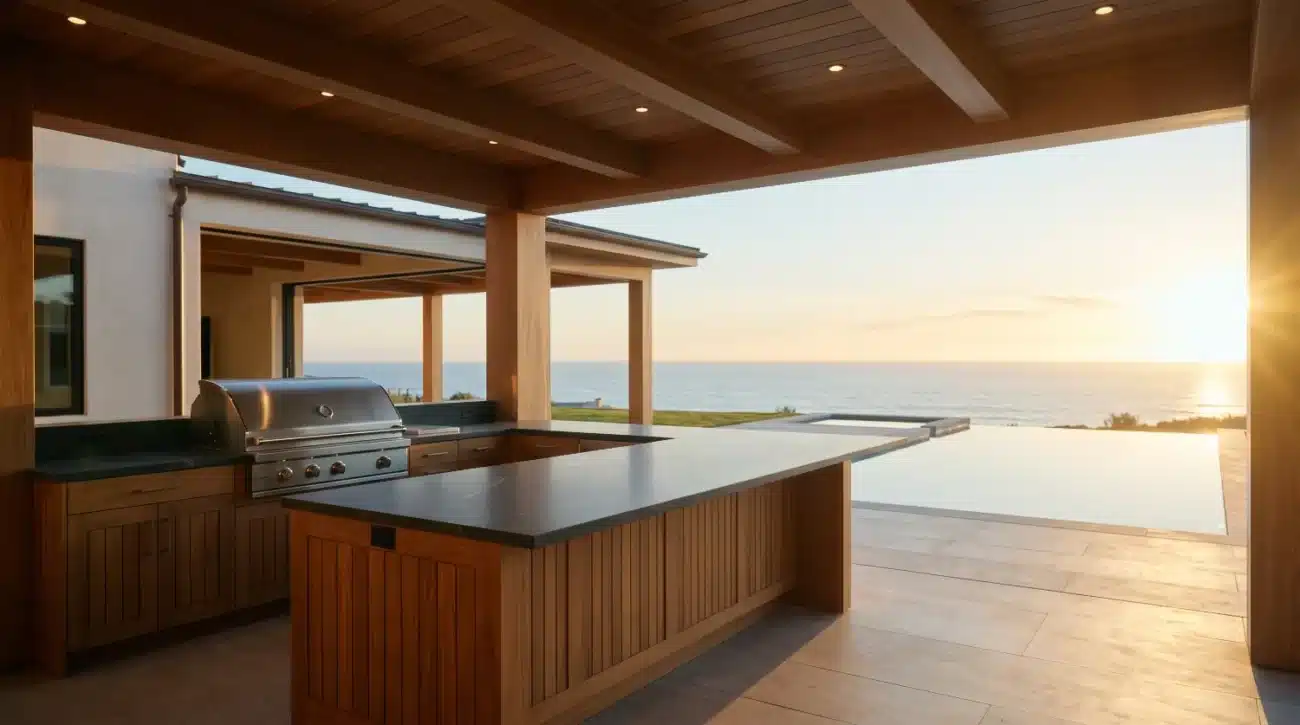
Seamless Architectural Continuity: Solid teak millwork bridges lush interior courtyards and open-air pool pavilions by extending structural lines through glass pocket doors.
-
Superior Environmental Engineering: Grade-A heartwood teak utilizes naturally dense rubber resin and silica deposits to prevent saltwater corrosion, delamination, and humidity warping.
-
Precision Load Bearing: Heavy stone countertops demand reinforced mortise-and-tenon framing paired with 316 marine-grade stainless steel leveling hardware to eliminate frame sag.
-
Integrated Venting Mechanics: Proper CAD specifications require specialized thermal breaks and high-CFM ventilation paths to shield natural wood fibers from intense grill radiant heat.
Tropical Modernism Outdoor Kitchen Teak Specification Guide
When an expansive glass wall glides into a concealed pocket in a coastal Malibu residence or a sun-drenched Miami estate, the line between interior sanctuary and tropical landscape disappears. In high-end tropical modernism architecture, material continuity is the ultimate foundation of spatial harmony. A frequent material failure occurs when specifiers attempt to extend interior-grade cabinetry or inferior exterior modular units into raw, open-air environments. Inferior woods warp under relentless humidity, while painted or composite materials blister and delamination occurs when exposed to coastal salt spray and tropical downpours.
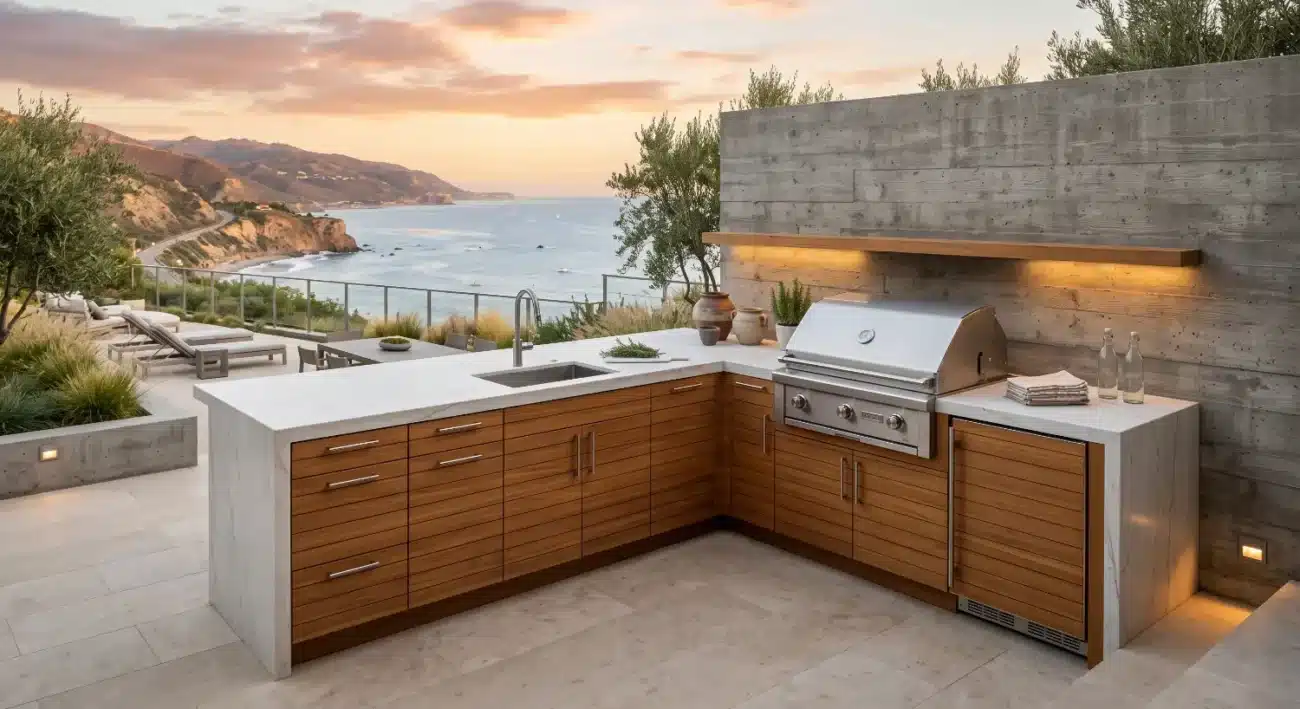
Tropical modernism relies on materials that age with dignity while surviving extreme environmental stress. Solid teak millwork provides the requisite warm organic balance against exposed board-formed concrete, cantilevered steel overhangs, and large-format porcelain slabs. Successfully executing these grand outdoor runs requires a deep understanding of wood anatomy, load-bearing joinery physics, structural thermal management, and precise CAD detailing.
Material Science and Structural Joinery for Tropical Modernism Millwork
Grade-A plantation teak (Tectona grandis) provides natural resistance against wood decay, moisture absorption, and salt-air oxidation due to its exceptionally high concentration of natural rubber resins, silica, and tactile oils contained within the dense heartwood fibers.
The natural composition of teak works systematically to defend the millwork structure against external climate conditions through three core material properties:
-
Tectonic Resins and Natural Oils: These organic compounds act as an internal hydrophobic water barrier, preventing ambient humidity and ocean spray from penetrating deep into the cellular structure of the timber.
-
Dense Silica Deposits: High concentrations of naturally occurring silica create a natural insect and pest deterrent while reinforcing the physical hardness of the grain.
-
Dense Heartwood Grain: High ring density ensures long-term structural dimensional hold, keeping cabinet doors and drawer face-frames square across varying seasonal moisture cycles.
Wood Anatomy and Environmental Resistance
Tropical modernism architecture often places cabinetry directly beside saltwater infinity pools, oceanfront loggias, or damp residential courtyards. Standard hardwoods expand, contract, and break down under these damp microclimates. Grade-A heartwood teak, harvested strictly from mature timber, naturally repels liquid moisture through high internal oil saturation and dense silica deposits. According to the research published by the USDA Forest Products Laboratory, teak exhibits some of the lowest volumetric shrinkage coefficients among commercial hardwoods, making it uniquely stable in high-humidity zones.
To maintain structural integrity along extended outdoor kitchen runs, architects must avoid surface film coatings such as polyurethane, epoxy, or heavy varnishes. These synthetic coatings lock internal moisture within the grain, causing catastrophic blistered peeling and internal fungal rot under thermal exposure. Pacific Teak Millworks leaves internal structural components unsealed, allowing the wood to breathe, while utilizing natural oil treatments for exposed surfaces. Specifiers can choose between preserving a warm golden-brown hue through periodic applications of specialized penetrating oils or permitting the raw wood to oxidize naturally into a silvery-grey patina that complements raw architectural concrete.
Load Management and Precision Joinery
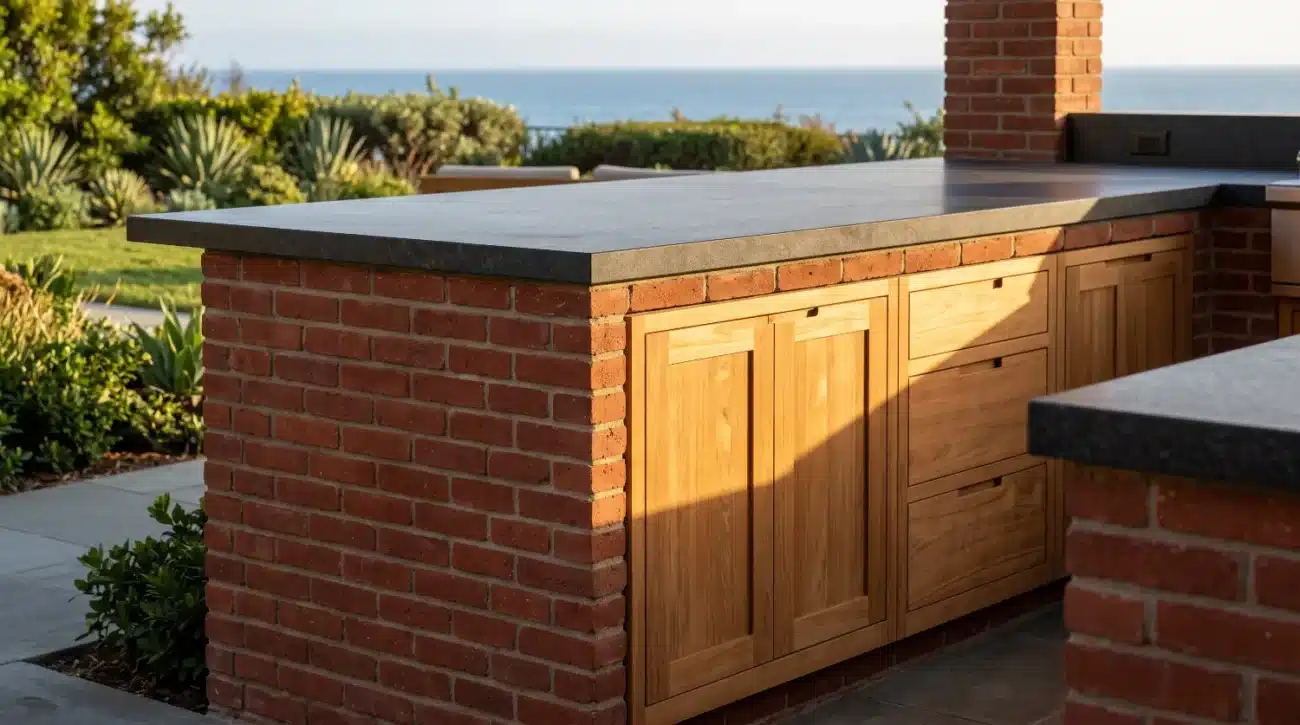
Outdoor kitchen islands in tropical modernism builds frequently feature immense slab countertops made of quartzite, dense granite, or five-centimeter-thick cast concrete. Supporting these heavy loads across continuous millwork runs requires advanced joinery designed to absorb shifting weights without binding internal drawer slides or throwing face-frames out of plumb.
The structural load path flows continuously through specialized mechanical details:
-
Top Countertop Surface Load: The primary downward force exerted by heavy stone or concrete slabs rests directly upon the upper frame rails.
-
Mortise-and-Tenon Face Framing: Traditional interlocking joint configurations redirect vertical weight down through solid timber stiles, preventing sag along extended cabinet runs.
-
Floating Panel Expansion Clearance: Dynamic side panels absorb ambient atmospheric motion without transferring mechanical strain to the primary structural joints.
-
Marine-Grade Leveling Feet: High-capacity 316 stainless steel leveling components anchor the base directly to the sub-floor, distributing total assembly weight evenly across uneven outdoor pavers.
-
Mortise-and-Tenon Framing: Every structural face-frame must utilize traditional, tight-tolerance mortise-and-tenon joinery anchored with marine-grade fasteners to distribute heavy vertical loads uniformly down to the base foundation.
-
Floating Panel Clearance: Door and wall panels require internal expansion gaps lined with weather-sealed rubber gaskets to accommodate micro-movements caused by seasonal thermal shifts without buckling the frame.
-
Marine Stainless Hardware: Every hinge, soft-close drawer slide, and adjustable leveling foot must be crafted exclusively from 316 marine-grade stainless steel to resist pitting corrosion in coastal environments.
Designers seeking to spec complete outdoor cooking layouts can review the Pacific Teak Millworks base cabinets collection to analyze load ratings, structural face-frame tolerances, and integrated leveling foot configurations engineered for high-capacity stone surfaces.
Architectural Integration and CAD Specification Workflows
Specifying solid teak cabinetry for tropical modern architecture requires precise CAD integration to maintain low-profile lines, manage high-BTU appliance ventilation, and ensure seamless coordination among trade contractors on site.
Architectural Alignment and Spatial Flow
Tropical modernism demands precise horizontal sightlines. Outdoor millwork should reflect the exact reveal spacing, toe-kick depths, and panel styles established inside the primary residence. When design teams establish continuous material transitions from an interior kitchen to an exterior pool pavilion, custom face-frames must accommodate uneven patio slopes without disrupting horizontal reveals.
Establishing continuous sightlines requires a clear three-step alignment protocol:
-
Indoor to Outdoor Threshold Transition: The continuous horizontal cabinet datum line originates inside the residence and crosses the sliding glass pocket door threshold into the exterior patio without breaking elevation.
-
Recessed Foundation Footings: Design base pads slightly below finished outdoor tile or stone pavers to conceal heavy-duty adjustable leveling hardware within a clean shadow-gap toe kick.
-
Sequential Flitch Grain Matching: Order custom runs where the outer teak face-frames and drawer fronts are milled from sequential timber flitches, ensuring perfectly continuous horizontal grain lines across the entire pavilion length.
-
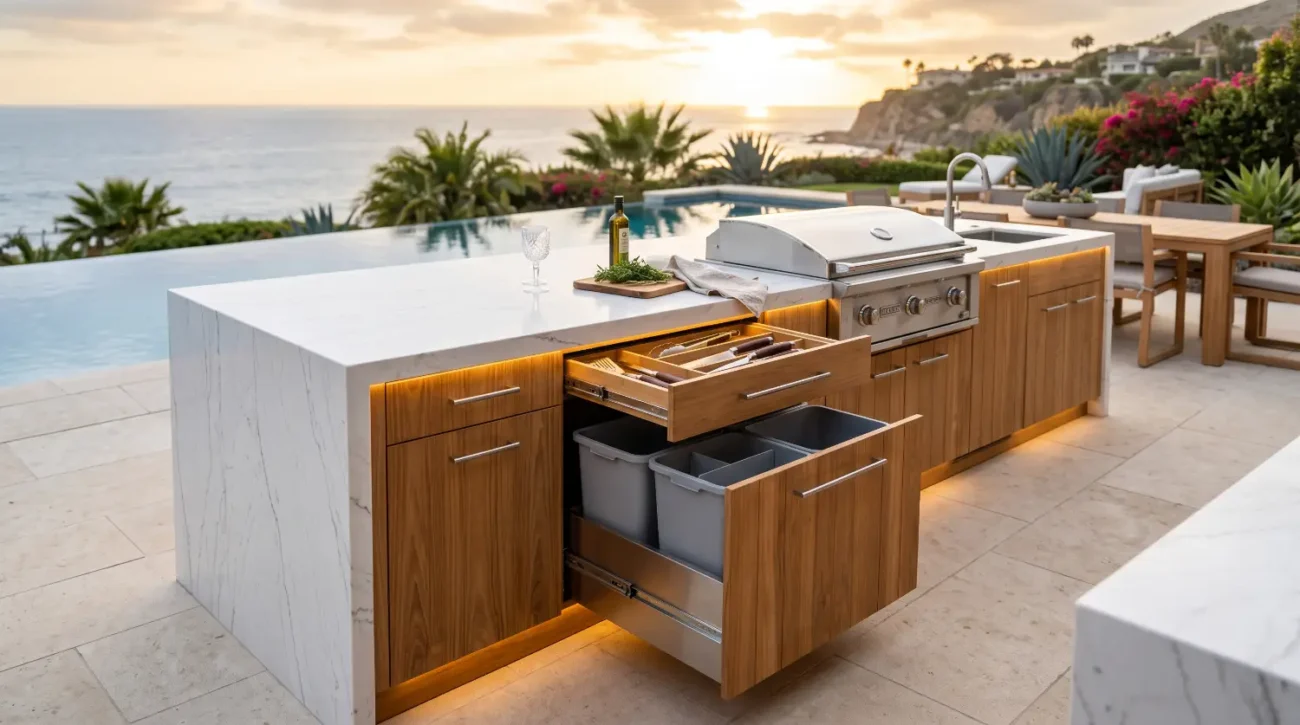
Integrated Appliance Framing: Specify custom insert cutouts that allow flush-mounted gas grills, under-counter refrigeration, and stainless steel trash drawers to rest directly within the teak frame without raw edge exposure.
For upper storage walls suspended against board-formed concrete or stacked stone piers, architects can reference the Pacific Teak Millworks wall cabinets collection to inspect high-capacity rear mounting cleats and internal weather-gasket details.
Thermal Management and Airflow Engineering
Integrating high-performance gas grills, ceramic smokers, and pizza ovens within solid teak cabinetry requires careful heat mitigation. Radiant heat trapped inside an unventilated wooden enclosure will scorch natural wood fibers, dry out internal resins, and create serious fire hazards.
Proper thermal regulation depends on an engineered convection path:
-
Ambient Air Intake: Cool air enters through subtle lower-plinth louvers integrated cleanly into the bottom teak base structure.
-
Insulated Thermal Shielding: A double-walled stainless steel jacket surrounds the high-BTU grill chassis, trapping direct heat before it transfers to the wooden face-frame.
-
Rear Convection Escape Vents: Heated air rises naturally behind the appliance and exits through high-flow cutouts located along the upper rear teak paneling.
-
Radiant Heat Insulation: Install double-walled stainless steel insulated jackets between the teak face-frame and high-BTU gas appliances to create a protective thermal barrier.
-
Rear Convection Vents: Detail high-flow ventilation cutouts in the rear teak paneling to allow hot air to escape naturally from behind the appliance chassis.
-
Combustion Air Intakes: Incorporate subtle lower-plinth louvers into the teak base structures to ensure gas burners receive adequate oxygen without compromising the clean, minimalist exterior aesthetic.
When detailing island islands surrounded by outdoor seating, trade professionals frequently utilize the Pacific Teak Millworks island inserts collection to incorporate stainless steel utility access doors, pull-out propane tank drawers, and sealed storage bins directly into custom masonry or wooden surrounds.
Specifier Protocols and Material Standards
To protect project integrity and maintain liability standards across complex residential builds, architects and specifiers should cross-reference verified sustainability frameworks such as the Forest Stewardship Council guidelines to verify responsibly sourced timber. Furthermore, specifying trade teams can verify material compliance, clearance requirements, and structural load metrics by reviewing the official Pacific Teak Millworks trade resources, which provide downloadable spec sheets and technical documentation for CAD/BIM integration.
For projects with accelerated construction schedules or complex site access restrictions, trade professionals should consult the official Pacific Teak Millworks cancellation and return policy PDF during the initial procurement phase to align delivery schedules with sub-contractor availability.
External References:
Key Takeaways
-
Grade-A Heartwood Integrity: Always specify mature, oil-rich heartwood teak over sapwood to ensure resistance against marine salt air, warping, and fungal decay.
-
Thermal Isolation Mandate: Utilize double-walled insulated stainless steel jackets and rear convection vents to protect solid wood framing from radiant grill heat.
-
Precision Load Planning: Implement traditional mortise-and-tenon structural framing supported by 316 marine-grade stainless hardware to hold heavy stone countertops without sagging.
-
Continuous Sightline Design: Align exterior cabinet reveals, toe-kick shadow gaps, and sequential flitch grain patterns directly with interior millwork to execute true tropical modernism continuity.
Whether you are a high-net-worth homeowner curating a resort-inspired outdoor sanctuary or an architect drafting technical CAD plans for a coastal estate, executing flawless solid teak millwork demands specialized engineering expertise. Pacific Teak Millworks partners directly with interior designers, landscape architects, and custom builders to deliver marine-grade outdoor cabinetry built to withstand the harshest environments. To request wood finish samples, access technical CAD files, or discuss trade program terms for your next project, visit our Pacific Teak Millworks contact page or connect directly with our design engineering team today.