Executive Summary
-
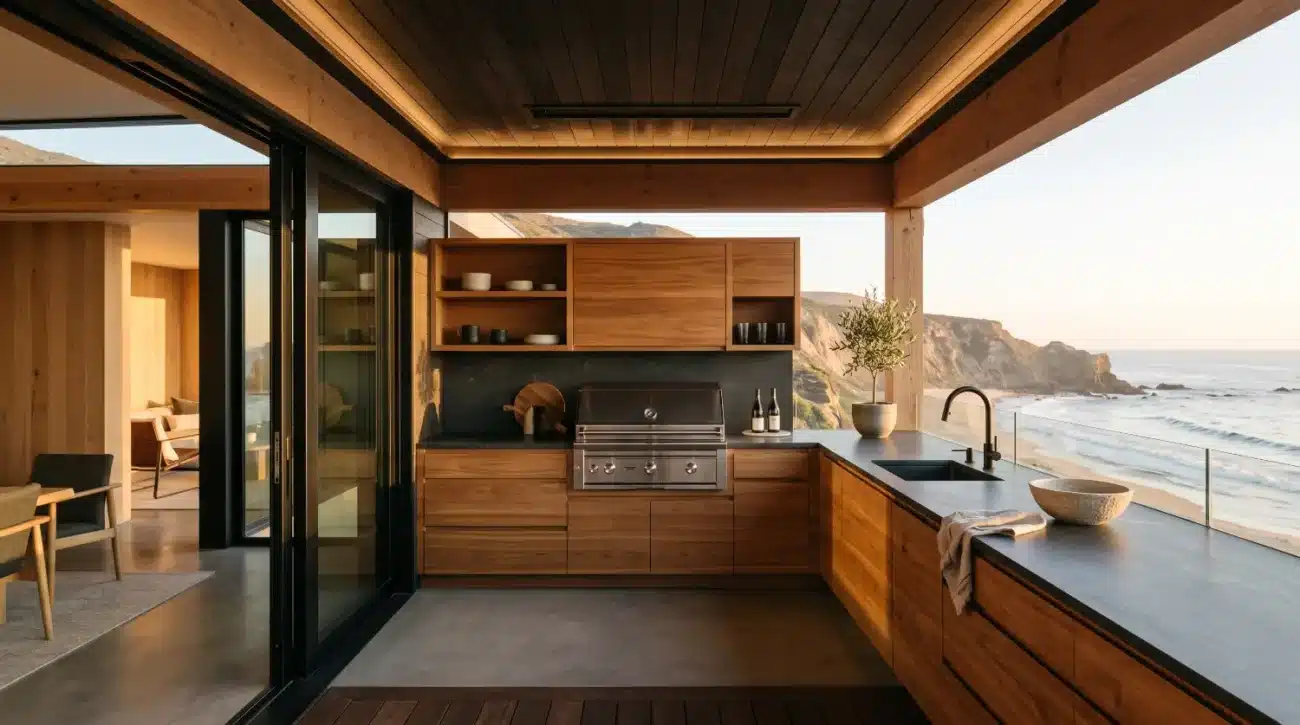
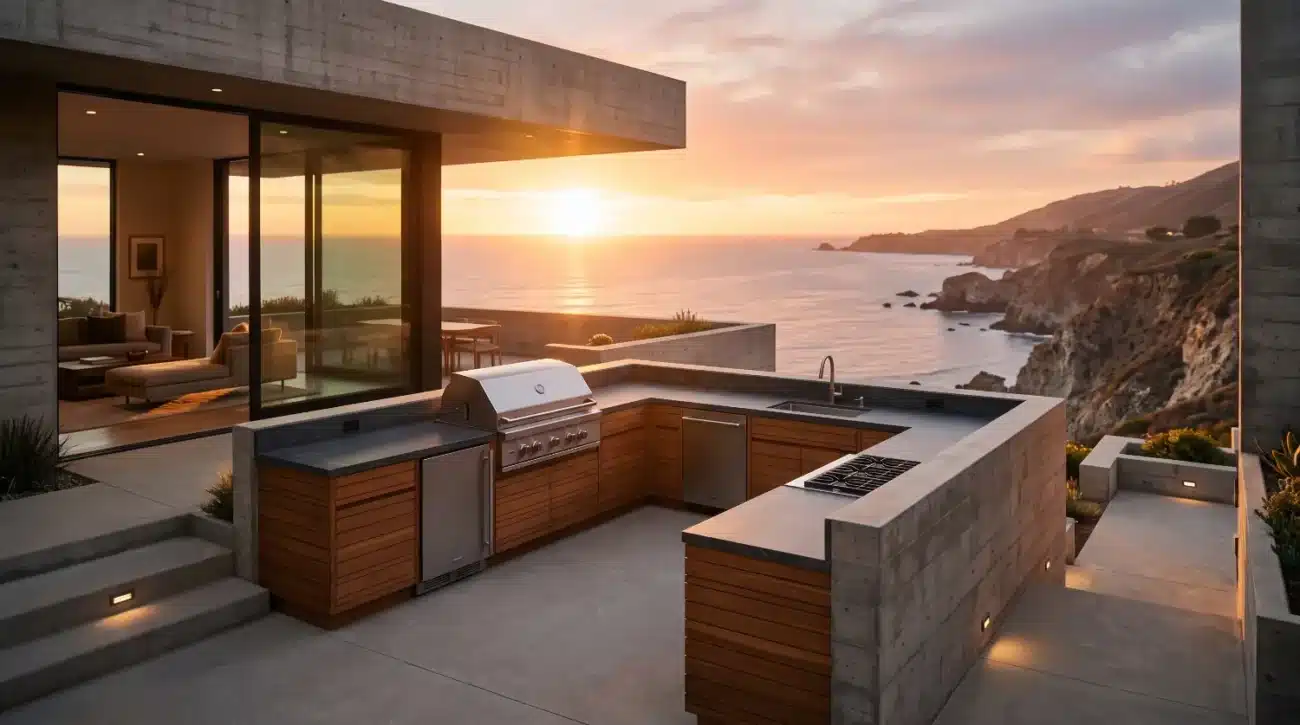
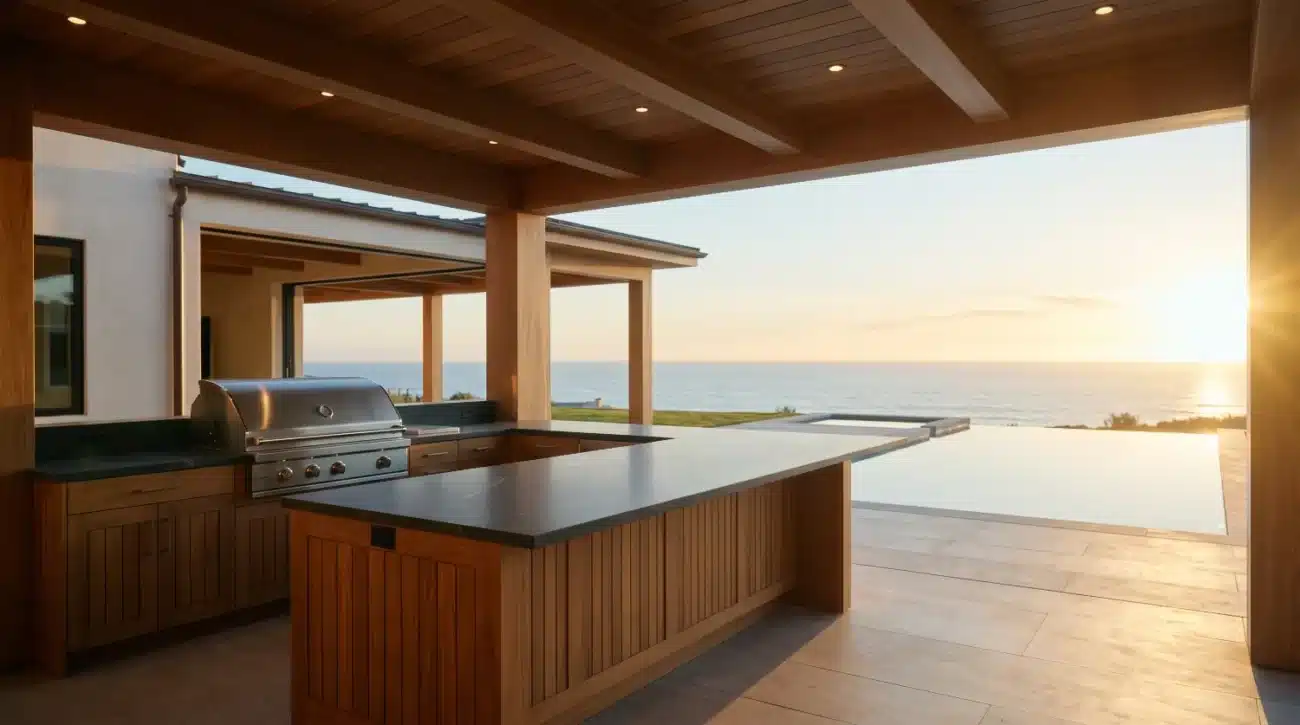
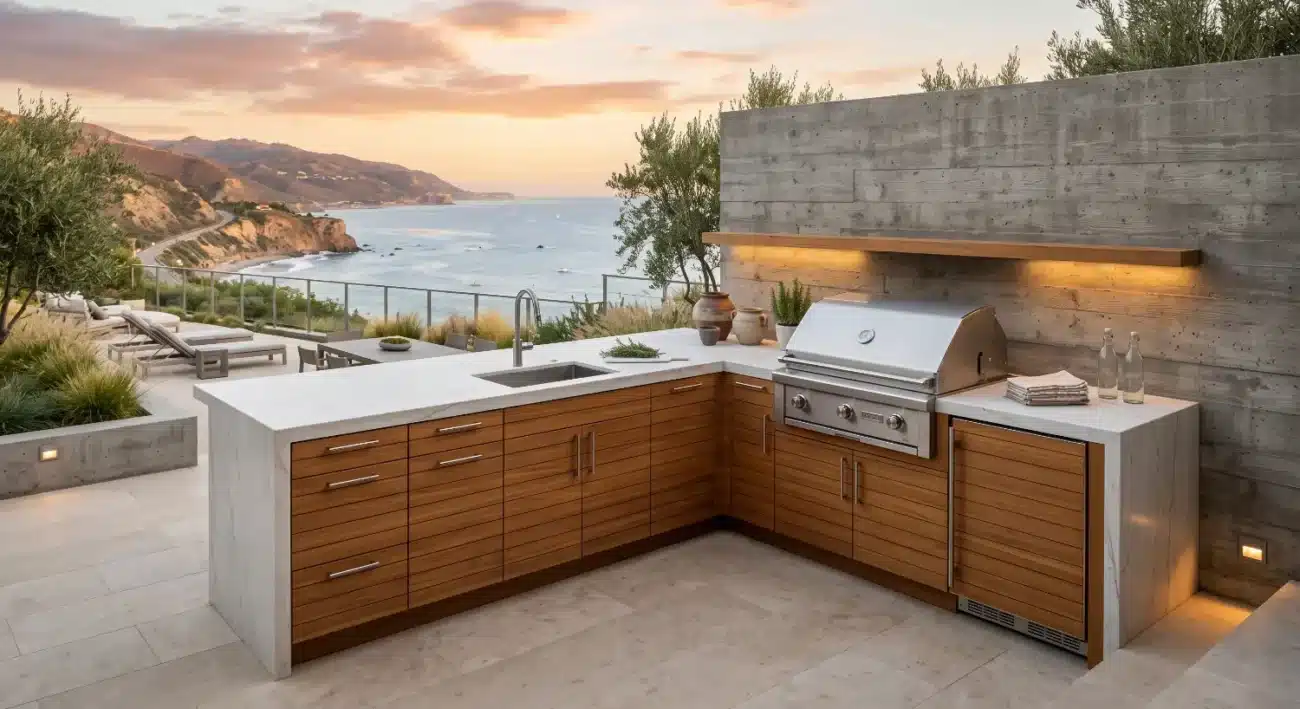
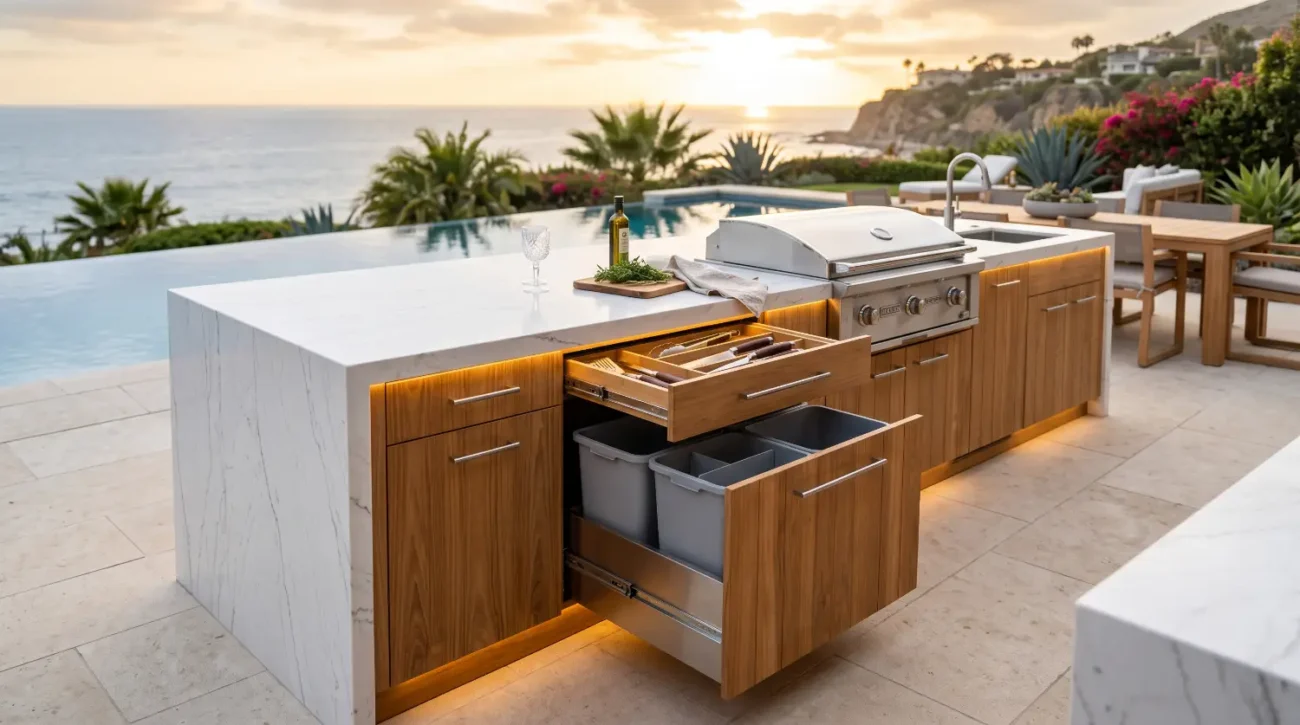
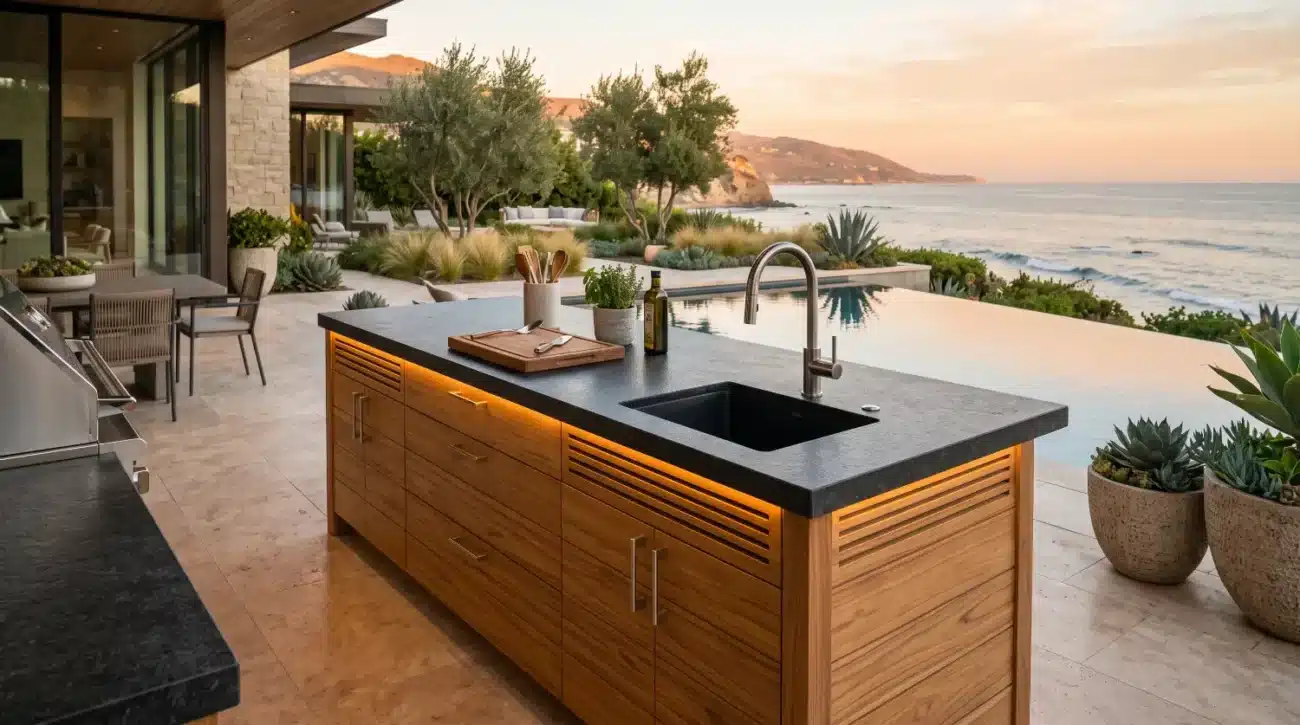
Architectural Harmony: Integrating solid Grade-A teak cabinetry into historic Craftsman outdoor kitchens respects original artisan joinery while providing ultimate weather resistance.
-
Material Science: Natural rubber and high silica contents make solid teak impervious to salt air, UV degradation, and seasonal moisture expansion without film-forming finishes.
-
Engineering Standards: Custom mortise-and-tenon construction and 316 marine-grade hardware support heavy stone countertops and ensure structural longevity in extreme coastal climates.
-
Trade Integration: Seamless collaboration between specifiers and craftsmen utilizes custom CAD planning and precision ventilation to bridge historic restoration and modern luxury.
Transforming a Historic Craftsman Patio with Custom Craftsman-Style Teak Cabinets
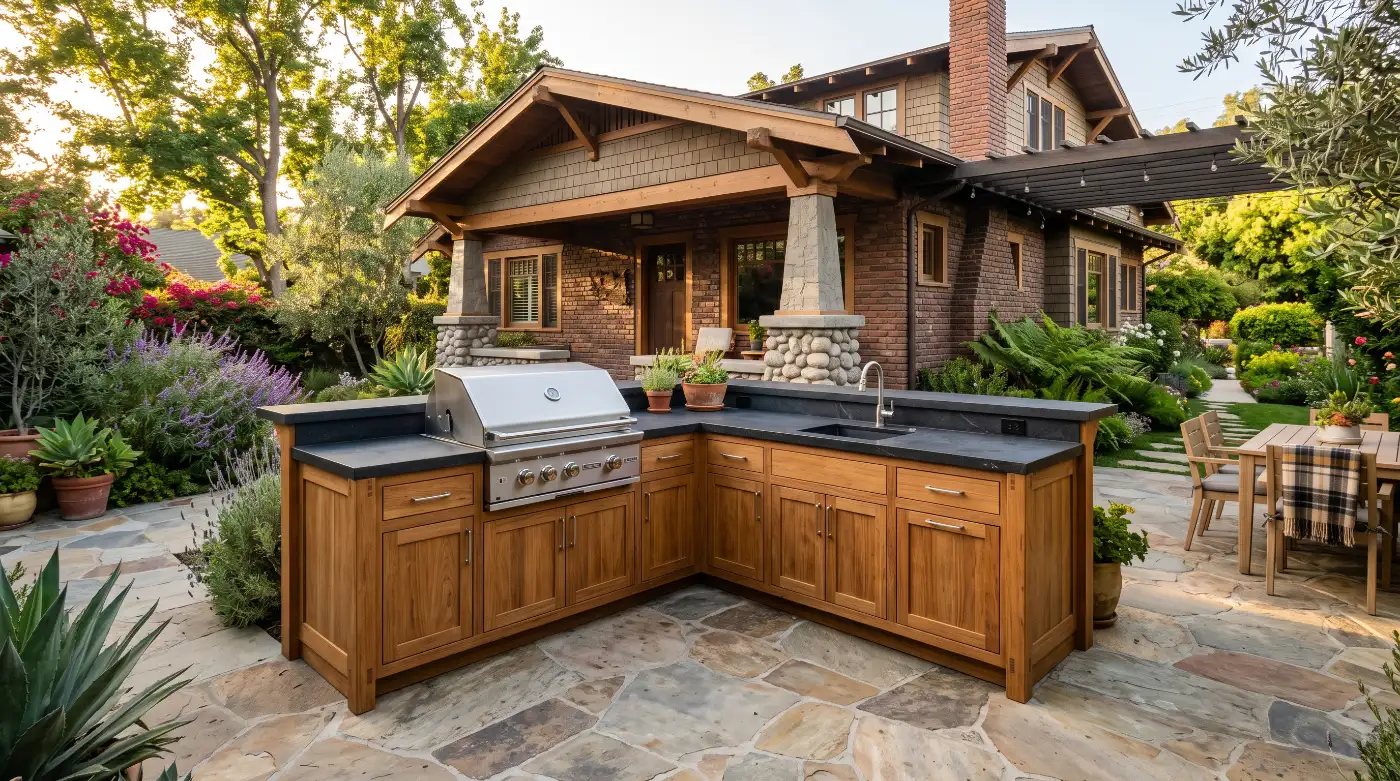
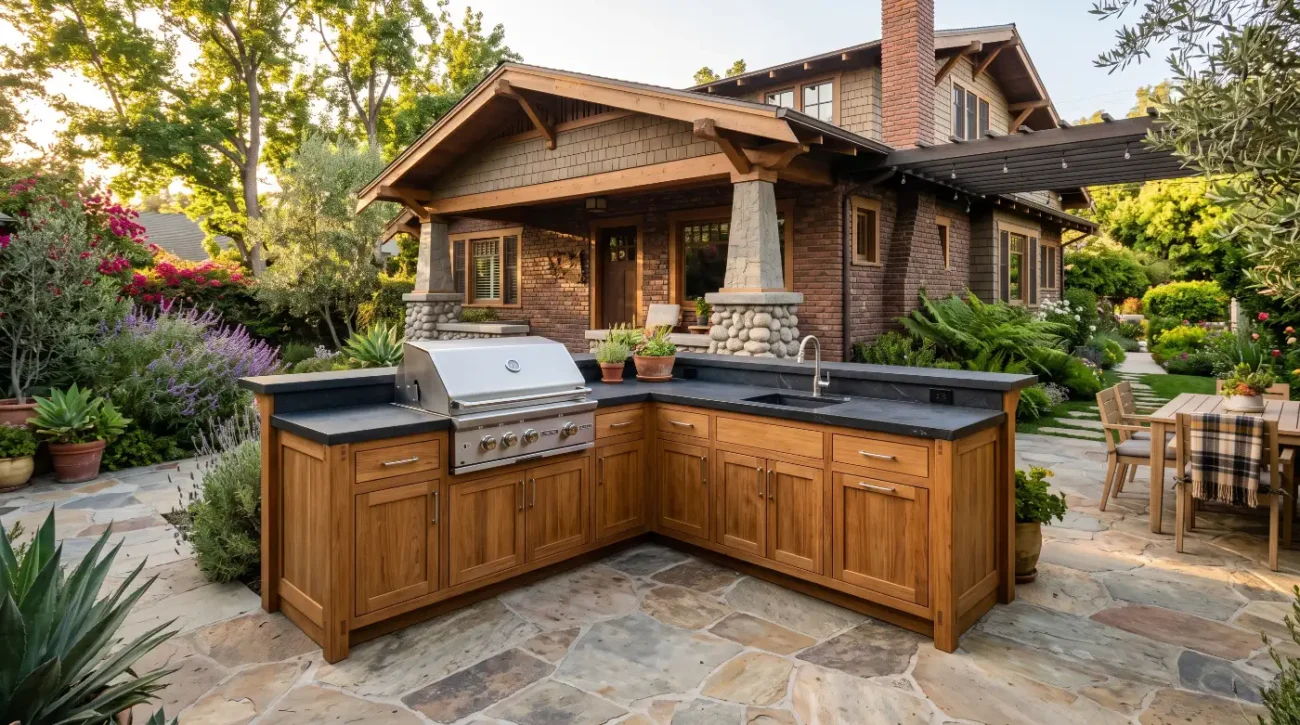
When an award-winning landscape architect in Pasadena set out to expand a restored 1912 Greene & Greene bungalow, the design brief appeared deceptively simple: create an outdoor culinary sanctuary that felt completely indigenous to the historic estate. The initial attempt relied on pre-fabricated, modular outdoor cabinets finished with an exterior wood veneer. Within fourteen months of exposure to Southern California sun and winter rains, the surface veneer delaminated, cheap fasteners rusted, and the internal framing warped under the weight of a three-hundred-pound soapstone countertop. Replacing this failed setup required more than new cabinetry—it demanded an uncompromising commitment to authentic artisan joinery, material science, and architectural continuity.
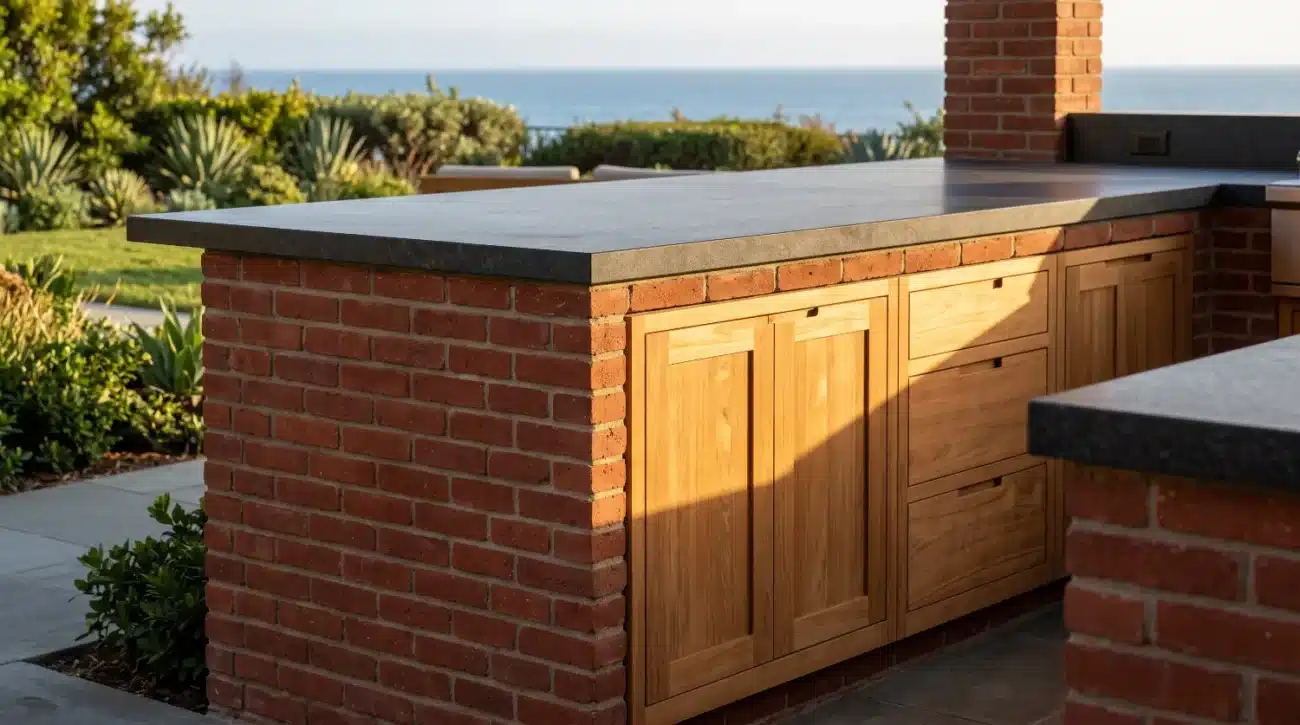
By specifying custom craftsman style outdoor kitchen wood cabinets built from solid Grade-A teak, trade professionals and discerning homeowners can bridge the gap between historic architectural integrity and modern exterior resilience. Craftsman architecture is fundamentally defined by structural honesty, hand-selected natural materials, exposed joinery, and broad, grounded proportions. Bringing these principles outdoors requires materials that match the visual weight of historic clinker brick, river rock, and exposed rafter tails, while standing up to heat, rain, and salt-laden ocean air.
The following core principles summarize the foundation of exterior Craftsman design:
-
Architectural Integration: Custom Craftsman-style outdoor cabinetry honors historic bungalow architecture through heavy face-frames, exposed joinery details, and broad, grounded proportions.
-
Material Superiority: Grade-A plantation teak contains dense natural oils and silica, offering permanent resistance to rot, UV degradation, and coastal salt corrosion.
-
Structural Engineering: Structural stability requires traditional mortise-and-tenon joinery paired with 316 marine-grade stainless steel hardware to sustain heavy natural stone counters.
-
Aesthetic Longevity: Preserving historic aesthetics involves choosing between a warm golden hand-rubbed oil finish or allowing the timber to age naturally into a silver patina.
Mastering the Architectural Language of Outdoor Craftsman Cabinetry
Craftsman-style outdoor kitchen wood cabinets honor historic bungalow design by utilizing solid Grade-A teak constructed with hand-mortised joinery, thick face-frames, and broad structural stiles that visually anchor exterior living spaces.
Craftsman-style outdoor cabinetry adapts early twentieth-century Arts and Crafts design principles to exterior environments by combining heavy-timber face-frames, subtle chamfered edges, and exposed mortise-and-tenon joinery with solid Grade-A teak. This construction method delivers structural honesty, supporting heavy granite, slate, or concrete countertops while naturally resisting exterior weather degradation.
The Arts and Crafts movement arose as a direct rejection of mass-produced, industrial furniture, celebrating instead the deliberate mark of the master woodworker. When designing an outdoor kitchen for a historic Craftsman home, off-the-shelf stainless steel modules or thin composite boxes create a jarring visual conflict against hand-laid brick, stained cedar shingle siding, and tapered stone porch columns. Solid wood cabinetry restores visual harmony, bringing the warmth, organic texture, and structural weight of indoor millwork out into the open air.
Achieving authentic Craftsman aesthetics in an exterior space requires careful attention to scale, balance, and shadow lines. Indoor Craftsman cabinetry relies on heavy face-frames, inset door profiles, slight chamfers along stile edges, and substantial horizontal rails. Translating these features to an outdoor patio demands even greater material thickness to handle environmental stresses. Utilizing thick solid teak frames ensures that door panels remain dimensionally stable across extreme seasonal humidity shifts, while providing the necessary visual mass to complement adjacent architectural features like pergola posts and stone hearths.
Integrating custom outdoor cabinetry into an existing historic footprint also requires precise coordination among architects, interior designers, and general contractors. Homeowners frequently collect design inspiration showcasing indoor hearths and cozy bungalow interiors, expecting that same detailed cabinetry aesthetic in their open-air living spaces. Specifying custom wall cabinets for outdoor kitchens allows designers to match existing interior casing lines and window trim, creating an effortless transition from indoor dining rooms to outdoor loggias.
-
Thick Face-Frame Geometry: Utilizing substantial solid teak stiles and rails creates deep shadow lines that ground the cabinetry against heavy stone or brick surroundings.
-
Exposed Mortise-Joint Aesthetics: Incorporating traditional interlocking joinery details reflects authentic Arts and Crafts construction techniques while providing superior shear strength.
-
Integrated Inset Door Panels: Designing recessed door panels allows the natural movement of solid wood without compromising flush door alignments or hardware clearances.
-
Harmonized Trim Profiles: Aligning cabinet crown moldings and base skirts with existing bungalow architectural details ensures cohesive continuity across the entire property.
Material Science and Structural Engineering in Exterior Joinery
Grade-A teak (Tectona grandis) provides unmatched environmental resistance due to high natural rubber resins and silica content, which prevent moisture absorption and structural warping in exterior installations.
Grade-A teak is essential for outdoor cabinetry because it is harvested exclusively from the dense heartwood of mature Tectona grandis trees. High concentrations of natural tectonic oils and microscopic silica crystals seal the cellular structure against water absorption, coastal saltwater corrosion, fungal rot, and insect damage without requiring synthetic surface coatings.
The harsh reality of exterior cabinetry design is that water and UV radiation destroy sub-standard materials rapidly. Standard domestic hardwoods like white oak, mahogany, or maple—frequently used in indoor Craftsman homes—suffer from rapid dimensional movement, grain raising, and rot when exposed to continuous outdoor weathering. According to testing protocols established by the USDA Forest Products Laboratory, teak stands virtually alone in its combination of low volumetric shrinkage, high bending strength, and natural decay resistance.
The secret to teak’s legendary longevity lies within its microscopic cellular structure. As Grade-A teak trees mature, they deposit heavy natural resins, rubbers, and silica directly into the heartwood fibers. This natural saturated oil content creates a natural hydrophobic barrier, repelling liquid moisture and preventing the freeze-thaw expansion cycles that split ordinary timber. Furthermore, the high silica content naturally deters wood-boring insects and termites, ensuring that custom millwork maintains its structural core for decades without requiring toxic chemical treatments.
The core technical performance characteristics of Grade-A teak include:
-
Volumetric Shrinkage Rate: Exceptionally low volumetric shrinkage rate of five and three-tenths percent, minimizing warping, twisting, and panel separation during seasonal humidity changes.
-
Natural Rubber and Resin Content: Exceedingly high density within heartwood, offering built-in water repulsion without synthetic chemical sealants.
-
Hardware Compatibility: Requires three-sixteen marine-grade stainless steel fasteners and hinges to prevent galvanic corrosion and wood staining around screw holes.
-
Structural Load Limit: High flexural strength capable of supporting heavy natural stone, soapstone, and poured concrete countertops.
From a joinery perspective, building outdoor cabinetry requires accommodating natural wood movement. Wood is a hygroscopic material; it expands across its grain during humid summer months and contracts during dry winter dry spells. Applying rigid film-forming sealers like polyurethane or marine spar varnish onto exterior teak is a common, costly mistake. Over time, UV radiation breaks down the adhesive bond between the film coating and the oily wood surface, trapping moisture underneath. This trapped moisture causes internal rot, unsightly black fungal spotting, and severe finish flaking.
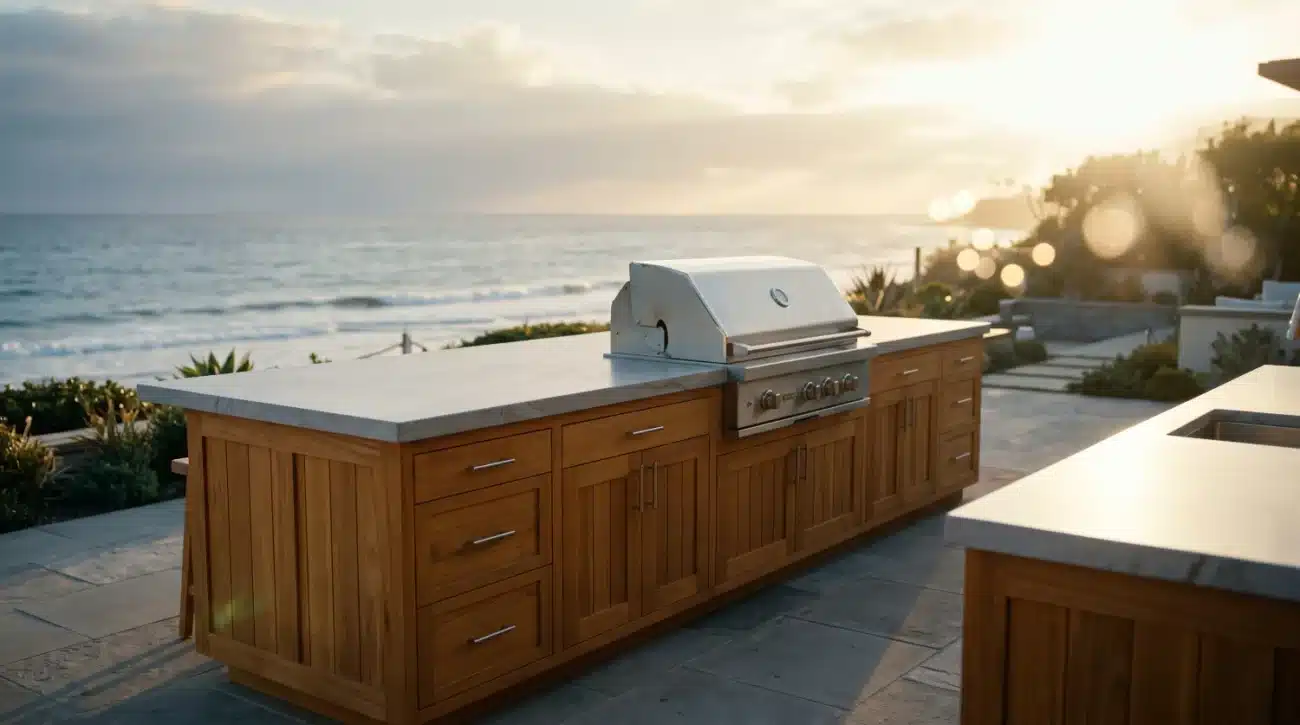
Instead of film coatings, true exterior woodworking relies on open-joint mechanics and structural allowance for movement. Cabinet doors must be engineered with floating center panels that expand and contract freely inside deeply grooved frame stiles. When supporting extremely heavy countertops like soapstone, thick granite, or cast concrete—materials highly favored in Craftsman architecture—the cabinet box must transfer vertical loads directly to leveling legs and floor structures, rather than relying on face-frame fasteners alone. Custom island inserts for outdoor kitchensprovide reinforced internal bracing designed to carry heavy appliances and dense masonry work without sagging or binding drawer slides.
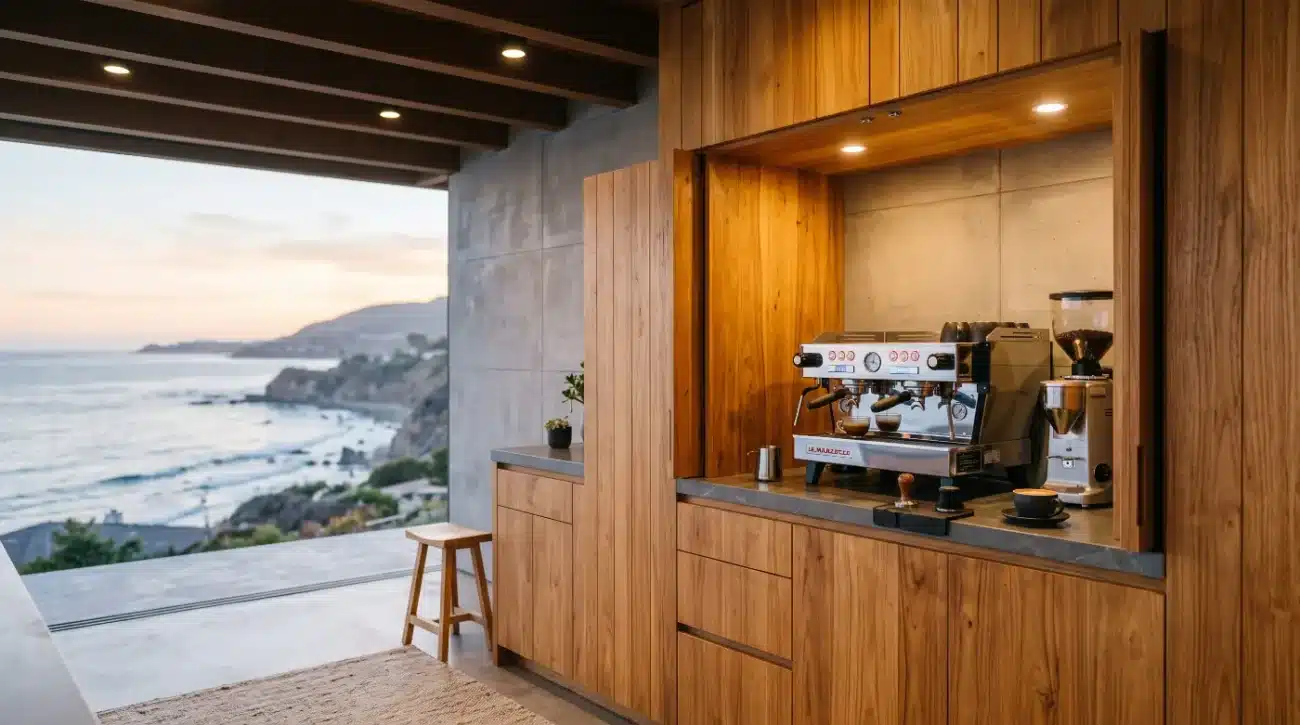
Trade specifiers managing complex site installations must also account for marine-grade hardware specifications. Utilizing standard three-zero-four stainless steel hardware in coastal environments like Malibu or the Florida coast will result in tea-staining and surface pitting within months. Only three-sixteen marine-grade stainless steel soft-close hinges and full-extension drawer glides offer the necessary molybdenum content to withstand airborne salts and harsh cleaning agents. Pairing high-grade hardware with responsibly harvested timber certified by organizations such as the Forest Stewardship Council guarantees that the installation is environmentally sustainable and built to endure extreme weather elements.
-
Floating Center Panel Construction: Engineered door frames allow wood panels to move naturally with ambient humidity without binding or pushing frame joints apart.
-
316 Marine-Grade Hardware: Soft-close hinges and heavy-duty drawer glides engineered with molybdenum resist pitting and rusting in high-salinity air.
-
Open-Cell Breathability: Omitting film-forming varnishes prevents moisture entrapment, allowing natural teak oils to protect the core wood without peeling.
-
Concealed Load-Bearing Structures: Internal vertical supports distribute the weight of heavy soapstone or concrete countertops safely down to the foundation.
Architectural Workflows, Finishing Protocols, and Care Strategies
Selecting between golden oil protection and natural silver oxidation dictates the long-term maintenance protocol for exterior Craftsman teak cabinetry.
Maintaining Craftsman teak cabinetry involves choosing either periodic oiling to preserve its rich, warm golden-brown hue or allowing natural sunlight and rain to convert the wood surface to a distinguished silver-grey patina. Both options preserve the underlying structural integrity of Grade-A teak due to its internal natural resins.
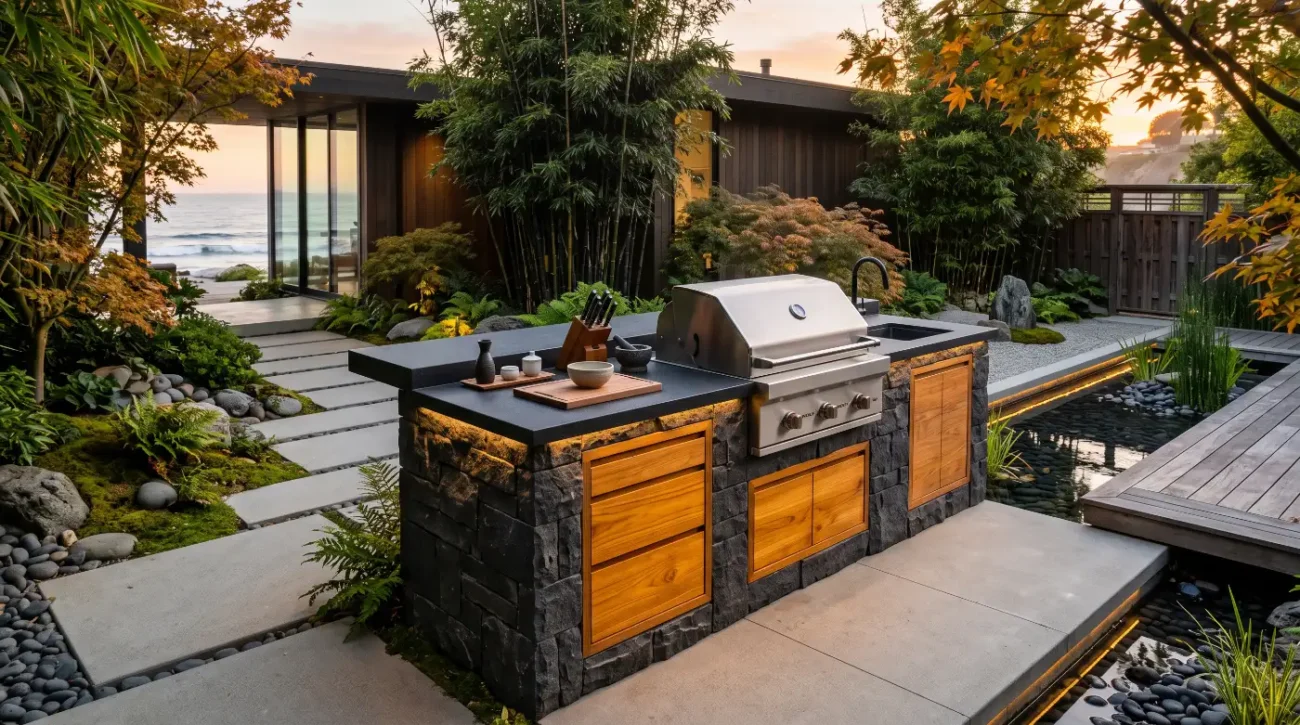
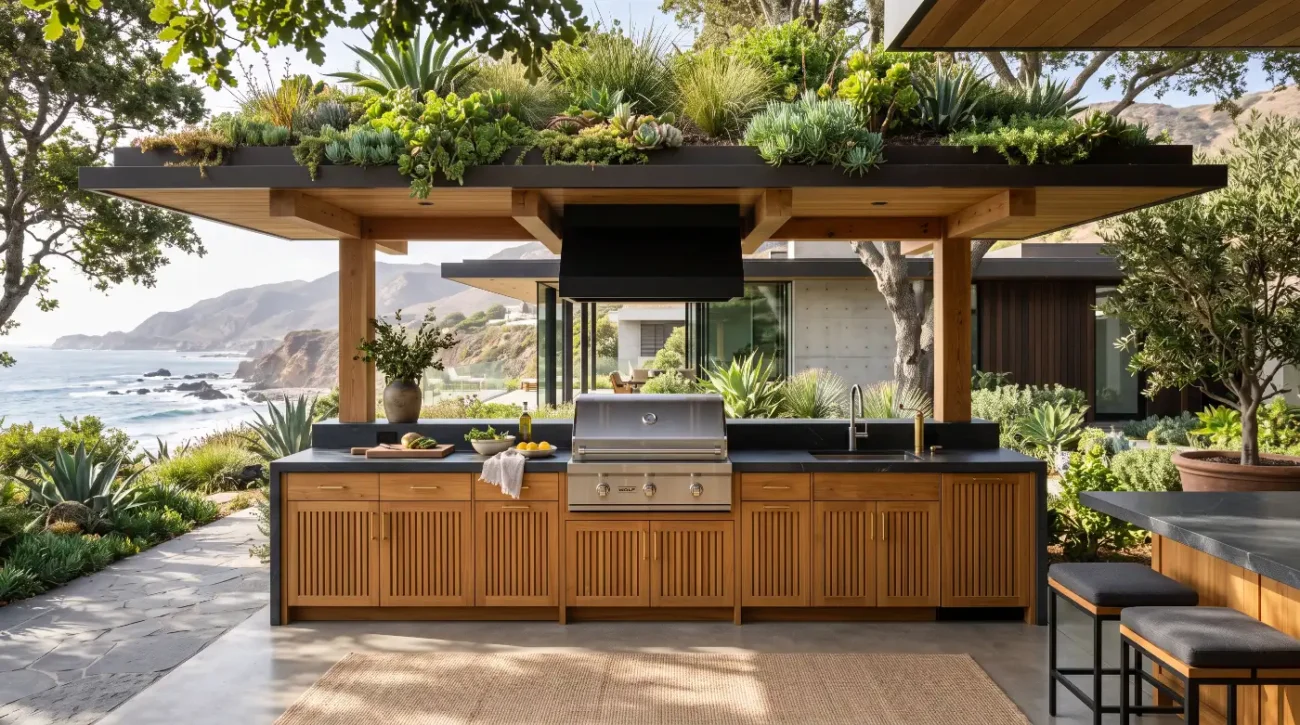
Integrating custom Craftsman outdoor cabinetry into a home renovation requires tight coordination between the project design team and master millworkers. Architectural firms and interior specifiers rely on detailed CAD and BIM drawings to establish appliance cutout tolerances, utility routing channels, and weight distributions long before timber is cut. For gas grill installations, incorporating rear and side ventilation channels within the teak enclosure is critical. Trapping heat beneath an unventilated grill island creates structural stress on cabinet frame joints and presents serious safety risks.
Once the physical millwork is installed, homeowners face an aesthetic decision regarding finish maintenance: preserving the warm golden luster of freshly milled teak or allowing the wood to naturally oxidize into a silvery-grey patina. In traditional Craftsman architecture, both finishes offer unique benefits. A golden-brown finish highlights the deep, rich grain patterns of the wood, complementing warm copper rain gutters, warm oak door casings, and earth-toned tilework. Achieving this look requires periodic applications of specialized exterior teak oils, which replenish surface resins lost to sun exposure.
The four essential steps of finishing and restoration include:
-
Initial Surface Preparation: Wash raw or newly installed teak with mild soapy water and a soft-bristle brush to remove surface dust and loose fibers.
-
Natural Oxidation Path: Leave raw timber unsealed so UV rays will gradually alter the surface to a silvery-grey patina over six to twelve months without affecting internal wood strength.
-
Warm Golden Preservation Path: Apply high-grade penetrating teak oil every six to twelve months, wiping away excess oil to prevent sticky surface build-up.
-
Deep Restoration Protocol: Restore heavily weathered or neglected silver teak by treating it with a gentle teak cleaner and brightener, followed by a light sanding along the grain and re-oiling.
Conversely, allowing teak to weather naturally into a silvery-grey patina aligns with the biophilic design ethos of the Arts and Crafts movement. As UV rays react with the surface fibers, oxidation creates a protective silver layer while leaving the internal structure completely sound. This low-maintenance option pairs beautifully with weathered stone foundations, river rock pillars, and muted green or bronze exterior siding.
To ensure long-term performance, homeowners and trade clients should review the comprehensive Teak Care & Maintenance Guide (PDF). Reviewing manufacturer guidelines helps prevent simple post-installation mistakes, such as placing hot cast-iron cookware directly onto raw wood surfaces or allowing organic debris to collect in drawer tracks. Understanding the underlying wood science ensures that custom outdoor cabinetry retains its beauty, structural strength, and value for decades to come.
-
Integrated Appliance Ventilation: Custom cutouts and heat shields prevent thermal stress on solid wood frames while ensuring gas grill safety compliance.
-
Biophilic Weathering Flexibility: Allowing natural oxidation creates a silver-grey patina that complements stone foundations with minimal maintenance.
-
Penetrating Oil Maintenance: Applying non-film-forming exterior oils protects deep golden hues without creating surface coatings that flake or peel.
-
Trade Program Precision: Utilizing detailed CAD documentation during procurement ensures exact site fitment, seamless utility integration, and predictable project timelines.
Key Takeaways
-
Architectural Integration: Custom Grade-A teak cabinetry brings authentic Craftsman joinery and visual weight to historic exterior patios and loggias.
-
Superior Durability: High silica and natural rubber resin content protect solid teak against salt corrosion, UV breakdown, and seasonal humidity shifts.
-
Structural Engineering: Traditional mortise-and-tenon construction paired with 316 marine-grade hardware effortlessly carries heavy stone and concrete counters.
-
Flexible Aesthetics: Homeowners can maintain a rich golden-brown hue using penetrating oils or let the wood naturally oxidize into a low-maintenance silver patina.
-
Trade Coordination: Detailed CAD planning and proper appliance ventilation ensure flawless execution and safety in high-end outdoor kitchen builds.
Transform Your Exterior Living Space
Whether you are a homeowner curating an architectural retreat or a trade professional managing a high-end exterior restoration, Pacific Teak Millworks delivers unmatched craftsmanship and material expertise. Our solid Grade-A teak cabinetry is engineered to withstand demanding coastal environments while elevating historic and modern architecture alike. To discuss custom CAD specifications, explore trade program benefits, or order teak finish samples for your next project, contact our master millwork team today.