Fast Track Summary
-
Architectural Integration: Crafting an outdoor beverage station requires balancing heavy refrigeration units, plumbing lines, and appliance ventilation with high-performance solid wood joinery.
-
Material Science Supremacy: Grade-A plantation teak offers dense grain, natural rubber resins, and self-sealing oils, delivering superior resistance to salt air corrosion and moisture movement compared to composite or metal alternatives.
-
Proactive Thermal Management: Proper appliance cutout clearances, internal airflow channels, and rear venting prevent heat trapping, ensuring wine coolers and ice makers operate efficiently without scorching adjacent millwork.
-
Trade Specifier Alignment: Seamlessly bridging high-net-worth design vision with precision CAD standards ensures flawless installation under heavy stone tops in challenging coastal or desert climates.
Architectural Engineering and Material Dynamics for Exterior Beverage Stations
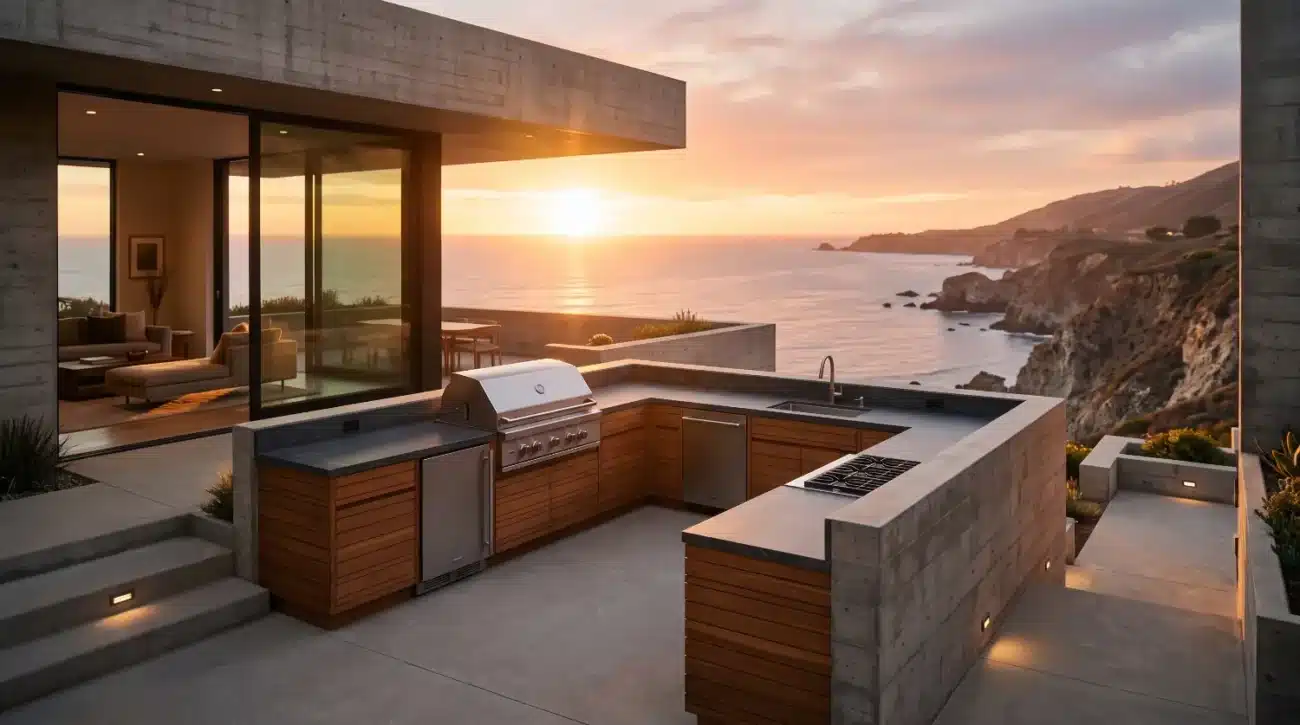
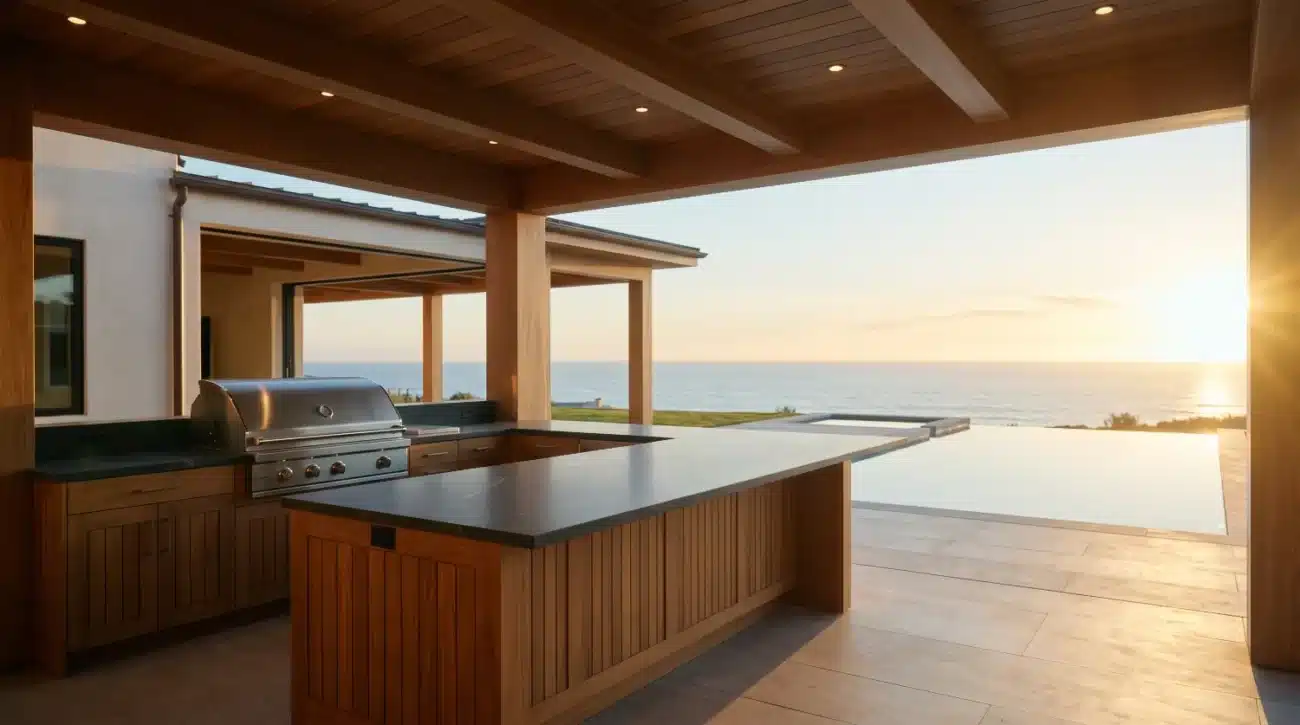
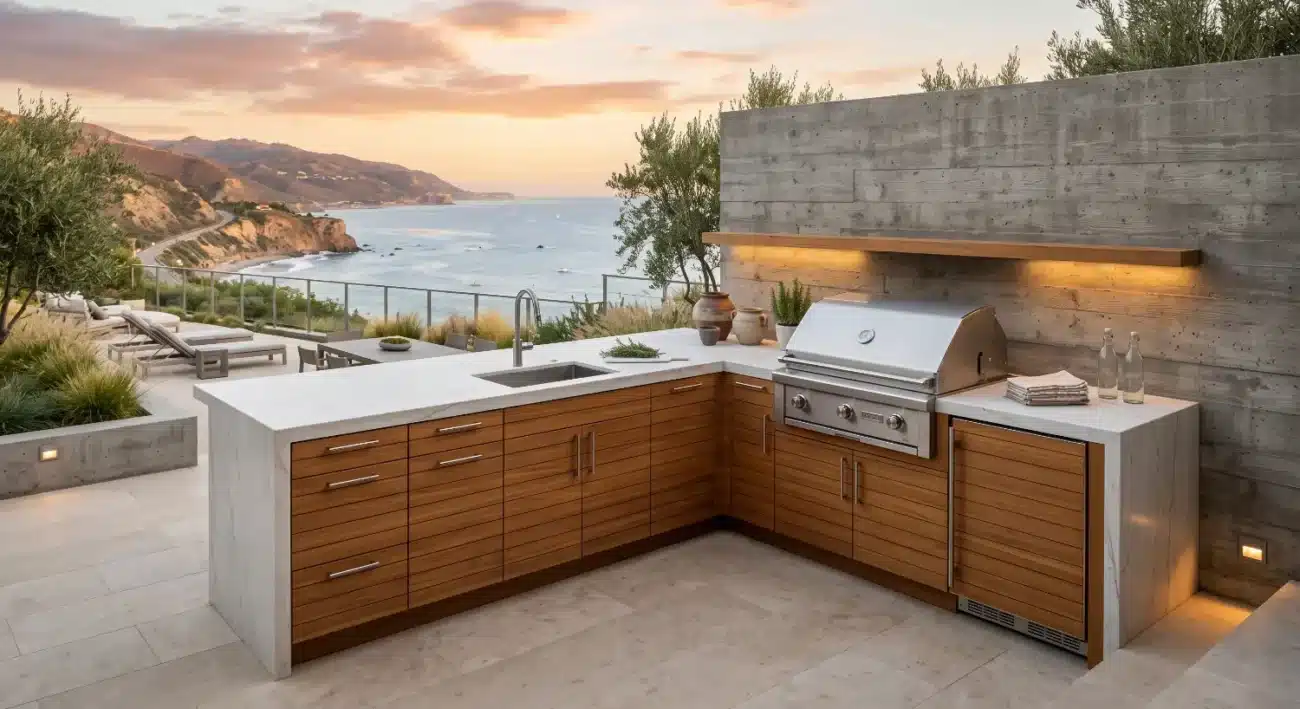
When an estate home in Malibu or Palm Springs hosts a summer gathering, the architectural layout of the exterior living space determines the fluid movement of guests. Standard outdoor kitchens often force the host to crowd around the primary grilling station just to hand off a chilled drink. An independently positioned, bespoke outdoor beverage station solves this spatial bottleneck by creating a dedicated refreshment zone that maintains smooth spatial circulation between the indoor loggia and outdoor lounge areas. Designing this feature, however, requires a deep understanding of structural load management, thermodynamic ventilation, and advanced marine wood science. Integrating high-draw electrical appliances, plumbed ice drawers, and heavy stone countertops within a single timber cabinet island presents severe structural challenges. Subpar modular units or improperly sealed composite cabinets routinely fail within two years of coastal exposure, succumbing to delamination, internal rot, hardware rust, and frame racking.
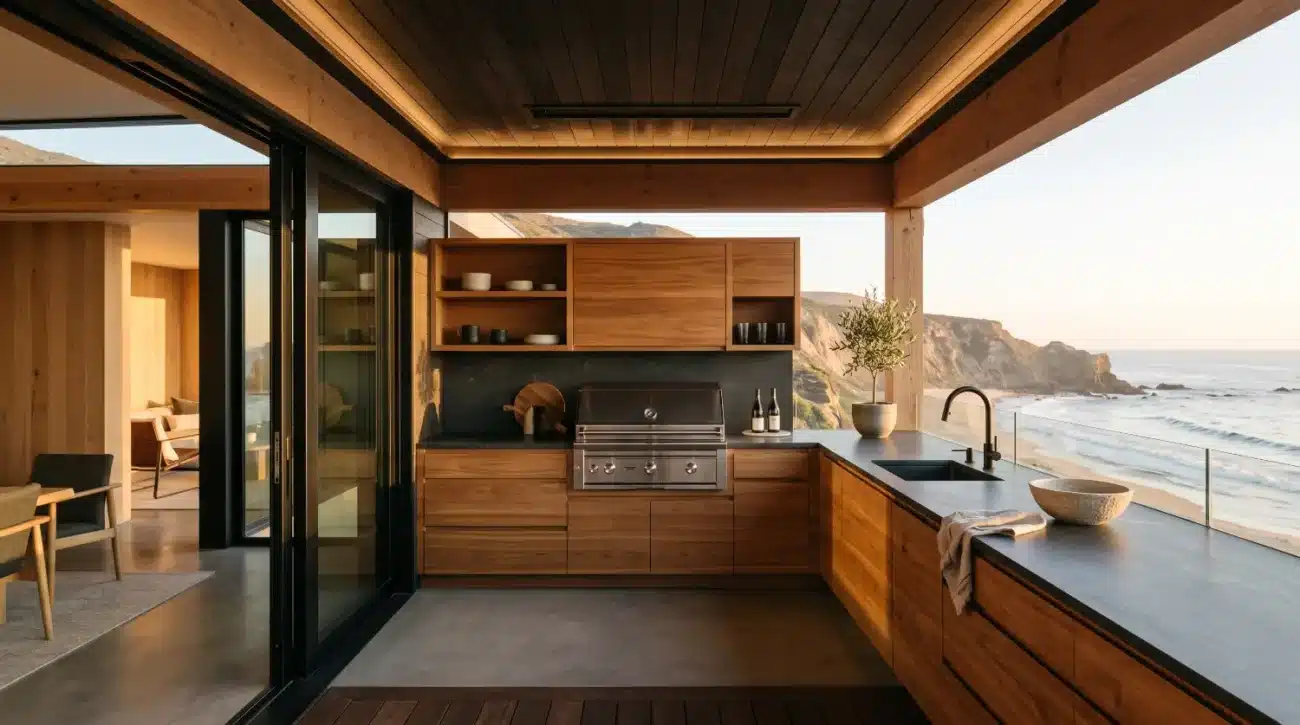
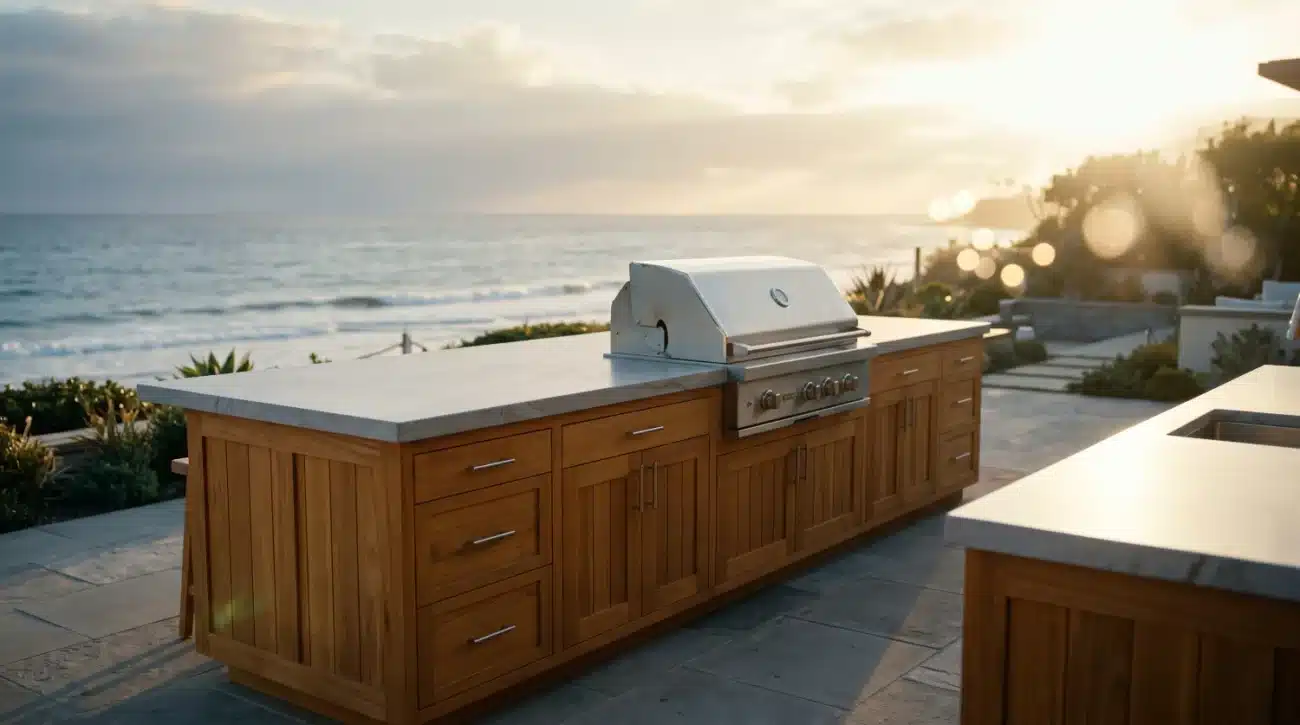
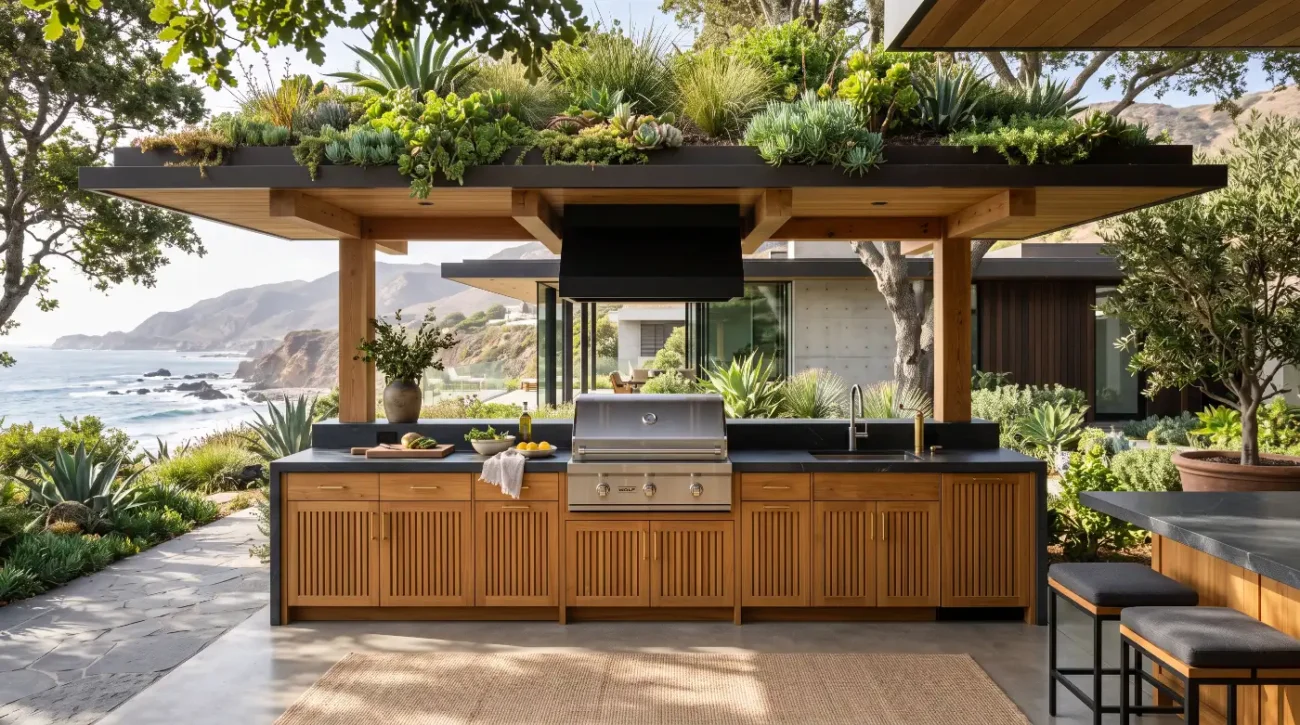
An outdoor teak beverage station design integrates specialized refrigeration inserts, marine-grade hardware, and Grade-A solid teak joinery to create an exterior millwork assembly capable of withstanding harsh coastal salt spray, intense sun, and damp freezing cycles.
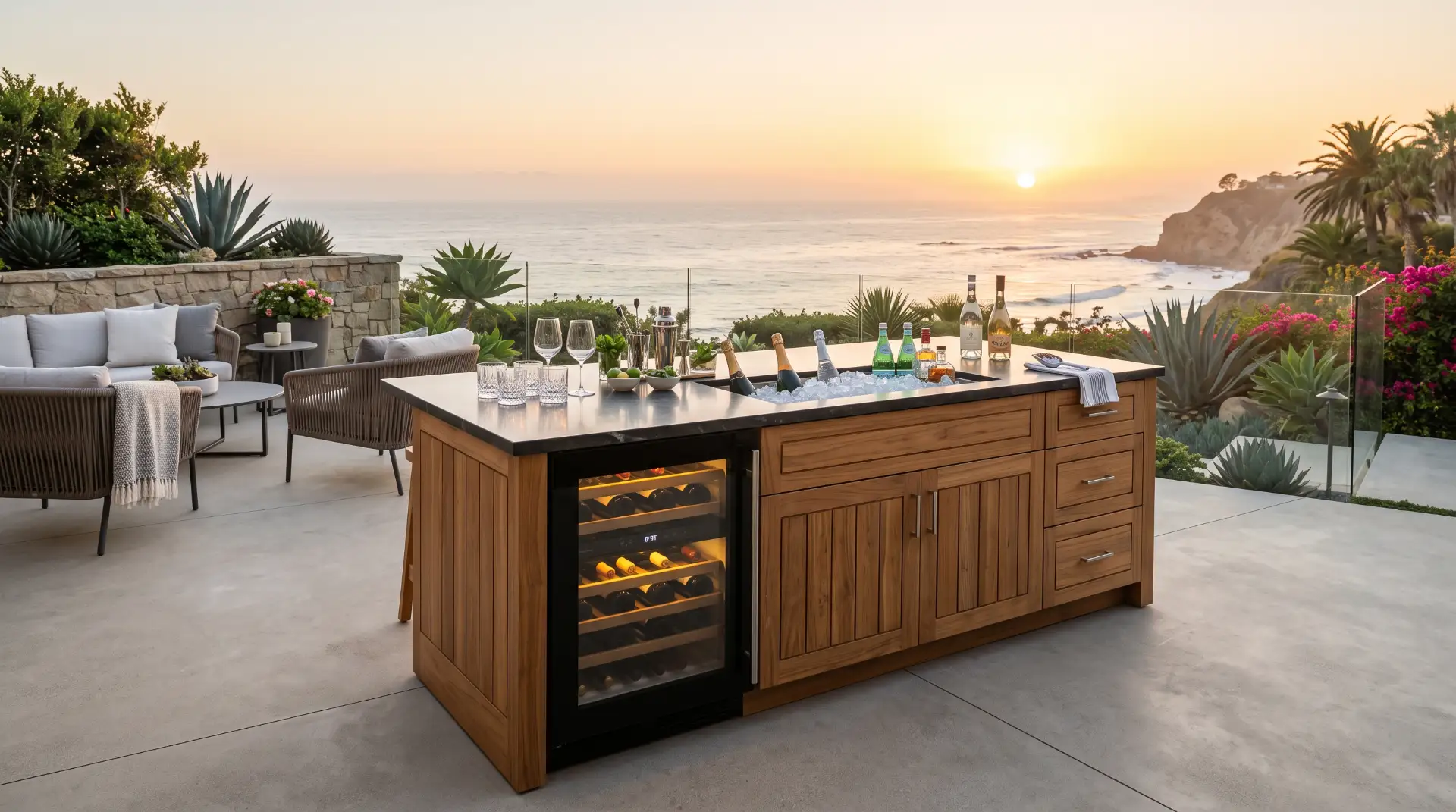
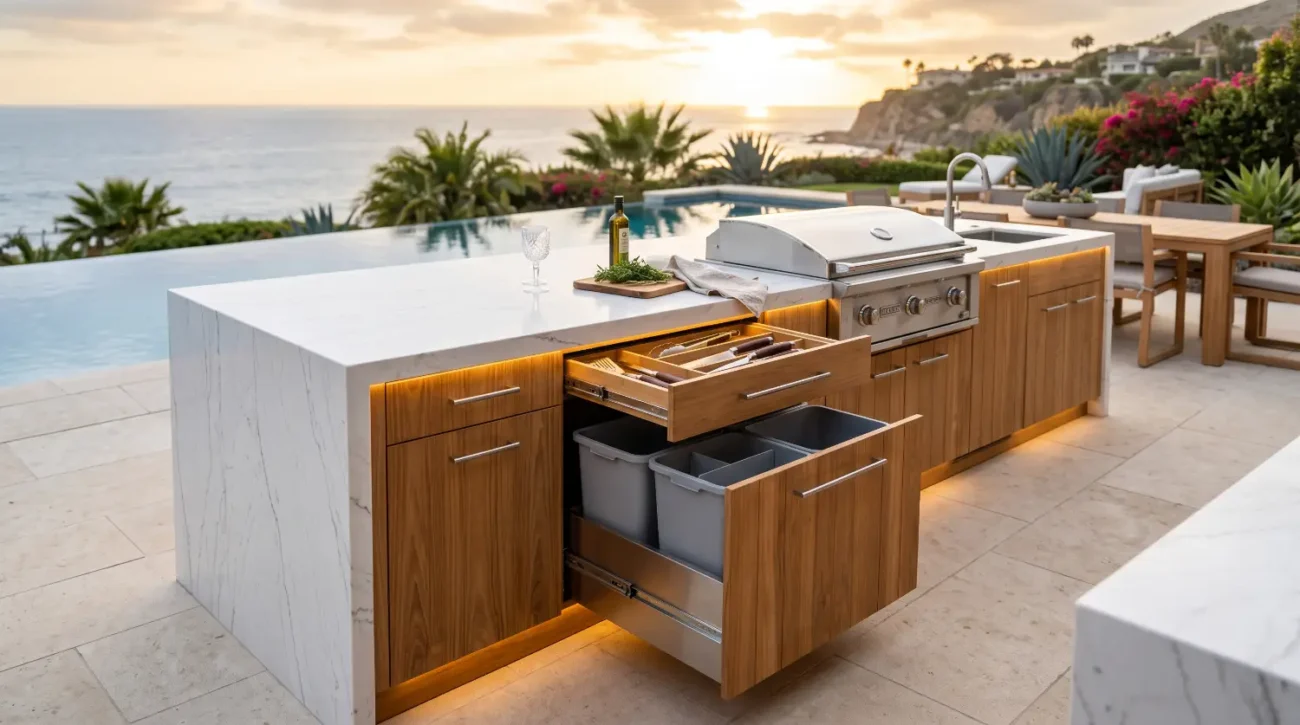
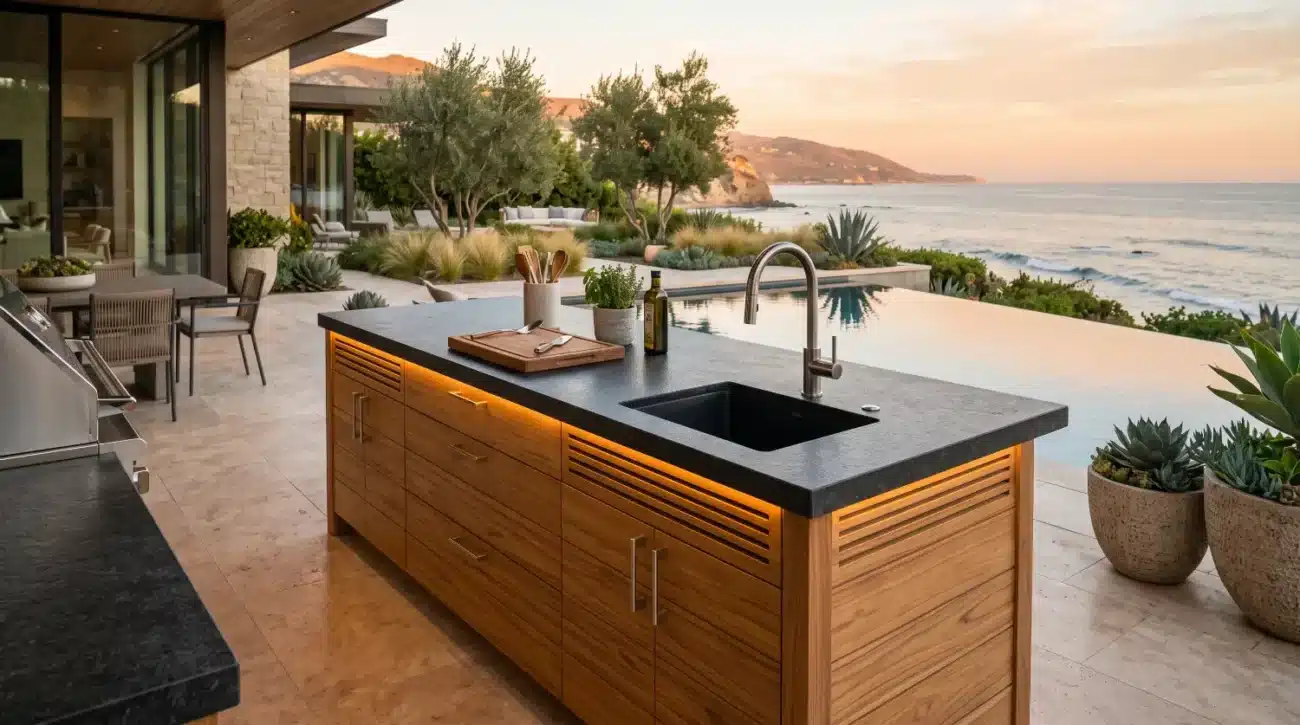
To understand the physical architecture of a bespoke outdoor beverage station, consider the vertical stack of high-performance materials engineered into a single unified island:
-
Surface Deck: A continuous heavy slab of polished quartzite or granite countertop that distributes top loads down into the primary framework.
-
Upper Utility Layer: Soft-close teak drawers equipped with 316 marine-grade stainless steel hardware running alongside an undermounted, plumbed marine ice basin and a vented undercounter wine cooler.
-
Sub-Surface Framework: A Grade-A teak face-frame constructed with traditional mortise-and-tenon joinery, surrounding an internal air circulation channel and anchored by heavy-duty adjustable base legs.
-
Foundation Substrate: A level stone paver, hardwood deck, or poured concrete pad engineered to hold the full structural weight.
The fundamental stability of any outdoor luxury cabinetry system rests on the material science of its wood. Pacific Teak Millworks utilizes Grade-A plantation teak (Tectona grandis), harvested exclusively from mature heartwood rich in natural silica, rubber resins, and dense tectonic oils. The USDA Forest Products Laboratory confirms that heartwood teak exhibits unmatched dimensional stability and natural fungal decay resistance, making it the premier timber for extreme exterior exposure. While cheaper softwoods or secondary heartwood grades absorb atmospheric moisture and warp under temperature spikes, Grade-A teak possesses a naturally low volumetric shrinkage coefficient. This structural resilience allows precision-machined cabinet doors and drawer fronts to maintain tight, uniform reveal tolerances year after year without sticking, sagging, or binding.
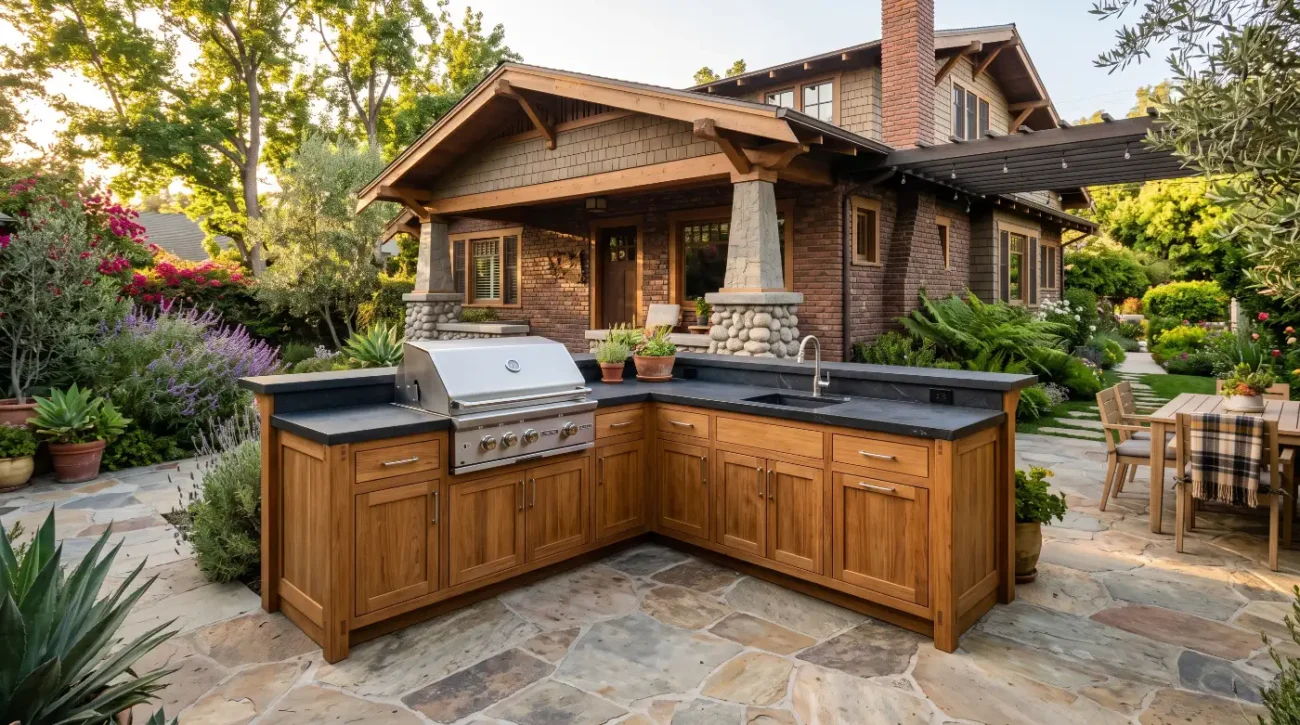
For high-net-worth homeowners working alongside interior designers and landscape architects, specifying solid teak cabinetry bridges the gap between raw natural beauty and uncompromising durability. When specified through our Base Cabinets Collection, these cabinetry runs act as an architectural anchor, grounding outdoor entertaining spaces with rich texture and structural integrity.
-
Grade-A Heartwood Density: Packed with natural rubber and silica that repel liquid water, preventing internal cellular swelling and grain cracking.
-
Mortise-and-Tenon Joinery: Traditional wood-to-wood structural joints that absorb dynamic thermal movement without shearing or loosening fasteners.
-
Marine Stainless Fasteners: Built exclusively with 316-grade stainless steel hinges, glides, and bracketry to completely eliminate rust staining and mechanism binding in coastal environments.
-
Load-Bearing Structural Framing: Engineered to support dense natural quartzite, thick granite, or cast concrete slab countertops without frame sagging or leg racking.
In a recent residential installation in Newport Beach, a client specified a continuous twelve-foot beverage island featuring a double-drawer undercounter refrigerator, an integrated clear-ice maker, and a central ice basin sink. The original contractor attempted to house these appliances inside standard outdoor-rated composite cabinets wrapped in thin wood veneers. Within eight months, salt fog corroded the non-marine hardware, while heat buildup behind the ice maker caused the synthetic core materials to off-gas and bow inward, seizing the drawers. The project was completely remediated by installing custom face-frame solid teak cabinetry from Pacific Teak Millworks. By engineering dedicated internal airflow plenums, utilizing 316 marine-grade stainless steel soft-close hardware, and allowing proper thermal expansion gaps within the cabinet frames, the new station preserved the fine joinery while accommodating the operational demands of the refrigeration units.
A frequent error in exterior beverage station design is treating outdoor teak like indoor cabinetry by applying impermeable polyurethane coatings or film-forming clear coats. When exposed to harsh ultraviolet light, these synthetic topcoats fracture at the micro-level. Atmospheric moisture penetrates beneath the cracked film, trapping water against the wood grain where sun heat bakes it, leading to surface peeling and severe internal wood rot. True exterior wood preservation relies on breathable, penetrating oil finishes or allowing the timber to gracefully weather into its natural silvery-grey patina.
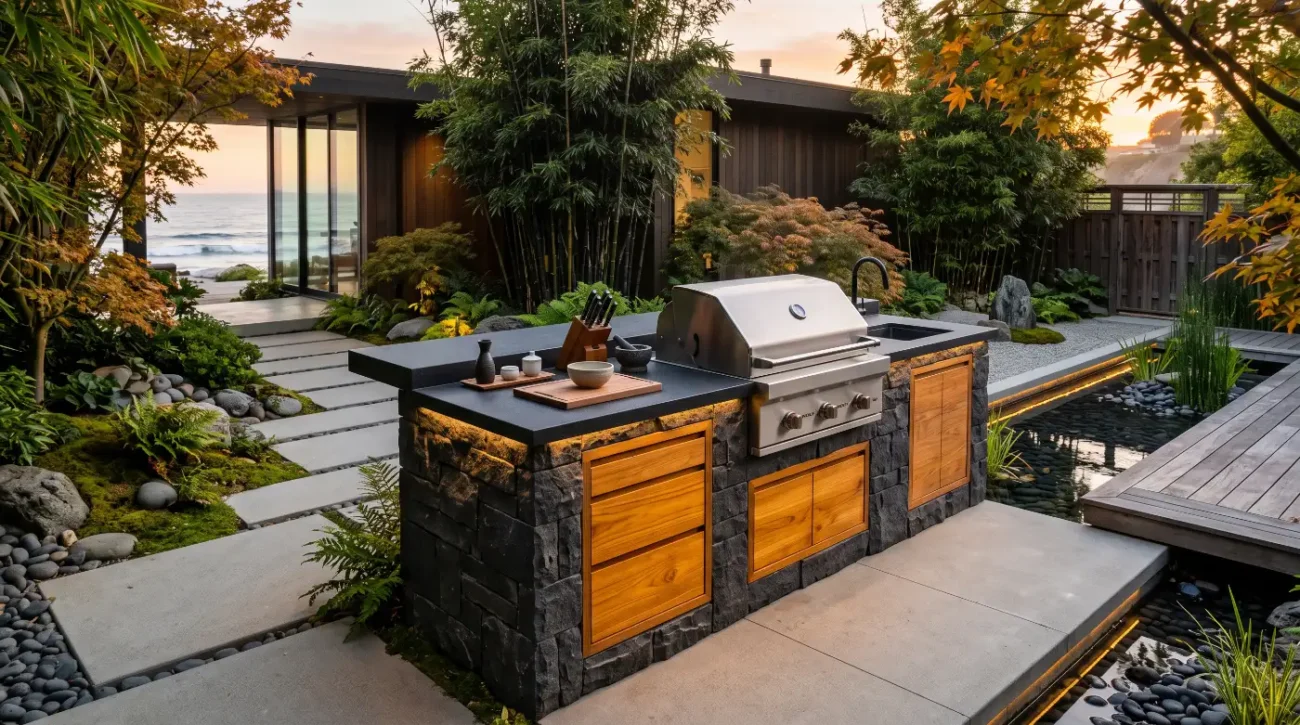
To maintain the deep golden luster of fresh heartwood, property owners should consult our comprehensive Teak Care & Maintenance Guide (PDF), which outlines precise washing and deep-penetrating oil application schedules. Alternatively, allowing the wood to oxidize creates an elegant grey shield that requires minimal labor while offering exceptional weather protection. Strategic design choices allow trade specifiers to combine sleek, dark porcelain countertops with raw, golden teak cabinetry face-frames, creating a bold material contrast that highlights both modern craftsmanship and natural wood grain.
Appliance Integration, Spatial Layouts, and CAD Specifications
A high-performance exterior beverage island must function as a seamless workstation where wine storage, rapid ice access, glassware organization, and trash management operate in logical alignment. Designing an outdoor beverage station requires balancing functional clearances, appliance power requirements, plumbing drops, and ergonomic storage. Designers must account for the spatial requirements of key appliances: dual-zone wine refrigerators require precise operating temperatures, speed rails demand immediate access, and deep drawers must store heavy spirits bottles upright without tipping.
Integrating undercounter appliances directly into wooden cabinetry islands requires meticulous planning around thermal dissipation. According to design guidelines from the National Kitchen & Bath Association, exterior cooling appliances generate substantial heat that must escape the cabinet enclosure to prevent compressor failure.
An outdoor teak beverage island achieves maximum operational efficiency when appliances are configured into distinct temperature and utility zones, preventing mechanical heat interference and streamlining host movement.
-
Refrigeration Clearance: Maintaining a minimum two-inch rear air gap and uninhibited front toe-kick ventilation prevents compressor overheating and excessive power draw.
-
Integrated Ice Drawers: Utilizing insulated, marine-grade stainless steel ice chests dropped into custom teak cutout frames ensures long-lasting ice retention with gravity-drain plumbing routing.
-
Wine Cooler Thermal Isolation: Separating high-temp wine cooling cabinets from hot ambient zones or direct sunlight prevents internal temperature spikes that destroy delicate vintages.
-
Appliance Cutout Precision: Precision CNC-milled cabinet face-frames ensure smooth appliance slides while maintaining structural stability across the entire island run.
When integrating drop-in ice chests and beverage cooling wells into solid timber structures, the internal cabinetry configuration requires a specialized vertical drainage and ventilation layout:
-
Top Tier: The insulated stainless steel ice chest basin and drain line are mounted securely flush into the solid teak top cutout.
-
Middle Tier: A solid teak drawer face-frame equipped with heavy-duty 316 stainless steel full-extension glides encapsulates the drop-in basin while maintaining a smooth front profile.
-
Bottom Tier: A ventilated base cabinet housing a passive airflow channel allows air circulation and gravity drain access beneath the thermal well.
Architects and landscape designers specify our specialized Island Inserts Collection to seamlessly embed drop-in ice chests, sink basins, and speed rails directly into solid teak structures. When executing detailed site plans, trade professionals can reference our Resource Center to access exact CAD line drawings, framing dimensions, and cutout tolerances. These technical resources allow architects to specify structural plumbing conduits and high-amp GFI electrical outlets early in the schematic design phase.
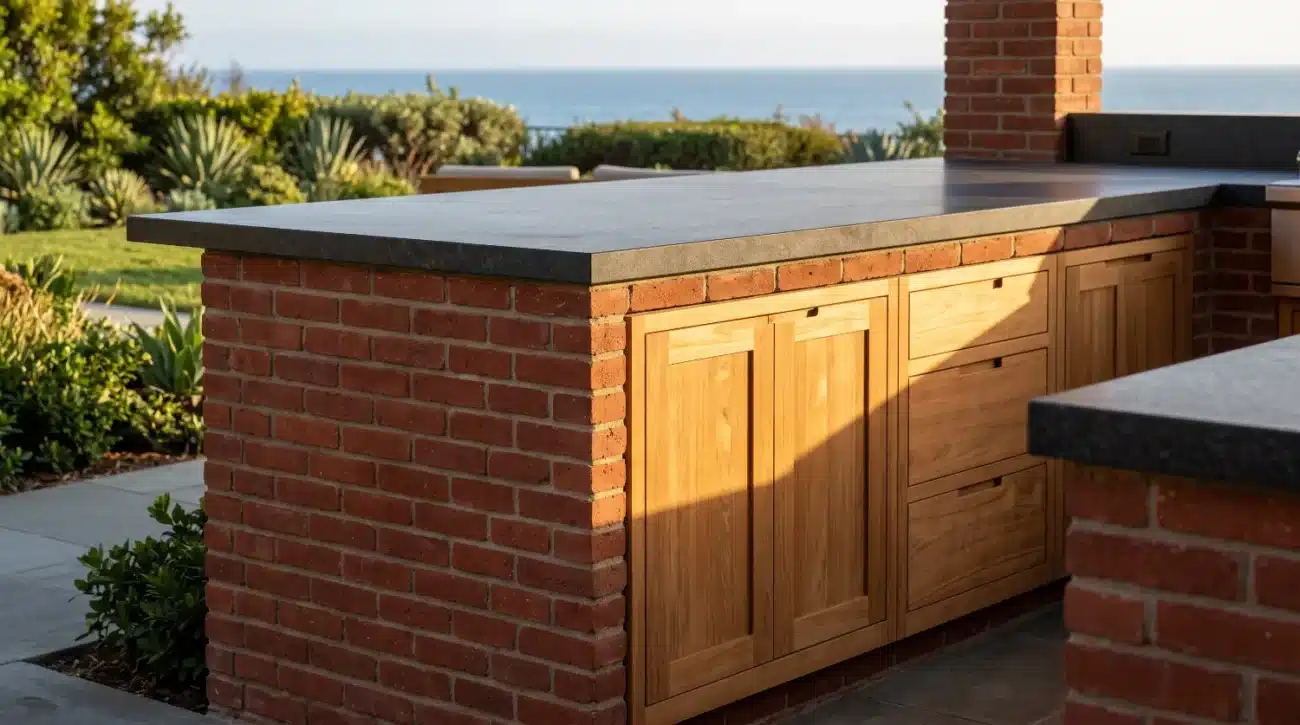
Accounting for dynamic countertop loads is another vital consideration. Heavy slabs of 3cm natural quartzite or hand-poured concrete place enormous compressive stress on cabinet framing. Without internal solid wood corner blocks and full-depth stretcher rails, cabinet frames can rack over time, causing soft-close drawer glides to bind and cabinet doors to lose alignment.
-
Conduct Site Framing Analysis: Verify that the sub-floor surface—whether natural stone paver, poured concrete, or raised hardwood decking—is structurally level and rated for total dead loads exceeding 800 pounds.
-
Establish Appliance Power and Plumbing Drops: Rough-in all electrical GFI outlets, gravity drain lines, and water supply lines within the central cabinet footprint prior to setting base units.
-
Set and Anchor Teak Base Cabinets: Align solid teak base units using marine-grade adjustable leg levelers, ensuring face-frames are plumb across all horizontal and vertical planes.
-
Install Appliance Air Vents and Channels: Confirm that passive rear ventilation pathways and toe-kick air grilles remain completely unobstructed by internal cabinet dividers.
-
Set Countertop and Seal Apertures: Lower natural stone tops onto full-perimeter teak support rails, applying high-grade silicone beads around appliance cutouts to block liquid intrusion into internal wood cavities.
-
Mount Marine Hardware and Adjust Reveals: Fine-tune 316 stainless steel 3-way adjustable hinges to achieve uniform 1/8-inch reveals across all custom teak drawer fronts and cabinet doors.
When planning an expansive outdoor kitchen, homeowners often gather online design inspiration and share mood boards with their project team. This process helps bridge the gap between initial concept and professional CAD execution. An interior designer can take a client’s aesthetic vision for a warm, resort-style patio and translate it into a fully engineered spec sheet, matching custom teak wall cabinets from our Wall Cabinets Collection with base refrigeration modules. This integrated approach ensures that every drawer pull, appliance cutout, and counter drop aligns perfectly with the home’s broader architectural vocabulary.
Furthermore, trade professionals who register through our Contact Us / Trade Inquiries portal gain direct access to custom lead times, trade pricing, and dedicated engineering support. Every piece of millwork manufactured by Pacific Teak Millworks is backed by detailed coverage outlined in our clear Warranty Documentation (PDF), ensuring absolute peace of mind for both specifier and property owner.
Navigating structural choices involves balancing initial fabrication complexity with long-term performance. While modular aluminum or PVC cabinet inserts offer lower initial costs and quick off-the-shelf delivery, they lack the structural rigidity, natural beauty, and thermal insulation of solid Grade-A teak. Synthetic materials expand and contract rapidly under direct sun exposure, leading to loose fasteners, warped drawer boxes, and faded surfaces. Solid teak millwork, by contrast, acts as a natural insulator, damping mechanical vibration from internal refrigerator compressors while providing a timeless tactile warmth that elevates the entire outdoor living space.
For additional insight into custom sizing options, wood care protocols, or delivery schedules, specifiers and clients can review our complete Frequently Asked Questions (PDF) or explore recent coastal project showcases featured on our Outdoor Design Blog. By combining age-old woodworking joinery with modern marine-grade hardware and rigorous thermal engineering, an outdoor teak beverage station becomes a functional centerpiece designed to deliver effortless performance across decades of outdoor entertaining.
External References
Key Takeaways
-
Specify Grade-A Teak: Ensure all cabinetry components are crafted from mature heartwood rich in natural silica and oil to resist coastal moisture, UV degradation, and wood rot.
-
Prioritize Thermal Ventilation: Design adequate rear clearance and toe-kick venting around undercounter wine coolers and ice makers to prevent heat buildup and compressor failure.
-
Insist on 316 Marine Hardware: Utilize 316-grade stainless steel soft-close hinges, drawer glides, and fasteners to eliminate rust staining and mechanical binding in salt-air environments.
-
Plan for Heavy Countertop Loads: Structural base cabinetry must incorporate mortise-and-tenon joinery and internal corner block bracing to support heavy natural stone or concrete tops.
-
Avoid Impermeable Clear Coats: Protect teak using breathable penetrating oils or allow the timber to naturally oxidize into a silvery-grey patina rather than applying film-forming polyurethanes that trap moisture and peel.
Elevate Your Outdoor Entertaining Vision
Whether you are a homeowner curating an intimate coastal patio or a trade professional specifying a master-planned estate layout, Pacific Teak Millworks offers the engineering expertise and material craftsmanship needed to realize your vision. Request custom teak wood samples, download detailed CAD files for your design team, or schedule a direct technical consultation with our engineering specialists. Contact Darin directly at (949) 365-6513, email us at darin@pacificteakmillworks.com, or submit your project drawings through our Contact Us / Trade Inquiries portal today to start building your custom exterior beverage station.