Fast Track Summary
-
Marine-grade solid teak cabinetry provides unmatched dimensional stability, natural oil protection, and rot resistance in corrosive saltwater environments.
-
Collaboration between clients and trade specifiers using detailed CAD files ensures seamless integration of heavy stone tops and stainless appliances.
-
Proper venting and structural joinery eliminate thermal stress, cabinet sagging, and moisture entrapment in harsh coastal microclimates.
-
Silvery patina transformation occurs naturally under high UV exposure, though periodic teak oil applications can preserve original golden tones.
Marine Architectural Engineering for Oceanfront Prep Kitchens
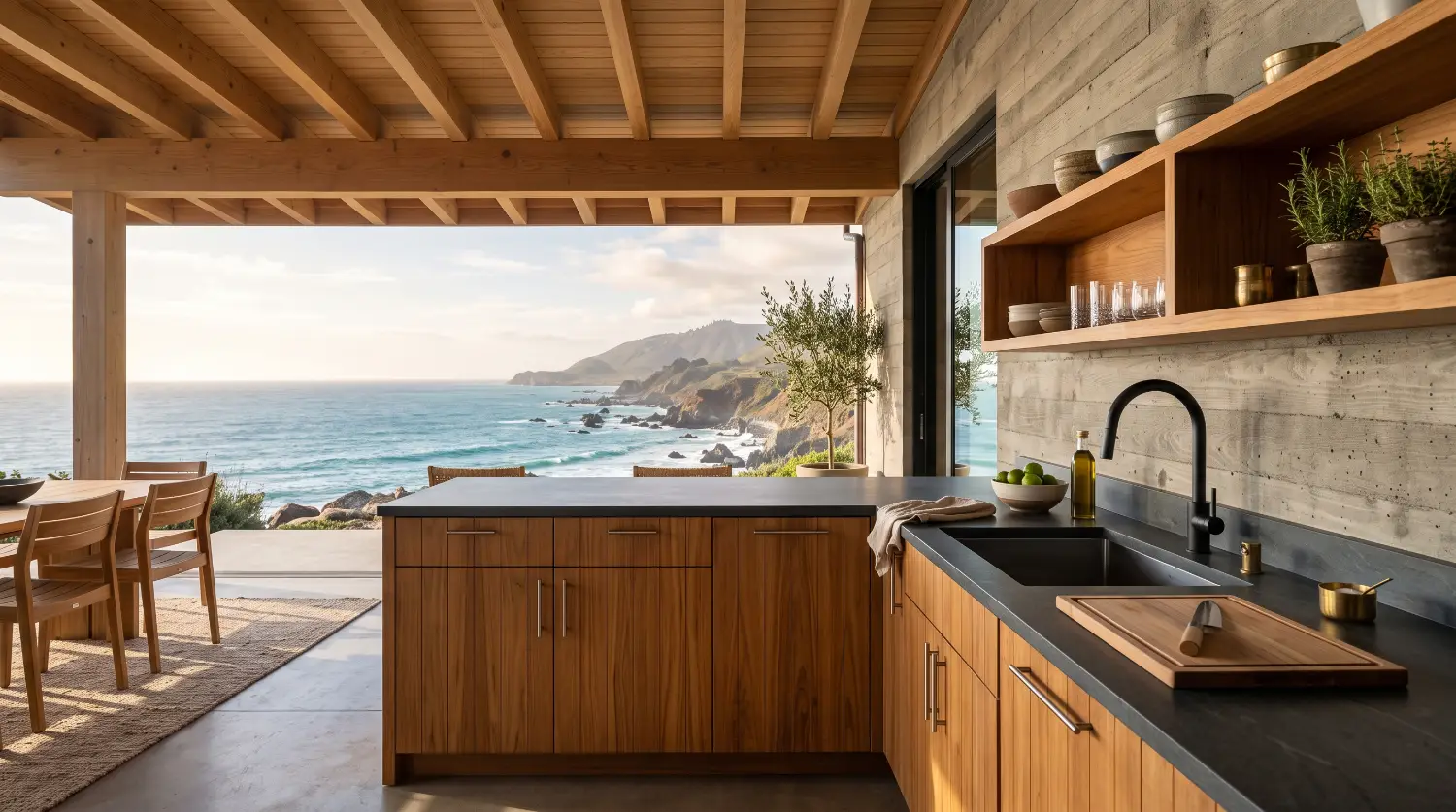
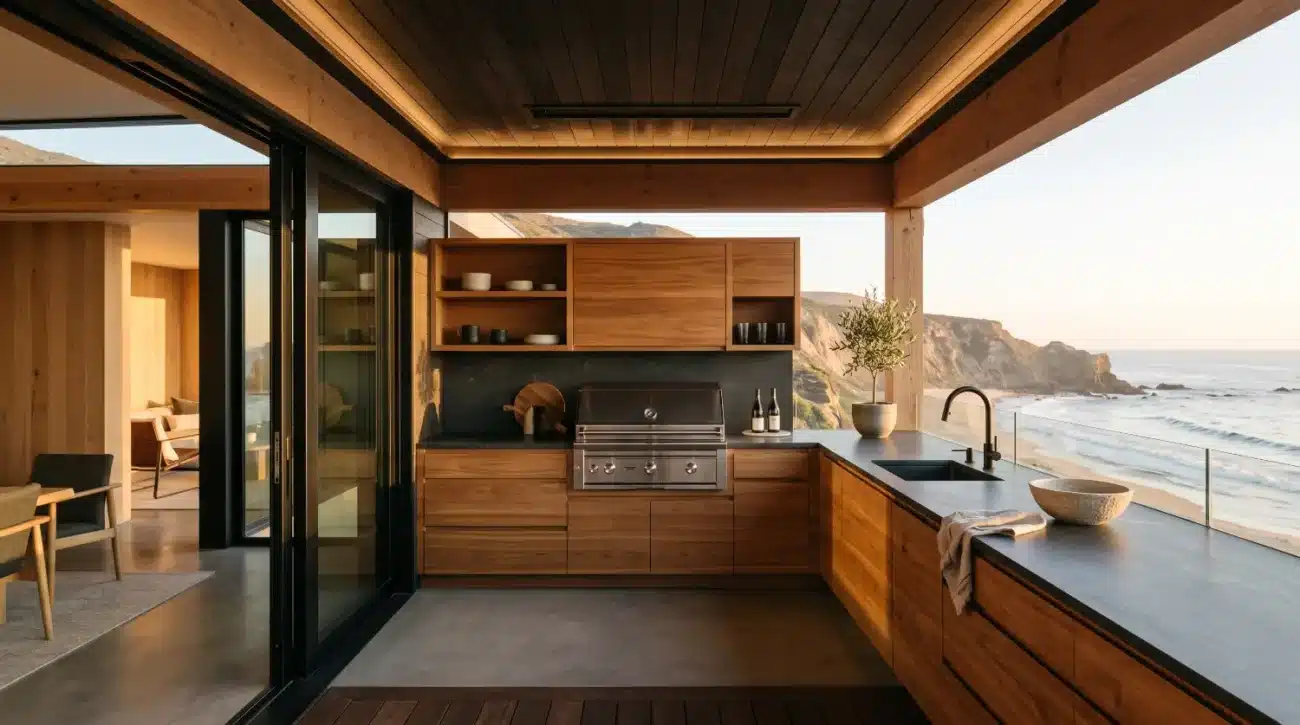
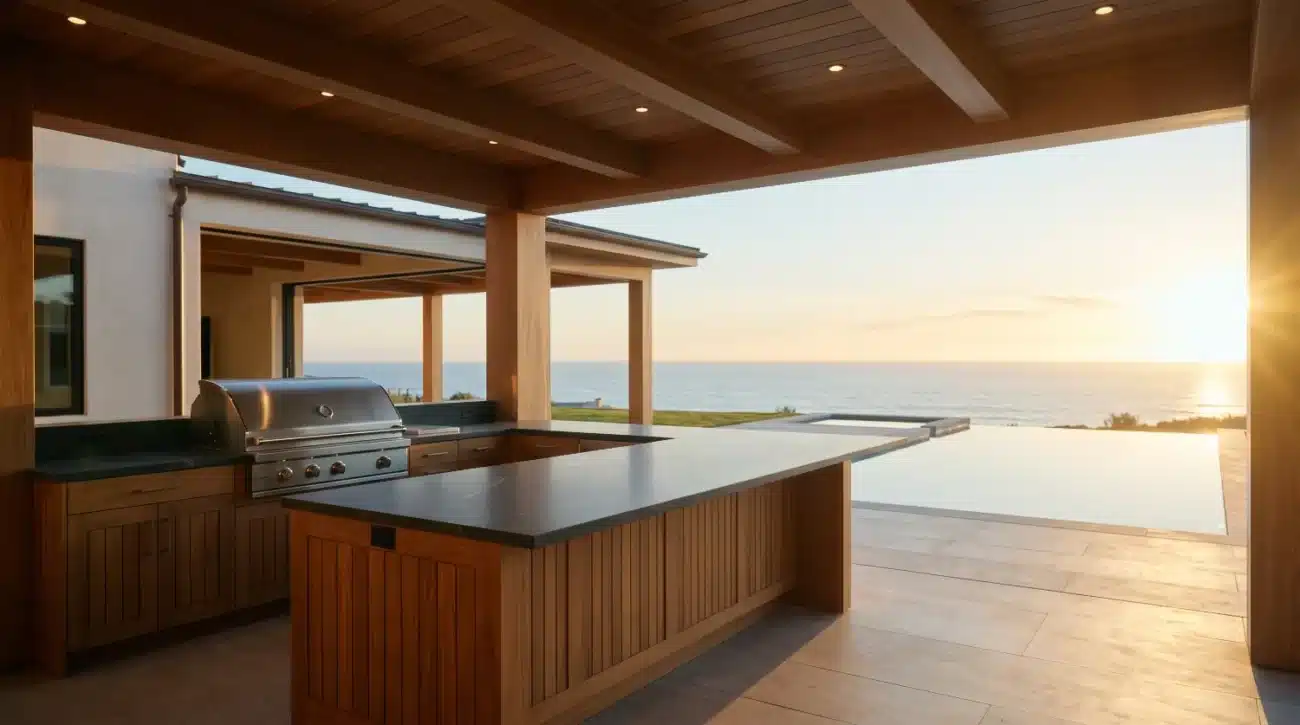
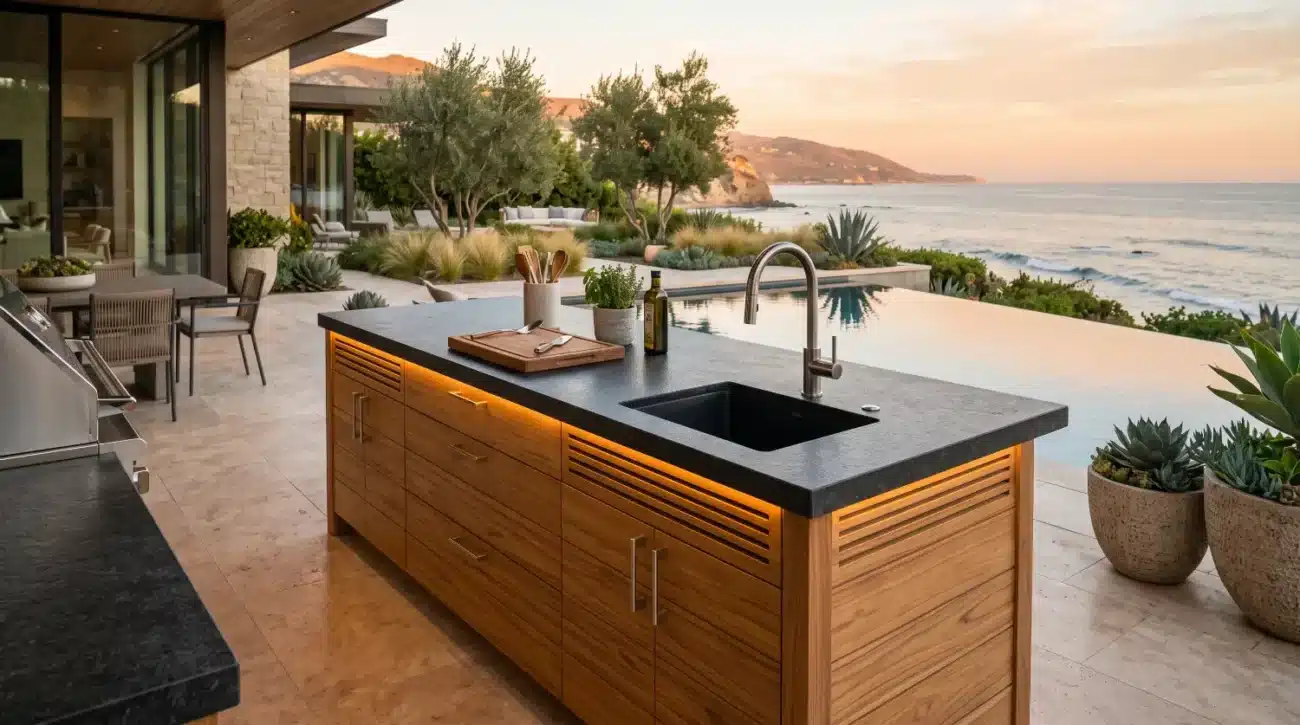
An oceanfront prep kitchen with solid teak cabinets represents the pinnacle of luxury exterior dining, combining natural biophilic warmth with raw material endurance. Designing for saltwater environments requires an understanding of coastal weathering dynamics, structural load capacity, and precise cabinetry engineering.
An oceanfront prep kitchen using Grade-A solid teak cabinets provides complete immunity to salt air corrosion, extreme UV exposure, and structural warping. By utilizing natural rubber resins and mortise-and-tenon joinery, teak cabinetry maintains structural integrity where metal rusts and composites delaminate.
The Biology and Chemistry of Coastal Teak
High-end oceanfront properties in Malibu, Miami, and the Hamptons subject exterior materials to relentless environmental pressure. Salt air accelerates oxidation on standard metal assemblies, while intense solar radiation degrades painted finishes and composite materials. Grade-A plantation teak (Tectona grandis) possesses a unique cellular composition rich in natural silica and tectonic resins. These natural oils create an internal barrier against moisture absorption, micro-cracking, and fungal decay.
When specifying cabinetry for an oceanfront prep kitchen, wood density and grain direction govern long-term performance. Heartwood harvested from mature teak trees exhibits tight, linear grain patterns with minimal sapwood content. This dense cellular structure resists thermal expansion and contraction during drastic coastal temperature shifts. While alternative hardwoods swell and jam drawer slides, properly milled teak maintains dimensional stability year-round.
Structural Joinery and Load-Bearing Physics
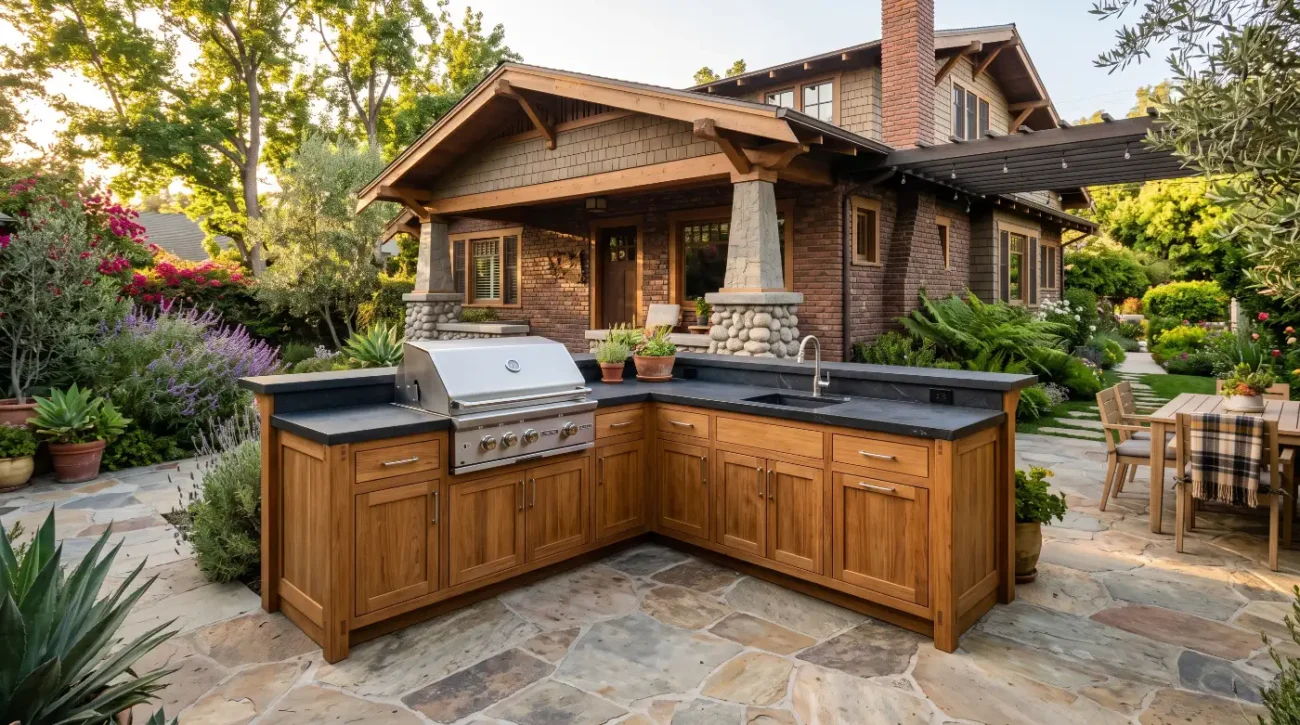
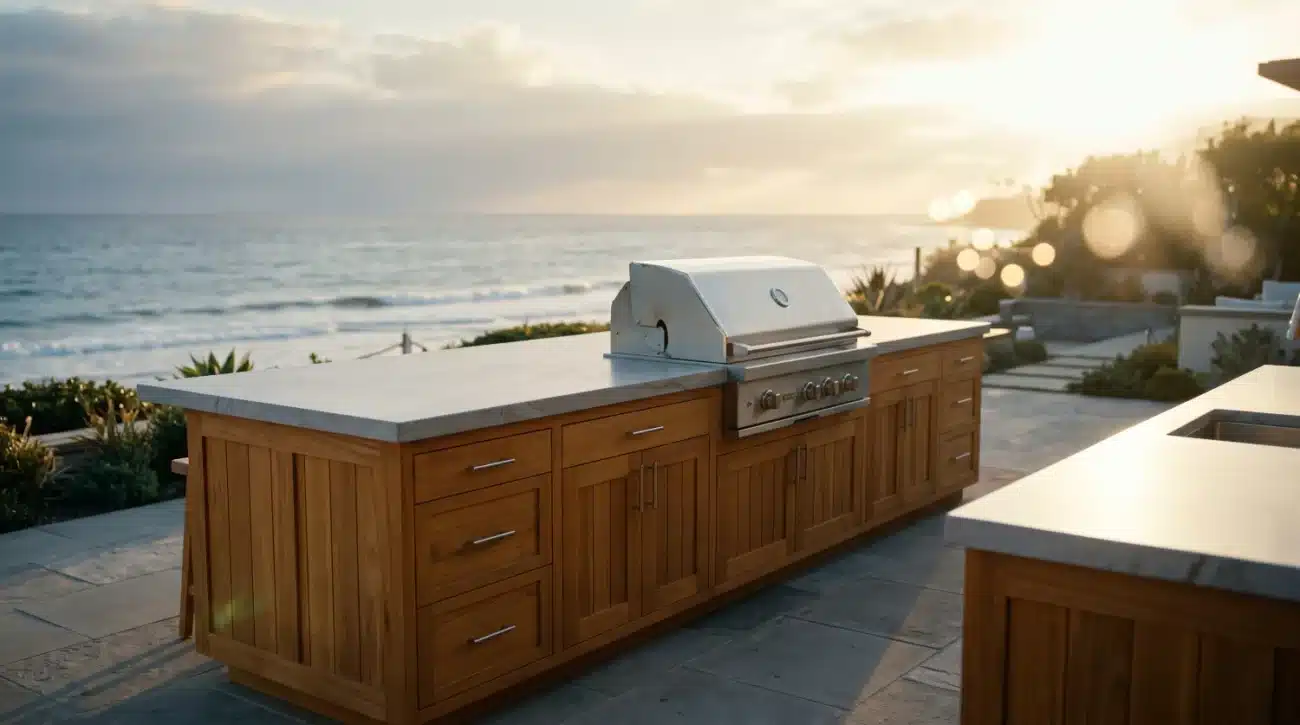
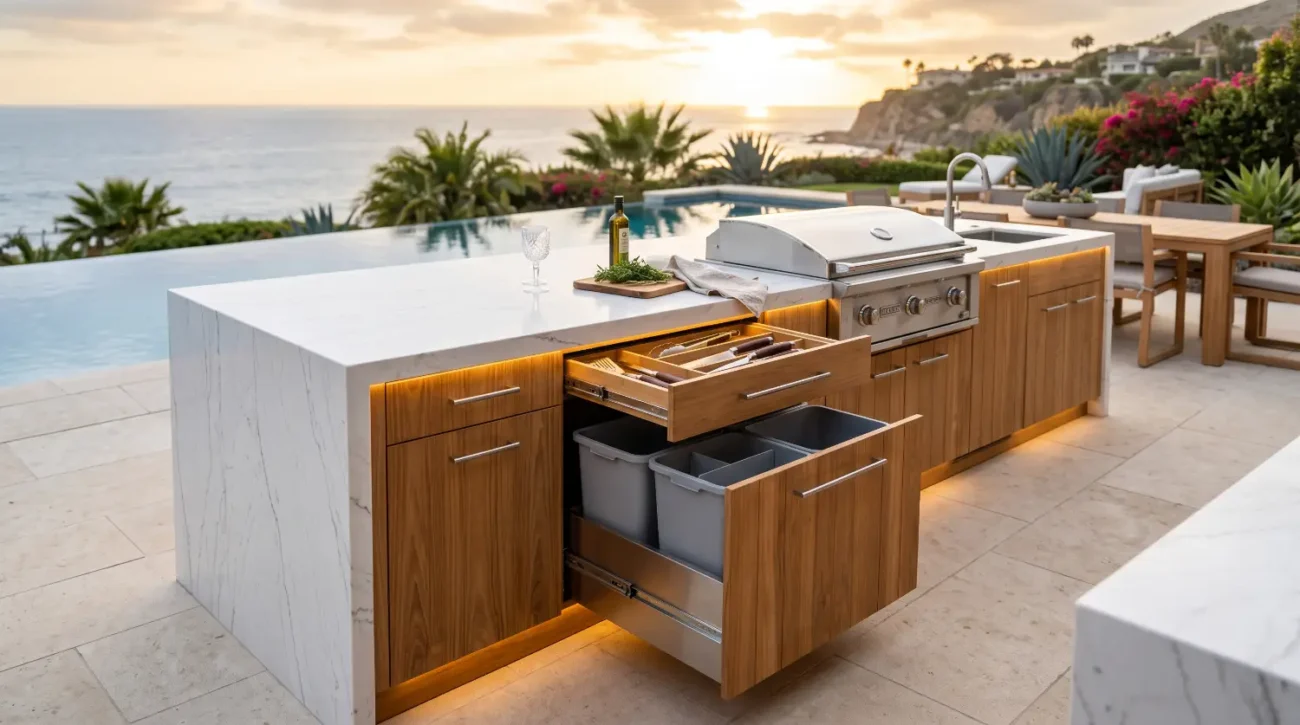
Oceanfront prep stations often support massive granite, quartzite, or ultra-compact porcelain slab countertops weighing hundreds of pounds. Standard modular cabinetry secured with surface fasteners quickly sags or racked out of square under these heavy loads. High-performance exterior millwork relies on traditional mortise-and-tenon joinery reinforced with waterproof exterior adhesives. This interlocking wood construction distributes vertical weight evenly across the entire frame.
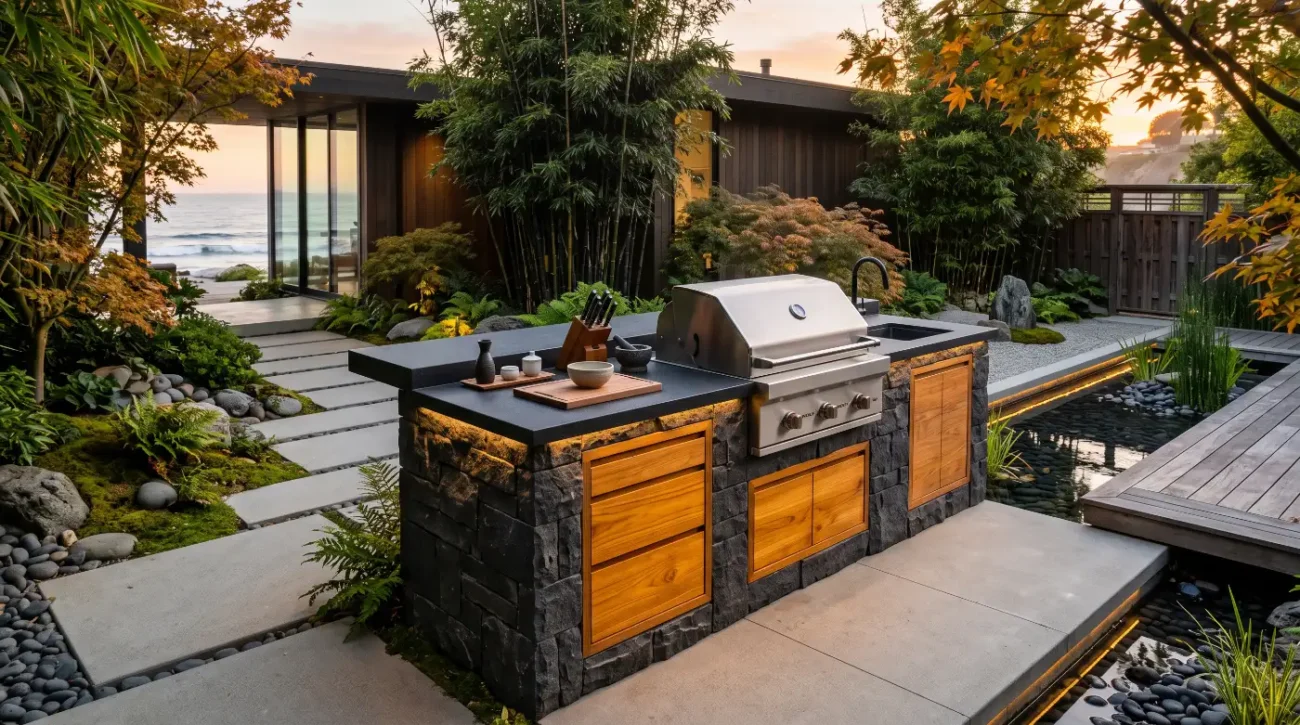
Integrating appliance cutouts within solid wood frames requires specific engineering tolerances to account for frame movement and heat dissipation. Gas grills, under-counter refrigeration, and ice makers generate substantial operational heat. Without engineered air channels and expansion gaps, heat transfers directly into adjacent cabinet walls, drying out natural oils and causing finish checking. Specifying specialized island inserts allows hot air to vent safely while maintaining a clean, integrated aesthetic.
Marine Hardware and Salt Air Defense
The failure of an exterior kitchen almost always begins at the hardware level. Standard outdoor cabinet hardware fabricated from 304-grade stainless steel eventually suffers from tea-staining and pitting when exposed to direct ocean breeze. Oceanfront installations mandate 316 marine-grade stainless steel hardware for all hinges, drawer glides, and mounting brackets.
-
316 Stainless Steel Hinges: Provide superior resistance to chloride pitting compared to standard 304 alloys, ensuring soft-close mechanisms remain smooth despite constant salt exposure.
-
Full-Extension Ball-Bearing Glides: Rated for heavy load capacities to prevent drawer sagging when packed with heavy cookware or serving platters.
-
Silicone Weather-Sealed Gaskets: Protect cabinet interiors from driven coastal rain and fine sand accumulation during stormy conditions.
-
Concealed Fastening Systems: Prevent galvanic corrosion by isolating metal screws from wet wood fiber contact points.
Bridging the gap between initial homeowner inspiration and trade execution requires translating mood boards into detailed CAD files. Specifying marine-grade solid teak cabinetry early in the design phase ensures proper structural support, appliance integration, and long-term protection against harsh coastal microclimates.
Navigating the D2C to B2B Architectural Workflow
Homeowners often begin their journey by curating digital mood boards filled with warm, coastal-inspired outdoor prep stations. Bringing these visual concepts to an interior designer or landscape architect initiates the transition from artistic intent to structural reality. Trade specifiers rely on accurate CAD and BIM blocks to integrate custom cabinetry into larger structural plans, ensuring mechanical, electrical, and plumbing rough-ins match the physical cabinet dimensions precisely.
Specifying luxury millwork early in the architectural process eliminates costly field modifications during construction. Designers can coordinate tile layouts, electrical junction boxes, and plumbing stub-outs with absolute confidence. Trade professionals looking for detailed millwork profiles can explore our comprehensive base cabinets collection to download dimensionally accurate representations for current projects.
Managing Environmental Risks and Countertop Weight
A critical mistake in coastal kitchen design is ignoring the relationship between cabinet leveling systems and slab countertop integrity. Oceanfront loggias and patios are sloped to shed rainwater, meaning every cabinet run requires precise elevation adjustment. Settling or improper shimming creates micro-torsion in the cabinet box. When heavy stone slabs rest on an uneven frame, the stress transfers into the stone, leading to hairline cracks across sink cutouts.
-
Adjustable Stainless Leveling Legs: Ensure precise leveling across sloped patio sub-bases to keep stone countertops fully supported and strain-free.
-
Ventilation Clearance Zones: Maintain required rear and side clearances around gas prep equipment to eliminate heat build-up against solid wood panels.
-
Countertop Drip Edge Profiles: Prevent rainwater from tracking backward along the underside of the stone directly into the upper cabinet face-frames.
-
Sealed Cabinet Sub-Bases: Elevate solid wood frames off wet patio surfaces to prevent long-term standing water absorption.
Finishing Dynamics, Care, and Architectural Integration
Maintaining oceanfront teak cabinetry involves choosing between preserving its rich golden-brown tone through periodic oiling or allowing the wood to naturally oxidize into a sleek silver patina. Avoiding film-forming polyurethanes is crucial, as they trap moisture and cause severe surface peeling.
Golden-Brown Luster vs. Natural Silvery Patina
One of the most appealing characteristics of exterior teak is its aesthetic versatility over time. Freshly milled teak features a deep golden-brown hue with subtle amber grain variations. When exposed to sunlight and salt air, the UV rays break down surface pigments, causing the wood to undergo a natural oxidation process. Over several months, the exterior surface transitions into a silvery-grey patina that many coastal architects prefer for its timeless, organic appearance.
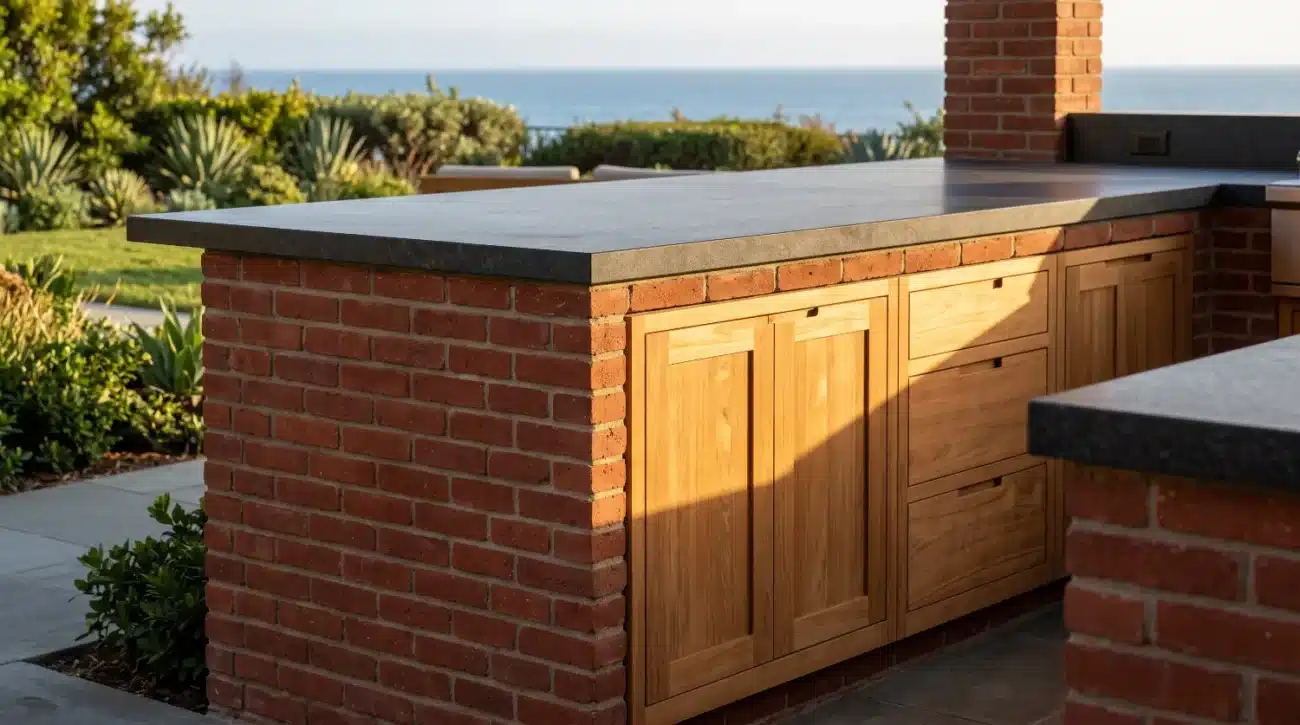
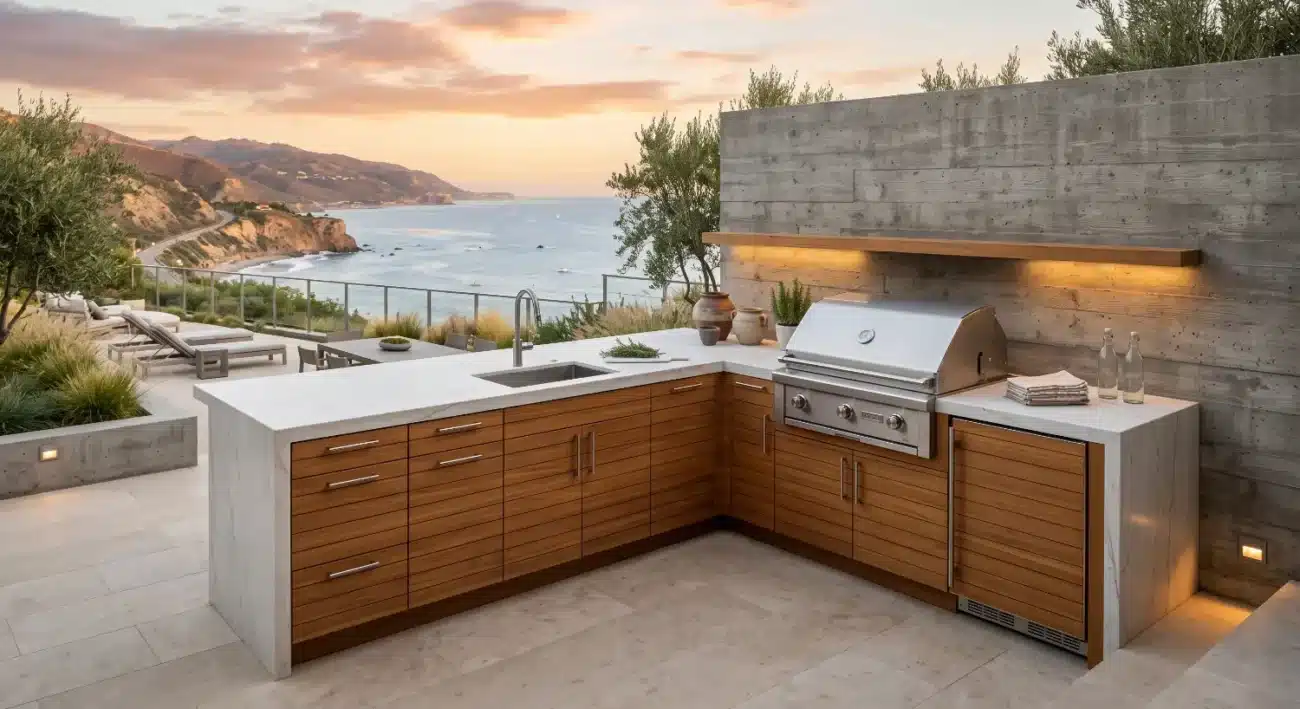
Allowing teak to weather into a silver patina does not compromise its structural integrity or water resistance. The natural internal oils remain intact beneath the micro-oxidized surface layer. Homeowners who prefer to maintain the warm golden luster can apply high-quality teak oils periodically. Understanding this dynamic allows designers to match the cabinetry finish with broader architectural materials, such as board-formed concrete, dark porcelain slabs, or light limestone paving.
Film-Forming Sealers vs. Breathable Penetrating Oils
A severe material failure occurs when well-meaning contractors coat exterior teak with film-forming polyurethanes, varnishes, or clear lacquer finishes. Exterior teak contains high natural oil content that prevents synthetic surface films from bonding permanently. Within a few months of marine exposure, moisture vapor becomes trapped underneath the hard film layer. Sunlight heats the trapped water, causing the polyurethane coat to blister, crack, and peel into unsightly white patches.
Restoring film-coated teak requires aggressive sanding that can damage precision face-frames and fine joinery. Coastal teak must be allowed to breathe. Penetrating teak oils or specialized marine-grade matte sealers protect the surface pigments without creating a impermeable plastic shell. For step-by-step restoration protocols and approved care products, download our official Teak Care & Maintenance Guide (PDF).
Biophilic Aesthetics in Modern Coastal Design
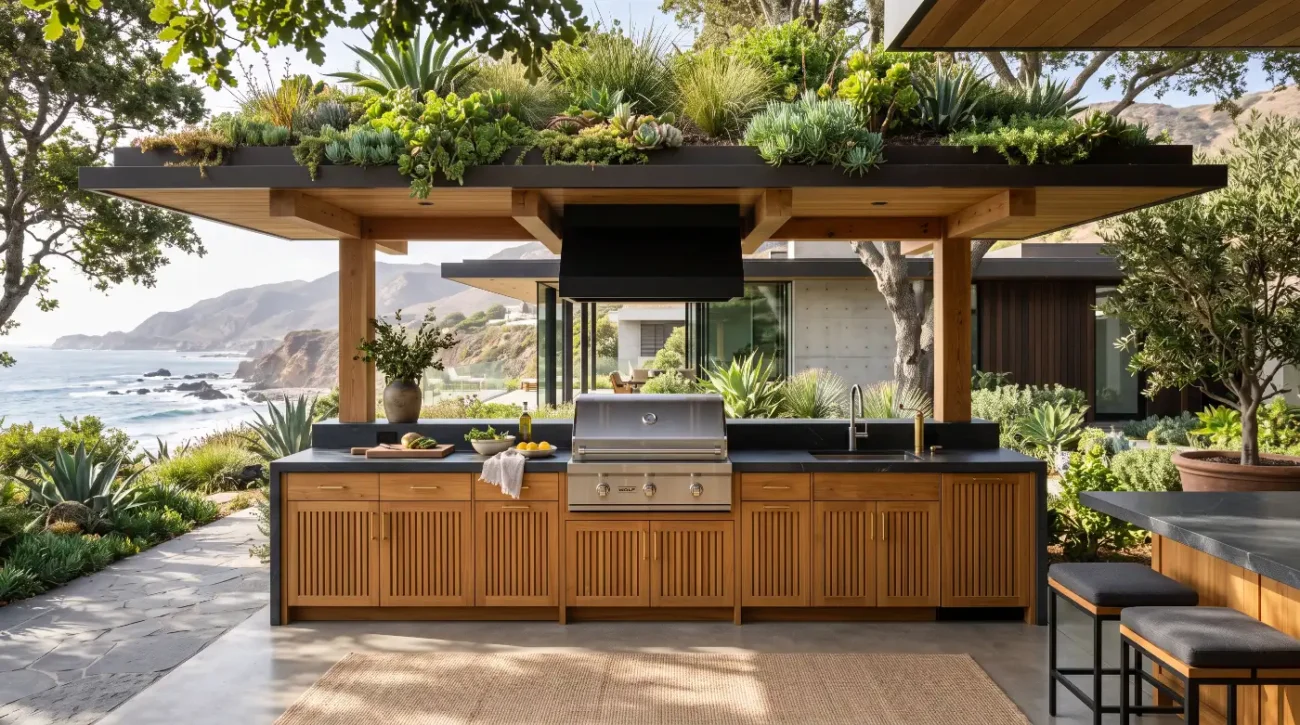
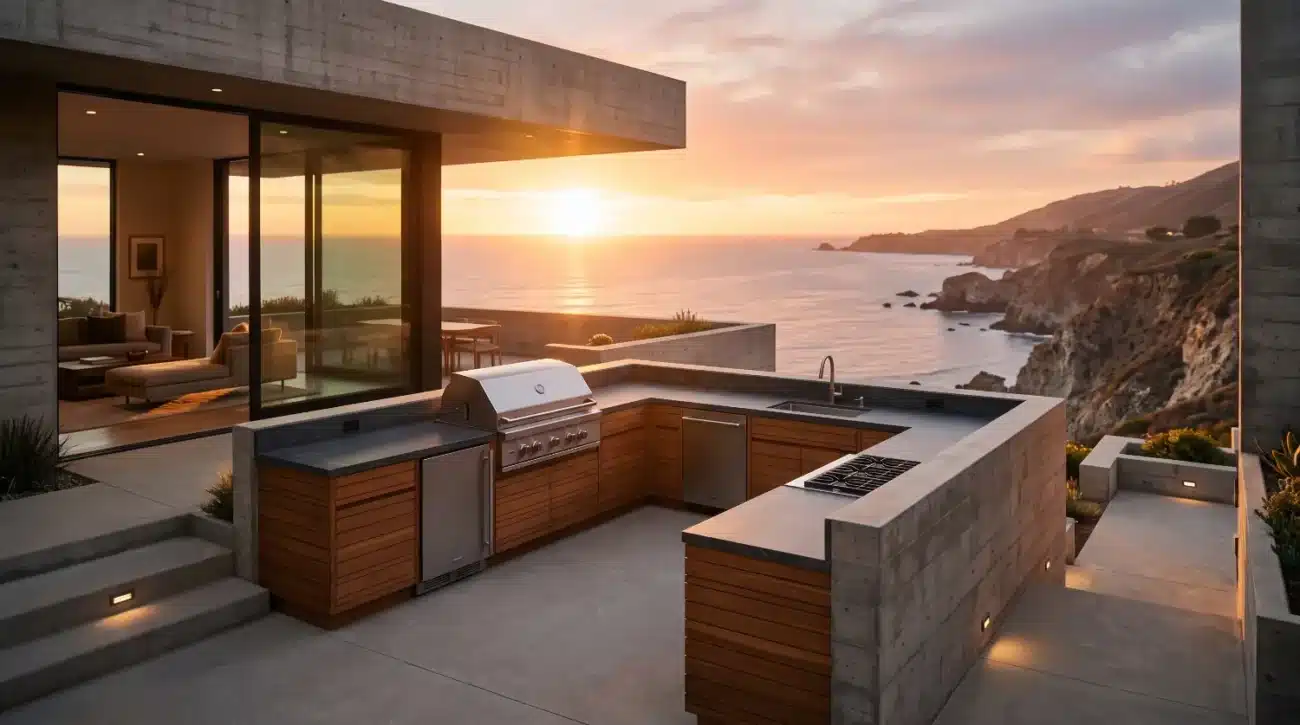
Modern residential architecture increasingly emphasizes indoor-outdoor flow, blurring the boundary between interior living spaces and open-air loggias. Solid teak cabinetry serves as an ideal material bridge, bringing natural warmth to contemporary glass-and-steel coastal estates. Pairing golden teak base units with dark, textured granite or porcelain countertops creates a grounded, sophisticated visual contrast that complements expansive ocean views.
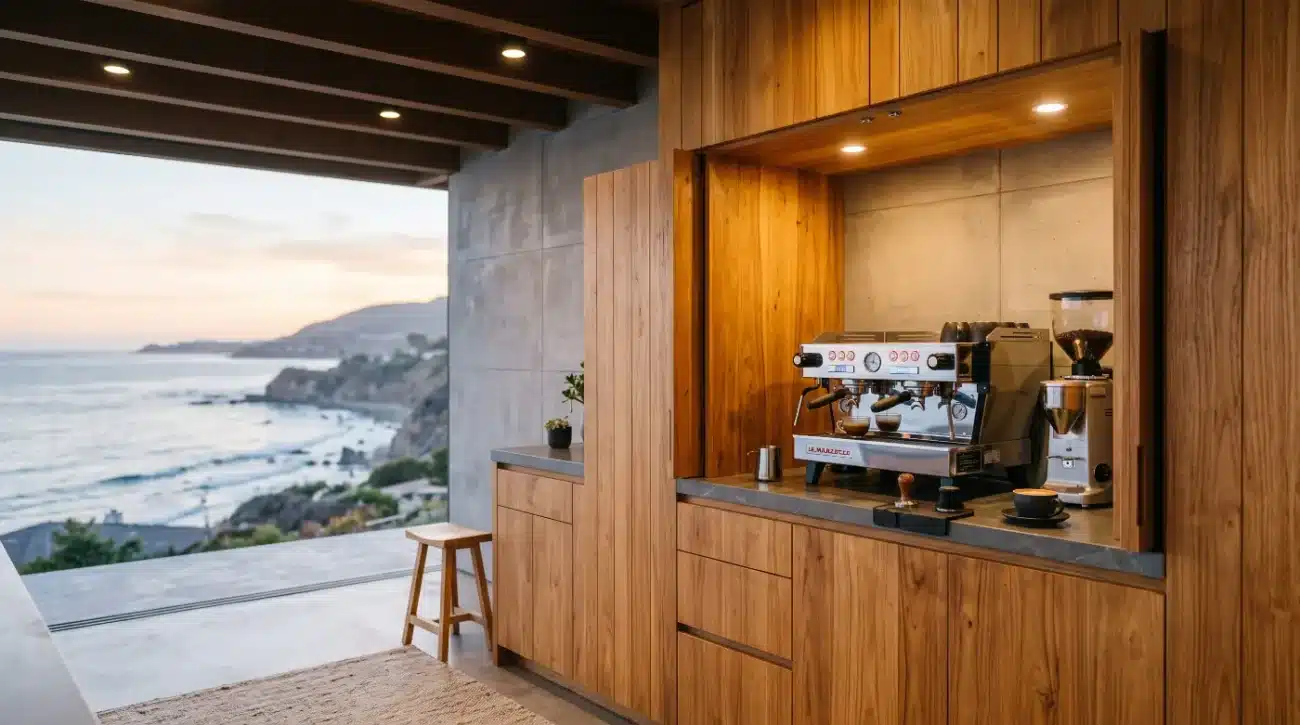
Integrating wall-mounted cabinetry alongside base prep units expands vertical storage while keeping floor footprints open. Overhead units provide convenient access to cookware, prep bowls, and outdoor dining supplies. Designers seeking layout options for elevated storage can view our wall cabinets collection to complement lower island configurations.
Specifying custom solid teak cabinetry backed by marine-grade construction techniques guarantees long-term performance and structural stability. Understanding warranty terms and trade support programs ensures seamless project execution for high-net-worth residential builds.
Trade Program Procurement and Architectural Specifications
Executing luxury residential builds requires coordination between architects, general contractors, and specialized millwork manufacturers. Lead times, site delivery schedules, and clear warranty terms play an essential role in keeping complex coastal builds on timeline. Trade professionals benefit from direct manufacturer collaboration to verify custom cutout dimensions, hardware options, and site prep requirements before fabrication begins.
Understanding comprehensive protection policies provides peace of mind for both the specifier and the property owner. High-end marine environments require hardware and structural guarantees built to withstand coastal weather extremes. Review our complete Warranty Documentation (PDF) for detailed coverage specs, or review our Cancellation & Return Policy (PDF) for trade procurement guidelines.
Common Coastal Prep Kitchen Pitfalls
Designing an outdoor kitchen that survives decades of ocean exposure requires avoiding critical design mistakes during the planning stage.
-
Omitting Appliance Heat Shields: Installing high-output gas prep appliances directly against uninsulated teak frames leads to scorching and thermal wood degradation.
-
Trapping Water Under Cabinets: Placing cabinet frames flush against flat, un-sloped concrete pads traps rainwater underneath, encouraging mold growth.
-
Mixing Dissimilar Metals: Using cheap zinc-plated or 304 stainless fasteners in contact with aluminum or damp teak triggers rapid galvanic corrosion.
-
Ignoring Local Wind Patterns: Placing prep areas downwind of salt spray zones without protective glass screens accelerates salt build-up on hardware.
-
Failing to Provide Mechanical Access: Sealing utility connections behind permanent cabinetry walls makes future plumbing or electrical maintenance impossible.
External References
To learn more about wood performance standards and tropical timber sustainability, review technical resources provided by the USDA Forest Products Laboratory and explore global forestry management frameworks through the Forest Stewardship Council.
Key Takeaways
-
Material Selection: Grade-A solid teak offers natural silica and oil content that inherently protects oceanfront cabinetry from salt corrosion and warping.
-
Hardware Specs: Only 316 marine-grade stainless steel hardware should be specified for coastal environments to prevent rust and tea-staining.
-
Finish Options: Teak can be left to naturally age into a silver patina or periodically oiled to maintain its original warm golden hue.
-
Avoid Film Coatings: Polyurethane and clear lacquer coatings trap moisture and fail under UV radiation, causing peeling and costly restoration.
-
Trade Integration: Utilizing detailed CAD blocks during early design phases prevents costly field alterations and structural alignment issues.
Design Your Oceanfront Prep Kitchen
Whether you are a homeowner bringing coastal design inspiration to your project team or an architectural specifier seeking precision marine-grade millwork, Pacific Teak Millworks offers technical expertise and custom crafting for luxury outdoor living. Explore our full library of CAD drawings, request material finish samples, or discuss custom project requirements directly with our master cabinetmakers. Contact our trade team today through our Trade Inquiries Page or email us directly at darin@pacificteakmillworks.com to begin your consultation.