Executive Summary
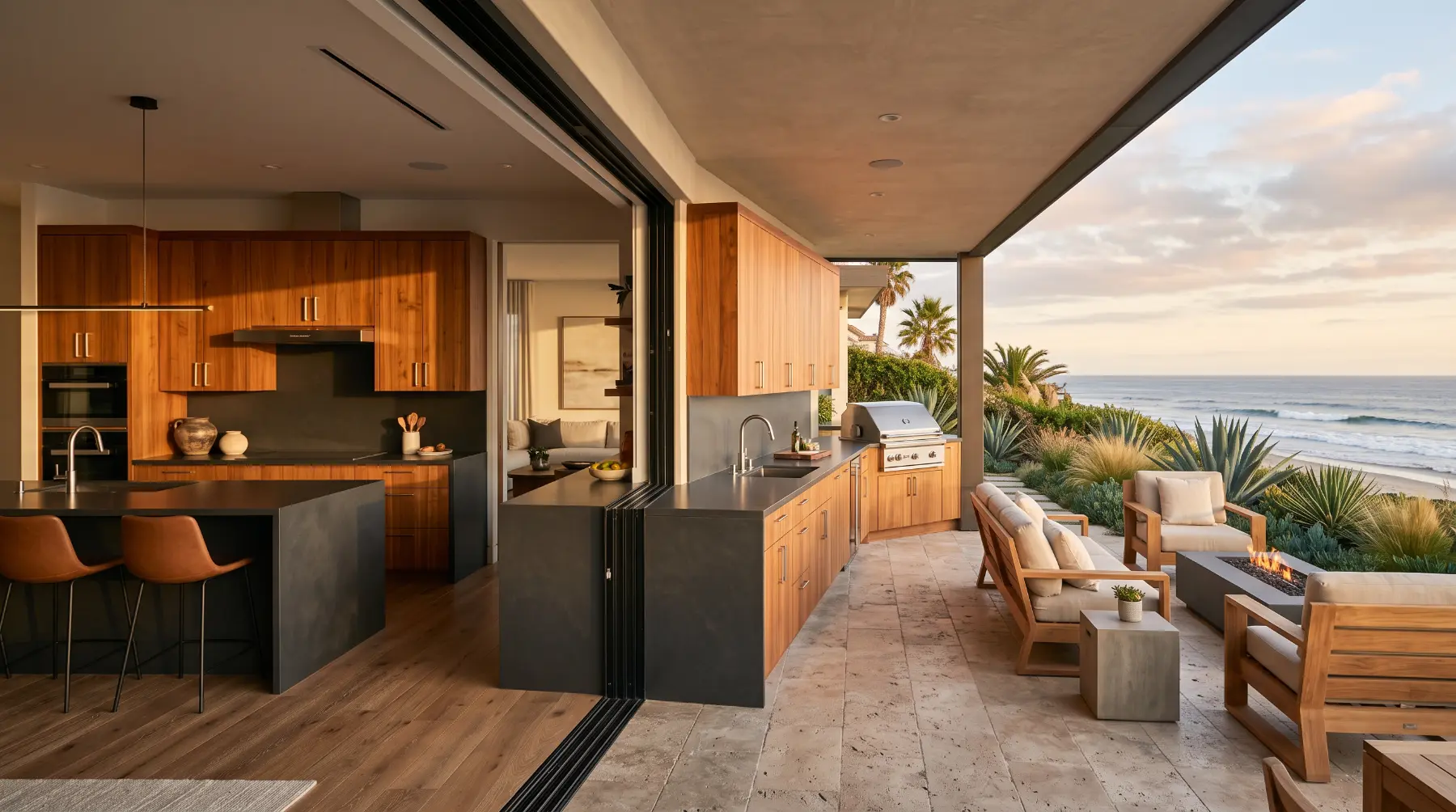
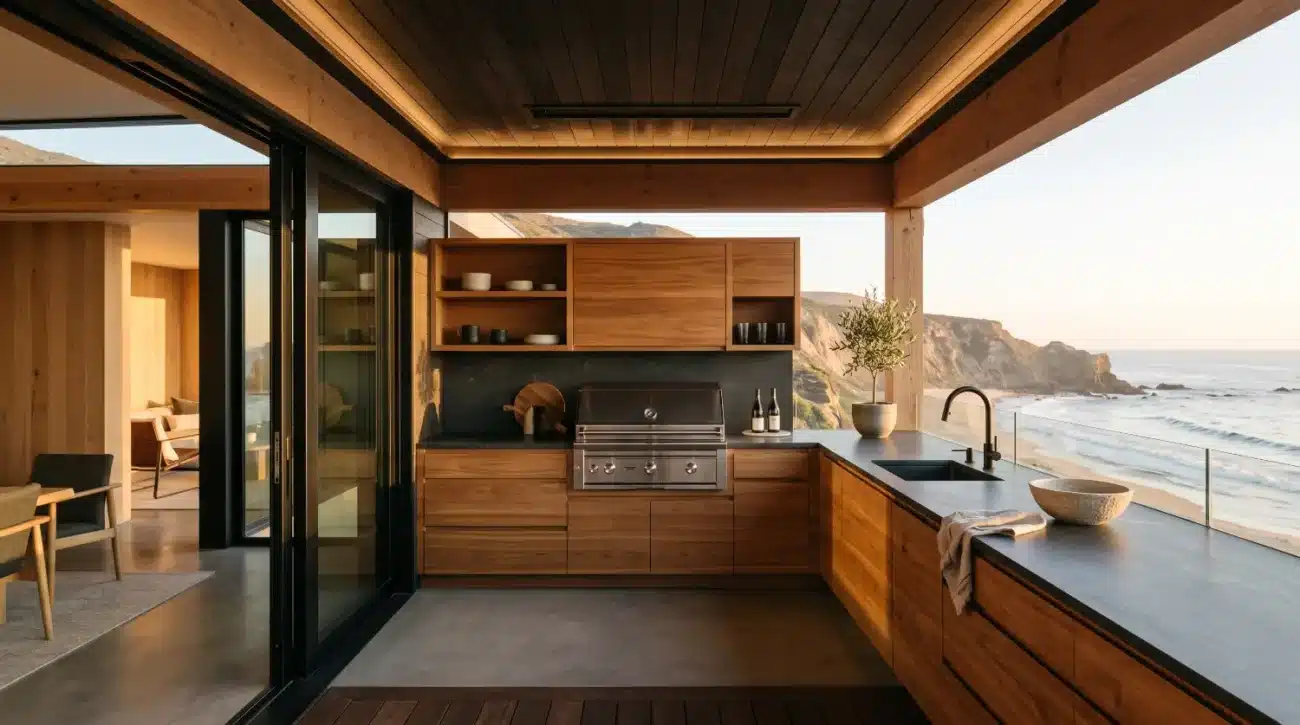
- Visual Continuity: Designing an indoor-outdoor kitchen transition requires matching grain alignment, cabinet profiles, and hardware finishes across large glass slider thresholds.
- Material Science: Grade-A plantation teak offers unrivaled weather resistance, relying on natural rubbers and tectoquinones to prevent rot, salt spray damage, and seasonal warping.
- Architectural Integration: Proper execution demands trade-level planning, including load-bearing structural support, marine-grade 316 stainless steel hardware, and passive appliance ventilation.
- Long-Term Protection: Sustaining custom outdoor cabinetry depends on correct finishing choices, preferring natural teak oils over film-forming sealers that trap destructive moisture.
How to Master the Indoor to Outdoor Kitchen Transition with Custom Teak Wall Cabinetry
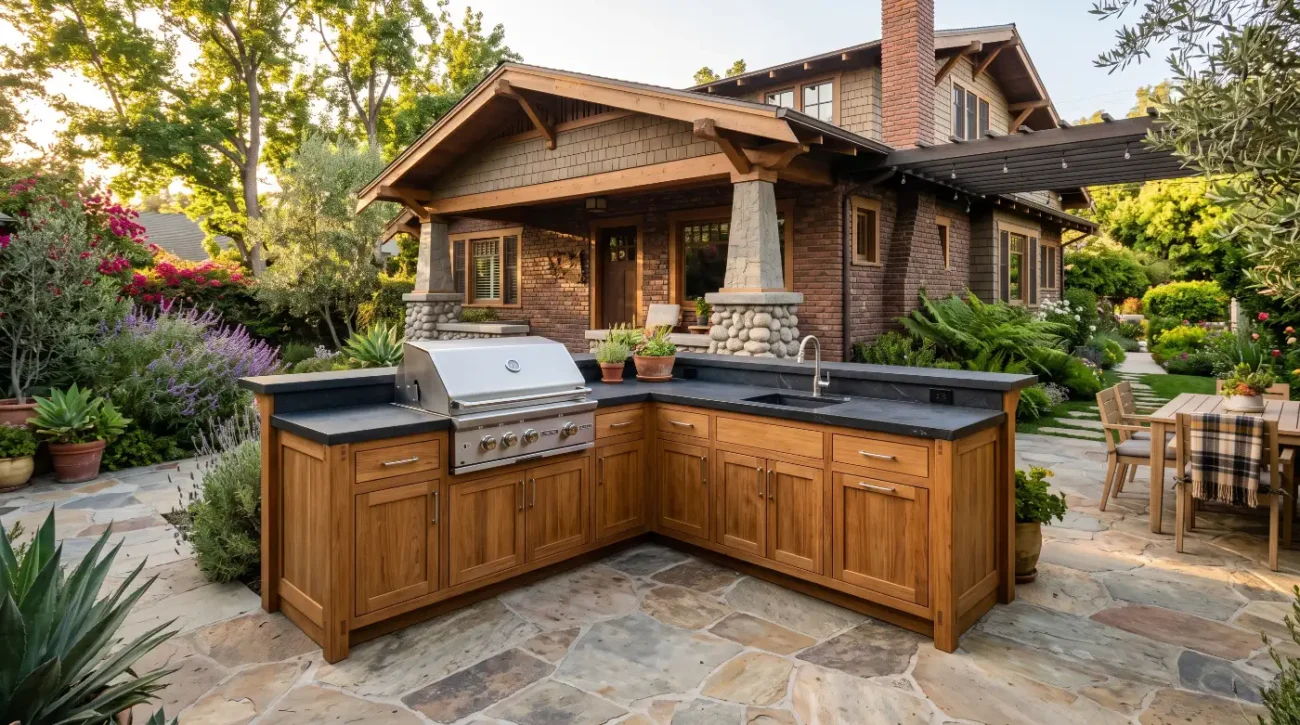
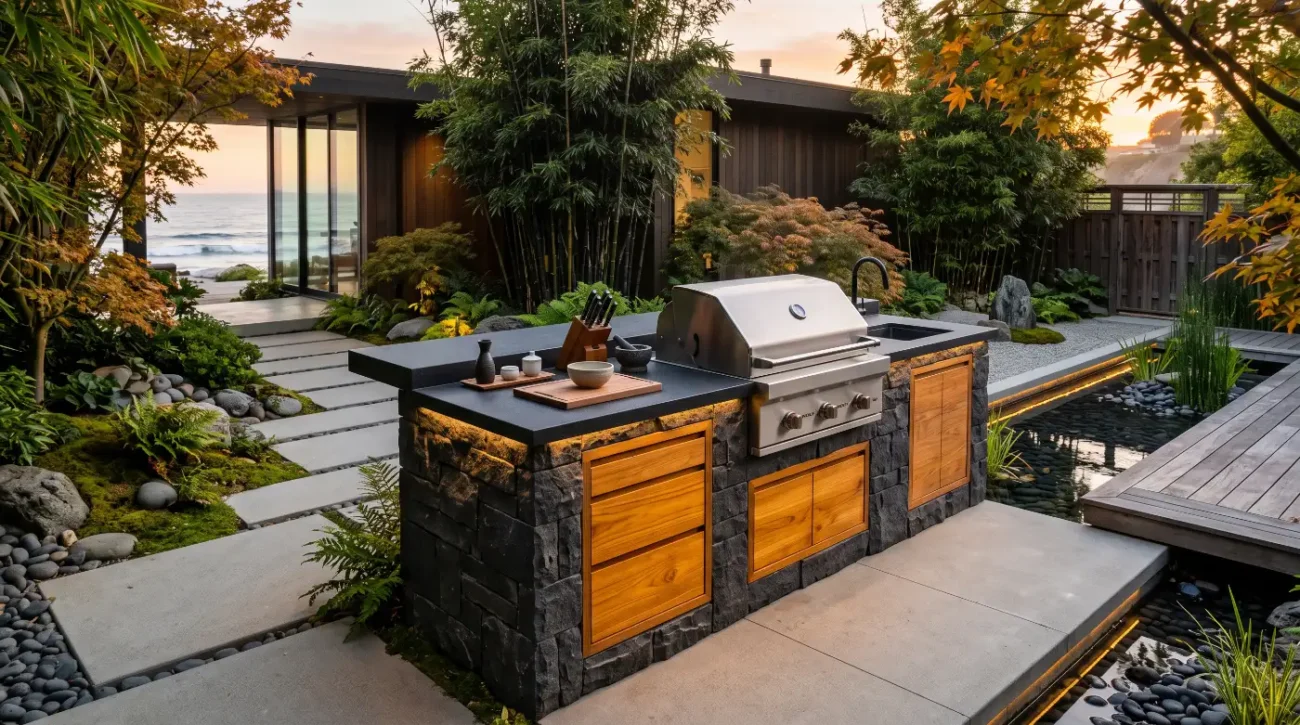
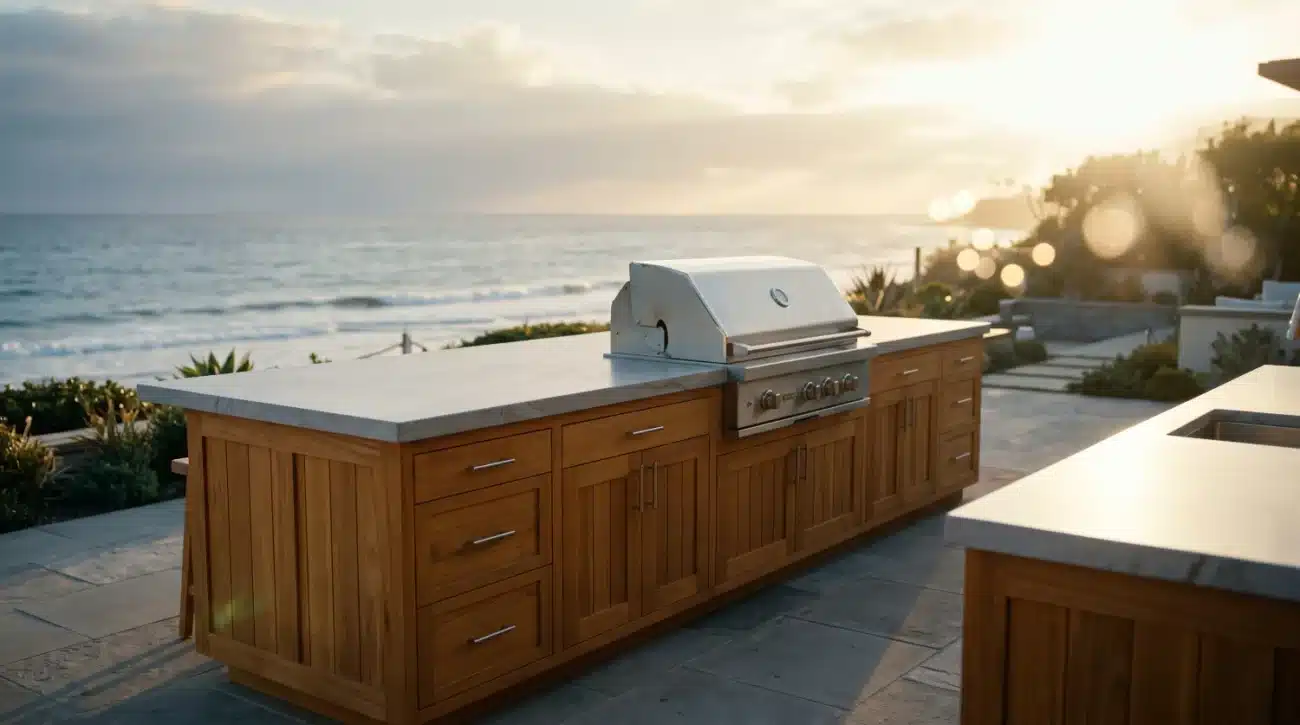
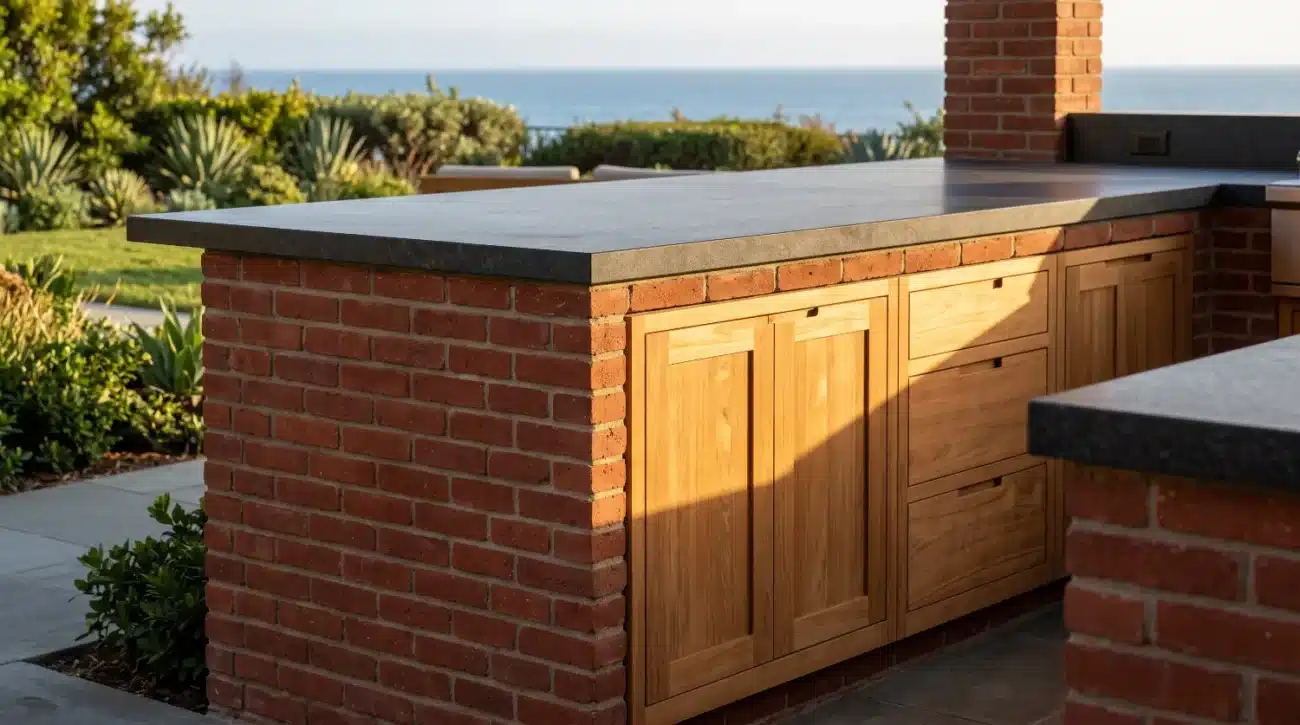
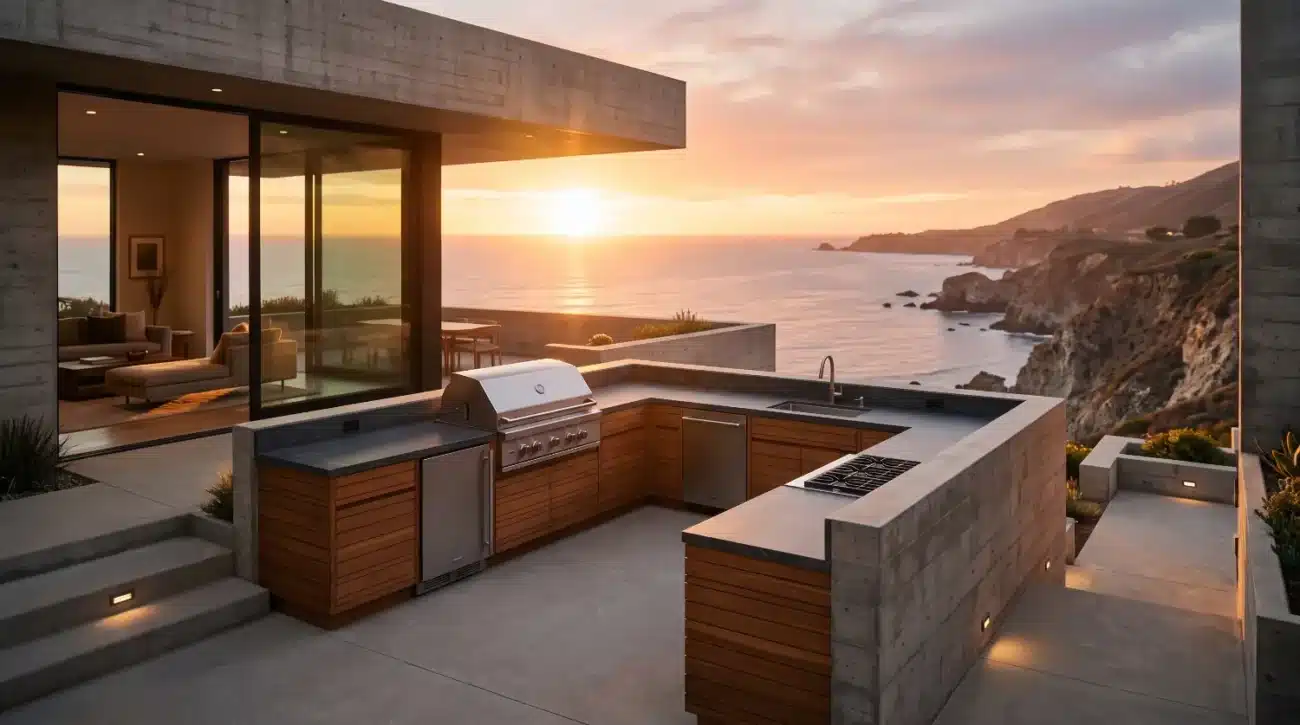
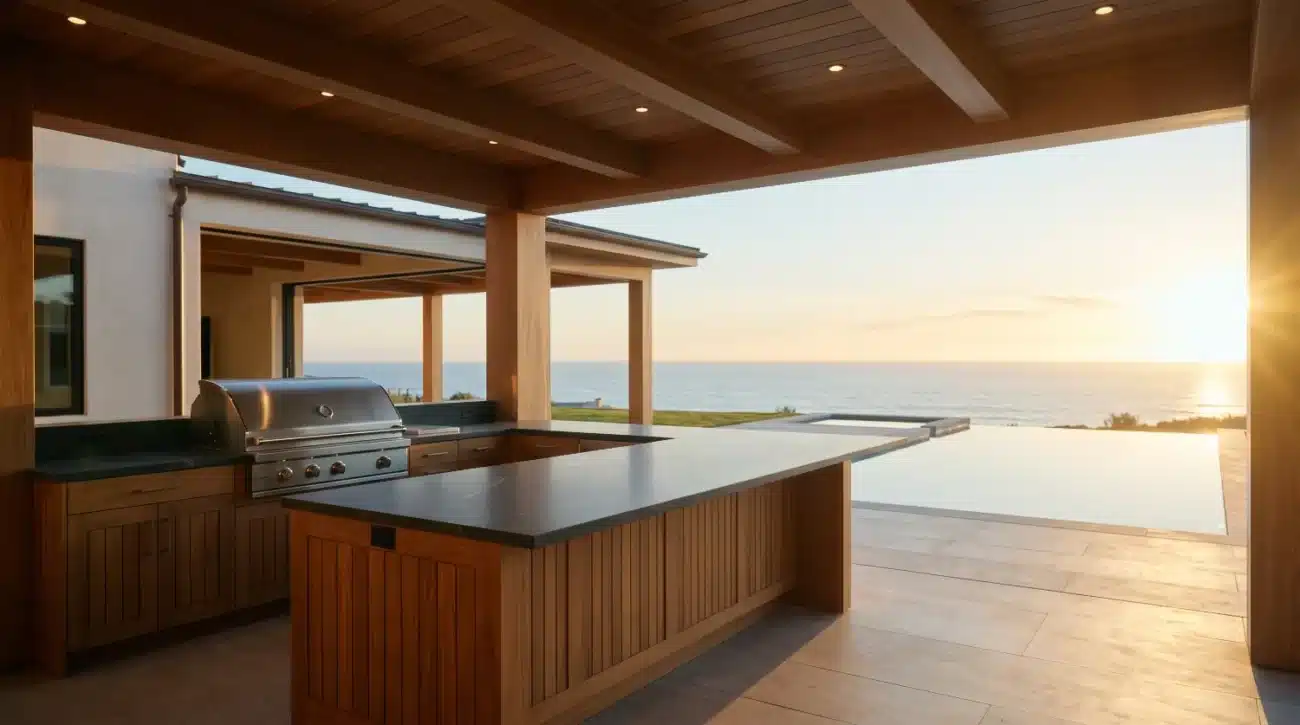
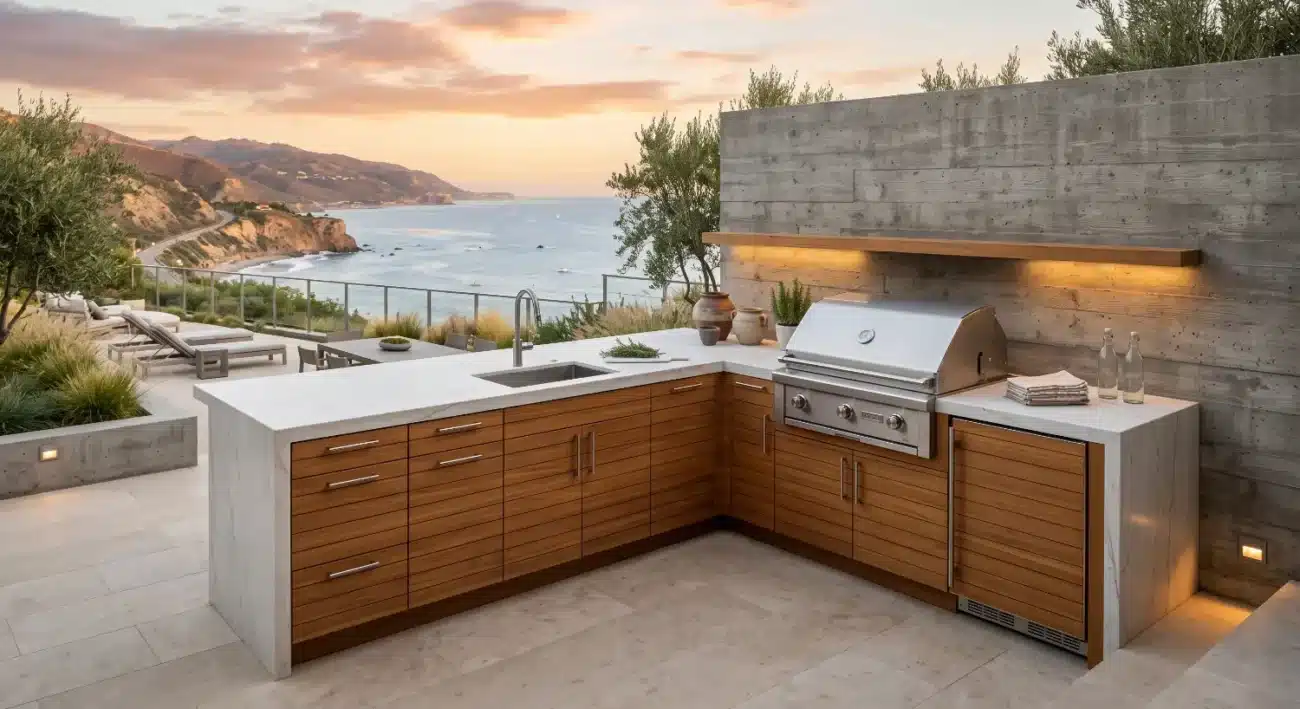
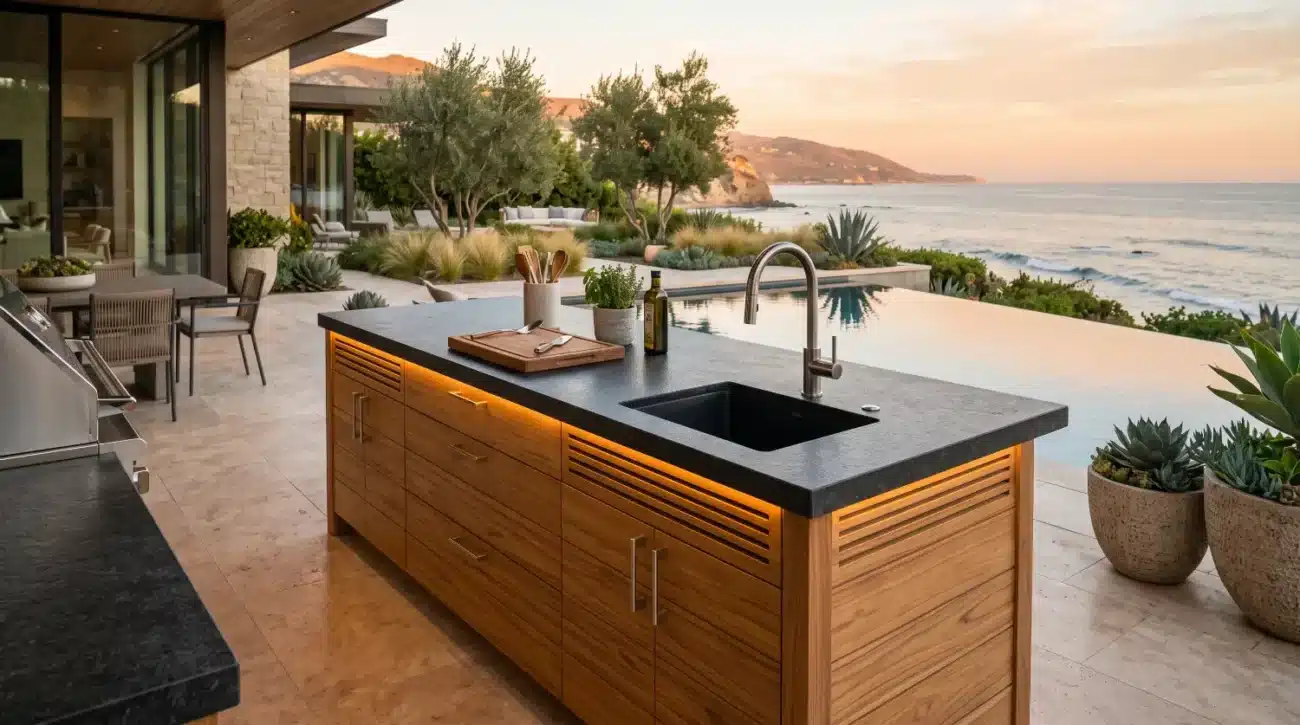
Transitioning luxury kitchen aesthetics from an enclosed interior to an open-air exterior space requires balancing architectural visual harmony with severe environmental exposure. When high-net-worth clients install expansive multi-slide glass doors in coastal Malibu estates or Palm Springs retreats, the boundary between the interior culinary space and the outdoor loggia vanishes. Maintaining a continuous design language across this threshold requires extending interior cabinet runs, wood tones, and spatial proportions directly into the open air. However, standard interior cabinetry fails rapidly when exposed to humidity swings, intense UV radiation, and ocean salt spray. Specifying solid teak wall cabinetry from Pacific Teak Millworks bridges this gap, giving architects and interior designers a weather-resistant millwork solution that preserves indoor refined craftsmanship outdoors.
Comparing Interior Architectural Cabinetry and Exterior Marine-Grade Teak Cabinetry
Understanding the material and structural differences between interior and exterior millwork is essential for long-term project success:
- Core Material Construction: Interior cabinetry traditionally uses plywood cores with thin natural wood veneers, whereas exterior marine-grade cabinetry requires solid Grade-A teak (Tectona grandis) throughout every box and face frame.
- Hardware Resistance: Standard interior installations rely on basic steel or decorative brass hardware that oxidizes quickly outdoors, while exterior setups require 316 marine-grade stainless steel hardware engineered to resist saltwater exposure.
- Joinery Engineering: Interior boxes frequently use glued dowels or edge-banded joints, while exterior teak cabinetry utilizes deep mortise-and-tenon solid wood joinery built to absorb continuous physical stress.
- Finishing Dynamics: Interior cabinets utilize film-forming polyurethane or lacquered coats that crack outdoors, whereas exterior teak relies on penetrating natural oils or an unsealed finish that matures into a silver patina.
- Movement Allowance: Interior units assume zero thermal expansion, while exterior cabinetry features engineered expansion gaps and breathing slots to accommodate atmospheric changes.
A common failure in high-end exterior projects occurs when designers specify interior-grade cabinetry materials—such as marine plywood cores with thin surface veneers—for outdoor covered patios. Even under a roof overhang, outdoor humidity cycles cause veneered panels to delaminate within two seasons. The moisture swells the substrate, popping the edge banding and destroying the clean lines intended to mirror the interior kitchen. Achieving a durable transition requires solid wood construction engineered specifically for atmospheric movement.
Bridging the D2C to B2B Specification Gap
High-net-worth homeowners often initiate outdoor kitchen projects by curating digital mood boards featuring seamless indoor-to-outdoor living spaces. These visual concepts feature matching grain patterns, hidden hardware, and flush cabinet runs that blur the boundary between the indoor kitchen and the exterior patio. When clients present these concepts to their design teams, the project shifts from aesthetic inspiration to technical execution. Landscape architects and custom builders must translate these conceptual visions into structural realities that satisfy strict building codes and withstand local climate conditions.
Bridging this gap requires clear communication between the homeowner, interior designer, landscape architect, and general contractor. Specifiers must select materials that deliver both the fine refined aesthetics requested by the client and the structural durability demanded by trade professionals. By sourcing precision-milled cabinetry collections directly from specialist manufacturers, design teams streamline CAD planning and eliminate site-milling guesswork.
The Indoor-Outdoor Specification Workflow
Executing a complex luxury millwork specification involves a structured three-phase transition:
-
Homeowner Vision and Aesthetic Discovery: The client compiles digital mood boards, selects preliminary material samples, and defines overall lifestyle and aesthetic goals for the outdoor living room.
-
Design Team and CAD Integration: Interior designers, architects, and specifiers translate client visions into formal architectural layouts, verifying appliance clearances, structural framing loads, and utility hookup locations.
-
Trade Execution and Site Delivery: General contractors prepare site framing, electrical, and plumbing infrastructure before taking delivery of custom-milled cabinetry from Pacific Teak Millworks for precision mounting.
When designing an extended cabinet run that passes through a structural glass wall, coordinate hardware profiles, crown reveals, and face-frame styles early in the planning phase. Selecting uniform cabinetry profiles maintains visual flow whether the glass wall is fully open or closed.
-
Align Architectural Lines: Match sightlines, toe-kick heights, and door panel reveals between indoor and outdoor runs to create a single continuous kitchen space.
-
Coordinate Material Palettes: Pair warmer golden teak tones with interior hardwoods, or utilize oxidized grey teak patinas to echo stone floor finishes.
-
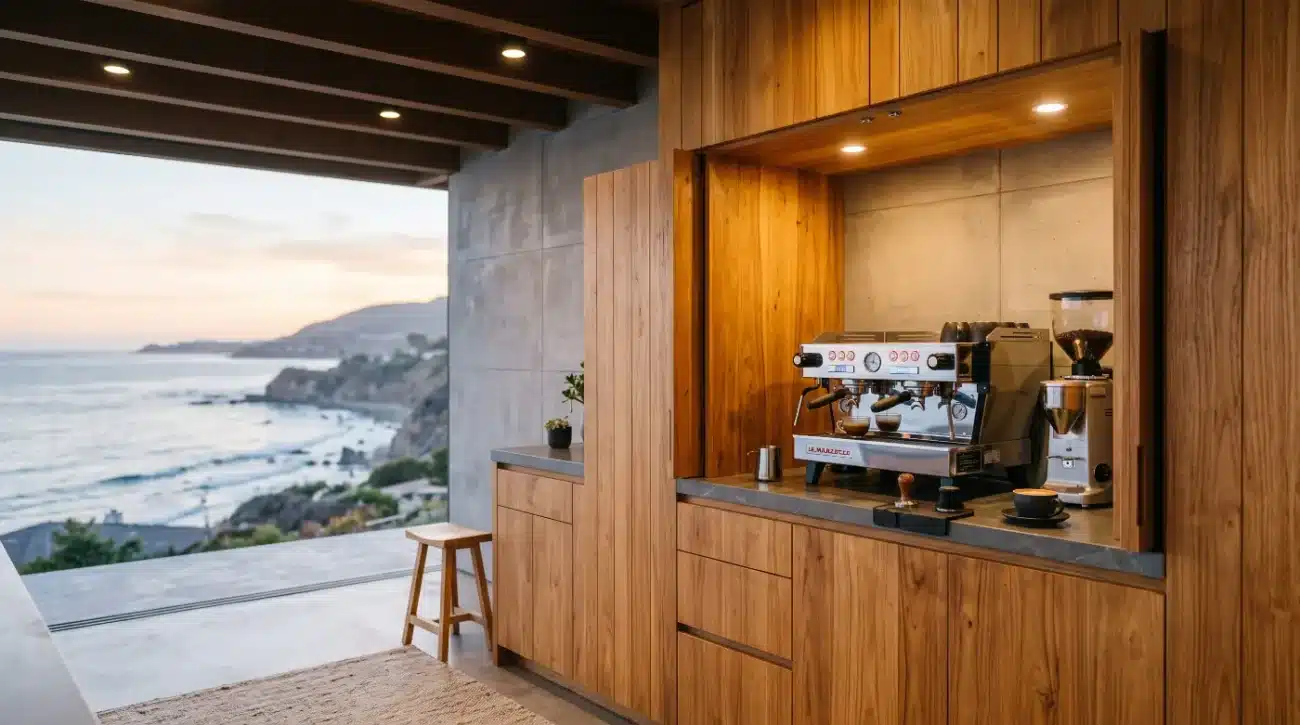
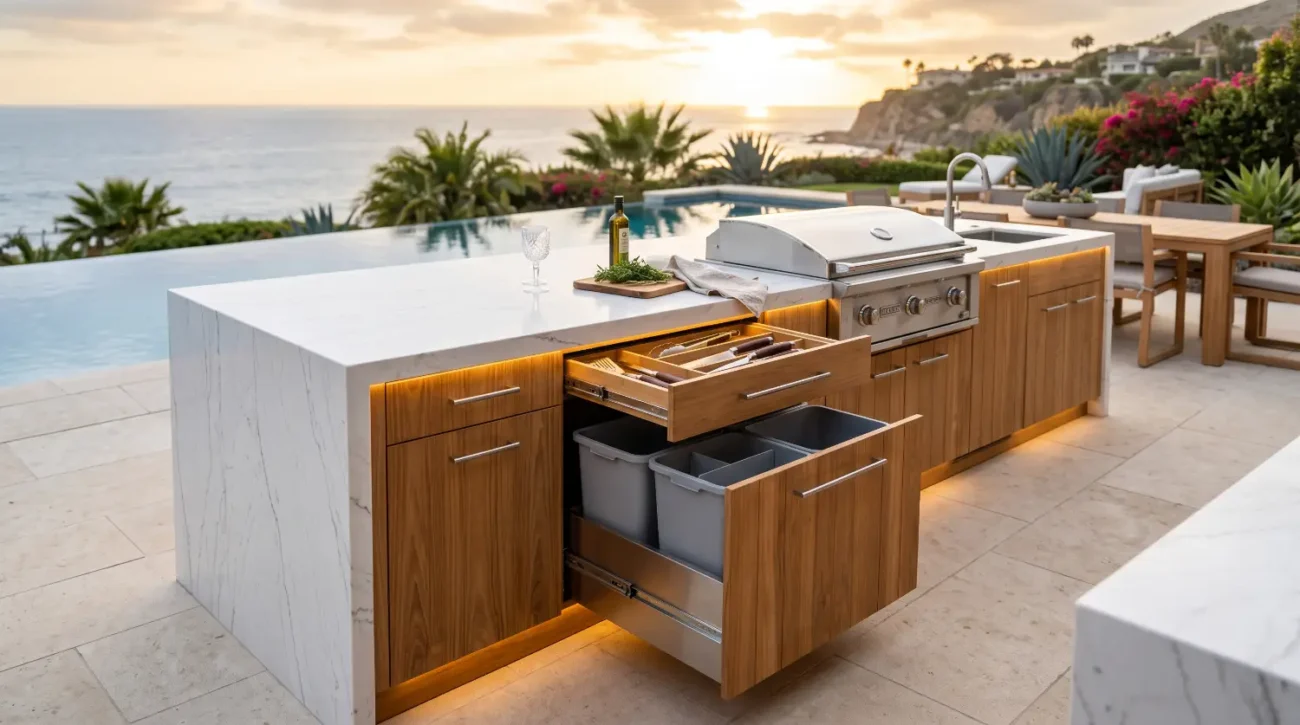
Integrate Hidden Storage: Specify custom upper wall units to hide outdoor utility access points, power outlets, and task lighting drivers without breaking the design aesthetic.
-
Standardize Hardware Finishes: Utilize matching matte black or brushed stainless steel pull profiles across all interior and exterior cabinet doors.
Understanding Teak Material Science and Wood Anatomy
The longevity of exterior cabinetry depends directly on the biological structure of the chosen wood species. Genuine Grade-A plantation teak (Tectona grandis) harvested from mature heartwood contains high concentrations of natural rubbers, silica, and tectonic resins. According to research from the USDA Forest Products Laboratory, these natural extractive compounds act as an internal water repellent and biocide, preventing decay-causing fungi and wood-boring insects from establishing a foothold.
Unlike domestic hardwoods like oak or maple, which absorb moisture and swell rapidly, Grade-A teak maintains exceptionally low shrinkage coefficient rates. This dimensional stability prevents cabinet doors from warping, binding, or splitting when exposed to shifting ambient humidity. When raw wood is exposed to sunlight, UV rays break down the surface lignin, causing the natural golden-brown oils to oxidize into a light silver-grey patina over six to twelve months. This surface oxidation is purely aesthetic and does not compromise the internal structural strength or decay resistance of the underlying heartwood.
Structural Anatomy of Grade-A Teak Heartwood
Grade-A teak performance stems from its distinct anatomical timber layers:
-
Outer Sapwood Boundary: The soft, pale outer layer of the tree trunk, characterized by low oil content and high moisture vulnerability, which is completely discarded in luxury cabinet milling.
-
Dense Heartwood Core: The rich central core of mature timber, packed with natural silica, tectonic resins, and high oil concentration that naturally repels water and prevents rot.
-
Tight Annual Growth Rings: High-density grain structure resulting from controlled growth, providing structural rigidity and resistance to splitting across extreme temperature swings.
-
Natural Tectoquinones: Naturally occurring organic chemical compounds present within the heartwood fibers that make the timber toxic to insects and immune to fungal decay.
A common misconception among homeowners is that applying clear film-forming coatings, such as outdoor polyurethane or marine spar varnish, will preserve the fresh golden-brown color forever. In exterior environments, solar UV light penetrates the clear coating, breaking down the top layer of wood fibers directly underneath the film. This causes the synthetic coating to bubble, crack, and peel within months. Moisture then enters through these micro-fissures, trapping water beneath the film and accelerating internal wood decay.
To maintain golden wood tones without risks of film failure, treat solid teak with specialized penetrating oils formulated for tropical hardwoods. For low-maintenance installations, allow the teak to oxidize naturally into a uniform silver patina, which requires simple periodic cleaning with standard soap and water. Exploring the Resource Center provides deeper insight into selecting appropriate protective treatments based on regional weather patterns.
Architectural Integration, Structural Engineering, and Trade Specification
Successfully installing outdoor wall cabinetry requires trade-level engineering that addresses load distribution, building tolerances, and marine hardware integration. Mounting upper wall cabinetry to exterior envelope walls introduces structural considerations that do not exist indoors. Outdoor wall structures must support heavy solid teak framing, dense stone or porcelain countertops resting on lower units, and dynamic wind-load pressures. Designers and builders can review detailed mounting protocols and dimensional tolerances in the official Teak Care & Maintenance Guide to ensure site preparation meets structural requirements.
Structural Mounting Assembly for Outdoor Wall Cabinetry
Mounting upper wall cabinetry safely onto exterior building envelopes involves precise layering from the interior stud out to the finished cabinet:
-
Structural Wall Framing: Interior wall studs provide the primary load-bearing anchor for the entire heavy exterior wall assembly.
-
Exterior Building Envelope: Stucco, stone veneer, or architectural siding forms the primary weather barrier of the residential structure.
-
Marine-Grade Stainless Fasteners: Specialized 316 stainless steel lag bolts anchor directly into structural studs through the exterior cladding to prevent sheer failures.
-
Air Drainage Back-Spacer: A three-eighths-inch drainage cavity created by polymer shims allows airflow behind the cabinet, preventing trapped moisture against the building paper.
-
Solid Teak Hanging Cleat: Precision-milled solid teak French cleats lock the cabinet box flush to the wall while evenly distributing vertical shear weight.
-
Cabinet Box Assembly: Solid teak wall cabinetry featuring mortise-and-tenon joinery hangs securely on the cleat system without exposed external fasteners.
When integrating upper cabinetry, specifiers must account for thermal expansion and air circulation. Mounting solid teak cabinets directly against flat stucco or damp masonry walls can trap ambient moisture behind the unit, fostering mildew growth on building paper. Leaving a three-eighths-inch drainage gap behind wall-mounted units using marine-grade polymer shims allows airflow to dry out structural backings after heavy rainfall.
Marine Hardware and Joinery Physics
Standard interior soft-close hinges, glides, and mounting brackets rust quickly when exposed to outdoor atmospheric conditions, particularly in coastal salt-air environments. Exterior cabinetry requires hardware components forged entirely from 316 marine-grade stainless steel. This specialized steel alloy includes molybdenum, an element that significantly increases resistance to pitting and crevice corrosion caused by chloride ions in seawater and pool chemicals.
Material Performance: 316 Marine Stainless Steel vs. Standard Hardware
Choosing marine-grade components ensures mechanical hardware functions for decades without structural degradation:
-
Chemical Composition: Grade 316 stainless steel contains two to three percent molybdenum, whereas standard 304 stainless or zinc-plated steel contains zero molybdenum.
-
Corrosion Performance: Grade 316 actively repels pitting and crevice corrosion from ocean salt air, while standard hardware forms surface rust and binds within months.
-
Internal Dampening Mechanisms: Marine soft-close hinges utilize sealed hydraulic chambers designed for wet environments, whereas basic hardware springs rust and fail.
-
Longevity Expectations: Marine 316 hardware provides decades of smooth operation without staining adjacent teak wood or jamming drawer glides.
Traditional interior cabinet boxes rely on glued dowels, pocket screws, or particleboard fasteners that degrade when subjected to outdoor temperature swings and humidity cycles. In contrast, custom outdoor cabinetry uses traditional mortise-and-tenon joinery reinforced with waterproof structural adhesives. This mechanical interlocking design allows individual wood components to expand and contract naturally without straining the joints or pulling the face frame out of square.
The Physics of Mortise and Tenon Joinery
Interlocking joinery provides superior structural stability for exterior applications:
-
The Milled Tenon Rail: A solid wood projection carved onto the end of a horizontal cabinet rail, precision-milled to exact structural dimensions.
-
The Chiseled Mortise Stile: A matching rectangular cavity carved into the vertical cabinet stile, designed to receive the tenon with high mechanical friction.
-
Mechanical Grain Interlock: When joined, the grain directions lock together, allowing natural wood movement along the axis while resisting rotational twisting and sagging.
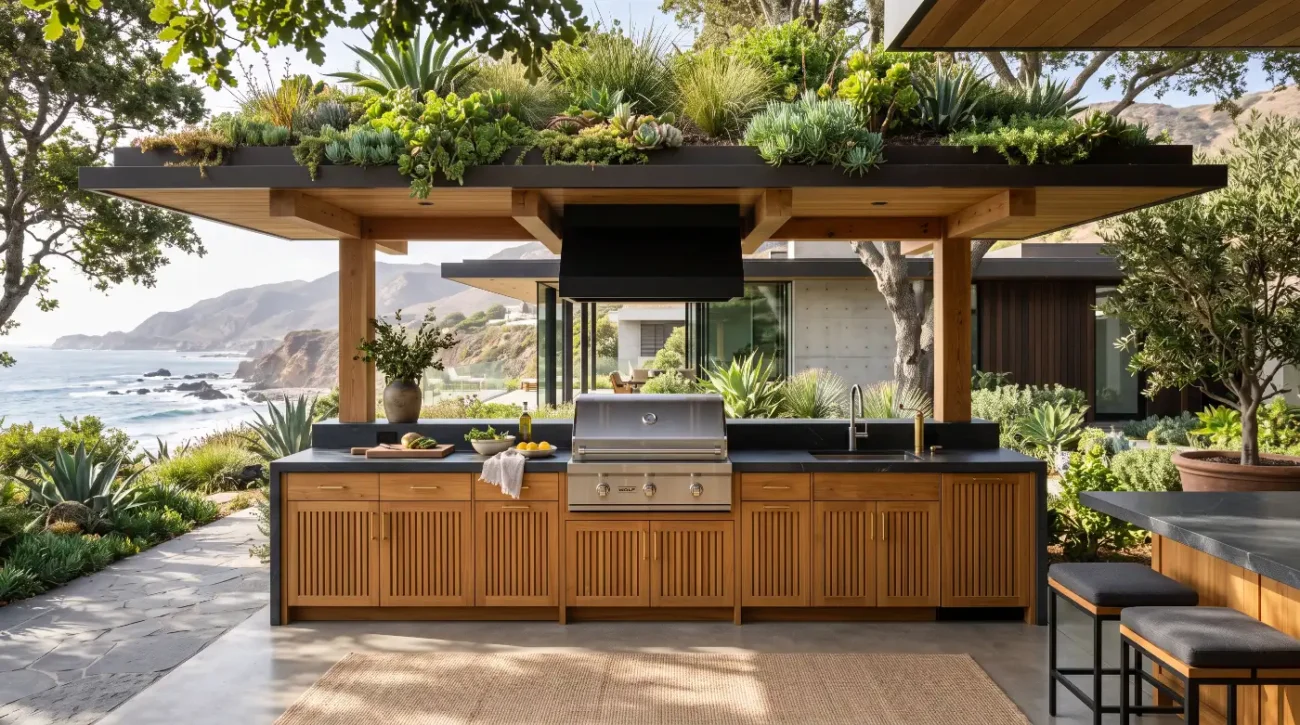
Beyond joinery selection, proper appliance integration is essential when designing outdoor kitchen layouts. Specifying upper wall cabinets directly above gas grills, side burners, or wood-fired pizza ovens introduces fire and thermal degradation hazards. Installing high-output grills beneath wooden wall cabinetry without sufficient overhead clearance or an approved commercial-grade exterior vent hood traps heat against cabinet undersides, scorching the wood finish and creating fire hazards.
-
Maintain Vertical Clearances: Ensure a minimum of thirty-six to forty-two inches of clear overhead space between outdoor cooking surfaces and upper cabinetry bottoms, unless installing an engineered heat shield.
-
Provide Ventilation Paths: Incorporate hidden venting channels behind upper wall units to allow heat from lower appliances to escape without heating cabinet interiors.
-
Incorporate Soft-Close Hydraulics: Utilize fully sealed 316 stainless steel soft-close hinge dampening mechanisms engineered to resist salt spray and dust infiltration.
-
Engage Trade Assistance: Specifiers can consult the team directly through Contact Us / Trade Inquiries to download CAD files, request customized physical timber samples, or verify load calculations for heavy natural stone installations.
Regional Environmental Considerations
Outdoor kitchen millwork must perform across vastly different regional microclimates, each presenting distinct material risks:
-
Coastal Environments (Malibu, Miami, The Hamptons): High salt air causes rapid metal oxidation and leaves salt crusts that attract moisture. Mitigation requires 316 marine stainless steel hardware and routine fresh-water rinses to clear salt deposits.
-
Desert Microclimates (Palm Springs, Austin): Extreme heat, low humidity, and intense UV exposure cause rapid surface drying. Mitigation demands deep-penetrating natural teak oils to nourish wood fibers and maintain dimensional stability.
-
Pacific Northwest and Damp Climates: Extended rain, high ambient humidity, and freeze-thaw cycles create standing moisture risks. Mitigation requires air-drainage back-spacers behind cabinets to ensure rapid drying.
Architects and specifiers can evaluate regional installation requirements and structural options by referencing the core product guides, including:
Reviewing common specification questions in the official Frequently Asked Questions helps trade professionals verify dimensions, lead times, and site preparation steps before installation begins. To see real-world project applications and design inspiration, explore the curated installation gallery on the Outdoor Design Blog.
External References
Key Takeaways: Outdoor Kitchen
-
Architectural Flow: Transitioning indoor kitchen design to an outdoor kitchen requires matching face-frame reveals, grain directions, and hardware finishes across glass wall thresholds.
-
Grade-A Teak Science: Natural silica, rubber resins, and tectoquinones make Grade-A teak exceptionally resistant to rot, insect damage, and moisture movement.
-
Marine Hardware: Exterior cabinetry requires 316 marine-grade stainless steel hardware to prevent rust and mechanical binding in coastal salt air environments.
-
Finishing Guidelines: Avoid clear film-forming polyurethane or spar varnish finishes, which trap internal moisture and peel under solar UV radiation.
-
Ventilation Clearance: Maintain adequate clearance and ventilation paths between cooking appliances and upper teak wall cabinetry to prevent heat damage to your outdoor kitchen.
Consult with Pacific Teak Millworks
Whether specifying a continuous indoor-outdoor residential footprint or designing a custom coastal loggia, selecting properly engineered millwork ensures long-term performance and aesthetic integrity. The team at Pacific Teak Millworks provides CAD files, timber finish samples, and trade specification support for architects, interior designers, and builders. Contact Darin and the trade team directly at (949) 365-6513, email darin@pacificteakmillworks.com, or visit Contact Us / Trade Inquiries to discuss your custom project requirements.