Fast Track Summary
-
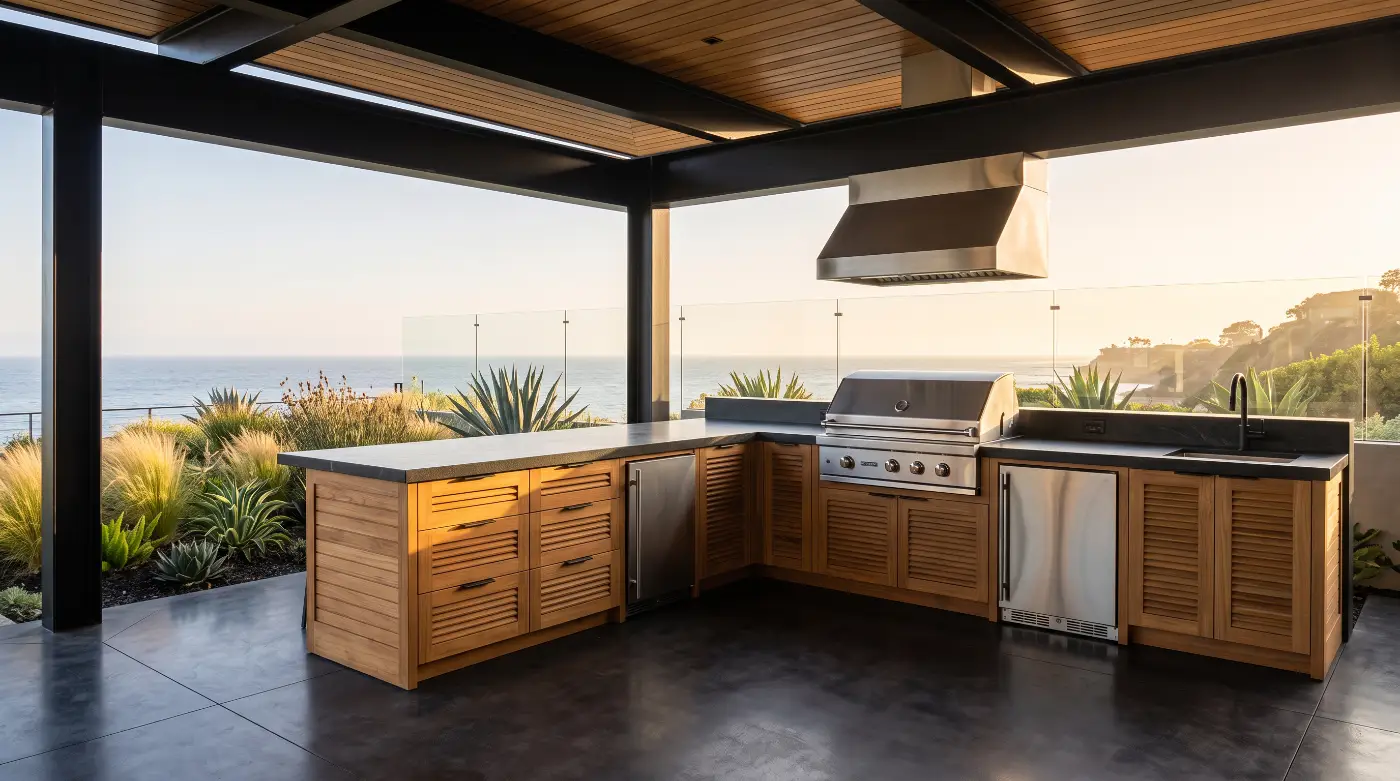
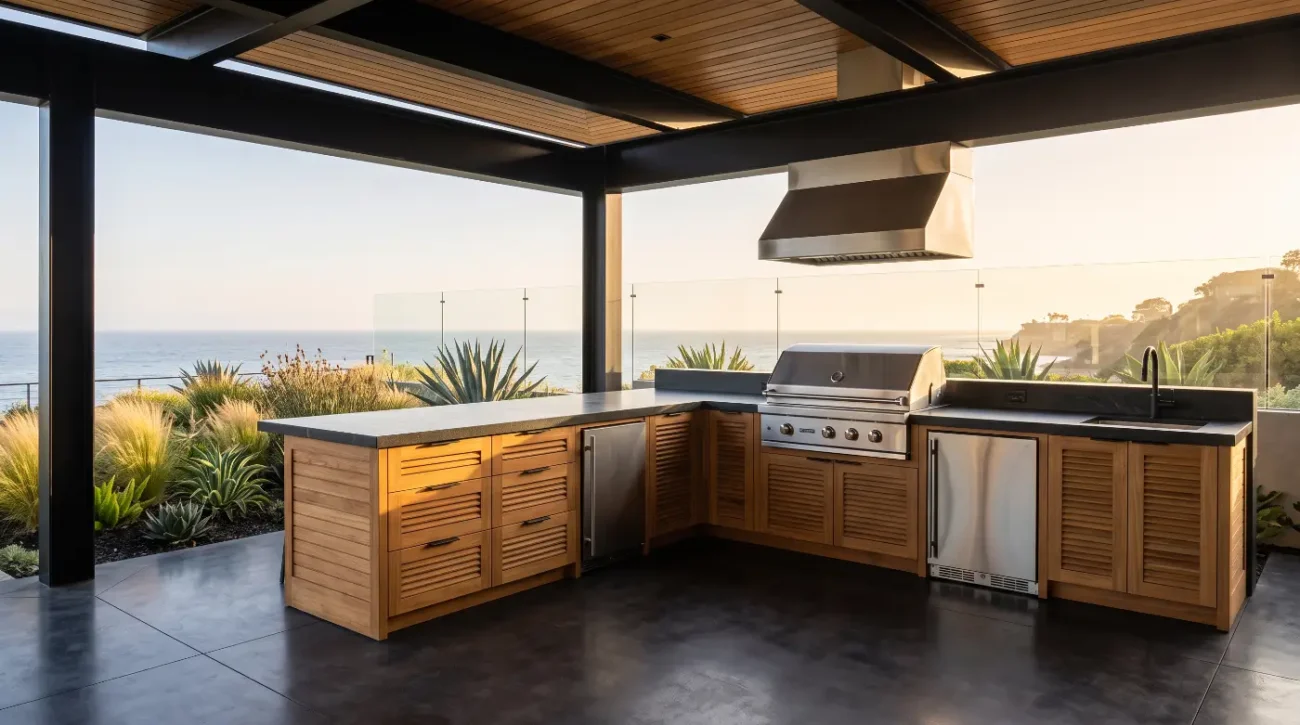
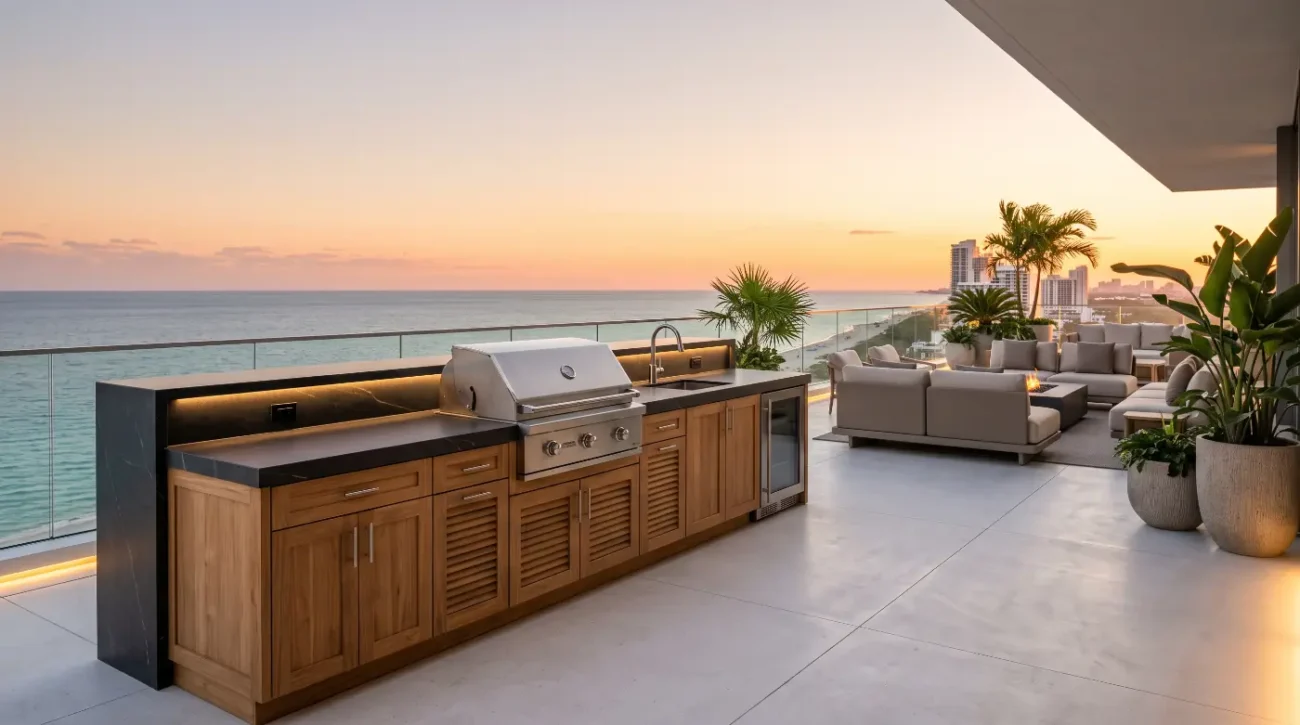
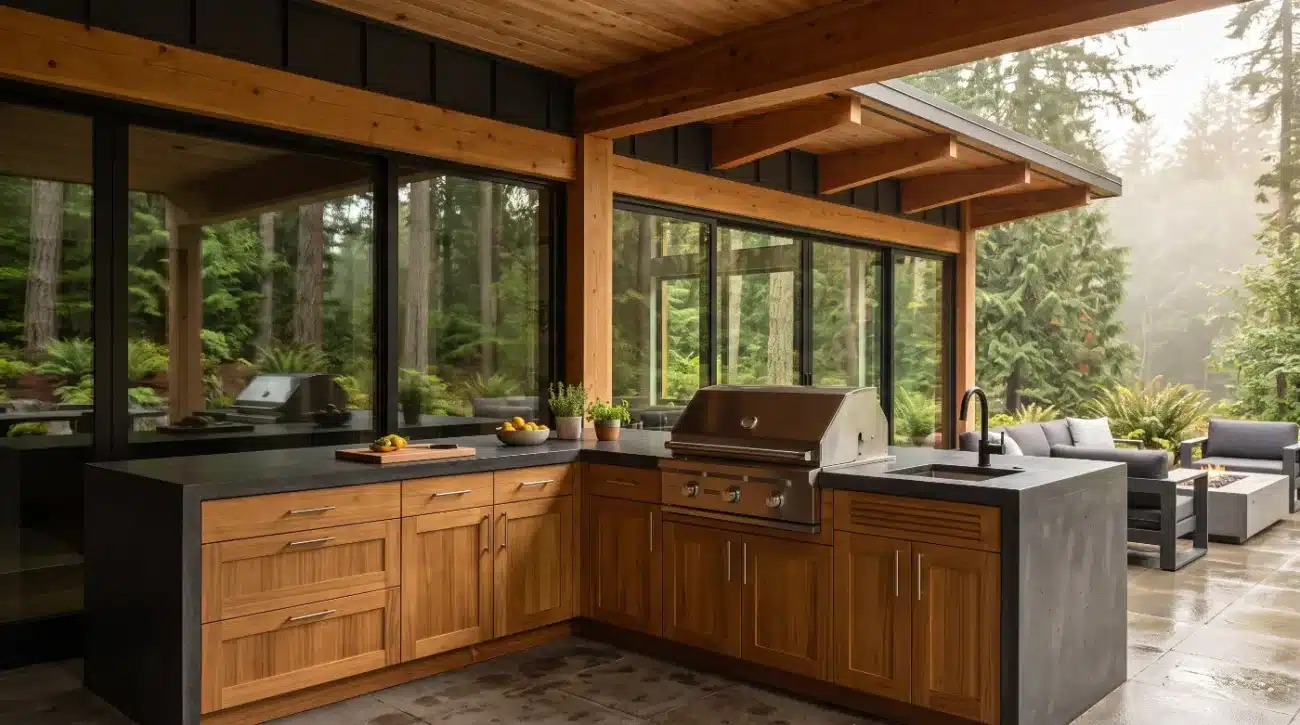
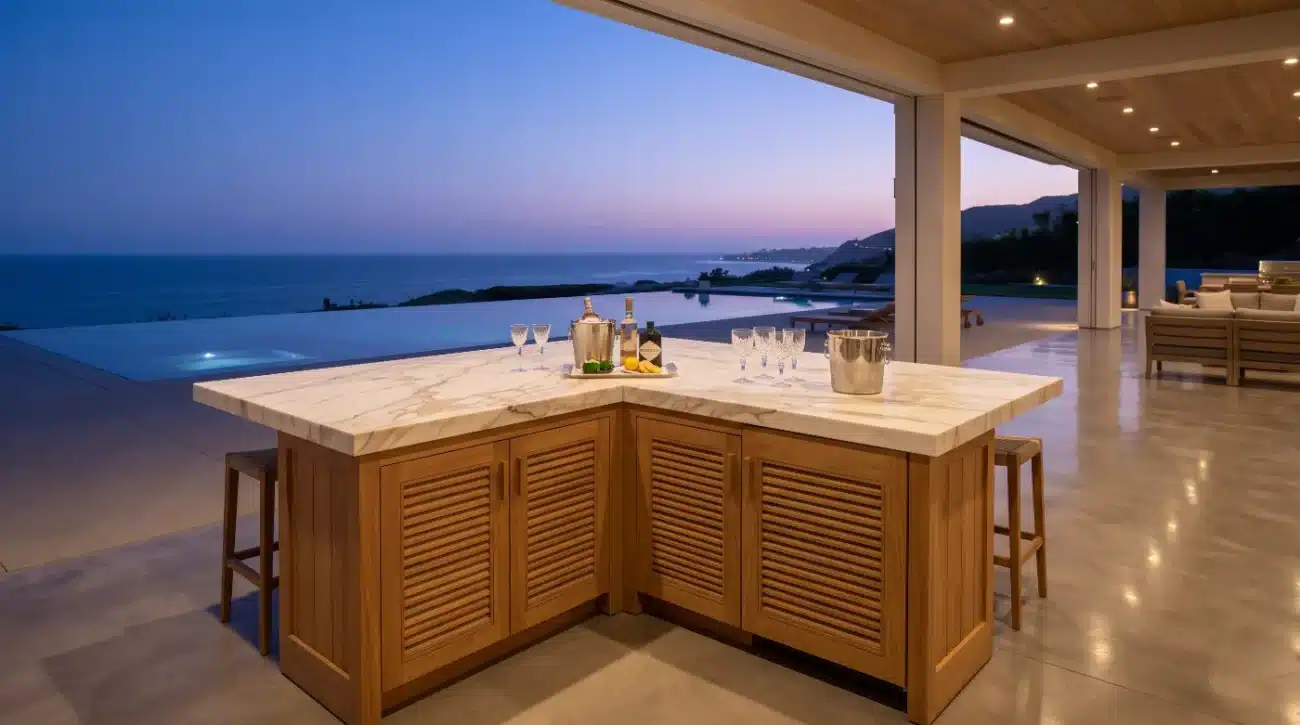
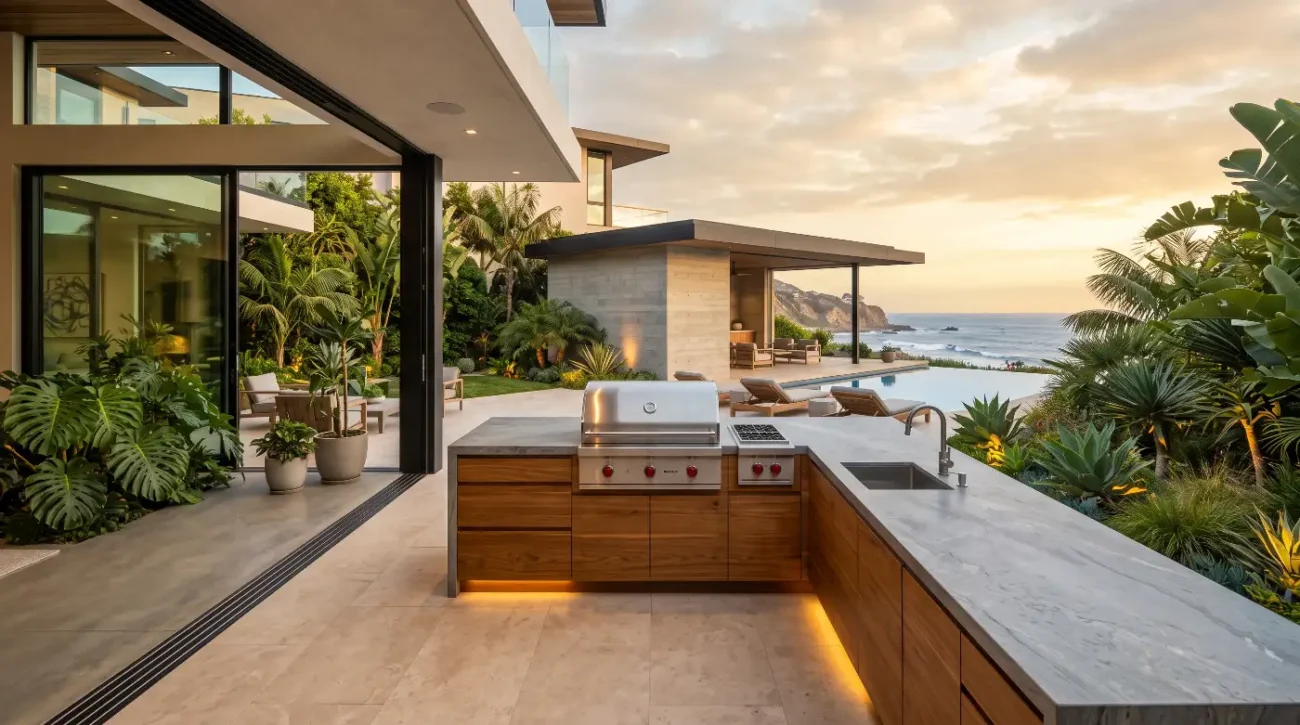
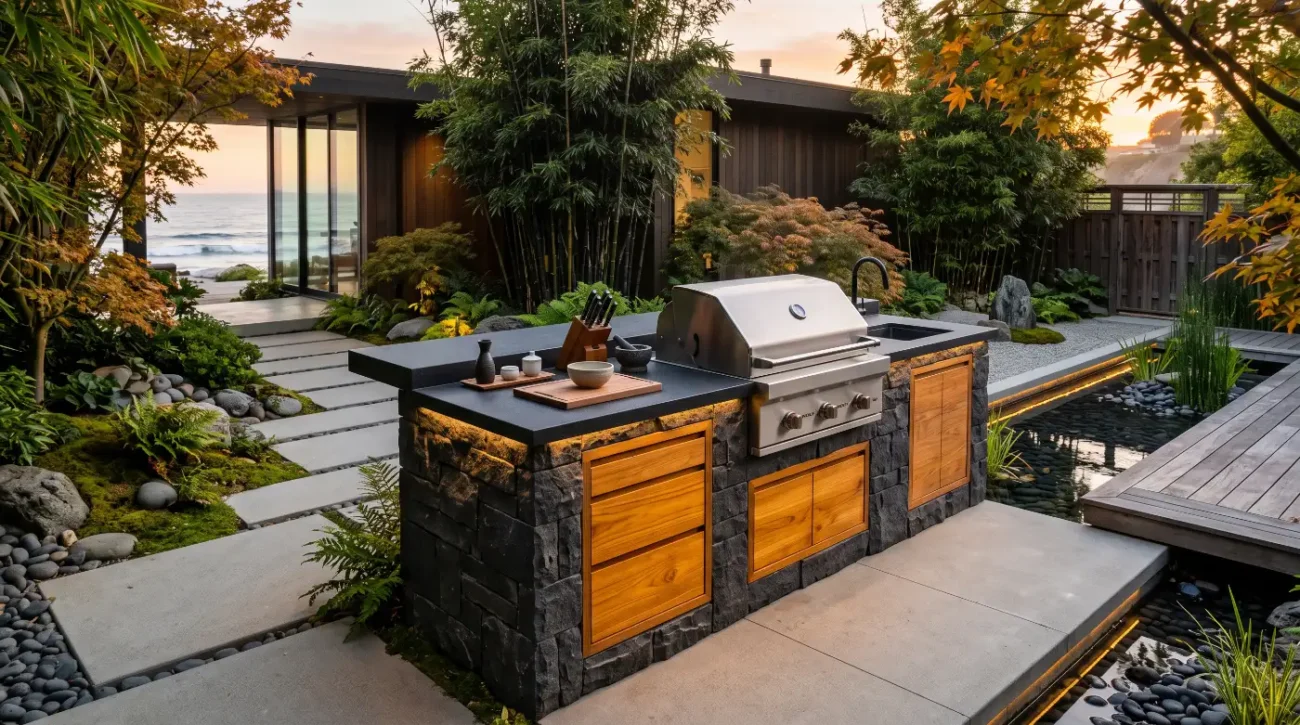
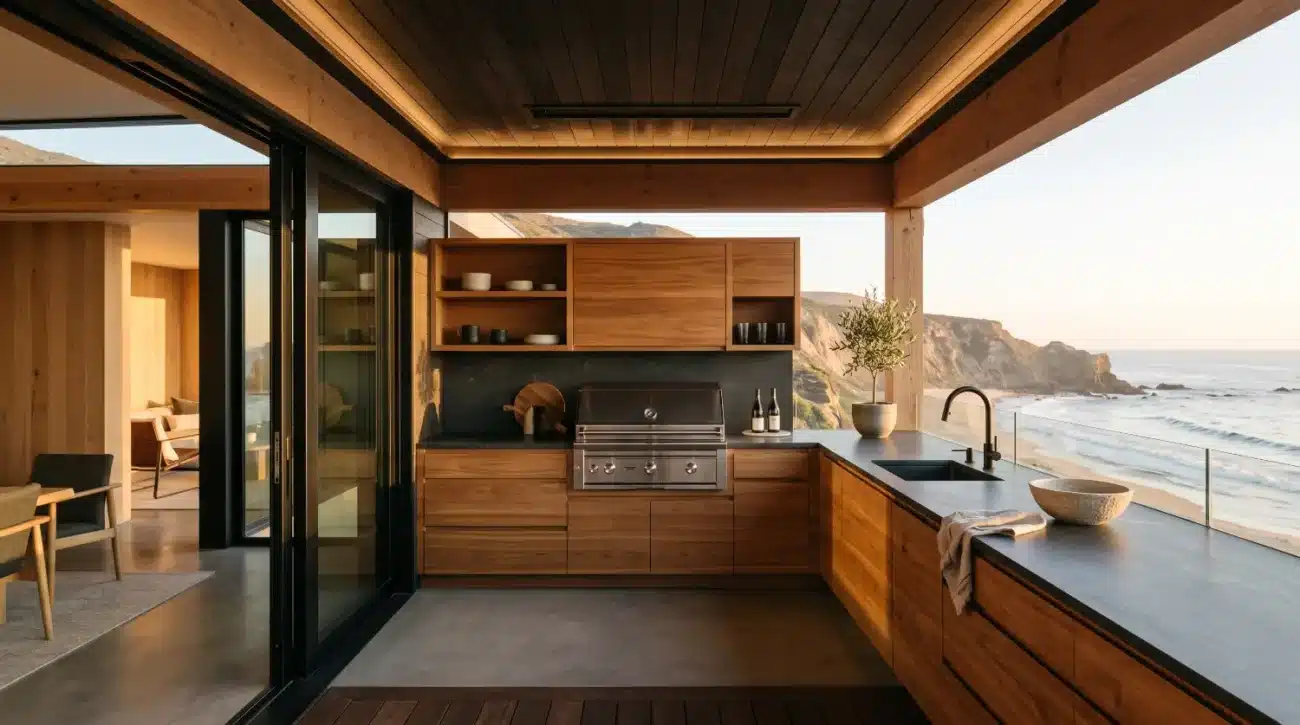
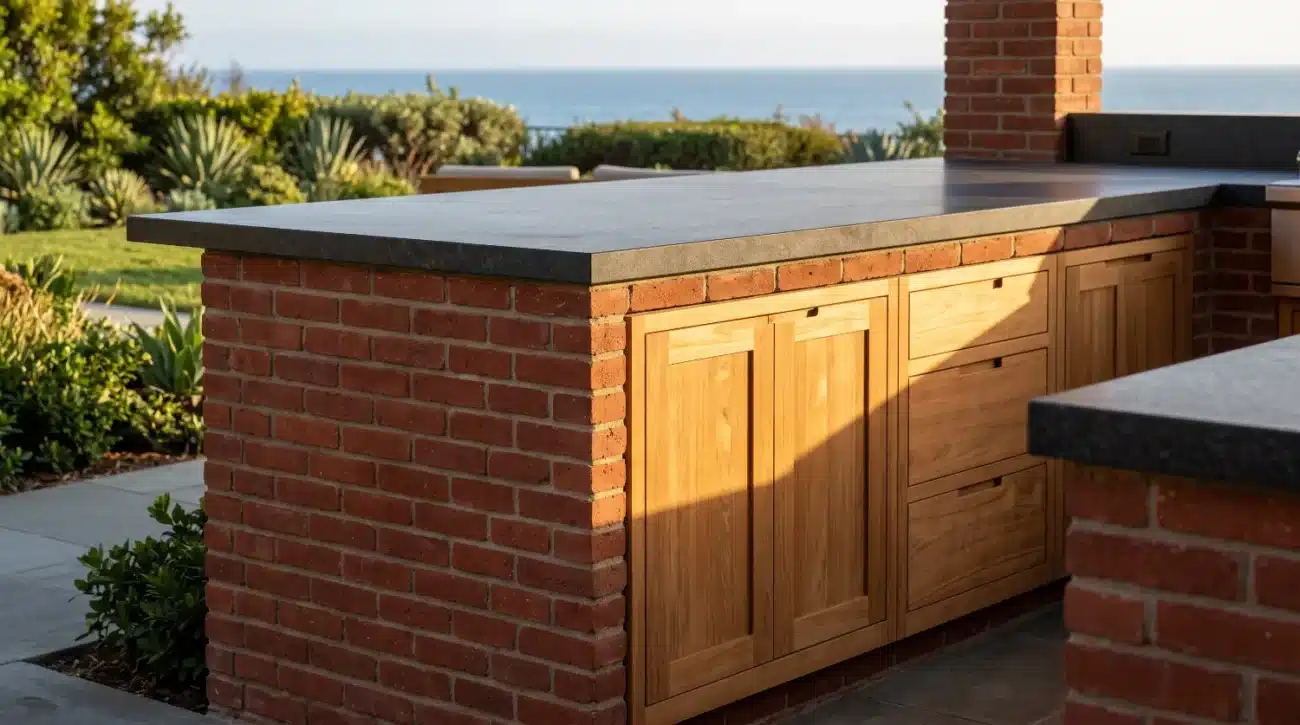
Aesthetic Balance: Juxtaposing cold black powder-coated steel structural framing with warm Grade-A solid teak cabinetry softens harsh modern industrial architecture while maintaining a refined urban luxury aesthetic.
-
Material Science: Grade-A plantation teak naturally resists marine salt spray, UV degradation, and moisture cycles due to its dense cellular structure, natural rubber compounds, and high silica content.
-
Engineering Precision: Integrating heavy stone or concrete countertops over teak cabinetry requires precise load distribution, 316 marine-grade stainless steel hardware, and allowance for natural wood movement.
-
Trade Integration: Achieving flawless execution relies on early CAD/BIM specifier coordination, proper gas ventilation clearances, and selecting modular solid wood cabinetry systems built to marine specifications.
Architectural Harmony: How Teak Softens Industrial Steel
When a luxury homeowner in Malibu or a penthouse client in urban Austin demands a modern industrial patio remodel, designers frequently encounter a structural design dilemma. Raw concrete slabs, exposed dark I-beams, black powder-coated aluminum pergolas, and dark porcelain countertops create a striking architectural envelope. However, without a warm, natural counterweight, these hardscapes feel sterile, uninviting, and thermally harsh under direct sun.
To bridge this gap, elite landscape architects and interior designers introduce solid teak millwork into the steel framework. The contrast between industrial metal and rich wood grain introduces necessary biophilic warmth without sacrificing modern minimalism. However, mixing wood with steel in an exposed exterior environment presents complex material dynamics that require careful trade consideration.
A high-net-worth client in Palm Springs recently presented their interior designer with a mood board featuring a cantilevered steel structure anchored by dark slate floors and black cabinetry. The designer immediately recognized a critical flaw. Dark metal cabinetry exposed to Desert Southwest solar radiation absorbs intense heat, making drawer handles untouchable and transferring ambient heat into beverage refrigerators. By specifying custom solid teak base cabinetry, the designer introduced a material that remains cool to the touch while softening the dark visual weight of the steel frame.
When evaluating material performance under extreme environmental exposure, several critical factors distinguish solid teak from powder-coated metal alternatives:
-
Surface Heat under Direct Sun: Solid Grade-A teak stays comfortable to the touch due to its low thermal conductivity, whereas powder-coated black steel absorbs extreme solar heat and creates dangerous thermal conditions.
-
Salt Air & Marine Corrosion: Teak contains high natural silica and oleoresin levels that inherently resist decay, whereas coated metal requires constant maintenance touch-ups at scratch, seam, or weld points to prevent rust.
-
Aesthetic Longevity Over Time: Natural teak gracefully yields a choice between an oiled golden luster or a noble silver patina, while factory metal coatings remain visually static and are highly prone to UV chalking or finish fading.
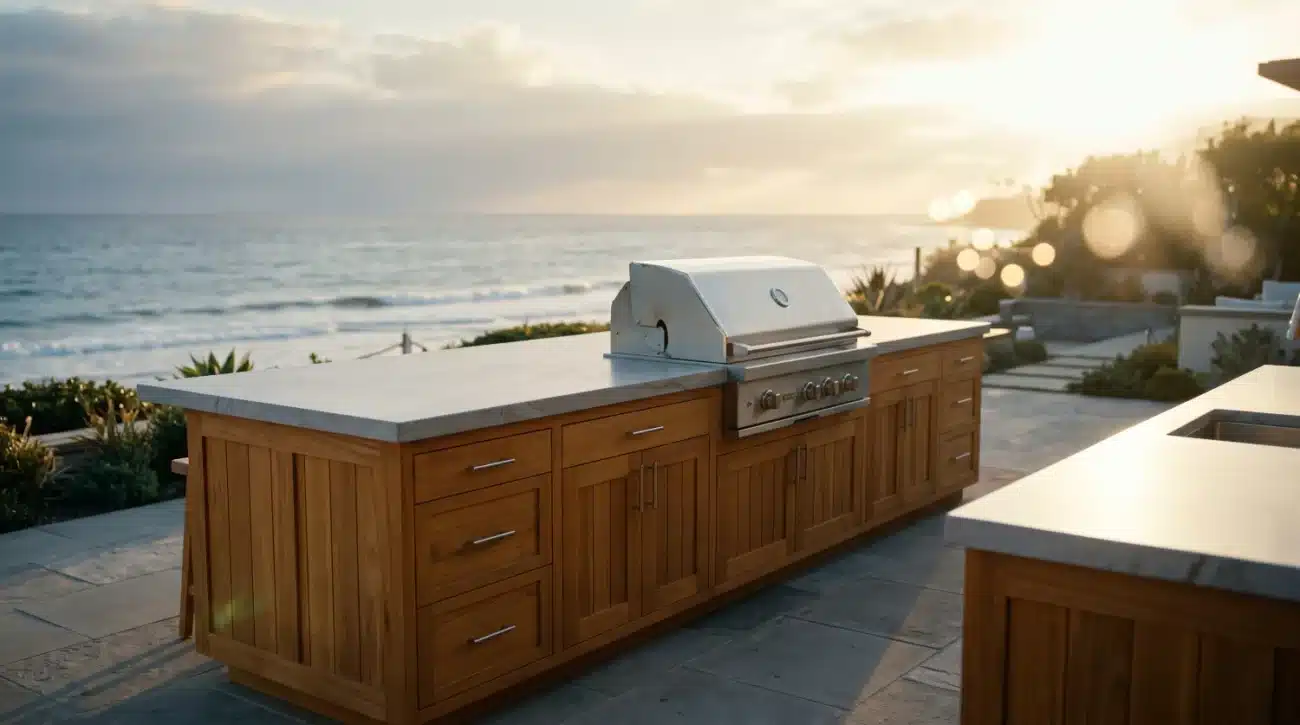
To execute this architectural balance successfully, specifiers rely on modular millwork engineered for harsh weather. Designers frequently turn to the Pacific Teak Millworks base cabinets collection to anchor heavy island layouts within steel-framed pavilions, creating an organic focal point within a structured environment.
-
Biophilic Warmth: Natural wood grain breaks the monolithic visual weight of cold architectural concrete and black metal beams.
-
Thermal Comfort: Wood exhibits low thermal conductivity, ensuring door fronts and drawer pulls remain comfortable to operate in extreme heat.
-
Textural Contrast: Combining matte brushed metal with the organic figure of solid timber adds visual depth to minimalist outdoor kitchens.
-
Architectural Flow: Matching outdoor teak millwork with interior hardwood finishes creates seamless transitions between indoor and outdoor living areas.
Material Science and Structural Engineering in Exterior Environments
Combining solid teak cabinetry with heavy black steel structural elements requires a deep understanding of wood anatomy, joinery physics, and hardware load capacities.
Grade-A teak harvested from mature heartwood contains high concentrations of natural rubber, tectonic resins, and silica. According to wood durability research from the USDA Forest Products Laboratory, these naturally occurring oleoresins render the timber inherently hydrophobic, preventing water absorption that leads to swelling, grain raising, and internal rot. Unlike domestic hardwoods that require thick, film-forming polyurethane coatings, teak protects itself from the inside out.
The internal cellular makeup of Grade-A teak delivers three specific structural protections:
-
Outer Oleoresins and Tectonic Resins: Form a natural hydrophobic barrier that actively repels water droplets and atmospheric humidity.
-
High Silica Content: Provides a natural bio-chemical defense against marine biological rot, fungal decay, and insect damage.
-
Dense Annual Growth Rings: Deliver exceptional dimensional stability, ensuring structural joinery stays true through severe thermal cycles.
Grain orientation plays an equally vital role when constructing outdoor joinery. Quartersawn teak features vertical grain lines that direct wood movement primarily through the depth of the board, making it the ideal specification for exterior cabinet face frames and door styles. Flatsawn teak displays arched cathedral grain patterns where expansion occurs across the width, making it better suited for floating panel inserts where thermal expansion channels accommodate movement.
When integrating teak cabinetry beneath heavy concrete or thick quartzite slabs, structural load management becomes critical. A typical 10-foot outdoor island clad in dark waterfall granite can exert thousands of pounds of downward force. Cabinetry framing must utilize mortise-and-tenon joinery combined with structural face-frames to prevent racking or sagging.
A common post-installation failure occurs when general contractors place heavy stone slabs directly over thin-walled metal modular cabinets or inadequately braced wood boxes. Over time, subtle settling or thermal expansion of the steel frame transfers point loads onto cabinet doors, causing hinges to bind and soft-close mechanisms to fail.
Custom outdoor millwork addresses this by integrating internal vertical corner posts and marine-grade levelers that transmit countertop weight directly to the footings, isolating the drawer boxes from structural compression.
Material selection for fasteners and operational hardware is equally vital. Standard 304 stainless steel or zinc-plated hardware will pit, stain, and freeze when exposed to coastal salt air or harsh outdoor cleaning chemicals. Specifiers should mandate 316 marine-grade stainless steel soft-close hinges, full-extension drawer slides, and weather-sealed gaskets.
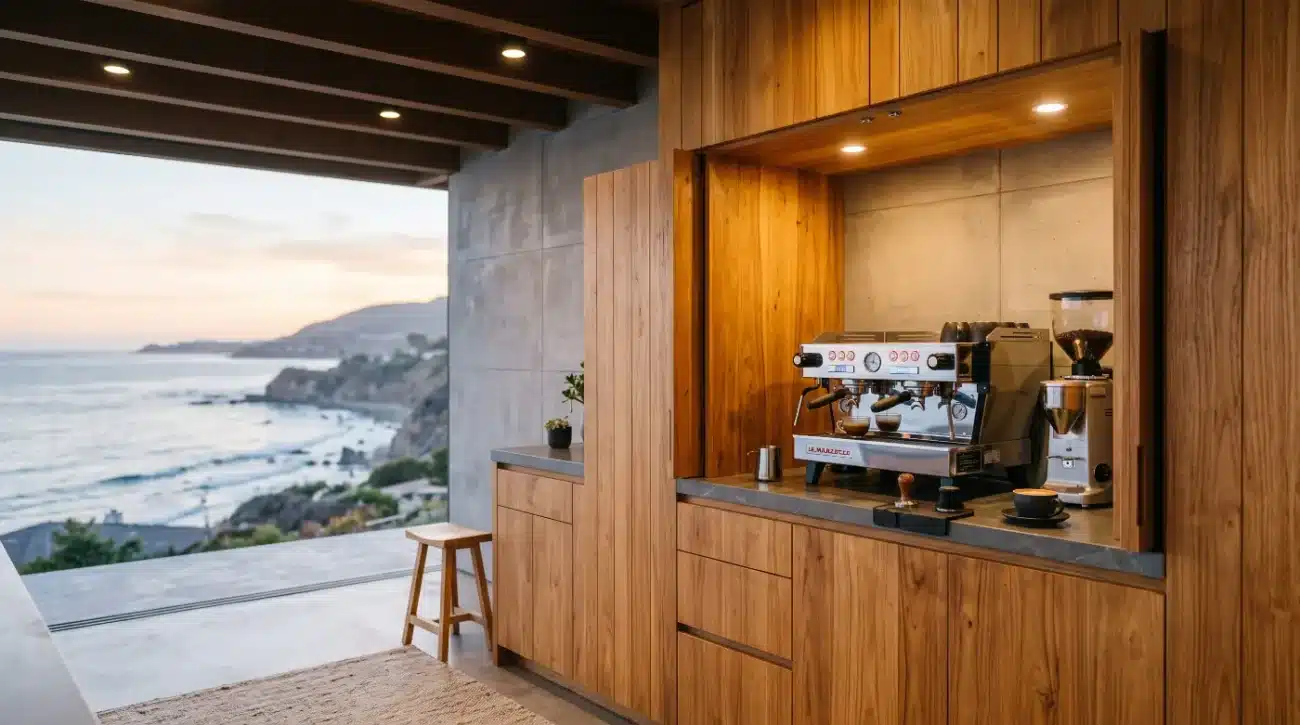
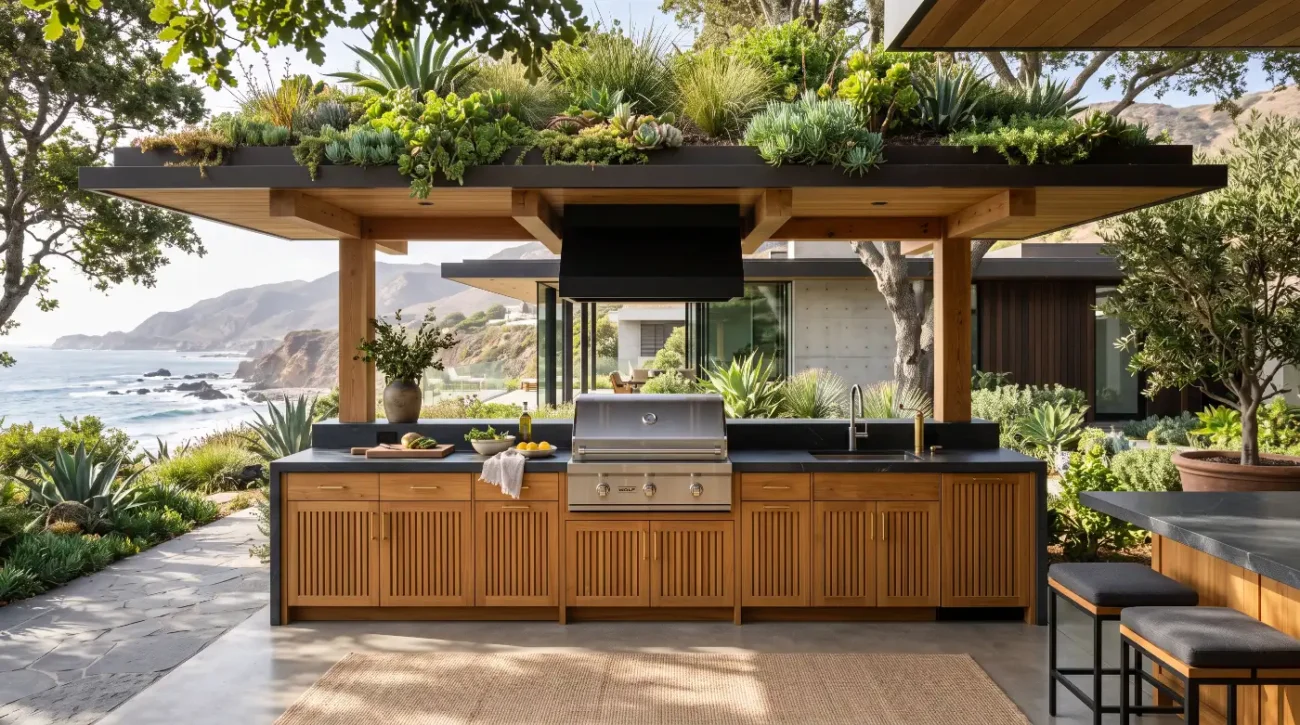
For overhead storage beneath covered loggias or steel pergolas, designers incorporate items from the Pacific Teak Millworks wall cabinets collection to maintain consistent material continuity while protecting glassware and cooking equipment from windborne dust.
When comparing standard outdoor construction to marine industrial specifications, the following structural distinctions apply:
-
Cabinet Box Frame Construction: Standard builds rely on pocket screws or basic dowels, whereas marine industrial specifications mandate traditional mortise-and-tenon joinery.
-
Metal Fastener Alloy: Standard builds use 304 stainless steel, whereas marine industrial specifications mandate 316 marine-grade stainless steel.
-
Drawer Glide Mechanics: Standard builds utilize standard soft-close slides, whereas marine industrial specifications require full-extension 316 stainless steel glides with internal dirt guards.
-
Countertop Load Distribution: Standard builds bear load on the cabinet perimeter box alone, whereas marine industrial specifications integrate internal load-bearing posts to transfer weight to base levelers.
-
Cellular Resin Retention: Natural oils block internal moisture intake, eliminating the expansion and contraction cycles that destroy lesser woods.
-
Mortise-and-Tenon Joinery: Traditional interlocking wood joinery distributes heavy stone countertop loads without relying solely on mechanical fasteners.
-
316 Marine Hardware: High-nickel stainless steel prevents hardware pitting, rusting, and mechanical binding in coastal salt fog environments.
-
Thermal Expansion Gaps: Engineered reveals around teak door panels allow natural wood movement across seasonal humidity swings without binding against metal frames.
Trade Workflows: Bridging the Specification Gap
Executing a modern industrial outdoor kitchen demands seamless coordination between interior designers, landscape architects, general contractors, and millwork manufacturers.
The architectural project specification workflow follows a precise six-stage progression to ensure long-term structural success:
-
Design Concept Alignment: The homeowner and interior designer define aesthetic goals, material palettes, and spatial functional requirements.
-
CAD and BIM Alignment: Specifiers map out exact CAD files, verifying structural load paths, appliance footprints, and plumbing rough-ins.
-
Architectural Specification: Designers outline precise appliance heat clearances, lower cabinet gas ventilation paths, and electrical conduit routing.
-
Site Preparation and Leveling: General contractors pour reinforced footings, run utility lines, and verify sub-floor load capacities.
-
Trade Procurement: The team manages custom lead times, coordinates factory fabrication, and schedules delivery to match site milestones.
-
Final Installation and Commissioning: Installers secure leveling legs, mount stone countertops, fit appliance jackets, and establish long-term care protocols.
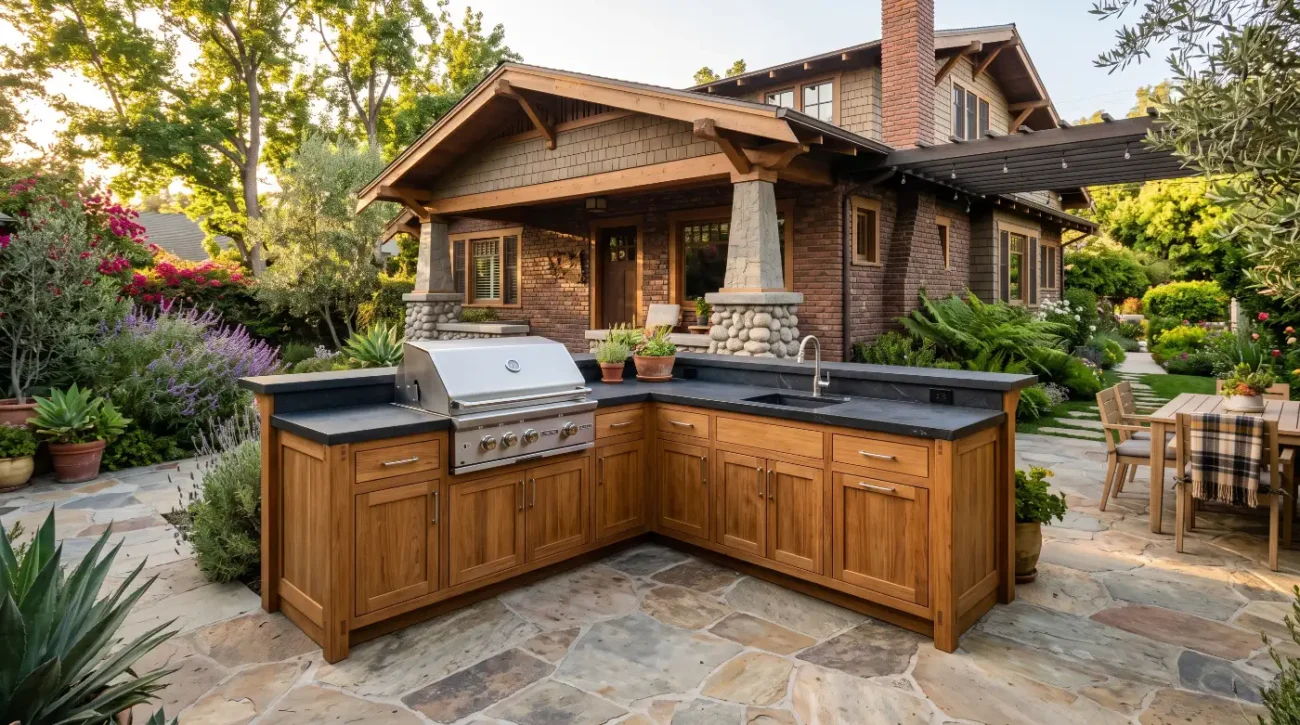
The process often begins with a homeowner presenting architectural concept images to their design team. Translating an aesthetic vision into a buildable set of construction documents requires precise technical specifications, including CAD drawings, cut sheets, and material certifications.
A frequent oversight during site preparation involves thermal clearances around gas appliances. High-end outdoor kitchens feature high-BTU gas grills, power burners, and smoker inserts integrated directly into wooden island structures. Placing an intense heat source adjacent to combustible materials without insulated jackets and heat shields creates a severe fire hazard and accelerates wood grain cracking.
Proper grill ventilation and thermal isolation require a multi-layered assembly:
-
Countertop Anchor: A non-combustible granite, porcelain, or quartzite slab seals the top surface of the cabinetry base.
-
Insulated Jacket Shield: A dedicated double-walled stainless steel insulating sleeve surrounds the grill chassis.
-
High-BTU Appliance: The gas grill rests suspended inside the insulated jacket, preventing direct radiant heat contact with adjacent wood framing.
-
Thermal Expansion Air Gap: A mandatory half-inch air space isolates the insulated jacket from the solid teak face frame.
-
Combustion Gas Venting: Strategic vent cutouts built into the lower teak base panels allow unburned gas to dissipate safely according to local codes.
Designers must specify insulated stainless steel liner jackets between the grill chassis and the solid teak cabinetry frame. Furthermore, high-volume combustion gases require lower cabinet venting to prevent trapped gas buildup. Integrating subtle vent cutouts into the teak base panels preserves the clean industrial line while complying with local building codes.
Trade professionals managing tight project timelines must also control procurement lead times. Selecting custom millwork line items that offer pre-engineered modular configurations simplifies the drafting stage. Specifiers can access technical documentation and layout templates directly through the Pacific Teak Millworks resource center to streamline the submittal process.
When installing island setups with integrated sinks, trash pull-outs, and warming drawers, designers incorporate built-in modules from the Pacific Teak Millworks island inserts collection to ensure precise framing tolerances and flush alignment against surrounding steel structures.
-
CAD and BIM Integration: Precise digital elevation files ensure cabinetry cutouts match appliance dimensions before site delivery.
-
Thermal Isolation Specs: Insulated grill jackets prevent direct heat transfer, preserving the structural integrity of surrounding wood joinery.
-
Combustion Gas Venting: Strategic lower-cabinet ventilation paths ensure compliance with fuel-gas safety standards without compromising aesthetics.
-
Trade Program Procurement: Working with established custom manufacturers reduces lead-time unpredictability for high-end builder schedules.
Maintenance Dynamics: Golden Oil Protection vs. Silver Patina
A major consideration when specifying solid teak in modern industrial projects is determining the wood’s long-term finish trajectory.
Designers and homeowners must choose between maintaining the wood’s initial golden-brown hue or allowing solar UV rays to oxidize the outer cellulose fibers into a silvery-grey patina. Both approaches offer distinct design advantages when paired with black steel framing:
-
Golden Luster (Oiled or Sealed Finish): Displays warm honey-amber tones that create striking visual contrast against black steel. Requires annual cleaning with a specialized teak wash followed by a penetrating oil application.
-
Silver Patina (Unfinished Natural Wood): Yields a weathered, organic driftwood grey appearance that softens raw industrial concrete. Requires minimal maintenance beyond periodic light washing to clear surface dust and environmental particulates.
A counterintuitive insight in exterior wood finishing is that applying film-forming sealers, clear coats, or polyurethanes to outdoor teak almost always leads to premature failure. Synthetic film coats lock in localized moisture while preventing the wood from breathing. As the timber naturally expands and contracts under ambient temperature fluctuations, the rigid plastic film micro-cracks. Water enters these microscopic fissures, trapping moisture beneath the surface, which causes grey discoloration, flaking, and localized rot.
The microscopic dynamic between synthetic coatings and natural oils reveals why surface films fail:
-
Rigid Polyurethane Coatings: Micro-fissures form from solar heat expansion, allowing ambient moisture to enter. The impermeable plastic coat traps water vapor underneath, forcing moisture into the timber grains and creating cloudy discoloration, peeling, and rot.
-
Penetrating Teak Oils: The oil saturates open cellular pores without forming a solid plastic skin. The wood surface remains breathable, allowing natural moisture vapor to escape freely while nourishing internal oleoresins.
To preserve the rich golden luster, specifiers must rely exclusively on breathable, penetrating teak oils or specialized marine sealers that migrate into the wood grain without creating a surface film. For detailed maintenance schedules and chemical safety recommendations, trade teams refer to the official Pacific Teak Millworks Teak Care Guide.
Alternatively, allowing the teak to weather naturally to a silvery patina creates a refined, low-maintenance aesthetic popular in coastal Pacific Northwest and coastal California residences. The silver patina acts as a protective shield against solar radiation while harmonizing with black steel and architectural fair-faced concrete.
Homeowners seeking long-term peace of mind regarding structural durability under both maintenance approaches should review the comprehensive Pacific Teak Millworks Warranty Documentation prior to final material sign-off.
-
Avoid Film Sealers: Rigid synthetic coatings trap internal wood moisture, leading to cracking, peeling, and surface degradation.
-
Breathable Oil Systems: Penetrating marine oils nourish natural wood fibers, restoring rich honey tones without film build-up.
-
Controlled Natural Oxidation: Exposure to ambient UV light transforms raw teak into a silvery patina without compromising internal structural strength.
-
Routine Cleaning Protocols: Periodic washing with mild teak cleaners removes ambient airborne particulates and salt deposits, preventing surface mold formation.
External References
Key Takeaways
-
Architectural Contrast: Introducing Grade-A teak cabinetry into black steel and concrete outdoor kitchens softens visual lines while preventing heat retention on functional surfaces.
-
Material Science Integrity: Rich natural rubber and silica contents make solid teak resistant to marine air corrosion, moisture penetration, and warping without requiring synthetic film sealers.
-
Load Engineering: Heavy stone countertop installations require structural mortise-and-tenon cabinetry framing, vertical support posts, and 316 marine-grade hardware to prevent frame binding.
-
Appliance Safety: Installing high-heat gas grills alongside wooden millwork requires insulated stainless steel jackets and cabinet ventilation to comply with local building safety codes.
-
Maintenance Flexibility: Teak can be maintained in its golden honey state using penetrating oils or allowed to oxidize naturally into a silver patina that complements modern industrial finishes.
Consult with Pacific Teak Millworks
Whether you are a homeowner gathering inspiration for a coastal outdoor retreat or an architectural specifier drafting complex CAD layouts for a high-end residential project, execution requires proven material expertise. The design specialists at Pacific Teak Millworks are available to assist with custom cabinetry sizing, appliance integration strategies, and sample requests. To review CAD files, request material swatches, or discuss an upcoming project build, contact our trade support team today through the Pacific Teak Millworks trade inquiry portal.