Executive Summary
-
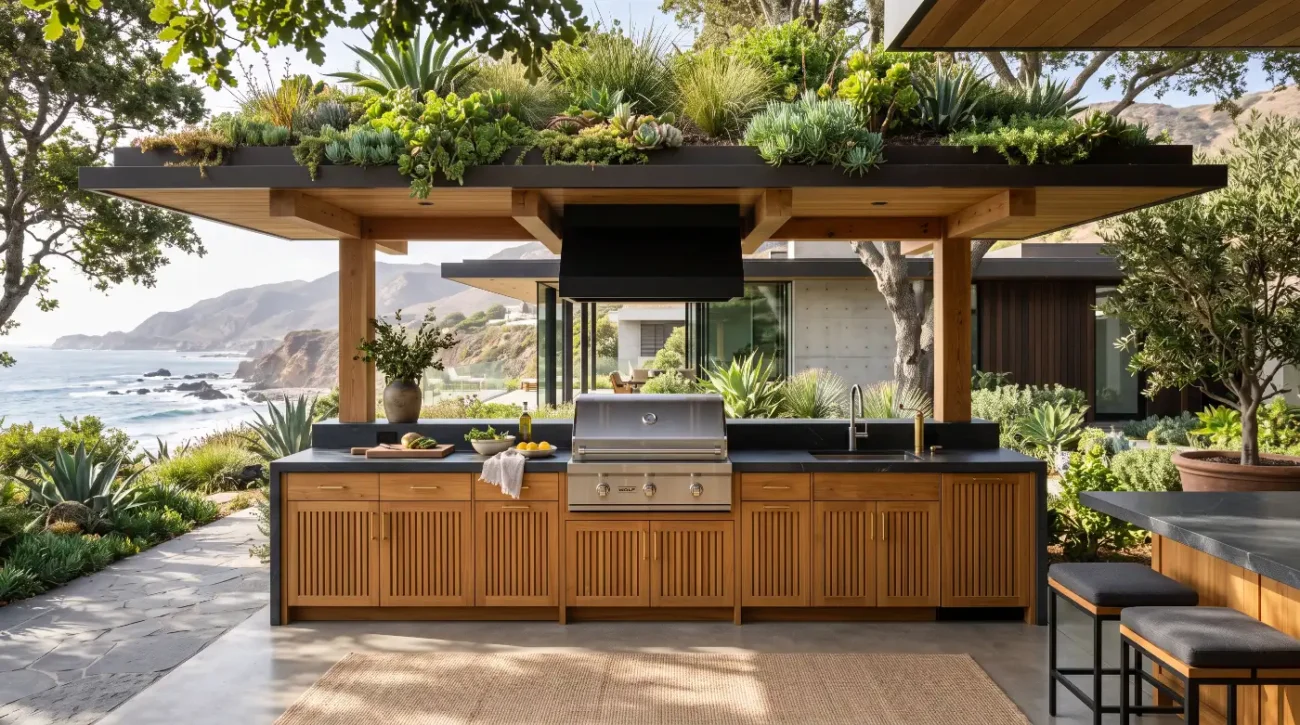
Architectural Synergy: Integrating solid Grade-A teak cabinetry into Mediterranean villa outdoor spaces bridges the tactile warmth of rich wood with classical stone coping, terracotta tiles, and custom wrought iron.
-
Material Science Rigor: High natural oil and silica content in Tectona grandis provides intrinsic resistance to UV radiation, salt air corrosion, and seasonal moisture movement without film-forming topcoats.
-
Marine-Grade Engineering: Engineered mortise-and-tenon joinery combined with 316 marine-grade stainless steel hardware ensures long-term structural integrity under heavy natural stone or concrete countertops.
-
Streamlined Trade Specification: Pacific Teak Millworks supports architects and specifiers with precise CAD integration, custom face-frame designs, and specialized appliance ventilation protocols.
Elevating Mediterranean Villa Estates with Custom Solid Teak Outdoor Cabinetry
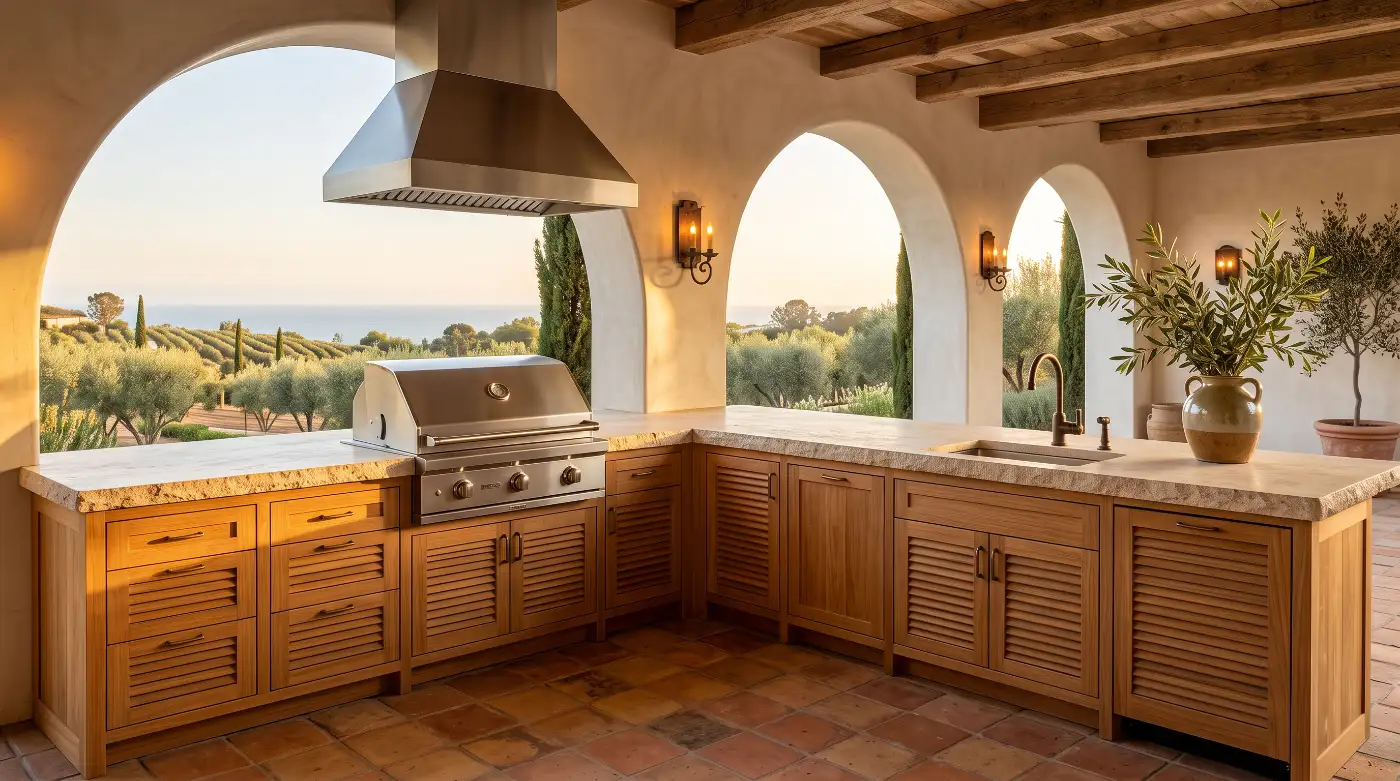
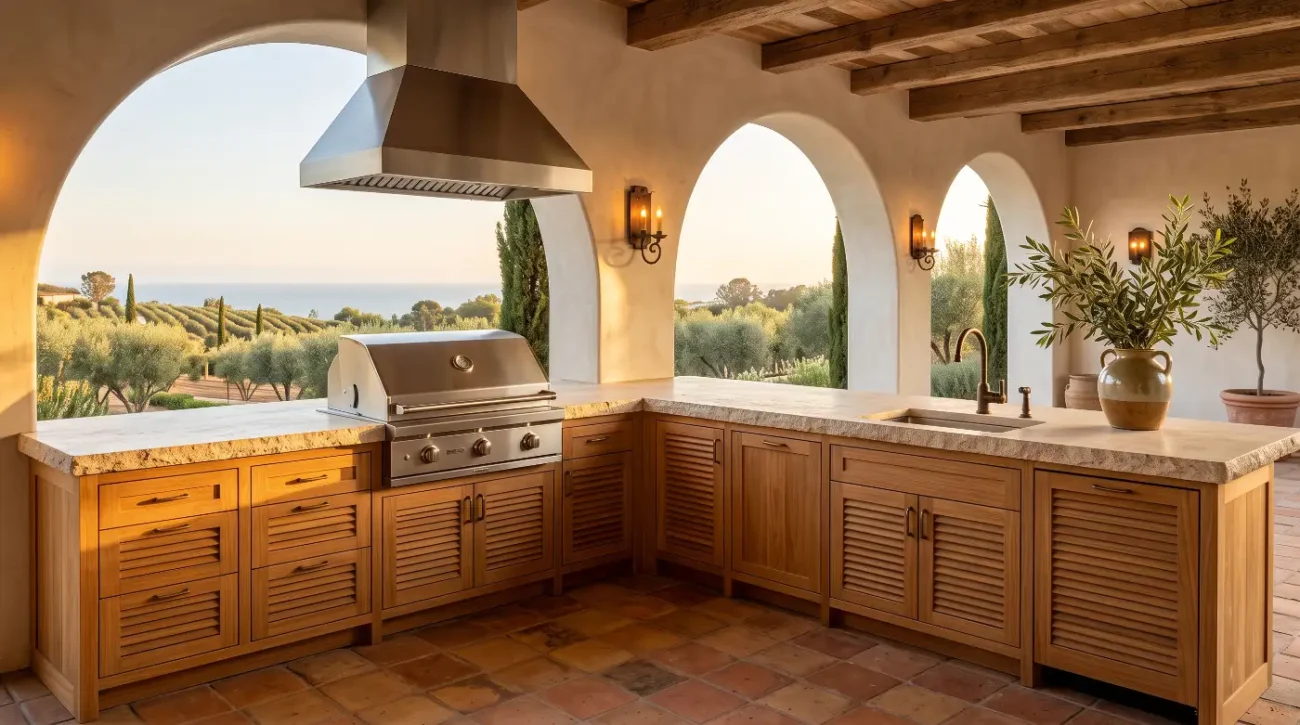
When a coastal Malibu property owner specified imported Italian terracotta tile, hand-chiseled limestone coping, and intricate wrought iron pergolas for a luxury Mediterranean estate, the initial millwork package specified painted exterior-grade composite cabinets. Within eighteen months of exposure to humid marine breezes and intense UV radiation, the composite substrates absorbed ambient moisture, causing hardware pull-out, edge swelling, and unsightly finish delamination. Replacing those compromised units with custom solid teak cabinetry instantly restored architectural harmony while establishing an enduring defense against aggressive coastal microclimates.
What Defines the Architectural Synergy Between Mediterranean Design and Solid Teak?
Mediterranean villa outdoor kitchen design relies on authentic natural materials that develop a rich historical narrative over time while resisting extreme environmental weathering.
-
Authentic Material Pairing: Solid teak bridges heavy structural elements like hand-chiseled stone, clay terracotta, and dark ironwork with warm organic textures.
-
Marine-Grade Longevity: Grade-A teak contains natural rubber latex and silica that prevent water intrusion, swelling, and salt-air oxidation.
-
Structural Load Capacity: Traditional mortise-and-tenon framing accommodates dense granite, quartzite, or concrete countertops without deflection.
-
Architectural Workflows: Precision CAD integration and trade program resources streamline specification for complex residential layouts.
How Grade-A Teak Natural Oils Prevent Coastal Degradation and Delamination
Grade-A teak harvested from mature Tectona grandis heartwood contains an exceptionally high concentration of natural rubber latex, tectonic resins, and silica. These organic compounds create a hydrophobic barrier within the cellular structure of the timber, blocking moisture absorption at a molecular level.
Unlike domestic hardwoods or synthetic wood-plastic composites, solid teak does not rely on topical urethane coatings or chemical pressure treatments to survive harsh outdoor environments. Applied film-forming sealers inevitably crack, trap sub-surface moisture, and trigger internal fungal rot. Natural teak oils allow the wood fiber to breathe while continually repelling water, preventing the warping, twisting, and structural delamination common in lower-grade exterior cabinetry.
In sun-drenched coastal markets like Palm Springs, Miami, and Newport Beach, high solar radiation breaks down surface wood fibers over time. As unsealed teak oxidizes, it transitions from a rich golden-honey hue into a distinguished silvery-grey patina without compromising its internal structural load capacity or dimensional stability.
For projects requiring consistent golden tones across a Mediterranean loggia, periodic application of specialized penetrating teak oils nourishes the outer grain layers. To explore complete care schedules and preservation techniques, download the comprehensive Pacific Teak Millworks Teak Care & Maintenance Guide.
Why Do Film-Forming Coatings Cause Internal Rot in Exterior Wood Cabinetry?
Film-forming polyurethane or acrylic coatings seal the exterior wood surface, trapping trapped ambient moisture inside the cellular structure where solar heat accelerates internal rot.
-
High Silica Retention: Natural silica content provides built-in resistance to marine borers, fungal decay, and insect infestation without toxic chemical treatments.
-
Dimensional Stability: Low coefficient of volumetric shrinkage minimizes movement during extreme thermal shifts between hot days and cooler coastal nights.
-
Self-Preserving Resins: Endogenous oily resins migrate toward surface micro-scratches, maintaining water resistance even after daily operational wear.
-
Patina Dynamics: Natural weathering produces a protective silver-grey surface layer that shields internal fibers from deeper ultraviolet degradation.
Comparative Analysis of Exterior Cabinetry Materials
-
Grade-A Solid Teak: Features exceptionally high natural oil and silica content, providing outstanding dimensional stability over time. It naturally weathers to an elegant silver patina if left untreated, while offering superior structural load resistance against heavy stone counters.
-
Exterior Composite and MDF: Exhibits a dangerously high swell rate under moisture exposure and relies heavily on synthetic chemical binders. It remains prone to core delamination in marine microclimates and delivers poor fastener retention under heavy structural loads.
-
Painted Softwoods: Demonstrates very low natural durability when exposed to exterior elements, requiring frequent surface scraping and repainting. Softwood stiles remain highly susceptible to internal rot as soon as surface finishes crack, offering only moderate structural strength.
-
Stainless Steel Shells: Contains high thermal conductivity that makes cabinet faces uncomfortably hot to the touch under direct sunlight. Steel surfaces remain subject to tea-staining in salt-air environments and are prone to permanent denting, creating a cold industrial aesthetic contrast.
How Custom Joinery Engineering Supports Heavy Stone Coping and Countertops
Integrating custom teak cabinetry into a Mediterranean villa requires managing structural load dynamics, as outdoor kitchens frequently feature heavy quartzite, thick concrete slabs, or multi-inch limestone coping.
What Joinery Systems Are Required to Support Dense Natural Stone Countertops?
Mortise-and-tenon joinery combined with heavy-duty structural face-frames distributes vertical dead loads directly down into levelling assemblies, preventing cabinet rack or door misalignments.
Standard modular cabinetry utilizes butt joints held together by dowels, pocket screws, or metal fasteners that concentrate structural stresses onto small contact points. Under the weight of a three-hundred-pound natural stone slab, these joinery methods often flex, causing cabinet doors to bind, drawer slides to stick, and seal lines around built-in gas appliances to fail. Custom solid teak base units utilize deep mortise-and-tenon construction secured with waterproof marine adhesives, forming a rigid box structure that distributes heavy vertical forces evenly across the foundation.
When a landscape architect designs an expansive island featuring a broad cantilevered dining ledge, structural stability relies entirely on cabinet frame rigidity. The solid face-frames engineered by Pacific Teak Millworks provide structural support that resists lateral wracking during seismic activity or soil movement under outdoor paver systems.
Specifiers can review our full line of heavy-duty island modules by exploring the Pacific Teak Millworks Base Cabinets Collection.
To maintain long-term alignment across uneven stone patios, outdoor cabinetry must incorporate marine-grade leveling hardware. Stainless steel leveling legs isolate the bottom end-grain of the teak face-frame from standing pool water, irrigation run-off, and ground moisture, blocking capillary action from drawing water up into the vertical stiles.
What Hardware Specifications Prevent Corrosion in High-Humidity Coastal Environments?
Cabinetry installed within five miles of a coastline must specify 316 marine-grade stainless steel hardware to prevent pitting, rust discoloration, and mechanical binding caused by airborne salt.
-
316 Marine Stainless Hinges: Superior molybdenum content protects internal springs and pivot pins against pit corrosion in salt-air microclimates.
-
Full-Extension Soft-Close Glides: Sealed stainless steel ball bearings maintain smooth glide action under heavy drawer loads of cast-iron cookware.
-
Concealed Weather Gaskets: Integrated elastomeric door seals prevent rain intrusion and insect nesting inside dry storage compartments.
-
Thermal Expansion Clearances: Precision-machined gaps around flush appliance cutouts accommodate thermal expansion of metal grill bodies without scorching adjacent wood faces.
Bridging the Specification Gap: From Homeowner Mood Boards to CAD Layouts
Luxury residential design projects frequently begin with high-net-worth homeowners curating digital mood boards filled with Mediterranean estate imagery. These visual inspirations showcase smooth plaster walls, hand-forged iron lanterns, and rich wood cabinetry offset by dark counter surfaces.
When presenting these concepts to an interior designer or landscape architect, translating aesthetic vision into buildable trade specifications requires clear technical coordination between design disciplines and specialty millwork fabricators.
Structural Phases of the D2C to B2B Specification Workflow
-
Phase One – Mood Board Alignment: Homeowner selects teak grain profiles, door styles, and hardware finishes to match architectural villa references.
-
Phase Two – CAD and BIM Integration: Architect incorporates precise cabinetry shop drawings, wall anchorage points, and utility rough-in zones into master plans.
-
Phase Three – Sub-Contractor Coordination: General builder verifies patio slope, gas supply lines, electrical runs, and countertop support steel before cabinet delivery.
-
Phase Four – Precision Installation: Trade installer secures base modules, adjusts 316 stainless leveling legs, and seals appliance flanges against weather intrusion.
During the schematic design phase, architects must balance aesthetic goals with mechanical realities, such as gas ventilation, electrical routing, and plumbing access for outdoor sinks. Solid teak cabinetry allows trade professionals to incorporate custom access panels and rear utility chases without compromising structural rigidity.
When specifying overhead wall units above a prep station or stone pizza oven, designers can reference line drawings and structural dimensions available within the Pacific Teak Millworks Wall Cabinets Collection.
A common post-installation failure occurs when designers fail to account for gas grill ventilation requirements when embedding high-BTU cooking appliances directly into wooden cabinet surrounds. Trapping heat against wood framing creates a thermal hazard and accelerates wood drying, leading to localized checking or joint separation.
Engineered teak island inserts incorporate dedicated stainless steel heat shields and high-capacity venting cutouts that channel excess thermal energy safely away from the wood structure.
Architects and specifiers seeking technical details, warranty parameters, and lead time logistics can review the official Pacific Teak Millworks FAQ Sheet or review comprehensive coverage terms in the Pacific Teak Millworks Warranty Documentation.
Architectural Design Strategies for Mediterranean Outdoor Kitchens
Creating a cohesive Mediterranean outdoor living space involves balancing rugged masonry structures with refined wood details.
How Does Teak Cabinetry Harmonize with Classical Mediterranean Materials?
Teak introduces organic warmth that softens cold concrete, plaster walls, wrought iron accents, and heavy terracotta surfaces.
In classic Santa Barbara, Tuscan, or Spanish Colonial architectures, expansive stone patios and troweled plaster walls can feel cold or monolithic without organic elements. Integrating golden or weathered teak base cabinetry breaks up monochromatic masonry expanses, establishing a welcoming human scale within open-air loggias or pool cabanas.
Choosing between a preserved golden oil finish and a naturally aged silver patina allows designers to tailor the cabinetry’s visual weight to complement adjacent material palettes.
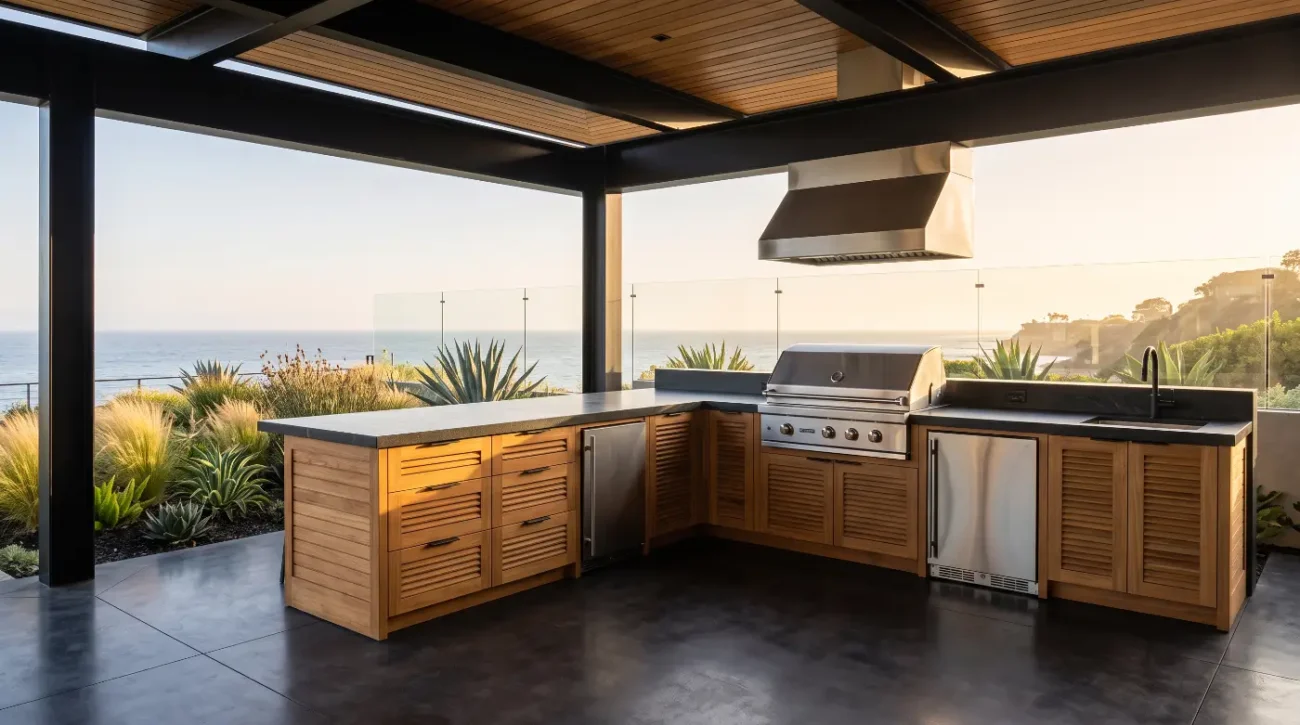
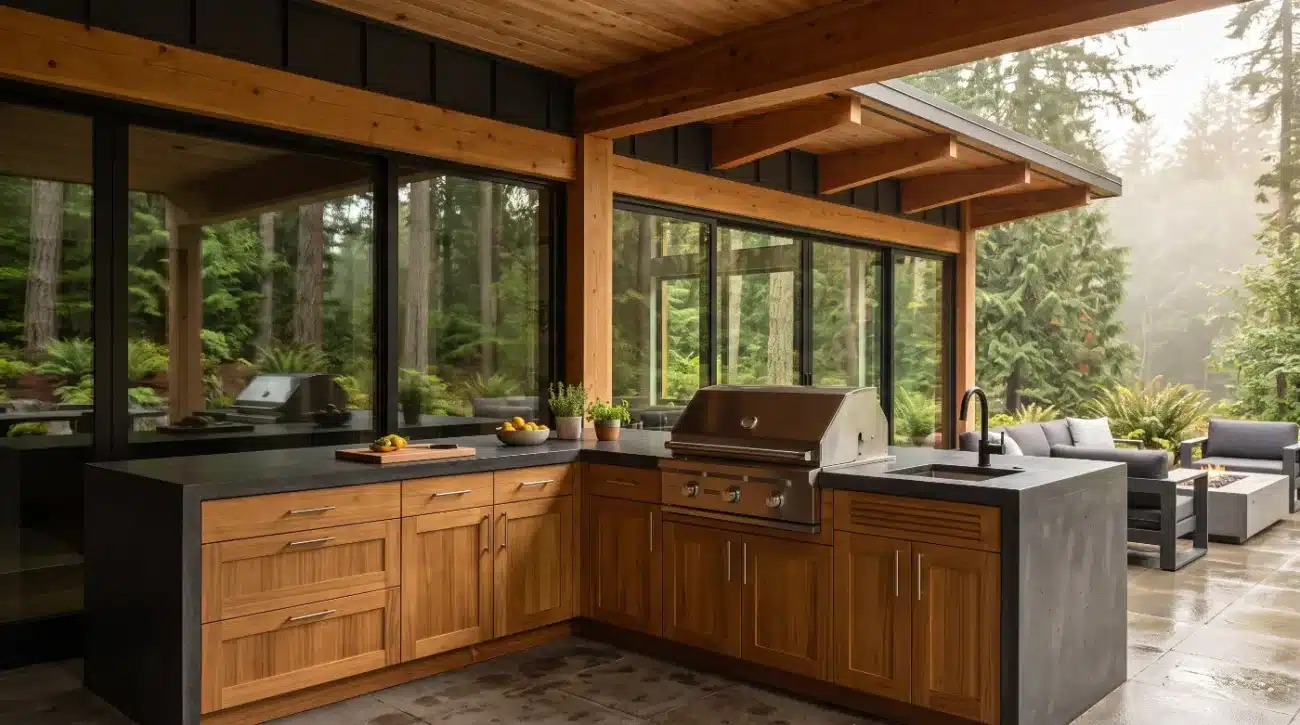
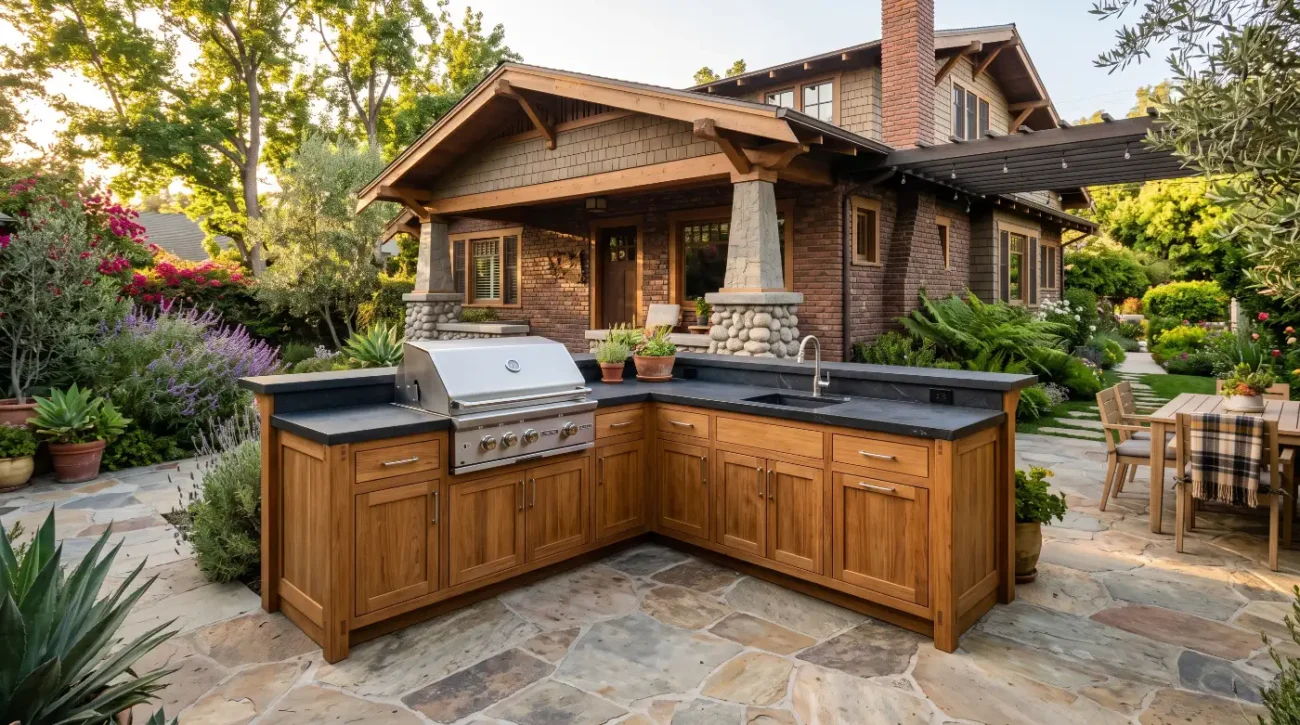
A compelling design strategy involves pairing unsealed, silver-patina teak cabinets with dark soapstone, honed basalt, or deep green marble countertops. The muted grey wood tones highlight the dark veining of natural stone while echoing the silvery olive trees common in Mediterranean landscaping.
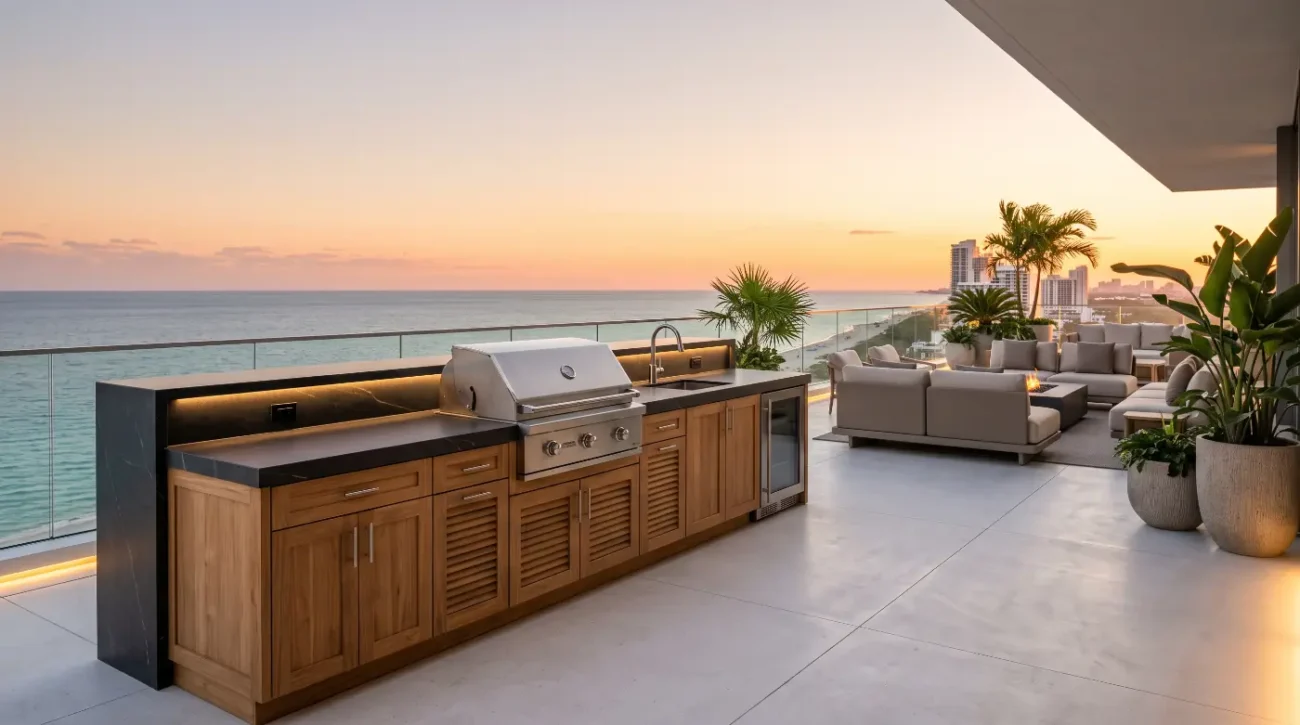
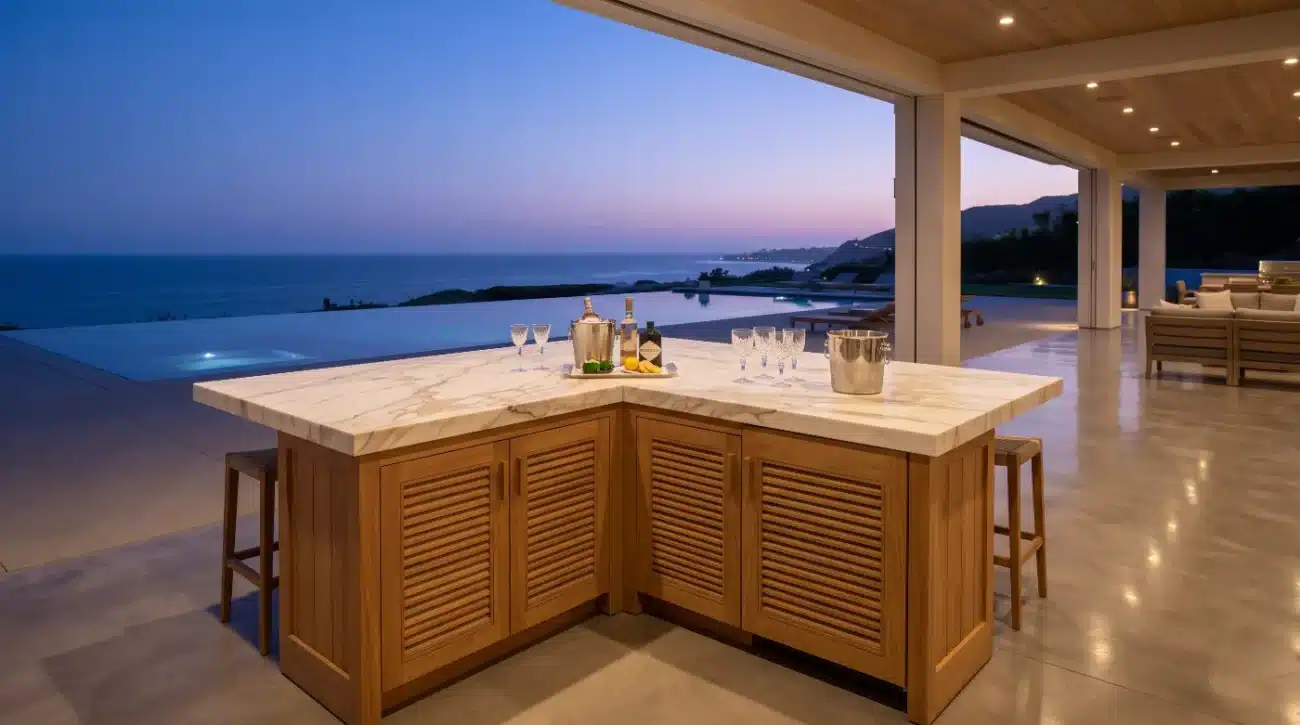
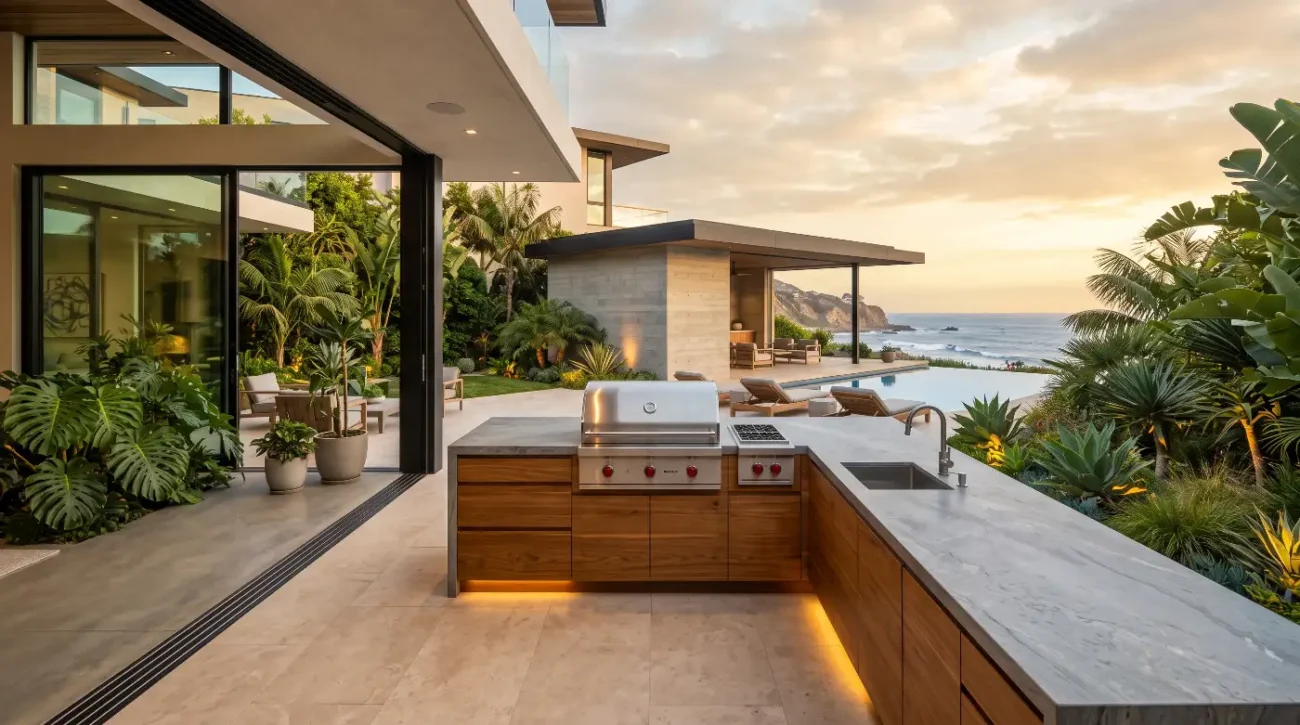
Conversely, pairing rich, golden-oiled teak cabinetry with warm travertine tile, light limestone coping, and warm bronze hardware reinforces a radiant sun-drenched aesthetic suitable for Palm Springs or Miami estates.
To maintain clean architectural lines around built-in appliances, design professionals turn to specialized insertion modules. These units conceal utility connections while providing a flush, tailored appearance against stone facades.
Explore available configuration options through the Pacific Teak Millworks Island Inserts Collection.
To ensure long-term satisfaction and avoid trade scheduling bottlenecks, landscape designers and general contractors must coordinate procurement early in the design phase. Reviewing lead times and order policies via the Pacific Teak Millworks Cancellation & Return Policy ensures smooth delivery timelines that align with sub-contractor scheduling on-site.
For more architectural inspiration and case studies showcasing solid teak millwork in luxury coastal projects, visit the Pacific Teak Millworks Outdoor Design Blog or explore our heritage on the Pacific Teak Millworks About Us Page.
External References
Key Takeaways
-
Material Excellence: Grade-A plantation teak (Tectona grandis) contains natural rubber latex and silica, offering built-in protection against water intrusion, salt air corrosion, and fungal decay.
-
Structural Precision: Traditional mortise-and-tenon joinery combined with solid face-frames provides the load capacity required to support dense granite, quartzite, and concrete countertops without deflection.
-
Hardware Rigor: Utilizing 316 marine-grade stainless steel hinges, soft-close slides, and leveling legs prevents rust staining and mechanical failure in coastal microclimates.
-
Design Versatility: Solid teak cabinetry bridges the gap between cold masonry elements (terracotta, plaster, iron) and warm natural textures, supporting both golden-oiled and naturally weathered silver finishes.
-
Trade Workflow Integration: Early coordination using CAD drawings, proper appliance heat-shielding protocols, and dedicated trade program support ensures seamless execution from initial concept to site installation.
Elevate your next luxury residential project with custom, marine-engineered solid teak cabinetry built to withstand the elements while delivering refined architectural beauty. Whether you are a homeowner gathering inspiration for a coastal estate or a trade specifier managing complex CAD layouts and material schedules, our team is ready to support your vision. Visit the Pacific Teak Millworks Contact Us Page to request wood finish samples, download CAD specifier files, or schedule a direct technical consultation with Darin and our master cabinetry specialists today.