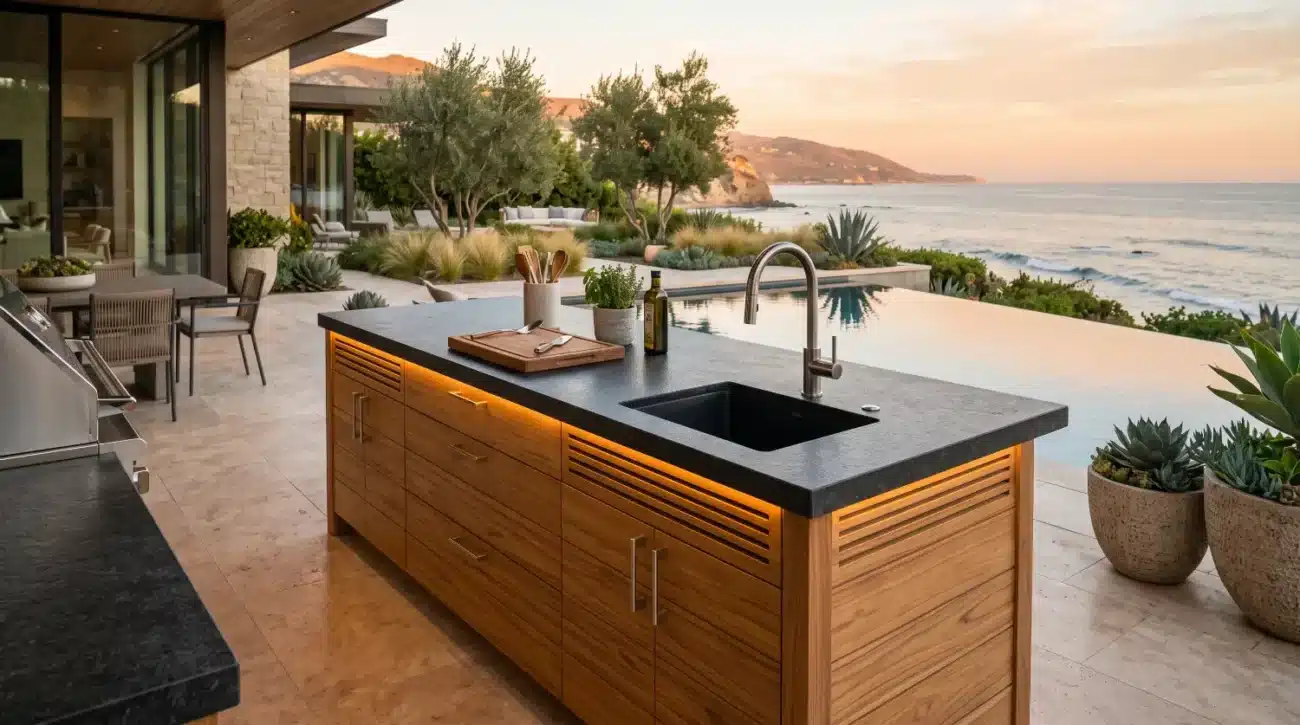
Executive Summary:
-
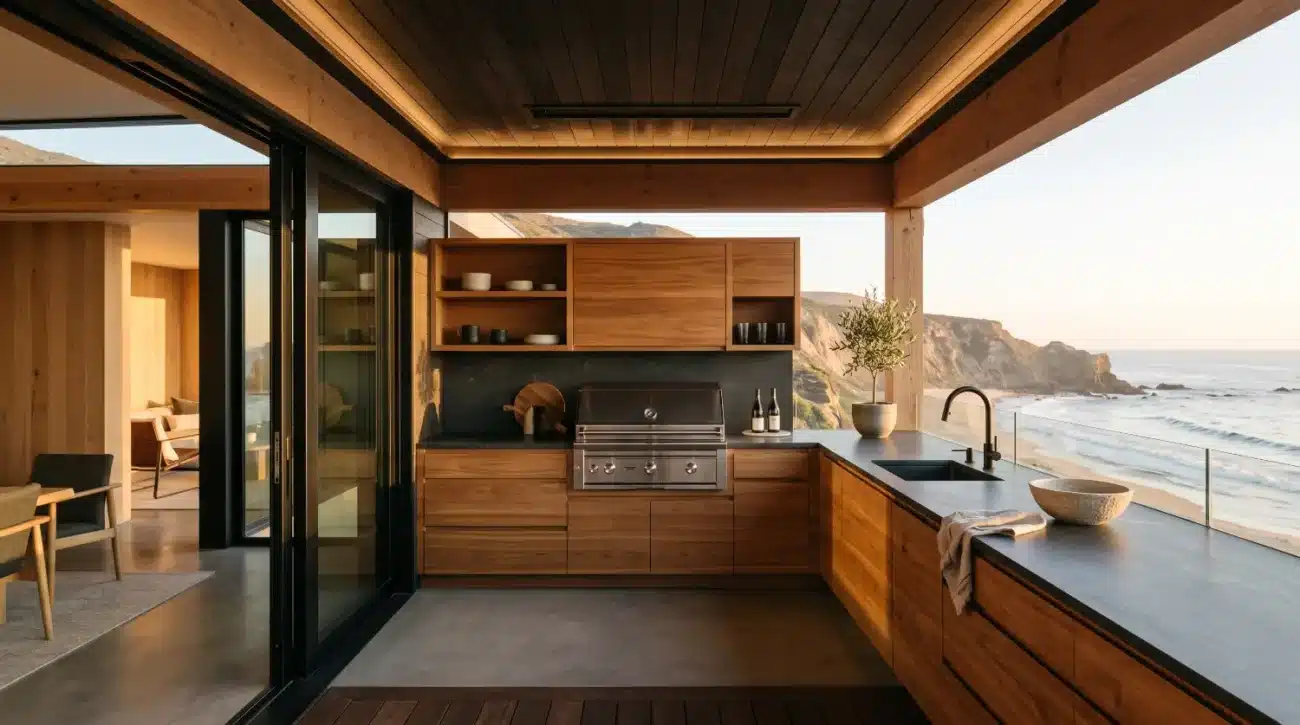
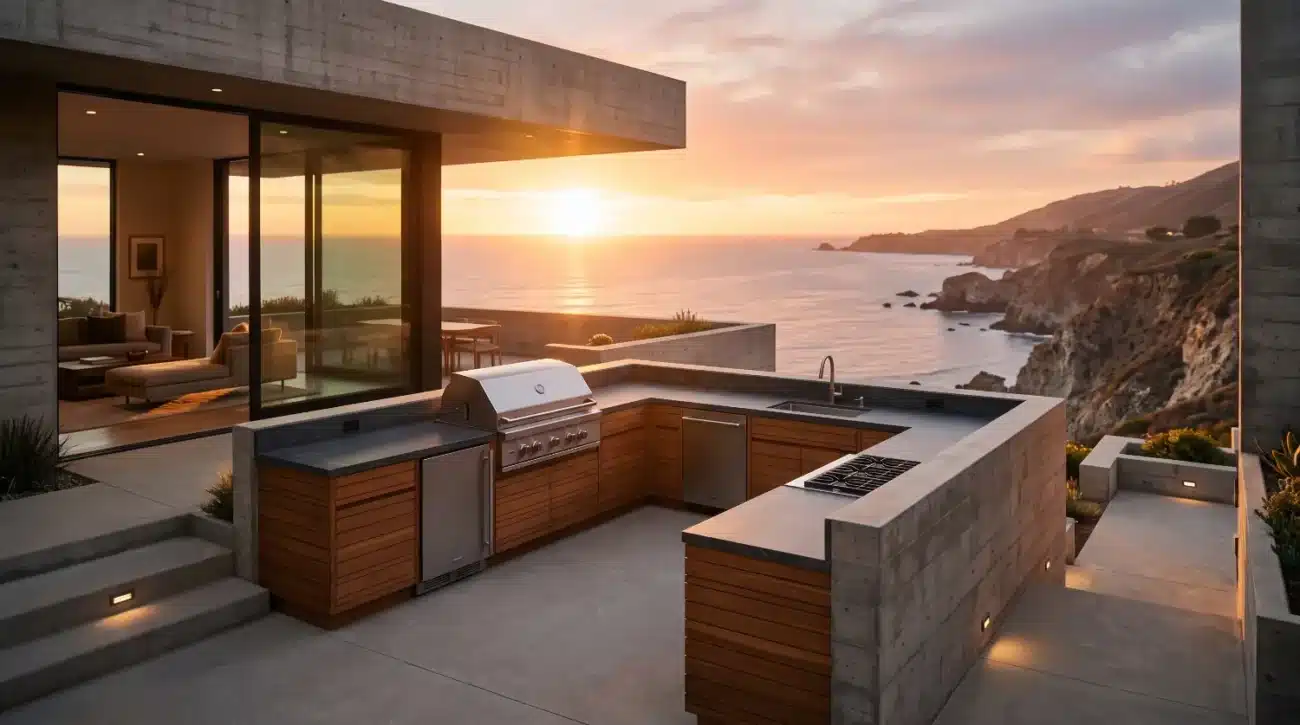
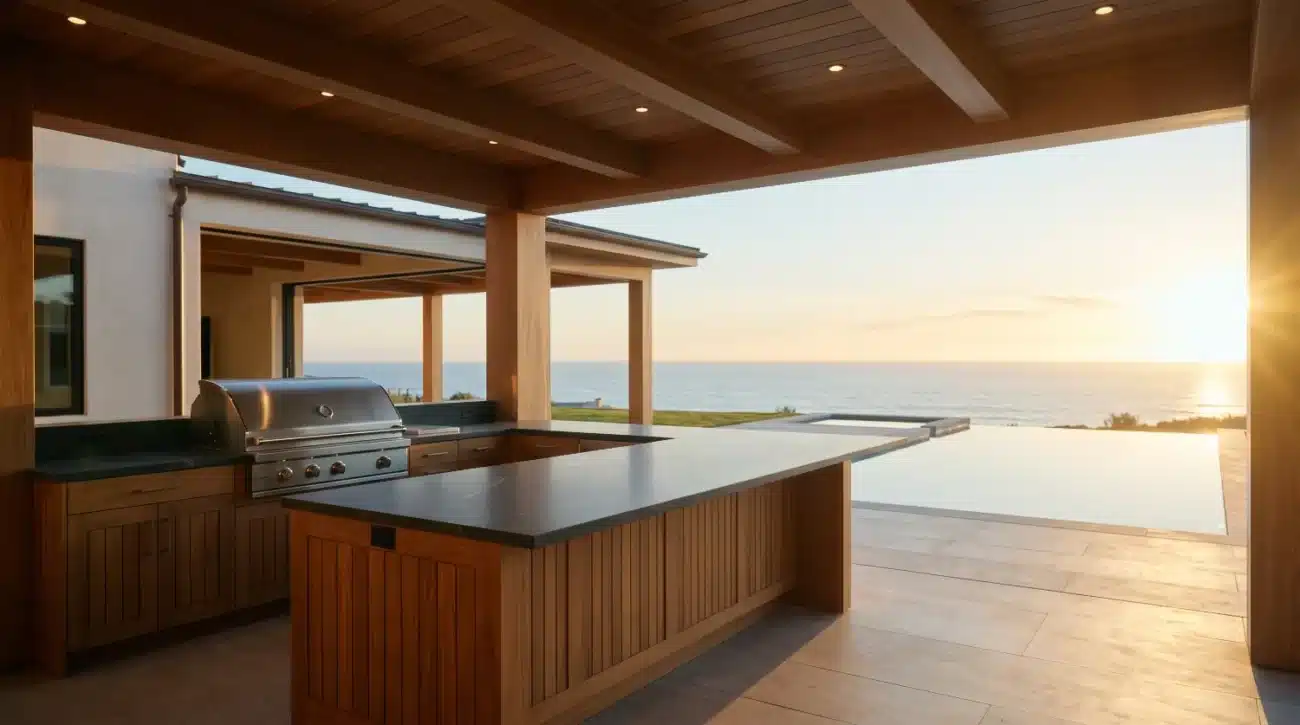
Mid-century modern outdoor kitchens rely on clean horizontal sightlines, minimal ornamentation, and authentic material palettes that blur the boundary between indoor living rooms and outdoor landscapes.
-
Solid Grade-A teak provides the natural warmth, rich grain density, and essential silica content needed to balance the cool concrete, glass, and geometric brick typical of mid-century architecture.
-
Seamless millwork features—such as flat slab or narrow shaker door profiles, integrated finger pulls, and concealed marine-grade hardware—maintain architectural purity without sacrificing exterior durability.
-
Specifying modular custom base units with floating reveals and precise framing tolerances allows trade professionals to accommodate heavy stone countertops and high-heat appliances without warping.
What Outdoor Cabinet Style Works Best for a Mid-Century Modern Renovation?
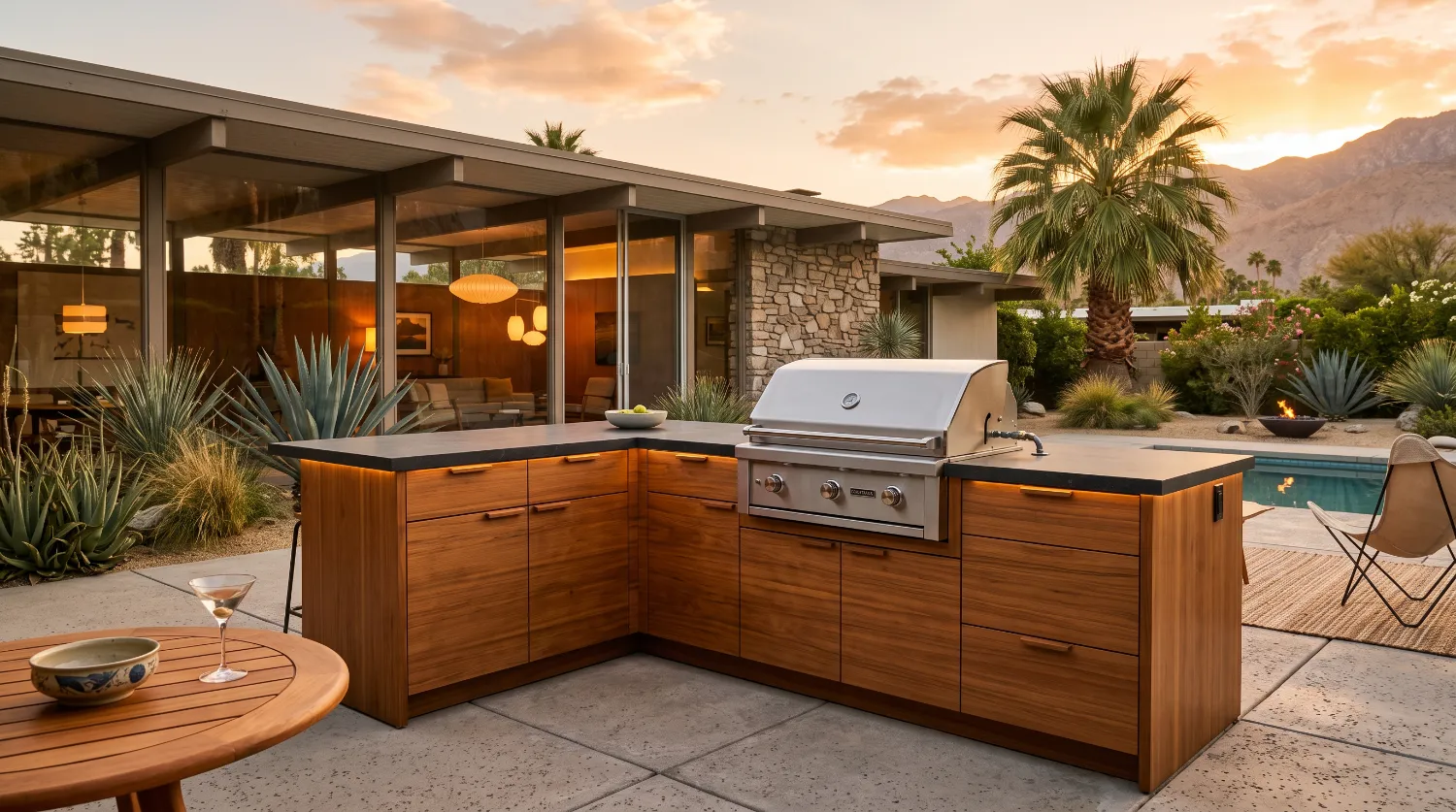
When a mid-century post-and-beam estate in Palm Springs underwent a complete exterior restoration, the project hit an unexpected hurdle at the patio edge. The architectural team had flawlessly restored the home’s low-slung roofline, floor-to-ceiling glass walls, and stacked-stone hearth. However, the initial outdoor kitchen builder installed off-the-shelf, high-gloss polymer cabinetry with heavy chrome handles. The result was an immediate design clash. The plastic-like surface, cold aesthetic, and industrial hardware disrupted the seamless indoor-outdoor transition that defines iconic mid-century architecture. Rebuilding the space required stepping away from synthetic materials and turning to solid teak millwork crafted with flat slab door profiles, integrated pull joinery, and concealed structural framing.
Overview
-
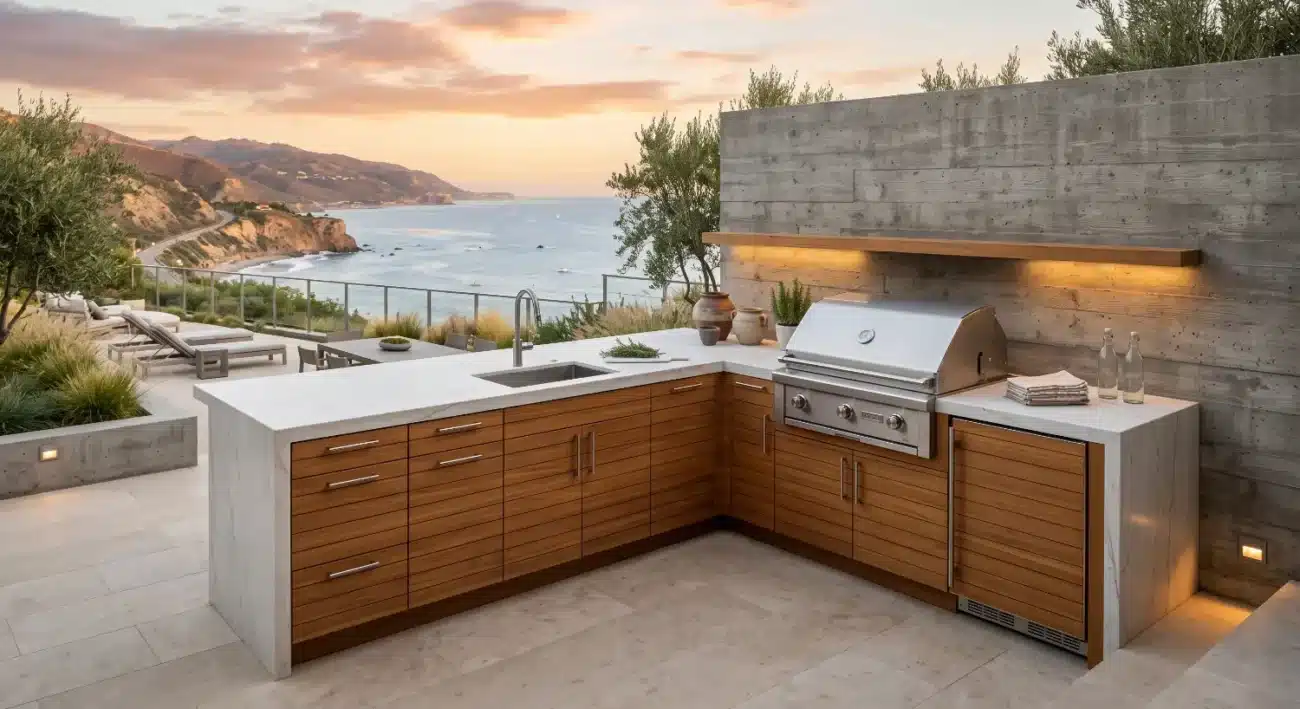
Flat slab and narrow-rail shaker teak door profiles best complement mid-century modern horizontal sightlines.
-
Grade-A teak delivers natural silica and rubber resins essential for saltwater and extreme climate resistance.
-
Marine-grade 316 stainless steel concealed hardware eliminates visual clutter while preventing coastal rust.
-
Custom floating reveals and integrated toe-kicks mirror classic mid-century furniture design traditions.
Architectural Alignment: Why Teak Belongs in Mid-Century Design
Mid-century modern architecture relies on clean horizontal sightlines, organic material choices, and an uninterrupted visual flow between interior living rooms and outdoor loggias. Designing an outdoor kitchen for a mid-century home requires cabinetry that honors these fundamental principles rather than overpowering them.
Mid-century modern outdoor kitchens demand solid wood cabinetry with warm tones and flat-panel geometry to match indoor millwork. Grade-A teak is the premier material for this application due to its natural rubber resins, silica content, and dimensional stability. When paired with low-profile door styles, teak cabinetry bridges the gap between architectural hardscapes and natural outdoor environments.
Mid-century design is rooted in biophilic harmony. Architects like Joseph Eichler, Richard Neutra, and Cliff May prioritized natural, unvarnished materials that age gracefully over time. Cold stainless steel cabinets can feel sterile against mid-century brick, while synthetic composite doors lack the grain depth required to echo classic indoor walnut or teak furnishings. Solid teak outdoor cabinetry brings natural warmth, tactile richness, and organic grain patterns to outdoor spaces.
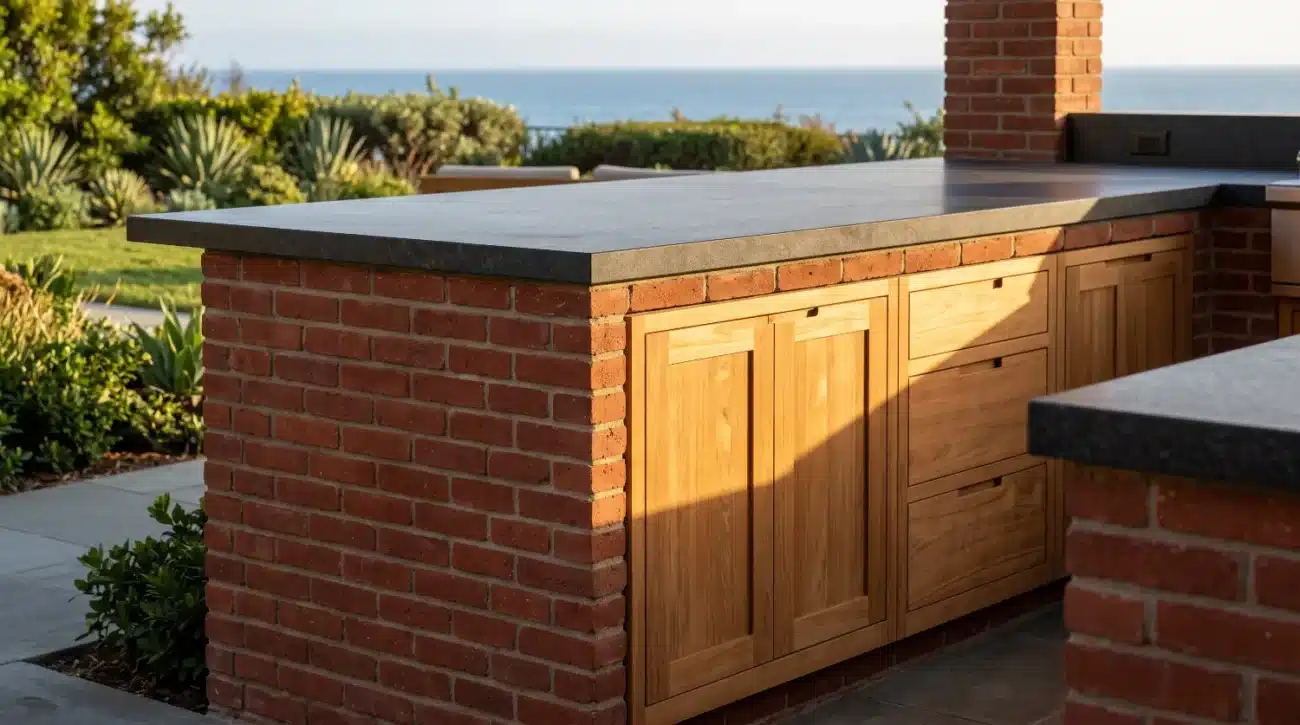
Selecting cabinetry for a mid-century renovation involves balancing wood tones with surrounding architectural elements. Mid-century homes feature extensive concrete, floor-to-ceiling glass, black powder-coated steel, and exposed masonry. Teak serves as a warm natural counterweight to these hard surfaces. The linear grain of teak highlights the horizontal emphasis of low-slung rooflines and low-profile patio walls.
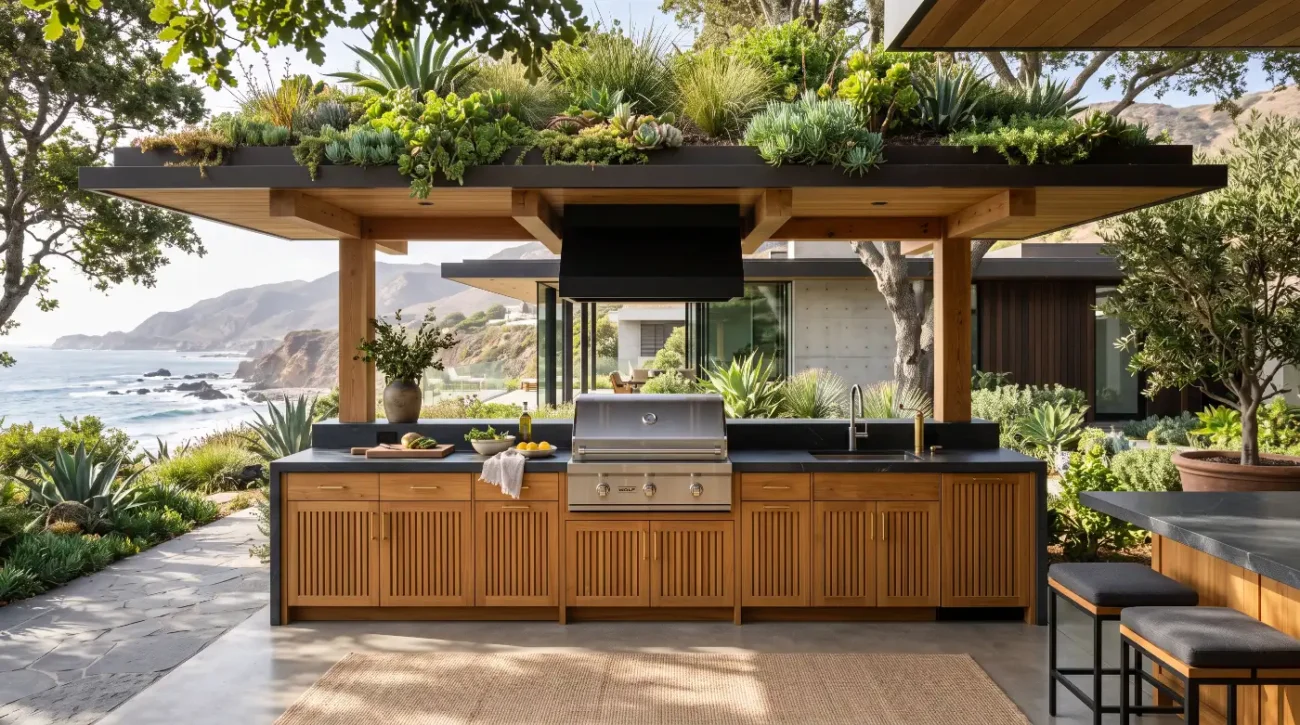
Achieving an authentic mid-century aesthetic requires avoiding ornate, traditional cabinetry detailing. Arched panels, raised center doors, heavy crown moldings, and prominent surface hardware disrupt the clean lines of mid-century architecture. The ideal style focuses on flat slab doors, flush face-frames, subtle narrow-rail shaker designs, and integrated finger-pull handles that maintain clean, uncluttered surfaces.
Cabinet Door Profiles for Mid-Century Architecture
Selecting the right door profile is the most important stylistic decision when integrating an outdoor kitchen into a mid-century modern home. The cabinet face dictates the visual rhythm of the entire exterior entertainment space.
Flat slab and slim-frame shaker profiles represent the ideal cabinet door styles for mid-century renovations. Flat slab doors feature unbroken horizontal grain patterns that reflect mid-century furniture design, while slim shaker frames provide crisp shadow lines. Both profiles rely on concealed 316 marine-grade hardware and integrated finger pulls to keep the cabinet face completely minimalist.
The Flat Slab Profile
The flat slab door profile represents the gold standard for mid-century modern exterior millwork. Featuring a completely smooth face without bevels, frames, or inset panels, the flat slab profile lets the natural wood grain take center stage. When crafted from solid teak, flat slab doors showcase continuous horizontal grain matching across adjacent cabinet runs. This creates a uninterrupted ribbon of warm wood that visually expands the outdoor living area.
Flat slab doors require exceptional woodworking precision. Because there are no frame recesses or panel shadows to hide subtle imperfections, every panel must be planed perfectly flat and engineered to resist warping. High-net-worth homeowners and trade professionals often explore dedicated base cabinet collections to ensure door panels maintain proper structural tolerances across changing seasons.
The Slim-Rail Shaker Profile
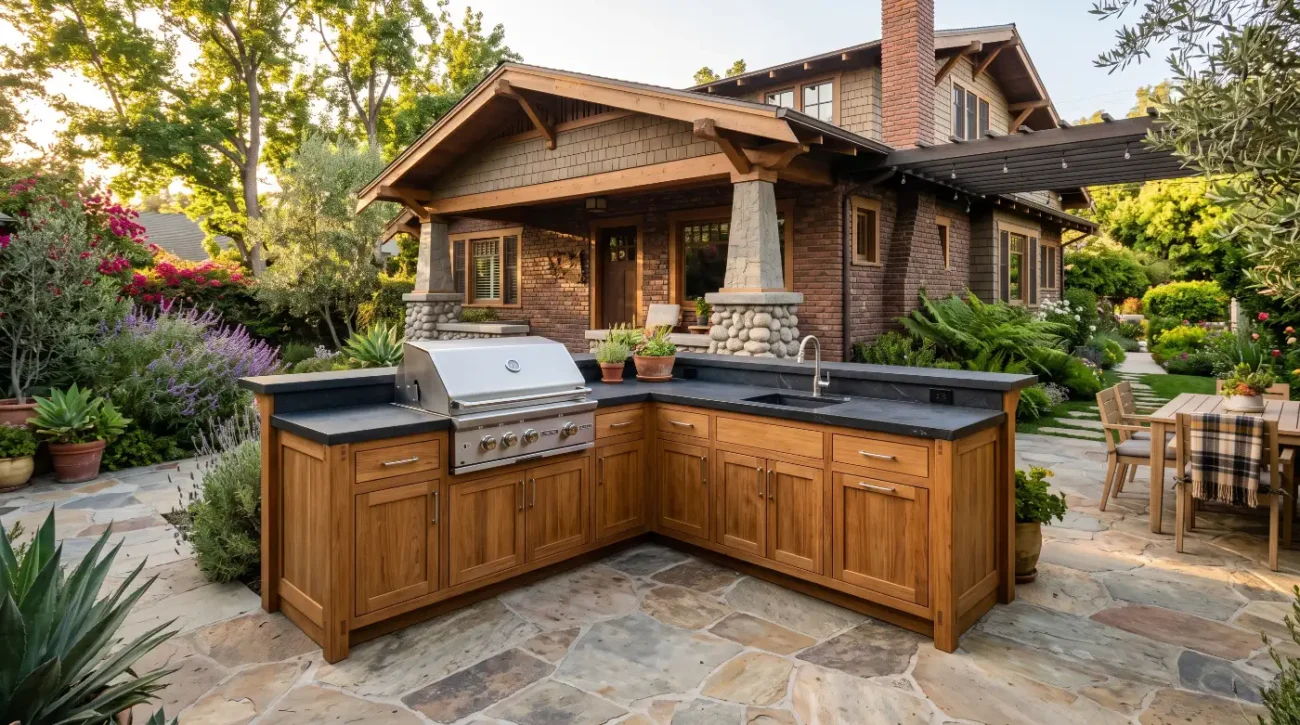
For homes that bridge mid-century modern design with transitional elements, the slim-rail shaker profile offers a refined alternative. Traditional shaker doors feature wide stiles and rails that can look too heavy for mid-century spaces. A modern slim-rail variation uses narrow borders—typically three-quarters of an inch to one inch wide—around a recessed flat center panel.
This narrow profile creates subtle shadow lines without adding visual bulk. The slim frame adds geometric structure that aligns cleanly with vertical window mullions, tongue-and-groove ceilings, or horizontal wood siding, while preserving the sleek aesthetic expected in high-end coastal renovations.
Integrated Handles and Finger-Pull Details
Mid-century furniture design famously avoided bulky hardware in favor of sculpted, integrated drawer and door pulls. Applying this concept to outdoor cabinetry keeps the cabinet fronts completely smooth and free of protruding metal pulls.
-
Continuous J-Pulls: A subtle channel routed directly into the top edge of base cabinet doors provides an easy handhold while remaining hidden from sight.
-
Beveled Edge Pulls: Machining a 45-degree inverse bevel along the back top edge of the door panel allows fingers to grip and open the cabinet without attaching external metal handles.
-
Touch-Latch Hardware: Concealed mechanical latches allow doors to spring open with a gentle press, maintaining a completely flush cabinet surface.
-
Recessed Teak Pulls: Sculpted, flush-mounted teak pulls set directly into the wood face honor vintage mid-century credenza designs while eliminating exposed metal hardware.
Wall Cabinet Integration and Vertical Alignment
Extending mid-century design principles to vertical storage requires careful attention to proportion and alignment. Wall-mounted cabinets in an outdoor kitchen loggia or covered patio should mirror the base cabinetry’s horizontal orientation. Specifying clean, flat-faced wall cabinets ensures vertical storage blends seamlessly into surrounding accent walls or exterior cladding, avoiding a top-heavy appearance above cooking stations.
Material Science: Grade-A Teak vs. Coastal Elements
High-end outdoor kitchens face harsh climate conditions that rapidly destroy inferior wood species and composite materials. Understanding the material science behind Grade-A teak reveals why it remains the premier choice for luxury exterior millwork.
Grade-A teak (Tectona grandis) harvested from mature heartwood contains high concentrations of natural rubber resins and silica. These organic compounds make the wood naturally resistant to moisture absorption, salt spray, wood-destroying fungi, and dimensional movement. This unique cellular structure enables solid teak cabinetry to maintain structural integrity in extreme coastal environments without synthetic coatings.
The Anatomy of Grade-A Heartwood
Not all teak delivers the same level of long-term durability. Grade-A teak is harvested exclusively from the dense center heartwood of mature Tectona grandis trees. According to material research from the USDA Forest Products Laboratory, mature teak heartwood contains high natural concentrations of hydrophobic rubber resins and silica particles bound directly within its cellular walls.
-
Silica Content: Naturally occurring silica hardens the wood fibers, rendering the timber resistant to moisture penetration and mechanical wear.
-
Natural Tectonic Resins: Essential rubber compounds seal the cellular pathways, preventing standing water and salt spray from causing deep fiber saturation.
-
Tight Grain Density: High-growth-ring density reduces moisture absorption, protecting the cabinet structure from swelling, shrinking, or warping during sudden climate shifts.
-
Natural Antifungal Properties: Tectonic oils actively repel wood-destroying fungi, rot, and boring insects without requiring toxic chemical treatments.
Resisting Coastal Corrosion and Extreme Sun Exposure
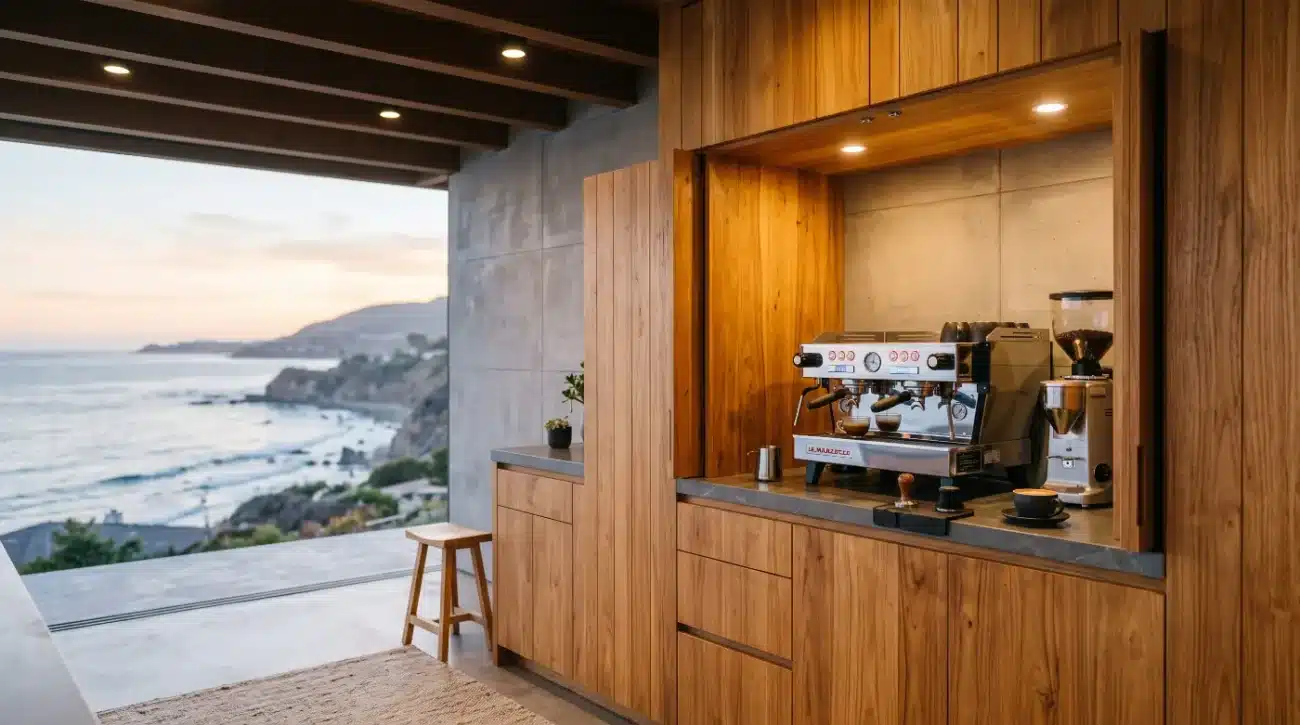
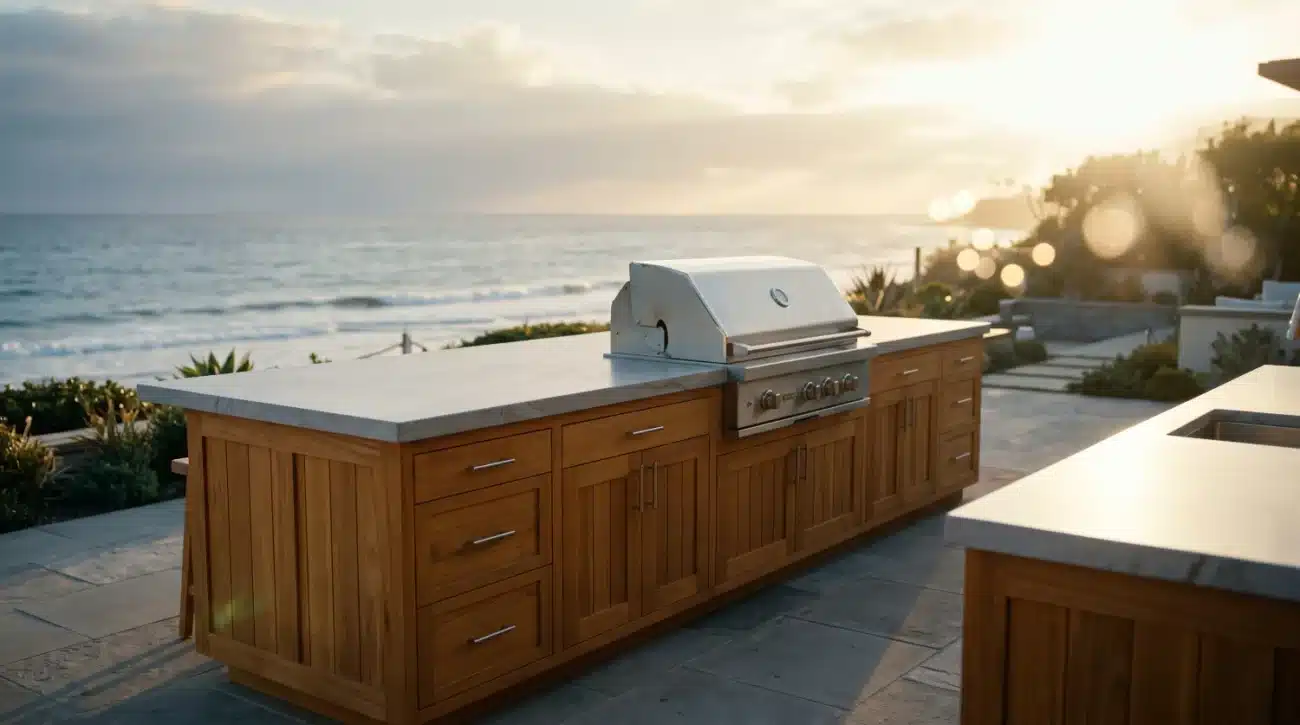
In luxury coastal enclaves like Malibu, Newport Beach, Miami, and the Hamptons, windborne salt spray creates a severe environment for exterior materials. Lower-grade woods quickly absorb salt water, causing internal wood fibers to break down and surface finishes to peel. Synthetic composites often soften and sag under intense direct sunlight, while painted metals can pit, bubble, and rust.
Grade-A teak handles these environmental stresses naturally. Its dense cellular composition blocks salt crystal accumulation within the grain. When exposed to extreme UV rays in desert locations like Palm Springs or Austin, teak’s natural oils keep the wood fibers supple, preventing the deep structural cracking and surface splintering common in cheaper hardwoods.
The Science of Finishing: Honey Warmth vs. Silvery Patina
A key design choice for a mid-century teak kitchen is deciding between maintaining its original golden-brown warmth or allowing the wood to age naturally into a silvery-grey patina. Both paths offer distinct visual benefits for mid-century modern spaces.
Design Tradeoff: Teak Finishing Paths
-
Golden-Brown Maintenance: Requires periodic applications of deep-penetrating teak oil or sealer to maintain warm timber tones that match indoor walnut and teak furniture.
-
Natural Silver Patina: Allowing UV rays to oxidize the outer wood layer creates a soft grey finish that complements fair-faced concrete, light terrazzo, and oxidized metal architectural accents.
Applying film-forming sealers like polyurethane or clear lacquer to outdoor teak is a common mistake. These hard surface coatings trap internal moisture and block the wood’s natural breathability. As temperature fluctuations cause the wood to expand and contract, hard surface coatings crack, flake, and turn cloudy, allowing moisture to reach the wood underneath and cause surface rot.
Maintaining the warm golden hue requires applying a breathable, penetrating teak oil formulated to replenish lost oils without building up a plastic-like film on the surface. Property owners can review step-by-step care protocols in the downloadable Teak Care & Maintenance Guide to protect their cabinetry investment over time.
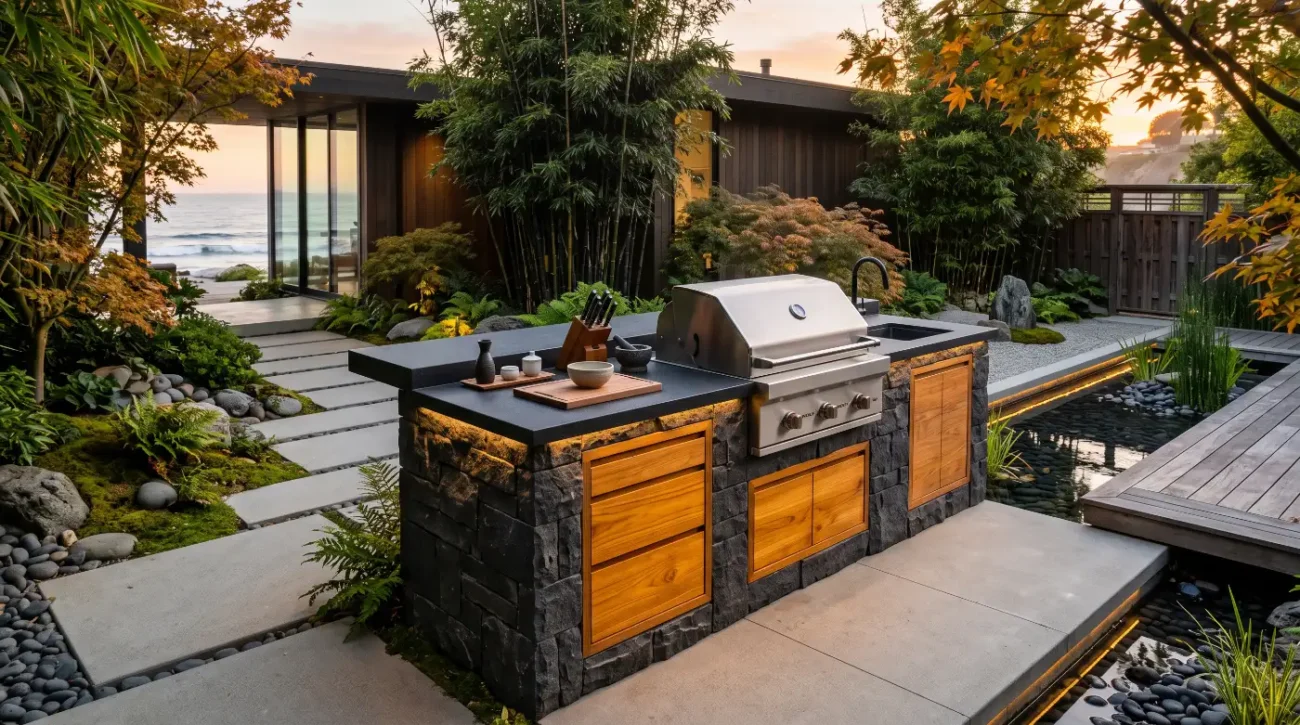
Allowing the teak to age naturally produces a soft grey patina. UV exposure oxidizes the pigments in the top layer of wood fibers, creating a silvery grey finish. This natural oxidation affects only the top fraction of a millimeter and does not weaken the wood underneath. A silver-grey teak kitchen pairs beautifully with mid-century architectural materials like poured-in-place concrete walls, grey limestone patio pavers, and matte black steel structural beams.
Structural Engineering and Trade-Level Millwork Precision
Designing custom outdoor cabinetry requires addressing complex structural engineering challenges. Supporting heavy stone countertops, accommodating high-heat appliances, and maintaining exact framing tolerances demand advanced woodworking methods.
Outdoor teak cabinetry requires traditional mortise-and-tenon joinery, marine-grade 316 stainless steel hardware, and built-in expansion gaps. Cabinet carcasses must be engineered to support heavy stone countertops, while integrated stainless steel heat shields and ventilation paths protect solid teak frames from high-heat gas grills.
Precision Joinery and Countertop Load Management
Heavy countertop materials like two-inch quartzite slabs, cast concrete, or thick granite put substantial weight on outdoor cabinet frames. Standard face-frame construction held together with metal brackets or pocket screws can loosen, sag, and cause doors to bind under heavy, long-term loads.
Master millwork relies on traditional mortise-and-tenon joinery reinforced with marine-grade fasteners. Interlocking solid wood joints distribute vertical countertop loads down through the structural cabinet stiles and levelling legs. Cabinet face frames must be built with internal expansion joints to handle natural moisture and temperature shifts without placing stress on stone countertop seams.
Marine-Grade Hardware and Fasteners
Selecting high-grade cabinet doors means little if the underlying hardware fails in outdoor conditions. Standard indoor cabinet hinges and drawer slides quickly rust, seize, or stain surrounding wood when exposed to exterior moisture and salt spray.
-
316 Marine-Grade Stainless Steel: All concealed hinges, assembly screws, and structural brackets must be crafted from 316 stainless steel, which contains molybdenum for superior resistance to salt-spray corrosion compared to standard 304 stainless.
-
Soft-Close Dampening Mechanisms: Integrated soft-close dampers prevent doors and drawers from slamming shut during strong winds, protecting cabinet joinery from repeated impacts.
-
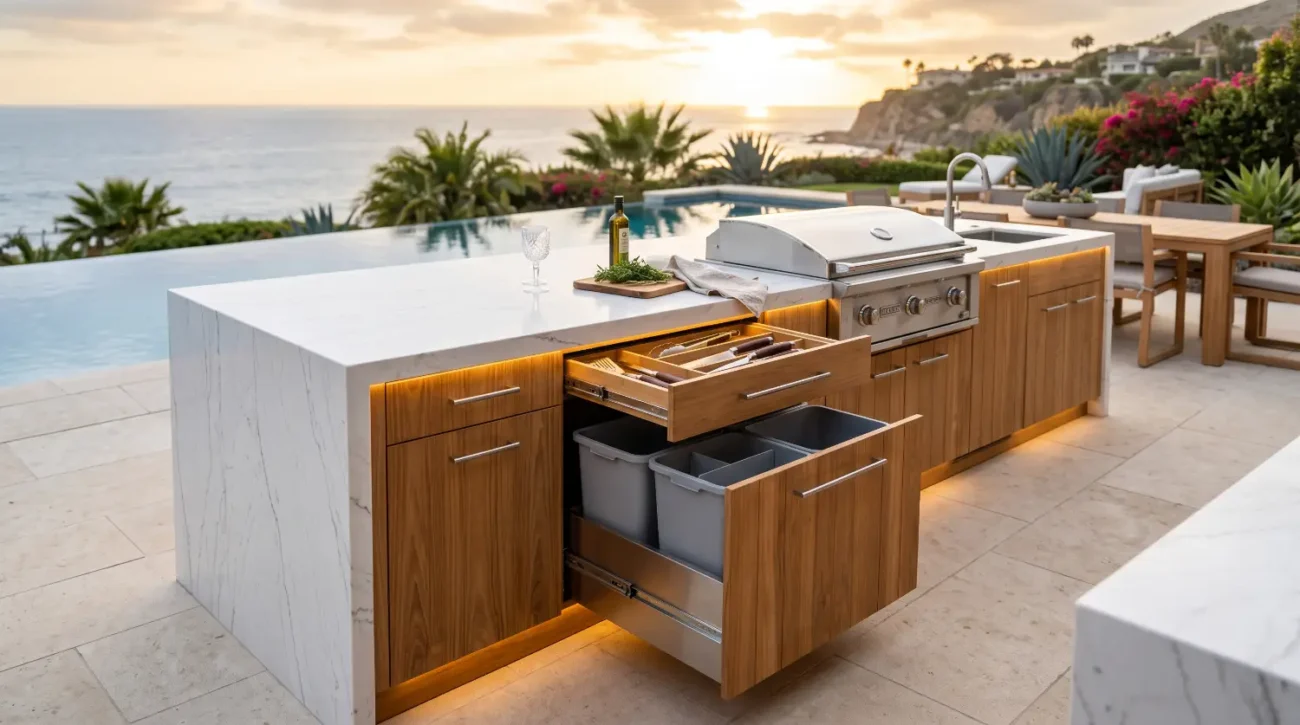
Full-Extension Drawer Glides: Heavy-duty, full-extension glides rated for high weight capacity allow deep storage drawers to open smoothly, providing easy access to heavy cast-iron cookware.
-
Weather-Sealed Gaskets: Internal drawer perimeters equipped with weather seals keep dust, insects, and rain out of storage areas.
High-Heat Appliance Venting and Insulation
Mid-century modern outdoor kitchens often combine solid teak cabinetry with high-performance gas grills, side burners, pizza ovens, and outdoor refrigeration units. Installing high-heat appliances directly into solid wood cabinetry requires careful thermal management to prevent scorched wood and fire risks.
Gas grills can generate internal temperatures exceeding 800 degrees Fahrenheit. Placing a grill directly against solid wood without proper thermal insulation can dry out the wood, ruin its natural oils, and create a serious safety hazard. Installing a custom-fit, double-walled stainless steel insulated jacket creates a safe thermal barrier between the grill chassis and the wooden cabinet frame.
Proper airflow within the cabinet base is equally important. Incorporating concealed rear vent louvers allows trapped heat to escape and prevents combustible gas from pooling inside closed storage compartments. Designers can explore specialized island inserts built to house built-in grills, warming drawers, and trash pulls with precise heat clearances already engineered into the frame.
Architectural Workflows: From Inspiration to Installation
Successfully executing a luxury outdoor kitchen renovation requires close collaboration between homeowners, interior designers, landscape architects, and custom builders. Managing the project workflow smoothly ensures design vision translates into a flawless installation.
Successful outdoor kitchen projects rely on early trade collaboration using CAD and BIM models. Integrating cabinet layouts into architectural plans helps trade teams verify utility locations, ensure proper appliance clearances, and confirm countertop weight distribution before shop fabrication begins.
Bridging the Homeowner-to-Trade Specification Gap
High-net-worth homeowners often start their renovation journey by gathering design inspiration, building mood boards, and selecting appliances. However, translating a conceptual mood board into a finished installation requires trade-level specification details.
Homeowners can bring preliminary ideas to their architectural design team, who then convert those concepts into precise build specifications. Working with custom cabinetry manufacturers that offer a comprehensive resource centergives trade professionals instant access to detailed CAD files, dimensioned elevation drawings, and material specifications. This shared access streamlines planning and eliminates costly errors on the job site.
CAD/BIM Integration and Construction Scheduling
Incorporating detailed cabinet models into the architect’s primary CAD or Revit design software helps identify potential installation issues early in the planning process.
-
Utility Rough-Ins: Verifying exact gas, electrical, and plumbing stub-out locations within the cabinet carcass dimensions before pouring concrete footings or laying patio pavers.
-
Appliance Cutout Approvals: Cross-referencing manufacturer specification sheets with cabinet opening dimensions to confirm proper fitting tolerances and door swing clearances.
-
Site Access Planning: Assessing gate widths, doorway clearances, and crane access requirements for delivering fully assembled teak modules to elevated decks or hillside properties.
-
Subcontractor Scheduling: Coordinating trade timelines so plumbing, gas, and electrical work happens after cabinet levelling, but before countertop templating and installation.
Trade professionals managing custom residential projects can review coverage terms and support services in the official Warranty Documentation to ensure the millwork is fully backed for long-term outdoor performance.
Designing for Mid-Century Indoor-Outdoor Continuity
The primary goal of a mid-century modern outdoor kitchen renovation is creating a natural extension of the indoor living space. Achieving this continuity relies on thoughtful spatial planning and material coordination across the threshold.
Aligning cabinet heights, countertop edges, and hardware styles with nearby indoor kitchens or dining credenzas creates a cohesive visual bridge through sliding glass walls. Matching the wood tones of outdoor teak cabinetry with indoor architectural features—such as walnut wall paneling, teak ceiling beams, or cedar eaves—further unifies the home’s design.
To explore custom options for your outdoor kitchen, review technical specifications, or discuss trade program protocols for an upcoming mid-century modern project, connect directly with our millwork specialists through our Contact Us / Trade Inquiries portal.
External References
Key Takeaways: Outdoor Kitchens
-
Profile Selection: Flat slab and narrow-rail shaker profiles provide the clean lines, smooth surfaces, and horizontal emphasis needed for mid-century modern outdoor kitchens.
-
Material Integrity: Solid Grade-A teak heartwood contains essential silica and rubber resins that naturally protect cabinetry from moisture, salt spray, and extreme temperature changes.
-
Hardware Specifications: Specifying 316 marine-grade stainless steel hinges, full-extension drawer glides, and concealed soft-close mechanisms prevents coastal corrosion and maintains clean cabinet faces.
-
Thermal Safety: Installing stainless steel insulated heat jackets and rear vent louvers protects solid teak cabinetry from the high heat generated by built-in gas grills.
-
Finishing Strategy: Choosing between maintaining warm golden teak tones with breathable oils or letting the wood oxidize to a natural silver patina, for your outdoor kitchen creates versatile options for pairing with concrete, stone, and brick.
-
Trade Workflows: Utilizing CAD/BIM libraries during early planning helps design teams align utility rough-ins, confirm countertop weight distribution, and ensure a seamless installation of your outdoor Kitchen.
Elevate Your Mid-Century Modern Outdoor Project
Transforming a mid-century modern patio into an extraordinary outdoor living space with an outdoor kitchen requires exceptional craftsmanship, precise trade engineering, and authentic materials. Pacific Teak Millworks crafts custom, marine-grade solid teak cabinetry tailored to the exact requirements of architects, landscape designers, custom builders, and discerning homeowners. Whether you are designing a low-profile poolside loggia in Palm Springs or a coastal outdoor kitchen in Malibu, our team provides technical guidance, custom CAD files, and material samples to bring your vision to life. To start planning your custom outdoor kitchen, request wood samples, or discuss project specifications, visit our Contact Us / Trade Inquiries page or call our master specifiers directly at (949) 365-6513.