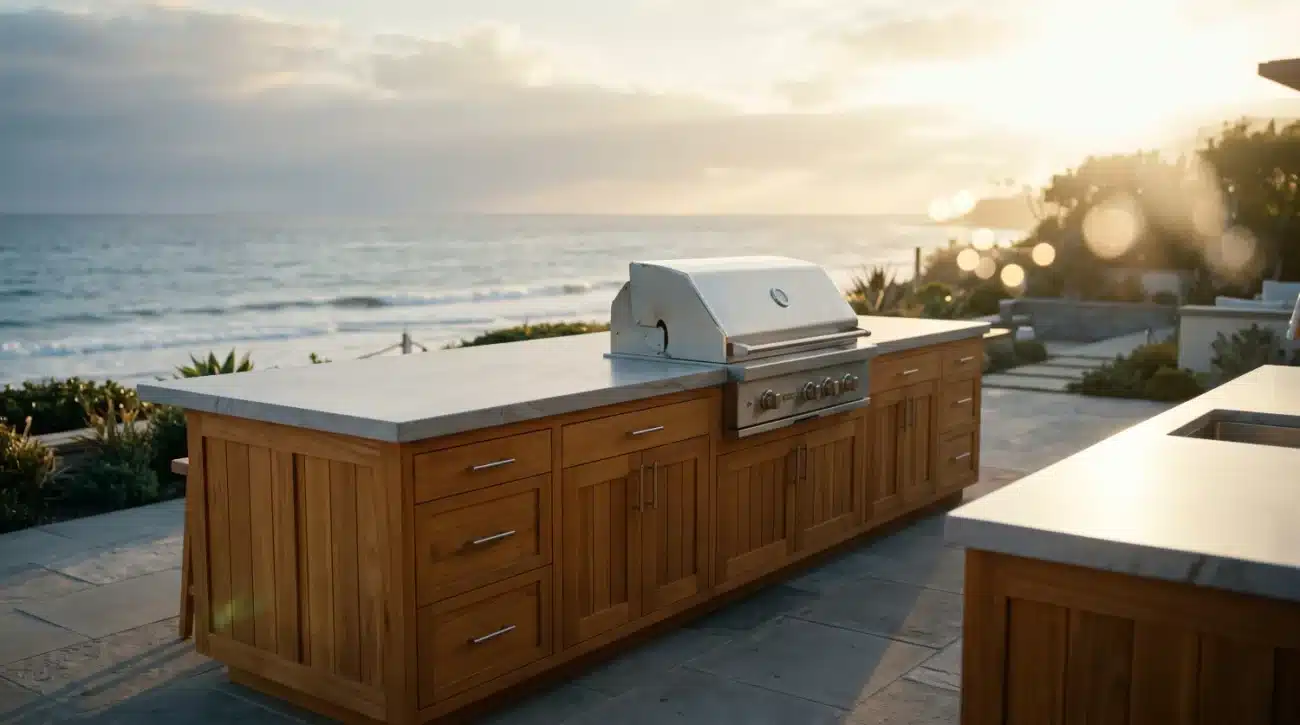
Executive Summary
-
Structural Longevity Standard: Grade-A solid teak cabinetry engineered with mortise-and-tenon joinery easily lasts 30 to 50+ years in extreme exterior environments, outliving composite, aluminum, and lower-grade timber alternatives.
-
Cellular Defense Mechanisms: High natural silica density and tectonic rubber resins inherent to old-growth and mature plantation Tectona grandis provide natural resistance to rot, wood-boring insects, and saltwater saturation without artificial chemical injections.
-
Architectural Tradeoff Decisions: Homeowners and trade specifiers can choose between preserving a golden-brown luster through routine oiling or allowing the timber to gracefully oxidize into an ultra-low-maintenance silvery-grey patina.
-
Engineering and Specification Nuance: Achieving maximum structural lifespans requires marine-grade 316 stainless steel hardware, proper appliance heat shielding, adequate cabinet ventilation, and precision levelling to support heavy natural stone countertops.
What Is the Expected Lifespan of Solid Teak Cabinetry in Exterior Applications?
When a luxury residential build in Malibu, Palm Springs, or the Hamptons suffers an exterior kitchen failure within five years of completion, the root cause is almost never aesthetic choice—it is material science denial. Architectural specifiers and discerning homeowners frequently watch expensive exterior installations degrade because film-forming polyurethane coatings peel under intense solar radiation, soft pine core boards swell from atmospheric moisture, or inferior metal fasteners corrode in salt breeze. Grade-A solid teak outdoor cabinet longevity lifespan expectations routinely exceed 30 to 50 years when engineered with true marine joinery, making authentic Tectona grandis the undisputed benchmark for high-end exterior architectural millwork.
Section Overview
-
Decades of Durability: Grade-A solid teak cabinetry engineered with marine-grade joinery delivers a functional lifespan exceeding 30 to 50 years in raw exterior conditions.
-
Natural Cellular Defense: Immense internal silica content and natural tectonic rubber resins shield the wood against moisture ingress, fungal decay, and coastal salt spray.
-
Architectural Flexibility: Specifiers can retain golden timber tones through periodic oiling or allow natural UV oxidation to form a self-protecting silver patina without structural compromise.
-
Structural Integrity Requirements: Pairing solid timber with 316 stainless steel hardware, dedicated thermal ventilation, and proper stone load distribution ensures generational performance.
Understanding the Structural Longevity and Material Science of Exterior Teak Millworks
When properly harvested, cured, and joined, Grade-A solid teak cabinetry possesses a structural functional lifespan ranging from 30 to over 50 years in open exterior applications. Unlike alternative materials that rely on superficial plastic laminates or toxic chemical pressure treatments, teak relies on its native cellular anatomy to survive intense ultraviolet exposure, ocean spray, and thermal cycling. This exceptional durability stems directly from the heartwood of mature Tectona grandis, where high concentrations of natural rubber resins and microscopic silica particles form an internal barrier against moisture absorption and fungal rot.
The underlying science of teak longevity lies within its unique grain density and extractive compound chemistry. According to extensive research by the USDA Forest Products Laboratory, mature heartwood teak exhibits minimal dimensional movement, high natural decay resistance, and exceptional shear strength under fluctuating relative humidity levels. While inferior woods experience severe cell-wall collapse and fiber separation during heat-freeze cycles, solid teak maintains tight dimensional stability. This intrinsic equilibrium prevents the severe warping, splitting, and joint detachment common in lower-grade timber assemblies.
To achieve maximum operational lifespan, custom millwork must utilize exclusively Grade-A heartwood harvested from mature trees. Sapwood—the younger, outer ring of the tree trunk—lacks protective natural oils and silica, rendering it vulnerable to insect attack and moisture decay within a few seasons of outdoor exposure.
Material Performance Comparison Across Exterior Cabinetry Options
The longevity of solid teak cabinetry relies heavily on modern joinery engineering that works in harmony with natural wood movement. Exterior timber constantly breathes, expanding across its grain during humid coastal summers and contracting during dry winter winds. Master cabinetmakers accommodate these micro-movements by utilizing floating panel construction, deep mortise-and-tenon joints, and stainless steel internal alignment pins. This allows individual components to adjust seamlessly without placing mechanical stress on surrounding cabinet frames or joint adhesives.
Preventing premature degradation requires selecting hardware components that match the multi-decade lifespan of the wood itself. Standard zinc-plated or 304-grade stainless steel hinges deteriorate rapidly when exposed to coastal air, causing rust streaks, mechanical binding, and panel misalignment. Top-tier exterior installations mandate 316 marine-grade stainless steel hinges, full-extension drawer glides, and weather-sealed mechanical latches. High-end collections, such as the Pacific Teak Millworks base cabinets collection, integrate 316 marine-grade hardware with precision face-frame construction to guarantee that every mechanical sub-assembly matches the timber’s extended lifespan.
Countertop load management presents another crucial factor in long-term cabinet survival. Modern luxury outdoor kitchens frequently feature heavy 3cm granite, quartzite, or poured concrete slabs weighing upwards of 800 pounds across a single island footprint. Solid teak cabinets feature exceptional compression strength, allowing them to support these massive loads without sagging or racking over decades. However, installers must ensure that support legs are perfectly leveled on stable footings to distribute load weight evenly across the entire timber frame, preventing uneven torque on doors and drawers.
Counterintuitive material insight: Applying heavy polyurethane, varnish, or film-forming clear coats on exterior teak drastically reduces its lifespan. These rigid film finishes trap microscopic moisture beneath the surface while blocking the wood’s natural ability to breathe. As solar UV rays break down the bond between the film and wood, water becomes trapped, causing grey rot, deep cellular discoloration, and extensive surface peeling that requires aggressive power sanding to repair.
Common post-installation mistake: Trapping extreme radiant heat from gas grills and pizza ovens against raw cabinetry walls accelerates thermal stress and wood drying. Installing high-output cooking appliances requires dedicated insulated jackets, heat shields, and cross-ventilation cutouts within the teak framework to prevent localized heat damage and maintain long-term structural integrity.
Overlooked environmental risk: High-pressure washing or using harsh chemical degreasers on custom teak millwork strips out beneficial surface resins and blast away soft wood fibers. This practice creates pitted, textured surfaces that collect atmospheric dirt, mold spores, and airborne pollutants, compromising both aesthetic refined quality and wood longevity.
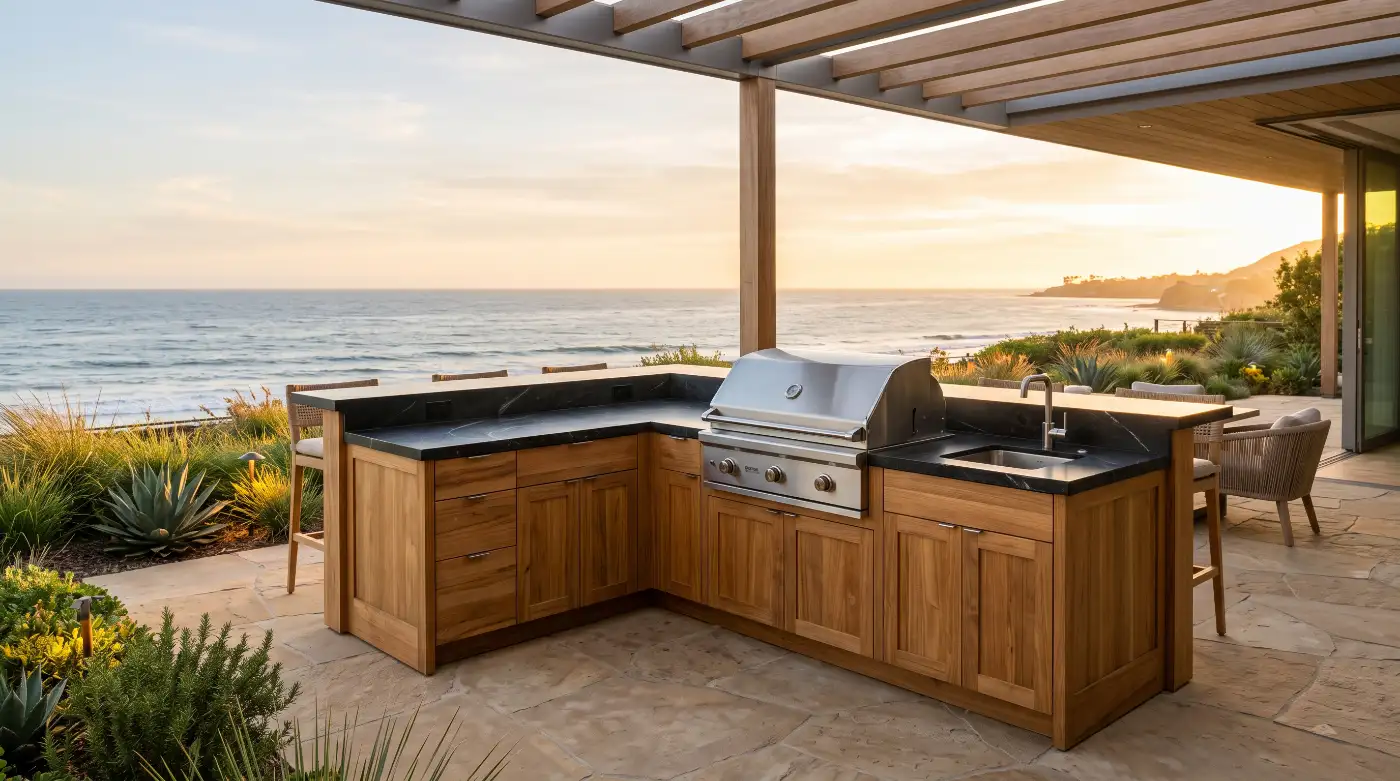
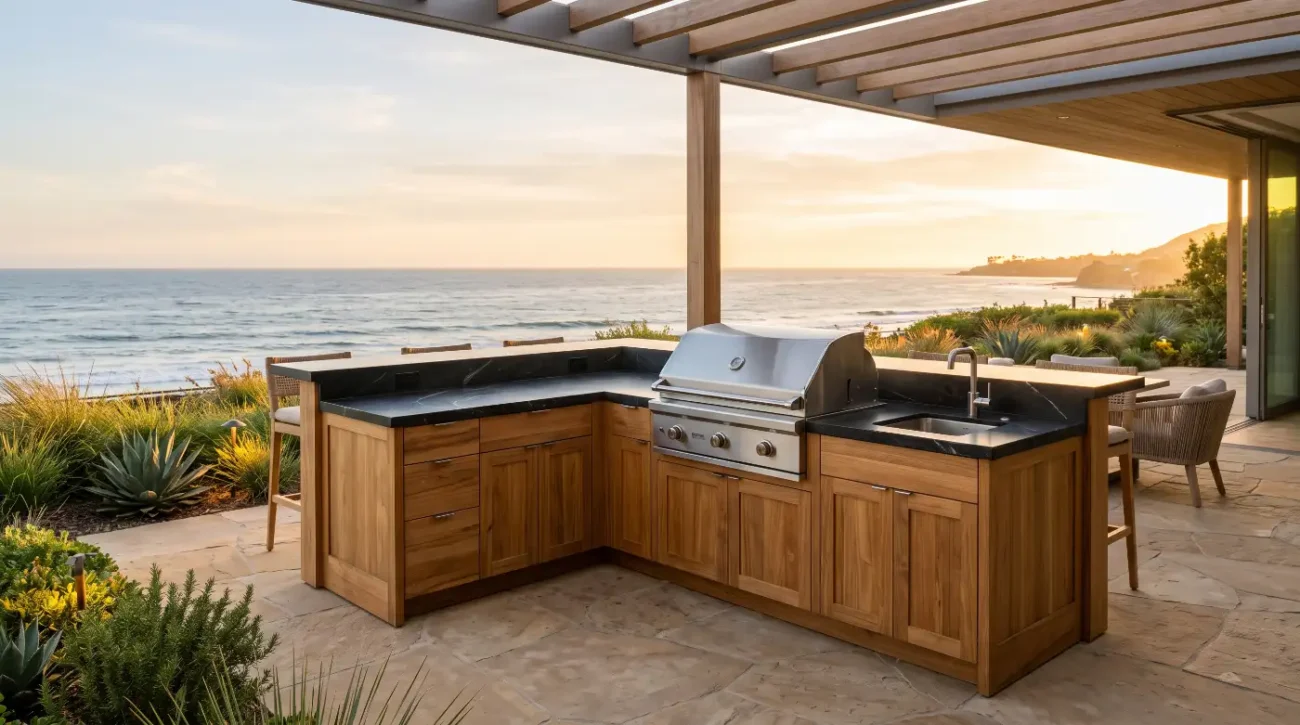
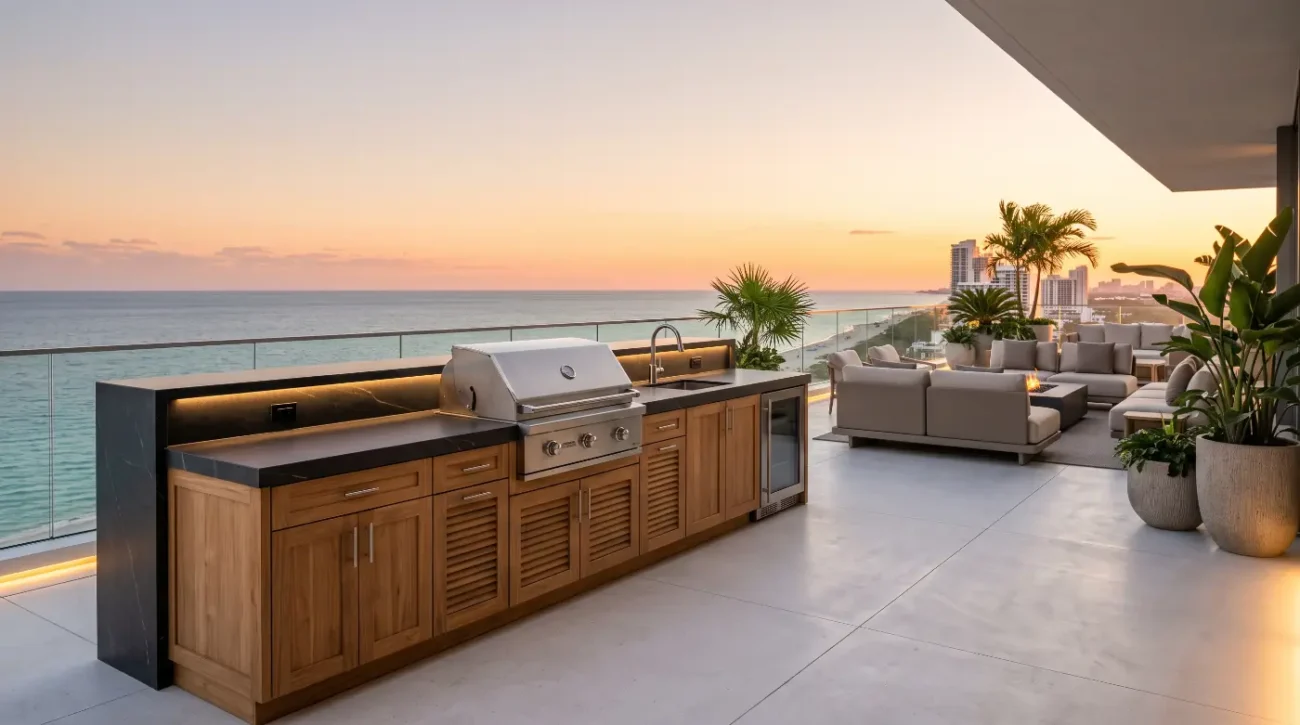
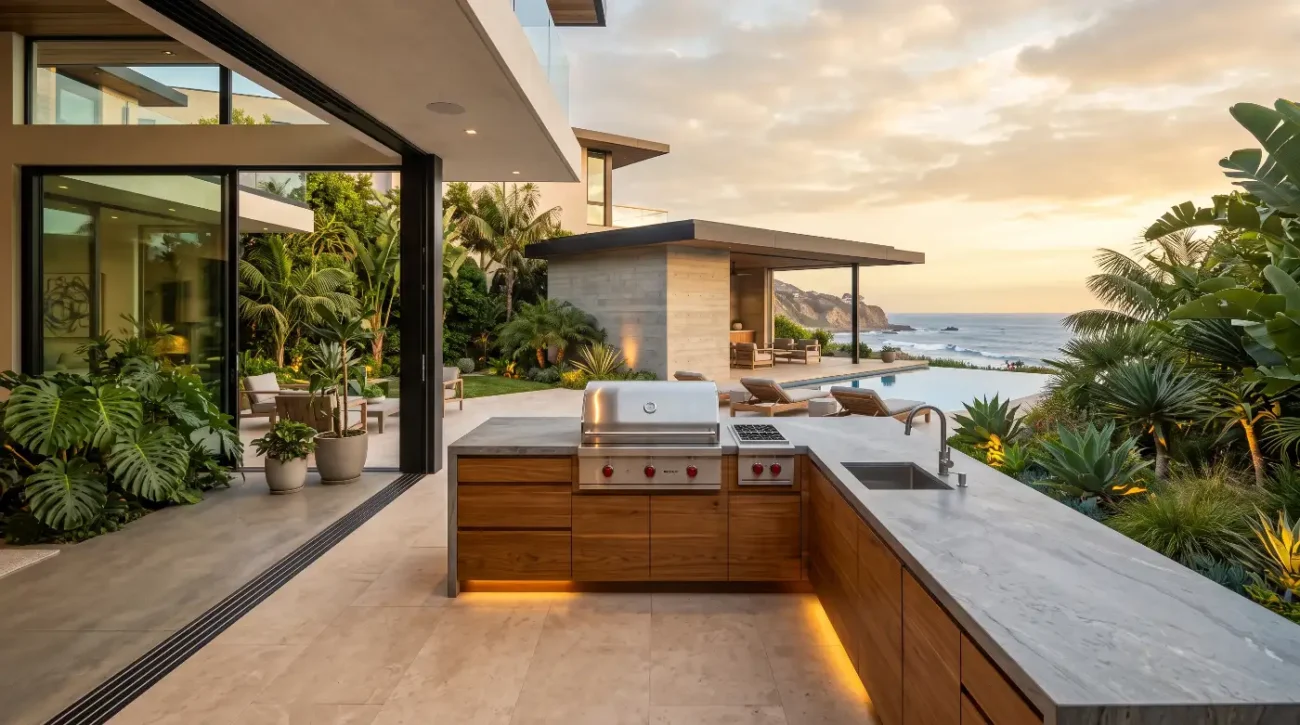
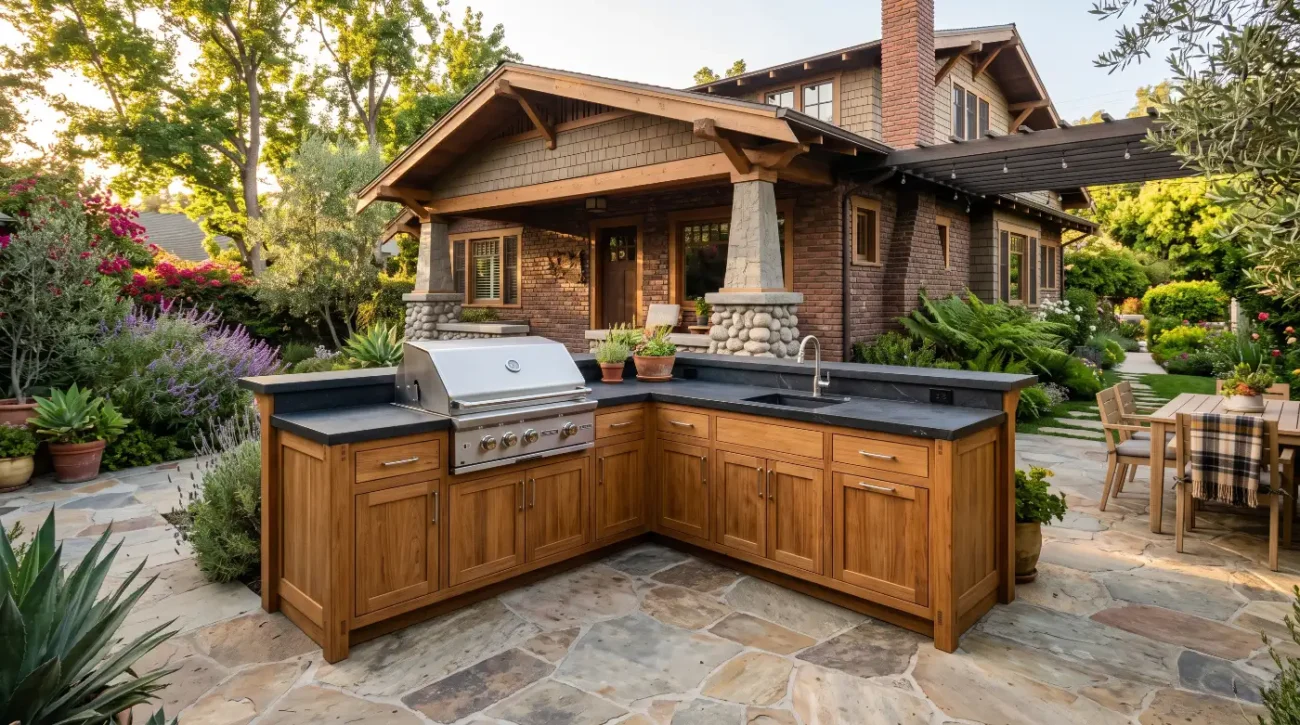
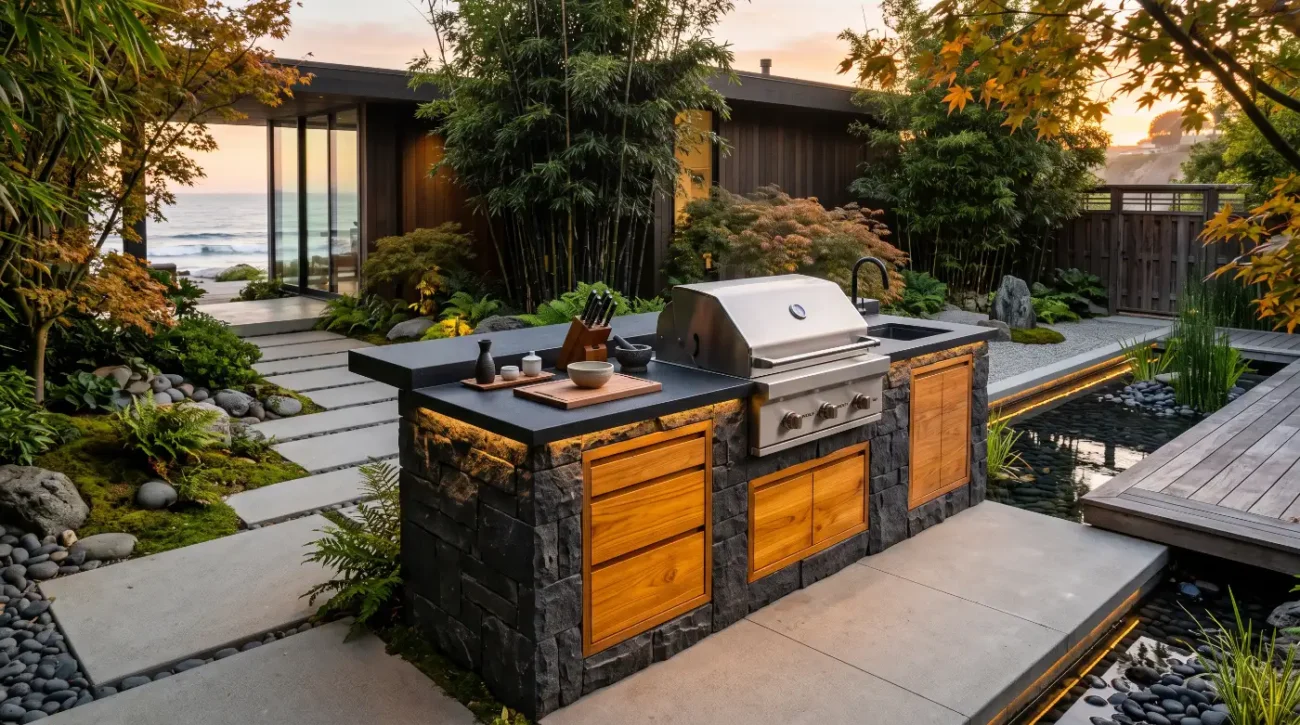
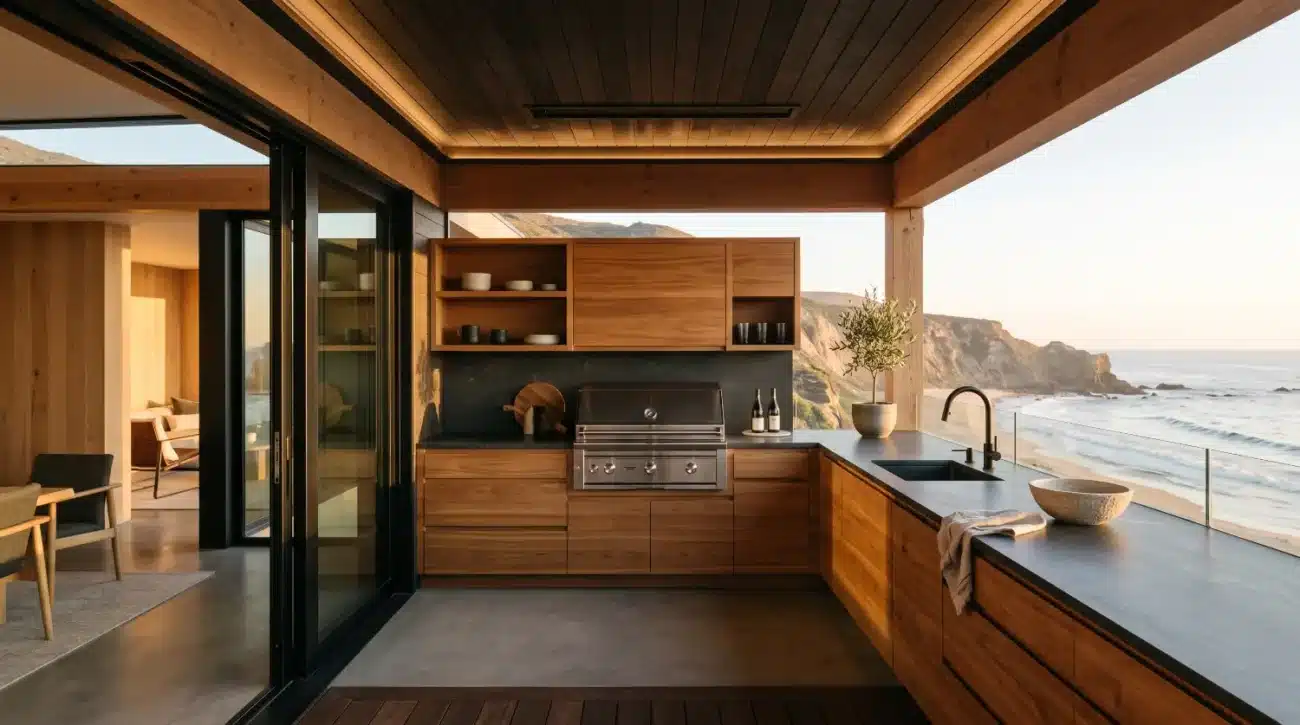
Hidden design opportunity: Blending warm, rich golden-brown teak cabinetry with dark, sleek porcelain or soapstone countertops creates a striking biophilic contrast that elevates coastal and desert outdoor living spaces while grounding the surrounding architectural landscape.
Strategic tradeoff: Homeowners must evaluate whether to maintain teak’s original golden hue through annual application of breathable, solvent-free oils or allow the wood to oxidize into a classic silver-grey patina. Allowing the timber to naturally oxidize eliminates ongoing oil maintenance without reducing the wood’s structural durability or weather resistance.
Essential Installation Longevity Checklist
-
Verify Timber Grade: Confirm 100% Grade-A heartwood timber specification across all load-bearing and exterior-facing structural members.
-
Inspect Hardware Specifications: Confirm 316 marine-grade stainless steel hinges, soft-close glides, and concealed structural fasteners throughout the build.
-
Incorporate Expansion Joinery: Utilize floating panel joinery mechanics to accommodate natural seasonal wood expansion and contraction cycles.
-
Enforce Thermal Separation: Install thermal insulation jackets and dedicated cross-ventilation cutouts around high-heat appliances.
-
Level Base Foundations: Ensure full structural levelling beneath heavy natural stone or concrete countertops to avoid frame racking.
Architectural Integration, Environmental Resilience, and Preventive Maintenance Protocols
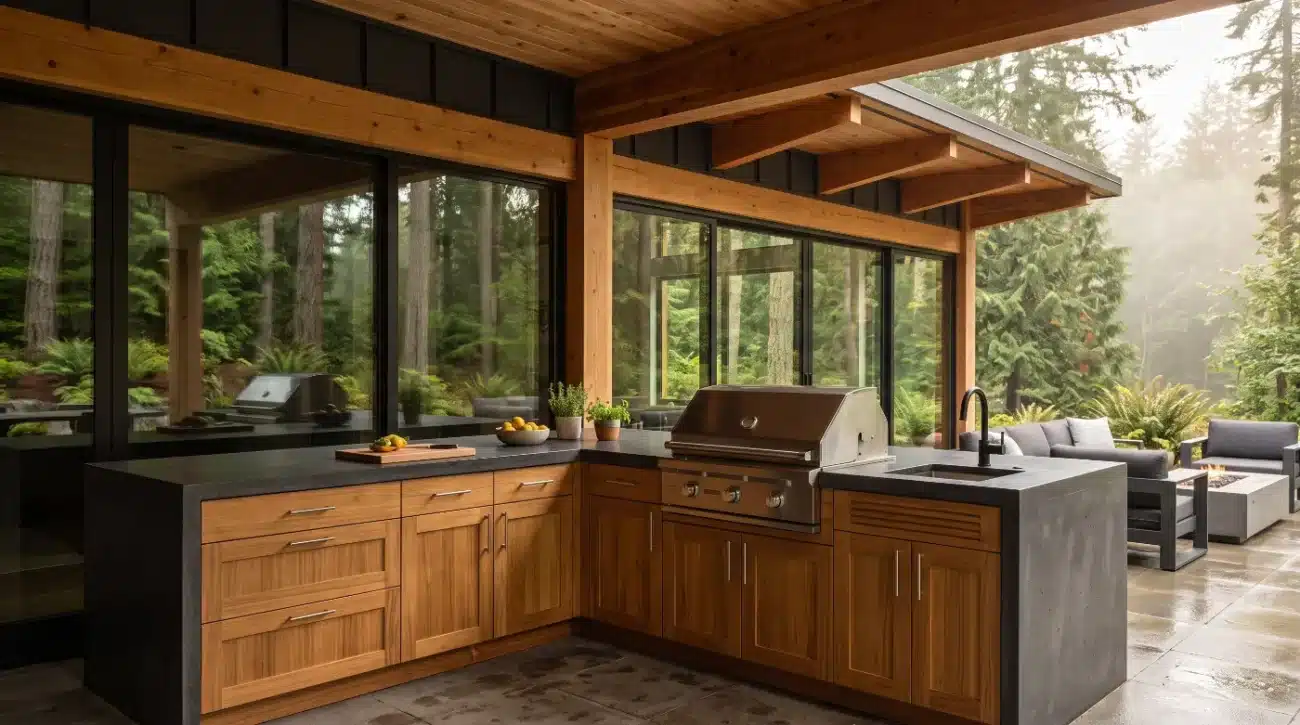
How do climate extremes dictate the long-term maintenance requirements and structural stability of exterior teak millwork? Environmental exposure levels, micro-climate variables, and maintenance schedules directly influence the visual patina and surface characteristics of outdoor teak cabinetry, while its structural heart remains completely sound. In sunny environments like Palm Springs or Miami, unsealed teak oxidizes rapidly under intense ultraviolet radiation, developing a protective silver-grey patina within six to twelve months. In damp, shaded conditions like the Pacific Northwest, controlling surface moisture and air movement prevents surface mildew spores from colonizing the wood’s micro-pores.
The architectural workflow for implementing high-performance exterior cabinetry requires close coordination between specifiers, landscape architects, and custom builders. During early planning phases, designers utilize detailed CAD drawings and BIM models to integrate cabinet dimensions, utility rough-ins, and appliance clearances long before site construction begins. Trade professionals seeking detailed technical specifications, CAD layout guides, and custom configuration options can review comprehensive resources through the Pacific Teak Millworks resource center to ensure flawless site integration and trade compliance.
Chronological Stages of Teak Patina Evolution
-
Stage 1 – Initial Installation (Months 0 to 3): Displays a rich golden-brown luster with visible natural wood grain and a high natural oil sheen. The surface repels liquid water instantly upon contact.
-
Stage 2 – Early UV Exposure (Months 3 to 8): Shows a subtle softening of rich golden tones into warm honey hues as surface oils balance. Initial UV interaction begins on fully exposed exterior faces.
-
Stage 3 – Weathering Transition (Months 8 to 18): Features a gradual shift toward a light silver-tinted wood grain while silica crystals solidify a protective outer barrier layer.
-
Stage 4 – Mature Silver Patina (Months 18 and Beyond): Establishes a uniform, elegant silvery-grey architectural finish while full structural integrity remains completely unaffected by the surface color shift.
Environmental resilience varies significantly across geographic regions, requiring localized installation and care strategies. Coastal beachfront properties in Malibu or the Florida Keys present extreme salt air saturation and windblown sand abrasion. In these settings, raw sea salt residue absorbs ambient atmospheric moisture, holding dampness against cabinet surfaces. Rinsing cabinetry periodically with fresh water removes salt buildup, protecting hardware functionality and preserving a clean surface appearance.
In cold climate zones prone to deep freezing and winter snow accumulation, solid teak cabinetry demonstrates remarkable resilience compared to synthetic alternatives that grow brittle and crack under sub-zero temperatures. Because teak’s natural cell structure contains almost zero free water once properly kiln-dried, it resists freeze-thaw expansion cycles that routinely fracture composite wood and low-grade hardwoods. Protecting cabinetry with breathable canvas covers during extended winter months prevents snow accumulation and ice dams from forming in drawer slides and hinge recesses.
Specifying luxury outdoor cabinetry involves selecting configuration styles that complement the surrounding architecture and meet spatial needs. Custom island layouts often combine full-height storage units with specialized drop-in equipment modules. For instance, integrated components from the Pacific Teak Millworks island inserts collection allow designers to seamlessly incorporate stainless steel warming drawers, trash pullouts, and access doors directly into custom solid teak frames, delivering a clean, cohesive architectural look.
Environmental Adaptation Protocols by Regional Micro-Climate
-
Coastal Beach Environments:
-
Primary Climate Stress: Intense salt spray, airborne sand abrasion, and high ambient moisture saturation.
-
Recommended Care Protocol: Execute bi-monthly fresh water rinses to prevent salt residue buildup on hardware.
-
Desert Sunbelt Regions:
-
Primary Climate Stress: Unrelenting ultraviolet exposure, extreme solar radiation, and exceptionally low relative humidity.
-
Recommended Care Protocol: Perform semi-annual teak oil applications if retaining the warm golden wood tone is desired.
-
Pacific Northwest Forest Zones:
-
Primary Climate Stress: Sustained atmospheric dampness, shade cover, and airborne fungal spore loads.
-
Recommended Care Protocol: Ensure unobstructed direct airflow and complete quarterly surface brush cleanings.
-
Freeze-Thaw Climatic Zones:
-
Primary Climate Stress: Deep snow accumulation, ice dams, and severe sub-zero thermal cycling.
-
Recommended Care Protocol: Apply breathable protective covers over non-use winter periods to shed ice buildup.
Long-term warranty coverage and manufacturer support reflect the true durability and material grade of premium millwork. High-end custom manufacturers build products designed to last generations under demanding outdoor conditions. Trade specifiers and homeowners evaluating material durability standards can inspect complete structural guidelines and coverage details by downloading the official Pacific Teak Millworks warranty documentation.
Counterintuitive maintenance insight: Sanding weathered silver-grey teak does not damage its structural integrity; it simply removes the thin, oxidized top layer of cellulose fibers to reveal the original golden-brown wood underneath. Homeowners can restore oxidized teak to its original golden tone at any point in its lifespan without compromising the strength or weather resistance of the cabinetry.
Common post-installation mistake: Failing to account for improper deck drainage or standing water around cabinet bases creates long-term moisture problems. While solid teak withstands standing water better than other woods, keeping cabinet bases elevated above wet surfaces on adjustable levelling legs promotes essential airflow and prevents water staining along base trims.
Overlooked environmental risk: Installing outdoor teak cabinetry directly beneath dripping tree canopies subjects the wood to concentrated sap drips, organic tannins, and bird droppings. These substances can cause surface staining and harbor fungal growth if not promptly washed off with warm water and mild dish soap.
Hidden design opportunity: Integrating high-mounted teak wall cabinetry with lower storage islands creates vertical depth and functional storage, softening hard masonry walls and extending the warm luxury of indoor kitchen design into open-air living spaces. Designers exploring vertical spatial layouts can review modular wall storage solutions within the Pacific Teak Millworks wall cabinets collection to maximize vertical organization.
Strategic tradeoff: Choosing custom solid teak cabinetry requires a higher initial investment than aluminum or synthetic alternatives. However, because teak eliminates the need for replacement every 5 to 10 years, it delivers lower total cost of ownership, superior long-term performance, and timeless architectural appeal over decades of outdoor use.
Long-Term Care Matrix and Finishing Directions
External References
Key Takeaways
-
Generational Lifespan: Grade-A solid teak cabinetry engineered with proper mortise-and-tenon joinery easily delivers a 30 to 50+ year operational lifespan in harsh exterior environments.
-
Natural Weather Resistance: High natural silica content, dense heartwood grain, and tectonic rubber resins defend the timber against water penetration, fungal rot, and saltwater corrosion without artificial coatings.
-
Finishing Versatility: Homeowners can maintain the wood’s original golden-brown tone with simple annual oiling or let it naturally oxidize into a low-maintenance, silvery-grey patina without compromising structural durability.
-
Marine Hardware Standard: Long-term performance relies on pairing solid timber cabinet frames with 316 marine-grade stainless steel hardware to prevent rust, binding, and mechanical failure in coastal salt air.
-
Architectural Integration: Proper airflow, appliance heat shielding, level stone weight distribution, and professional CAD planning ensure seamless site installation and decades of trouble-free luxury outdoor living.
Consult with Pacific Teak Millworks
Transforming an ambitious outdoor architectural vision into an enduring exterior kitchen requires trade-level craftsmanship, material precision, and custom engineering. Whether you are a homeowner curating an expansive coastal retreat or an architect specifying custom millwork for a high-end estate, Pacific Teak Millworks provides the trade expertise, CAD support, and marine-grade craftsmanship needed to bring your project to life. Connect directly with our lead specialist, Darin, by calling (949) 365-6513, emailing darin@pacificteakmillworks.com, or submitting a design inquiry through our official Pacific Teak Millworks contact portal to request wood finish samples, review specification guides, or discuss your upcoming architectural project.