Fast Track Summary
-
Seamless Utility Integration: Integrating an outdoor kitchen hidden trash drawer teak module eliminates visible refuse containers while maintaining clean, continuous architectural lines across high-end outdoor living spaces.
-
Marine-Grade Performance: Utilizing 316 marine-grade stainless steel hardware and Grade-A teak guarantees structural integrity against saltwater corrosion, extreme heat, and severe humidity.
-
Precision Trade Specification: Correctly anticipating countertop dead loads, appliance ventilation, and custom face-frame joinery prevents moisture trapping and structural sagging over decades of use.
-
Unified Architectural Aesthetics: Matching custom teak utility pullouts with surrounding cabinetry bridges the gap between interior design sophistication and exterior durability.
Architectural Precision in Utility Integration: Engineering the Outdoor Kitchen Hidden Trash Drawer Teak Module
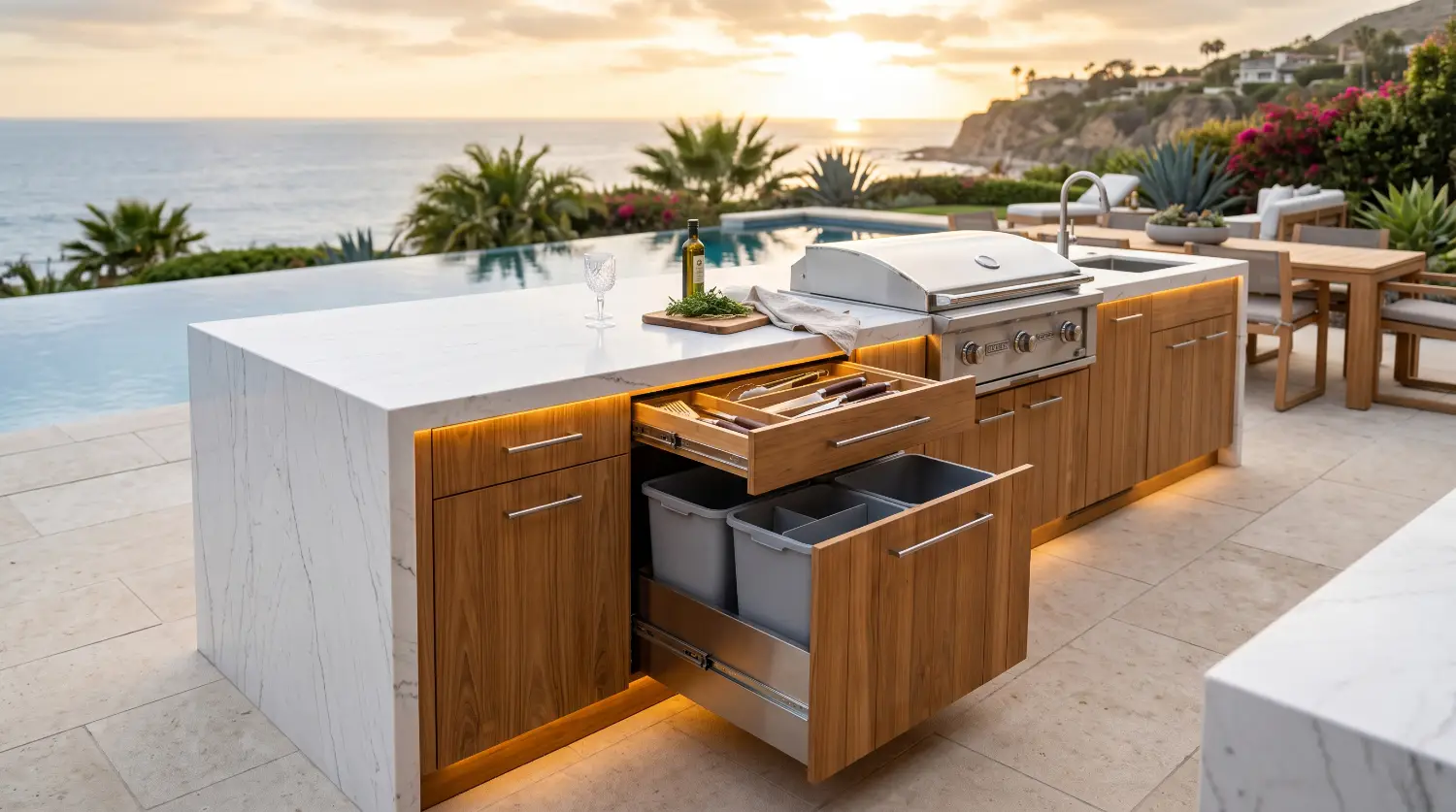
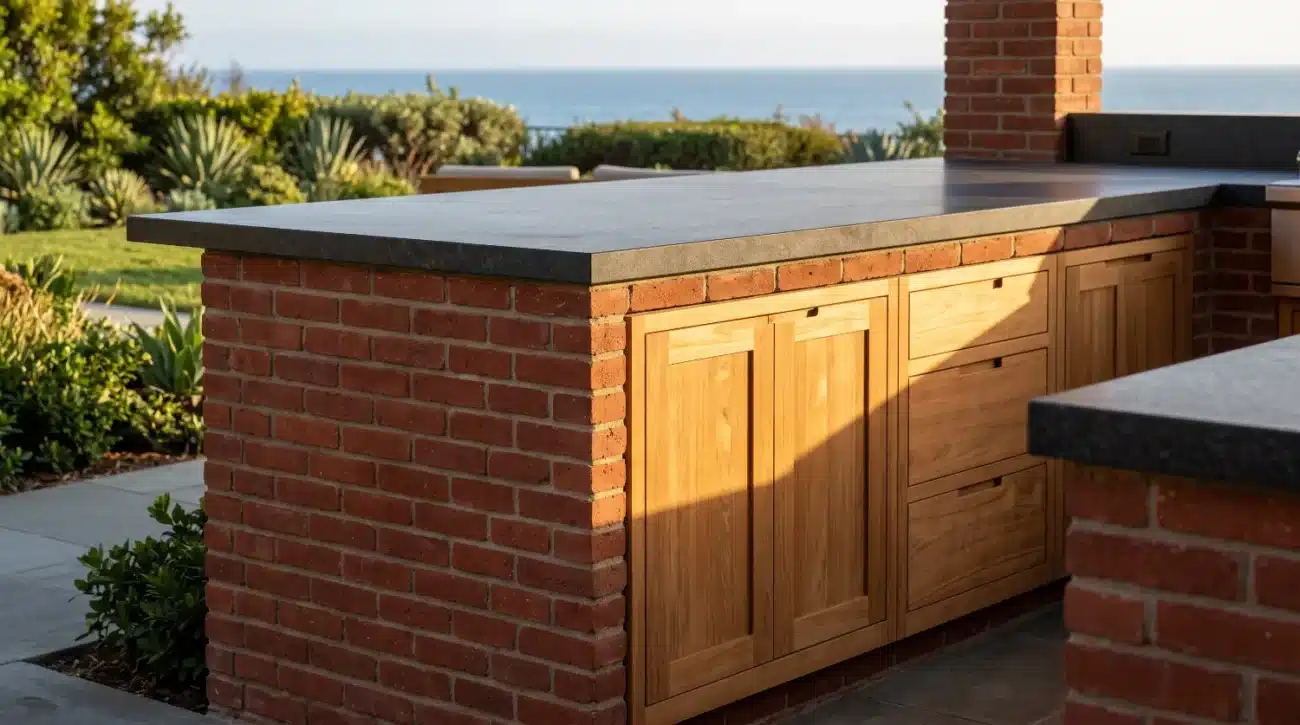
An outdoor kitchen hidden trash drawer teak module is a specialized, solid teak cabinetry unit engineered with dual-bin pullout mechanisms and marine-grade hardware to conceal waste and utility storage within exterior luxury kitchens. Designed from Grade-A teak containing high natural oils and silica, these modules resist moisture penetration, rot, and coastal environmental degradation while maintaining continuous millwork lines.
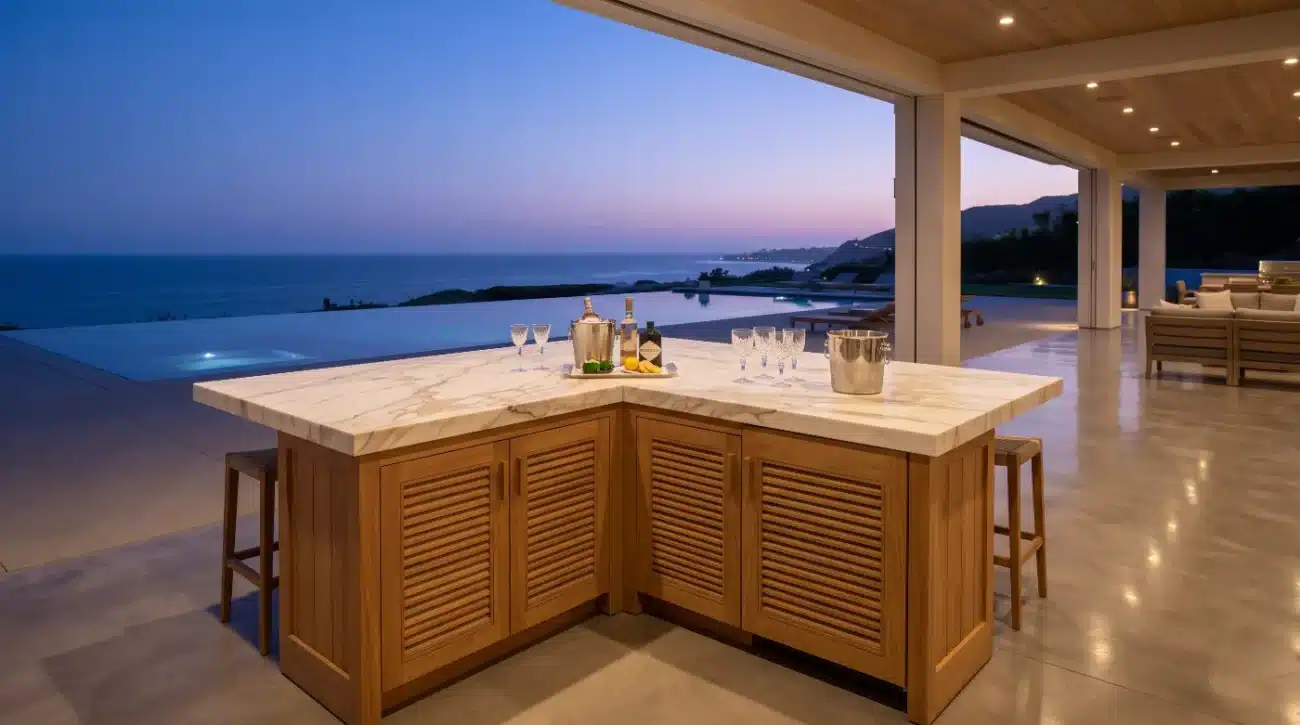
An elite outdoor entertaining space falls apart the moment a plastic waste bin is dragged beside a custom quartzite island. A multi-million dollar residential loggia in Malibu or a sun-drenched terrace in Palm Springs demands the same spatial discipline and functional discretion as an indoor Michelin-star chef’s kitchen. Concealing utilitarian necessity within bespoke architectural millwork is not an afterthought—it is the defining mark of master-level exterior planning. When designing exterior culinary spaces, integrating functional waste management, recycling centers, and tool organization requires a delicate balance between structural engineering and raw material science. Standard indoor cabinetry components buckle, rust, and swell within months of exposure to coastal salt spray or intense desert UV cycles. By choosing an outdoor kitchen hidden trash drawer teak base cabinet, specifiers ensure that functional utility drawers vanish behind face-frames crafted from the world’s most resilient hardwood.
The structural architecture of a Pacific Teak Millworks custom utility module relies on four key integrated components that guarantee long-term performance:
-
Precision Grain-Matched Face Frame: Crafted from solid Grade-A teak to deliver an uninterrupted, furniture-grade aesthetic that blends with adjacent cabinetry.
-
316 Marine-Grade Stainless Steel Glides: Full-extension, heavy-duty slides built specifically to withstand saltwater air and heavy dynamic loads.
-
Dual Polypropylene Waste Bins: High-density, non-porous containers equipped with integrated odor-sealing lids to isolate organic refuse.
-
Thermal Expansion Mortise-and-Tenon Joinery: Time-tested woodworking connections engineered with microscopic allowances for natural atmospheric movement.
Architects and landscape designers often encounter a critical specification gap when transitioning from interior CAD layouts to exterior builds. Interior cabinetmakers routinely specify soft-close slides rated only for conditioned indoor air, leading to catastrophic bearing failure when exposed to atmospheric humidity. Furthermore, cheaper modular outdoor kitchens rely on thin-gauge stainless steel drawers that rattle, retain scorching heat, and disrupt the warm, biophilic warmth of a luxury backyard sanctuary. Incorporating solid teak utility pullouts solves both aesthetic and physical challenges. Solid teak possesses a natural rubber density and silica concentration that physically repels moisture, eliminating the structural warping associated with lower-tier woods. When backed by heavy-duty 316 marine-grade stainless steel glides, these units support heavy waste loads, propane storage, and charcoal bags without sagging or compromising alignment.
Understanding the mechanics of thermal wood expansion is paramount when setting tolerances for custom face-frames. Solid wood moves across its grain in response to shifting ambient moisture levels. An inexperienced cabinetmaker who tightens joinery without allowing movement gaps invites bound drawers and split stiles during seasonal transitions. Pacific Teak Millworks engineers every hidden utility module with traditional mortise-and-tenon joinery and floating panel architectures, ensuring that the cabinet absorbs extreme weather variations while keeping face reveals perfectly plumb.
-
Concealed Dual Bin Pullouts: Isolates organic waste and dry recyclables into dual-bin systems hidden behind a single, continuous teak drawer front.
-
Heavy Capacity Utility Storage: Provides reinforced structural flooring engineered to hold heavy objects like LP gas tanks, bulk wood pellets, or cast-iron cookware.
-
Integrated Towel and Tool Drawers: Incorporates top-tier shallow drawers above waste pullouts to store prep knives, luxury linens, and cleaning supplies close to the work zone.
-
Custom Face-Frame Alignment: Aligns reveal gaps precisely with adjacent appliances and storage modules to create a monolithic, fine-furniture appearance.
Material Science: Why Grade-A Teak Outlasts Synthetic Alternatives
Grade-A plantation teak (Tectona grandis) taken strictly from the heartwood of mature trees represents the gold standard for exterior architectural millwork due to its high natural resin content, dense grain structure, and natural silica pockets. Unlike sapwood or inferior timber grades, Grade-A heartwood actively blocks water absorption, preventing the fungal growth, rot, and swelling that ruin lesser outdoor cabinetry installations.
A frequent material failure in high-end coastal builds involves specifying film-forming polyurethane finishes or varnish over exterior wood. When exposed to harsh sun and ocean air, these rigid coatings trap ambient moisture beneath the surface, leading to severe peeling, wood rot, and black fungal staining. Teak requires no synthetic surface plasticization to maintain structural integrity. According to empirical studies from the USDA Forest Products Laboratory, teak’s natural extractive content provides unparalleled natural decay resistance, outperforming almost all commercially available hardwoods in direct weather exposure. Homeowners can allow their custom cabinetry to oxidize naturally into an elegant silver-grey patina, or maintain a rich golden-brown luster through periodic light oiling as detailed in the official Pacific Teak Millworks Teak Care & Maintenance Guide.
The physical environment inside an outdoor trash drawer is inherently harsh. Food scraps create high-humidity microclimates, and accidental spills introduce organic acids. Low-grade metal cabinets corrode under these conditions, while composite materials degrade under heat. Solid teak remains inert. The high concentration of natural rubber within the wood fibers acts as a built-in shock absorber and moisture barrier, ensuring that the internal walls of the cabinet drawer do not absorb foul odors or warp out of square.
When evaluating exterior timber options, the material properties highlight clear differences in long-term performance across popular choices:
-
Grade-A Teak: Features exceptional natural oil and resin content with an extremely low coastal rot risk, delivering a projected service life of over fifty years in harsh marine environments.
-
White Oak: Contains moderate natural oils but exhibits a moderate risk of coastal decay, typically requiring replacement or extensive restoration within ten to fifteen years.
-
Ipe (Brazilian Walnut): Offers extreme wood density with low natural oil reserves, presenting low rot risk but proving difficult to work, adjust, and join cleanly in custom face-frame applications over a twenty-five to thirty-year lifespan.
-
Exterior-Grade MDF or Composites: Relies entirely on synthetic binders with zero natural decay resistance, leading to catastrophic swelling and delamination within two to five years of exterior moisture exposure.
When specifying timber for projects adhering to green building guidelines, sourcing certified sustainable materials is essential. Organizations like the Forest Stewardship Council monitor timber supply chains to ensure that luxury materials are harvested ethically without contributing to tropical deforestation. Pacific Teak Millworks sources sustainable Grade-A teak, matching environmental responsibility with luxury craftsmanship.
-
High Tectonic Resin Content: Creates an internal hydrostatic barrier that prevents liquid spills and humidity from penetrating deep into the wood grain.
-
Natural Silica Saturation: Blunts biological decay mechanisms and repels destructive insects like termites and marine borers naturally.
-
Dimensional Stability Across Climates: Exhibits minimal radial and tangential shrinkage compared to oak or cedar, preventing stuck drawers in humid environments.
-
Silvery Patina Transition: Offers the choice to let UV rays convert golden hues into a low-maintenance silver patina without degrading underlying structural strength.
Trade Engineering: Hardware Tolerances and Load Distribution
Engineered hidden utility drawers rely on 316 marine-grade stainless steel hardware systems rated for heavy static and dynamic loads to ensure smooth operation when carrying dual 50-quart waste bins filled with refuse. Standard 304-grade stainless steel hardware, commonly marketed for outdoor use, quickly develops surface pitting and structural corrosion in coastal air containing high sodium chloride levels.
A primary structural oversight during outdoor kitchen construction involves underestimating countertop weight distribution. High-end clients frequently choose thick granite slabs, cast concrete, or heavy porcelain worktops that place hundreds of pounds of downward pressure onto the cabinetry framework. If the trash cabinet box lacks rigid internal corner blocking and precision leveling systems, the frame sags. This minor deflection binds the drawer glides, destroying the soft-close action and leaving the drawer open to pests.
Comparing alloy specifications demonstrates why material selection directly dictates hardware longevity in coastal environments:
-
316 Marine-Grade Stainless Steel: Formulated with two to three percent molybdenum, providing immune resistance to sodium chloride pitting, supporting dynamic loads up to 220 pounds, and offering lifetime performance in saltwater zones.
-
304 Standard Outdoor Stainless Steel: Lacks molybdenum protection, leaving it highly vulnerable to atmospheric pitting, limited to dynamic loads under 100 pounds, and prone to mechanical failure within two to five years near the ocean.
To prevent frame distortion, Pacific Teak Millworks constructs cabinetry boxes using thick, solid teak panels held together with stress-tested mortise-and-tenon joinery. Stainless steel full-extension glides are mounted directly into reinforced structural cleats. This layout distributes weight evenly through a clear, four-stage structural load pathway:
-
Heavy-Duty Top Rail: Receives direct vertical pressure from natural stone or concrete slabs exceeding 500 pounds.
-
Interlocking Corner Blocks and Side Cleats: Transfers downward forces laterally into the cabinet side walls, bypassing the moving drawer mechanism.
-
316 Stainless Glide Assemblies: Operates independently within a stress-free internal envelope rated for 220 pounds of internal dynamic drawer weight.
-
Adjustable Marine Leveling Legs: Channels the entire structural mass directly down to the solid concrete or paver sub-base foundation.
-
316 Marine Stainless Steel Construction: Utilizes molybdenum-alloyed steel components that withstand marine air and chemical cleaning agents without rusting.
-
Full-Extension Ball-Bearing Glides: Allows the inner waste bins to clear the front edge of the countertop completely, enabling top-loading convenience.
-
Overbuilt Dynamic Load Limits: Engineered to support dynamic weights exceeding 150 pounds without drawer front deflection or hardware bind.
-
Soft-Close Dampening Mechanisms: Prevents heavy drawers from slamming shut, protecting cabinet joinery and preventing liquid spills inside the box.
Design Integration, Layout Workflows, and Spatial Optimization
Integrating hidden utility drawers into luxury outdoor kitchens involves positioning waste, recycling, and storage modules directly adjacent to food preparation zones and sink basins within an ergonomic work triangle. Proper spatial planning ensures efficient waste disposal during food prep while concealing functional storage behind clean cabinetry fronts that match adjacent island structures.
A frequent post-installation regret among homeowners is placing the primary trash receptacle far from the main prep sink or grilling station. This forces cooks to carry wet food scraps across high-traffic walkways, dripping oil and juice across pristine natural stone pavers. By integrating a multi-bin pullout directly to the left or right of the sink area, kitchen workflow remains fluid and efficient. Incorporating an upper utility drawer directly above the trash module creates a dedicated zone for trash bags, sanitizing wipes, and chef’s tools, keeping counter surfaces clear.
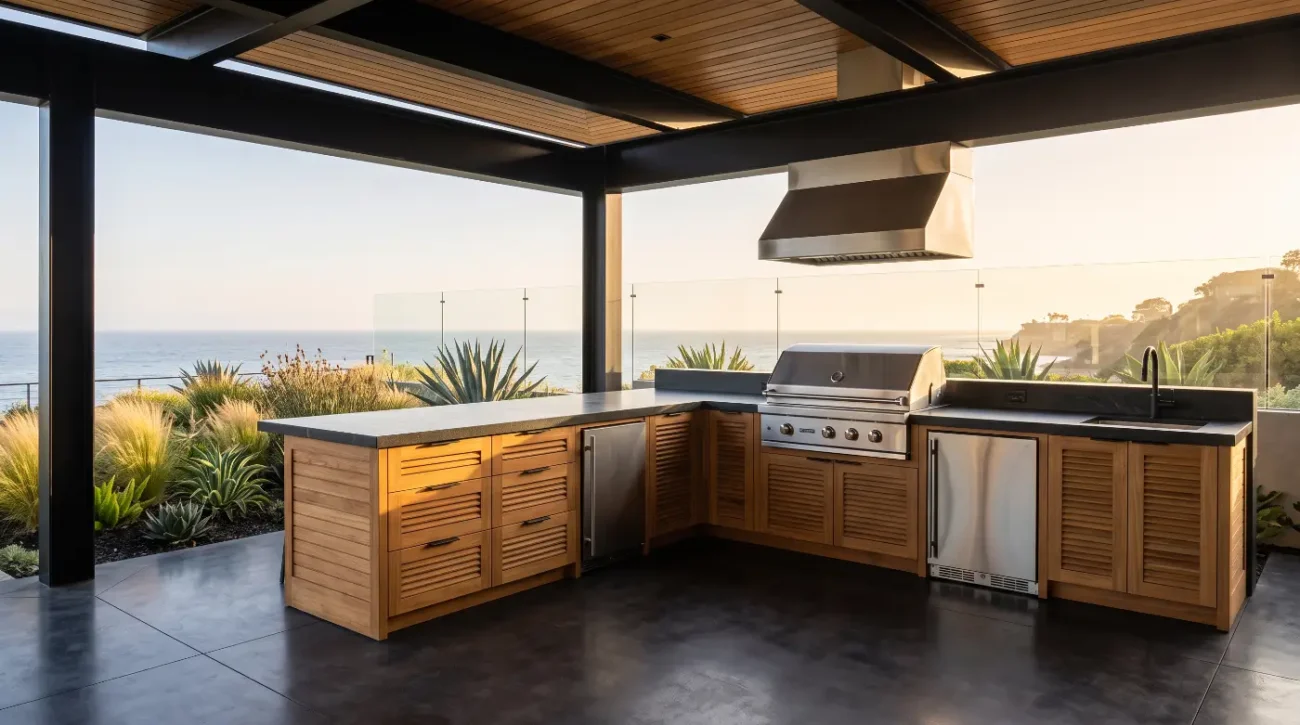
When configuring built-in island layouts, trade professionals must evaluate how appliance heat affects adjacent teak cabinetry. High-BTU gas grills and charcoal smokers radiate substantial heat sideways. Placing a wooden trash cabinet directly beside an uninsulated grill chassis risks drying out the timber, scorching fine finishes, or igniting trapped grease fumes. Designers should always maintain adequate thermal clearance or insert insulated stainless steel jacket barriers between heat-producing appliances and solid teak utility cabinets. For detailed spatial guidelines and custom layout assistance, architects can review technical resources in the Pacific Teak Millworks Resource Center.
-
Strategic Prep-Zone Proximity: Place waste modules within arm’s reach of the main cutting board and sink to keep food prep mess contained.
-
Dual-Zone Utility Separation: Utilize top utility drawers for dry prep tools while using the lower, deep pullout exclusively for sealed waste and recycling bins.
-
Thermal Mitigation Clearance: Ensure proper spacing and thermal insulation jackets between high-heat gas grills and custom wooden utility modules.
-
Odors & Pest Containment: Incorporate tight-fitting, weather-sealed drawer fronts with custom gaskets to block lingering odors and deter foraging pests.
To achieve ideal ergonomics, the linear arrangement of an outdoor culinary station should follow a precise functional order:
-
Prep Sink Zone: Serves as the primary origin point for washing produce and trimming proteins, generating immediate wet organic waste.
-
Hidden Trash and Utility Module: Located immediately adjacent to the sink so scraps are scraped directly into concealed bins without crossing walkways.
-
Thermal Shield Insulation Barrier: Insulates the teak cabinet structure from high-temperature radiant heat generated by cooking equipment.
-
High-BTU Grill Zone: Completes the workflow, allowing prepped food to move directly from the cutting station to the cooking surface.
Architectural Case Studies: Coastal Malibu vs. Desert Palm Springs
Analyzing real-world installations shows how bespoke teak utility modules adapt to contrasting climate demands while elevating outdoor luxury living spaces.
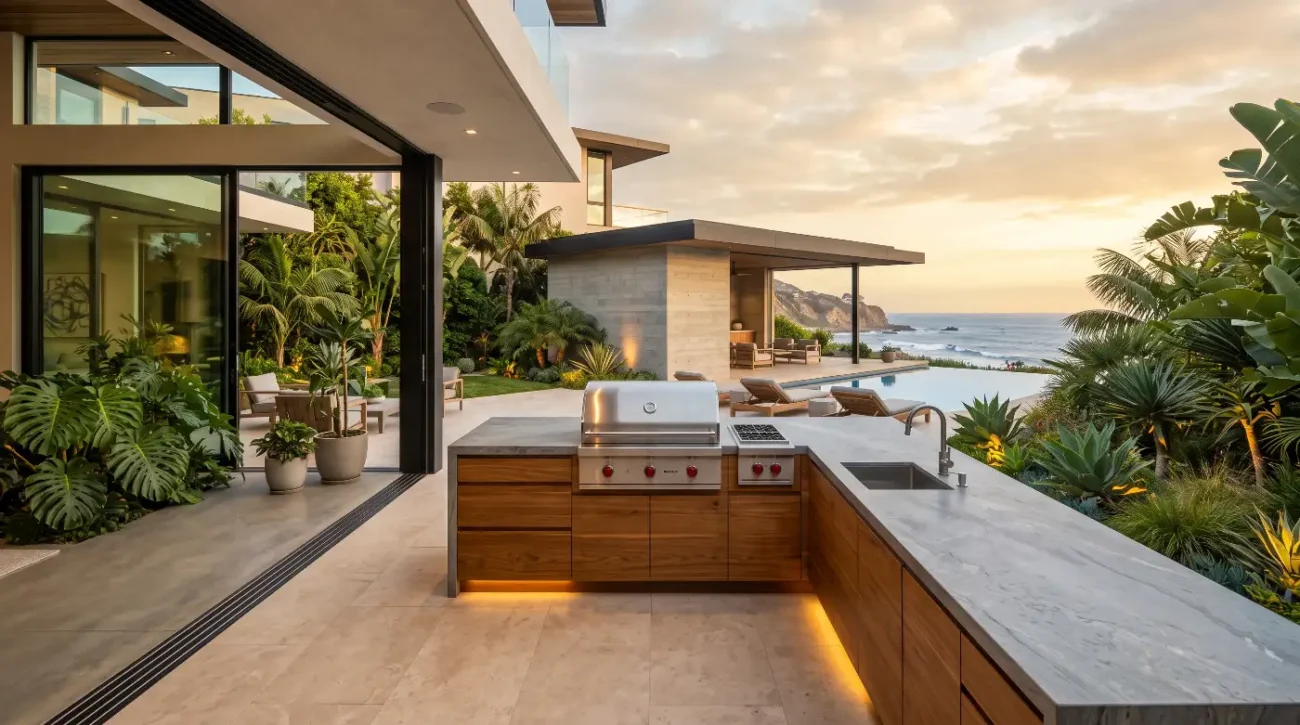
In a recent Malibu bluff project overseen by a premier landscape architecture firm, the homeowner wanted an outdoor kitchen that matched the home’s contemporary Scandinavian-coastal aesthetic. The property sits less than two hundred yards from the breaking surf, exposing every exterior element to intense salt fog and damp ocean breezes. The initial design proposed painted exterior-grade plywood cabinets with powder-coated steel hardware. Within six months of preliminary planning, the builder recognized that sea salt would quickly delaminate the wood and seize the hardware.
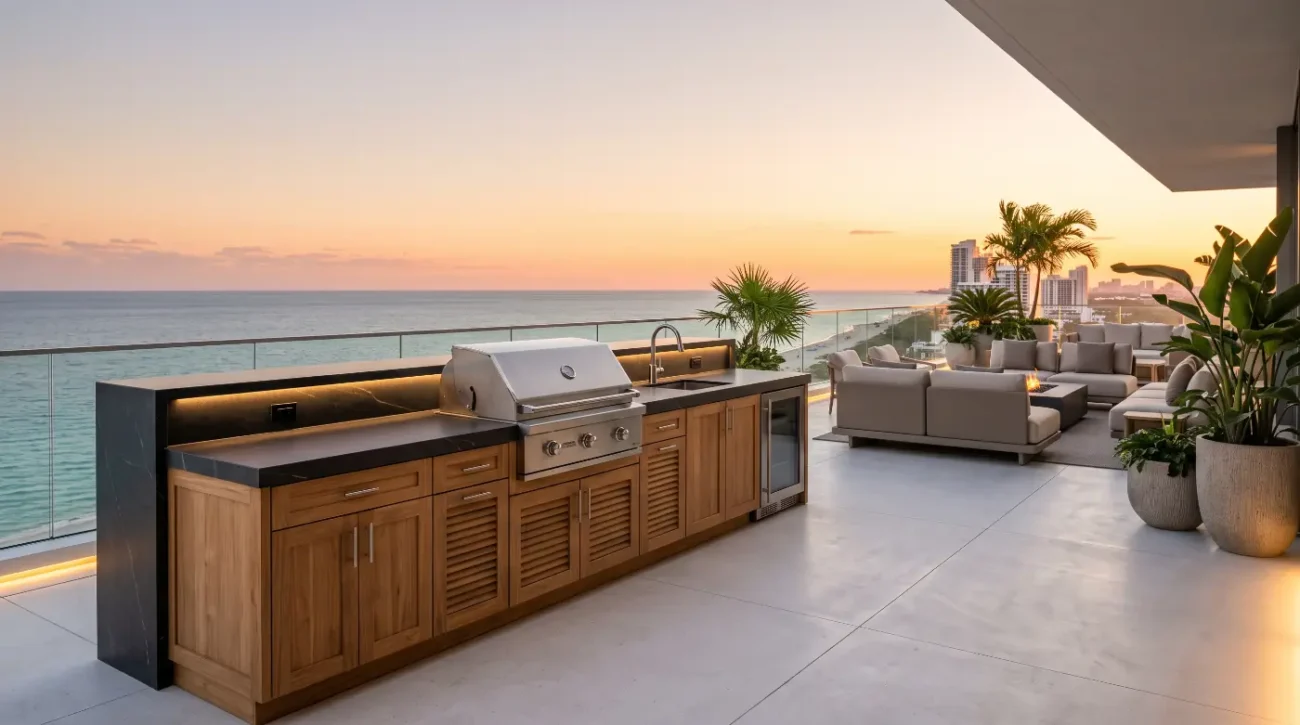
The design team pivoted to specifying solid teak modules from the Pacific Teak Millworks Wall Cabinets Collectionand base series, including a dual-bin hidden trash unit. The natural oily density of the Grade-A teak handled the continuous moisture without rot, while the 316 marine-grade stainless steel glides operated smoothly despite persistent salt exposure. The homeowner allowed the teak to weather naturally into a silver patina, blending with the coastal bluff landscape while keeping trash and cleaning supplies dry and operational.
In contrast, a luxury estate renovation in Palm Springs faced opposite environmental challenges: intense UV exposure, summer temperatures exceeding 115 degrees Fahrenheit, and dry desert dust storms. The architect needed to hide two heavy LP propane tanks and a dual recycling system within a freestanding island covered in dark basalt stone. Standard metal doors warped under extreme heat cycles, creating uneven reveal gaps across the island face.
By installing custom Pacific Teak Millworks Island Inserts and heavy-duty teak pullout modules, the builder established a stable, heat-resistant framework. The low thermal conductivity of solid teak prevented heat from transferring inside the cabinet box, keeping the gas regulators safe and preventing plastic trash bins from softening. Annual applications of high-grade teak oil preserved the deep, golden-brown tone, creating a striking visual contrast against the dark basalt counters.
Examining regional environmental demands underscores how solid teak solves unique geographical challenges:
-
Coastal Marine Environments (e.g., Malibu): The primary environmental risk stems from salt spray and persistent atmospheric dampness. The technical response requires zero-corrosion 316 stainless hardware and hydrostatic joint construction, allowing the wood to transition into a low-maintenance silver oxidation patina.
-
High-Heat Desert Environments (e.g., Palm Springs): The primary threat is severe UV degradation and thermal heat absorption. The technical response relies on teak’s low thermal transfer properties and engineered expansion gaps, preserved through periodic applications of protective teak oil.
-
Coastal Salt Resistance: Prevents binding hardware and swollen drawer boxes in high-humidity ocean environments.
-
Desert Thermal Insulation: Shields stored items, propane connections, and waste bins from extreme ambient temperatures.
-
Aesthetic Flexibility: Adapts naturally to both modern, patinated silver builds and warm, rich golden-brown finishes.
-
Structural Reliability: Eliminates the door sag and misalignment common with metal and composite cabinetry subject to heat expansion.
Specification & Procurement: Navigating the CAD-to-Site Workflow
Successfully procuring and installing custom teak utility cabinetry requires precise coordination between designers, architects, and trade specialists during the early CAD layout phase. Integrating clear specifications into architectural drawings ensures accurate plumbing rough-ins, countertop weight support, and proper appliance fit before site construction begins.
Executing a flawless installation follows a structured, five-step specification workflow:
-
CAD Integration: Download official 2D detail drawings and 3D BIM models directly into master architectural project files.
-
Rough-In Verification: Confirm that electrical conduits, water lines, and gas supply pipes clear internal drawer glide paths prior to framing.
-
Sub-Base Calibrated Leveling: Adjust the stainless steel leveling feet under the cabinet base to compensate for natural patio drainage pitch before setting the box.
-
Countertop Decking Installation: Mount heavy granite, quartz, or concrete slabs, ensuring weight rests firmly on structural cabinet rails.
-
Final Hardware Calibration: Fine-tune the 316 stainless steel soft-close glides to establish uniform three-sixteenth-inch reveal gaps around face frames.
A common trade oversight during site preparation is failing to verify sub-floor slope. Outdoor patios are designed with minor pitch angles to encourage rainwater drainage. If a contractor sets an outdoor kitchen island directly onto a sloped surface without leveling the cabinet frame, heavy pullout drawers will drift open or bind against the face frame. Every Pacific Teak Millworks base cabinet features integrated, heavy-duty leveling feet, allowing installation teams to compensate for deck pitch while maintaining uniform horizontal reveals.
Trade professionals must also manage lead times and project delivery schedules effectively. Custom millwork requires dedicated bench time by skilled woodworkers. Ordering cabinetry late in the construction timeline causes costly subcontractor delays. Design professionals can join the Pacific Teak Millworks Trade Program to access dedicated trade pricing, request custom timber samples, and secure direct CAD blocks for seamless client presentations. Clear communication regarding structural scope, returns, and ordering rules is detailed in the official Pacific Teak Millworks Cancellation & Return Policy and backed by our comprehensive Pacific Teak Millworks Warranty Documentation.
For additional technical queries, review the comprehensive answers provided in our Pacific Teak Millworks Frequently Asked Questions or explore our Pacific Teak Millworks Outdoor Design Blog to discover more project inspiration. Learn more about our commitment to craftsmanship on our About Us Page.
-
Early CAD Block Integration: Download precise 2D and 3D architectural models early in the design process to ensure perfect site fits.
-
Sub-Floor Slope Adjustment: Utilize integrated leveling feet to balance patio slope while maintaining precise reveal tolerances.
-
Lead Time Management: Coordinate cabinetry delivery early with hardscape contractors to prevent sub-contractor downtime.
-
Direct Trade Consultation: Partner directly with millwork specialists to review custom modifications for complex outdoor kitchen layouts.
External References
Key Takeaways
-
Uncompromised Aesthetic Standards: Concealing trash and utility storage behind solid Grade-A teak fronts maintains continuous architectural lines across high-end outdoor spaces.
-
Extreme Weather Resilience: Natural teak resins combined with 316 marine-grade stainless steel hardware prevent rot, swollen joints, and hardware failure in coastal or desert environments.
-
Precision Load Handling: Mortise-and-tenon construction supports heavy countertop weights without distorting cabinet boxes or binding drawer glides.
-
Ergonomic Spatial Planning: Positioning hidden trash pullouts directly beside prep sinks minimizes liquid spills and streamlines cooking workflows.
-
Trade Specification Support: Utilizing CAD files and working with specialized millwork craftsmen ensures smooth transitions from initial design to final site installation.
Request Trade Samples & Consultation
Transform your vision into an enduring architectural statement with custom solid teak cabinetry. Whether you are a homeowner gathering inspiration for a coastal sanctuary or a trade professional finalizing CAD specifications for a high-net-worth client, Pacific Teak Millworks provides the engineering precision and material expertise your project demands. Contact Darin and our master cabinetry team today at (949) 365-6513, email us at darin@pacificteakmillworks.com, or visit our Contact Us Page to request wood samples, review architectural drawings, and discuss your outdoor kitchen design requirements.