Executive Summary
-
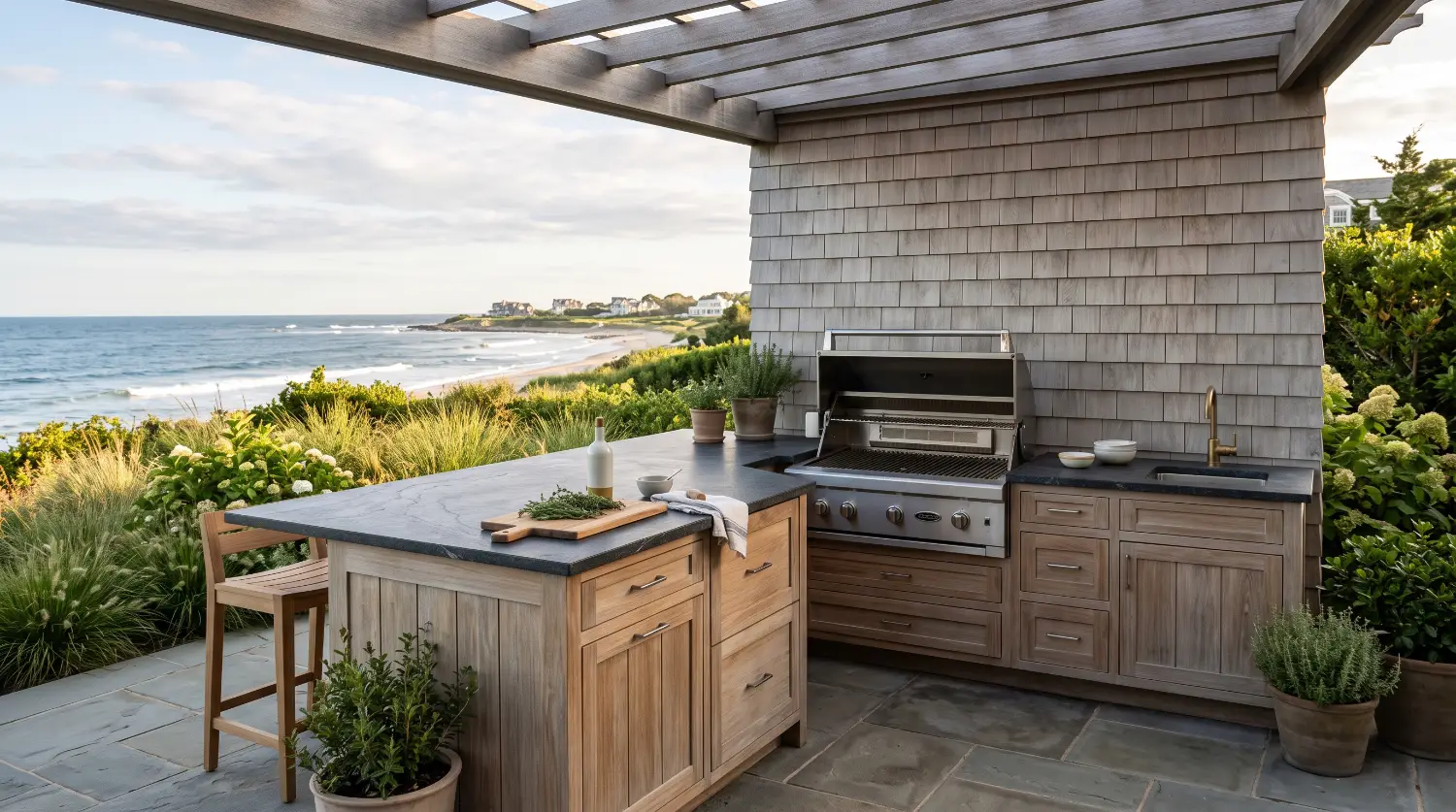
Harmonizing Coastal Materialities: Blending classic Atlantic cedar shingle cladding with solid Grade-A teak millwork creates a cohesive, highly resilient coastal aesthetic that ages gracefully into a distinguished silver patina.
-
Marine-Grade Architectural Engineering: Designing for oceanfront environments requires mortise-and-tenon joinery, 316 stainless steel hardware, and engineered expansion gaps to combat extreme salt spray and humidity.
-
Bridging Trade Specification Gaps: Seamless project execution relies on precise CAD appliance cutouts, proper internal heat shielding, structural weight distribution for heavy stone tops, and dedicated trade support.
Engineering Architectural Harmony: Integrating Solid Teak with Coastal Shingle Estates
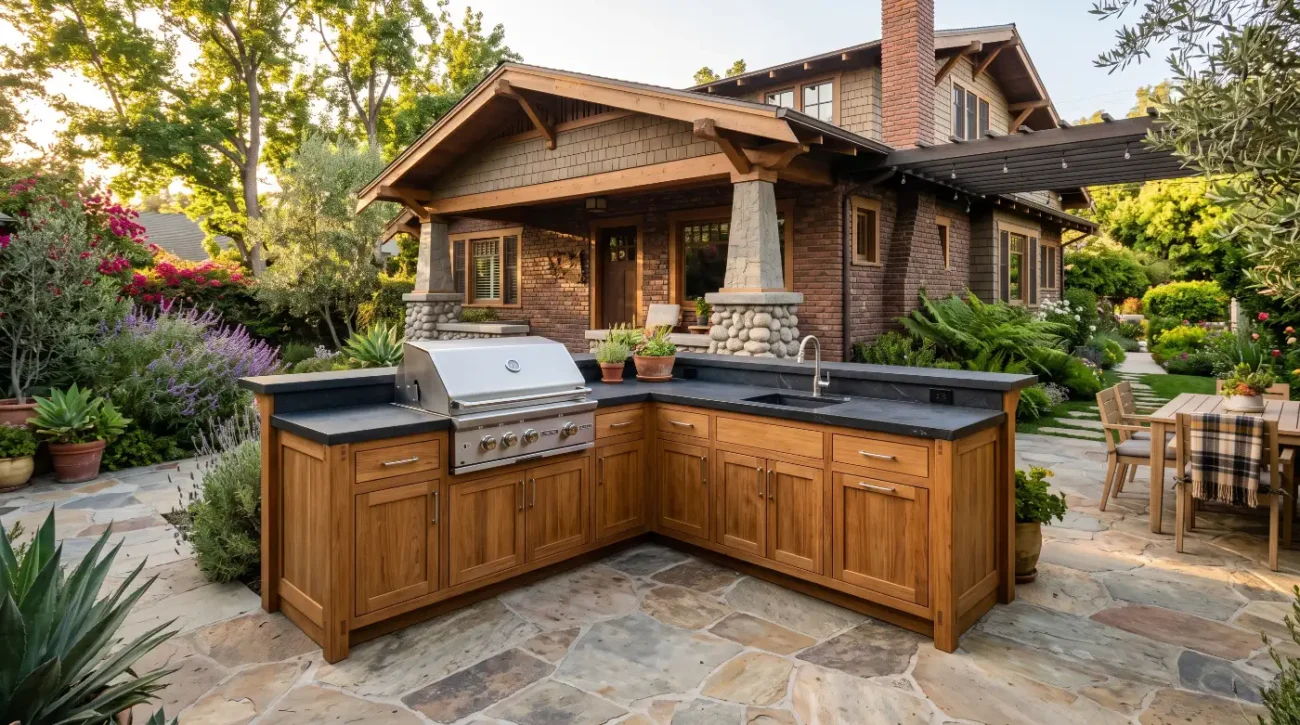
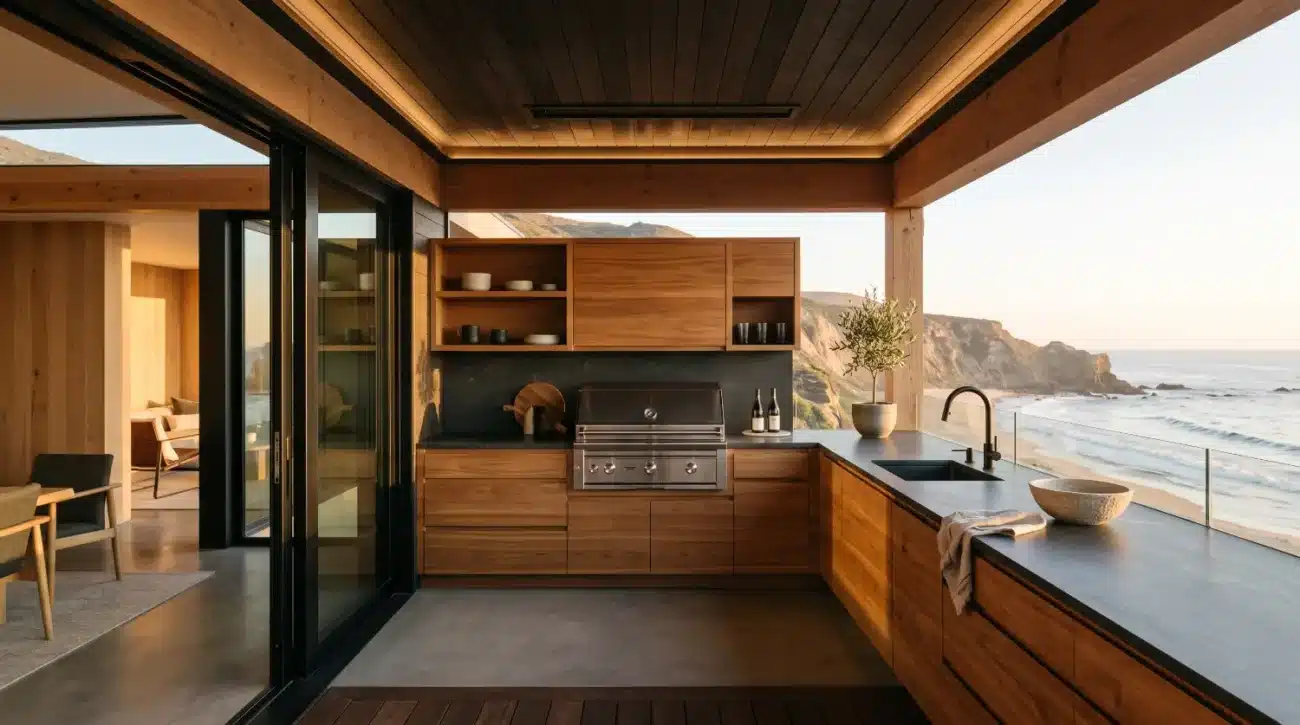
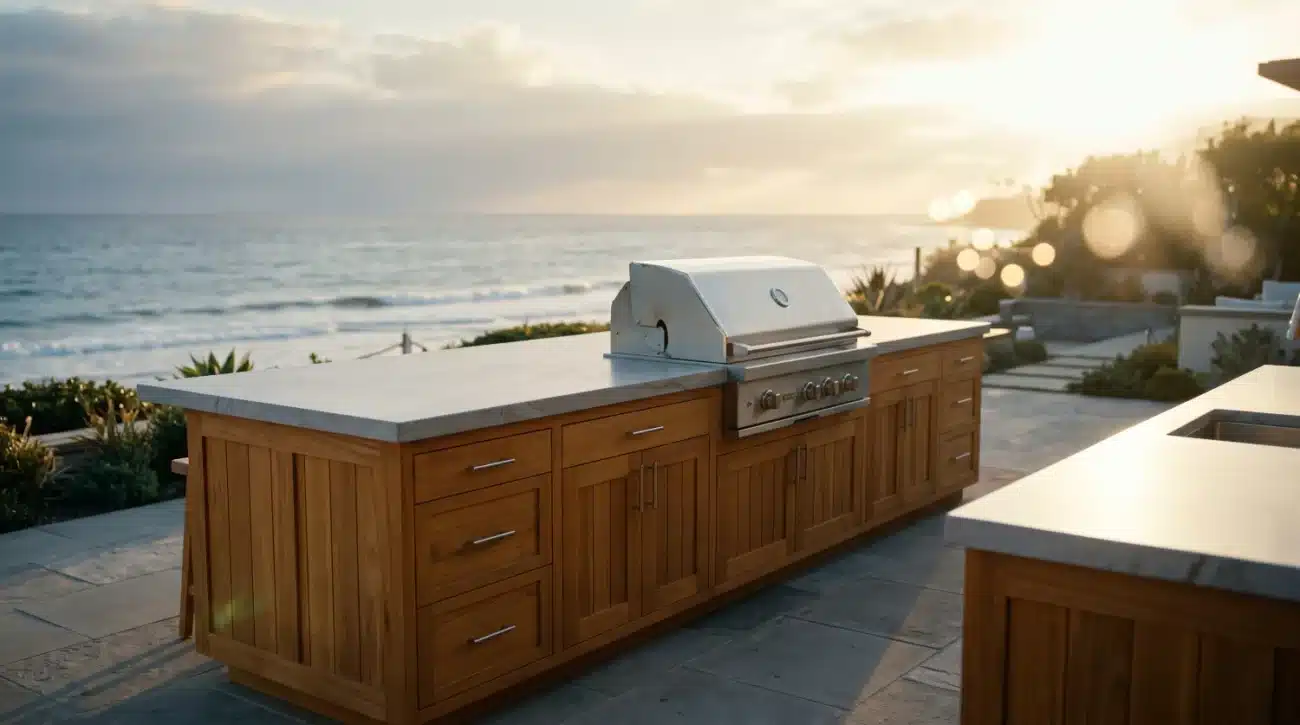
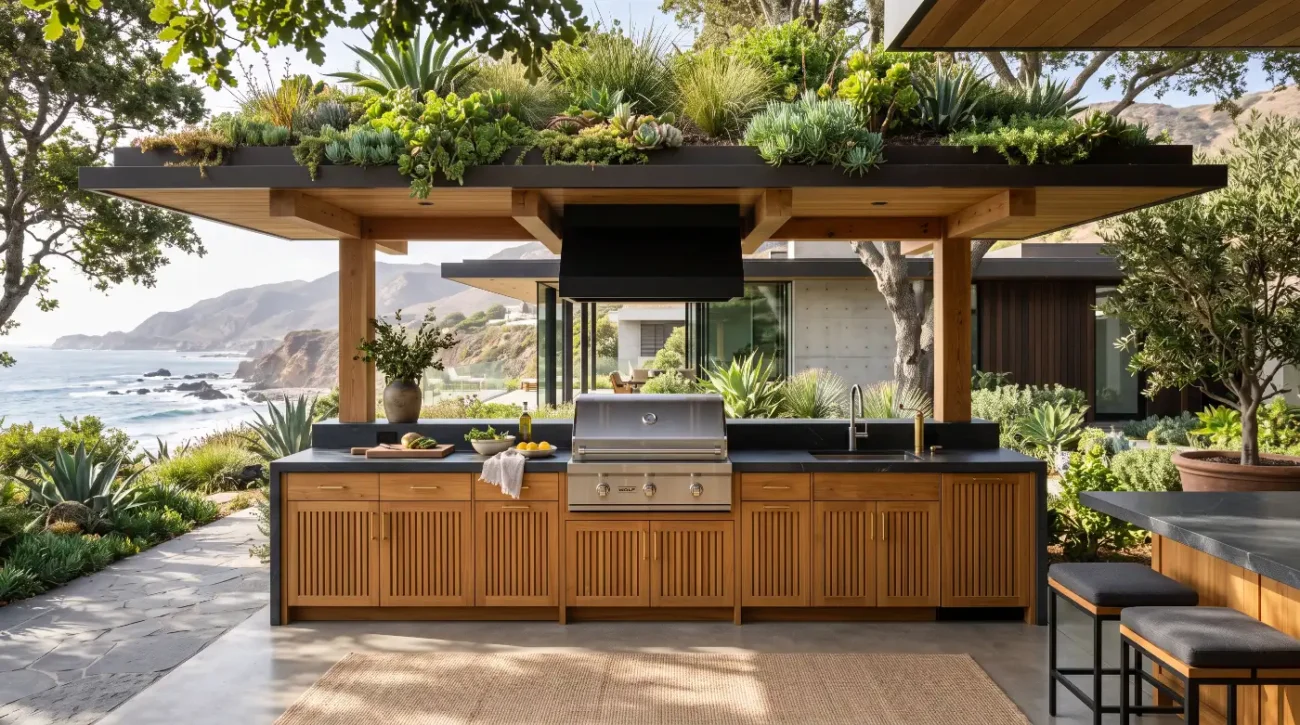
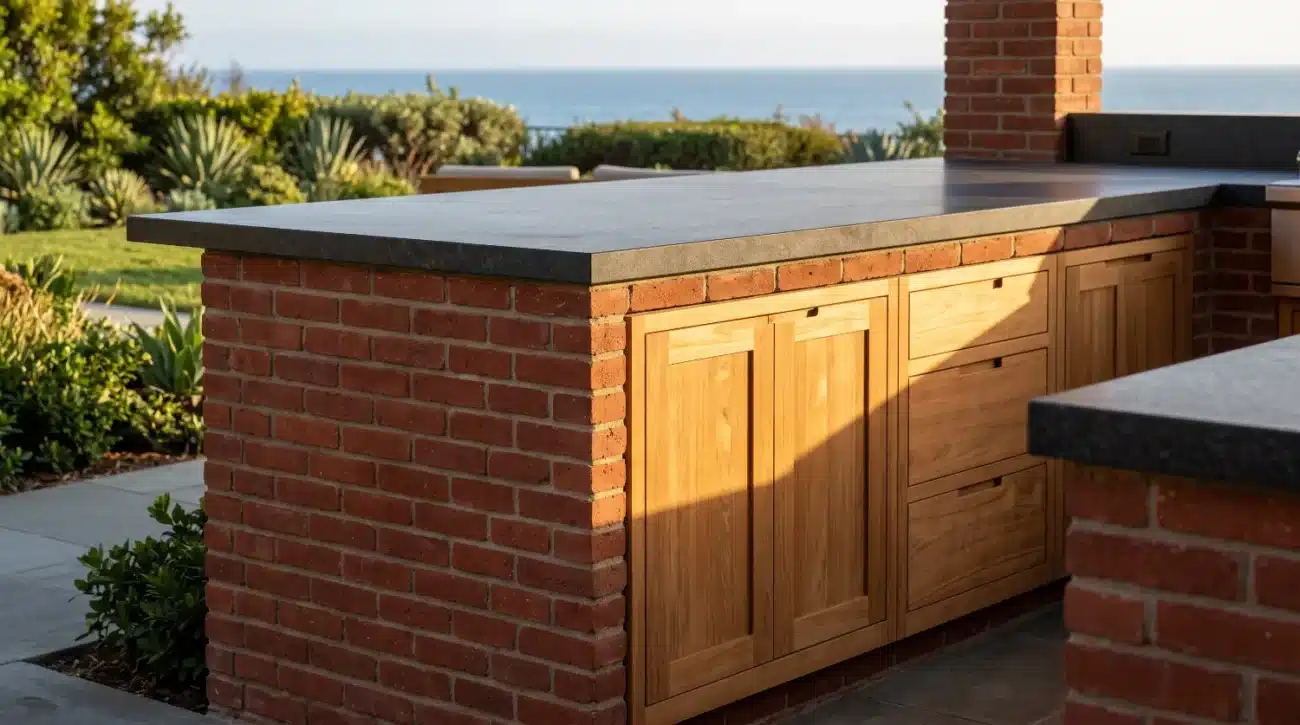
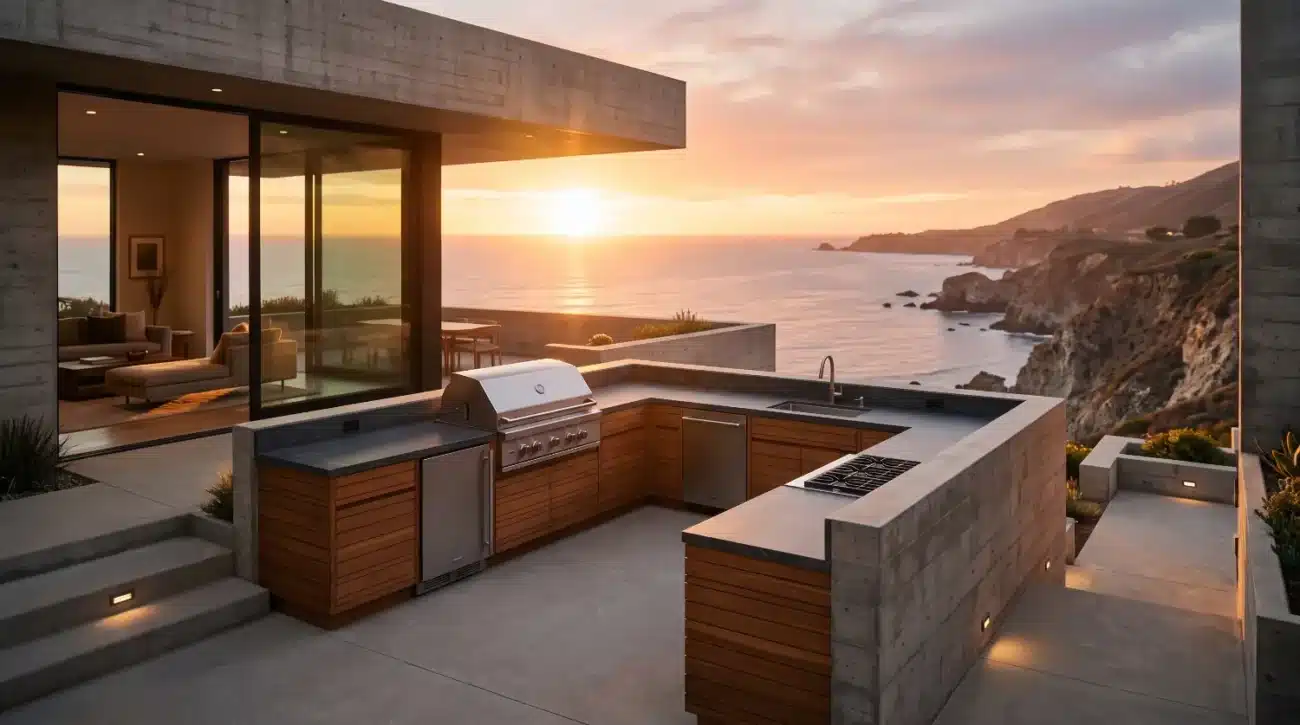
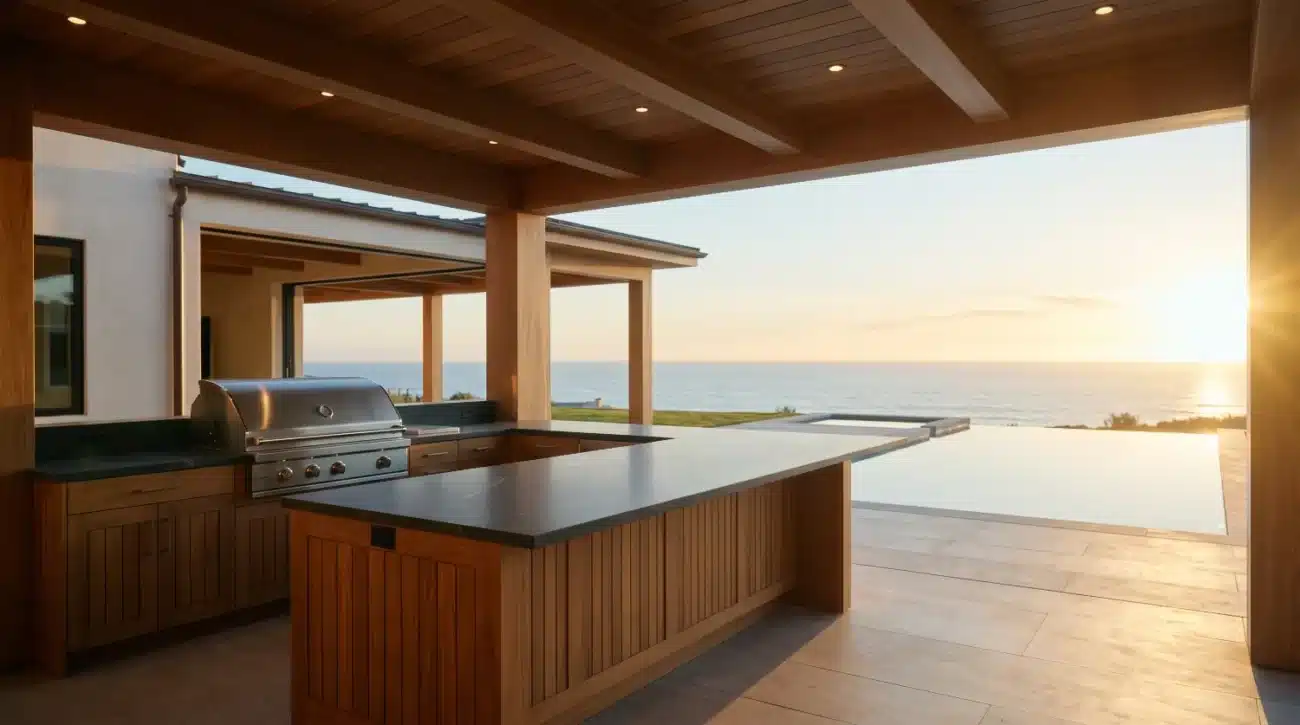
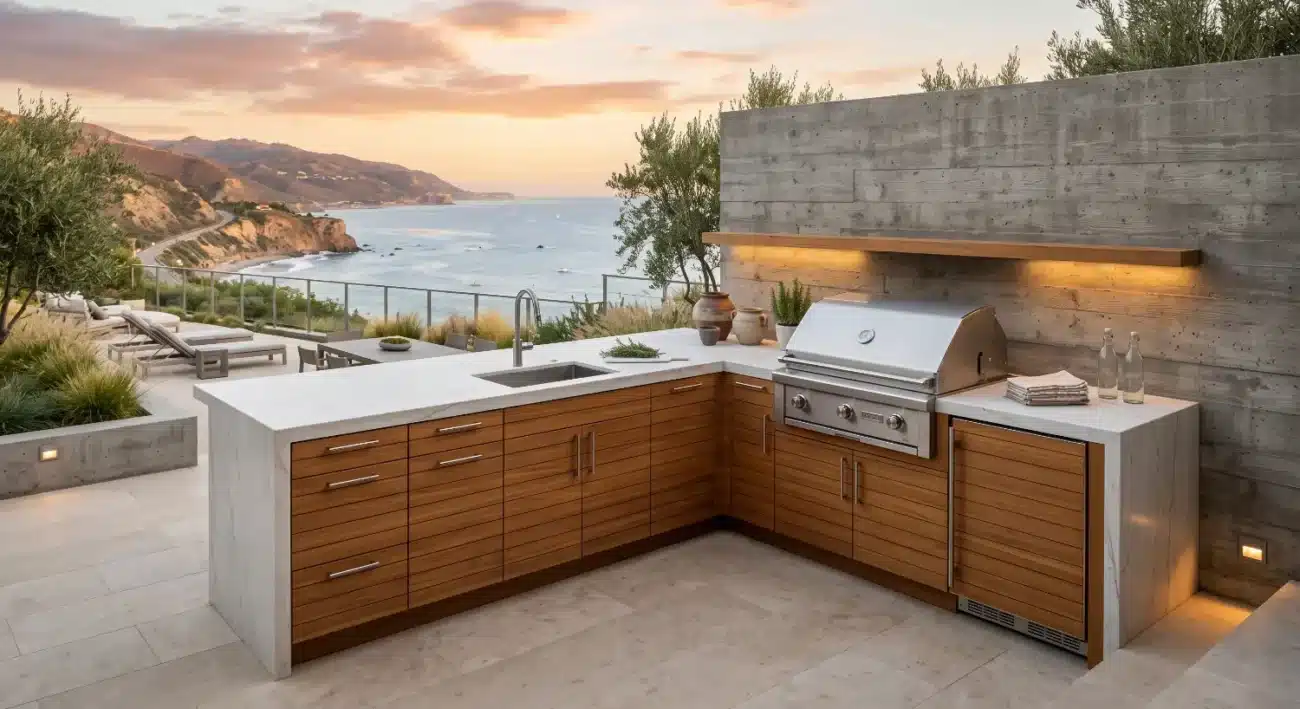
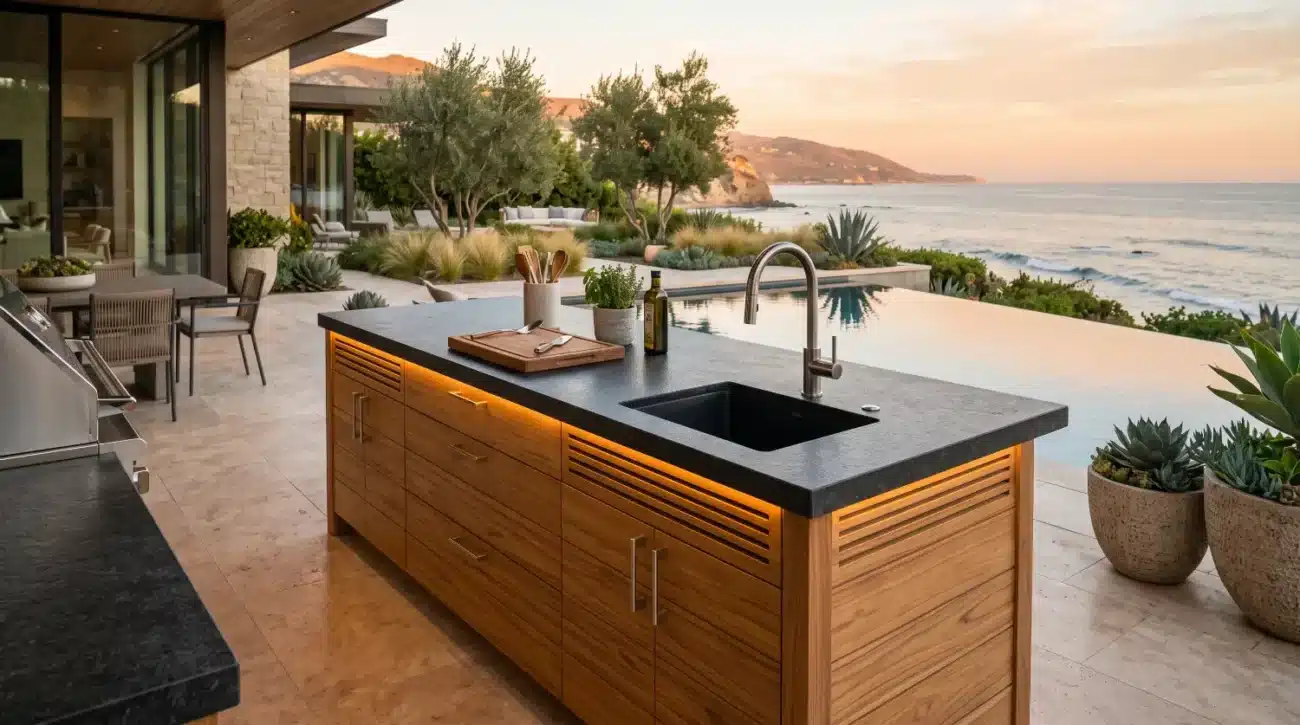
Designing a luxury outdoor living space for an oceanfront estate requires navigating severe environmental forces, structural tolerances, and nuanced aesthetic traditions. Synthetic composite panels and powder-coated metal cabinets often rust, delaminate, or clash visually against natural wood exteriors. Solid Grade-A teak cabinetry offers an enduring alternative, matching the structural integrity of historical architecture while weathering the world’s most aggressive coastal microclimates.
When a custom shingle-style estate sits along the Atlantic shoreline, every exterior building material faces relentless environmental pressures. High wind loads, salt spray, extreme humidity shifts, and freeze-thaw cycles rapidly degrade inferior materials. Powder-coated aluminum cabinets frequently pit, chip, and oxidize along screw cutouts. Synthetic marine polymer materials expand drastically under direct summer sunlight, causing cabinet doors to sag and misalign.
Solid teak millwork provides superior dimensional stability in harsh coastal settings. Grade-A teak (Tectona grandis) harvested from mature trees possesses an extraordinary concentration of natural oils and tectonic resins. This high resin density, combined with micro-fine silica particles trapped within the wood grain, acts as a natural water repellant and preservative. While cedar shingles protect the home’s vertical envelope, solid teak cabinetry serves as a resilient foundation for high-use outdoor culinary centers.
Integrating natural wood cabinetry into a coastal estate requires balancing raw materials with surrounding architectural elements. Designers often face a key strategic choice: maintaining teak’s warm golden-brown luster through routine oil treatments, or allowing the wood to naturally oxidize into a sleek silver patina. When teak is left to weather, UV radiation and moisture transform its surface color while leaving its inner structural core completely intact. This natural silvering mirrors aged Atlantic cedar shingles, resulting in a cohesive, biophilic design that blends seamlessly into the coastal landscape.
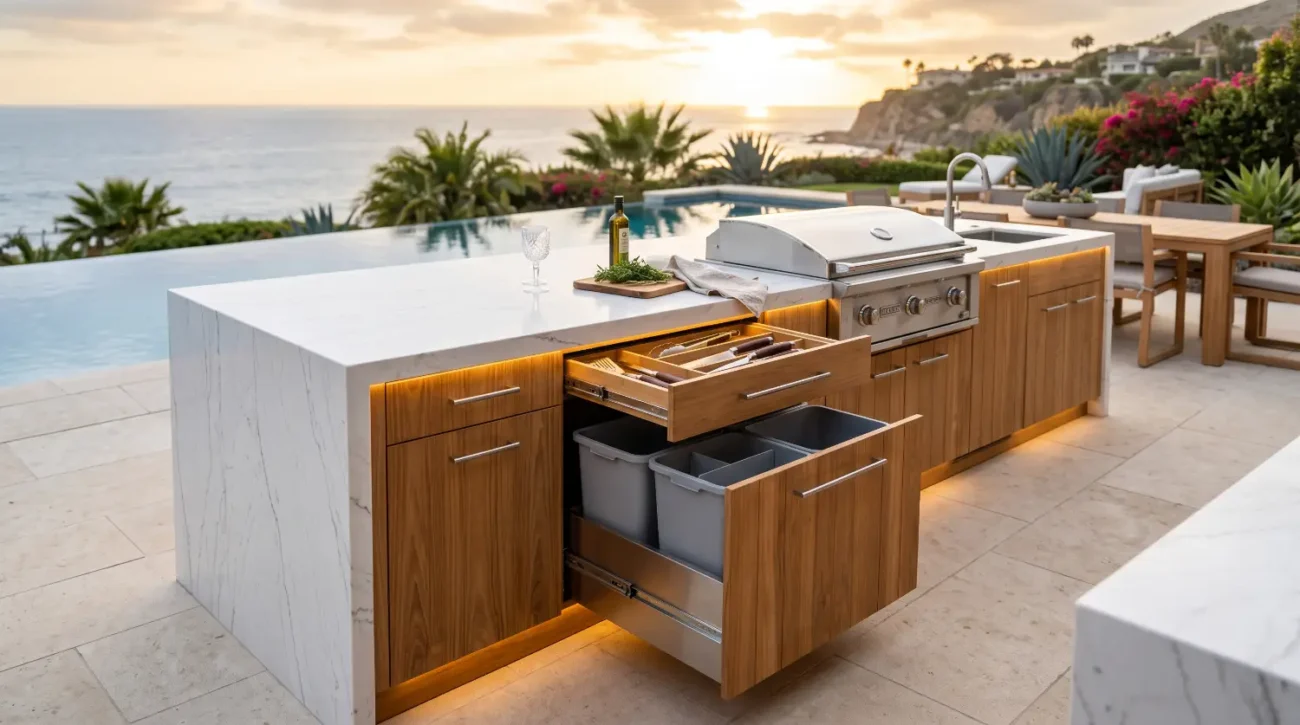
Achieving this seamless aesthetic requires meticulous structural engineering. Outdoor kitchen layouts must accommodate high-capacity cooking equipment, integrated refrigeration systems, and heavy stone countertops without sacrificing door alignment or drawer smooth-glide operation. Specifiers must account for load limits, wood movement allowances, airflow management, and hardware selection long before ground breaking begins.
-
Selecting Grade-A Heartwood: Ensure all exterior millwork utilizes dense, oil-rich heartwood cut from mature teak trees to prevent water absorption and rot.
-
Integrating Marine Hardware: Install 316-grade stainless steel soft-close hinges and full-extension drawer glides to permanently resist salt spray corrosion.
-
Planning Dimensional Expansion: Incorporate free-floating panel doors and expansion tolerances to handle shifting relative humidity levels.
-
Distributing Countertop Loads: Incorporate hidden structural framing and adjustable levelling legs capable of supporting heavy granite, quartzite, or concrete tops.
To explore engineered options for oceanfront residential projects, review the Pacific Teak Millworks Base Cabinets Collection.
Trade Specification Mechanics: CAD Integration, Heat Shielding, and Coastal Longevity
A successful luxury outdoor kitchen installation relies on precise architectural specification and close coordination across project trades. Interior designers, landscape architects, and custom builders must translate preliminary mood boards into precise construction documents. Miscalculating appliance cutouts, neglecting heat management, or using film-forming clear coats can lead to costly material failures and project delays.
A common trade oversight in exterior millwork planning is failing to insulate solid wood cabinetry from high-BTU gas grills and side burners. Intense radiant heat generated by stainless steel cooking appliances can dry out surrounding wood fibers, leading to warping, discolored finishes, and potential fire hazards. Specifiers must mandate non-combustible insulated heat jackets around all grill cutouts, maintaining an engineered air gap between the appliance chassis and the teak face frame. Proper rear and side cabinet ventilation must also be integrated into the CAD layout to prevent dangerous fuel gas accumulation and allow heat to escape safely.
Proper material care is equally critical to long-term performance. Applied film-forming polyurethanes, varnishes, or clear lacquer seals block the wood’s natural breathing process. When microscopic salt air penetrates beneath these hard outer shells through fastener holes or joint lines, moisture becomes trapped inside the wood matrix. Trapped water accelerates internal fungal decay and causes clear coats to bubble, flake, and peel off in unsightly sheets. Maintaining teak requires periodic light cleaning and application of deep-penetrating natural oils designed specifically for marine environments. For step-by-step guidance on long-term surface preservation, download the Pacific Teak Millworks Teak Care & Maintenance Guide PDF.
Managing high-weight surface materials requires careful structural design. High-end coastal outdoor kitchens frequently feature 3-centimeter thick quartzite, leathered granite, or poured-in-place concrete countertops. These heavy slabs put immense downward force on cabinet structures. If cabinet frames lack reinforced mortise-and-tenon joinery or rely on cheap, surface-mounted leveling legs, structural sag can occur over time. Uneven settling puts stress on stone seams, leading to cracked counters and sticking drawer slides. Heavy-duty internal framing spreads weight directly down to the subfloor, protecting delicate cabinet joinery and ensuring precise panel alignment for the life of the installation.
Executing custom outdoor kitchen projects efficiently requires streamlined communication between design teams and millwork specialists. Architects and designers can accelerate their workflow, access precise detail drawings, and ensure structural compatibility by joining the trade specification program via the Pacific Teak Millworks Contact Us Page.
-
Incorporating Insulated Heat Jackets: Always specify manufacturer-approved insulated jackets for all gas grills integrated into solid wood cabinetry.
-
Eliminating Film-Forming Polyurethanes: Rely on deep-penetrating teak oils or natural oxidation rather than hard topical sealers that peel and trap moisture.
-
Ensuring CAD Appliance Tolerances: Verify precise appliance manufacturer cutout dimensions in CAD plans to allow for proper airflow and thermal movement.
-
Specifying High-Capacity Leveling Hardware: Select corrosion-resistant levelling feet rated for extreme load capacities to prevent cabinet racking on uneven stone patios.
Understanding the structural characteristics of solid wood in outdoor spaces relies on trade-tested material standards. Design professionals can reference technical wood research published by the USDA Forest Products Laboratory and explore sustainable forestry practices outlined by the Forest Stewardship Council to verify material performance data.
Key Takeaways: Outdoor Kitchens
-
Aesthetic Integration: Pair Grade-A solid teak cabinetry with silvered cedar shingles to create an iconic coastal look that ages gracefully into a rich silver patina.
-
Material Science Superiority: Teak’s high natural oil and silica content provides natural protection against salt spray, rot, high humidity, and dimensional warping.
-
Hardware Rigor: Use only 316 marine-grade stainless steel soft-close hardware to eliminate corrosion, surface rust, and mechanical failure in oceanfront settings.
-
Thermal Protection Protocols: Always incorporate non-combustible insulated jackets around gas grills to shield solid wood frames from intense radiant heat.
-
Structural Load Management: Utilize reinforced mortise-and-tenon joinery to safely support heavy quartzite, granite, or concrete slab countertops without sag.
-
Breathable Surface Care: Avoid film-forming varnish or polyurethane coatings; preserve wood health using natural, deep-penetrating oil treatments or unsealed natural weathering.
Whether you are a homeowner curating a coastal sanctuary or an architect specifying custom millwork for an oceanfront estate, solid teak cabinetry provides unmatched beauty and structural durability. Explore our complete line of base units, wall cabinets, and island inserts engineered specifically for extreme weather environments. Contact Darin and the trade support team directly at (949) 365-6513, email darin@pacificteakmillworks.com, or visit the Pacific Teak Millworks Contact Us Page to request wood samples, review CAD file libraries, and discuss custom project specifications.