Executive Summary
-
Digital Inspiration Alignment: Transforming mood boards into actionable architectural plans requires translating visual aesthetics into exact spatial tolerances and material specifications.
-
Material Science Selection: Selecting Grade-A plantation teak with marine-grade hardware ensures structural integrity against coastal corrosion, thermal expansion, and extreme weather.
-
Trade Specification Bridge: Connecting direct-to-consumer vision with trade professionals streamlines CAD integration, structural load planning, and appliance clearance management.
-
Enduring Luxury Investment: Balancing raw teak oxidation with proper oil maintenance protocols protects long-term value and aesthetic performance in high-end outdoor living spaces.
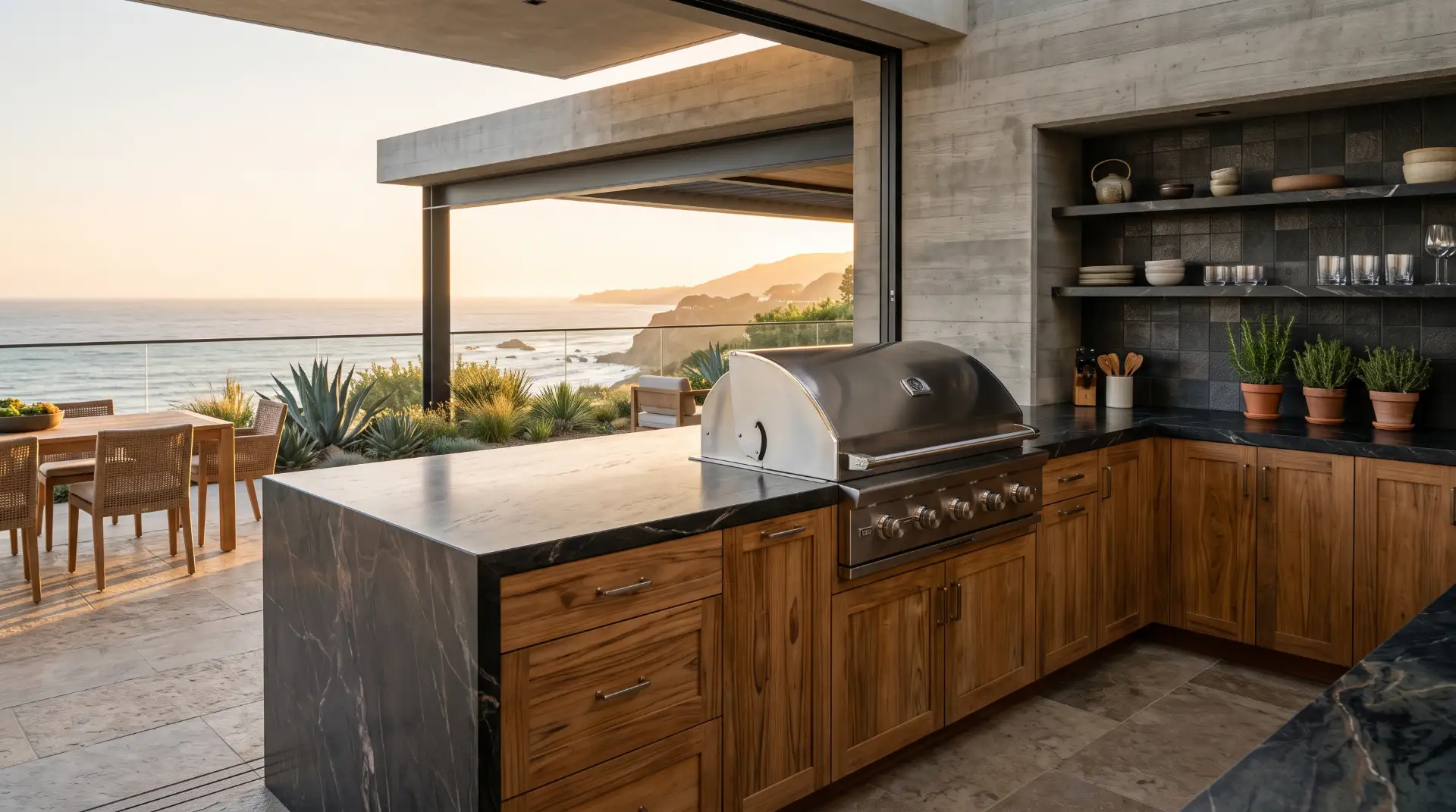
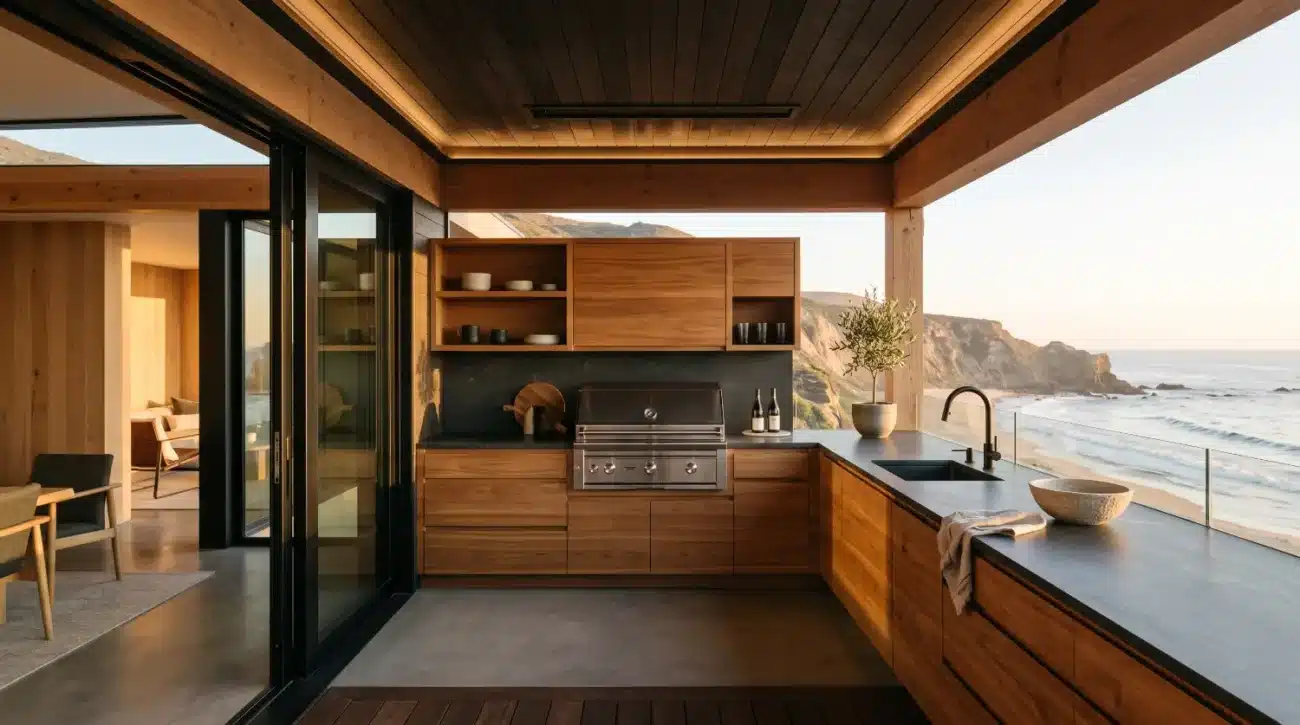
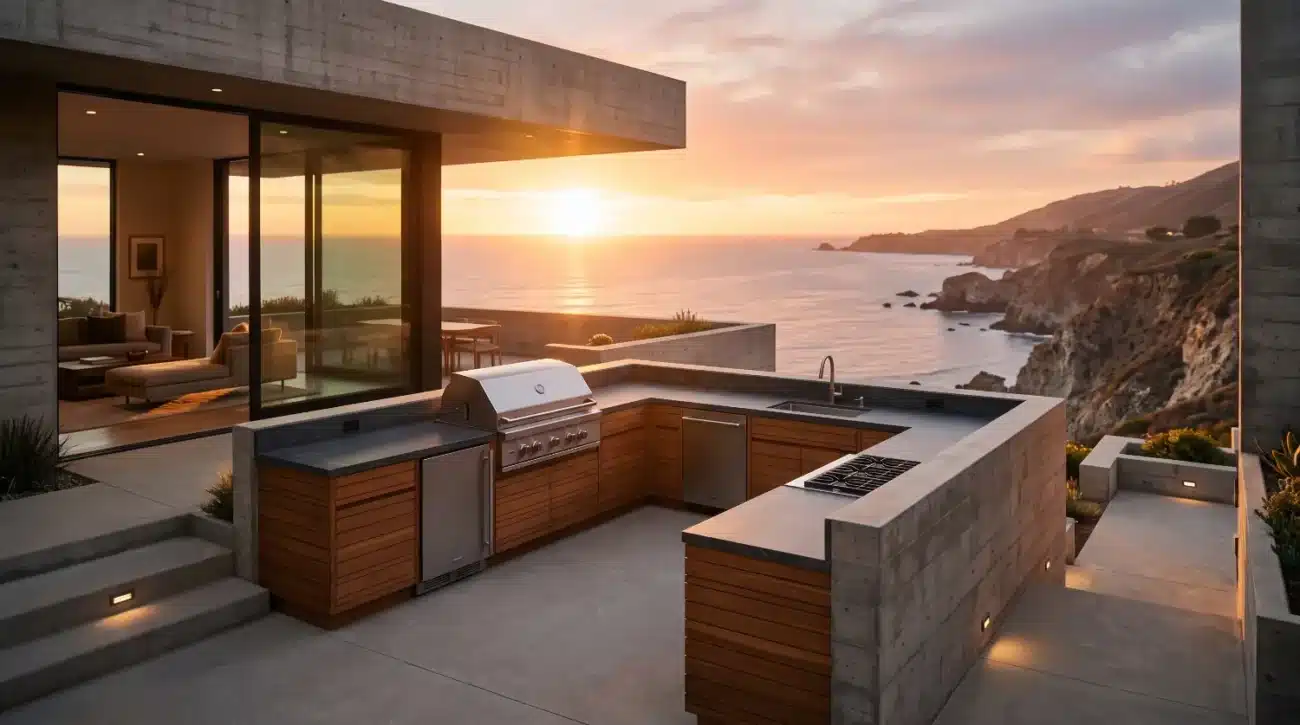
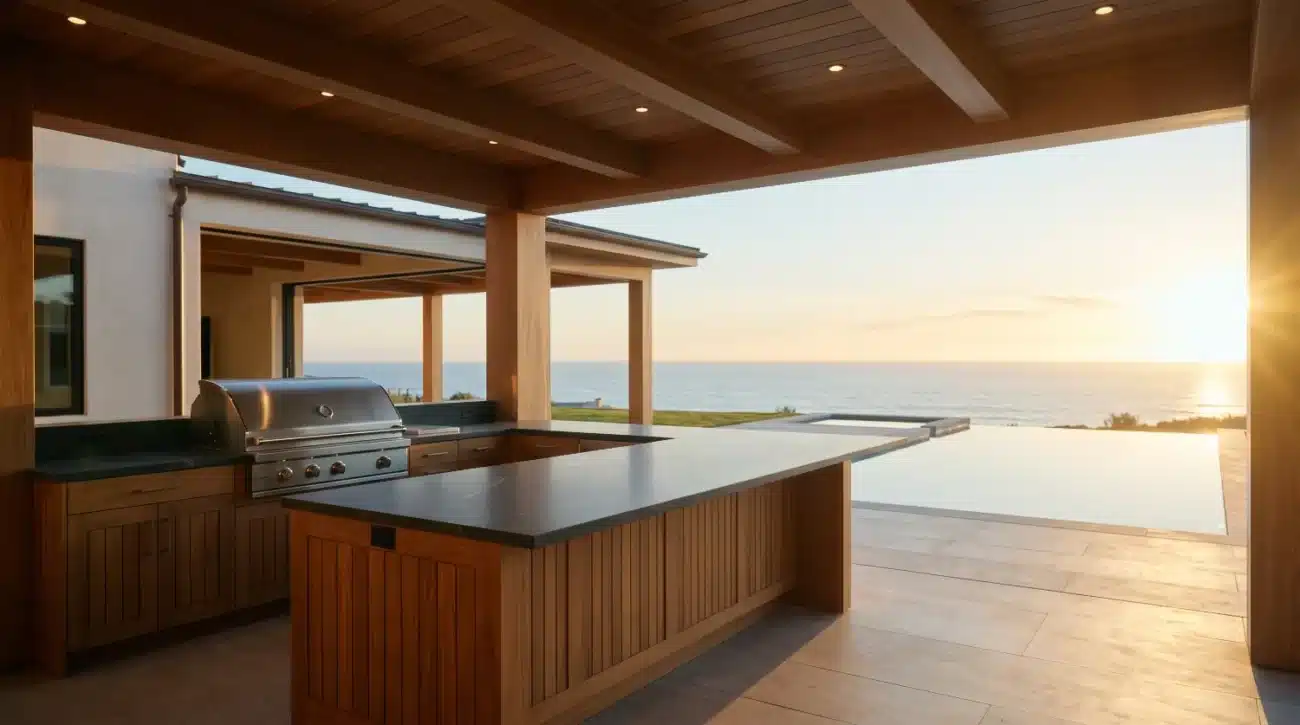
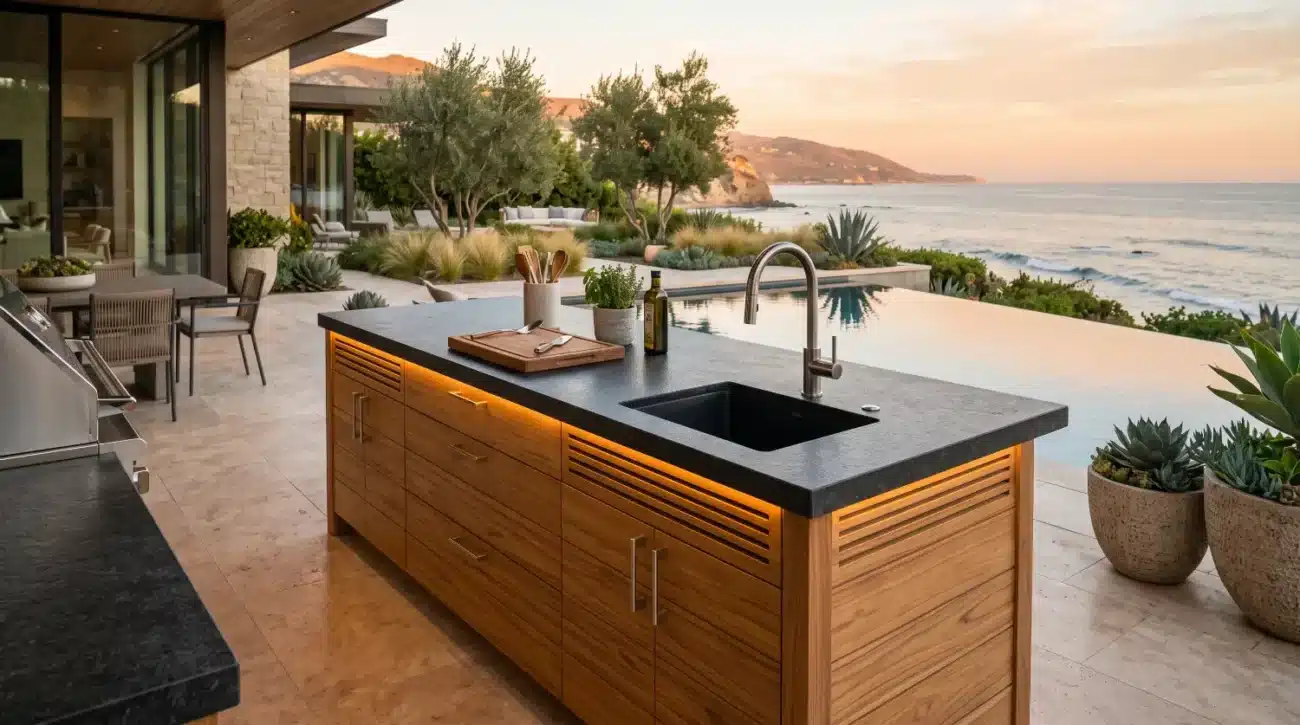
When a coastal Malibu homeowner presents a curated collection of digital mood boards to their project architect, a critical translation gap instantly emerges. Visual inspiration platforms excel at capturing lighting, material contrast, and overall atmosphere, but they routinely mask the harsh realities of physical engineering, structural loads, and environmental degradation. A render or social media photo rarely accounts for thirty-knot salt-air headwinds, six-hundred-pound soapstone countertops, or the intense thermal radiation of a thirty-six-inch hybrid gas grill. Turning a collection of digital imagery into an enduring luxury outdoor space requires moving beyond surface-level aesthetics. It demands a rigorous methodology that bridges initial visual ideation with trade-level specification, material science, and precision joinery.
Transitioning from conceptual design to a fully realized exterior installation requires a clear understanding of architectural workflows, subcontractor sequencing, and material performance. Homeowners and design professionals must navigate key milestones to ensure the final installation matches the initial design vision while performing flawlessly in outdoor environments.
-
Digital Curation and Spatial Mapping: Cataloging aesthetic preferences while establishing baseline spatial boundaries, site access limits, and primary architectural sightlines.
-
Trade Integration and CAD Translation: Handing off visual concepts to licensed designers or architects who convert inspiration into precise CAD elevations, mechanical rough-ins, and structural layouts.
-
Material Engineering and Specifying: Selecting exterior-grade materials, such as Grade-A teak cabinetry and marine stainless steel, capable of withstanding local microclimates.
-
Appliance and Substructure Coordination: Finalizing cutout tolerances, ventilation shafts, and load-bearing framing to accommodate high-performance cooking appliances and heavy stone tops.
-
Procurement and Site Execution: Ordering custom millwork through dedicated trade channels, managing lead times, and coordinating site delivery with general contractors for seamless installation.
How to Translate Digital Outdoor Kitchen Inspiration into CAD Specifications
Transforming digital design boards into buildable architectural plans requires converting unstructured visual concepts into precise CAD drawings, spatial layouts, and engineering tolerances. Specifiers must translate vague aesthetic choices into exact cabinetry dimensions, mechanical rough-ins, appliance cutouts, and load-bearing substructures capable of supporting heavy natural stone countertops in harsh exterior environments.
The journey from a digital mood board to a fully realized outdoor loggia often begins with a fundamental misunderstanding of material performance. A common design failure occurs when specifiers treat exterior cabinetry like interior casework, using particle cores, high-pressure laminates, or light-duty aluminum frames clad in thin veneers. In coastal environments like Miami or Newport Beach, high humidity and salt air rapidly penetrate surface coatings, causing internal core swelling, glueline delamination, and structural failure within months. True luxury outdoor living demands solid, uncompromised materials engineered by nature and refined by traditional woodworking techniques.
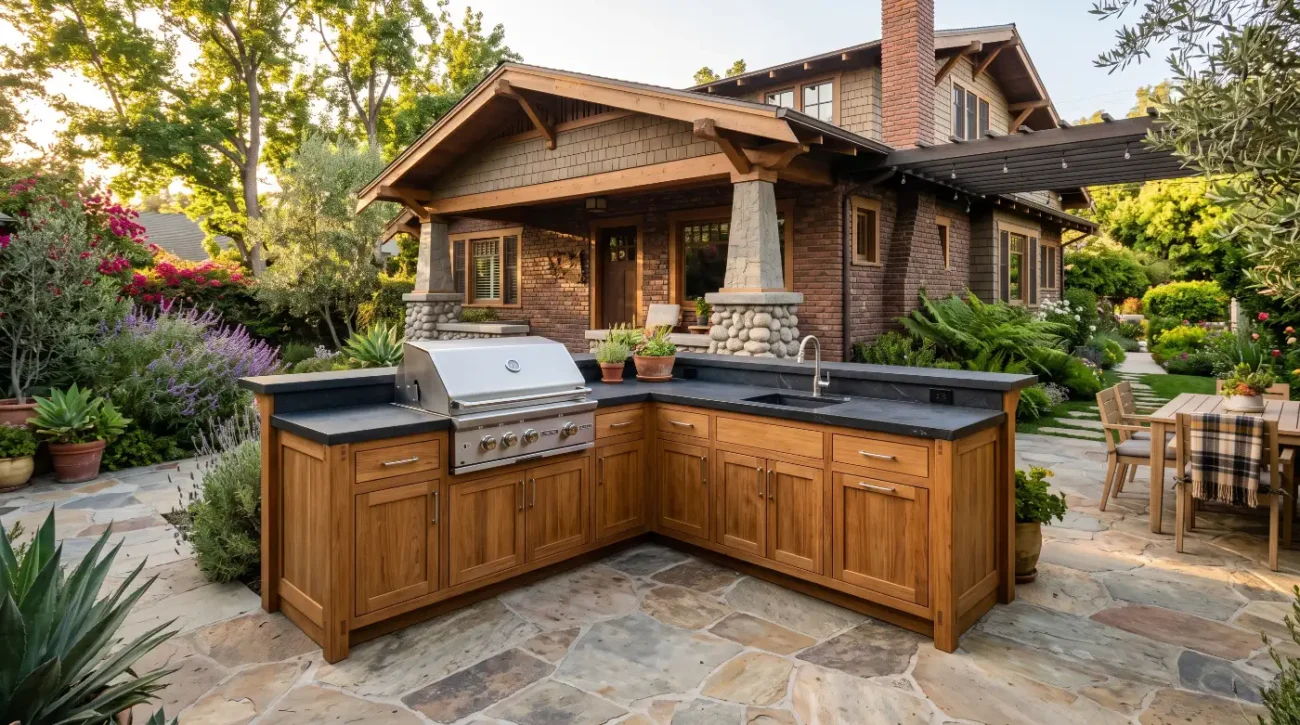
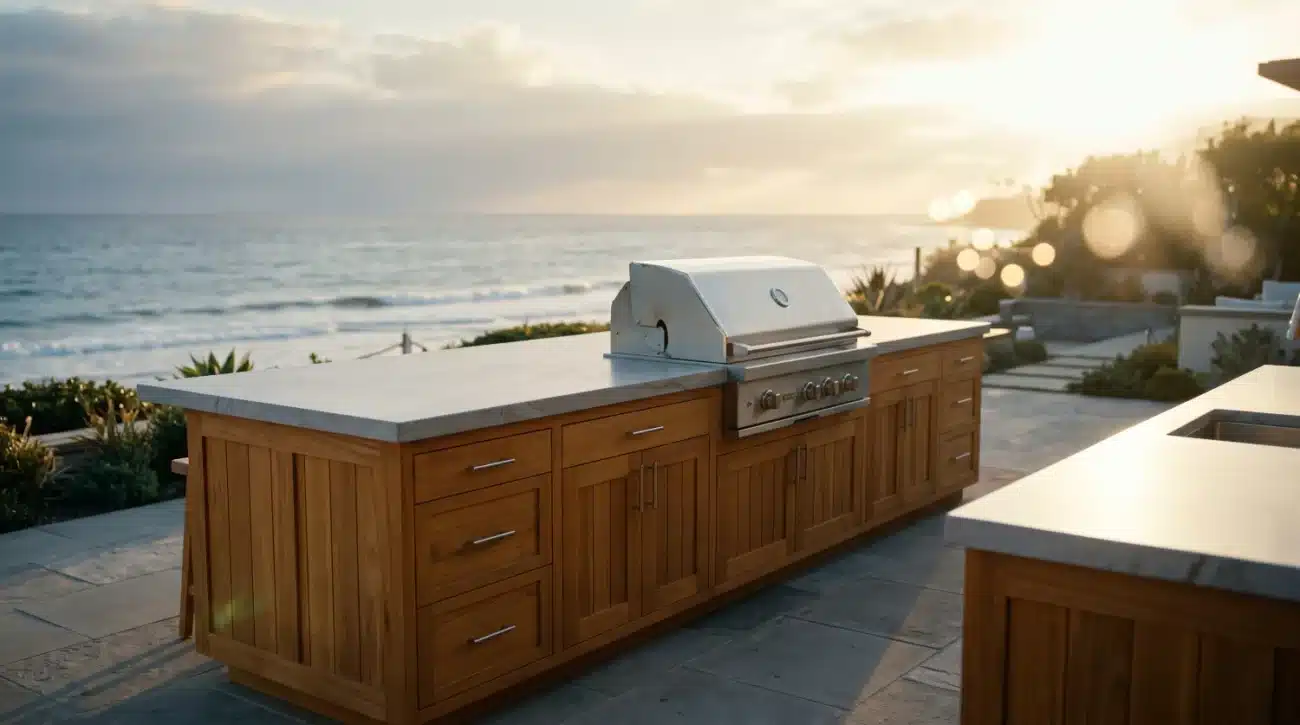
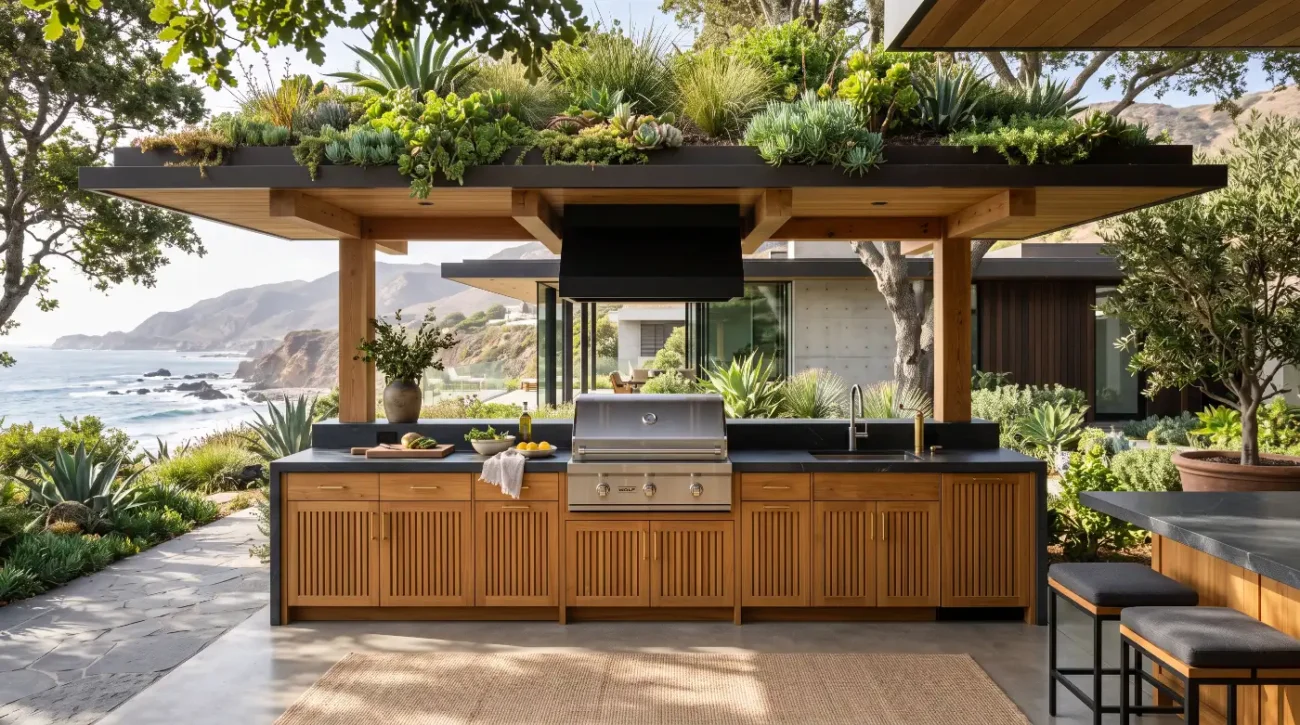
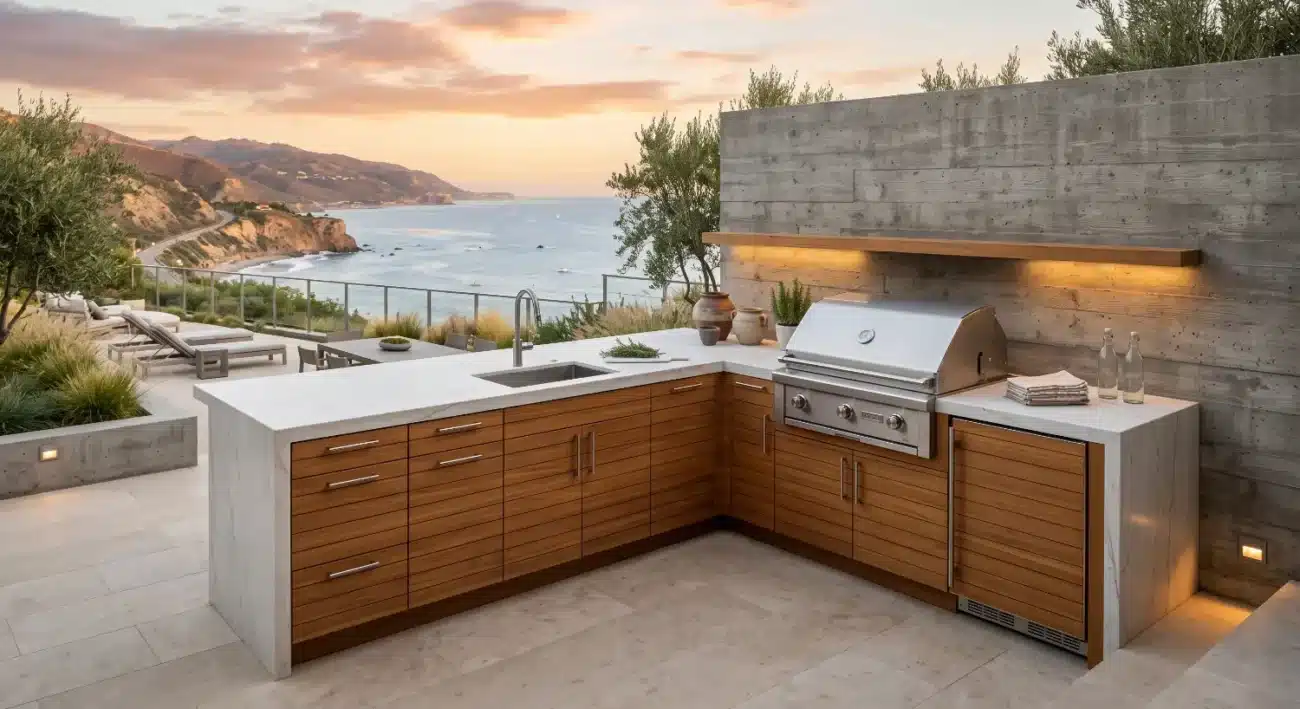
When presenting initial concepts to an interior designer or landscape architect, homeowners should focus on functional layout and material contrast rather than fixed off-the-shelf product dimensions. Professional specifiers utilize CAD libraries to map out precise cabinet runs, taking into account structural wall anchorage, utility connection points, and grade slopes for drainage. Incorporating specialized units from a Base Cabinets Collection early in the design phase allows the design team to plan around standardized depth profiles while customizing overall run lengths, filler panels, and end caps to match unique architectural parameters.
A critical design pitfall during the initial layout phase is failing to plan for appliance heat dissipation and gas ventilation. Enclosing high-BTU gas grills or charcoal smokers inside wood casework without proper insulated jacket sleeves and stainless steel liner isolation traps extreme thermal energy against cabinet walls. Over time, this intense heat dries out internal wood fibers, degrades structural adhesives, and creates severe fire hazards. Proper CAD specifications must account for manufacturer-mandated cutout clearances, stainless heat shields, and rear ventilation louvers to allow passive air movement through the island substructure.
-
Dimensional Tolerance Mapping: Establishing exact overall cabinet run lengths, toe-kick heights, and finished counter elevations that align perfectly with adjacent architectural thresholds and hardscape paving.
-
Appliance Clearance Integration: Incorporating explicit manufacturer cutouts, insulated heat jackets, and gas line access points directly into cabinet shop drawings before fabrication.
-
Countertop Load Calculations: Engineering cabinet face-frames and internal gussets to support dense natural quartzite, granite, or thick concrete slabs without center-span deflection.
-
Utility Rough-in Alignment: Positioning electrical outlets, water supply lines, and liquid propane or natural gas connections within designated cabinet service cavities for clean installation.
-
Airflow and Heat Venting Design: Incorporating upper and lower passive ventilation cutouts within grill base cabinets to prevent volatile gas accumulation and reduce thermal buildup.
Navigating the transition from direct-to-consumer ideation to trade specification requires close collaboration between the property owner and the professional design team. While homeowners drive the aesthetic vision, the project architect, interior designer, or general contractor must take ownership of technical execution. Utilizing the expert resources found within the Resource Center provides trade professionals with instant access to technical spec sheets, architectural care guidelines, and structural dimensional data required to complete comprehensive bid sets and construction documentation.
Bridge the gap between conceptual design and trade-level execution by following a structured project pipeline:
-
Establish the Functional Zones: Divide the outdoor kitchen layout into distinct prep, cooking, serving, and cold-storage zones to determine cabinetry requirements.
-
Review Site Microclimates: Assess local environmental stress factors, such as direct solar exposure, salt spray, or freeze-thaw cycles, to inform material choices.
-
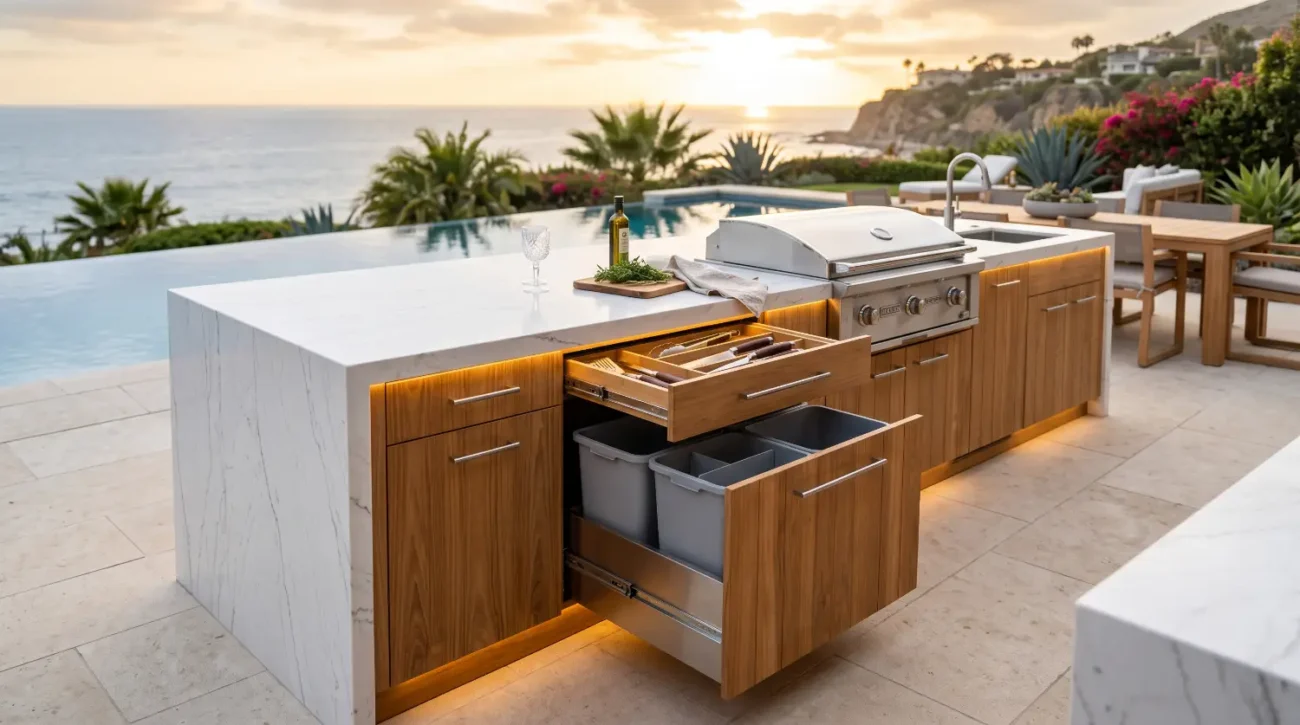
Select Millwork Configurations: Choose appropriate base units, sink modules, trash pull-outs, and Island Inserts to create a cohesive storage layout.
-
Coordinate Trade Submittals: Provide the project builder with detailed cabinetry elevation drawings, appliance specification sheets, and material finish samples for client sign-off.
-
Finalize Field Measurements: Direct the general contractor to verify site dimensions, wall plumbness, and floor level after hardscape installation but prior to cabinet fabrication.
Why Grade-A Teak and Marine-Grade Hardware Resist Exterior Degradation
Grade-A plantation teak naturally resists moisture absorption, fungal rot, and saltwater corrosion due to its high density, natural rubber resins, and rich silicates. When paired with 316 marine-grade stainless steel hardware and traditional mortise-and-tenon joinery, solid teak cabinetry provides structural stability, accommodating thermal movement without warping, splitting, or hardware mechanical failure.
The structural longevity of exterior cabinetry depends heavily on the physical properties of the selected timber. Grade-A teak, harvested exclusively from the dense heartwood of mature Tectona grandis trees, contains a naturally high concentration of tectonic oils, natural rubber resins, and microscopic silica particles. Research from authoritative wood science institutions, such as the USDA Forest Products Laboratory, highlights that these natural extractives give teak its extraordinary dimensional stability, natural water repellency, and resistance to wood-destroying fungi and insects. Unlike lesser hardwoods or softwoods that rely on synthetic topical chemicals, teak protects itself from the inside out.
When exposed to fluctuating ambient humidity, extreme heat, or freezing dampness, all wood naturally expands and contracts across its grain profile. Applying rigid synthetic finishes like polyurethane, epoxy, or heavy film-forming varnishes to exterior teak traps internal moisture beneath the surface coating. As the wood expands under direct sunlight, the rigid film cracks, allowing liquid water to enter beneath the clear coat. The trapped moisture cannot evaporate, leading to internal wood rot, surface clouding, and unsightly peeling that requires aggressive mechanical sanding to repair.
To preserve the structural integrity and aesthetic character of exterior millwork, designers and builders must rely on breathable, penetrating finishes or allow the timber to age naturally. Following the official protocols outlined in the Teak Care & Maintenance Guide ensures that the wood retains its natural oils while allowing moisture vapor to escape freely. Over time, untreated outdoor teak oxidizes under ultraviolet light, developing a distinguished, soft silvery-grey patina that harmonizes effortlessly with stone, fair-faced concrete, and coastal landscapes.
-
High Natural Rubber Content: Acts as an internal waterproofing agent, preventing deep moisture absorption, dimensional swelling, and grain raising during heavy rainfall.
-
Rich Silica Microstructure: Dense silica content dully coats wood cells, providing natural resistance against marine borers, termites, and fungal decay.
-
High-Density Heartwood Grain: Sourced exclusively from the central core of mature trees, offering tight, straight grain lines that resist twisting, bowing, and surface checking.
-
Dimensional Moisture Stability: Exceptionally low volumetric shrinkage coefficient ensures joints stay tight and cabinet doors remain aligned across seasonal climate shifts.
-
Natural Oxidizing Defense: UV exposure transforms rich golden wood oils into a stable, silvery patina that acts as a protective outer shell without structural degradation.
Equally important to timber quality is the selection of underlying mechanical hardware and structural joinery techniques. Standard interior cabinet hardware—and even low-grade 304 stainless steel—rapidly succumbs to tea-staining, pitting, and mechanical binding when exposed to coastal salt air or pool chemicals. True marine-grade installations require 316 stainless steel hinges, drawer glides, and assembly fasteners. The addition of molybdenum in 316 stainless steel dramatically increases resistance to chloride pitting, ensuring smooth, silent soft-close operation over decades of daily use.
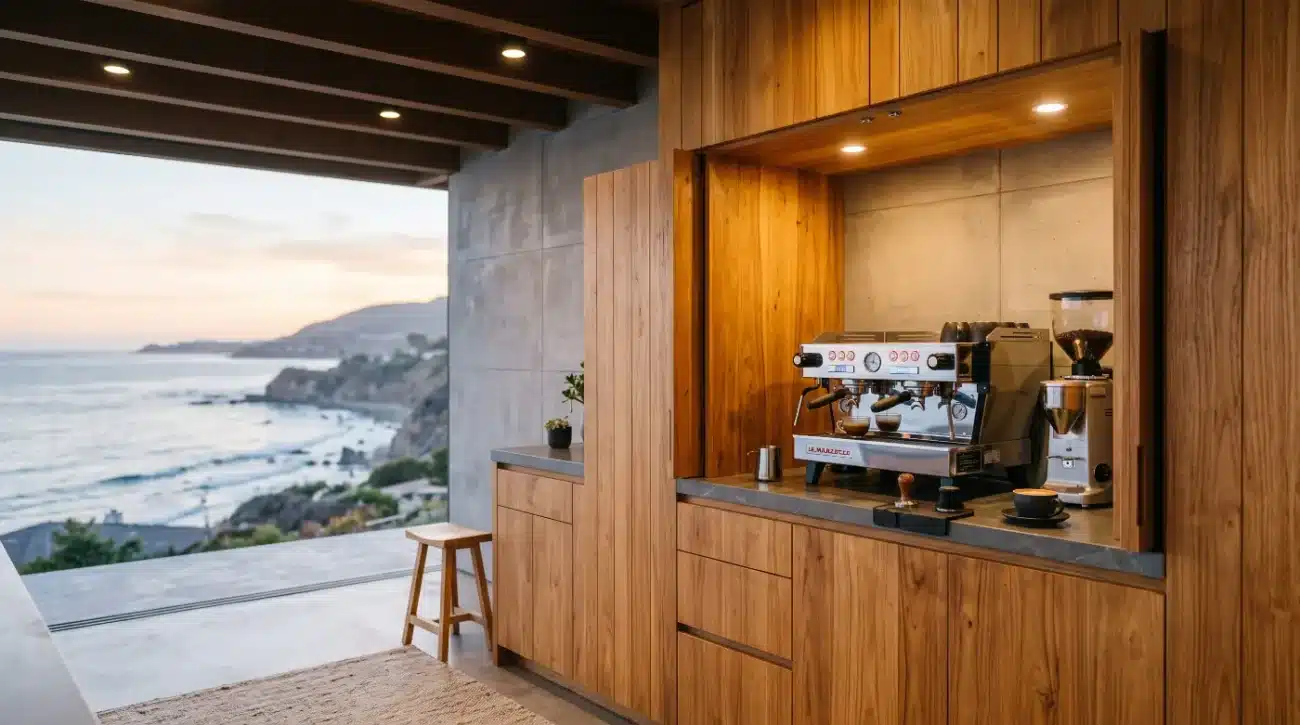
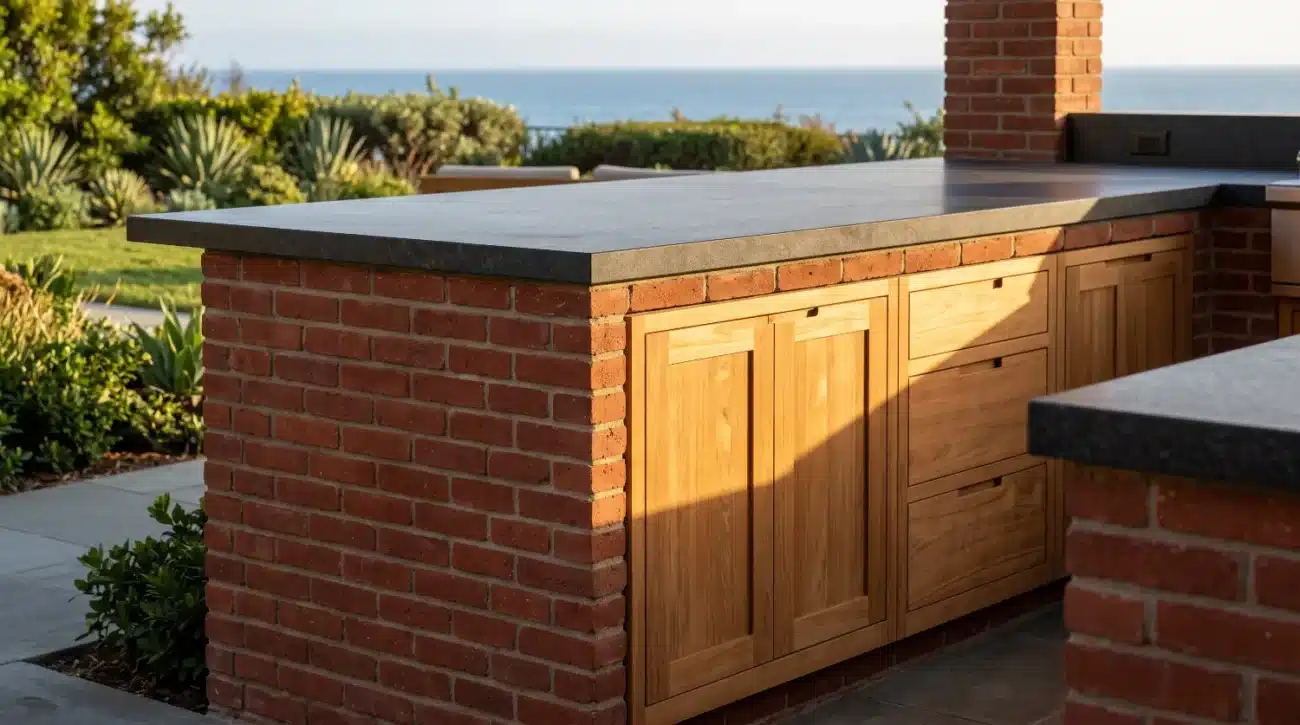
In addition to premium metal components, long-term exterior durability relies on traditional, time-tested joinery methods. True custom millwork employs precision mortise-and-tenon joints, blind doweling, and structural face-frames that allow individual wood components to move slightly along their natural growth rings without pulling frame corners apart. When vertical storage space is needed alongside lower runs, specifying matching units from a Wall Cabinets Collection ensures that upper cabinetry maintains the same precision joinery, weight capacity, and weather-sealed gasket protection as ground-level islands.
Understanding structural warranties and fabrication standards gives trade specifiers and property owners complete confidence during the purchasing process. Reviewing comprehensive documentation, such as the official Warranty Documentation, reinforces the value of investing in solid hardwood construction over temporary, short-lived modular alternatives. Furthermore, maintaining clear communication with the manufacturer regarding lead times and logistics—supported by transparent policies like the Cancellation & Return Policy—ensures smooth execution across all construction phases.
-
316 Marine Stainless Steel: Premium alloy containing molybdenum to resist severe atmospheric chloride corrosion, pitting, and rust in oceanfront environments.
-
Full-Extension Soft-Close Glides: Heavy-duty slide systems engineered to carry heavy exterior drawers smoothly while dampened closure mechanisms prevent slamming.
-
Precision Mortise-and-Tenon Joinery: Mechanical interlock joints that distribute structural stresses evenly across cabinet frames, avoiding dependency on exposed metal fasteners.
-
Perimeter Weather Gaskets: Flexible, UV-resistant door seals that block wind-driven rain, sand, and garden debris from entering internal cabinet storage cavities.
-
Adjustable Marine Levelling Feet: Heavy-duty composite or stainless legs that isolate solid wood cabinet bases from direct standing water on stone or tile hardscapes.
Bridging the gap between initial online inspiration and a fully executed luxury outdoor kitchen requires balancing clear aesthetic vision with trade-level specification and uncompromised material selection. By understanding wood science, selecting marine-grade hardware, and collaborating closely with trade professionals through structured CAD workflows, homeowners can transform mood board concepts into enduring outdoor spaces.
External References
Key Takeaways
-
Translate Inspiration to CAD: Convert unstructured online mood boards into actionable CAD drawings with precise dimensions, appliance clearances, and weight load engineering.
-
Prioritize Grade-A Teak: Use high-density, oil-rich Grade-A teak to ensure natural resistance against moisture, rot, UV radiation, and severe climate swings.
-
Specify Marine Hardware: Require 316 marine-grade stainless steel soft-close hardware to eliminate rust, pitting, and mechanical binding in coastal environments.
-
Avoid Film-Forming Sealers: Never apply rigid polyurethane or synthetic varnishes to outdoor teak, as trapped moisture causes deep rot and surface peeling.
-
Engage Trade Professionals: Collaborate with designers, architects, and builders early in the design process to navigate utility rough-ins, ventilation, and site lead times efficiently.
Whether you are a homeowner curating design inspiration or an architect finalizing detailed CAD submittals for a coastal estate, Pacific Teak Millworks provides the trade expertise, material science, and custom solid teak millwork required to bring your vision to life. Explore technical resources, request wood finish samples, or discuss your project specifications directly with our engineering team by visiting our Contact Us / Trade Inquiries page today.