Fast Track Summary
-
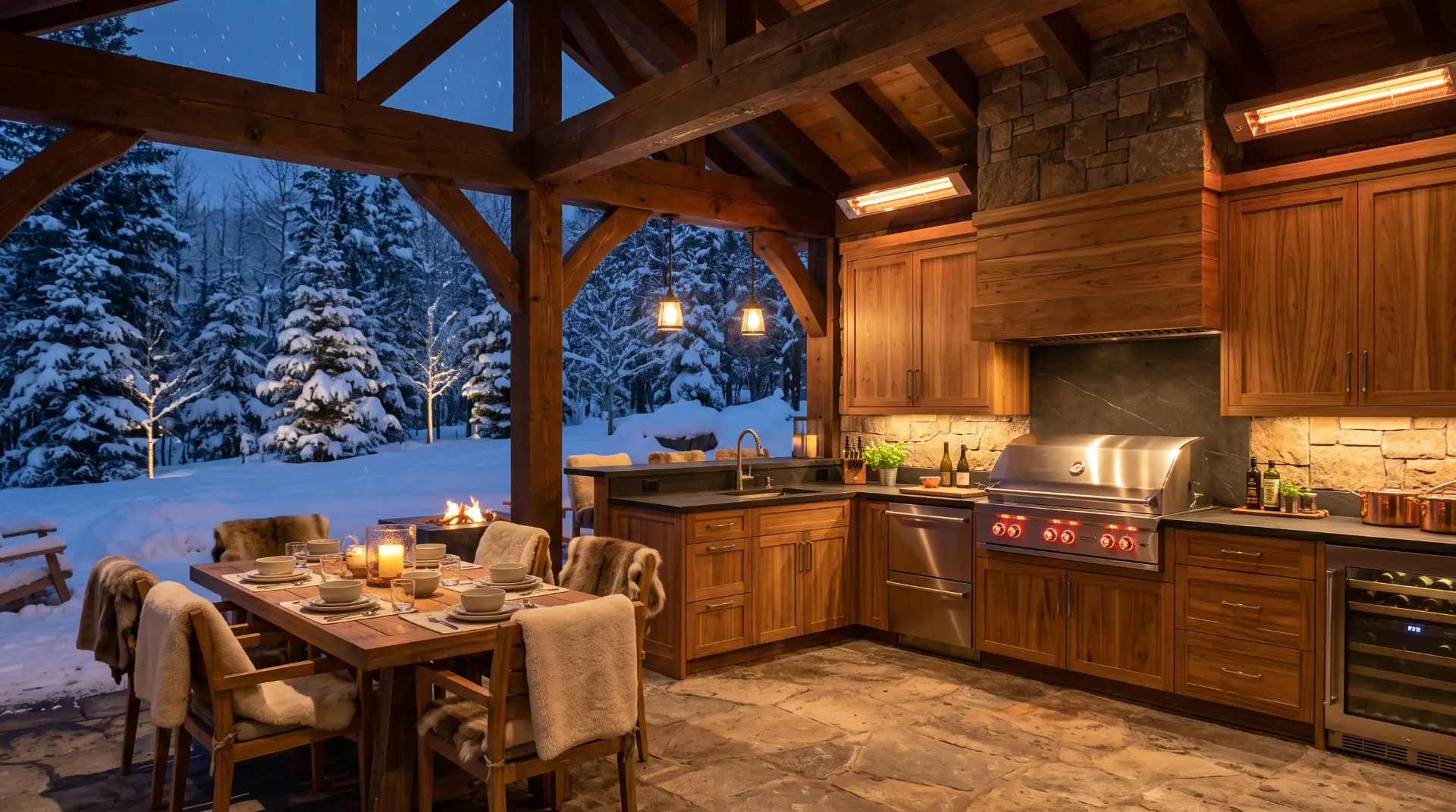
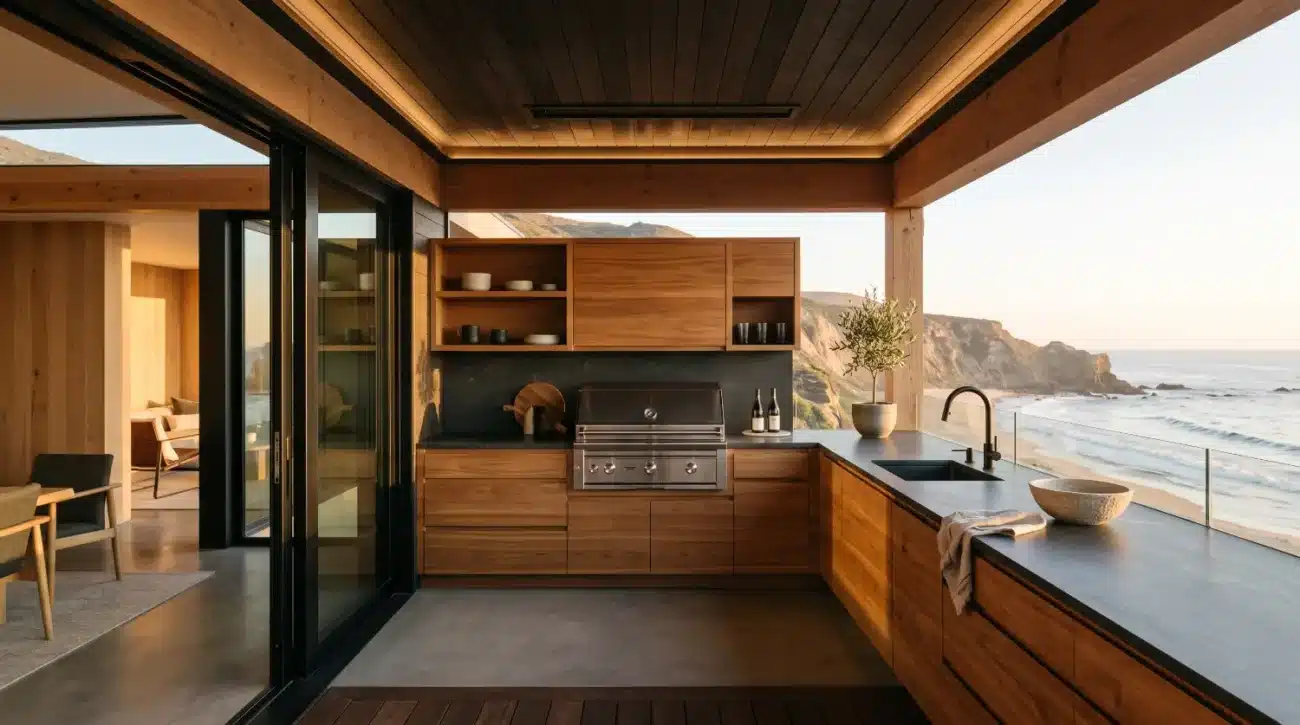
Architectural Sheltering is Essential: Year-round outdoor entertaining requires integrated radiant heating, covered loggias, and dynamic wind-break structures to retain localized microclimates.
-
Material Science Matters: Solid Grade-A teak combined with 316 marine-grade stainless steel resists sub-zero freeze-thaw cycles, preventing material delamination and structural joint failure.
-
Smart Layout Execution: Isolating cooking zones from sub-zero winds and utilizing non-porous countertops safeguards high-end appliances and heavy stone installations.
Designing Year-Round Luxury Outdoor Kitchen Layouts for Extreme Cold Climates
Designing a luxury four-season outdoor kitchen in harsh climates like the Pacific Northwest, Chicago, or coastal New England requires overcoming severe structural and thermal challenges. Standard outdoor cabinetry often fails when exposed to sub-zero temperatures, ice dams, and severe freeze-thaw cycles. Aluminum contracts, inferior woods split at joinery lines, and synthetic polymer veneers shatter under impact in extreme cold. A four-season outdoor kitchen must be engineered as an architectural extension of the residential envelope. It needs structural stability, thermal efficiency, and high-performance materials like Grade-A teak that can withstand environmental stress without losing aesthetic appeal.
Fast Track Insights for Cold-Climate Design
-
Grade-A Teak Structural Stability: Natural silica and high resin density keep solid teak stable, preventing warping, cracking, or joint separation during severe thermal shifts.
-
Strategic Microclimate Creation: Radiant overhead heating combined with louvered roof structures shields cooking zones and guest seating from ambient cold and downdrafts.
-
Marine-Grade Hardware Integration: Using 316 stainless steel soft-close hardware prevents internal rust, hinge seizing, and alignment failures caused by winter moisture.
-
Proper Gas and Drainage Winterization: Sloped internal plumbing, insulated utility raceways, and dedicated shut-off valves protect gas lines and water supply from freezing.
Mitigating Thermal Shock and Structural Expansion in Freeze-Thaw Environments
A four-season outdoor kitchen layout must withstand continuous freeze-thaw cycles. Moisture penetrates standard cabinet joinery, freezes, expands, and breaks down adhesives, causing panels to warp. According to research from the USDA Forest Products Laboratory, wood species with dense grain structures and high natural oil contents resist moisture absorption, stabilizing them during extreme temperature swings.
Grade-A teak (Tectona grandis) naturally resists moisture infiltration due to its dense grain structure, internal rubber resins, and high oil content. Unlike softwoods or composite materials that expand and contract rapidly, teak maintains its dimensions under freezing conditions. Mortise-and-tenon joinery accommodates micro-movements, allowing the frame to shift without breaking the structural bond.
Essential Engineering Standards for Cold-Climate Millwork
-
High Internal Resin Density: Natural tectonic resins seal the cellular wood structure, preventing water absorption that leads to freeze-thaw cracking.
-
316 Marine-Grade Fasteners: Stainless steel structural screws and brackets resist oxidation from road salts and freezing condensation.
-
Integrated Expansion Gaps: Dado joints and floating panel channels allow natural wood movement without buckling cabinet face-frames.
-
Self-Draining Base Channels: Internal cabinet base channels prevent standing water from accumulating and freezing around levelling legs.
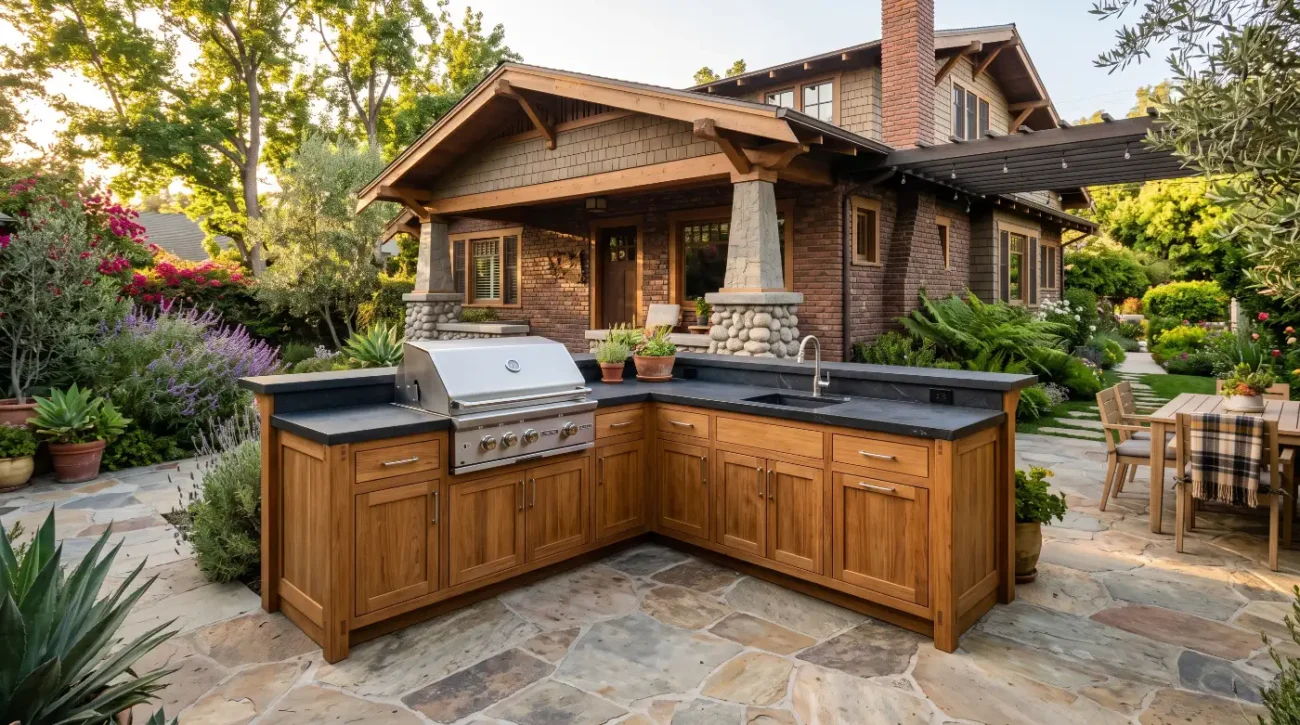
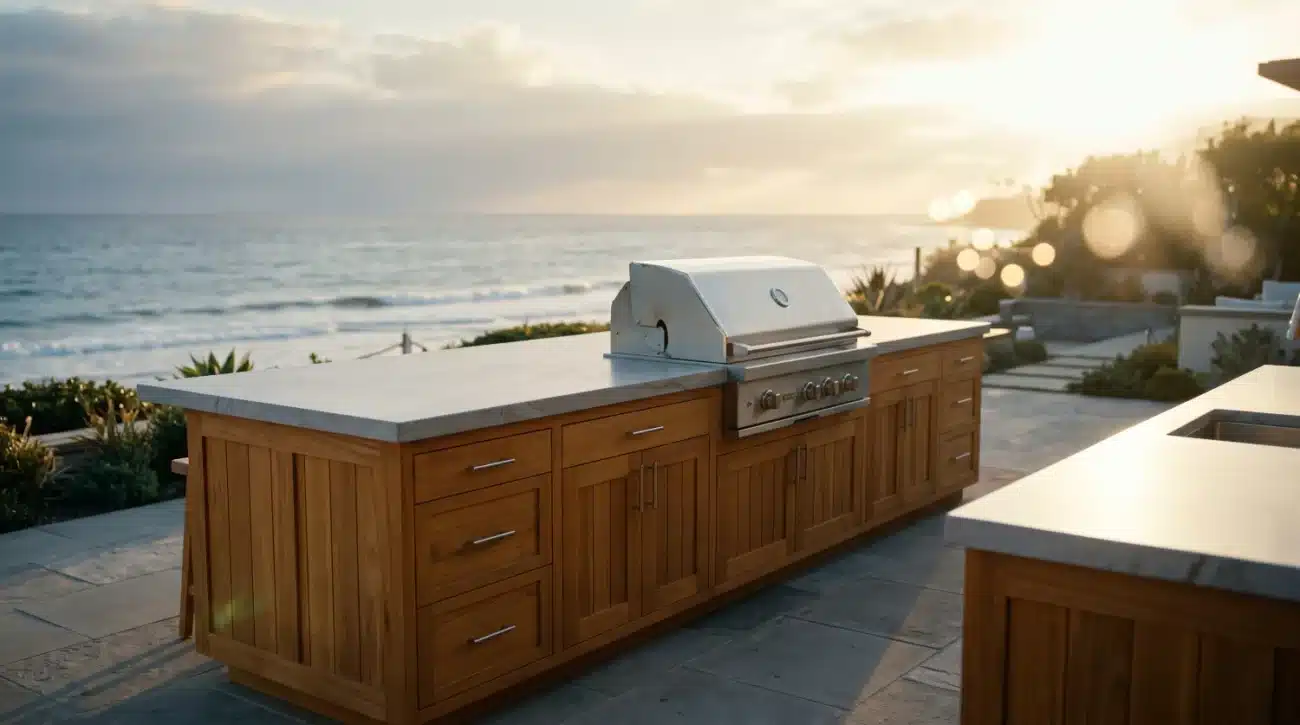
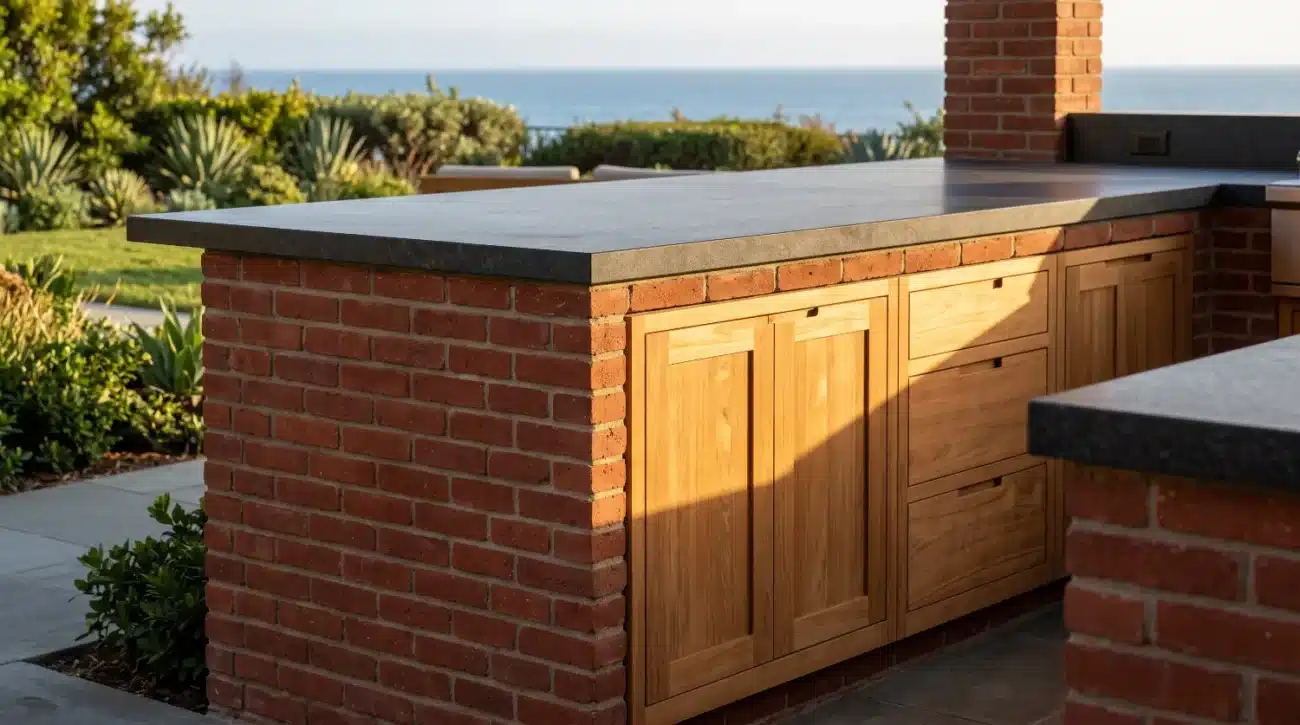
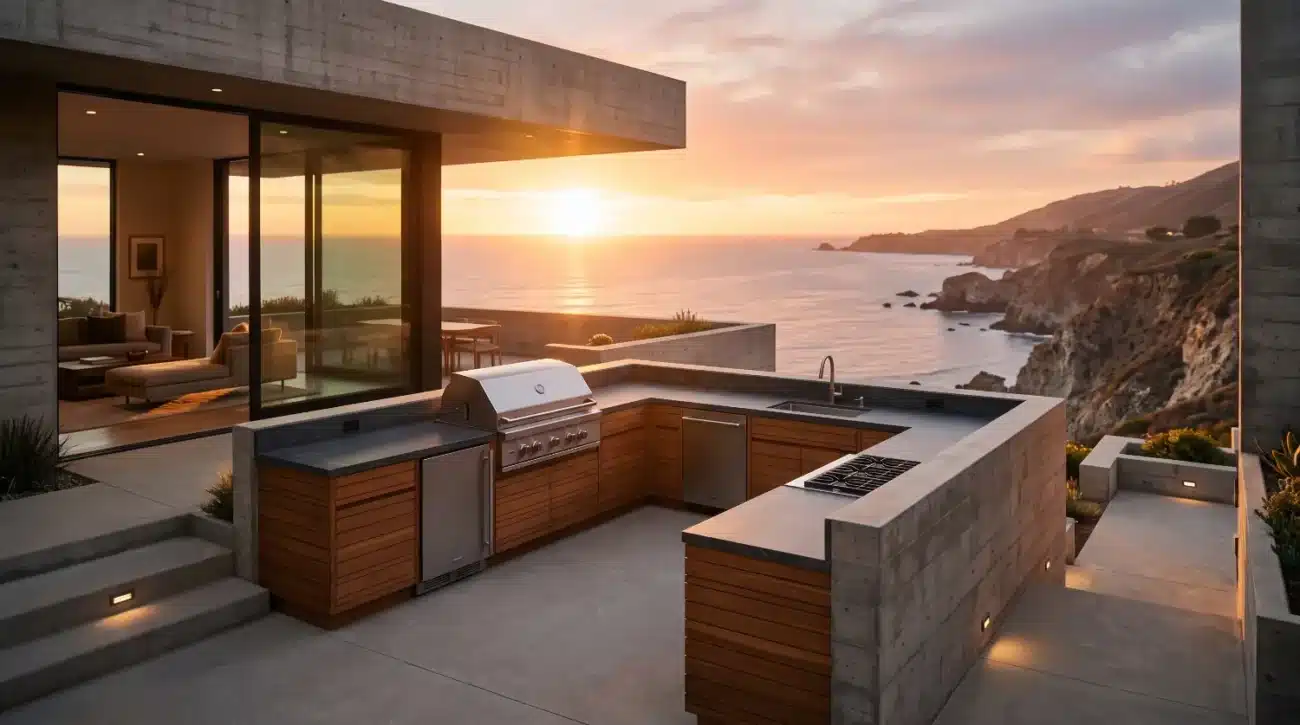
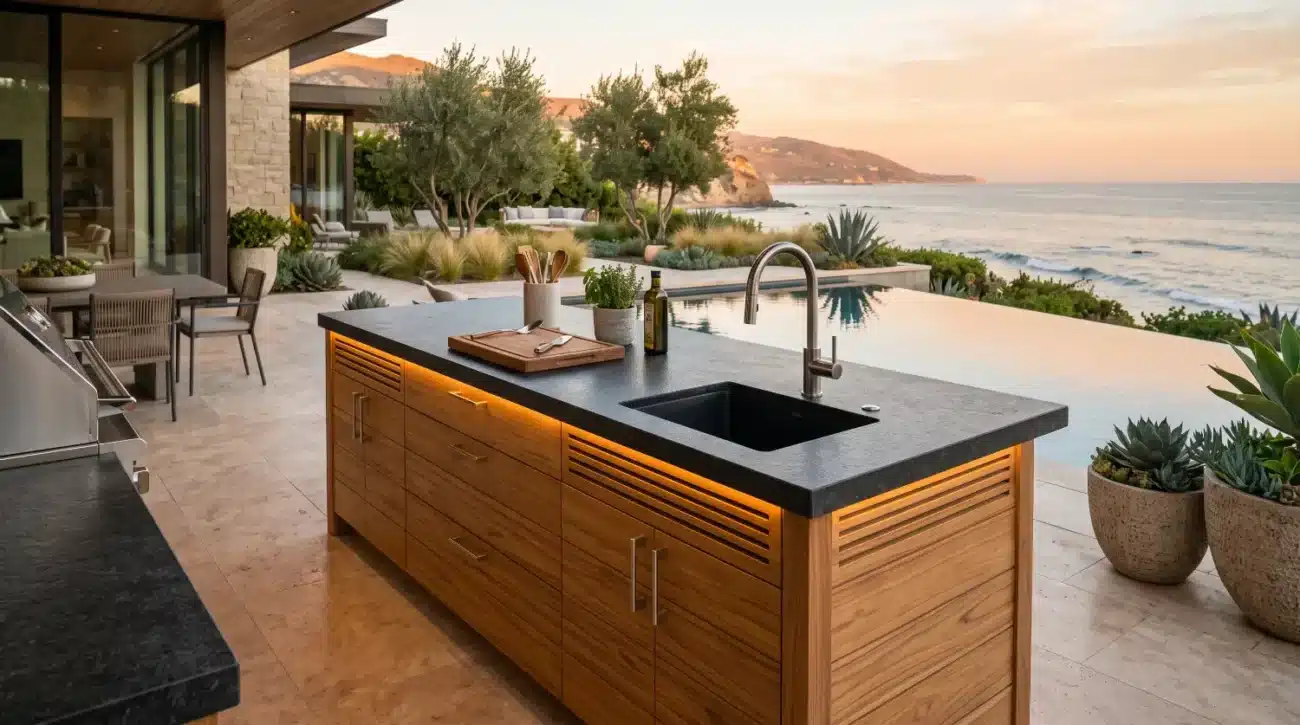
Architectural specifiers must account for heavy stone countertops, such as two-inch quartzite or dark granite slabs, when designing support structures. Sub-zero temperatures increase stress on levelling legs and cabinet frames. Precision-milled base units with structural corner bracing distribute heavy countertop loads evenly across concrete piers or stone patios, preventing sag and alignment issues. Explore our Base Cabinets Collection to see how structural mortise-and-tenon construction supports heavy stone countertops in extreme outdoor conditions.
Architectural Layout Strategies for Wind Protection and Microclimate Control
A successful four-season outdoor layout depends on managing prevailing winds, snow loads, and low ambient temperatures. Placing a grill island in an unprotected zone makes winter cooking difficult and uncomfortable for guests. According to guidelines from the American Society of Landscape Architects, strategic spatial zoning and architectural windbreaks help maintain warmth around cooking and dining areas during cold months.
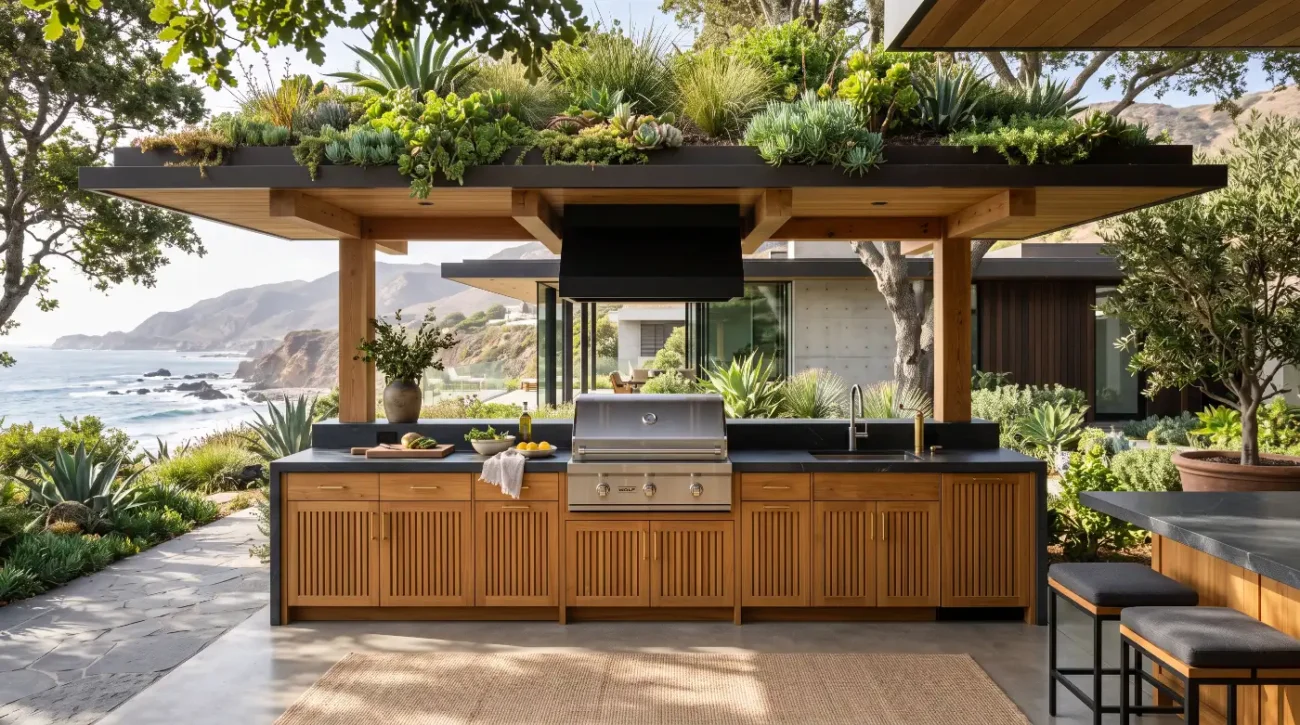
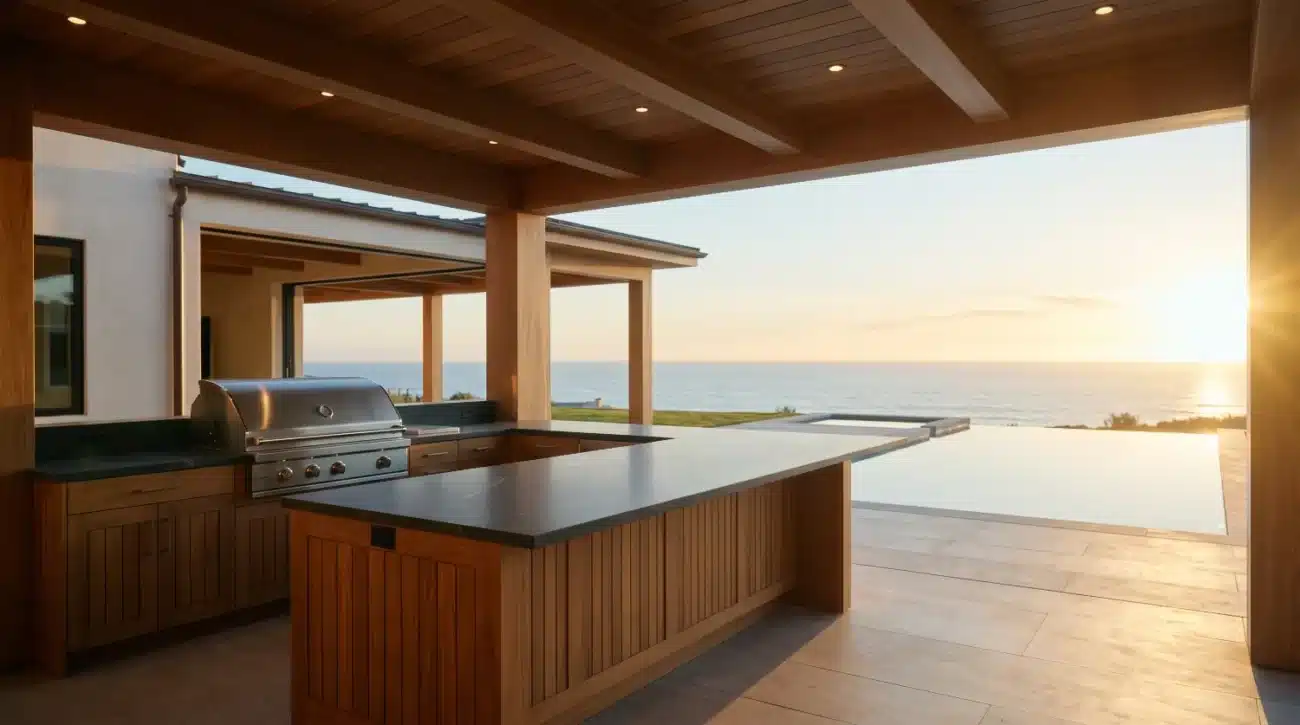
Positioning the outdoor kitchen beneath a covered loggia, pavilion, or louvered pergola shields the chef and appliances from snow, freezing rain, and falling ice. The layout should follow a functional workflow (cold storage, preparation, cooking, serving) while protecting heating elements from crosswinds. Windbreaks made of solid teak slatted screens, stone accent walls, or tempered glass panels shield burners from cold air, preventing flame blowout and uneven heating.
Spatial Zoning Strategies for Cold Climates
-
Protected Perimeter Positioning: Place primary cooking zones against structural house walls or masonry barriers to block prevailing winter winds.
-
Radiant Heat Zone Integration: Install flush-mounted electric radiant heaters above prep stations and dining seating to raise ambient warmth.
-
Thermal Envelope Buffer: Keep the cooking space close to home entry points to shorten travel distance for winter outdoor dining.
-
Proportional Roof Coverage: Extend canopy overhangs at least 36 inches past cabinet faces to shield drawer fronts from rain and snow.
Integrating flush-mounted wall storage keeps cooking tools dry and accessible. Review our Wall Cabinets Collectionfor weather-sealed, overhead storage solutions designed for sheltered outdoor kitchens.
Thermal Engineering and Material Science for Cold-Climate Outdoor Millwork
Creating a comfortable four-season outdoor living space requires balancing appliance performance, wood dynamics, and radiant heating systems. The thermal output of high-BTU gas grills, pizza ovens, and fire features must be carefully managed when installed next to natural wood cabinetry.
Fast Track Insights for Cold-Climate Material Selection
-
Thermal Isolation Barriers: Installing insulated grill jackets prevents heat transfer from high-BTU burners to surrounding wood frames.
-
Sustained Oil Protection: Applying teak oil protects the wood’s warm tone, while letting it naturally oxidize creates a low-maintenance, weather-resistant silver patina.
-
Countertop Material Selection: Non-porous materials like dark granite or engineered sintered stone resist freeze-thaw cracking better than porous marble or concrete.
-
Proper Gas Appliance Ventilation: Dedicated ventilation channels prevent gas accumulation and lower thermal buildup near wooden cabinet walls.
Managing Heat Dispersion, Appliance Ventilation, and Grill Integration
A common mistake in custom outdoor kitchen design is placing high-heat appliances directly against wooden framing without adequate thermal isolation. In cold weather, the temperature contrast between a 700-degree grill interior and sub-zero ambient air creates extreme thermal gradients. Without proper insulation, this thermal stress can scorch finishes, dry out wood joints, or create safety hazards.
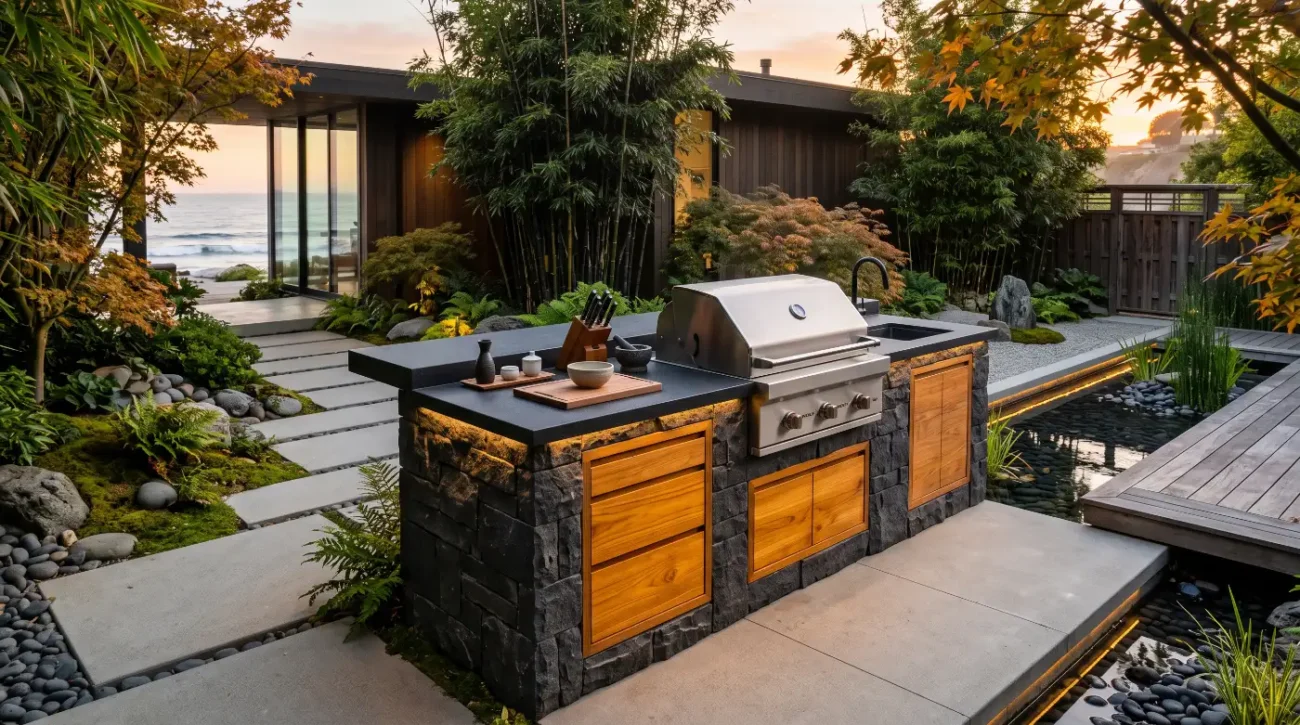
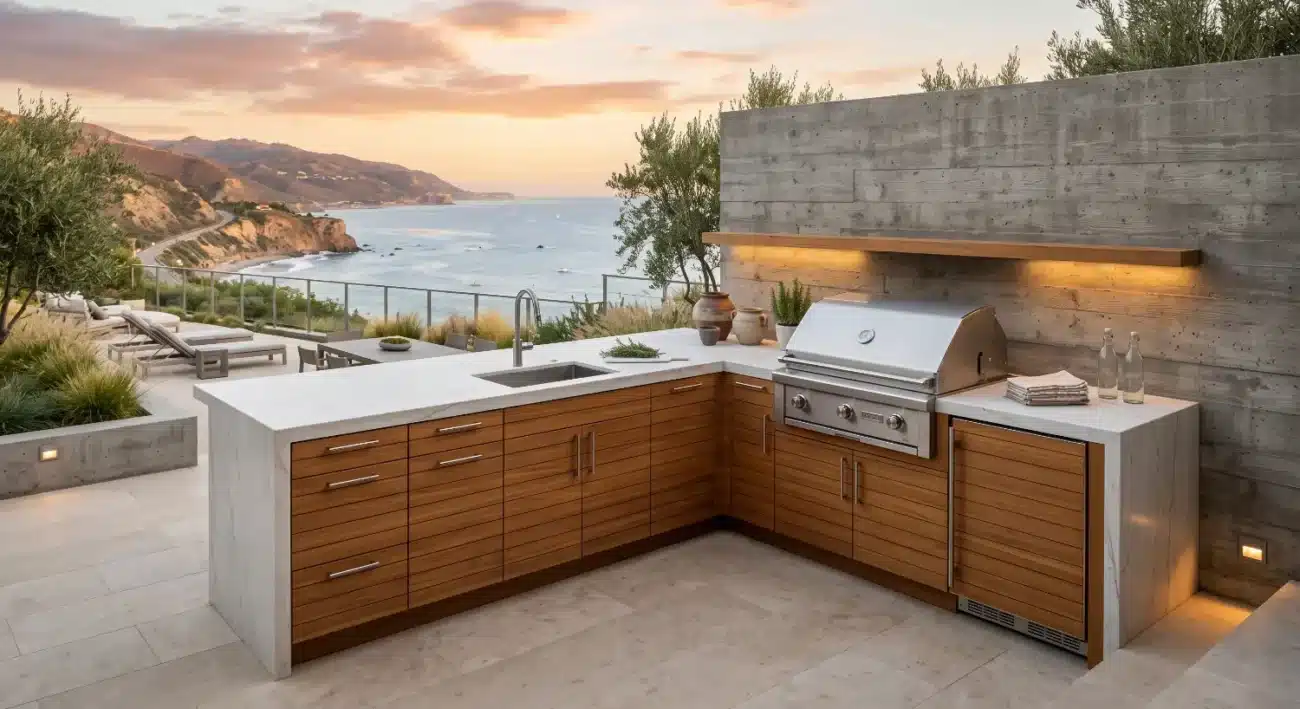
Using heavy-duty 316 stainless steel insulated grill jackets provides a continuous thermal barrier between the appliance and solid teak framing. These jackets shield the wood from direct heat, allow proper airflow, and catch grease drips before they contact cabinet surfaces.
Critical Clearance and Installation Guidelines
-
Insulated Jacket Specifications: Always use manufacturer-certified stainless steel jackets when inserting gas grills into solid wood islands.
-
Rear Heat Clearance: Maintain a minimum 6-inch air gap between the back of the grill hood and combustible vertical structures.
-
Cabinet Ventilation Flues: Install stainless steel louvered vents high and low in grill bases to prevent gas buildup and allow heat dissipation.
-
Countertop Isolation Strips: Place heat-resistant silicone gaskets between hot appliance flanges and cold countertop surfaces to reduce thermal shock.
For custom island builds, our Island Inserts Collection offers precise stainless steel hardware cutouts designed to fit seamless, heat-isolated appliances.
Long-Term Care, Weathering Dynamics, and Surface Protection Protocols
High-net-worth homeowners face a key choice when specifying Grade-A teak for winter kitchens: preserve the wood’s natural golden-brown hue or let it weather into a silvery-grey patina. Both options offer strong durability because teak’s natural oils protect its core, regardless of surface finish.
Applying film-forming polyurethane sealers or exterior varnishes on outdoor teak is counterproductive. Extreme winter freezes cause clear coats to crack, trap moisture beneath the surface, and lead to wood peeling and rot. Instead, clear penetrating oils nourish the outer wood fibers without forming a rigid surface film.
Winter Preparation and Maintenance Workflow
-
Deep Surface Cleaning: Wash cabinet surfaces with a mild pH-neutral teak cleaner and a soft bristle brush to remove salt spray, dirt, and organic residue before winter sets in.
-
Penetrating Oil Application: Apply a light coat of high-grade teak oil to restore moisture and protect the warm golden color through snowy months.
-
Hardware Lubrication: Coat 316 stainless steel hinges and drawer glides with marine-grade silicone lubricant to prevent rust from road salt and snow.
-
Countertop Sealing Protocol: Seal porous natural stone surfaces with a deep-penetrating fluoropolymer sealer to prevent ice expansion within stone pores.
-
Ventilation Checks: Clear leaf debris from cabinet base vents and grill jackets to ensure proper winter airflow and prevent trapped moisture.
Review our complete Teak Care & Maintenance Guide (PDF) for detailed schedules on managing finishes across different climate zones.
Seamless Architectural Integration Across Trade Disciplines
Designing a custom four-season outdoor kitchen requires close coordination between architects, landscape designers, custom builders, and millwork specialists. Bridging the gap between initial concept sketches and final trade specification prevents costly jobsite delays and structural re-engineering.
Winter Outdoor Kitchen Construction Workflow
-
Architectural Specification & CAD Planning: Define the radiant heating layout, calculate structural stone countertop loads, and establish loggia overhang depths. Download CAD and BIM blocks early in the planning phase to ensure precise cabinet dimensions and trade clearance tolerances.
-
Site Preparation & Utility Rough-In: Pour reinforced concrete piers to support heavy stone installations and prevent winter frost-heaving. Install freeze-proof utility lines, thermal raceways, and dedicated winter drain shut-off valves prior to setting cabinetry.
-
Millwork Installation & Structural Levelling: Anchor solid Grade-A teak base units using marine-grade 316 stainless steel hardware. Precision-adjust heavy-duty levelling legs to accommodate patio slopes, guaranteeing smooth drawer operation and proper water drainage.
-
Appliance Setting & Countertop Integration: Fit certified 316 stainless steel insulated grill jackets into solid wood frames. Carefully set quartzite, dark granite, or sintered stone slabs onto precision-milled teak frames, applying silicone thermal isolation gaskets along all contact points.
Trade professionals can access our CAD files, structural load data, and detail drawings in our online Resource Center. Homeowners can also browse our Outdoor Design Blog for design inspiration, spatial planning ideas, and material comparisons.
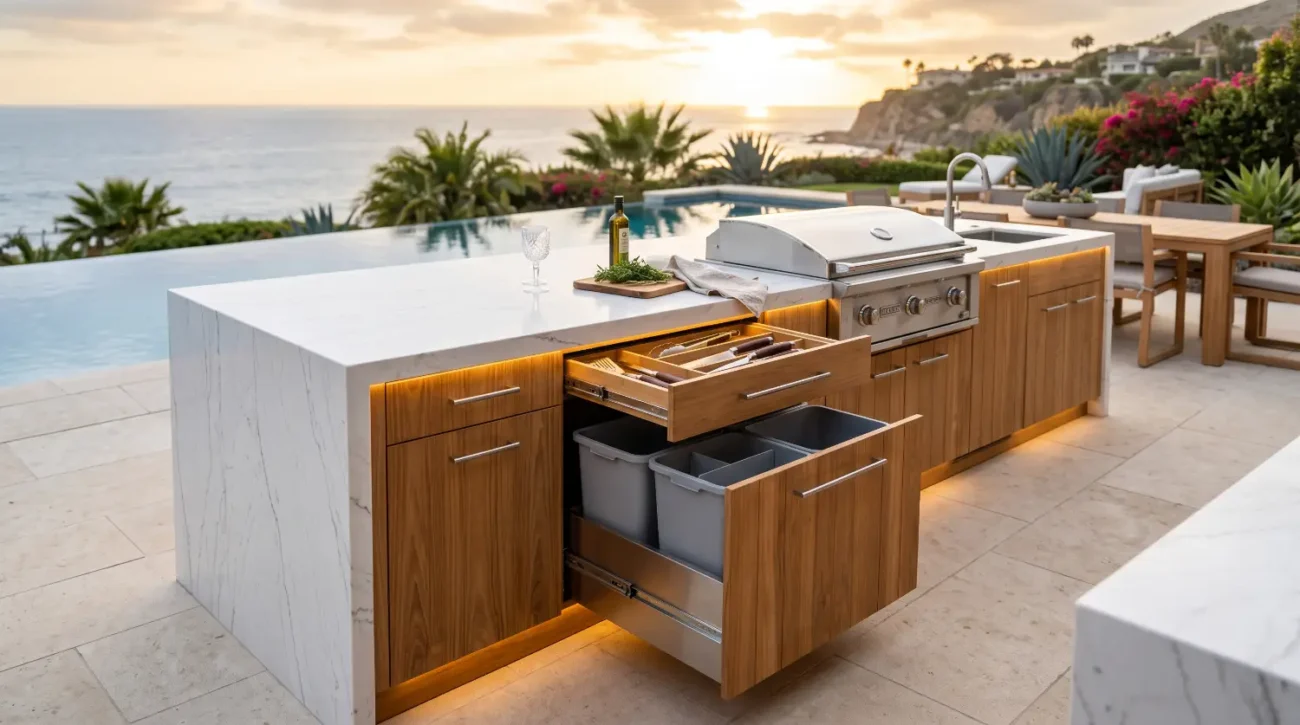
Understanding construction tolerances ensures smooth field installation. Solid teak base units feature heavy-duty levelling legs that adjust for sloped outdoor patios, keeping countertop seams tight and drawers running smoothly. All doors and drawer boxes use 316 stainless steel soft-close hardware, preventing cabinet slam in high winds and providing reliable performance in freezing weather.
Our solid teak outdoor kitchen cabinetry is backed by comprehensive structural coverage. Review our Warranty Documentation (PDF) for complete details on material guarantees, marine hardware coverage, and structural protections. For questions about lead times, custom ordering, or shipping logistics, see our Frequently Asked Questions (PDF) and Cancellation & Return Policy (PDF).
Building a year-round outdoor entertaining space combines timeless natural beauty with precise structural engineering. Combining solid Grade-A teak millwork, marine-grade stainless steel hardware, and protected spatial layouts yields a four-season outdoor kitchen that resists extreme weather while providing an inviting space for winter entertaining. Learn more about our heritage and manufacturing standards on our About Us page.
Key Takeaways
-
Grade-A Teak Material Resilience: Solid teak’s high resin density, rubber content, and natural oils prevent warping, cracking, and joint separation in sub-zero climates.
-
Architectural Microclimate Design: Combining radiant overhead heating, louvered roofs, and windbreak structures keeps cooking zones comfortable during winter.
-
Thermal Isolation Standards: Using 316 marine-grade stainless steel insulated grill jackets shields solid wood cabinetry from heat damage during cold-weather grilling.
-
Proactive Winter Maintenance: Avoid film-forming clear coats in freezing climates; use deep-penetrating teak oils to maintain wood color and guard against moisture penetration.
-
Trade Alignment & Precision: Integrating CAD/BIM assets early in design ensures seamless jobsite coordination between stone masons, plumbers, and millwork installers.
Craft Your Four-Season Outdoor Sanctuary
Designing an all-weather outdoor kitchen requires balancing structural engineering, material science, and luxury design. Whether you are a homeowner planning a winter living space or an architect specifying materials for a coastal property, Pacific Teak Millworks provides custom solid teak cabinetry engineered for tough environments. Contact Darin and our design team through our Contact Us / Trade Inquiries page to request wood samples, review CAD details, or discuss your outdoor kitchen project.