Fast Track Summary
-
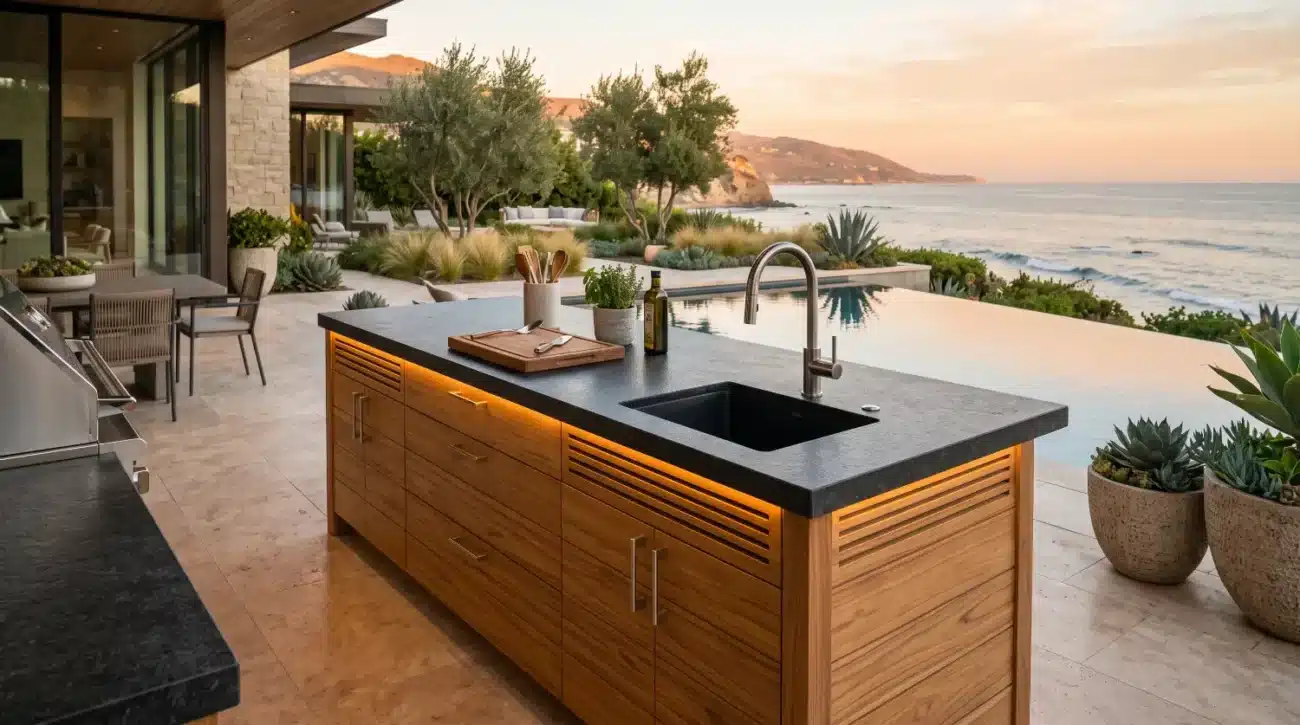
Unified Architectural Continuity: Mastering the transition from interior luxury to exterior environments using Grade-A teak millwork bridges the gap between residential interiors and outdoor living landscapes.
-
Material Science Precision: Utilizing dense, oil-rich Tectona grandis ensures structural stability against extreme UV, marine salt air, and thermal expansion while protecting heavy stone installations.
-
Professional CAD Integration: Bridging the gap between D2C inspiration boards and B2B trade execution requires detailed cabinetry framing, venting, and hardware specifications.
-
Flexible Aesthetic Options: Balancing periodic teak oil maintenance to preserve rich golden hues against allowing the wood to naturally oxidize into a sleek silver patina.
Engineering Spatial Continuity Through Architectural Teak Millwork
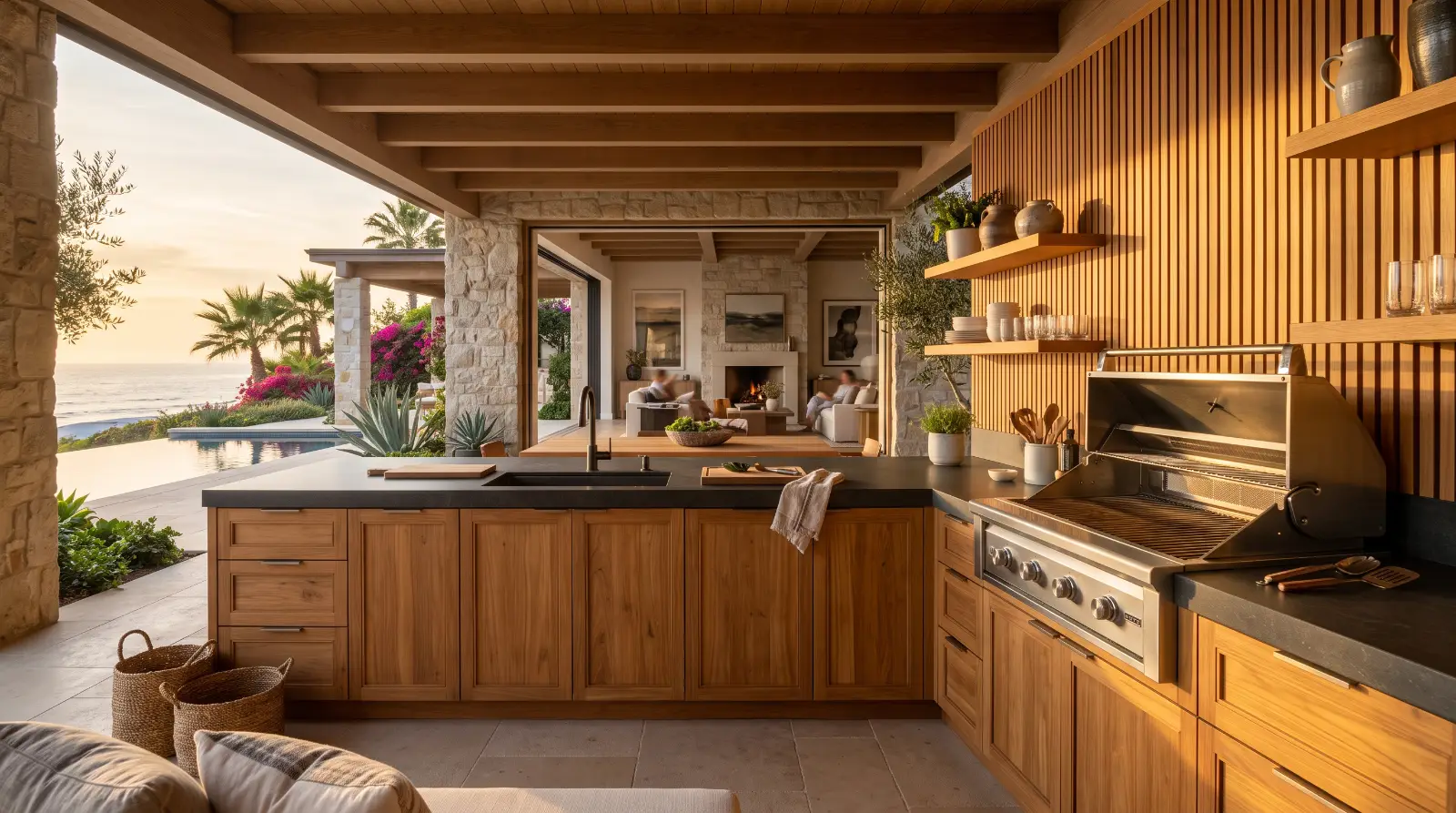
How do elite designers translate indoor luxury into cohesive outdoor living environments using architectural teak millwork? Elite designers achieve spatial continuity by using solid Grade-A teak cabinetry as a unifying architectural element that links indoor living spaces with outdoor kitchens, loggias, and poolside retreats.
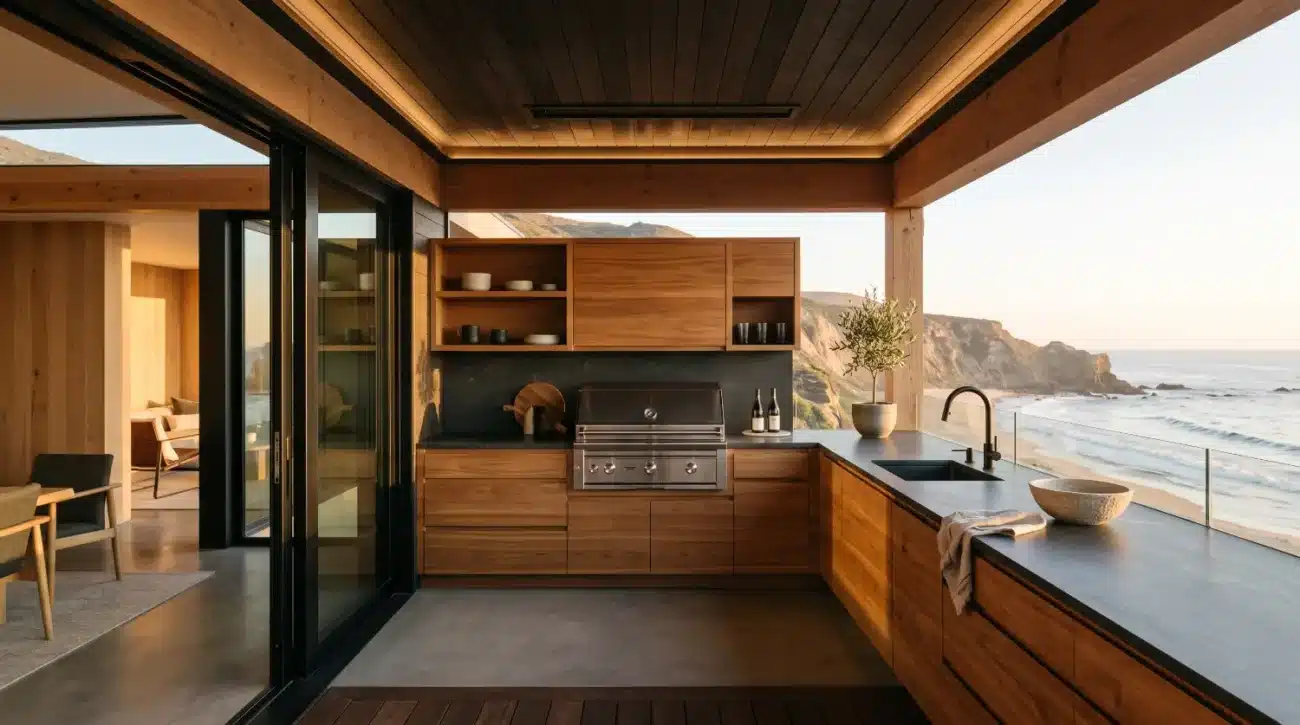
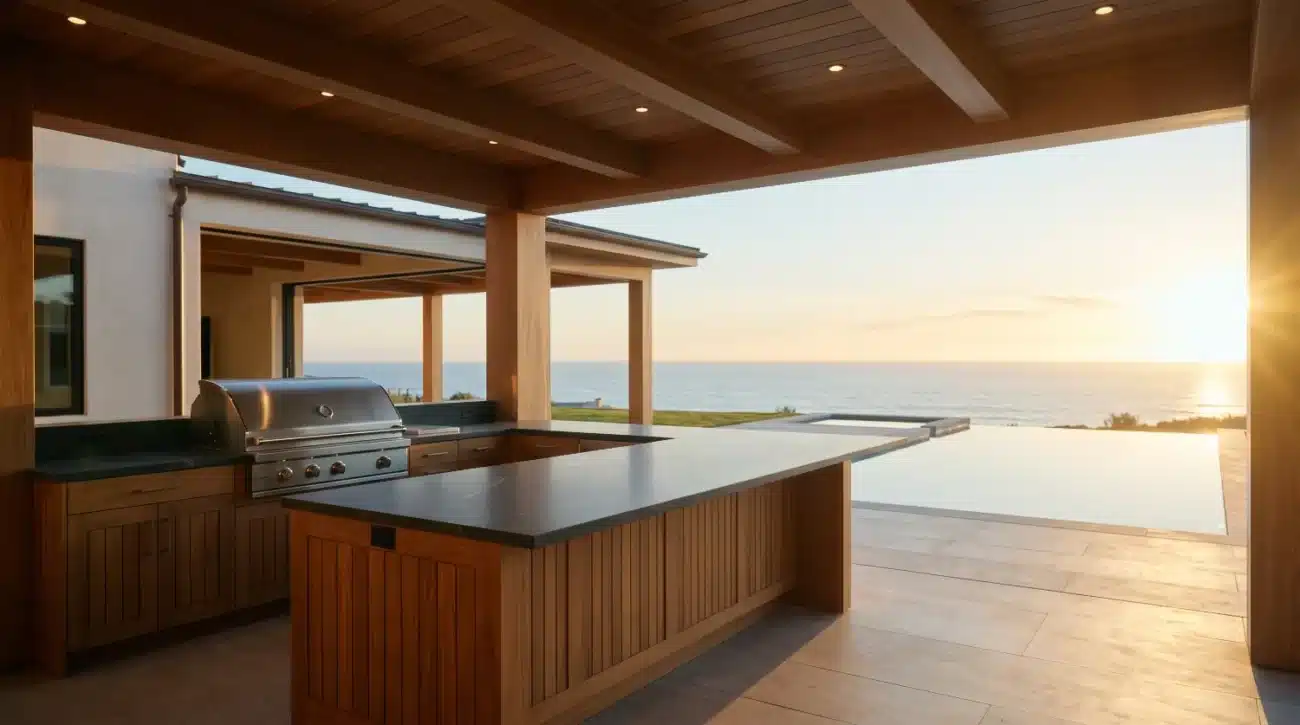
An interior designer in Malibu stands on an expansive white oak floor, looking through a twenty-foot vanishing glass wall toward a windswept outdoor loggia. The client holds a tablet displaying curated digital mood boards—a collection of high-end outdoor kitchens, warm wood cladding, and sleek stone islands. The client wants that exact resort-style warmth outside. However, the designer knows that standard indoor cabinetry woods like maple or white oak will quickly warp, delaminate, and rot under aggressive coastal salt spray and intense California sun.
The solution to this architectural dilemma is not found in composite synthetics or cold, clinical metal boxes. It is found in the deliberate specification of solid Grade-A teak millwork. When designed correctly, teak acts as an exterior bridge that carries the warmth, texture, and refined joinery of interior architecture directly into the landscape. Achieving this level of spatial harmony requires a deep understanding of wood movement, structural load capacities, and marine-grade hardware integration.
Translating Client Vision into Technical Specifications
Homeowners often initiate high-end exterior projects by gathering visual inspiration online, creating a curated gallery of warm tones, linear slatted walls, and integrated kitchen islands. When they present these saved images to an interior designer, landscape architect, or custom builder, a critical specification gap opens. A photograph does not show appliance heat clearances, structural stone weight distribution, or marine hardware specifications.
Design professionals bridge this gap by translating visual concepts into precise CAD layouts. By utilizing specialized base cabinetry collections built specifically for outdoor environments, designers can translate conceptual mood boards into buildable, code-compliant exterior floor plans. This process allows the design team to maintain visual consistency while ensuring that the physical cabinetry accommodates high-end gas grills, stainless steel refrigeration units, and heavy natural stone countertops.
Establishing the Material Threshold Between Inside and Out
Biophilic design principles emphasize the visual and tactile connection between human beings and natural materials. Extending wood millwork from an interior great room to an exterior dining loggia creates an illusion of expanded square footage. To execute this seamlessly, designers align the sightlines of outdoor cabinet face-frames with interior architectural casing, maintaining matching reveal widths and horizontal datum lines.
When specifying outdoor millwork, matching the exact species of indoor flooring or wall paneling is rarely feasible due to aggressive outdoor exposure. Instead, designers use teak as a natural counterpoint. The rich grain of solid teak complements interior hardwoods while providing unmatched exterior durability.
The Material Science and Engineering of Grade-A Teak
Why is Grade-A teak the premier material for luxury exterior cabinetry, and how does its structural biology withstand extreme environmental exposure? Grade-A teak contains dense natural rubber resins, high silica content, and hydrophobic oils that make it naturally resistant to water penetration, fungal rot, marine-grade corrosion, and severe thermal movement.
Understanding the internal anatomy of Grade-A teak reveals why it outperforms alternative timber species in exterior environments:
-
Outer Sapwood Characteristics: Sapwood represents the soft, living outer layers of the tree. It exhibits high moisture retention, low natural oil concentration, and extreme vulnerability to rot, fungal decay, and pest infestation. Luxury millwork strictly excludes sapwood.
-
Inner Heartwood Properties: Grade-A teak is derived exclusively from the center heartwood. It features dense grain patterns, high silica concentration, and an abundance of natural tectonic oils that form a permanent defense system against extreme weather elements.
-
Natural Silica Retention: The high volume of natural silica embedded within the cell walls acts as an internal moisture barrier, resisting water absorption and preventing salt crystal degradation in coastal regions.
-
Tectonic Resin Density: Internal resins provide natural protection against wood-boring insects, termites, and fungal spores without requiring synthetic chemical treatments.
-
Structural Load Stability: The tight grain density guarantees exceptional structural stability, supporting heavy stone installations without sagging or racking over time.
According to wood durability research from the USDA Forest Products Laboratory, the natural extractives in high-grade teak act as an internal preservative, making the heartwood naturally resistant to decay-causing fungi and moisture absorption. This biological makeup makes solid teak uniquely suited for structural outdoor applications.
Wood Anatomy and Natural Environmental Protection
The cellular structure of teak functions as an internal barrier against moisture and environmental stress. The natural oils within the wood fibers repel liquid water, preventing the saturation-and-drying cycles that cause lesser woods to crack, check, or split. Furthermore, the high silica content embedded in the cell walls creates a natural defense against wood-boring insects and airborne salt crystals in coastal locations like Palm Springs, Miami, or the Hamptons.
-
High Silica Retention: Acts as a physical barrier against water absorption and salt spray degradation.
-
Natural Tectonic Oils: Maintains internal flexibility, preventing surface checking during rapid humidity shifts.
-
Dense Heartwood Grain: Provides exceptional dimensional stability, minimizing expansion and contraction across seasonal shifts.
-
Termite and Pest Resistance: Contains natural compounds that repel wood-boring insects without chemical treatments.
Joinery Physics and Structural Load Management
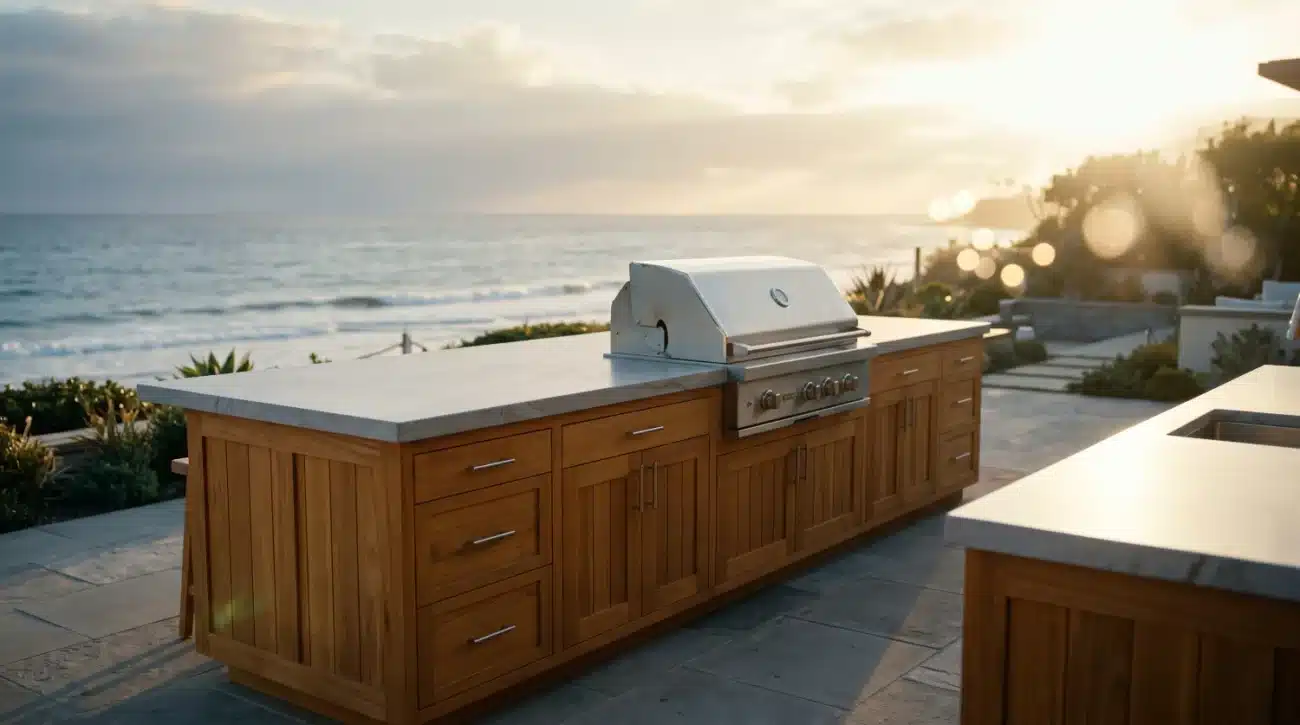
Outdoor kitchens often feature thick quartzite, granite, or cast concrete countertops that can weigh upwards of eighty pounds per square foot. Standard residential cabinetry construction methods, such as pocket screws or dowel joints held together with interior PVA glues, will fail under these structural loads when exposed to outdoor humidity shifts.
Professional outdoor cabinetry relies on traditional mortise-and-tenon joinery combined with modern waterproof adhesives. Mortise-and-tenon joints interlock the solid wood frames, transferring vertical loads directly down through the cabinet stiles to the leveling legs. This structural framing prevents sagging, racking, or frame distortion over time, ensuring that heavy stone tops remain level and supported across the entire installation.
Preventing Thermal Expansion and Internal Decay Errors
A counterintuitive aspect of exterior wood cabinet design involves how finishes interact with the timber. Applying film-forming sealers, polyurethane, or varnish to exterior teak can ruin the installation. These film coatings trap micro-moisture beneath the surface layer. As the morning sun warms the cabinet, trapped vapor expands, causing the film coating to blister, peel, and flake. Worse, this trapped moisture fosters internal rot within the grain structure.
Instead of applying synthetic topcoats, master woodworkers leave high-grade teak unfinished or treat it with breathable natural oils. This allows the wood to breathe, naturally shedding surface moisture while maintaining its dimensional integrity.
Another common mistake in outdoor kitchen design is failing to properly isolate heat-generating appliances from the cabinetry structure. Gas grills and side burners can produce extreme radiant heat. Installing a grill directly against solid wood walls without an insulated heat shield jacket or adequate ventilation clearance poses a fire hazard and can char or severely dry out the adjacent teak. Designers must specify custom cutout tolerances and heat-insulating sleeves to ensure long-term thermal safety.
Marine-Grade Hardware Integration
Exterior cabinetry is only as durable as its weakest mechanical component. In harsh saltwater or high-humidity environments, standard zinc-plated or 304-grade stainless steel hardware will corrode, freeze, or leave rust streaks across the wood face-frames.
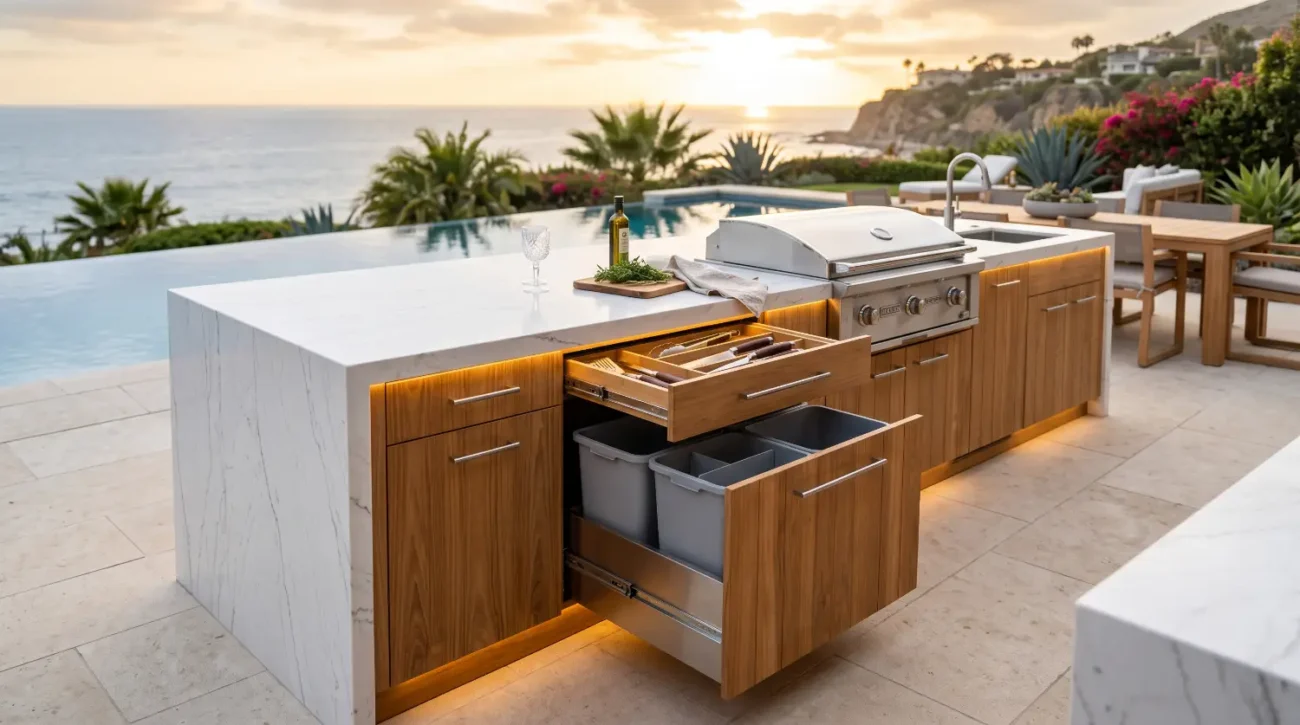
To maintain effortless functionality, luxury outdoor cabinetry incorporates 316 marine-grade stainless steel hardware. Soft-close hinges, full-extension drawer glides, and mounting brackets crafted from 316 stainless steel contain added molybdenum, which prevents pitting corrosion caused by airborne chlorides. Integrating these heavy-duty glides with solid wall cabinets ensures smooth operational performance in any climate.
Crafting Cohesive Workflows and Aesthetic Continuity
How do design professionals integrate custom teak millwork into comprehensive outdoor living plans while balancing maintenance preferences? Designers integrate teak millwork by coordinating early CAD specifications with trade sub-contractors and offering clients a clear choice between warm golden-brown oil finishes and low-maintenance silver-grey patinas.
Creating a cohesive outdoor space requires coordinating multiple trades, including landscape architects, electricians, plumbers, and stone fabricators. Design professionals rely on comprehensive CAD spec libraries to streamline this workflow. Incorporating pre-designed teak cabinet components into master site plans allows specifiers to establish exact rough-in locations for plumbing lines, electrical conduits, and gas supply valves well before the site slab is poured.
Bridging the D2C to B2B Execution Gap
When homeowners bring online mood boards to a design firm, they are seeking a cohesive aesthetic vision. The designer’s role is to convert those visual references into precise architectural drawings. Working with specialized millwork manufacturers who provide dedicated CAD blocks and spec sheets simplifies this process.
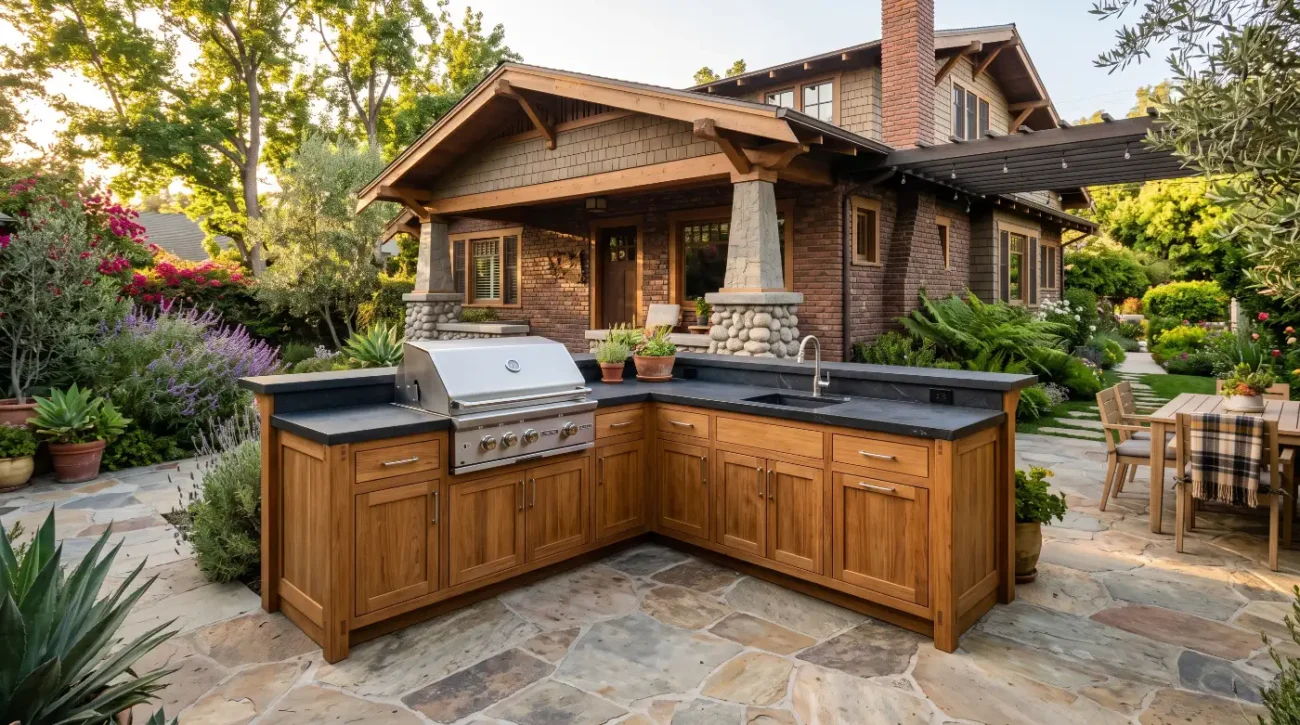
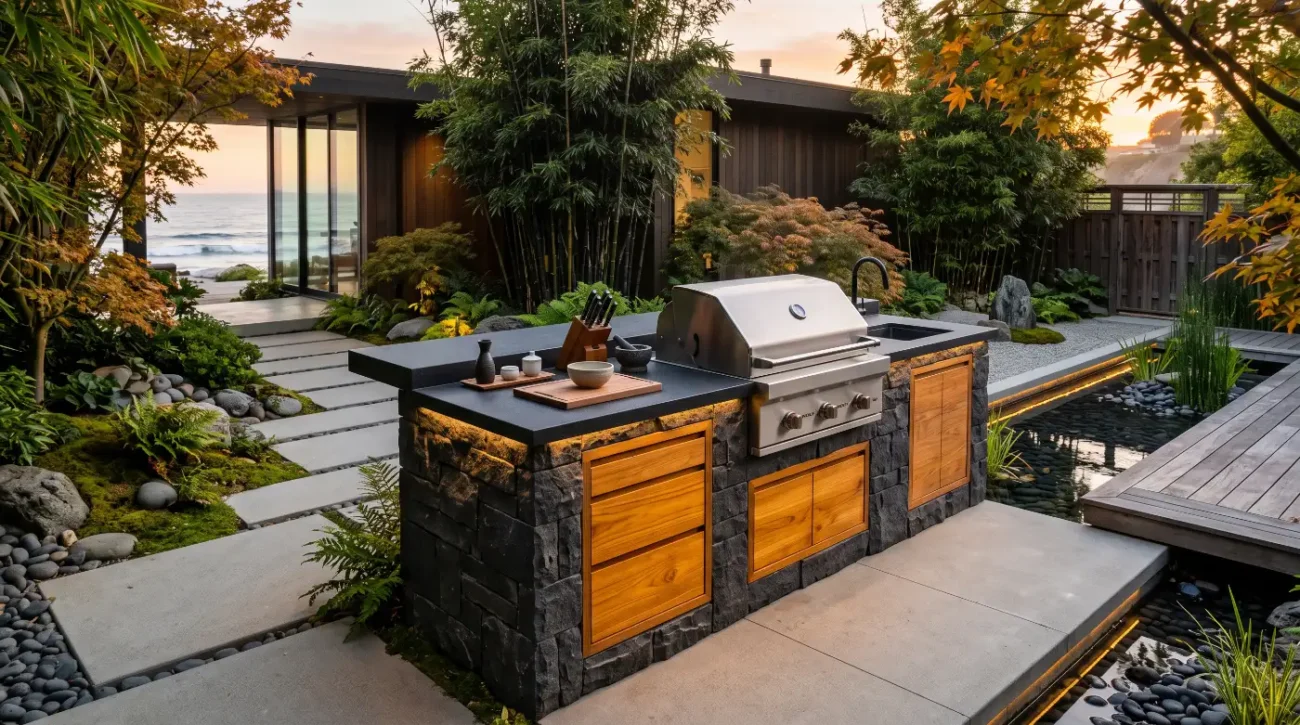
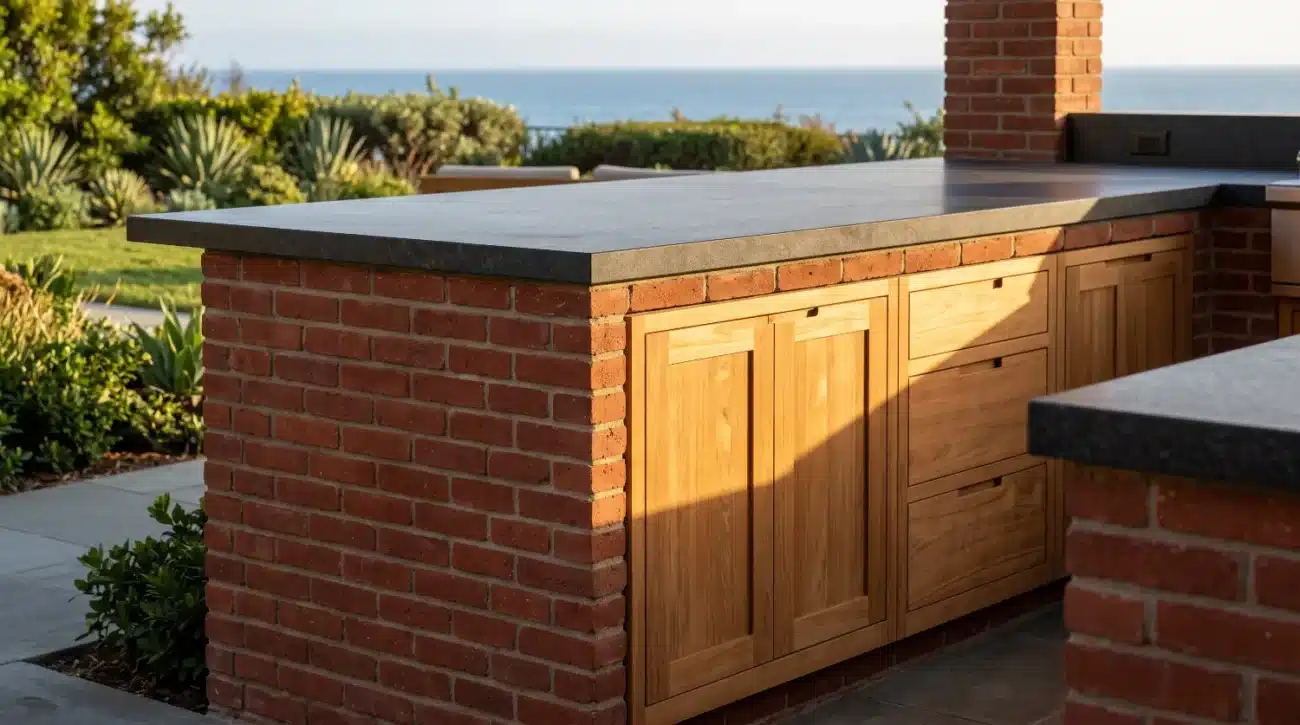
By utilizing modular, solid-teak island inserts, designers can incorporate custom teak drawers, access doors, and trash pull-outs directly into stone, stucco, or brick island structures. This approach gives designers the flexibility to blend warmth and organic texture into custom masonry islands while ensuring that all moving components feature precise framing tolerances and weather-tight seals.
Aesthetic Versatility: Golden Warmth vs. Silver Patina
One of the defining characteristics of Grade-A teak is its aesthetic adaptability over time. Homeowners and designers must decide early in the design process which visual evolution best aligns with the overall architectural scheme:
-
The Classic Golden-Brown Finish: To maintain the rich, warm honey tones of freshly milled teak, the wood must be periodically treated with a high-quality, breathable teak oil or sealer. This regimen replenishes surface oils stripped by UV exposure and prevents natural oxidation. It is ideal for warm, transitional, or Mediterranean-inspired designs that feature rich earth tones, natural stone, and warm lighting.
-
The Natural Silver-Grey Patina: If left untreated, exposure to sunlight and rain causes the outer layer of teak to naturally oxidize, developing a sleek, uniform silvery-grey patina over six to twelve months. This weathered look is prized in modern coastal, Scandinavian, and biophilic architectural styles. Crucially, this oxidation is purely cosmetic; it does not compromise the wood’s structural strength, internal oil density, or rot resistance.
To help clients preserve their investment regardless of their chosen finish option, designers routinely provide access to comprehensive documentation such as the official Teak Care & Maintenance Guide.
Strategic Material Pairing Guidelines
To maximize visual impact, designers rarely use teak in complete isolation. Instead, they pair teak millwork with complementary exterior materials to build rich, layered spaces:
-
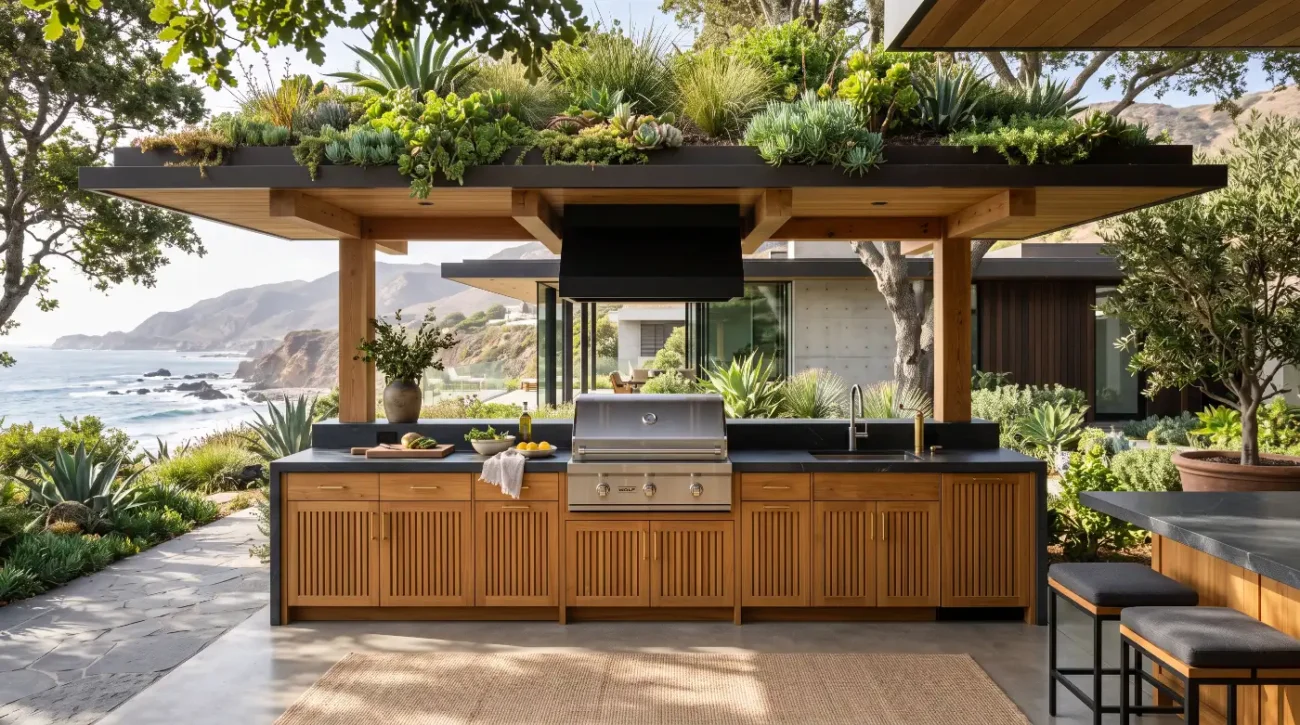
Teak and Dark Porcelain Slabs: Pairing raw golden teak cabinetry with charcoal or slate-colored porcelain countertops creates a sleek, high-contrast modern look that resists scratching and heat.
-
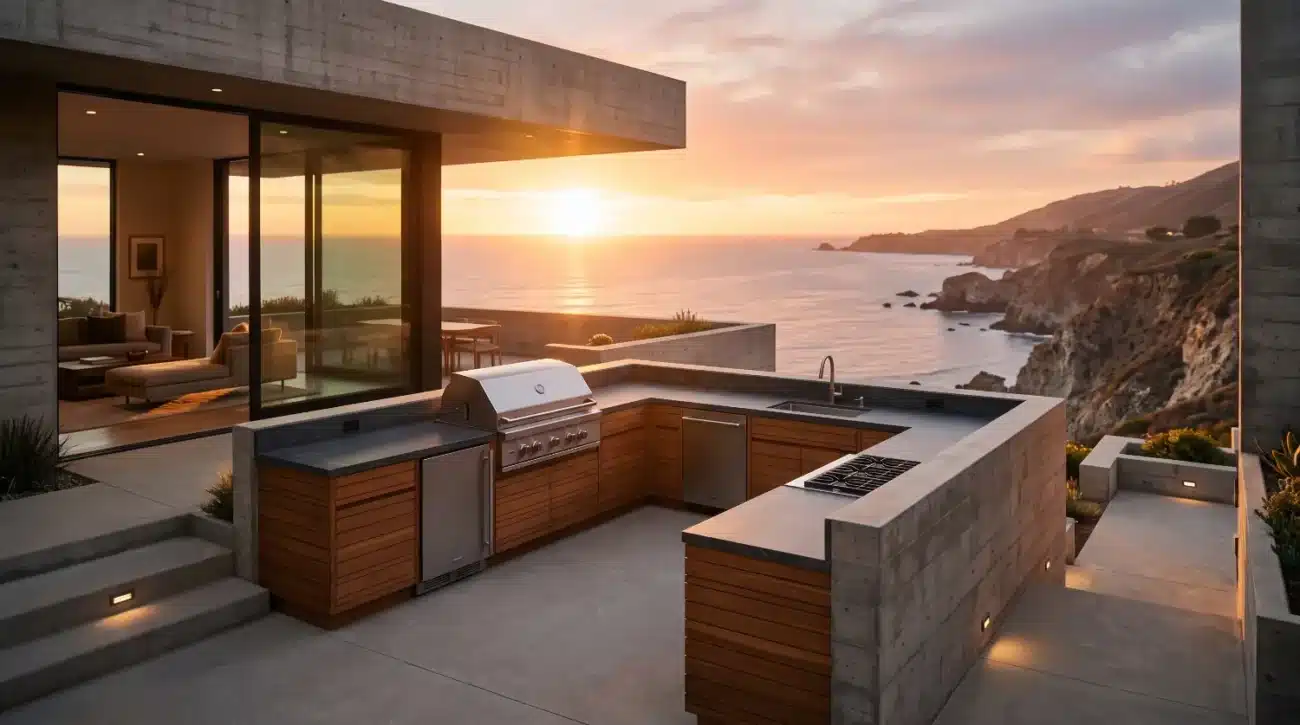
Teak and Cast Concrete: Combining silver-patina teak with light grey concrete surfaces highlights tactile industrial textures, making it ideal for urban rooftop patios or desert retreats.
-
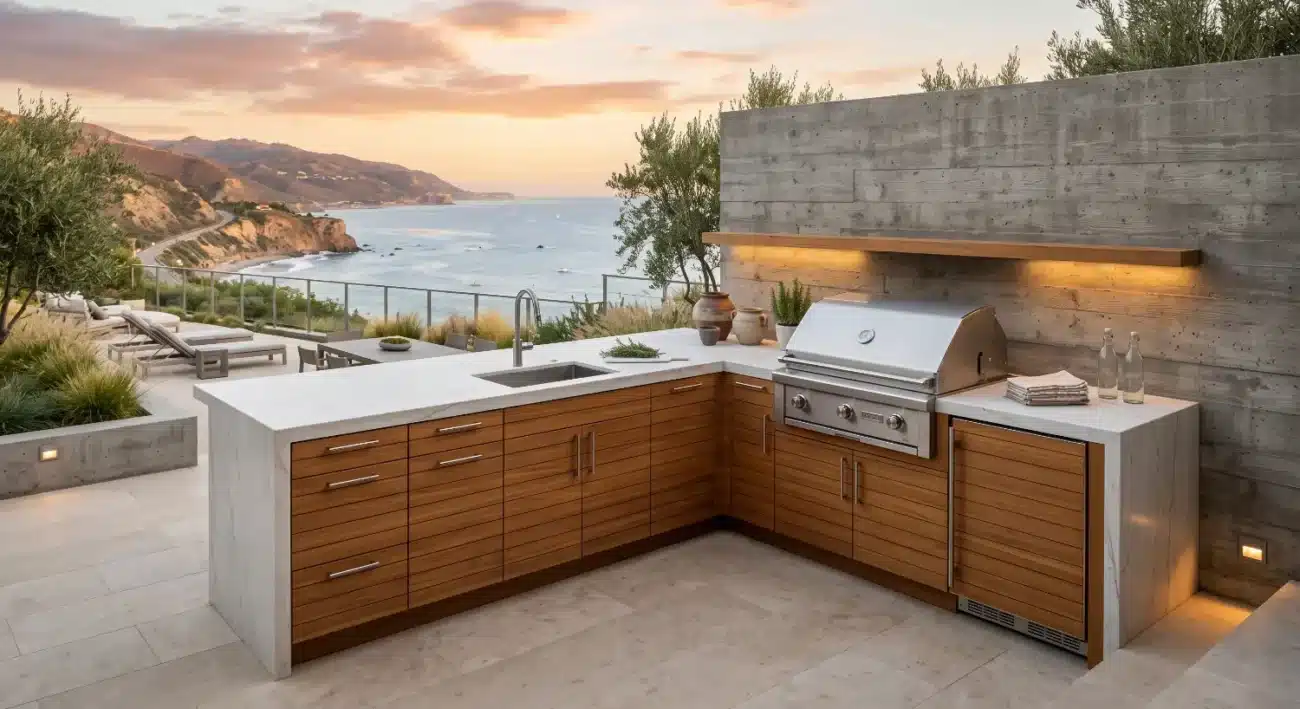
Teak and Brushed 316 Stainless Steel: Framing polished stainless steel grills and refrigeration units with rich teak cabinetry softens cold metal surfaces, introducing organic warmth to functional cooking zones.
-
Teak and Slated Cladding: Extending slatted teak wall panels behind outdoor wall cabinets visually connects storage units to the surrounding landscape architecture.
When managing complex project timelines, design teams can review the manufacturer’s operational policies by referencing the clear Cancellation & Return Policy to ensure clear scheduling communication between builders and suppliers.
For certified sustainability standards regarding responsibly managed wood resources, designers can review guidelines published by the Forest Stewardship Council, ensuring that specified millwork meets international environmental criteria.
Streamlining Trade Procurement Protocols
Executing a high-end exterior project demands clear communication between design professionals and manufacturing specialists. Following a structured design and procurement protocol ensures seamless execution:
-
Inspiration Mood Board Phase: The client presents curated digital inspiration photos showcasing preferred aesthetics, finishes, and functional priorities.
-
CAD Specification Phase: The designer imports specialized architectural CAD blocks into the project plan, establishing precise dimensions and appliance clearances.
-
Utility Rough-in Phase: General contractors and sub-contractors align gas, electrical, and plumbing rough-in locations to match the cabinet CAD layout.
-
Trade Procurement Phase: The design team places direct cabinet orders through dedicated trade programs to ensure exact custom specifications.
-
Precision Assembly Phase: On-site installers utilize mortise-and-tenon levelling systems to secure heavy countertop loads and establish uniform reveals.
-
Long-Term Performance Phase: The completed installation delivers decades of exterior utility, backed by comprehensive manufacturer warranty protection.
Designers can streamline project delivery by sourcing components directly through specialized trade programs. Accessing direct support from experienced craftsmen ensures that custom appliance cutouts, special face-frame reveals, and site-specific structural modifications are engineered correctly before shipping. Comprehensive protection is further reinforced through transparent documentation found within the official Warranty Documentation.
By prioritizing solid wood construction, precise joinery, and accurate material science over short-term synthetic alternatives, interior designers and exterior architects can create outdoor living environments that deliver long-term beauty, functional durability, and structural elegance.
External References:
Key Takeaways
-
Bridge the Specifier Gap: Convert residential client mood boards into buildable CAD specifications that account for weight, venting, and utility rough-ins.
-
Specify Grade-A Heartwood: Utilize mature teak rich in natural silica and rubbers to eliminate moisture absorption, rot, and structural warping.
-
Avoid Film-Forming Coatings: Never coat exterior teak with polyurethane or varnish; use breathable natural oils or allow the wood to naturally oxidize into a silver patina.
-
Demand Marine-Grade Hardware: Ensure all mechanical glides, hinges, and fasteners are constructed from 316 marine-grade stainless steel to prevent rust and failure in salt air.
-
Leverage Solid Joinery: Rely on traditional mortise-and-tenon construction to support heavy granite, concrete, or quartzite outdoor countertops securely.
Are you ready to elevate your next residential project with solid Grade-A teak outdoor cabinetry? Whether you are a homeowner gathering ideas or a trade professional managing a custom CAD layout, contact our master craftsmen today through our Contact Us / Trade Inquiries portal or call us directly at (949) 365-6513 to request wood finish samples, access CAD spec files, or discuss custom project dimensions.